Everyday Economics: Existing home sales report may be noisy. Inflation will shape outlook
This week’s economic calendar includes several important housing reports, including existing home sales, housing starts, and building permits. But the most consequential releases are likely to be the first reading on February consumer inflation and the delayed January report on personal consumption expenditures, or PCE, the Federal Reserve’s preferred inflation measure. Together, they will help answer the central economic question of the moment: can the Fed respond to a weakening labor market, or will inflation remain high enough to keep policymakers cautious?
Last week’s jobs report made that question more urgent. The labor market is no longer simply cooling from an unsustainably strong pace. It now looks close to stalled. Payroll employment fell in February, prior months were revised lower, and hiring remains concentrated in a narrow set of industries. Even accounting for temporary factors, labor demand has clearly lost momentum. That matters because housing depends on more than interest rates. Mortgage rates influence affordability, but home sales also depend heavily on confidence. Households are more likely to buy, sell, or move when they feel secure in their jobs and incomes. When hiring slows and uncertainty rises, many of those decisions are delayed. A softer labor market can weigh on housing activity even when borrowing costs improve.
The housing reports out this week should also be read in light of January’s severe winter weather. February existing home sales mostly reflect purchase contracts signed in January, when large parts of the country were disrupted by a major freeze. That is one reason a weak sales number would not be surprising. Still, the January data suggest the market was slowed by weather, not stopped by it. Zillow’s January market report showed that 195,335 homes went pending, 1.8 percent more than a year earlier. That is a useful reminder that buyer demand did not vanish. It remained present even in a month shaped by bad weather, affordability challenges, and broader economic caution.
There is a second important housing story beneath the surface. Affordability has improved over the past year. Zillow reported that the typical monthly mortgage payment on a U.S. home in January was 8.4 percent lower than a year earlier, and a separate Zillow analysis found that a median-income household could afford a home priced about $30,000 higher than it could a year ago, the strongest buying power since March 2022. But that does not mean affordability has returned to normal. Even after that improvement, buyers still have far less purchasing power than they did before the pandemic housing boom and mortgage-rate shock. In practical terms, conditions are less punishing than they were a year ago, but they remain much tougher than households grew used to before 2020.
Inventory has also been improving, and that is gradually changing the balance of power in the market. Inventory is shifting bargaining power toward buyers, which should support buyer entry at the margin but keep price growth and turnover in check.
That same logic helps explain why homebuilding is expected to remain subdued. Builder sentiment is still weak despite some recent improvement in mortgage rates. The National Association of Home Builders’ confidence index fell again in February, reflecting persistent affordability problems, soft buyer traffic, and continued cost pressure. Builders are not operating in a market defined by excess demand anymore. They are operating in one where resale inventory is slowly improving, buyers are more price sensitive, and financing conditions remain restrictive by the standards of the past decade. That is an environment more consistent with flat-to-weaker permits and starts than with a meaningful construction rebound.
But the most important releases this week are still on inflation.
The last consumer price index report, covering January, was encouraging but not decisive. Headline inflation rose 0.2 percent over the month and 2.4 percent from a year earlier. Core inflation, which excludes food and energy and is often watched more closely for underlying trends, rose 0.3 percent over the month and 2.5 percent from a year earlier. That was progress. It suggested inflation was still moving lower. But it did not settle the matter, especially since some service categories remained firm and policymakers have repeatedly said they want greater confidence that inflation is returning sustainably to their 2 percent target.
The delayed January PCE report adds another important piece. In the previous release, which covered December, headline PCE rose 0.4 percent over the month and 2.9 percent from a year earlier. Core PCE also increased 0.4 percent on the month and 3.0 percent from a year earlier. Those are not the numbers of an economy that has fully finished the inflation fight. Rather, they suggest that price pressures ended 2025 on a firmer note than the Fed would have preferred.
That leaves the Fed facing a difficult tradeoff. Under ordinary circumstances, a weaker labor market would strengthen the case for lower interest rates. The Fed itself indicated in December that downside risks to employment had increased even as inflation remained somewhat elevated. But the inflation picture has become harder to interpret. The February CPI and January PCE reports largely reflect conditions before the recent conflict with Iran pushed oil prices sharply higher. That means even a decent inflation report may not fully reassure markets or policymakers if they believe energy costs will soon begin feeding through to broader prices.
This is why the week ahead matters so much. Housing data may show temporary weakness related to weather. Construction data are likely to reflect continued caution among builders. But the inflation reports will do the most to shape expectations for monetary policy. If inflation continues to cool, the case for easier policy later this year becomes stronger, especially given the softer labor market. If inflation remains sticky, the Fed may have less room to respond, even as economic momentum fades.
The real test this week, then, is not whether one housing report comes in a little soft because of snow and ice. It is whether inflation had continued to ease substantially ahead of the Iran war. If it had, the Fed could take some comfort that the underlying trend was moving in the right direction before the oil shock hit. If it had not, policymakers may have to confront a more uncomfortable mix of slower growth, weaker hiring, and renewed inflation pressure. That would matter well beyond financial markets. For households, higher energy prices reduce spending power. For businesses, they raise costs and create new uncertainty. And for the Fed, they narrow the room to respond to a cooling labor market. In that sense, this week’s inflation data are not just another monthly update. They are the last clear readings on the economy before the oil shock began to reshape the outlook.
Texodus: At least 12 Texas members of Congress won’t be returning next year
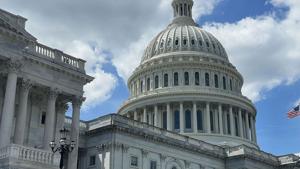
Twelve members of Texas’ congressional delegation elected in 2024 won’t be returning to office next year. Eleven are incumbents; one is deceased. The number is expected to grow depending on the outcome of upcoming elections.
They represent nearly one-third of the Texas congressional delegation. Texas has the second largest delegation in the country of 38, behind California’s 52.
The 12 members are from Republican or Democratic strongholds whose new seats under redistricting aren’t expected to flip. However, several Democrats ran in new districts because of redistricting, upending several races.
In 2024, Houston’s former Democratic mayor Sylvester Turner won CD 18, a Democratic stronghold, filling an open seat vacated by deceased U.S. Rep. Sheila Jackson Lee. Turner was sworn into office in January 2025 and died two months later. The seat remained vacant until a special election was held last November.
Former Harris County Attorney Christian Menefee won the seat in a crowded race and ran for reelection in the March primary. He won more votes than Al Green, who is seeking reelection in CD 18 after serving for years in CD 9, which was redistricted to a Republican stronghold. Menefee and Green are heading to a runoff. If Green loses, he will join Democratic Reps. Marc Veasey of Fort Worth, and Lloyd Doggett of Austin, who were the first casualties of redistricting.
Last year, Veasey and Doggett announced they weren’t running for reelection because of redistricting. Two Democrats hoping to replace Veasey in a new CD 33 are former U.S. Rep. Colin Allred and incumbent U.S. Rep. Julie Johnson. They head to a runoff in a Democratic stronghold. If Johnson loses, she joins the Democratic redistricting casualty list.
Incumbent U.S. Rep. Greg Casar won his primary race in a new CD 37 to replace Doggett, also in a Democratic stronghold, The Center Square reported.
Three incumbents ran for another office, Jasmine Crockett, D-Dallas, Chip Roy, R-Fredericksburg, and Wesley Hunt, R-Houston. Crockett and Hunt lost their primary races for U.S. Senate. Roy is heading to a runoff for state attorney general. Their congressional seats remain Democratic and Republican strongholds, respectively.
President Donald Trump has said he will soon make an endorsement in the U.S. Senate race. Attorney General Ken Paxton, who is challenging incumbent U.S. Sen. John Cornyn, has issued conflicting statements about dropping out, The Center Square reported.
Four incumbent Republicans announced they were retiring: U.S. Reps. Morgan Luttrell of Magnolia, Jodey Arrington of Lubbock, Troy Nehls of Richmond and Michael McCaul of Austin. Their seats remain Republican strongholds.
Two incumbent Republicans were forced out after tumultuous primary races: disgraced U.S. Reps. Tony Gonzales and Dan Crenshaw. Gonzales’ seat along the southwest border leans Republican; Crenshaw’s northern Houston suburb seat remains solidly Republican.
Gonzales was forced to end his reelection bid by U.S. House leadership after he admitted to having an affair with a staffer who later killed herself. This was after he denied the affair for months, said he wasn’t resigning and falsely accused the woman’s husband of bribing him, The Center Square reported. When Gonzales announced he was dropping his reelection bid, he issued no apology and expressed no remorse.
Crenshaw was ousted by state Rep. Steve Toth, a grandfather and owner of a pool cleaning company. Toth, considered one of the most conservative members of the state House, won after voters expressed disgust with Crenshaw for his profanity laced outbursts against constituents and the media using official House social media accounts. He also faced criticism for allegations of insider trading and support for red flag laws, which he denies.
Even after he lost, Crenshaw continued to blame voters. “A large part of this election was about the power of clickbait. Memes became truth. Too many people are not discerning through the clickbait,” he told the Texas Tribune.
The last time a large number of Texas’ congressional delegation didn’t return to Congress was eight years ago. Ten members elected in 2016 didn’t run for reelection or lost in 2018.
Former Republican incumbents U.S. Reps. John Culberson of Houston and Pete Sessions of Dallas lost their re-elections in 2018. Former incumbent U.S. Rep. Robert (Beto) O’Rourke, D-El Paso, challenged U.S. Sen. Ted Cruz and lost.
Former incumbents U.S. Reps. Joe Barton, R-Fort Worth, Gene Green, D-Houston, Jeb Hensarling, R-Dallas, Sam Johnson, R-Plano, Ted Poe, R-Atascocita, and Lamar Smith, R-San Antonio, didn’t seek re-election in 2018.
Barton, a member of the Tea Party and Freedom caucuses, described himself as “a constant defender of conservative ideals and values.” He wasn’t forced to resign; he only announced he wasn’t running for reelection after nude photos he took of himself along with sexually explicit texts were leaked. He acknowledged he sent them to women with whom he was having extramarital affairs.
Former incumbent U.S. Rep. Blake Farenthold, R-Corpus Christi, who also claimed to be a conservative, resigned after it was reported that he used taxpayer money to settle a sexual harassment lawsuit and created a hostile work environment for female employees.
War in Iran shocks markets, costs U.S. taxpayers $1 billion a day

The escalating war in Iran has already rattled global markets and driven oil prices to their highest levels since April 2024. If the conflict persists, the strain on the global economy deepens and the burden on U.S. taxpayers grows.
With U.S. military operations costing more than a billion dollars each day, experts warn that a prolonged war could require a significant increase in defense spending, further affecting the federal budget.
The U.S. and Israel launched attacks on Iran on Feb. 28 after nuclear talks with Islamic Republic failed to produce a deal. President Donald Trump and Secretary of War Pete Hegseth have laid out four military objectives: Destroying Iran’s missile capabilities, neutralizing its navy, preventing the development of nuclear weapons, and ensuring the regime can’t direct terrorism beyond its borders.
Both Trump and Hegseth said the conflict is at the beginning. It’s unclear how long the war could continue, but Trump said it could be several weeks. On Friday, Trump said he would accept nothing less than Iran’s unconditional surrender.
U.S. gas prices surged to an average of $3.45 on Sunday, according to AAA, a $0.47 increase over the week. That’s the sharpest weekly rise since March 2022, when prices jumped $0.60 after Russia invaded Ukraine.
Since the Iran conflict began, oil prices have soared from around $65 to over $90 a barrel as of Friday.
Desmond Lachman, senior fellow at the American Enterprise Institute, said the economic hits could become more severe as the war continues.
He predicted gas prices could climb even higher, potentially exceeding $3.50 or even $3.75 per gallon.
“That has an impact on inflation and could also slow the economy. So it’s quite a big deal,” he said.
Shipping traffic through the critical Strait of Hormuz is nearly at a standstill, according to the Joint Maritime Information Center, an international group that tracks commercial shipping safety. The waterway usually handles about 20% of the world’s crude oil and natural gas shipments.
On average, about 138 vessels pass through the strait each day. That dropped to four earlier this week.
“This represents a near-total temporary pause in routine commercial traffic,” JMIC noted. “While no formal legal closure of the Strait has been universally acknowledged, the reduction stems from a combination of security threats, insurance constraints, operational uncertainty, and effective disruptions rather than a declared blockade.”
Lachman said the Strait of Hormuz is one problem, but Iran is also attacking oil and gas infrastructure, reducing supply.
“They are going after oil refineries and pipelines so there’ll be pressure on the United States to end the war,” he told The Center Square. “What’s happening right now is that those Gulf states are able to intercept the drones that the Iranians are sending, but the Iranians have got more drones than these states have got interceptors.”
Additional disruptions could send oil prices above $100 a barrel, Lachman said.
Goldman Sachs Research economists Jessica Rindels and Pierfrancesco Mei estimated that higher oil prices could hamper the U.S. economy and push up consumer prices. Higher oil prices reduce disposable income, which in turn limits spending, they noted.
“History suggests that oil price spikes driven by geopolitical shocks can be short-lived if markets gain confidence that supply disruptions will be temporary,” they wrote in a report.
How long the war with Iran will last and how far it might spread throughout the Middle East remain unclear, Lachman said.
“The trouble is, nobody really knows how long it will continue,” he told The Center Square.
United Nations Secretary-General António Guterres said Friday that the “situation could spiral beyond anyone’s control.”
“All the unlawful attacks in the Middle East and beyond are causing tremendous suffering and harm to civilians throughout the region – and pose a grave risk to the global economy, particularly to the most vulnerable people,” he said. “It is time to stop the fighting and get to serious diplomatic negotiations. The stakes could not be higher.”
In addition to the global economy, a long and costly war in Iran could hit U.S. taxpayers, Lachman said.
“This is costing over a billion dollars a day,” he told The Center Square. “So if this drags on, the U.S. is going to need a big increase in its defense budget, which can push interest rates up. You’ve just got to hope that this is a very short war; otherwise, there will be serious consequences.”
Trump is already looking to boost military spending. Trump previously proposed a $1.5 trillion budget for the Department of War, a 60% increase over existing levels.
On Friday, the nation’s largest defense contractors agreed to “quadruple Production of the ‘Exquisite Class’ Weaponry,” the president said in a social media post.
Mississippi primaries to watch on Tuesday
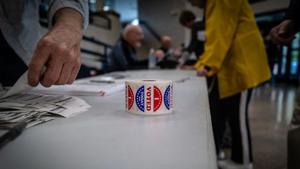
Mississippi will hold its state primary elections on Tuesday, making it the fourth state in the nation to elect party representatives in preparation for the 2026 midterm elections. One Democratic primary in the state has been labeled a battleground race by election watchers.
Several key primary elections will take place to determine the competitiveness Mississippi can expect going into the general election. Here are some of those races and the candidates who are running.
U.S. Senate
Sen. Cindy Hyde-Smith, R-Miss., is running for reelection on Tuesday. She was first appointed to the Senate in 2018. She won her first election in 2020.
Hyde-Smith has made illegal immigration, gun rights and anti-abortion issues primary fixtures of her reelection campaign. President Donald Trump has endorsed Hyde-Smith in several elections, including for the upcoming primary.
Trump wrote in a social media post, “Senator Cindy Hyde-Smith is 100% MAGA, and doing a fantastic job representing the Incredible People of Mississippi!”
Hyde-Smith faces a challenger in the Republican primary from Sarah Adlakha, a Mississippi physician.
Adlakha completed BallotPedia’s candidate connection survey, a questionnaire where candidates can answer several questions about their policy goals, background and stances. Her campaign focused on increased access to healthcare and greater economic flexibility.
Adlakha called for reducing taxes, increased workforce education, and greater defense spending.
“By focusing on pro-business policies, reducing taxes, and eliminating unnecessary regulations, Mississippi can foster an environment where local businesses thrive,” Adlakha wrote.
She called attention to several military installations in the state and their role in shoring up defense spending and continued ship building.
“Strengthening our national defense ensures these facilities remain vital contributors to our local economies, providing stable employment and supporting businesses throughout the region,” Adlakha wrote.
Several Democrats are also vying to take over Hyde-Smith’s seat in the U.S. Senate. Scott Colom, a twice nominated district judge, is running for the Democratic nomination against Albert Littell
Former President Joe Biden nominated Colom to the U.S. District Court for the Northern District of Mississippi twice, both nominations were rejected by the U.S. Senate. Colom serves as a district attorney in Mississippi and has emphasized reducing crime in his campaign.
“Our current U.S. Senator Cindy Hyde-Smith isn’t working for us anymore, voting against Mississippi jobs and investments because it serves her donors’ agenda,” Collom wrote. “Scott will always put Mississippi first – and he’ll work with anyone, Republican or Democrat, to get things done for our state.”
Collom is running against Albert Littell, who has advocated for expanded mental health services and lower prescription drug costs. Littell also promised to raise the minimum wage in Mississippi.
U.S. House
All four districts in Mississippi will hold primary elections for the U.S. House on Tuesday. In District one, incumbent Rep. Trent Kelly, R-Miss., is the only Republican candidate running in the district.
Cliff Johnson, a law professor, and Kevin Buck, a former member of the Mississippi House of Representatives, are running to face off against Kelly on the Democratic ticket.
Johnson has focused his campaign on increased education quality, lowering healthcare costs and lowering grocery prices in Mississippi.
“While wages remain flat, prices for everything from groceries to health care are soaring,” Johnson wrote in BallotPedia’s candidate survey. “To make things worse, the Trump administration and politicians who support it are focused on giving tax cuts to the super-rich.”
In Mississippi’s second Congressional district, incumbent Rep. Bennie Thompson, D-Miss., is looking to hold onto his seat. Ballotpedia identified the Democratic primary in Mississippi’s second congressional district as a battleground race.
Thompson was first elected in 1993 and has received endorsements from Planned Parenthood, federal workers unions and the Yeamsters in his reelection campaign.
Evan Turnage, a practicing lawyer, is challenging Thompson for the Democratic nomination in Mississippi’s second congressional district. Turnage has advocated for holding government officials accountable for managing stock portfolios and trading.
“In order to restore trust in our system, we have to get corporate money out of politics, ban members of Congress from trading stock, and overhaul corporate lobbying,” Turnage wrote in Ballotpedia’s candidate connection survey.
Races across Mississippi will be unique to watch as voters head out to the polls to determine who appears on November’s ballot.
Advocates, lawmakers propose increased cigarette tax

Anti-tobacco advocates and state officials across the country are proposing an increased tax on cigarette packs.
The Campaign for Tobacco-Free Kids published an annual report tracking the landmark 1998 Tobacco Master Settlement Agreement, a $206 billion settlement agreement between U.S. states and four major tobacco companies to settle lawsuits over smoking-related deaths.
The settlement is designed to fund anti-smoking initiatives in states across the country. However, the report found that many states are falling short of fully funding tobacco prevention programs. In fiscal year 2026, total state funding for programs allocated was 3.4% of the $21.7 billion set aside this year.
The campaign called on state legislatures to raise taxes on cigarette packs by $1.50 per pack. Advocates said this increase would generate $6 billion in new revenue to invest in programs that decrease tobacco use across the country.
The report comes as state legislatures across the country are considering tax increases on cigarette packs. In Utah, legislators are considering a bill that would raise the tax on cigarettes by $2 per pack. Michigan Gov. Gretchen Whitmer also called for a $2 tax increase in the state’s 2027 budget.
“We know states are facing budget shortfalls because of the cuts into federal public health programs, including Medicaid,” said Vince Willmore, vice president of communications at the Campaign for Tobacco-Free Kids. “So this is really a win-win solution for states.”
Willmore said states need to adopt significant increases to encourage smokers to quit and prevent kids from accessing tobacco products. The report claimed an increased tax could save $14.3 billion in long-term health care costs.
In fiscal year 2026, states will spend $728.6 million on tobacco prevention and cessation programs. This figure is $36.2 million less than last fiscal year and a quarter of the $3.3 billion recommended by the CDC.
Maine is the only state in the nation that spends the CDC’s recommended amount of funds on tobacco prevention and cessation programs.
Willmore told The Center Square that states have never done an adequate job of funding tobacco prevention and cessation programs. He said since most laws do not require the programs to be funded, they are not budgetary priorities.
“The states have treated the tobacco settlement as a cookie jar that they can use to fund a whole bunch of different programs instead of using the funds as intended to reduce tobacco use,” Willmore said.
States across the country have used tobacco settlement funds for wildly different purposes than intended. In 2001, New York used $19 million in settlement funds to build a sprinkler system in a golf course. A California county once used the settlement funds to build a juvenile jail in 2002.
Willmore said states have made it more difficult to track how tobacco settlement funds are used because they are placed in a general slush fund. He said states often used tobacco settlement funds to close budget gaps.
In 2003, North Carolina lawmakers used $25 million in the state’s settlement fund that year to address a hole in the budget. New York also used $24 million to pay off its debt on a county jail and office building in 2001.
Willmore called on regulators to implement strict standards against retailers who sell tobacco products. He also called for more enforcement measures on states that misuse tobacco settlement funds.
“States are at risk of losing their licenses and their ability to sell tobacco products,” Willmore said. “That creates a really strong incentive for states to comply with these laws.”
While Maine was the only state to fund tobacco-free health and education campaigns at CDC recommended levels, New Hampshire only provided $1 toward efforts for fiscal year 2026. New Hampshire was provided $211 million in settlement funds for fiscal year 2026
“They’re last in the nation in funding these programs,” Willmore said. “It’s probably costing the state, both in terms of lives and healthcare costs.”
The campaign estimated roughly 1,900 people die of smoking-related diseases every year in New Hampshire. Tobacco use is the leading cause of preventable death in the United States.
“There has been a lot of focus on fighting chronic disease,” Willmore said. “If we’re going to make progress against chronic disease, the fight against tobacco has to be a priority.”
After prison sentence, engineer collects nearly $1.5M from same state agency he was convicted of defrauding

Environmental engineer Michael Keebler has collected nearly $1.5 million from the Illinois EPA through new business entities despite a prior federal prison sentence for defrauding the same agency’s leaking underground storage tank fund.
Read MoreLegal experts anticipate SCOTUS will overturn drug user gun ban

Legal experts anticipate the U.S. Supreme Court will strike down a law barring unlawful drug users from possessing firearms.
On Monday, justices of the U.S. Supreme Court heard arguments in U.S. v. Hemani, a case challenging a law that prohibits a person who “is an unlawful user of or addicted to any controlled substance” from possessing a firearm.
Lawyers for Ali Hemani, a Texas man who was found possessing a gun, marijuana and cocaine, argued the law violated his Second Amendment rights. The Trump administration filed a petition to the Supreme Court to hear the case last year.
During the arguments, a majority of justices appeared skeptical of the law and the U.S. government’s petition to challenge it. The case came out of a standard developed from New York Rifle and Pistol Association, Inc. v. Bruen, that required modern gun laws be consistent with the historical tradition of firearm regulation.
The U.S. government argued this tradition applied in U.S. v. Hemani, based on founding era restrictions on “drunkards” participation in civil life. However, a majority of justices did not appear to be convinced of this argument.
Hayley Proctor, a professor of law at Notre Dame University, said many legal experts expected the majority of justices to be on the side of the government.
“The argument really dispelled that impression,” Proctor told The Center Square. “The court was asking very difficult questions of the government.”
The justices posed several hypotheticals of when an individual uses drugs unlawfully. Justice Amy Coney Barrett mentioned an example of a woman who uses her husband’s prescription Ambien to sleep.
“There can’t be a judgment there that simply using Ambien makes you dangerous,” Proctor said. “Unlawfulness is not the same thing as dangerousness.”
Lawyers for the U.S. government also argued the law could shift to only disarm individuals who possess Schedule I or Schedule II drugs. This would include marijuana, heroin, fentanyl and morphine. Proctor said relying on a federal scheduling to determine the law could be difficult because marijuana is being considered for rescheduling.
“The federal government has not fully enforced federal law on marijuana,” Proctor said. “So that plays into it.”
Lawyers for the Trump administration also argued that unlawful drug users pose a similar public safety threat as drunkards as the founding era did. However, legal experts said the justices were not convinced of this argument either.
“I don’t know that the reliance on the commitment laws, the vagrancy laws and the surety laws that the government seems to rely on here really captures the facts of this case and I think that’s why they struggled a lot with the questioning,” said F. Lee Francis, professor of law at the Widener Law Commonwealth.
The administration also pointed to founding era laws that disarmed British loyalists for rebellion against the colonies. Marc Levin, chief policy counsel at Right on Crime, said those arguments did not apply either, even though national security could be a concern in these kinds of cases.
“I kind of empathize to some degree with [the government’s] situation because it is really difficult to meet the standard that was set in Bruen, but I think it was designed that way,” Levin said.
Francis and Levin both pointed out that Justice Samuel Alito appeared to be in favor of the government’s argument in the case but said he appeared to be in the minority. Levin predicted the court would rule 8-1 to strike down the law and Francis guessed it would come out to 7-2, with Chief Justice John Roberts possibly joining Alito.
“I agree that the chief is on Alito’s side,” Levin said. “He likes to be part of the majority, so he might be able to find his way.”
The court is expected to release a decision in the consequential Second Amendment case by July.
Parents’ rights advocates hail SCOTUS ruling against secret gender transitions
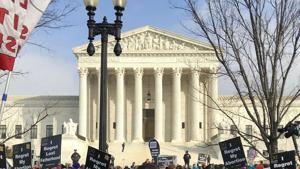
The U.S. Supreme Court’s ruling in Mirabelli v. Olson deciding against California’s law that allowed for gender transitions of school children without parental knowledge has met with commendation from advocacy groups and law firms, with a legal counsel calling the decision one of the “biggest parental rights wins” in a generation.
Chief legal affairs officer at think tank America First Policy Institute Leigh Ann O’Neill told The Center Square that she hopes “to see these policies where they belong – in the waste bin of history.”
“Secrecy policies like the ones used by California schools drive a wedge between parents and their children,” O’Neill said.
“Teachers and administrators are undermining parents’ right to be the primary decision makers for their children,” O’Neill said. “The Supreme Court has signaled its clear understanding of the urgency of this case.”
President of advocacy group the American Principles Project Terry Schilling told The Center Square that “the Supreme Court recognizes what every parent knows in their heart: gender ideology violates the rights of children and their families.”
“Gavin Newsom Democrats waged a war against common sense and parents, and they lost,” Schilling said.
Schilling emphasized that “lawmakers cannot merely rely on the courts to protect families. Parents need lawmakers to step up and pass nationwide bans on the poison of child sex changes and gender ideology running rampant in our education and medical establishment.”
Vice president and legal fellow at education restoration group Defending Education stressed to The Center Square the importance of parental rights as it pertains to the Supreme Court’s ruling.
“The parental right, rooted in biology and recognized for millennia, is the cornerstone of any society,” Perry said. “We sacrifice or neglect that right at our peril.”
“Parental rights are both natural and pre-political,” Perry said. “They predate the Constitution and government itself, and when state agencies appoint themselves the arbiters of the future of our minor children, our society suffers greatly for it.”
Perry stated that “in Mirabelli v. Olson, the Court reinstated a victory for the parents from the trial court which prohibited ‘misleading parents about their children’s gender presentation’ and required schools to follow parents’ instructions regarding the names and pronouns that children use.”
Perry said however that “because this was an emergency docket disposition that related only to one case out of California – the ruling will have limited practical effect.”
“This was a victory for the California parents – but a procedural one, only,” Perry said. “The parents will now return to the lower court and continue to litigate on the policy itself, while its operation is halted for the time being.”
“It is, however, a positive sign of the Court’s desire to wade in to the increasing conflict between parents and schools on gender secrecy policies,” Perry said.
Senior Council at nonprofit law firm Becket Adele Keim called the Supreme Court case “one of the biggest parental rights wins in a generation.”
“The Supreme Court reaffirmed that parents – not the state – have primary authority over their kids’ upbringing and education,” Keim told The Center Square.
“This means that parents have the right not to be shut out of decisions relating to their kids’ mental health, which is what California’s gender transition secrecy policies did here,” Keim said.
“The Supreme Court held that parents don’t forfeit that right when they send their kids to public school,” Keim said.
Keim told The Center Square that “a liberal society like ours recognizes that kids don’t belong to the state,” but to parents.
“A healthy society flourishes when schools and governments work with parents, not against them,” Keim said. “At a minimum, that means not keeping parents in the dark about their kids’ mental health, like California did here.”
On Monday, the Supreme Court ruled “in favor of plaintiffs in a lawsuit against a California law that allowed public schools to conceal a student’s ‘gender transitions’ from their parents,” The Center Square reported.
As Adele Keim told The Center Square, the case – Mirabelli v. Olson – “builds on Becket’s win in Mahmoud v. Taylor last year, where the Court held that parents in Maryland had the right to opt their children out of storybooks that pushed one-sided ideology on gender and sexuality and conflicted with the families’ religious beliefs.”
“These rulings make it clear that American parents don’t forfeit their rights when they send their kids to public school,” Keim said.
Veteran suicide rate remains high despite spending millions

Veterans die by suicide at roughly twice the civilian rate, despite the Department of Veterans Affairs spending more than $500 million a year to address the problem.
In 2023, the rate of suicide for veterans was 35.2 per 100,000, up from 34.7 per 100,000 in 2022, according to the most recent figures from the VA. By comparison, the national suicide rate was 14.1 per 100,000, according to the U.S. Centers for Disease Control and Prevention.
Jim Whaley, a retired U.S. Army Lieutenant Colonel and CEO of Mission Roll Call, told The Center Square that official government figures may not fully capture the problem, suggesting the data undercounts the true scope. He also said the government has spent a millions on prevention with lackluster results.
“A lot of money has gone into suicide prevention, and it really hasn’t worked,” he said.
Whaley called for a national summit of veterans groups to address the issue. He said that in addition to the big, national organizations, small local groups need to be a part of the solution.
He also said the goal should be zero veteran suicides.
“Let’s not just try to reduce it,” he told The Center Square. “Let’s have a bold goal.”
Younger veterans, men, those with mental health problems and substance abuse problems are among those with the highest risks. Whaley said another difficult time can be during the transition from the military to civilian life.
Homelessness is another factor, Whaley said. While the two issues may seem separate, they are often linked. Homelessness, Whaley said, can be a path to suicide.
VA Secretary Doug Collins noted that his department is focused on solutions.
“Veteran suicide has been a scourge on our nation for far too long,” he said. “Most Veterans who die by suicide were not in recent VA care, so making it easier for those who have worn the uniform to access the VA benefits they have earned is key.
Collins also said the department will, for the first time, take a look at how well the programs it already has are working.
He said it was “a serious effort to track the efficacy of the hundreds of millions the department spends per year in this area to ensure we have real solutions, not just rhetoric.”
BlackRock summit to focus on workforce needed for U.S. infrastructure boom

A coalition of government officials, corporate executives, and labor leaders is gathering in Washington next week to address what many see as the biggest obstacle to a new wave of U.S. infrastructure investment: finding enough skilled workers to build it.
BlackRock and Global Infrastructure Partners will host a U.S. Infrastructure Summit in Washington, D.C., on Wednesday, March 11. The one-day event will bring together policymakers, business leaders, and labor representatives to discuss how the country can deliver major infrastructure projects while also expanding the skilled trades workforce needed to support them.
The issue has grown more urgent as billions of dollars in private investment flow into sectors such as semiconductors, energy, and artificial intelligence.
The Trump administration has attracted trillions of dollars in private investment commitments tied to infrastructure development and advanced manufacturing. However, those projects require a large workforce of electricians, construction workers, technicians, and other skilled trades.
BlackRock research estimates that infrastructure development alone could create hundreds of thousands of new skilled trade jobs over the next decade.
The summit’s speaker list reflects a broad coalition forming around the workforce challenge.
Participants include U.S. Interior Secretary Doug Burgum, U.S. Transportation Secretary Sean Duffy, and U.S. Energy Secretary Chris Wright. A bipartisan group of U.S. senators also are scheduled to attend, including Sen. Mark Warner, D-Va., Sen. Steve Daines, R-Mont., Sen. Catherine Cortez Masto, D-Nev., Sen. Todd Young, R-Ind., and former Sen. Markwayne Mullin, R-Okla., President Donald Trump’s pick to succeed Kristi Noem as Department of Homeland Security secretary.
Corporate leaders scheduled to appear include Chevron CEO Mike Wirth, UPS CEO Carol Tomé, and NextEra Energy CEO John Ketchum. Labor leaders such as Teamsters General President Sean O’Brien and North America’s Building Trades Unions President Sean McGarvey will participate as well.
Policy experts from across the political spectrum will also speak. That includes American Compass founder Oren Cass and Progressive Policy Institute senior advisor Bruno Manno.
The Trump administration has pursued several workforce initiatives in recent months to address the labor shortage.
In April 2025, President Donald Trump signed an executive order to prepare Americans for skilled trade jobs. Congress later approved Workforce Pell Grants, which extend federal financial aid to short-term job training programs. The administration released “America’s Talent Strategy,” a plan to better align education programs with workforce needs.
Officials have also set a goal of surpassing one million active registered apprentices nationwide.
Private companies have begun experimenting with workforce agreements to attract workers to expanding industries.
Last year, in the rail sector, Union Pacific and the SMART-TD union announced a “Jobs for Life” agreement guaranteeing lifetime employment for certain union workers following a proposed merger involving Norfolk Southern.
Supporters say the agreement demonstrates how companies and labor groups may find common ground when industries are growing and skilled workers are in high demand.
Summit organizers say the goal of the Washington gathering is to bring together leaders from across government, business, and labor to determine how the country can translate investment commitments into real projects and long-term economic growth.
Whether that coalition can turn shared concerns into coordinated action remains unclear.