Posts by digitalgrandpa
After prison sentence, engineer collects nearly $1.5M from same state agency he was convicted of defrauding

Environmental engineer Michael Keebler has collected nearly $1.5 million from the Illinois EPA through new business entities despite a prior federal prison sentence for defrauding the same agency’s leaking underground storage tank fund.
Read MoreLegal experts anticipate SCOTUS will overturn drug user gun ban
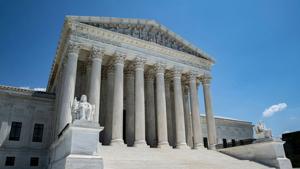
Legal experts anticipate the U.S. Supreme Court will strike down a law barring unlawful drug users from possessing firearms.
On Monday, justices of the U.S. Supreme Court heard arguments in U.S. v. Hemani, a case challenging a law that prohibits a person who “is an unlawful user of or addicted to any controlled substance” from possessing a firearm.
Lawyers for Ali Hemani, a Texas man who was found possessing a gun, marijuana and cocaine, argued the law violated his Second Amendment rights. The Trump administration filed a petition to the Supreme Court to hear the case last year.
During the arguments, a majority of justices appeared skeptical of the law and the U.S. government’s petition to challenge it. The case came out of a standard developed from New York Rifle and Pistol Association, Inc. v. Bruen, that required modern gun laws be consistent with the historical tradition of firearm regulation.
The U.S. government argued this tradition applied in U.S. v. Hemani, based on founding era restrictions on “drunkards” participation in civil life. However, a majority of justices did not appear to be convinced of this argument.
Hayley Proctor, a professor of law at Notre Dame University, said many legal experts expected the majority of justices to be on the side of the government.
“The argument really dispelled that impression,” Proctor told The Center Square. “The court was asking very difficult questions of the government.”
The justices posed several hypotheticals of when an individual uses drugs unlawfully. Justice Amy Coney Barrett mentioned an example of a woman who uses her husband’s prescription Ambien to sleep.
“There can’t be a judgment there that simply using Ambien makes you dangerous,” Proctor said. “Unlawfulness is not the same thing as dangerousness.”
Lawyers for the U.S. government also argued the law could shift to only disarm individuals who possess Schedule I or Schedule II drugs. This would include marijuana, heroin, fentanyl and morphine. Proctor said relying on a federal scheduling to determine the law could be difficult because marijuana is being considered for rescheduling.
“The federal government has not fully enforced federal law on marijuana,” Proctor said. “So that plays into it.”
Lawyers for the Trump administration also argued that unlawful drug users pose a similar public safety threat as drunkards as the founding era did. However, legal experts said the justices were not convinced of this argument either.
“I don’t know that the reliance on the commitment laws, the vagrancy laws and the surety laws that the government seems to rely on here really captures the facts of this case and I think that’s why they struggled a lot with the questioning,” said F. Lee Francis, professor of law at the Widener Law Commonwealth.
The administration also pointed to founding era laws that disarmed British loyalists for rebellion against the colonies. Marc Levin, chief policy counsel at Right on Crime, said those arguments did not apply either, even though national security could be a concern in these kinds of cases.
“I kind of empathize to some degree with [the government’s] situation because it is really difficult to meet the standard that was set in Bruen, but I think it was designed that way,” Levin said.
Francis and Levin both pointed out that Justice Samuel Alito appeared to be in favor of the government’s argument in the case but said he appeared to be in the minority. Levin predicted the court would rule 8-1 to strike down the law and Francis guessed it would come out to 7-2, with Chief Justice John Roberts possibly joining Alito.
“I agree that the chief is on Alito’s side,” Levin said. “He likes to be part of the majority, so he might be able to find his way.”
The court is expected to release a decision in the consequential Second Amendment case by July.
Parents’ rights advocates hail SCOTUS ruling against secret gender transitions
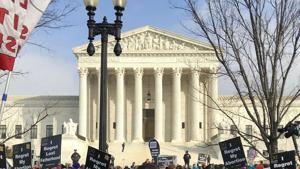
The U.S. Supreme Court’s ruling in Mirabelli v. Olson deciding against California’s law that allowed for gender transitions of school children without parental knowledge has met with commendation from advocacy groups and law firms, with a legal counsel calling the decision one of the “biggest parental rights wins” in a generation.
Chief legal affairs officer at think tank America First Policy Institute Leigh Ann O’Neill told The Center Square that she hopes “to see these policies where they belong – in the waste bin of history.”
“Secrecy policies like the ones used by California schools drive a wedge between parents and their children,” O’Neill said.
“Teachers and administrators are undermining parents’ right to be the primary decision makers for their children,” O’Neill said. “The Supreme Court has signaled its clear understanding of the urgency of this case.”
President of advocacy group the American Principles Project Terry Schilling told The Center Square that “the Supreme Court recognizes what every parent knows in their heart: gender ideology violates the rights of children and their families.”
“Gavin Newsom Democrats waged a war against common sense and parents, and they lost,” Schilling said.
Schilling emphasized that “lawmakers cannot merely rely on the courts to protect families. Parents need lawmakers to step up and pass nationwide bans on the poison of child sex changes and gender ideology running rampant in our education and medical establishment.”
Vice president and legal fellow at education restoration group Defending Education stressed to The Center Square the importance of parental rights as it pertains to the Supreme Court’s ruling.
“The parental right, rooted in biology and recognized for millennia, is the cornerstone of any society,” Perry said. “We sacrifice or neglect that right at our peril.”
“Parental rights are both natural and pre-political,” Perry said. “They predate the Constitution and government itself, and when state agencies appoint themselves the arbiters of the future of our minor children, our society suffers greatly for it.”
Perry stated that “in Mirabelli v. Olson, the Court reinstated a victory for the parents from the trial court which prohibited ‘misleading parents about their children’s gender presentation’ and required schools to follow parents’ instructions regarding the names and pronouns that children use.”
Perry said however that “because this was an emergency docket disposition that related only to one case out of California – the ruling will have limited practical effect.”
“This was a victory for the California parents – but a procedural one, only,” Perry said. “The parents will now return to the lower court and continue to litigate on the policy itself, while its operation is halted for the time being.”
“It is, however, a positive sign of the Court’s desire to wade in to the increasing conflict between parents and schools on gender secrecy policies,” Perry said.
Senior Council at nonprofit law firm Becket Adele Keim called the Supreme Court case “one of the biggest parental rights wins in a generation.”
“The Supreme Court reaffirmed that parents – not the state – have primary authority over their kids’ upbringing and education,” Keim told The Center Square.
“This means that parents have the right not to be shut out of decisions relating to their kids’ mental health, which is what California’s gender transition secrecy policies did here,” Keim said.
“The Supreme Court held that parents don’t forfeit that right when they send their kids to public school,” Keim said.
Keim told The Center Square that “a liberal society like ours recognizes that kids don’t belong to the state,” but to parents.
“A healthy society flourishes when schools and governments work with parents, not against them,” Keim said. “At a minimum, that means not keeping parents in the dark about their kids’ mental health, like California did here.”
On Monday, the Supreme Court ruled “in favor of plaintiffs in a lawsuit against a California law that allowed public schools to conceal a student’s ‘gender transitions’ from their parents,” The Center Square reported.
As Adele Keim told The Center Square, the case – Mirabelli v. Olson – “builds on Becket’s win in Mahmoud v. Taylor last year, where the Court held that parents in Maryland had the right to opt their children out of storybooks that pushed one-sided ideology on gender and sexuality and conflicted with the families’ religious beliefs.”
“These rulings make it clear that American parents don’t forfeit their rights when they send their kids to public school,” Keim said.
Veteran suicide rate remains high despite spending millions

Veterans die by suicide at roughly twice the civilian rate, despite the Department of Veterans Affairs spending more than $500 million a year to address the problem.
In 2023, the rate of suicide for veterans was 35.2 per 100,000, up from 34.7 per 100,000 in 2022, according to the most recent figures from the VA. By comparison, the national suicide rate was 14.1 per 100,000, according to the U.S. Centers for Disease Control and Prevention.
Jim Whaley, a retired U.S. Army Lieutenant Colonel and CEO of Mission Roll Call, told The Center Square that official government figures may not fully capture the problem, suggesting the data undercounts the true scope. He also said the government has spent a millions on prevention with lackluster results.
“A lot of money has gone into suicide prevention, and it really hasn’t worked,” he said.
Whaley called for a national summit of veterans groups to address the issue. He said that in addition to the big, national organizations, small local groups need to be a part of the solution.
He also said the goal should be zero veteran suicides.
“Let’s not just try to reduce it,” he told The Center Square. “Let’s have a bold goal.”
Younger veterans, men, those with mental health problems and substance abuse problems are among those with the highest risks. Whaley said another difficult time can be during the transition from the military to civilian life.
Homelessness is another factor, Whaley said. While the two issues may seem separate, they are often linked. Homelessness, Whaley said, can be a path to suicide.
VA Secretary Doug Collins noted that his department is focused on solutions.
“Veteran suicide has been a scourge on our nation for far too long,” he said. “Most Veterans who die by suicide were not in recent VA care, so making it easier for those who have worn the uniform to access the VA benefits they have earned is key.
Collins also said the department will, for the first time, take a look at how well the programs it already has are working.
He said it was “a serious effort to track the efficacy of the hundreds of millions the department spends per year in this area to ensure we have real solutions, not just rhetoric.”
BlackRock summit to focus on workforce needed for U.S. infrastructure boom

A coalition of government officials, corporate executives, and labor leaders is gathering in Washington next week to address what many see as the biggest obstacle to a new wave of U.S. infrastructure investment: finding enough skilled workers to build it.
BlackRock and Global Infrastructure Partners will host a U.S. Infrastructure Summit in Washington, D.C., on Wednesday, March 11. The one-day event will bring together policymakers, business leaders, and labor representatives to discuss how the country can deliver major infrastructure projects while also expanding the skilled trades workforce needed to support them.
The issue has grown more urgent as billions of dollars in private investment flow into sectors such as semiconductors, energy, and artificial intelligence.
The Trump administration has attracted trillions of dollars in private investment commitments tied to infrastructure development and advanced manufacturing. However, those projects require a large workforce of electricians, construction workers, technicians, and other skilled trades.
BlackRock research estimates that infrastructure development alone could create hundreds of thousands of new skilled trade jobs over the next decade.
The summit’s speaker list reflects a broad coalition forming around the workforce challenge.
Participants include U.S. Interior Secretary Doug Burgum, U.S. Transportation Secretary Sean Duffy, and U.S. Energy Secretary Chris Wright. A bipartisan group of U.S. senators also are scheduled to attend, including Sen. Mark Warner, D-Va., Sen. Steve Daines, R-Mont., Sen. Catherine Cortez Masto, D-Nev., Sen. Todd Young, R-Ind., and former Sen. Markwayne Mullin, R-Okla., President Donald Trump’s pick to succeed Kristi Noem as Department of Homeland Security secretary.
Corporate leaders scheduled to appear include Chevron CEO Mike Wirth, UPS CEO Carol Tomé, and NextEra Energy CEO John Ketchum. Labor leaders such as Teamsters General President Sean O’Brien and North America’s Building Trades Unions President Sean McGarvey will participate as well.
Policy experts from across the political spectrum will also speak. That includes American Compass founder Oren Cass and Progressive Policy Institute senior advisor Bruno Manno.
The Trump administration has pursued several workforce initiatives in recent months to address the labor shortage.
In April 2025, President Donald Trump signed an executive order to prepare Americans for skilled trade jobs. Congress later approved Workforce Pell Grants, which extend federal financial aid to short-term job training programs. The administration released “America’s Talent Strategy,” a plan to better align education programs with workforce needs.
Officials have also set a goal of surpassing one million active registered apprentices nationwide.
Private companies have begun experimenting with workforce agreements to attract workers to expanding industries.
Last year, in the rail sector, Union Pacific and the SMART-TD union announced a “Jobs for Life” agreement guaranteeing lifetime employment for certain union workers following a proposed merger involving Norfolk Southern.
Supporters say the agreement demonstrates how companies and labor groups may find common ground when industries are growing and skilled workers are in high demand.
Summit organizers say the goal of the Washington gathering is to bring together leaders from across government, business, and labor to determine how the country can translate investment commitments into real projects and long-term economic growth.
Whether that coalition can turn shared concerns into coordinated action remains unclear.
Debate grows as states consider teacher strike bans

Many states are considering new policies affecting teachers’ ability to strike or participate in protests, and education officials and labor advocates continue to debate the legality of teacher strikes.
The strikes are banned or heavily restricted in roughly 38 states and Washington, D.C. In states such as Georgia, North Carolina, South Carolina, Texas and Virginia, legislation explicitly prevents teachers from striking.
Twelve states explicitly allow teacher strikes, including Alaska, California, Colorado, Hawaii, Illinois, Louisiana, Minnesota, Montana, Ohio, Oregon, Pennsylvania and Vermont. In a few states, such as South Carolina, Utah and Wyoming, the legality of strikes is not clearly defined in statutes or case law.
In Arizona, the proposed House Bill 2313 would prohibit public school teachers from striking or participating in organized work stoppages. It has drawn criticism from union officials.
Geneva Fuentes, communications director for the Arizona Education Association, the state’s largest teachers’ union, warned that the bill could have unintended consequences for school districts.
“HB 2313 is a badly drafted bill that would withhold funding from school districts if educators speak to each other about illness and other legitimate absences from work,” Fuentes told The Center Square in an email. “In reality, the broader effect of this bill would be to strip much-needed funding from our students and prevent educators from communicating with each other about basic issues that affect student learning.”
Fuentes added that the bill does nothing to address Arizona’s teacher recruitment and retention challenges.
“Proposals like HB 2313 only add to existing pressures and do nothing to address the real challenges facing Arizona schools,” Fuentes said. “Strong public schools require collaboration between policymakers and educators. Protecting students means protecting stable funding for their schools, and retaining educators starts with respecting their profession.”
Because taxpayer dollars fund schools and teacher salaries, education officials argue that strikes could disrupt classroom instruction.
In an exclusive interview with The Center Square, Arizona Superintendent of Public Instruction Tom Horne said teachers have the right to protest but should not do so during school hours.
“They have a First Amendment right to protest, but they can do it after school,” Horne said. “They don’t have to use it as a reason not to do the work that the taxpayers are paying them for.”
Horne said he supports HB 2313, arguing that schools exist to educate students using taxpayer funds.
“The taxpayers are paying money, and the money goes into salaries for these teachers to teach the kids,” he added. “So if they walk out during school hours to protest, they’re stealing from the taxpayers. They’re getting money without doing the work.”
The debate comes as educators’ political activity has raised concerns in other states.
The Texas Education Agency issued guidance after hundreds of students in several major cities joined national walkouts protesting federal immigration enforcement earlier this year.
The TEA warned that teachers who aid or encourage students to leave class for such protests could face investigation or potential sanctions, including licensure revocation.
The Center Square reached out to the TEA for a comment but has not received a response.
Texas Attorney General Ken Paxton later opened investigations into several school districts for facilitating and failing to keep students safe and accountable during various student protests against lawful immigration enforcement.
“I will not allow Texas schools to become breeding grounds for the radical Left’s open borders agenda,” the Republican attorney general said in a statement. “Let this serve as a warning to any public school official or employee who unlawfully facilitates student participation in protests targeting our heroic law enforcement officers: my office will use every legal tool available to hold you accountable.”
Meanwhile, lawmakers in Maryland are considering legislation that would expand teachers’ labor rights. House Bill 1492, introduced by more than 20 Democratic lawmakers, would repeal the state’s ban on teachers’ union strikes and allow public school employees, such as teachers and librarians, to strike without retaliation.
Teacher strikes are illegal in Washington state, but the law does not specify penalties, and strikes continue to occur across the state, The Center Square reported.
In 2025, state Democrats approved Senate Bill 5041, allowing striking workers to receive unemployment benefits for up to six weeks.
However, a 2006 formal opinion by then Attorney General Rob McKenna stated that “state and local public employees, including teachers, have no legally protected right to strike.”
The Center Square reported in January that federal officials recently arrested three people in connection with a protest that disrupted a Sunday church service in St. Paul, Minnesota. One of those arrested, Chauntyll Louisa Allen, serves as clerk of the St. Paul Board of Education.
What to know about COGFA’s Friday state revenue update
An update released Friday shows current fiscal year revenue is expected to be about 1.2% higher than what lawmakers budgeted for. For the upcoming year, new projections are now more bullish than what Gov. JB Pritzker proposed, according to the Commission on Government Forecasting and Accountability.
Read MoreAmerican gasoline prices increase most in one week since 2020

American gasoline prices continued to rise on Friday and are up the most of any week since 2022.
Iran widened attacks on energy-producing countries near its borders and the Strait of Hormuz remains closed to shipping, dashing hopes for a quick resolution to a crisis sending shockwaves through global markets. The United States last Saturday began a military campaign in Iran, one that has continued throughout the week with aggression.
As of 1 p.m. Eastern Saturday, the U.S. national average price for regular gasoline had jumped approximately 43.1 cents per gallon from the same time in the previous week, reaching approximately $3.41 per gallon, according to AAA. The 14% rise from the previous Saturday was the largest weekly increase since March 2022, when Russia’s invasion of Ukraine roiled global energy markets.
Gasoline prices in Indiana rose 44.3 cents during the week while drivers in Florida, Louisiana and Oklahoma had seven-day increases of 43.9 cents, 42.3 cents, and 40.9 cents per gallon, respectively.
Meanwhile, benchmark prices for other key fuels in overseas markets rose even more during the week. In Europe, the price of liquified natural gas – LNG – at the TTF Hub was up about 52% in the week, reaching $15.61 per million British thermal units. In Asia, the Japan-Korea Marker was up 91% in the week $31.65 per million BTU, which compared with $3.20 per million BTU at the Henry Hub in Louisiana, up a modest 6.8% on the week.
Second-term Republican President Donald Trump said in an interview with Reuters late Thursday that the U.S. military operation was his top priority, not higher gasoline prices.
“They’ll drop very rapidly when this is over, and if they rise, they rise, but this is far more important than having gasoline prices go up a little bit,” the president said.
The president reiterated on Friday that a deal with Iran will require “unconditional surrender.” On Thursday, the president said he would be “all for” a ground offensive inside Iran by the region’s Kurdish forces.
GasBuddy head of Petroleum Analysis Patrick De Haan said in an interview Thursday afternoon that prices were surging across a range of fuels that include U.S. gasoline, diesel, and jet fuel as markets realized U.S. naval escorts of oil and gas tankers would not occur immediately.
“Nothing’s moving, and I think that’s why the market suddenly ramped up today,” said De Haan. “In addition, we saw Iran escalate today by launching new missile attacks on Azerbaijan.”
U.S. wholesale jet fuel prices were up by 72% at one point of the day on Thursday, noted De Haan.
“The U.S. Navy will escort ships as soon as reasonable,” Energy Secretary Chris Wright said Friday in an interview on Fox News.
On Tuesday, the president ordered the U.S. Development Finance Corporation to offer political risk insurance and naval convoys for ships transporting energy and other commodities through the Strait of Hormuz and the Persian Gulf.
About 20% of the world’s crude oil passes through the Strait of Hormuz.
Treasury Secretary Scott Bessent said Wednesday on CNBC that U.S. officials will make a “series of announcements” aimed at facilitating shipments of oil, LNG, and other commodities out of the Persian Gulf.
Early Friday afternoon, New York Mercantile Exchange West Intermediate Texas crude oil futures for delivery in April traded at $90.49 per barrel, up $25.28 or 38.8% in the week since the conflict began. This was the largest increase in percentage terms over a seven-day period since oil demand collapsed during the COVID-19 era in 2020.
“There is a lot of volatility in the markets,” said Mike Moncla, president of the Louisianan Oil and gas association. “In general, higher prices are better for the oil and gas industry in Louisiana and elsewhere, but we also need stability and clarity – a year from now this whole thing might be over and a barrel of oil might be back at $60.”
Still, gasoline prices remain relatively inexpensive. In 2022, the year Russia’s invasion of Ukraine pushed global energy prices sharply higher, a gallon of regular grade gasoline averaged $3.88 per gallon and in June peaked at a monthly average of $4.92 per gallon.
“There’s no cheaper liquid in the world than gasoline,” said Moncla. “If you had to fill your tank with milk or Windex or any other liquid out there, I think you’d spent a whole lot more than you do filling your tank with gasoline.”
Lawmakers concerned over taxpayer burden of Iran conflict

As U.S. military operations in Iran continue with no end in sight, lawmakers are debating whether to authorize billions in taxpayer money for the Pentagon.
Though the Trump administration has not yet formally requested supplemental funding, it is expected to do so soon, and the number will likely be in the tens of billions of dollars.
The Department of Defense received over $900 billion in December through the National Defense Authorization Act.
While not all Democratic lawmakers have ruled out providing extra money, many are staunchly against supporting hostilities that Congress did not authorize.
House Budget Committee Ranking Member Brendan Boyle, D-Pa., has requested the Congressional Budget Office provide official estimates of how much a war in Iran could cost under different scenarios.
“The Constitution grants Congress both the power of the purse and the responsibility of declaring war,” Boyle wrote in a letter to CBO. “Congress should ensure we are spending taxpayer dollars to improve the quality of life for the American people, not paying for another endless war in the Middle East.”
Trump said the conflict – which the administration originally touted as a short-term operation – may last more than five weeks.
The DOD has neither confirmed nor denied whether it plans to deploy U.S. troops on the ground in Iran, with Defense Secretary Pete Hegseth telling reporters that the Pentagon will “go as far as we need to go to advance American interests.”
For American taxpayers, that could cost them tens of billions of dollars, according to some estimates.
While the Institute for Policy Studies estimates the U.S. is currently spending roughly $60 million per day on Iran operations, other organizations project much higher numbers. According to calculations by the Center for Strategic and International Studies, the conflict has already cost taxpayers up to $3.7 billion, or roughly $891 million per day.
The federal government racked up record-breaking deficits in fiscal year 2025 and is set to do so again at current spending levels under the second Trump administration.
From November 2025 to February 2026 alone, the U.S. added nearly $700 billion to the national debt, The Center Square reported.
Carterville school employee placed on leave for sexual abuse over a year after FBI received tip

More than a year passed between when the FBI received a tip about alleged sexual abuse involving a Carterville school district employee and when the employee was placed on leave.
Read More