Center Square
DHS silent on number of agents remaining in Twin Cities

In the wake of Operation Metro Surge in the Twin Cities, it is still unclear how many federal immigration agents remain in the area.
In a statement to The Center Square, the U.S. Department of Homeland Security said: “For operational security we do not disclose resources or numbers of personnel on the ground.”
At the time of this story’s publication, DHS had not responded to questions regarding if Operation Metro Surge had actually fully ended or if agents that were a part of it remain in Minnesota.
This comes as reports from local media outlets allege “very little has actually changed in Minnesota,” despite state and local officials like Gov. Tim Walz stating over a week ago that “Metro Surge is ending.”
White House border czar Tom Homan, who was sent to the Twin Cities to help manage the heated situation, announced Feb. 12 that the immigration enforcement operation in Minnesota would end over the following week.
That came more than two months after DHS sent thousands of federal agents to the Twin Cities in an effort called Operation Metro Surge.
During the peak of the operation, the Twin Cities faced nearly-constant public protests. The protests were heightened by the January deaths of Alex Pretti and Renee Good, both of whom were shot by federal agents. Today marks one month since Pretti died.
Homan said in his initial announcement that the pullback of federal forces had already begun.
“A significant drawdown has already been underway this week and will continue to the next week,” he said. “Law enforcement officers drawn down from this surge operation will either return to the duty station or be assigned elsewhere.”
Even at that time, Democrats expressed hesitancy about Homan’s announcement.
“I won’t believe it until they’re actually gone,” said Minnesota Lt. Gov. Peggy Flanagan, who is running for U.S. Senate this year.
Republicans and the Trump administration have applauded Operation Metro Surge as a necessary way to address illegal immigrants living in Minnesota—especially criminals.
Homan said agents successfully apprehended more than 4,000 illegal immigrants, including murderers, sex offenders, national security threats, and gang members, throughout Minnesota as a part of the operation.
Supreme Court strikes down court error in baby food case
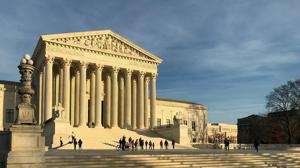
The U.S. Supreme Court, in a unanimous decision, struck down a lower court’s decision preventing parents from suing a baby food manufacturer over tainted products.
The case, Hain Celestial Group v. Palmquist, centers around parents in Texas who fed their child baby food from Whole Foods Market. Later, their child was diagnosed with mental and physical conditions resulting from heavy-metal poisoning.
A report later found that baby foods, including Hain’s, contained elevated levels of toxic metals. Sarah and Grant Palmquist, the Texas parents, sued Hain and Whole Foods in state court.
Hain, a company based in Delaware, removed the case to federal court. U.S. law allows federal courts to handle disputes likely exceeding $75,000 in damages when it is between entities in different states. However, Whole Foods was based in Texas and gave the Palmquist’s standing to keep the lawsuit in state court.
“The Palmquists exercised their right to choose a state forum by purposefully and properly joining a nondiverse defendant against whom they could not proceed in federal court, and diligently asserted that right by promptly moving to remand the case to state court,” Justice Sonia Sotomayor wrote in the court’s opinion.
Justice Clarence Thomas filed a concurring opinion in support of Sotomayor’s opinion. He pointed to the court’s historical interpretation of claims in state and federal courts.
“This Court has always interpreted §1332(a)’s language ‘to require ‘complete diversity,’ meaning that a federal court can exercise jurisdiction only if no plaintiff shares state citizenship with any defendant,” Thomas wrote.
Thomas also called on the high court to revisit the ‘improper-joinder doctrine,’ which allows federal courts to disregard the citizenship of plaintiffs in cases where there is a lack of diversity.
“Federal courts sitting in diversity likely cannot dismiss nondiverse parties based on their view of the merits of the claims against those parties,” Thomas wrote. “Doing so appears unfaithful to Congress’s limits on our diversity jurisdiction and inconsistent with this Court’s precedents.”
If the court were to revisit this precedent, it could fundamentally alter high profile lawsuits across state lines. This could put national companies at risk for large financial burdens similar to this baby food case.
Illegal border crosser apprehensions drop 96% at southwest border in a year

In one year, illegal border crossings dropped by 96% at the southwest border, an historic shift from record highs during the Biden administration.
In January, 34,626 illegal border crosser apprehensions were reported nationwide, up from numbers hovering around 30,000 in October, November and December.
The January total is a significant drop from 242,071 in January 2024, 209,151 in January 2023 and 81,479 in January 2025, according to U.S. Customs and Border Protection data.
At the southwest border, apprehensions totaled 9,726 in January, down from 61,445 in January 2025, an 84% decrease over the year. The numbers also represent a dramatic drop from 176,195 in January 2024 and 157,358 in January 2023, according to the data.
At the northern border, 4,261 illegal border crosser apprehensions were recorded in January despite harsh winter conditions. In November, 3,583 were apprehended at the northern border, according to the data.
January’s northern border total represents a significant downward trajectory from 4,976 in January 2025, 13,390 in January 2023, and a high of 15,916 in January 2024. The northern border saw unprecedented numbers of illegal border crossers and crime under the Biden administration, The Center Square reported. For years, northern U.S. states and Indian reservations have been impacted by transnational crime, human and drug trafficking orchestrated by Mexican cartels and Chinese Triad operating in Canada, The Center Square reported.
Nationwide, encounters averaged 1,117 a day in January, 58% lower than the 2,628 daily average from January 2025, CBP said in a statement.
Border Patrol agents make apprehensions between ports of entry. CBP Office of Field Operations officers make apprehensions at ports of entry. According to the data, CBP OFO officers apprehended 26,749 illegal border crossers and Border Patrol agents apprehended 7,877 in January, bringing the total to 34,626 for the month, according to the data.
The data contradicts claims repeatedly made by Department of Homeland Security Kristi Noem that no one is illegally entering the country. The claims date to last August when she stated at a cabinet meeting, “We’ve gone three months in a row now with zero illegal aliens coming into this country.”
By last July, the Trump administration had released 13,000 inadmissible foreign nationals into the country, according to CBP data, The Center Square reported. Texas Department of Public Safety officers have also been apprehending roughly 100 illegal border crossers a week, all gotaways, The Center Square reported.
Similar to the Biden administration, the Trump administration is not publicly reporting gotaway data.
Gotaways are the official CBP term for foreign nationals who illegally enter the country between ports of entry to evade capture and don’t return to Mexico or Canada. At least more than two million known and reported gotaways illegally entered the country during the Biden administration, The Center Square exclusively reported. The actual number is unknown and expected to be much higher because not all gotaways are reported.
The massive drop in illegal entries represent “historic results,” CBP Commissioner Rodney Scott said. “Border Patrol apprehensions are down 96% from the previous administration’s monthly average,” he said, referring to the southwest border. “This historic reduction reflects the dedication of our agents and officers to securing our borders, protecting our communities, and upholding the rule of law.”
He also points out that the number of apprehensions made in January were 91% below the peak of 370,883 apprehended during the Biden administration.
Border Patrol agents apprehensions at the southwest border were also 96% lower than the monthly average of the Bidem administration and less than the total apprehended in six days in January 2025, he added.
Over the year, Border Patrol agents apprehended 196 illegal border crossers a day along the southwest border, 96% lower than the daily average apprehended during the Biden administration. In the last nine months, they also released zero illegal border crossers into the U.S. through parole programs, he added.
Group says Congress must stop U.S. strikes on suspected drug boats

A human rights group called for Congress to stop U.S. military strikes on suspected drug boats, a tactic that President Donald Trump says is saving American lives.
Amnesty International USA claims that more than 150 people have been murdered at sea. The Trump administration says it’s using the strikes to kill suspected narcoterrorists smuggling drugs to America.
“It is well past time for Congress to act to stop these killings,” said Amnesty International USA’s National Director for Government Relations Amanda Klasing. “As a whole, Congress has abdicated its duty to hold this administration to account for its actions.”
On Monday, U.S. Southern Command posted video of a military strike on a suspected drug boat that killed three people.
“Intelligence confirmed the vessel was transiting along known narco-trafficking routes in the Caribbean and was engaged in narco-trafficking operations,” U.S. Southern Command said in a social media post.
On Feb. 23, at the direction of #SOUTHCOM commander Gen. Francis L. Donovan, Joint Task Force Southern Spear conducted a lethal kinetic strike on a vessel operated by Designated Terrorist Organizations. Intelligence confirmed the vessel was transiting along known… pic.twitter.com/XUHImPAZik— U.S. Southern Command (@Southcom) February 23, 2026
This operation was one of many within U.S. Southern Command’s Operation Southern Spear counter-narco-terrorism campaign. The War Department has publicly reported more than 40 strikes resulting in at least 137 fatalities.
The War Department has not estimated the value of the drugs destroyed in the strikes or the cost of the drug campaign. Even as the military carries out strikes on some vessels, the U.S. Coast Guard continues to seize drugs in other operations without killing those on board.
Democrats, some Republicans, and some international organizations have criticized the U.S. military strikes. However, Congress has not passed a measure requiring Trump to secure Congressional authorization before launching strikes.
Republican House Speaker Mike Johnson has said the Trump administration is addressing a national issue. Johnson previously compared Trump’s military actions to President Barack Obama’s strikes against overseas terrorists during his time in the White House. He said that Obama carried out more than 500 drone strikes that killed at least 3,700 people, including Americans, from 2009 to 2015.
Trump says the strategy is working and saving lives. The U.S. president said each sunken boat has saved 25,000 American lives from overdoses.
The president has said he could use the military to stop drug smuggling in other areas of the world, including the U.S.-Mexico border, but has yet to take action.
Supreme Court halts mail delivery lawsuit
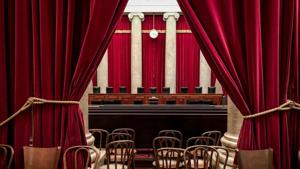
The U.S. Supreme Court, in a 5-4 decision, upheld a law that shields the United States Postal Service from liability when mail is intentionally not delivered.
The case, USPS v. Konan, centers around a Texas woman who sued the U.S. Postal Service for allegedly withholding her mail and interfering with its delivery. Lebene Konan cited the Federal Tort Claims Act, a law that allows U.S. citizens to sue the federal government for negligent or wrongful acts of federal employees.
However, the Federal Tort Claims Act contains several exceptions. The postal exception, relevant in this case, gives the United States immunity from “all claims arising out of the loss, miscarriage, or negligent transmission of letters or postal matters.”
“The Court declines to limit ‘miscarriage’ to negligent failures, as no dictionaries cited impose this limitation, and ordinary speakers used ‘miscarriage’ to refer to problems with mail caused by intentional misconduct, such as when mail was stolen or burned,” Justice Clarence Thomas wrote.
Thomas and Justices Brett Kavanaugh, Amy Coney Barrett, Samuel Alito and Chief Justice John Roberts made up the majority of the court. Justices Sonia Sotomayor, Ketanji Brown Jackson, Elena Kagan and Neil Gorsuch dissented.
Sotomayor, who wrote the court’s dissenting opinion, cited claims of racism Konan made during the court hearing as to why her mail was not delivered by the USPS. She called on Congress to give the postal service a general exception from lawsuits like this in the future.
“Ultimately, this regime is the consequence of Congress’s choice to have the exception turn on certain types of misconduct, rather than providing the Postal Service with a blanket exception,” Sotomayor wrote. “It is not the role of the Judiciary to supplant the choice Congress made because it would have chosen differently.”
However, the majority led by Thomas argued that Konan did not provide the proper information to the post office without for the mail to be delivered.
“When Congress enacted the FTCA in 1946, the ‘miscarriage’ of mail ordinarily included any failure of mail to properly arrive at its intended destination,” Thomas wrote. “Konan would limit ‘miscarriage’ to unintentional failures or failures where the mail went to the wrong address. Neither limitation is well founded.”
Trump, Democrats to make their case at State of the Union
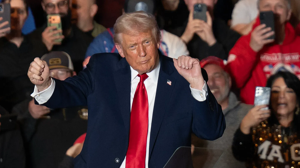
President Donald Trump is set to deliver his second State of the Union Address of his second term Tuesday evening, when he is expected to highlight his accomplishments during his first year back in office and spotlight goals for the coming year.
During an event at the White House Monday, Trump teased that his address is “going to be a long speech, because we have so much to talk about.”
The president is expected to highlight tax cuts, lower gas prices, a dramatic decline in illegal border crossings, lower crime rates, lower drug costs, international peace deals, and trade deals – despite presiding over the longest government shutdown in history.
Trump’s address comes as the federal government is in the midst of a partial shutdown that is affecting the Department of Homeland Security.
Several Democratic lawmakers have announced their intention to boycott the address; it’s unclear if other Democratic lawmakers will protest the president in the House Gallery. Last year, several held paddles to make statements.
The president will likely make the economy one of his top priorities, highlighting the passage and signing of the Big, Beautiful Bill last summer. In briefings and news conferences, Trump and his administration often point to higher tax credits and a tax break for tipped workers as well as a healthy stock market, as evidence that his economic policies are winning.
Among the top issues Trump will likely spotlight are crime and immigration. During the past year, the president has deployed the National Guard to select major U.S. cities, including Washington, D.C., to tackle crime.
The president will likely spend part of his speech trying to sell his economic agenda, including his use of tariffs.
Trump could also use the opportunity to push his Senate Republicans to eliminate the filibuster to pass key legislation, such as election security measures.
While Trump will likely point to lower gas prices and lower taxes, Democrats have been pushing affordability.
Democrats have tapped newly inaugurated Gov. Abigail Spanberger, D-Va., to deliver the Democratic response to Trump’s address Tuesday night, with Sen. Alex Padilla, D-Calif., to deliver a Democratic response in Spanish.
The address comes ahead of a critical mid-term election, where both Republicans and Democrats have a lot riding on their messaging.
It’s unclear who the president will be hosting in the gallery Tuesday evening. However, multiple reports indicate that the men’s U.S. hockey team, which just brought home the gold, has been invited to attend.
Trump administration considers selling some student debts to private sector
The Trump administration confirmed Monday that it is considering selling portions of the nearly $1.7 trillion federal student loan portfolio to private sector companies.
While the private investors would gain ownership and collection rights over the loans, the original federal terms of the loans would theoretically remain unchanged.
While controversial, a sale could be conducted legally if certain rules are followed. Under the Higher Education Act of 1965, the Secretary of Education – with the consultation of the Treasury department – may sell existing Direct Loans, so long as the sale imposes no net cost to the federal government.
Supporters of the idea say that a sale would provide an immediate revenue boost to the federal government and reduce federal administrative burdens. They also suggest that private management could potentially lead to more efficient and innovative refinancing plans.
Critics, however, are concerned that a sale could involve conflicts of interest and possibly jeopardize federally granted borrower protections, as well as pave the way for fully privatized lending.
“Instead of helping Americans drowning with student loan debt, Trump is thinking up ways to make life worse for borrowers,” Sen. Elizabeth Warren, D-Mass., who requested an explanation of the Education department, said Monday. “If the Trump administration cared about working-class families, it would stop its ridiculous plan to sell out families to Wall Street.”
Department of Education Under Secretary Nicholas Kent told Warren that while the department has already met with stakeholders “to discuss ideas,” it so far “has not taken any final actions or made final decisions regarding selling all or part of the student loan portfolio.”
“We continue to explore all viable options to reduce the burden on taxpayers by restoring the health of the portfolio,” Kent added. “The Department remains focused on helping borrowers return to repayment and escape the albatross of delinquency and default.”
The sale discussions are the latest move by the Trump administration to tackle the so-called student debt crisis while simultaneously shrinking the federal government’s role in national education.
Student borrowers are already facing changes to their federal loan repayment plans, due to provisions in Republicans’ budget reconciliation bill.
Starting this July, new borrowers will have only two loan repayment plan options, the Standard Repayment Plan or the Repayment Assistance Plan. Borrowers currently on other plans will be phased into one of the two by July 2028, The Center Square reported.
Trump’s newest tariffs could cost U.S. families $600 or more

Consumers and U.S. businesses will continue to pay the bulk of President Donald Trump’s tariffs under an untested federal law likely to spark new legal challenges.
New analysis suggests the average U.S. household would lose $600 to $800 under the president’s most recent tariff plan.
Trump cited section 122 of the Trade Act of 1974 to impose a temporary 15% tariff on imported goods to address balance-of-payments deficits, which occur when more currency leaves the country than enters it.
Trump said the new tariffs would be more powerful than those the Supreme Court found unconstitutional. Most experts said the law was much more limited in scope than the power Trump was used to wielding before the high court’s ruling on Friday.
Trump’s most recent 15% duty on imports would remain in place for 150 days unless extended by Congress.
Like Trump’s tariffs under the 1977 International Emergency Economic Powers Act, no other president has used section 122 to impose tariffs around the world, said Alan Wolff, a senior fellow at the Peterson Institute for International Economics.
“That expiration requirement … poses a political problem for the president. It is highly unlikely that a majority of members of Congress will be willing to reinstate unpopular Trump ‘reciprocal’ tariffs,” the former deputy director-general of the World Trade Organization said in a policy brief. “The tariff issue will, to some degree, figure in every House and Senate electoral race this year if not decided before then.”
Trump initially announced a 10% global tariff on Friday after the Supreme Court decision. He raised that to 15% on Saturday.
On Monday, Trump said he didn’t need Congress’s permission to move forward.
“As President, I do not have to go back to Congress to get approval of Tariffs,” Trump said. “It has already been gotten, in many forms, a long time ago! They were also just reaffirmed by the ridiculous and poorly crafted supreme court decision!”
Even so, Sen. Bernie Moreno, R-Ohio, called for Congress to enact Trump’s tariffs into law.
“SCOTUS’s outrageous ruling handcuffs our fight against unfair trade that has devastated American workers for decades,” he said in a statement. “This betrayal must be reversed and Republicans must get to work immediately on a reconciliation bill to codify the tariffs that had made our country the hottest country on earth!”
Trump’s 15% global tariff could bring some limited relief to consumers because it’s the ceiling under the law Trump used to issue them.
The Yale Budget Lab found that consumers faced an overall average effective tariff rate of 16% before the Supreme Court ruling. After the ruling, it fell to 9.1% before climbing back to 13.7% when Trump imposed Section 122 tariffs.
The Yale Budget Lab also estimated that the Section 122 tariffs would mean a loss of between $600 and $800 for the average U.S. household.
The Supreme Court, divided 6-3, ruled that the International Emergency Economic Powers Act didn’t give Trump expansive tariff powers to tax goods entering the country. Justices Clarence Thomas, Brett Kavanaugh and Samuel Alito dissented. The majority ruled that Trump’s tariffs violated the major questions doctrine, which holds that Congress must speak clearly when it grants significant powers.
“The Framers gave ‘Congress alone’ the power to impose tariffs during peacetime,” Chief Justice John Roberts wrote for the majority.
Treasury Secretary Scott Bessent said Friday the administration will restructure the sweeping import taxes under other legal authorities.
“This administration will invoke alternative legal authorities to replace the IEEPA tariffs,” he said. “We will be leveraging Section 232 and Section 301 tariff authorities that have been validated through thousands of legal challenges.”
U.S. Supreme Court appears skeptical of Cuban land claims
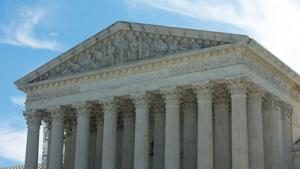
Justices of the U.S. Supreme Court appeared skeptical of Cuban claims to land during two oral arguments on Monday where U.S. companies were seeking to recover decades-old losses under a law targeting Cuba’s communist government.
The court heard arguments in Havana Docks v. Royal Caribbean Cruises and Exxon Mobil v. Corporacion Cimex. Both cases challenged laws that allowed U.S. citizens to bring lawsuits against anyone who trafficked in property that was confiscated by the Cuban government on or after Jan. 1, 1959.
In 2016, several cruise lines began using a set of docks that the Havana Docks company had interest in, although the Cuban government took over operations of the docks in 1960. The cruise lines argued that, even without the government takeover, Havana Docks lost its interest in the property in 2004.
However, lawyers for Havana Docks argued that the corporation operated plenary authority over the docks and should have been consulted when cruise lines began using their property. Justices on the court appeared skeptical of this claim and questioned to what extent Havana Docks had interest in surrounding properties.
Justice Amy Coney Barrett posed a hypothetical to Havana Docks’ lawyers over whether cruise ship companies could be liable for a grocery store only loosely connected to the docks in question. She said allowing a suit like this to go forward could result in enormous monetary damages for cruise ship companies.
“[It is] unbelievable to me that if you had these disparate interests all over the island that someone who uses the docks is going to be liable [for] the value of the grocery store,” Barrett said. “There’s no way for the defendant to get out from under the huge liability.”
Justice Sonia Sotomayor also appeared to be skeptical of Havana Docks’ claims and highlighted her fear that this litigation would provide an “infinite” amount of damages for companies that used the Cuban docks.
“You’re seeking now not one compensation with interest; you’re seeking infinite compensation forever,” Sotomayor said. “There’s a due process problem from you thinking you’re entitled to infinite compensation.”
Paul Clement, a lawyer for Royal Caribbean Cruises, said the property interest of the docks in Havana ended after 2004, regardless of the Cuban government’s takeover. He argued that Cuba’s takeover of the docks resulted in no compensation for the U.S. companies interested in conducting business.
“What makes what Cuba did unlawful is that they took U.S. national property without compensation,” Clement said.
In Exxon Mobil v. Corporacion Cimex, the case is surrounding oil assets previously owned by Exxon that were seized by the Cuban government in 1960. Similarly, the Cuban government never paid Exxon for its seizure of assets.
The argument hinged on whether Exxon had to satisfy its claim under the Foreign Sovereignty Immunities Act – a law to determine if a foreign state or its agencies can be sued in the United States.
Generally, foreign states are immune to prosecution under the FSIA. However, there are several exceptions to the FSIA, including if a case involves a violation of international law or it is an action based on commercial activity.
The justices appeared skeptical of Exxon’s claims that the statute explicitly provides for a lawsuit against Cuba. Justices Ketanji Brown Jackson and Brett Kavanaugh highlighted their fear that allowing this lawsuit to go forward would give Exxon the ability to “punish” the Cuban government.
Curtis Gannon, Deputy Solicitor General at the U.S. Department of Justice, argued these kind of enforcement actions would incentivize a transition to democracy in Cuba.
Jules Lobel, a lawyer representing Corporacion Cimex, argued that Congress considered adding an additional exception to the FSIA but did not, leaving Cuba immune to an enforcement action in this case.
Morgan Ratner, a lawyer for Exxon Mobil, argued that if Cuba was immune from litigation, it would advantage a foreign government over state and local governments when pursuing lawsuits against the United States.
“Foreign governments shouldn’t be better off than states and Indian tribes,” Ratner said.
Justices pointed to a provision that allowed the president to decide whether lawsuits against Cuba were in the United States’ best interest. Justice Neil Gorsuch said the president should have deference over these lawsuit decisions.
Justices on the court will deliberate further after oral arguments and are expected to issue a decision in these cases by July.
CDL tests will become English only

All commercial driver’s license tests will be administered in English, the U.S. Department of Transportation said Friday.
In a press conference, Transportation Secretary Sean Duffy and Federal Motor Carrier Safety Administration Administrator Derek Barrs said the move will “strengthen safety and integrity on America’s roads.”
In addition to testing in English, the registration system will be updated with identification verification. Noncompliant CDL training centers and carriers will also be addressed.
“What we’re doing is implementing a rule that will say there’s one language in which you can take your test – it’s English only,” Duffy said. “You take the test in English. You can’t speak English; you can’t read English – you’re not going to do well on the test.”
Most signage in America, including electronic emergency messaging, is in English.
States will be asked to disqualify drivers not meeting English proficiency standards.
“We’ve got to hold every link in the chain accountable as we move through this entire process,” Barrs said.
The administrator outlined how his agency confronts fraud, chameleon carriers, unsafe operators, and abuse across the motor vehicle industry.
“They’re designed to evade and get away with enforcement, compliance and doing the right things,” Barrs said in describing a definition for a chameleon carrier network and referring to a fatal crash in Indiana last week. “This is not an isolated incident. It exposes serious vulnerabilities that we have in our system that we are going to be addressing.
“We’ve got to unmask chameleon carriers. Our investigation into this particular crash confirmed the Indiana crash resulted from a coordinated chameleon effort to network that repeatedly changed their names, and their U.S. DOT numbers, to evade oversight.”
Barrs said the network uncovered is one of many nationwide. Three carriers, he said, were put out of service “in record time.” He described his agency’s approach as using all rules and “tools in the toolbox” to put such carriers out of business as quickly as possible.
More than 7,000 schools for CDLs have been shuttered under the watch of Duffy and Barrs.
“When we get on the road,” Duffy said, “we should expect that we should be safe. And that those who drive those 80,000-pound big rigs, that they are well-trained, they’re well-qualified, and they’re going to be safe.”
Audits and investigations were already underway by the Transportation Department and Federal Motor Carrier Safety Administration before the Aug. 12 triple fatal on the Florida Turnpike. Sixty-six days later, a triple fatal in California sandwiched a rules change proposal that got snarled in litigation.
The first week of February, four people from an Amish community in Indiana lost their lives in a crash with a big rig driven by a man not legally in the United States. That means he should not have been granted a nondomiciled CDL by Pennsylvania.
The trio of tragedies, along with other crashes involving CDL drivers illegally in America, have sparked momentum toward restoring order in the process.
“For years, chameleon carriers, CDL mills, and weak English language proficiency enforcement have allowed unqualified drivers to slip through the cracks compromising safety as well as facilitating fraud,” said President Todd Spencer of the Owner-Operator Independent Drivers Association. “Rather than lowering standards, the Trump administration is strengthening training, licensing, and qualification protocols to ensure properly trained and vetted drivers operate on our nation’s highways. That is a win for public safety and for the professional truckers who take pride in this industry.”