Center Square
Trump proclaims National Angel Day
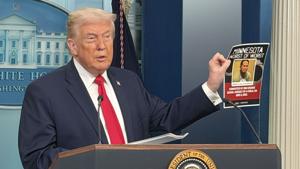
Several angel families gathered at the White House Monday as President Donald Trump proclaimed Feb. 22 National Angel Day – honoring Americans “victimized by dangerous criminal illegal aliens.”
Sunday marked the second anniversary of the murder of 22-year-old Laken Riley, a nursing student at Augusta University. Riley was murdered while jogging by Jose Ibarra, a Venezuelan national in the U.S. illegally. Ibarra was eventually convicted and sentenced to life in prison.
Riley’s murder served as the inspiration for the Laken Riley Act, mandating federal detention of immigrants in the country illegally arrested for certain crimes, including theft and other serious crimes.
The president made remarks during the somber ceremony honoring the victims and their families, highlighting the immigration policies of former President Joe Biden’s administration.
“Everyone in this room not only suffered an infinite loss, they were the victims of politicians who put comfort of foreign criminals before the safety of American citizens and American patriots,” said Trump.
Among the handful of angel families invited to make remarks was Allyson Phillips, the mother of Riley.
Phillips warned that what happened to her family could happen to anyone, while thanking the president for his commitment to cracking down on immigration.
“There are just not enough words to say, because if you live the nightmare that we have lived, you understand the importance of the job that he’s doing and securing our nation and fighting for our families, because this could be any family. This happened to my family. This could be any one of your families.”
In the proclamation, the president vowed to continue his administration’s commitment to cracking down on illegal immigration, especially tracking down the violent ones, citing the Laken Riley Act.
“I recommit to removing dangerous illegal alien criminals from our Nation to prevent such senseless tragedies from happening again,” according to the proclamation.
“As President, the first bill I signed into law was the Laken Riley Act. In Laken’s memory, this commonsense law mandates the detention and deportation of illegal alien criminals and allows States to sue the Federal Government when politicians fail to enforce immigration laws,” the proclamation continued.
The president went on to tout record-low illegal crossings at the southern border, while urging violence to cease against immigration officials.
“We must end the violence against the brave men and women of ICE and Border Patrol. The demonization of these heroes by radical politicians must stop, and the reckless sanctuary policies that shield criminal aliens must end once and for all,” said Trump.
New interactive Holocaust survivor exhibit unveiled in Arizona

Holocaust survivor Esther Basch is telling her story in a new interactive exhibit displayed by the Arizona Jewish Historical Society and the Hilton Family Holocaust Education Center.
The exhibit is called “Triumph in Tragedy: Stories of Courage and Connection.” It opened in November at Yavapai Community College in Prescott, Ariz., where it will remain on display through Aug. 31 before moving to other Arizona locations on a tour concluding in March 2027.
“Triumph in Tragedy” was developed by University of Southern California libraries and the USC Shoah Foundation. Visitors can ask the interactive exhibit questions and receive real-time responses from Basch.
She recorded her life story over three days in September 2024. Seven months later, Basch died just shy of her 97th birthday.
“We’re very happy that Esther was able to record this in such a timely fashion. We still miss her, but her story will live forever through this conversation,” said Tony Fusco, Holocaust education director for the AJHSC.
Fusco called Basch’s survival story “amazing,” saying her call to action was “I can forgive, but I can’t forget.”
“It is extremely resounding in the sense that she believes that everyone should be compassionate, caring [and] loving,” Fusco told The Center Square.
Basch was born on May 28, 1928, in Czechoslovakia.
She survived the Auschwitz concentration camp in Nazi-occupied Poland, Fusco told The Center Square. He added she arrived there on her 16th birthday, the day she was taken away from her parents.
The Holocaust education director said Basch never saw her family again after being separated from them at Auschwitz.
While at the camp, she had an encounter with Dr. Josef Mengele, who was known as the “Angel of Death,” Fusco added.
He said American soldiers liberated Basch on April 14, 1945.
Basch was referred to as the “Honey Girl” because when she was liberated, she “ate a jar of honey too quickly and became deathly ill,” Fusco noted.
After surviving the Holocaust, Basch lived in Israel, France and Canada before settling down in Arizona.
Basch went on to dedicate her life to education and public speaking.
Basch’s daughter, Rachel, said her mother “shared her story so young people would understand the dangers of hatred and the power of their own choices.”
“Knowing her voice will continue to teach and inspire future generations means everything to our family,” she said.
The new Hilton Family Holocaust Education Center, opening next year, will host Basch’s interactive interview, Fusco noted.
“When survivors can no longer stand in front of a classroom, we have a responsibility to ensure their voices still can,” said Talli Dippold, the new museum’s executive director.
“Esther’s testimony does more than tell history,” Dippold said. “It invites conversation, challenges indifference and reminds every generation that their choices matter.”
In the upcoming museum, Basch’s exhibit will also feature artifacts, holographic technology and other items, Fusco said.
Besides focusing on stories of Holocaust survivors living in Arizona, the museum will also present information about the Holocaust and its timeline, he added.
The museum will bring about a “greater understanding of the Holocaust, but also a greater understanding of many of the local survivors that lived in Arizona,” Fusco said.
Oskar Knoblauch, a 100-year-old Holocaust survivor in Arizona, also recorded an interactive interview, which is available at the Arizona State Capitol Museum, Fusco noted.
“ I’m so proud that this type of technology that we created will help foster a living conversation that will go on forever,” he said.
There are around 70 Holocaust survivors living in Arizona, Fusco told The Center Square.
He added that there are fewer than 200,000 Holocaust survivors worldwide.
As time passes, survivors will no longer be around, making it more important than ever for students to hear them, Fusco said.
“Stories like Esther’s, as well as many of the local survivors that called Arizona home, will always be remembered, and the lessons of the Holocaust will be taught, and students will have a very engaging and interactive experience,” he noted.
For more about the “Triumph in Tragedy” exhibit, see the Arizona Jewish Historical Society’s website, azjhs.org/what-we-do/exhibitions.
Los Angeles reports drop in homicides; GOP disputes findings

Elected leaders of Los Angeles have announced a decrease in homicides, but not everyone is buying it.
Los Angeles Mayor Karen Bass said that in 2025, the city experienced a 19% drop in homicides citywide and a 27% drop in homicides in neighborhoods most impacted by violence.
Bass, a Democrat, credited gang reduction and youth development zones across Los Angeles.
“What this work represents is bringing all aspects of our community together,” said Bass. “We come together in programs like Summer Night Lights, Fall Friday Nights and our Justice Fairs. That’s the way to prevent and reduce crime.”
Summer Night Lights is a program that runs from July to August and is designed to boost safety in communities affected by violence. Fall Friday Nights is an extension of the summer program. Justice Fairs provide access to jobs, education opportunities and legal resources.
Los Angeles City Council members Marqueece Harris-Dawson, Eunisses Hernandez and Tim McOsker joined the mayor recently for the announcement.
“As the Trump administration threatens cuts to these critical violence intervention programs, Los Angeles will continue to show the country that care-first approaches save lives,” said Hernandez at a news conference with Mayor Bass.
Roxanne Hoge, chairman of the LA GOP, said this latest attempt by Mayor Bass to boast about crime reduction is “another stunt with no actual record of success.”
Hoge told The Center Square that the city’s 2026 announcement is mostly a copy and paste of the message delivered in 2025.
“The real reasons we are seeing a drop in crime numbers is the commitment from federal law enforcement to law and order, combined with the sad truth that many residents have given up on reporting crimes that no one will ever pay for,” said Hoge.
If city officials really wanted to make Los Angeles safe, Hoge said, they would repeal their “counterproductive sanctuary laws” and practice “broken windows” policing.
“Unfortunately, the word has gone out to visitors that Los Angeles is neither safe nor clean. And with the World Cup and the Olympics on the way, we have real concerns that tourists will see images of the graffiti towers and the 6th Street bridge takeovers and stay home,” said Hoge.
The Mayor’s Office stands by the remarks. In an email to The Center Square, the office said the 27% drop in homicides across gang reduction and youth development zones in 2025 reflects verified Los Angeles Police Department data for the neighborhoods most impacted by violence.
The Center Square reached out to the LAPD this week for comment and did not receive a response.
“This decrease is the result of the Mayor’s comprehensive approach to public safety, driven by community-based leadership and engagement,” the Mayor’s Office continued. “Her strategy addresses crime, ongoing cycles of retaliation, trauma to families and youth, while reducing the broader impact of violence on community stability.”
By combining “targeted enforcement with investments in prevention and supportive services,” the Mayor’s Office said Los Angeles remains committed to keeping all communities safe.
Medicaid spending doubled in Colorado despite enrollment

Editor’s note: This story has been updated since its original publication to include comments from the Arizona Department of Health Care Policy and Financing.
Colorado has seen Medicaid spending doubled over the last decade, according to a new report.
Meanwhile, the state’s unit tasked with investigating and prosecuting Medicaid fraud has had to triage its investigations as the number of referrals it receives has outpaced its staff.
Since 2015, spending by the state Department of Health Care Policy and Financing, which administers Colorado’s Medicaid program, has increased 101% to $16 billion. According to a recent analysis by Common Sense Institute Colorado, Medicaid enrollment only went up 7.6% from fiscal year 2018 through 2024, while the department’s full-time equivalent employment grew 72% during that time.
Meanwhile, the state’s Medicaid Fraud, Abuse and Neglect Unit, a branch of the Attorney General Phil Weiser’s office that’s responsible for investigating and prosecuting fraud by providers, has become backlogged by cases, according to state documents.
“Despite staffing additions over the last few years, the pace of incoming referrals continues to exceed existing staffing,” HCPF’s November report, delivered annually to state lawmakers, said for fiscal year 2024-25. “Over time, funding for the Medicaid program has continued to rise faster than funding for the MFANU, resulting in a backlog of cases and the inability to pursue certain leads and complaints.”
A spokesperson for HCPF told The Center Square there is not more recent public data than fiscal year 2024-25, which ended in June.
According to the new report, MFANU has had to “triage” its investigative cases, “turning down matters involving lower monetary losses and at times limiting the scope of ongoing investigations.”
The caseloads for the unit’s investigators have tripled since 2023, while attorney caseloads are up fivefold, the report stated. At the time of the report, MFANU had 56 referrals approved for investigation that had not been assigned “due to continuing staffing limitations.”
“This number has continued to increase, and the Unit anticipates that the need to triage investigations will continue through the next reporting period,” the report said.
The unit received 497 complaints in fiscal year 2024-25 and opened 172 investigations. MFANU recovered over $45.6 million in civil actions through litigation or settlements, collecting over $1.7 million from providers, according to the annual report on the unit by the attorney general’s office.
MFANU identified criminal restitution ordered to Medicaid totaling $139,299, according to the HCPF report.
“In regard to only provider fraud, fraud continues to involve the provision of in-home services and off-site services, including billing the Medicaid program for services that were not provided and over billing for services rendered,” the report said. “Several of these schemes involved providers of in-home nursing care, providers of day habilitation services for developmentally disabled Medicaid clients, and adult day service providers.”
Several cases of Medicaid fraud in the state have been prosecuted or settled in recent months.
The U.S. Attorney’s Office and the state Attorney General’s Office office earlier this month announced an individual from Mesa County was charged for defrauding Medicaid’s non-emergent medical transportation program by billing over $1 million through Armistead Twin Rides LLC. Another individual from Douglas County was charged with fraud billed $3.3 million in non-emergent medical transportation ride through a limo company.
Last month, a Greeley eye care clinic agreed to a $280,000 settlement for allegedly illegally billing Medicaid, while an eye clinic in Fountain agreed to a $240,000 settlement.
“We continue to look for and hold accountable bad actors,” Attorney General Weiser said last week, answering The Center Square’s questions during a virtual news conference. “That has been a key focus that we have brought to that.”
A spokesperson for the attorney general told The Center Square in a follow-up email that MFANU’s staffing increased from 17 to 23 full-time equivalent positions from 2017 to 2023.
“Since AG Weiser has been in office, [MFANU] has recovered more than $50M through court orders (civil recoveries and criminal restitution), convicted 62 defendants, and settled 111 civil fraud cases,” the spokesperson said.
The unit has also regularly holds a Health Care Fraud Working Group to collaborate with state and federal partners and added a community outreach program in 2024, the spokesperson added.
CSI Healthcare Fellow Greg D’Argonne, one of the authors of the analysis, suggested in an interview with The Center Square that some of the overhead dollars HCPF uses for a Recovery Audit Contractor program instead go to “beef up” its own fraud oversight.
“Let’s put money back into HCPF’s pockets and take it away from the fraudsters and quit focusing so much on providers who are rendering services in good faith but because of some minor billing error or technical error, they’re getting dollars recouped going back as much as seven years,” he said.
“HCPF has added over 300 FTEs over the last few years,” he noted. “Why don’t they deploy some of those people over to the fraud unit? Because really, that should be what the state should be going after, is fraud.”
The HCPF spokesperson told The Center Square that the agency ” is committed to preventing, identifying, and rooting out fraud, waste and abuse (FWA).
“We are leveraging tools available to take legal action against Medicaid providers who have defrauded taxpayers and participated in abusive business practices,” the spokesperson.
“We are also working to improve our FWA efforts,” the spokesperson added, noting the department recently established a “FWA Finder” tool that will help “identify provider billing anomalies.”
“While this tool will help, HCPF is working through a more comprehensive review of the additional needs, tools, staff, and resources necessary to address the nation’s increase in provider FWAs, such as up-coding and other over-billing schemes — similar to those seen under Medicare Advantage or industry software and strategies designed to facilitate these practices,” the HCPF spokesperson said. “More resources are essential for HCPF to keep pace with this reality,.”
European Union puts U.S. trade deal on hold after Supreme Court ruling
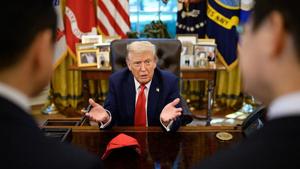
The European Union on Monday halted plans to finalize a trade deal with the U.S. after the U.S. Supreme Court said the bulk of President Donald Trump’s tariffs were illegal.
The EU’s decision is the most significant fallout yet from the Supreme Court’s ruling on Friday. Trump’s trade deal with the 27-nation bloc was based on his ability to issue tariffs, a power the Supreme Court curtailed in its decision that Trump did not have the authority to enact tariffs under the 1977 International Emergency Economic Powers Act.
The stalled trade deal adds further confusion for U.S. businesses and consumers after the the high court ruling. Trump initially announced a 10% global tariff on Friday after the Supreme Court decision. He raised that to 15% on Saturday, but questions remain about the limit of Trump’s tariff authority under the alternative laws he cited Friday.
“The ruling by the Supreme Court … is clear and unequivocal. Its implications cannot be ignored, and business as usual is not an option,” said Bernd Lange, chair of Parliament’s International Trade Committee.
Lange said the so-called Turnberry Deal was no longer in force.
“A key instrument used on the US side to negotiate and implement the Turnberry Deal is no longer available,” he said in a statement. “The situation is now more uncertain than ever. This runs counter to the stability and predictability we sought to achieve with the Turnberry Deal.”
Lange also said Trump’s new global tariffs violated the terms of the agreement.
“This, in itself, constitutes a clear departure from the terms of the Turnberry Deal,” he said.
Lange said work on the trade pacts would be put on hold “until clarity, stability and legal certainty in EU–US trade relations are re-established.” He said the matter would be re-assessed next week.
Trump warned of even higher tariffs in response.
“Any Country that wants to ‘play games’ with the ridiculous supreme court decision, especially those that have ‘Ripped Off’ the U.S.A. for years, and even decades, will be met with a much higher Tariff, and worse, than that which they just recently agreed to. BUYER BEWARE!!!,” Trump wrote in a social media post.
The U.S. trade deal with the European Union called for 15% tariffs on goods coming to the U.S. The deal almost fell apart last month when Trump said he would impose higher tariffs on some European nations until Denmark agreed to give up its control of Greenland. Trump has said the U.S. must control the arctic nation of 57,000 for national and global security in the face of threats from China and Russia.
The U.S. president also said he doesn’t need permission from Congress.
“As President, I do not have to go back to Congress to get approval of Tariffs,” Trump said. “It has already been gotten, in many forms, a long time ago! They were also just reaffirmed by the ridiculous and poorly crafted supreme court decision!”
Trump announced over the weekend that he would no longer capitalize the name of the nation’s highest cfourt in his posts “based on a complete lack of respect.” Trump has repeatedly lashed out at the high court since the ruling. He has publicly praised the three conservative justices who dissented to the majority opinion in the case.
The Supreme Court, divided 6-3, ruled that the International Emergency Economic Powers Act didn’t give Trump expansive tariff powers to tax goods entering the country. Justices Clarence Thomas, Brett Kavanaugh and Samuel Alito dissented. The majority ruled that Trump’s tariffs violated the major questions doctrine, which holds that Congress must speak clearly when it grants significant powers.
“The Framers gave ‘Congress alone’ the power to impose tariffs during peacetime,” Chief Justice John Roberts wrote for the majority.
Treasury Secretary Scott Bessent said Friday the administration will restructure the sweeping import taxes under other legal authorities.
“This administration will invoke alternative legal authorities to replace the IEEPA tariffs,” he said. “We will be leveraging Section 232 and Section 301 tariff authorities that have been validated through thousands of legal challenges.”
The EU deal was the biggest deal Trump made after announcing “Liberation Day” tariffs on April 2, 2025. U.S. total goods trade with the European Union were an estimated $975.9 billion in 2024. By comparison, U.S. trade goods with Japan totaled an estimated $227.9 billion in 2024.
Ohio state, local leaders have no knowledge of ‘world’s largest’ natural gas plant

A massive natural gas electric power plant planned for southern Ohio announced by the Trump administration this month caught state and local leaders by surprise.
The $33 billion plant would be the “largest natural gas generation project in the world,”the U.S. Department of Commerce announced on Feb. 17 as one component of a new trade deal with Japan.
The plant is expected to be in the “vicinity of Portsmouth,” the Commerce Department said.
That was news to the mayor of Portsmouth Charlotte Gordon.
“I wasn’t privy to these discussions,” Gordon told The Center Square. “I started calling some of the people I thought should know and they didn’t know.”
The same is true for the office of Gov. Mike DeWinne.
“We do not have any information on this,” DeWinne spokesman Dan Tierney told The Center Square.
Gordon believes the project would be built on federal land at a former uranium enrichment plant, called the Portsmouth Gaseous Diffusion Plant, in nearby Pike County.
The plant was originally built in 1952 to provide enriched uranium for weapons and nuclear power plants, according to the U.S. Department of Energy.
“Uranium enrichment activities at Portsmouth concluded in May 2001,” the Energy Department’s website says.
In 2011, a private company – now called Centrus Energy Corp. – that had leased the Portsmouth facility, returned it to the U.S. Department of Energy for “decontamination and decommissioning,” according to DOE.
“It’s a large amount of land,” Gordon said. “I do believe that is the site of this [gas power plant] project.”
The U.S. Department of Energy did not immediately respond to a request for comment.
Although the city of Portsmouth, which has a population of about 18,000, would welcome the jobs from the gas plant, it is doing well without it, the mayor said.
“We’re building a state-of-the art water plant and we’re actually selling water to the northern part of Kentucky across the Ohio river,” Gordon said. “Their wells have been contaminated and the Environmental Protection Agency shut down their wells.”
There are also plans for a new riverfront development.
“We are right now going through a really wonderful renaissance,” she said.
U.S. Supreme Court agrees to hear ‘climate change’ lawsuit case
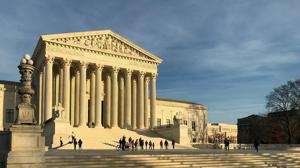
The U.S. Supreme Court agreed on Monday to hear a case over whether states can sue fossil fuel companies for damages related to climate change.
The nation’s highest court agreed to hear arguments in Suncor Energy Inc. v. County Commissioners of Boulder County. Justices on the court asked both parties to submit briefs on whether it has constitutional authority to decide the case.
The case, based out of Colorado, challenges the authority of state and local governments to use nuisance laws in proceedings against fossil fuel companies.
“There is no constitutional bar to states addressing in-state harms caused by out-of-state conduct, be it the negligent design of an automobile or sale of asbestos,” the filing from attorneys for Boulder to the Supreme Court reads.
Lawyers for the energy companies said the Clean Air Act protects entities from being involved in lawsuits regarding emissions that span across state lines.
“Seeking injury in the form of physical harms allegedly caused by global emissions, as petitioners do, is just an indirect method of regulating interstate and international emissions,” lawyers for the oil companies wrote in a brief to the Supreme Court.
Typically, state nuisance laws are used in disputes with neighbors where an individual may be conducting activities that lower the value of another individual’s property.
Christopher Mills, founder of Spero Law, said this case is similar to several others across the country that are attempting to alter energy and climate change policy.
“The goal here is to affect national policy rather than actually provide any sort of traditional remedy for a local nuisance,” Mills said.
In October, the Maryland Supreme Court heard arguments in a similar case against large oil companies. Justices on the court appeared skeptical of three separate cases from Baltimore, Annapolis and Anne Arundel counties against the British oil and gas company BP.
The cases claim fossil fuel companies concealed information about their products’ contributions to climate change.
“It seems like your theory of injury and relief are all tied and necessary for relief on international emissions,” said Justice Brynja Booth.
Christopher Mills, constitutional attorney, former law clerk to U.S. Supreme Court Justice Clarence Thomas, said state courts should not be deciding national energy policies.
“The Court’s action shows that it rightly recognizes that this is a national issue in need of an immediate national resolution,” Mills said in a statement provided to The Center Square. “Letting these copycat lawsuits fester in state courts across the country is a recipe for uncertainty, undermining American energy production and harming consumers. The right place to decide contested climate change issues is in Congress, not via state-law nuisance claims.”
John Yoo, a law professor at the University of California at Berkley, criticized the lawsuit as a mechanism to push legislative change through the court system.
“Boulder’s lawsuit seeks to rewrite national energy policy by way of its state courts,” Yoo said. “The Founders vested in Congress the authority to determine best policies for the nation, not state courts pursuing ideological causes that voters and legislators have so far declined to adopt.”
The Trump administration also encouraged the high court to review the case in a brief to the Supreme Court.
“Allowing Colorado to deem the effects of the companies’ worldwide conduct tortious ‘cannot be reconciled with the decision making scheme Congress enacted’ in the Clean Air Act, which precludes any such role for a single State,” lawyers for the Trump administration wrote in a brief to the court.
John Shu, legal scholar and commentator who served in the administrations of Presidents George H. W. Bush and George W. Bush, agreed with Mills.
“The Court was wise to grant cert in this case. Greenhouse gas emissions are constantly moving and do not stay over a single location,” She said in a statement. “This is why Congress has the power to regulate interstate commerce and is the proper entity to regulate greenhouse gas emissions under the Clean Air Act. Furthermore, it is improper for a single state court to regulate the policies of other states.”
The Supreme Court is expected to release a decision in the case by July. The high court has yet to set a date for oral arguments in the case.
“The problem is especially severe because courts would be asked to put a price tag on the cost of one energy company’s contributions to global climate change,” Mills said.
Everyday Economics: Has the labor market cooled enough to justify more cuts?
This week is light on major economic releases and heavy on Federal Reserve speeches. That shifts the spotlight to the question markets actually care about right now:
Has the labor market cooled enough to justify additional rate cuts, even though inflation – and inflation expectations – remain closer to 3% than 2%?
The latest inflation data argues for caution. At the same time, trade policy is back in the headlines: after the Supreme Court struck down the administration’s prior tariff program, the President responded by reinstating a temporary 10% global tariff (under Section 122 authority), adding a fresh dose of uncertainty to the inflation outlook and the growth path.
Inflation moved the wrong way at year-end
The Fed’s preferred inflation gauge firmed in December:
Headline PCE inflation rose to 2.9% year over year in December, up from 2.82% in November. Prices rose 0.4% month over month in December, up from 0.2% in November. Core PCE (excluding food and energy) also increased 0.4% m/m and is running around 3.0% y/y – still meaningfully above the Fed’s 2% goal.
That doesn’t mean inflation is re-accelerating permanently. But it does mean the Fed lacks a clean “all clear” signal – and it makes the case for cutting based purely on labor-market cooling harder to defend.
A ‘balanced Taylor rule’ suggests policy isn’t obviously too tight
One way economists translate inflation and labor-market data into a policy-rate benchmark is the Taylor rule, a simple formula that links the recommended short-term interest rate to:
how far inflation is from the central bank’s target, andhow much slack exists in the labor market.
A balanced Taylor rule typically puts similar weight on inflation and economic slack. It matters because it offers a transparent, back-of-the-envelope way to ask: Is the current fed funds rate far above what the economy “needs,” or broadly in the right neighborhood?
Using late-2025 conditions, a balanced Taylor-style framework pointed to a policy rate around the mid-3% range when inflation was cooler and labor slack had widened. But December moved the wrong way for cuts: inflation firmed while the unemployment rate edged lower. In plain English, that combination pushes the implied policy rate up, meaning the inflation/labor mix at year-end raises the threshold for future cuts rather than lowering it.
Labor market cooling: yes—but the composition is a warning sign
At first glance, the unemployment rate has drifted lower. But it’s happening alongside a labor-supply story that is changing too. Recent research and official estimates suggest immigration flows have cooled sharply, which can reduce labor force growth even as demand slows.
More importantly, the “low-hire” dynamics are becoming harder to ignore:
Job openings have fallen to about 6.5 million (December), while the number of unemployed/job seekers is about 7.5 million. That’s a meaningful reversal from the post-pandemic period when openings far exceeded job seekers. Hiring is also narrow in breadth. Job growth has increasingly been concentrated in a handful of sectors – health care and social assistance in particular – while other sectors are flat or down.
That mix – openings below job seekers plus concentrated hiring – is exactly the kind of labor-market cooling that can look “fine” in the unemployment rate until it suddenly isn’t.
What Fed officials are likely to emphasize this week
With the data giving mixed signals, Fed speeches become the story because they reveal which risk policymakers are prioritizing.
Christopher Waller (Fed governor): has argued that tariff-driven price increases can be treated as temporary and not over-weighted in policy decisions, saying the Fed can “look through” those effects when expectations are anchored. Lisa Cook (Fed governor): has emphasized that risks remain skewed toward inflation staying too high and that she wants stronger evidence inflation is on a sustainable path back to target. Austan Goolsbee (Chicago Fed): has said additional cuts are possible, but conditional on inflation clearly moving back toward 2%. Raphael Bostic (Atlanta Fed): has pointed to stronger growth as a reason inflation pressures could persist, strengthening the case for patience on cuts. Tom Barkin (Richmond Fed): has framed the policy challenge as risks on both sides of the mandate – protecting the labor market without letting inflation expectations become embedded. Jeff Schmid (Kansas City Fed): has argued it’s too soon to rely on productivity improvements (including from AI) to solve inflation, implying policy should remain restrictive until inflation clearly cools.
The data that matter this week
Case-Shiller home price index: Zillow’s data already pointed to cooling
Home-price growth cooled into the end of 2025, and Zillow’s home value index and market reporting offered a useful preview of what Case-Shiller is likely to confirm for December. Zillow noted December was notably soft – home values failed to rise month-over-month in any of the 50 largest metros.
Moderating price growth is good news for future homebuyers. Even though affordability remains stretched, the direction has improved: income growth outpaced home-price growth in 2025, and the combination of flatter prices and lower mortgage rates has made affordability less restrictive heading into spring.
Producer price inflation: the pipeline check
After December’s firmer PCE report, this week’s PPI release matters because it helps answer whether upstream price pressures are building again or whether December was a bump.
Construction spending: strong overall, but nonresidential is doing the lifting
Construction spending has been supported by nonresidential activity, including investment tied to the AI buildout. Residential construction, by contrast, has remained subdued: builders are cautious when homes take longer to sell and concessions pressure profit margins – and the forward pipeline softened, with 2025 permits down 3.6% from 2024.
Bottom line
The Fed is trying to thread a needle. Inflation remains closer to 3% than 2%, and December’s PCE print moved higher, not lower. At the same time, the labor market is cooling in ways that don’t show up cleanly in the unemployment rate: job openings are now below job seekers, and hiring is narrowly concentrated – a classic “low-hire” warning sign.
That’s why speeches dominate this week: they will signal whether policymakers think labor-market cooling is sufficient to keep cutting or whether inflation’s stubbornness (and trade uncertainty) keeps the Fed in “hold and verify” mode a little longer.
U.S. Supreme Court to hear foreclosure case Wednesday
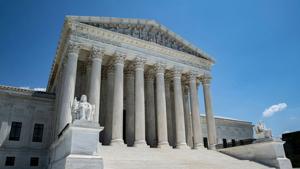
The U.S. Supreme Court will hear a case on Wednesday over whether tax foreclosure sales are constitutional.
Pung v. Isabella County involves the rights of a foreclosed upon homeowner to receive equity back when their home is sold over a tax foreclosure. The dispute comes between the Pung family and Isabella County, Michigan, over real estate taxes on a home the Pungs owned.
A judge determined that the Pungs owed about $2,200 in taxes and allowed the government to auction off their home for $76,000. An individual purchased the Pungs’ home from the government and later sold it for $195,000.
The Pung family sued the government and claimed the sales price was far below the house’s fair market value. Michael Pung, who brought the lawsuit against the county, argued the takings clause of the Fifth Amendment requires that he receive the monetary equivalent of the property that the state has taken from him.
“The deep history of the takings clause and property rights [comes from] the Magna Carta and early colonial practices and the Northwest Ordinance,” said Jay Carson, senior litigator at the Buckeye Institute. “All of them have the same concept that the government can’t take any more than what is actually owed to it.”
The case builds from Tyler v. Hennepin County, where the U.S. Supreme Court ruled unanimously against a Minnesota county for seizing a 94-year-old woman’s home due to her $15,000 tax debt. The county kept the $25,000 profit from the sale, in violation of the takings clause, according to the high court.
The key difference in Pung v. Isabella County is that the Pung family received their surplus proceeds after the sale of the house.
Lawyers for Isabella County argued that the Pungs’ home was sold for less due to the tax burden owed by the family during the process.
“Property that must be sold within those strictures is simply worth less and is not ground for objection by the former owner,” lawyers for the county wrote to the high court.
However, the Pung family and Carson argued the government should owe payments based on a property’s fair market value rather than the value assessed during a foreclosure sale. They argue the county assessed the property’s fair market value to be around $200,000 despite selling it for less.
“The facts in this case where the subsequent purchasers turned around and sold it for that approximate value shortly thereafter speaks volumes to the underlying equity in this,” Carson said.
Carson said the unanimous decision in Tyler v. Hennepin County makes him feel hopeful that the court will side with the Pung family. He said governments should award foreclosed upon homeowners based on fair market value.
He predicted the justices may not rule on what standard should apply for the government in determining foreclosure payments but argued the case should go in favor of the Pung family.
“In this case, fair market value sure looks like it might be the best or most appropriate test to use,” Carson said.
The justices will hear arguments in the consequential foreclosure case on Wednesday and will likely issue a decision by July.
High-profile Senate races to watch in 2026

Several key U.S. Senate races are set to determine the balance of congressional power after the 2026 midterm elections.
The Senate is currently split 53-45 in favor of Republicans. Sens. Bernie Sanders and Angus King are independents but caucus with the 45 Democrats in the legislative body, making the split essentially 53-47.
In order to pass legislation that can withstand a filibuster, 60 senators must agree with it. Given the current partisan makeup, it has been difficult to pass meaningful legislation through the U.S. Senate.
However, several key races across the country this year could shift the Senate’s partisan balance. Here are some of those races.
Minnesota
U.S. Sen. Tina Smith, D-Minn., decided not to run for reelection. In her place, a crowded field of contestants on both sides of the aisle has emerged.
Democrats vying to replace Smith include U.S. Rep. Angie Craig, D-Minn., and Minnesota Lt. Gov. Peggy Flanagan.
Craig has served as a U.S. representative from Minnesota since 2019. Before serving in the U.S. House, she worked as a journalist and a health care executive. She has focused her campaign on fighting against immigration and customs enforcement measures in the state and across the country.
Flanagan has served as lieutenant governor of Minnesota since 2019. She has focused her campaign’s attention on issues related to ICE throughout the state. Flanagan’s campaign has also focused on affordability issues and the adoption of Medicare for All.
Flanagan has received more endorsements from prominent Democrats than Craig, including that of Smith. Sens. Bernie Sanders, D-Vt., Elizabeth Warren, D-Mass., and Ed Markey, D-Mass., have all endorsed Flanagan’s candidacy.
“She is a ferocious fighter on behalf of working families,” Warren said in reference to Flanagan’s push to raise Minnesota’s minimum wage and achieve paid family leave.
“She takes no corporate PAC money,” Warren added. “To me, that gives me a lot of confidence that when Peggy Flanagan says she’s working for your family, it’s not just words.”
On the other side of the aisle, a hotly contested primary has also emerged for Republicans who aim to flip Minnesota’s senate seat.
Former NBA player Royce White and former reporter Michele Tafoya are among the crowd of Republican candidates who have declared for the state’s primary election.
Tafoya has focused her campaign on fraud scandals in the state and committed to providing more transparency in federal assistance programs.
“After years of asking tough questions on the sidelines, Michele Tafoya is stepping up to lead — determined to help restore integrity, reclaim Minnesota’s reputation, and show the nation what resilient, principled leadership looks like,” Tafoya’s website reads.
White previously ran for Minnesota’s open senate seat in 2024. He has focused his campaign on border security and tackling America’s $38 trillion debt.
Tafoya has received an endorsement from the National Republican Senatorial Committee.
The senate seat held by Amy Klobuchar will also be an important race to watch in Minnesota. While her term is not up, Klobuchar is running for governor in the state and a special election would need to be called for her senate seat if she were to win the governor’s race.
Minnesota’s primary election is Aug. 11.
Ohio
U.S. Sen. Jon Husted, R-Ohio, is looking to win his first election in the Senate and retain his seat. Husted was appointed to fill the senate vacancy left by Vice President JD Vance after he was elected alongside President Donald Trump in 2024.
Ohio’s race will count as a special election as it will serve to determine who fills out the remainder of Vance’s term, ending in 2028. A slew of Democrats have thrown their names into the ring attempting to challenge Husted.
Among the Democrats challenging Husted, former U.S. Sen. Sherrod Brown appears to be the frontrunner. U.S. Bernie Moreno, R-Ohio, defeated Brown in 2024, ending a tenure that began in 2007.
Brown has focused his campaign on attacking Husted’s voting record and calling for bans of stock trading in Congress. He has also called for lower health care costs and criticized Husted’s vote on the Big Beautiful Bill.
“Health insurance has become a luxury too many Ohioans can no longer afford,” Husted wrote in reference to an estimate that 120,000 state residents dropped Affordable Care Act coverage in 2025.
Last year, Trump offered Husted his “complete and total” endorsement for a senate bid in 2025.
“He is working hard to Create Jobs, Lower Costs, Promote Products and Services MADE IN AMERICA by our incredible Ohio Workers, Support our Great Farmers, Champion Innovation, Secure our Border, Stop Criminals, Strengthen our Military/Veterans, and Strongly Protect our always under siege Second Amendment,” Trump wrote on social media.
Ohio’s primary election is May 5.
New Hampshire
In New Hampshire, a fierce battle for the Senate is expected to take place. With Sen. Jeanne Shaheen, D-N.H., retiring, former Republican rival John Sununu has thrown his hat into the ring, along with former Massachusetts state Sen. Scott Brown.
Sununu defeated Shaheen in 2002 for a seat to the U.S. Senate. In 2008, Shaheen defeated Sununu. She has held the seat ever since. Shortly after announcing her retirement, Sununu joined the race to replace Shaheen.
Sununu, who also served as New Hampshire’s governor from 1983-1989, has focused his campaign on lowering taxes for Americans. He promised to oppose any middle-class tax hikes if elected. He has also campaigned on fighting against big technology companies’ surveillance.
“Today, as privacy is again under threat from government overreach and Big Tech, John will hold them accountable and defend every American’s right to be free from surveillance,” Sununu’s website reads.
Trump endorsed Sununu earlier this month. He said Sununu would help grow the economy, cut taxes and regulations and advance American energy dominance.
Democrats looking to replace Shaheen include U.S. Rep. Chris Pappas, D-N.H., and medical scientist Karishma Manzur. Pappas has represented New Hampshire’s first congressional district since 2019.
Pappas slammed Sununu’s endorsement from Trump. He said Sununu had a lackluster start to his campaign and poor fundraising quarter.
“Whether that’s toeing the line for an unpopular president or doing the bidding of corporate special interests, John Sununu is the same out of touch political figure New Hampshire voters rejected 18 years ago,” Pappas said.
New Hampshire’s primary election will be on Sept. 8.