Center Square
Jordan: Minnesota officials ‘assisted’ billions in welfare fraud
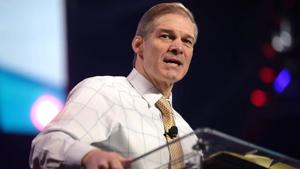
Congressional scrutiny is intensifying over alleged billions of dollars in welfare fraud in Minnesota, with House Judiciary Chairman Jim Jordan accusing state officials of assisting the scheme.
Jordan said in an interview that Minnesota Democrats will face increased scrutiny in the coming months.
“They knew there was fraud because whistleblowers came forward and they just ignored it. In fact, it looks like they retaliated against them,” Jordan said. “In many ways, I think they actually assisted the fraud. It wasn’t just like: ‘We’re going to look the other way.’ They actually assisted the fraud.”
He pointed to concerns about the actions of Minnesota Attorney General Keith Ellison, who Jordan said met with and received political donations from one of the organizations involved in the fraud scandals.
“He met with them, and then he got political contributions,” Jordan said. “Then the money kept flowing, of course, to this organization.”
Ellison has rejected claims that he enabled fraud, saying his office cooperated with federal prosecutions. In the hearing before the Senate Homeland Security Committee last week, he denied meeting with any fraudsters or taking donations from them.
“That’s a lie,” Ellison said in response to accusations from Republicans.
Jordan also pointed out that Gov. Tim Walz, a Democrat, announced he will not be running for re-election this year.
“If it was Republicans’ fault, if it wasn’t really his fault, if they didn’t know it about this, if there hadn’t been whistleblowers coming forward, you know he would be running for re-election – but he’s not, because this thing is real.”
The accusations come just after officials in the Trump administration called the widespread welfare fraud in Minnesota “the single greatest theft of taxpayer dollars through welfare fraud in American history.”
“We believe that the Somali fraud operation in Minnesota is the single greatest theft of taxpayer dollars through welfare fraud in American history,” said Stephen Miller, White House deputy chief of staff for policy and homeland security adviser, in an interview earlier this week.
Independent and federal investigations are ongoing after billions of dollars in taxpayer-funded fraud schemes were uncovered in recent months, as extensively reported by The Center Square, with claims the fraud could total between $9 billion and $20 billion in Minnesota alone.
According to Miller, the fraudulent practices included falsely claiming children had autism to obtain benefits, enrolling individuals in food assistance programs who were never eligible or enrolled, and “engaging in massive fraud, lying, theft, and grift on a scale we’ve never seen before in American history.”
Since the story first broke a few months ago, numerous arrests have been made and federal investigations remain ongoing. Congress has also turned its attention to the issue, probing everything from welfare fraud to the finances of Somalia-born U.S. Rep. Ilhan Omar, D-Minn.
In January, the U.S. House Judiciary Subcommittee on Crime and Federal Government Surveillance held a hearing on the Minnesota fraud investigation.
During that hearing, both Democrats and Republicans acknowledged that fraud is widespread throughout government welfare programs. However, U.S. Rep. Jamie Raskin, D-Md., said the federal fraud investigations in Minnesota are targeted.
“Fraud is not headquartered in one state, for one municipality, much less one ethnic, racial or religious community,” Raskin said. “But, President Trump couldn’t resist the temptation to use fraud in Minnesota as an occasion to mobilize the power of the federal government to bully and intimidate first and second generation Somali Americans who live in that state.”
Jordan said more focus needs to be placed on the alleged theft of “billions of dollars of American taxpayer money,” adding that the Justice Department will investigate the alleged widespread fraud nationwide.
“We need more focus . . . it needs to be a focus nationwide,” Jordan said. “Where is this also happening? Not just in Minneapolis, but where else is this going on?”
Detroit police suspends officers who contacted Border Patrol

The Detroit Police Department has suspended two officers for coordinating with federal immigration authorities.
Detroit Police Chief Todd Bettison made the announcement regarding the incidents last week – one of which happened on Dec. 16 and the other Feb. 9.
“I will say this to everyone. . . 98, 99% do it the right way each and every day, they’re out there working hard,” Bettison said. “But I do have the 1, 2% that decide to violate our rules, our policies, and our procedures. And to those officers, I will hold them accountable.”
The department has an internal policy that restricts officers from contacting federal immigration authorities.
First Assistant Chief Charles Fitzgerald told the Detroit City Council on Tuesday that two officers took it upon themselves to contact U.S. Customs and Border Patrol, something that was discovered following the department’s review of body camera footage.
In both incidents, the suspected illegal immigrants were detained by federal immigration authorities.
“We’re not in the immigration business at DPD, we never have and never will,” Fitzgerald said.
Republican lawmakers found this position by the department concerning.
“Sanctuary cities have no place in Michigan,” Senate Republican Leader Aric Nesbitt, R-Porter Township, told The Center Square. “If Detroit’s police chief isn’t interested in keeping his community safe, he should find a new job.”
Yet, in a memo released by the Detroit City Council, its legal council takes the position that Detroit is not a “sanctuary city.”
“The City of Detroit has not declared itself a sanctuary city,” the memo stated. “However, the City has ordinance provisions that generally prohibit the City’s police officers and other employees from soliciting information from individuals pertaining to their immigration status.”
Bettison explained last week that, “we do not” enforce immigration laws. “That’s against our policies, our rules, our procedures.”
That same city memo included a report on the Detroit Police Department’s interactions with federal immigration authorities in 2025. It found that zero department funding was used for U.S. Immigration and Customs Enforcement activities, including no data sharing or voluntary providing of information.
The Department of Homeland Security issued 63 detainers for those arrested by the department. Of those, 28 were actually picked up by federal officials.
For the two officers now under suspension, Bettison has recommended they be suspended without pay. That will require a decision from the Police Board of Commissioners, who are meeting on Thursday.
“I intend to terminate them,” Bettison said last week.
That will require a command hearing, which can take a few weeks to move forward with.
Cardinal says Vatican won’t join Trump’s Board of Peace
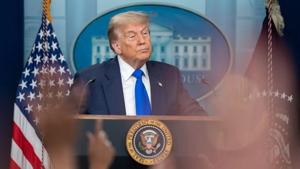
The Vatican won’t join President Donald Trump’s Board of Peace to oversee the rebuilding of Gaza.
Vatican Secretary of State Cardinal Pietro Parolin said Wednesday that the Holy See had concerns about the board’s structure.
“One concern is that at the international level it should above all be the UN that manages these crisis situations,” Parolin told the Holy See’s official news outlet, Vatican News. “This is one of the points on which we have insisted.”
The United Nations, which has 193 member nations, was founded in 1945.
Trump would chair the board, which is structured to include an international group of governmental representatives from invited countries. The U.S. president invited 60 nations to join the Board of Peace last month at the World Economic Forum in Switzerland. Russia, Hungary, Israel, and Argentina joined the board. The United Kingdom, France, Germany, Greece, and Ukraine declined invitations.
A senior administration official declined to discuss diplomatic conversations.
“The Pope and Vatican are welcome to join the many other nations who are committed to the Board of Peace and its guiding principles promoting stability and securing enduring peace,” the official said.
On Sunday, Trump said his “Board of Peace has unlimited potential.” On Thursday, Trump’s Board of Peace will hold its first meeting.
“We will announce that Member States have pledged more than $5 BILLION DOLLARS toward the Gaza Humanitarian and Reconstruction efforts, and have committed thousands of personnel to the International Stabilization Force and Local Police to maintain Security and Peace for Gazans,” Trump wrote in a social media post. “Very importantly, Hamas must uphold its commitment to Full and Immediate Demilitarization. The Board of Peace will prove to be the most consequential International Body in History, and it is my honor to serve as its Chairman.”
Pope Leo XIV has been critical of Trump’s immigration policies.
Lawmakers: Antitrust bill targets anti-competitive behavior
New antitrust legislation introduced in the California Assembly seeks to curtail corporate activity that some lawmakers characterize as anti-competitive.
“The Compete Act is about providing competition and opportunity in markets, and it’s about creating a prosperous, equitable and transparent economy,” Assembly Majority Leader Cecilia Aguiar-Curry, D-Winters and author of the bill, said during a press conference on Tuesday afternoon. “It’s about choices for consumers, power for workers, growth for small business, and it’s about markets built on merit, not power.”
Assembly Bill 1776 updates California law by building on the rules established by the Cartwright Act of 1907, Aguiar-Curry told reporters at the Capitol in Sacramento.
The Cartwright Act was passed long before the modern economy emerged, advocates for the Compete Act said Tuesday.
“Markets have changed,” Aguiar-Curry said during the press conference. “Industries have consolidated. When competition dries up, our families pay more; our small businesses struggle to compete. Our workers have fewer options and innovation slows down.”
A trust would be redefined under the Compete Act as a combination of capital, skill or acts by one person or more, thus expanding what is able to be prosecuted as a crime, according to the bill’s text.
Currently state law defines antitrust activities as a combination of capital, skill or acts by two or more people. Ultimately, the Compete Act could have the effect of allowing more workers to unionize, as well as allowing for conditions that keep large corporations from overpowering the market and crowding out small businesses, supporters of the bill said.
Under current law, consolidation in various industries, like the grocery industry, create conditions that suppress competition, as well as undermine workers’ bargaining power and keep wages low, advocates said.
“Workers deserve to see their paychecks grow,” said Mark Ramos, president of United Food and Commercial Workers Western States Council and UFCW Local 1428, a union in Fairmont.
“They deserve to prosper, just as their employers have prospered,” said Ramos, who stood with Aguiar-Curry during the news conference.
Examples of what some lawmakers called anti-competitive behavior in California include the proposed Netflix and Warner Bros. Discovery merger, which the Golden State’s lawmakers questioned company officials about earlier this month, according to previous reporting by The Center Square. Netflix sought to buy Warner Bros. Discovery for $83 billion, combining their resources and streaming services. Congressional Republicans warned against what they characterized as anti-competitive behavior in recent months, saying that the merger would “raise serious competition questions” and that lawmakers should look at any corporate deal that would result in concentration in the streaming and entertainment market.
During Tuesday’s press conference, small business owners talked about large internet shopping platforms “scraping” their business websites, a practice that uses bots to visit websites and extract large amounts of data about products, price points and other information. That information, small business owners said, was used to recreate product listings to sell their own products on large e-retailer sites they weren’t listing their products on.
School spending rises nationally amid enrollment decline
Public school enrollment has declined in recent years even as staffing and spending have increased, prompting debate among education leaders over how resources are being used and whether they are improving student outcomes.
Total annual public school spending is nearing $1 trillion nationally, according to a Reason Foundation report.
According to Edunomics Lab at Georgetown University, public school enrollment has declined by roughly 750,000 students since 2014. In that same time, public school employment has grown by more than 600,000 positions.
Only about one-third of students score at or above the proficient level on the National Assessment of Educational Progress in reading, according to the National Assessment Governing Board.
According to the National Education Association, the national average teacher salary reached $72,030 in 2024, up 26.9% from $58,454 in 2015-16.
The highest average salaries are reported in California at $101,084, New York at $95,615, Massachusetts at $92,076 and Washington at $91,720, according to World Population Review.
However, the National Council on Teacher Retirement reported that when adjusted for inflation at 3%, recent salary increases equate to only about 1.5% growth.
Despite pay increases, teachers continue to earn less than similarly educated professionals. USAFacts reports that most public K-12 teachers hold master’s degrees, yet their average pay is $20,000 less than the average pay of a worker with an advanced degree.
The Economic Policy Institute has found that teacher benefits, including pensions, do not fully offset what it calls a growing wage penalty compared to other college-educated workers. The compensation gap for teachers was -17.1% in 2024.
Public school teachers typically work about 180 instructional days per year under annual contracts that include summer and seasonal breaks, though many report additional hours spent on planning, grading and professional development.
In some states, top teacher salaries remain below $60,000, including Mississippi at $53,704, Florida at $54,875 and Missouri at $55,132.
A recent peer-reviewed study published in Politics and Policy found that administrative growth is more pronounced in states with stronger teachers’ union influence.
Becky Pringle, president of the NEA, said declining test scores reflect underinvestment rather than overspending.
“Test scores don’t just reflect what students know — they reflect the consequences of disinvestment in public education,” Pringle said in a statement emailed to The Center Square.
Pringle called for higher teacher pay, smaller class sizes and increased investment in instructional resources.
The NEA, which represents more than 2.8 million teachers nationwide, reported $529.5 million in revenue for the 2022–23 fiscal year, with $374.2 million from membership dues, according to Americans for Fair Treatment.
During the same reporting period, Pringle earned $495,787 – about 8.5 times the salary of the average public school teacher.
Rusty Brown, director of special projects at the Freedom Foundation, argued bureaucratic growth and union influence have reduced efficiency and academic standards.
“When you get a massive bloated bureaucracy that grinds efficiency to a halt,” Brown told The Center Square. Brown added the issue is not only pay levels but how funds are used and whether they produce results.
At the same time, large school districts are fighting with budget deficits.
The Los Angeles Unified School District, the nation’s second largest school district, approved an $18.8 billion budget for 2025-26 despite projecting $15.9 billion in revenue, creating a $2.9 billion deficit.
“Los Angeles Unified is committed to protecting high-quality student learning, even as we face significant fiscal challenges,” an LAUSD spokesperson told The Center Square. “Continued declines in student enrollment, reductions in state funding, and the expiration of critical federal relief dollars are creating substantial budget pressures for the upcoming year.”
“As a result, the district must prepare for responsible and strategic budget reductions to maintain long-term financial stability,” the spokesperson said.
Superintendent Alberto Carvalho earns $440,000 annually under a contract running through 2030, along with additional benefits of a $50,000 annual contribution to a retirement account, and access to private security, cars and a driver.
Since 2002, inflation-adjusted K-12 spending has increased by more than 35.8%, with per-pupil expenditures rising from $14,969 to $20,322.
WATCH/EXCLUSIVE: DUI bills imposes stricter punishments
A series of new anti-DUI bills is being introduced this year in the California Legislature.
Most of the new legislation seeks to target drivers convicted of vehicular manslaughter while under the influence.
“I’ve seen the tragedy that’s associated with it, and the reality of how frequently this problem presents itself,” Assemblymember Tom Lackey, R-Palmdale and one of the authors of the DUI-related legislation, told The Center Square in an exclusive interview on Tuesday. “It’s a very significant part of our culture, although we’ve made improvements since the ‘80s, where it was still funny to see people drunk and get behind the wheel of a car. It’s no longer funny.”
One of the bills Lackey authored this year, Assembly Bill 1686, makes it possible to convict someone of a felony if they are convicted of one to two DUIs within 10 years. Currently those convicted of one to two DUIs within a 10-year period can have both of those DUIs prosecuted as a misdemeanor.
Lackey, who said he is a non-drinker, said he was trained at the beginning of his 28-year career as an officer in the California Highway Patrol to detect what impairment looked like.
“These people didn’t seem to be drunk and still meet the criteria for being under the influence,” Lackey told The Center Square. “I thought, ‘We might be a little strong-handed on this,’ until I saw crash after crash after crash. Being a non-drinker, it was an eye-opener.”
Among the two other bills, Assembly Bill 1687 would impose stricter punishments on drivers who are convicted of vehicular manslaughter by revoking their driving privileges for eight years, as opposed to three years, which is allowable under current law. Another bill introduced by Lackey and other lawmakers, Assembly Bill 1685, would make it easier for repeat offenders convicted of manslaughter to have their drivers’ licenses revoked. Current law allows two points to count against a driver convicted of manslaughter. The bill would allow three points to count against a driver.
“We’re trying to attach more accountability, generally speaking,” Lackey told The Center Square. “What we’re trying to do is attach consequences, and I know people get uncomfortable with that. But I’m telling you, when you lose a loved one, there needs to be a consequence for that.”
According to data from the California Department of Motor Vehicles, DUI convictions between 2014 and 2017 went down. In 2014, the number of total DUI violations in the state numbered at 84,797, which decreased every year until 2017, when it fell to 70,691. The number of first-time DUIs was 75,441 in 2014, which went down to 62,937 in 2017.
Despite the fall in numbers of DUI-related crashes, drunk and high drivers in California still pose severe risks on the roads. CalMatters reported in 2025 that drivers under the influence caused a 50% increase in alcohol-related crashes where someone died.
Additional data from the California Department of Motor Vehicles shows that between 1980 and 2021, the number of alcohol-involved crash fatalities has also gone down, from 2,684 in 1980 to 1,344 in 2021. However, of those numbers, the number of drug-only car crashes in which someone was killed went up, from 152 in 1980 to 524 in 2021.
The effort from Lackey and fellow lawmakers, Assemblymember Cottie Petrie-Norris, D-Irvine, and Sen. Bob Archuleta, D-Pico Rivera, follow related legislation passed last year that Petrie-Norris introduced. That bill, Assembly Bill 366, was passed and signed into law in October 2025.
“What this bill does is require that anyone who is convicted of a drunk driving offense install a breathalizer or an ignition interlock device,” Assemblymember Cottie Petrie-Norris, D-Irvine, told The Center Square on the Assembly floor on Tuesday. “The reason it’s super important for us to apply this to all convicted folks with DUIs is we know it works. It’s a common-sense approach for us to protect Californians and save lives.”
Archuleta, who co-authored all three of the bills targeting DUI penalties, was not available for an interview on Tuesday.
SCOTUS decisions to be issued this week, what could be released

Justices on the U.S. Supreme Court announced several days in the next week where they may release decisions in certain cases.
The high court said it may announce opinions on Feb. 20, Feb. 23, Feb. 24 and Feb. 25. It is possible for revisions or late changes to effect what, if any, decisions are released on a certain day but the justices rarely retract an opinion announcement.
After justices hear oral arguments in a case, they hold a conference to vote on their decision. After voting, the most senior justice in the majority will assign who writes the majority opinion in the court.
If Chief Justice John Roberts votes in the majority, he will assign who is in charge of writing the majority opinion. The most senior judge of those who dissent will write the court’s dissenting opinion.
Several high profile cases remain on the high court’s docket that could be decided within the next week. Here are some of those cases.
Tariffs
An issue that is likely top of mind for the Trump administration are challenges to the president’s tariff authority. Trump has made tariffs a central part of his economic plan since his return to the White House.
Trump cited the 1977 International Emergency Economic Powers Act to bring forth tariffs on countries around the world. In April 2025, he imposed a blanket 10% import tax on every U.S. trading partner.
A coalition of states and business leaders sued the Trump administration under the 1977 law and won in two lower courts before the White House appealed to the Supreme Court.
Learning Resources Inc. v. Trump is one of the challenges to the president’s authority. Lawyers for the coalition of states and businesses argue that the constitution vests control over economic issues like tariffs to Congress, not the president.
“Congress is jealously protective of its ‘power over the purse,'” the lawyers wrote in a brief to the court. “The Founders were wary of its use by the President given the history of colonial resistance to Crown-imposed duties levied without consent.”
However, the Trump administration argued that Congress gave the president specific authority to regulate tariffs and economic activity in his capacity as head of the executive branch.
“Congress has supplemented the President’s inherent authority by granting him broad authority to address foreign emergencies swiftly and decisively,” lawyers for the Trump administration wrote.
Campaign finance
Justices on the high court could also release a consequential decision with a significant effect on campaign finance as the midterm elections approach.
In December, justices on the court heard arguments in National Republican Senatorial Committee v. Federal Election Commission, a case that could strike down limits on political party spending. The case would determine how much political parties can spend in coordination with candidates for expenditures like advertising.
Advocates in the case have urged justices on the court to understand the issue as one regarding the First Amendment. Lawyers argued coordination between PACs and candidates should not be restricted under federal election guidelines.
“The challenged limits flout the First Amendment because they burden core constitutional rights of political parties and candidates alike without being narrowly tailored to advance the government’s only permissible interest in regulating political speech – preventing quid pro quo corruption,” lawyers for the NRSC wrote.
The challenge arose from then-Sen. JD Vance’s campaign. PAC leaders, including Travis Trawick of FullPAC, said the case could unleash billions more into campaigns and help fund down ballot races.
According to AdImpact, spending in the 2026 midterm elections is projected to reach over $10.8 billion. However, Trawick said this figure does not account for money that could be unleashed after the Supreme Court’s decision.
Redistricting
Justices on the court could also issue a consequential decision in Louisiana v. Callais, a case that could determine to what extent states can engage in redistricting.
The case centers around two majority-Black congressional districts in Louisiana. Civil rights advocates argue the map “cracked and packed” Black voters into the districts and gave them less electoral opportunity.
This claim would go against the Voting Rights Act, which prevents districting decisions from being made on the basis of race.
“Politics came only after the race-based decision to create another Black-majority district,” lawyers wrote to the court.
As states across the country race to engage in mid-decade redistricting, a decision by the high court would have significant effects on the 2026 midterm elections.
The Center Square investigation prompts Congressional probe to end ESG investments in public pensions

The U.S.House Committee on Education and Workforce launched an inquiry into California’s main public pension fund after The Center Square exposed that it may have prioritized ESG goals at the expense of its fiduciary duty.
A committee letter, which placed the investigation in the context of its ongoing inquiry into stronger safeguards for public pensions nationwide, cited The Center Square’s investigation into CalPERS’ loss of 71% of the $468 million it invested in its Clean Energy and Technology Fund as the impetus for its action.
“CalPERS as a public pension is eligible for significant tax subsidies if, among other things, its benefits are provided ‘for the exclusive benefit of [an employer’s] employees or their beneficiaries.’” wrote the committee. “The Committee seeks information to determine whether CalPERS is undermining this requirement by prioritizing a radical Environmental, Social, and Governance (ESG) agenda over its obligation to its beneficiaries, which will inform its potential reforms to ERISA and the Code.”
Under current regulations, public pension funds receive significant tax benefits, including tax-free growth, tax deferrals, and some tax exemptions, in exchange for operating for the exclusive benefit of pensioners.
The committee’s letter to CalPERS President and Vice Chair of Investment Theresa Taylor demanded extensive documentation of its CETF investments and due diligence, which The Center Square was denied due to explicit exemptions in California’s Public Records Act for certain financial records.
CalPERS must provide the requested documentation by Feb. 27.
“We received and are reviewing the U.S. House Committee letter regarding the nearly 20-year-old investment,” wrote CalPERS spokesperson Abram Arredondo in a statement to The Center Square. “As their investigation is ongoing, we have nothing further to add.”
The letter’s three congressional signatories, U.S. Rep. Tim Walberg, R-Mich., Rick Allen (R-Ga.), and Kevin Kiley (R-Calif.), were not available for comment by publication time.
‘Poison pills’: Environmentalists, lawmakers criticize the 2026 farm bill

Democrats and environmentalists are sounding the alarm over the recently-released farm bill, which includes deregulatory and pro-industry provisions supported by the Trump administration.
The draft Farm, Food, and National Security Act of 2026 scales back regulatory hurdles for pesticide manufacturers, restricts federal funding for certain solar “farm” projects, and gives the U.S. Department of Agriculture more control over international food assistance.
Congress is under pressure to pass a farm bill, which it is supposed to do every five years but has not since 2018. Although the majority of the draft’s content is bipartisan, it has received pushback for proposed changes that critics say will reverse environmental progress and shield large corporations from public accountability.
One of the most controversial measures would give the Environmental Protection Agency the sole authority to approve national pesticide labeling requirements, including any warnings about potential product risks.
Additionally, pesticide manufacturers would be immune from lawsuits alleging they failed to adequately communicate potential harms linked to their product, so long as the product label fit EPA standards.
The Center for Biological Diversity has called the bill a “monstrosity” that would “allow foreign-owned pesticide conglomerates to dominate the policies that impact the safety of the food every American eats.”
“This Republican Farm Bill proposal is a grotesque, record-breaking giveaway to the pesticide industry that will free Big Ag to accelerate the flow of dangerous poisons into our nation’s food supply and waterways,” Brett Hartl, the organization’s government affairs director, told The Center Square.
“This bill would block people suffering from pesticide-linked cancers from suing pesticide makers, eviscerate the EPA’s ability to protect rivers and streams from direct pesticide pollution, and give the pesticide industry an unprecedented veto over extinction-preventing safeguards for our nation’s most endangered wildlife,” Hartl added.
Supporters argue the measure will boost the competitiveness of America’s agricultural sector, provide regulatory certainty, and shield corporations from “frivolous” lawsuits.
CropLife America, which represents the nation’s pesticide industry, did not respond to The Center Square’s request for comment in time for publication.
Democratic lawmakers have condemned other parts of the farm bill as well, such as a restriction on federal funding of solar projects located on forest or prime farmland.
The legislation also transfers authority to administrate the Food for Peace program from the U.S. Agency for International Development to the USDA, a move Democrats and other critics say could endanger the program’s efficiency and effectiveness.
With partisanship running high in Congress, it is unclear if enough Democrats will support the 802-page bill, which authorizes funds for crop insurance, disaster assistance, risk management, farm loans, rural energy grants, forest management, and hundreds of other critical bipartisan initiatives.
House Agriculture Committee Ranking Member Angi Craig, D-Minn., described the legislation as “a shell of a farm bill with poison pills that complicates if not derails chances of getting anything done.”
The committee will mark up the bill next week, where Democrats will likely introduce amendments to strip parts of the bill they dislike. Republicans need at least seven Senate Democrats to vote for the bill for it to reach the president’s desk.
U.S. hits three suspected drug boats in Pacific as interdictions continue
U.S. Southern Command announced strikes on three suspected drug boats in the eastern Pacific and Caribbean.
The strikes, part of Joint Task Force Southern Spear, hit suspected drug boats that U.S. military officials said were operated by terrorist groups.
“Intelligence confirmed the vessels were transiting along known narco-trafficking routes and were engaged in narco-trafficking operations,” U.S. Southern Command said in a social media post.
Late on Feb. 16, at the direction of #SOUTHCOM commander Gen. Francis L. Donovan, Joint Task Force Southern Spear conducted three lethal kinetic strikes on three vessels operated by Designated Terrorist Organizations. Intelligence confirmed the vessels were transiting along known… pic.twitter.com/mib9XtptSB— U.S. Southern Command (@Southcom) February 17, 2026
The first two strikes, in the eastern Pacific, and the third, in the Caribbean, killed a total of 11 people. No U.S. military forces were hurt.
Since President Donald Trump began the controversial military strikes on suspected drug boats in the region in September, at least 37 strikes have killed 120 people. Democrats, a few Republicans, and some international groups have condemned the U.S. military strikes. However, Congress failed to pass a measure requiring Trump to get permission before launching such strikes.
U.S. officials have not estimated the weight or value of illegal drugs that have been destroyed in the military strikes.
Trump has yet to use the military on suspected drug operations in other parts of the world, but has said he would consider military action elsewhere to stop drug smuggling.
Monday’s strikes come as the U.S. Coast Guard continues to stop other suspected drug smuggling boats, seize drugs and turn those on board over to local authorities.
Last week, the U.S. Coast Guard Cutter Seneca’s crew unloaded about 17,750 pounds of cocaine worth more than $133.5 million in Port Everglades from four interdictions in international waters off the eastern Pacific Ocean, according to the Coast Guard. The Seneca’s crew seized 4,410 pounds of cocaine on a go-fast boat on Jan. 25 and another 13,340 pounds of cocaine from three go-fast boats on Jan. 31.
“This deployment demonstrates our enhanced posture and continued success in the fight against narco-terrorism and transnational criminal organizations,” said Capt. Lee Jones, commanding officer. “The Coast Guard, in conjunction with our inter-agency and international partners, continues to patrol areas commonly associated with drug trafficking in the Eastern Pacific, denying smugglers access to maritime routes by which they move illicit drugs to our U.S. land and sea borders.”
Coast Guard officials said they plan to accelerate anti-drug operations in the Eastern Pacific Ocean in support of Operation Pacific Viper.
“The Coast Guard continues increased operations to interdict, seize and disrupt transshipments of cocaine and other bulk illicit drugs by sea,” officials said. “These drugs fuel and enable cartels and transnational criminal organizations to produce and traffic illegal fentanyl, threatening the United States.”
Last week, the Mexican Navy announced a joint bust with the U.S. Coast Guard of several tons of cocaine near Clarion Island.
Trump has said that each drug strike at sea potentially saves 25,000 American lives.
Drug overdose deaths are a leading cause of American deaths. The U.S. Centers for Disease Control and Prevention reported provisional data found about 87,000 drug overdose deaths from October 2023 to September 2024. That’s down from about 114,000 the previous year and the lowest since 2020.
Most of the world’s cocaine supply comes from nearby Colombia. China and other Asian nations produce most of the precursor chemicals needed to make fentanyl, the potent opioid responsible for most U.S. overdose deaths in recent years.
Since the 9/11 terrorist attacks in 2001, U.S. presidents of both parties have used the military to kill terrorists abroad, including members of Al-Qaeda and ISIS.