Center Square
Denver City Council members advance bill to ban ICE masks

A Denver City Council committee has approved a proposal to ban law enforcement officers, including federal immigration agents, from wearing masks.
The proposal from Councilmembers Flor Alvidrez and Shontel M. Lewis also requires all law enforcement to identify themselves with a badge or some form of identification. Violators could face fines and jail time.
Lewis told The Center Square that they began working on the bill last summer.
“We saw the terror and the fear in communities, and so it was an opportunity to proactively think about legislation that was going to protect our communities,” Lewis said.
Wednesday’s vote by the Health and Safety Committee was a unanimous 7-0.
The measure now goes to the full city council for the first of two votes before it can be finalized. If approved, the ban will take effect immediately, Lewis said.
Councilmember Chris Hinds supports the measure.
“Anyone granted the authority to use deadly force must be held to the highest standard of accountability,” Hinds told The Center Square.
That, he said, starts with transparency.
“The public has a right to know who is exercising that power,” said Hinds. “If someone cannot do the job without hiding their identity, then they should not be entrusted with the responsibility to take a human life. And when that authority is abused, there must be real consequences.”
The proposal in Denver comes at a time when many politicians and citizens in other states have been critical of federal efforts to locate and remove illegal immigrants from cities.
California, for example, has a ban on law enforcement officers wearing masks, although Los Angeles Police Chief Jim McDonnell has said that he will not enforce it, and a federal judge has issued a temporary ruling against the ban. Meanwhile, California Attorney General Rob Bonta told The Center Square Thursday that if the ban is ultimately upheld in courts, all local and state law enforcement will enforce it.
Denver police are preparing in case the ban is approved by the full city council.
“I have spoken to the police and my co-sponsor spoke to the police union, and they are in the process of working to figure out how they operationalize the policy if it goes into effect,” said Lewis.
The Department of Homeland Security, which oversees U.S. Immigration and Customs Enforcement and Customs and Border Protection, strongly opposes bans on masks.
Assistant Secretary Tricia McLaughlin told The Center Square that sanctuary politicians attempting to ban federal law enforcement from wearing masks is “despicable” and a flagrant attempt to endanger officers.
“To be crystal clear: We will not abide by this unconstitutional ban,” she said, answering a question by email.
McLaughlin also said the Supremacy Clause of the U.S. Constitution makes it clear that Denver’s sanctuary politicians do not control federal law enforcement.
“Our officers wear masks to protect themselves from being doxxed and targeted by known and suspected terrorist sympathizers,” McLaughlin told The Center Square. “Not only is ICE law enforcement facing a more than 1,300 percent increase in assaults against them, but we’ve also seen thugs launch websites to reveal officers’ identity.”
McLaughlin ended by saying that the men and women at CBP, ICE, and all federal law enforcement agencies put their lives on the line every day to arrest violent criminal illegal aliens to protect and defend the lives of American citizens.
“Make no mistake, this type of demonization is contributing to the surge in assaults of law enforcement officers,” said McLaughlin.
U.S. Ed Dept. investigates Puyallup wrestler’s sexual assault allegation by trans athlete

The U.S. Department of Education is investigating the Puyallup School District for how it handled an alleged sexual assault of a female wrestler late last year allegedly by a transgender student.
The Rogers High School sophomore reported the alleged assault to school officials and her coach two days after the December incident. The girl’s family contends the administration failed to take meaningful action to protect and investigate her claim of sexual assault.
The alleged victim, 16-year-old Kallie Keeler, says the incident happened during a Dec. 6, 2025, match in which she was wrestling against a 190-pound transgender wrestler. At the time, Keeler did not know her opponent was a biological male.
“The allegations in this case are sickening—that a female athlete was not only unknowingly forced to compete against a male in a girls-only division, placing her at increased risk for sexual assault, but that her report of sexual assault during the match was ignored by Puyallup School District for months. While the District may prioritize ideological agendas over the safety and dignity of its students, the Trump Administration will not tolerate such conduct,” Assistant Secretary for Civil Rights Kimberly Richey said in a Friday news release announcing the federal investigation. “We will continue to vigorously enforce Title IX to ensure that women and girls have safe, equal access to educational programs and opportunities, and that allegations of sexual assault are addressed promptly and fully.”
The office of Pierce County Sheriff Keith Swank and the Puyallup School District confirmed Tuesday they are also conducting an investigation into the incident.
Partial government shutdown imminent as Congress leaves town

Lawmakers have left town after failing to pass the Homeland Security full-year funding bill, ensuring a partial shutdown of DHS beginning Saturday.
This is the second time in less than six months that Democrats have forced a shutdown over policy demands, with the holdup this time centered around demands for immigration enforcement restrictions.
The Homeland Security bill is the last of the fiscal year 2026 appropriations bills not yet law. House Minority Leader Hakeem Jeffries, D-N.Y., echoed his party’s position Friday on social media, saying he refuses to fund Immigration and Customs Enforcement unless significant reforms are included in the bill.
“ICE is out of control. Republican extremists refuse to rein them in,” Jeffries stated. “Democrats will hold the line until dramatic change occurs.”
But the shutdown accomplishes nothing in terms of putting pressure on the agency or curbing its activities, because ICE is already flush with cash.
Riding on a $75 billion boost from Republicans’ budget reconciliation bill that became law last year, ICE has no immediate need of the $10 billion allocated within the Homeland Security bill. Immigration enforcement activities will continue regardless of the shutdown.
The funding lapse does, however, negatively impact other DHS agencies, including FEMA, the U.S. Coast Guard, the Secret Service, and the Transportation Security Administration.
Those agencies will have to scale back all but the most necessary operations. If the shutdown persists until the next payday, DHS employees – who collectively make up about 13% of the U.S. government’s civilian workforce – will miss their paychecks.
“We gave the Democrats a chance to fund TSA, FEMA, the Coast Guard, and federal law enforcement today, and they voted it down,” Senate Majority Leader John Thune, R-S.D., said after the failed Thursday night vote. “They aren’t looking for a solution; they’re looking for a political opportunity. Federal employees should not be held hostage for another shutdown.”
While the funding lapse will have fewer obvious impacts than the 43-day full government shutdown from October to November 2025, it could again impact air travel if TSA agents miss their paychecks.
The Senate isn’t scheduled to return from recess until Feb. 23, although Thune may call lawmakers back if Democrats and the White House reach a deal before that date.
Among other reforms, Democrats want to prohibit DHS agents from wearing masks, racially profiling, indiscriminately arresting people, tracking protestors, or entering private property without a judicial warrant in addition to an immigration court warrant.
Other demanded changes include requiring agents to display ID, wear body cameras, and obtain the consent of states and localities to conduct large-scale operations, among other things.
Demands for greater accountability erupted after an ICE agent fatally shot 37-year-old Alex Pretti in January, the second killing that month of a U.S. citizen protesting in Minneapolis.
Sultan in Epstein files resigns, global turmoil continues
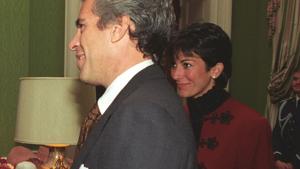
An executive of a Dubai-based company resigned on Friday after documents released by the Justice Department tied him to convicted sex offender Jeffrey Epstein.
Sultan Ahmed Bin Sulayem was recently named in the Justice Department’s release of files related to Jeffrey Epstein. An email exchange suggested the sultan sent Epstein some kind of “torture video”
Documents released showed that Bin Sulayem communicated with the convicted sex offender for years and even visited his island, Little St. James.
U.S. Reps. Thomas Massie and Ro Khanna, D-Calif., visited the Justice Department this week to request it unredact certain names of prominent men who were mentioned in the documents.
The Sultan was one of several individuals whose names were unredacted after Massie and Khanna’s visit.
“[Thomas Massie] and I called on DOJ to stop protecting this man and unredact his name,” Khanna wrote. “They relented. Then I took to the House floor to name names. Today, he resigns.”
DP World, the group Bin Sulayem resigned from, inserted a new chairman and CEO in place of the disgraced sultan.
The resignation follows turmoil across the globe since the Justice Department’s latest release of files on Epstein. In the United Kingdom, connections between Peter Mandelson, a former UK representative, and Epstein led to Mandelson’s resignation from the UK Parliament.
The controversy has affected Prime Minister Keir Starmer with many calling for his resignation. Starmer planned to appoint Mandelson as the United Kingdom’s ambassador to the United States.
Documents revealed Epstein lobbied Mandelson for favorable tax policies. Mandelson also informed Epstein of prominent U.K. political figures’ resignations before they were formally announced.
Starmer’s chief of staff, Morgan McSweeney, resigned this week as a result of revelations tied to Mandelson. McSweeney said he advised Starmer to appoint Mandelson as ambassador to the United States.
“The decision to appoint Peter Mandelson was wrong. He has damaged our party, our country and trust in politics itself,” McSweeney said. “I leave with pride in all we have achieved mixed with regret at the circumstances of my departure. But I have always believed there are moments when you must accept your responsibility and step aside for the bigger cause.”
Temporary protected status terminated for Yemen nationals
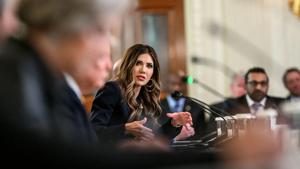
Yemeni nationals in the U.S. on temporary protective status will have 60 days to leave the country.
Department of Homeland Security Secretary Kristi Noem announced the termination of the protected status for nationals of the Gulf Arab state, which was initially granted Sept. 3, 2015, citing an “ongoing armed conflict” that could “pose a serious threat” to Yemeni nationals if they were to return.
“After reviewing conditions in the country and consulting with appropriate U.S. government agencies, I determined that Yemen no longer meets the law’s requirement to be designated for Temporary Protected Status,” Noem said in a statement. “Allowing TPS Yemen beneficiaries to remain temporarily in the United States is contrary to our national interest. TPS was designed to be temporary, and this administration is returning TPS to its original temporary intent. We are prioritizing our national security interests and putting America first.”
Since 2015, Yemeni nationals have had TPS extended six times – most recently in 2024, the last year of former President Joe Biden’s presidency. His administration extended it three times.
DHS says that Yemen nationals with “no other lawful basis” for remaining in the U.S. have 60 days to “voluntarily” leave the country. The nationals are encouraged to utilize the U.S. Customs and Border Protection app, which “provides a safe, secure way to self-deport,” which includes a “complimentary plane ticket, a $2,600 exit bonus, and potential future opportunities for legal immigration.”
However, if they don’t leave, the Yemeni nationals in the country on TPS voluntarily, they are subject to being arrested and deported, and “may never be allowed to return to the United States.”
Woman wants RFK Jr. to add COVID vaccine to injury table

A Florida woman who claims she was injured by the COVID vaccine sued U.S. Department of Health and Human Services Secretary Robert F. Kennedy Jr. this month, in an effort to compel him to add the vaccine to the Vaccine Injury Table.
Plaintiff Jeanne Materese filed her lawsuit Feb. 2 in U.S. District Court for the Middle District of Florida, Fort Myers Division.
“By failing to add the COVID vaccine to the Vaccine Injury Table, the Secretary is obstructing and frustrating a process intended to ensure that Ms. Materese and others injured by newly recommended vaccines have access to a compensation process ‘as soon as possible,’” her 13-page complaint states.
In her filing, Materese alleges she suffered an adverse reaction to a COVID vaccination in August 2021 that left her with a severe platelet formation and blood clotting disorder.
The National Childhood Vaccine Injury Act of 1986 created the Vaccine Injury Compensation Program, or VICP.
The VICP was created as an alternative to the tort system to allow individuals who suffer a severe adverse reaction from a covered vaccination to pursue claims for compensation in the United States Court of Federal Claims.
The VICP was specifically intended to provide injured persons with compensation “quickly, easily, and with certainty and generosity.”
Materese argues she should have a “preserved right” to file a claim for compensation for her injury under the VICP.
However, she contends her ability to bring a VICP claim has not been secured because Kennedy has not complied with the Vaccine Act, which requires him to add the COVID vaccine to the Vaccine Injury Table.
Additionally, Congress has not been notified by Kennedy of the need to impose the excise tax on the COVID vaccine as required by the Vaccine Act, her filing argues.
“Congress created a process to ensure that new vaccines recommended for routine administration would be covered by the VICP,” the complaint states. “The first step is a recommendation for routine administration by the Centers for Disease Control and Prevention (‘CDC’).”
Following the CDC’s recommendation, the Secretary is required to add the new vaccine to the Vaccine Injury Table.
When the Secretary adds the vaccine to the Vaccine Injury Table, the right to seek compensation for an injury predating the revision accrues.
According to Materese’s suit, the date the vaccine is added to the Vaccine Injury Table triggers the eight-year look back provision, which also acts as a statute of repose. This permits claims where the vaccine injury occurred within eight years of the Vaccine Injury Table addition, and precludes claims for vaccine injuries occurring more than eight years before the Vaccine Injury Table addition.
Materese argues that by 2021 the COVID vaccine was recommended for routine administration to children, thus triggering the two-year deadline for the Secretary to add the COVID vaccine to the Vaccine Injury Table.
“Significantly more than two years has now elapsed since the Centers for Disease Control and Prevention recommended the COVID vaccine for routine administration to children,” the complaint states.
“Because the Secretary has not added the COVID vaccine to the Vaccine Injury Table as mandated, Ms. Materese risks having her right to file a claim expire under the Vaccine Act’s statute of repose as a consequence of the Secretary’s continuing neglect of this duty.”
On Nov. 25, 2025, Materese sent notice to Kennedy, informing him that he and his predecessor Secretary had thus far “failed to meet their obligations” under the Vaccine Act.
“Compliance by the Secretary with the requirements of the Vaccine Act in the addition of the COVID vaccine to the Vaccine Injury Table will safeguard the right to compensation Ms. Materese, and others in the United States like her have suffered severe adverse reactions to COVID vaccinations, through the VICP as envisioned by Congress,” her filing states.
Materese is asking the federal court to issue an order compelling Kennedy to add the COVID vaccine to the Vaccine Injury Table.
Sarasota law firm mctlaw is representing Materese in the action.
Ford returning to the Middle East as tensions rise with Iran

A second aircraft carrier is en route to the Middle East as tensions build with Iran, according to multiple reports.
The USS Gerald Ford, the newest and largest carrier in the fleet, is headed back to the Middle East after assisting with operations in the Caribbean, including Operation Absolute Resolve, which led to the capture of deposed Venezuelan leader Nicolas Mauro.
There was speculation that the USS George H.W. Bush could be deployed to the region, but it is completing pre-deployment workups off the Atlantic coast.
The USS Abraham Lincoln and its strike group are already deployed near Iran.
President Donald Trump met earlier this week with Israeli Prime Minister Benjamin Netanyahu at the White House, marking their seventh meeting since Trump took office over a year ago.
In a social media post after the meeting, the president urged diplomacy with Iran, following a Wednesday meeting with Israeli Prime Minister Benjamin Netanyahu. During an event at the White House Thursday, Trump told reporters he hopes a deal is made “quickly” with Iran, adding it could take a month.
Following the meeting with Netanyahu, Trump issued another stern warning to Iran if a deal has not been struck.
“If it cannot, we will just have to see what the outcome will be,” Trump wrote. “Last time Iran decided that they were better off not making a deal, and they were hit with Midnight Hammer – that did not work well for them. Hopefully this time they will be more reasonable and responsible.”
Talks between the U.S. and Iran have been ongoing in Oman since late last week. Tensions are growing.
Israel is reportedly concerned with not only Iran rebuilding its nuclear program, but also ballistic missiles and support for proxy groups, such as Hamas and Hezbollah.
While Trump won’t commit to whether the U.S. will strike Iran for the second time in less than a year, he continues to hurl threats at the Iranian regime, citing a large armada of American naval ships in the region, which has been growing.
Last week, the State Department warned Americans in the Islamic Republic to leave the country. Trump said Iran’s leadership “should be very worried” amid rumors that the talks had hit a snag; that was later rebuffed.
“I’m hearing that Iran wants to restart the new program,” Trump said in a network interview. “If that’s the case, we’ll send the forces to do the job again. They tried to go back to the site, but they couldn’t access it. We discovered that they wanted to open a nuclear site in another part of the country. I said, ‘You do that – we’ll do very bad things to you,’”
Secretary of State Marco Rubio has appeared less optimistic that the U.S. and Iran could reach a deal.
“If the Iranians want to meet, we’re ready,” Rubio said during a news conference at the State Department. “I’m not sure you can reach a deal with these guys, but we’re going to try to find out. This is a president that always prefers a peaceful outcome to any conflict or any challenge.”
Last week, the U.S. confirmed it had shot down two Iranian drones flying near the USS Abraham Lincoln, an aircraft carrier sailing in the region.
The president continues to cite the increasingly significant naval presence in the region, hoping to pressure the Islamic Republic to “make a deal.”
“It is moving quickly, with great power, enthusiasm, and purpose,” the president wrote on social media. “It is a larger fleet, headed by the great Aircraft Carrier Abraham Lincoln, than that sent to Venezuela. Like Venezuela, it is ready, willing, and able to rapidly fulfill its mission, with speed and violence, if necessary.”
The president is calling on Iran to “come to the table and negotiate a fair and equitable deal,” underscoring that the Islamic Republic cease trying to rebuild its nuclear program.
It’s unclear if the Ford will be deployed to the Mediterranean or will join the Lincoln in the Fifth Fleet Area of Command around the Persian Gulf.
Lemon faces federal arraignment today in St. Paul church protest case

Journalist Don Lemon is scheduled to appear in a Minnesota courtroom today to be arraigned on federal charges related to a protest that disrupted a Jan. 18 Sunday church service in St. Paul.
Lemon, who was inside the church covering the protest, is one of nine people arrested in connection with the demonstration.
All nine were indicted by a federal grand jury in Minnesota in January on two counts:
• conspiracy against right of religious freedom at a place of worship
• and injure, intimidate, and interfere with exercise of the right of religious freedom at a place of worship
Those charges stem from the Freedom of Access to Clinic Entrances (FACE) Act of 1994, which prohibits obstruction or threats at abortion clinics and places of worship.
Lemon’s arrest came following widespread calls for arrests in the wake of the protest, which quickly captured attention far beyond Minnesota.
The U.S. Department of Justice and the FBI are working together to investigate the protest, which was organized in part by members of Black Lives Matter Minnesota.
Video posted by the group shows protesters chanting “ICE out” and “justice for Renee Good” during the service at Cities Church. Another video circulating on social media shows Kelly calling congregants “pretend Christians” and “comfortable white people.”
Caleb Phillips, a congregant at the church, told The Center Square in an exclusive interview that the protestors were seated throughout the congregation before the service began.
“The entire congregation came alive. Individuals who are planted from front to back throughout the entire place stood up,” Phillips said. “It felt like we were surrounded, because they were all throughout the congregation.”
Reports allege the protesters discovered one of the church’s pastors works for U.S. Immigration and Customs Enforcement, calling the protest a “clandestine mission.” The federal indictment called the church protest a “coordinated takeover-style attack.”
The church protest came in the wake of the Jan. 7 killing of 37-year-old Renee Nicole Good during an encounter with ICE officers conducting enhanced immigration enforcement. Lemon, a former CNN anchor, defended the protesters.
“I imagine it’s uncomfortable and traumatic for the people here,” Lemon said during a livestream of the protest at service. “But, that’s what protesting is about.”
The Trump administration has been vocal in its displeasure with the protest—promising legal action.
“We will always protect our churches and the freedom of religion,” Bondi said during a federal committee hearing on Wednesday.
Just days after the incident, Harmeet Dhillon, assistant attorney general for the DOJ’s Civil Rights Division, directly addressed Lemon.
“Don Lemon himself has come out and said he knew exactly what was going to happen inside that facility,” Dhillon said. “He went into the facility, and then he began ‘committing journalism,’ as if that’s sort of a shield from being an embedded part of a criminal conspiracy. It isn’t.”
Lemon’s Jan. 30 arrest came shortly after a judge refused to sign a warrant for his arrest. The former CNN host was held overnight following his arrest, but was then released on his own recognisance.
Since then, Lemon has appeared on many shows like “Jimmy Kimmel Live!”
“I will not stop now. I will not stop ever,” Lemon said following his release. “In fact, there is no more important time but right now, this very moment, for a free and independent media that shines a light on truth and holds those in power accountable.”
Senate GOP wants companies funding lawsuits to be revealed
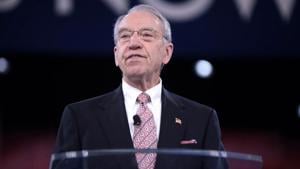
U.S. Senate Republicans have introduced a bill targeting companies that invest in lawsuits, proposing rules that would force them to identify themselves and refrain from interfering with settlements.
Sens. Chuck Grassley of Iowa, Thom Tillis of North Carolina, John Kennedy of Louisiana and John Cornyn of Texas filed the Litigation Funding Transparency Act. The businesses that would be affected are called third-party litigation funders (TPLF) and provide money up-front to plaintiffs lawyers in exchange for a percentage of whatever is recovered in court.
These arrangements worry some who feel they give investors who aren’t parties in court proceedings control over them. For example, Burford Capital is now allowed to challenge a $50 million settlement between Sysco Corp. and poultry producer Pilgrim’s Pride.
The U.S. Court of Appeals for the Seventh Circuit last week found problems with the execution with the settlement, which Burford felt wasn’t large enough. The company is the world’s largest third-party lawsuit investor, and its fight with Sysco, its own client, has complicated the case for years.
“… But for this legal maneuvering, this litigation could have been resolved long ago,” Seventh Circuit Judge Nancy Maldonado said. “This case is a cautionary tale to any party who seeks to fund its litigation through a third party.”
The Senate bill would keep funders from influencing litigation strategy and settlement negotiations. It would also prevent them from viewing any evidence that is subject to a protective order.
A recent study showed the costs TPLF imposes on American families through inflated prices. Oklahoma and Georgia passed measures targeting TPLF last year, joining Wisconsin, Indiana, Montana, West Virginia, Louisiana and Kansas.
In federal courts, Delaware, New Jersey and the Northern District of California require disclosure of TPLF agreements. The Senate bill’s disclosure requirements apply to federal class actions and mass torts that are grouped in multi-district litigation proceedings.
The majority of pending federal civil cases are in those MDLs. Among the largest, according to the research firm KCIC, are 67,000 lawsuits against Johnson & Johnson over talcum powder and 24,000 over hernia mesh.
Outside funding became an issue during J&J’s attempt to settle those talc cases, which ultimately failed and put the company in the position of spending a massive amount in lawyers fees and court costs to defend itself in court.
“The American people deserve to know when corporations and foreign states pour money into class action lawsuits to influence outcomes,” Kennedy said.
Other Republicans are concerned TPLF allows foreign interference in the U.S. energy and technology markets. In a hearing last year, Sen. Ted Cruz accused environmental activists and their Democratic supporters in Congress of using Chinese money to undermine the U.S. economy.
In January, the House Judiciary Committee took up H.R. 1109, which similarly requires disclosure of TPLF agreements. But the mark-up session was interrupted when committee members were needed on the House floor for votes on other legislation, and the discussion on the bill ended.
Bill sponsor Darrell Issa, R-Calif., then introduced the Protecting TPLF From Abuse Act, which currently sits in the Judiciary Committee.
Election 2026: Cooper social post is now you see it, now you don’t
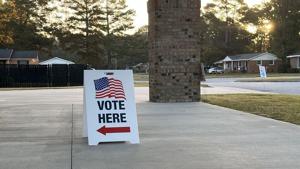
Roy Cooper vetoed mandatory requirement of photo identification in 2018.
Thursday, the U.S. Senate candidate vetoed a photo of himself presenting photo ID to cast a ballot.
In 2018, his veto was overridden and a half-a-decade of litigation played out before the wish of the North Carolina voters was implemented.
No word on if he’s pursuing litigation this time – as he did on the wishes of voters – on the staffer who posted the image to his social media account. It would seem unlikely, given he put the photo back up later and it remained Friday morning.
Hide and seek election season. Welcome to 2026.
All pleasantry aside, Cooper’s bid to win the Democratic primary and potentially face Republican Michael Whatley in November added the juice to the mixer Thursday evening. Though it’s nothing like the previous week, when names finally began to become public among the 3,500 prisoners he released and said were nonviolent in a 2021 settlement with the NAACP and ACLU.
More than 50 were serving life sentences. More than 5,400 more had been let out prior to settlement release.
Absentee voting started with mailed ballots Jan. 12, Cooper participated in the first day of early in-person voting on Thursday, and March 3 is the primary Election Day for six Democrats, six Republicans, and a seventh Republican already ruled ineligible to win by primary.
Text on his original post included, “I know there’s a lot riding on this race, and I don’t take your votes for granted. You can count on me to represent all North Carolinians in the Senate. I exercised my civic duty today, and I hope you’ll join me.”
The image of his ID being checked was largest of a three-piece collage. The other two were greeting supporters and from a distance marking his ballot. In a press conference afterward, he did not support the SAVE Act – a proposal for requiring photo ID in federal elections.
His edited version included showing ID and marking the ballot.
Whatley reposted Cooper, saying, “Today, Cooper showed how easy it is to use an ID to vote. I strongly support the SAVE America Act and will always fight to protect our elections.”
So does the nation. Cooper is against policy 83% of Americans favor, according to the Pew Research Center, and 84% according to Gallup. The Pew sampling includes 71% of Democrats, and Gallup says its 67%.
Either way, Cooper is 1 in 3 for his party, less than 2 in 10 in America.
Cooper was in his first term as governor when, in 2018, a constitutional amendment before voters in November asked about photo ID as a requirement to vote. It wasn’t close for 3.7 million casting a decision – 55.5% said yes and only 44.5% said no.
Still, the move was fraught with legal battles. It didn’t emerge for good until Super Tuesday in the 2024 presidential cycle, with few to no problems reported statewide by the Democratic majority State Board of Elections.