Center Square
January inflation cools to 2.4%, lowest since May

Consumer prices rose by 0.2% overall in January, according to recent data released by the U.S. Bureau of Labor Statistics.
Overall, the inflation rose to 2.4% annually in January, a significant cooldown from previous months.
In December and November, inflation rates rose 2.7%, respectively. Those rates were still lower from the 3% inflation rate in September.
The price index for shelter rose 0.2% in January and accounted for the largest factor item in monthly increases. Similarly, the food index rose 0.2%. These increases were offset by a significant decrease in the cost of energy with a 1.5% lower rate.
Over a 12 month period ending in January, the energy index decreased 0.1% and the food index increased 2.9%.
“This is good news on inflation,” said Heather Long, chief economist at Navy Federal. “There may be one more bump from tariffs, but its encouraging to see a cooling off.”
Gas prices fell by 7.5% over the period of a year ending in January alongside 1.8% lower rate in used cars and trucks. Long praised the slowdown in food price increases and pointed to the rates in January compared to December.
Food prices in December spiked 0.7% overall, whereas January only saw an increase of 0.2%.
“This will help a lot of struggling families,” Long said. “So will the decline in gas prices.”
The inflation report follows a better-than-expected January jobs report that showed an gain of 130,000 jobs and steady unemployment at 4.3%.
McCuskey praises federal rollback of Endangerment Finding
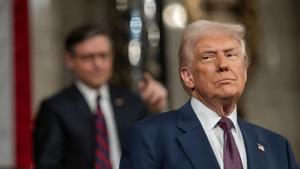
West Virginia Attorney General J.B. McCuskey is praising the federal government’s decision to repeal an Obama-era scientific finding on climate change.
On February 12, President Donald Trump and U.S. Environmental Protection Agency Administrator Lee Zeldin announced the single largest deregulatory action in U.S. history.
In this final rule, EPA is eliminating both the Obama-era 2009 Greenhouse Gas (GHG) Endangerment Finding and all subsequent federal GHG emission standards for all vehicles and engines of model years 2012 to 2027 and beyond.
McCuskey says the move will save American taxpayers over $1.3 trillion.
“I am enormously excited for this announcement,” McCuskey said. “The Trump administration promised to deregulate, and repealing the unconstitutional Obama-era ‘endangerment finding’ is the single most impactful deregulatory action in American history.
“This rule was the first salvo of a war against working class Americans. It adopted a radical agenda based on pseudoscience, and it raised the price of every single American product.”
For nearly two decades, the endangerment finding has served as the legal underpinning for regulations targeting man-made greenhouse gases.
“The endangerment finding’s impact can’t be overstated,” McCuskey said. “It has cost American families over a trillion dollars since its adoption in 2009. So, EPA’s repeal efforts will save American families money and make vehicles — and every good transported by them — more affordable.
“The Obama administration designed this rule to force gas cars to go the way of the 8-track. But American consumers have spoken. And with auto makers like Ford announcing production halts on electric vehicles, the market has listened.”
McCuskey said he is ready to fight any challenge to today’s move.
“This repeal will no doubt be challenged in court, and West Virginia will be on the front lines of this litigation,” he said. “Defending EPA’s deregulation is essential to both affordability and the rule of law. The Obama EPA’s 2009 endangerment finding was an unconstitutional overreach.
Because of cases like West Virginia v. EPA and Loper-Bright, courts recognize that federal agencies, like the EPA, can’t regulate beyond their congressional authorization. In issuing the endangerment finding, EPA grossly expanded its own powers — well beyond those Congress granted it in the Clean Air Act. Repealing the endangerment finding is long overdue.”
California attorney general sues over alleged FERPA violation
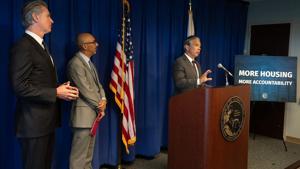
California Attorney General Rob Bonta filed a lawsuit this week against the U.S. Department of Education, disputing its claim that the California Department of Education violated the Family Educational Rights and Privacy Act and challenging its threat to withhold $4.9 billion in federal education funding.
Bonta’s lawsuit, filed against the Trump administration, seeks to block what he described as an unlawful interpretation of FERPA. At a virtual press conference on Thursday, Bonta said the California Department of Education is fully compliant with the law as written and argued that the federal agency does not have the authority to expand statutory requirements.
“The Trump administration has been fond of looking at a law that is clear on what it requires and then twisting it and changing it. Rewriting it in their own minds into something that it is not that is consistent with their own political agenda,” Bonta told The Center Square.
FERPA gives parents or guardians the right to request their children’s education records. The Trump administration in January alleged that the CDE violated FERPA for attempting to “conceal information about students’ gender identity” from the parents.
“Our north star here is the law. The Trump administration cannot change the law with its own absurd rendering of it and then say you are not following the law and then withhold $5 billion,” Bonta said.
According to the complaint, the administration “unlawfully seeks to expand the requirements of FERPA by decree, reading an affirmative duty to disclose student records to parents where none exists and demanding that Plaintiff accede to this interpretation as a new condition of receiving federal education funding.”
On Bonta’s website, the office outlines various LGBTQ+ discrimination protections, including guidance stating that students have the right to disclose, or not disclose, their gender identity on their own terms, regardless of age.
Your school, whether public or private, doesn’t have the right to “out” you as LGBTQ+ to anyone without your permission, including your parents,” the website states.
Greg Burt, vice president of the California Family Council, criticized the state’s approach in an exclusive interview with The Center Square. Burt said gender support plans, documents used by schools to support students who seek to transition, are treated as “unofficial records,” which he argues violates FERPA.
“The school is putting itself right in the middle of the relationship between parent and child and pitting them against each other,” Burt said. “You (the schools) are turning faith-based parents into the enemy that Bonta thinks he has to protect the kids from.”
The California Department of Education has publicly stated there is no “unofficial records” exception under FERPA, including for documents such as gender support plans. In a letter, the department said that whether a support plan or other education record is maintained in a central file or separate location to protect student privacy, it remains subject to parental inspection and review in accordance with FERPA.
Bonta said questions surrounding parental rights are matters for policymakers to discuss, but maintained that the current dispute centers around the law.
California attorney general, Homeland Security debate mask ban

If ultimately upheld in court, California’s ban on masks for federal immigration officers will be enforced by all law enforcement agencies despite doubts by the Los Angeles police chief, state Attorney General Rob Bonta told The Center Square Thursday.
But also on Thursday, the U.S. Department of Homeland Security called the ban unconstitutional and defended its officers, answering The Center Square’s questions by email.
If courts ultimately uphold the mask ban as law in California, local law enforcement and the state Department of Justice would enforce it, just like they would any other law, Bonta said during a virtual news conference focused primarily on a civil rights investigation related to the Eaton Fire in Altadena.
“Laws are there to be followed. Laws are there to be enforced if they’re not followed,” Bonta said, answering The Center Square’s questions.
Bonta also said California has been “spared the level of severity and harm” seen in Minneapolis, where federal immigration officers killed two U.S. citizens who got into confrontations with officers, Renée Good and Alex Pretti. But he added, “We think it might happen. So we’re prepared.”
Bonta called the Minneapolis killings “sickening” and “tragic.” “They should both be alive today.”
Assistant Secretary Tricia McLaughlin of Homeland Security noted candidates for U.S. Immigration and Customs Enforcement undergo months of rigorous training and study topics such as deescalation.
“Our officers only use lethal force in defense of their own lives, the lives of their fellow officers, and for the safety of the public,” McLaughlin told The Center Square. She added they’re trained to use the minimum amount of necessary force.
Federal officers have arrested more 3,500 criminal illegal immigrants including murderers, rapists, child pedophiles and dangerous public safety threats, McLaughlin said.
California’s ban on masks was placed on hold Monday by a preliminary injunction issued by Los Angeles-based U.S. District Court Judge Christina Snyder, who was appointed by President Bill Clinton. Snyder, who’s with the court for the Central District of California, ruled against the state No Secret Police Act’s ban on masks because, she said, “it unlawfully discriminates against federal officers.”
The preliminary injunction is an early phase of the dispute between the state and the Trump administration, Bonta said. “The case continues. There could be a summary judgment. There could be a trial where additional decisions are made by the court about what laws are in place or not in place.”
Before the injunction was issued, Los Angeles Police Chief Jim McDonnell told reporters that enforcement of the ban would endanger Los Angeles police officers. McDonnell said his department would not enforce the ban.
“The reality of one armed agency approaching another armed agency to create conflict over something that would be a misdemeanor at best or an infraction, it doesn’t make any sense,” McDonnell said at a news conference. “It’s not a good public policy decision, and it wasn’t well thought out.”
Gov. Gavin Newsom signed the mask ban, known as Senate Bill 627 or the No Secret Police Act, in September.
When Newsom signed the ban into law, the U.S. Department of Homeland Security said it wouldn’t comply.
“To be crystal clear: We will not abide by [Gov. Gavin] Newsom’s unconstitutional ban,” McLaughlin told The Center Square in September.
McLaughlin commented further Thursday.
“Gov. Newsom’s unconstitutional legislation fans the flames of division, hatred and dehumanization of our law enforcement,” McLaughlin told The Center Square. “The Supremacy Clause [of the U.S. Constitution] makes it clear that California does not control federal law enforcement.”
“At a time that ICE law enforcement faces a more than 1,300% increase in assaults and their family members are being doxxed and targeted, the [fact that the] sitting Governor of California chooses to sign unconstitutional legislation that strips law enforcement of protections, is disgusting,” McLaughlin said.
Answering The Center Square’s questions, Bonta on Thursday noted the federal court did uphold California’s law requiring federal agents to identify themselves during their operations.
McLaughlin noted federal officers clearly identify themselves as law enforcement.
Bonta answered The Center Square’s questions about federal immigration officers.
“Some of the major problems of ICE in America continue,” Bonta said. “They’re masked. They’re armed. They use unnecessary force. They’re traumatizing and terrorizing our communities. They are using warrants issued by their own agencies and not by independent judges, and they think that is appropriate. They don’t have a good consistent use of body cameras.”
Bonta called on congressional Democrats to stand firm in their expectations for reforms.
TVA to keep two coal-fired power plants operating indefinitely

Two coal-fired power plants in Tennessee that had been scheduled for closure in 2026 and 2028 will be kept open for the “foreseeable future” after a unanimous vote by the board of the Tennessee Valley Authority on Wednesday in Hopkinsville, Kentucky.
The TVA, the nation’s largest public utility with about 10 million customers, will continue operating coal-burning units at the Kingston Fossil Plant and the Cumberland Fossil Plant, which currently provide a combined 3.8 gigawatts of power, enough to serve 2.7 million homes on an average day.
The vote comes after four new board members appointed by President Donald Trump were sworn in on Jan. 12, restoring a voting quorum to the nine-member panel for the first time in nearly a year.
Trump dismissed three board members during the first half of 2025, and the Senate voted to confirm three replacements along with a nominee for a vacant seat just before the end of the year.
The board also voted to scrap plans for a new solar facility at the Kingston plant, although it maintained plans to add a natural gas-fired generation unit with 1.5 gigawatts of capacity. At the Cumberland Fossil Plant, the TVA will continue construction on a 1.45-gigawatt gas generation unit along with a 100-megawatt battery storage system.
Advocacy groups including the Southern Environmental Law Center and Appalachian Voices blasted TVA’s decision, saying it was made without notifying impacted communities.
TVA executive vice president and chief financial officer Tom Rice said the utility’s need to meet rapidly increasing energy demand from data centers and population growth, as well as shifts in the federal regulatory landscape, makes it necessary to keep the coal-fired plants in service.
Since January 2023, when the previous board authorized retirement of the coal-generation units at the two plants, the TVA has seen a number of key changes, with a large increase in electricity demand and a declaration of an energy emergency, said Rice.
“We’ve also seen a significant change in the regulatory outlook, particularly for coal, and that creates both the opportunity and the need for us to revisit these decisions,” he said.
Wade White, director of the committee that studied the proposal to keep the coal plants running, has consistently advocated for “coal resiliency” while criticizing “stringent environmental regulations” targeting coal’s economic viability since he joined the board as a Biden appointee in 2022.
“Coal, like other energy resources, should be a part of a comprehensive strategy for delivering reliable, resilient, and affordable electrician to TVA customers,” White said at the meeting.
“Since TVA opened its first coal fired plant during World War II, coal has been a driving force for our power system and over 85 years later, it is still at the heart of what we do,” White said. “For a rural Kentuckian like me, who has known people who work in the western Kentucky mines and others who work at plants like The Shawnee Fossil Plant near Paducah, it is especially gratifying to present these recommendations to the TVA board for approval.”
The TVA is not alone; multiple utilities and regulatory bodies across the U.S. have recently decided to delay planned coal plant retirements, including Dominion Energy, PacifiCorp, Santee Cooper, Alliant Energy and Northern Indiana Public Service.
“TVA already found these coal plants to be uneconomical and unreliable, and that hasn’t changed just because the administration wants to keep coal online,” said Leah McCord, Tennessee Projects and Coalition Coordinator at Appalachian Voices. “For TVA to take this action without public input is contrary to the public power model these new board members all recently affirmed.”
The U.S. Department of Energy on Thursday announced it awarded funding totaling $175 million for six projects that will modernize, retrofit and extend the life of coal-fired power plants that serve rural and remote communities in Ohio, West Virginia, Kentucky and North Carolina.
The projects are part of a $525 million program aimed at expanding and reinvigorating America’s coal power generation through targeted upgrades that increase efficiency, extend plant life and add dependable capacity using infrastructure already built and connected to the grid, according to the Energy Department.
Lawmakers probe nationwide child care fraud

A bipartisan group of senators probed allegations of fraud in the child care industry on Thursday.
The lawmakers called for greater transparency and more rigorous verification procedures to ensure that child care providers are not engaging in fraudulent activity.
The U.S. Senate Health, Education, Labor and Pensions Committee questioned leaders of child care institutions from across the country about allegations of fraud stemming from claims about child care facilities in Minnesota.
In December, online content creator Nick Shirley posted a video alleging day care facilities in Minnesota improperly used millions of dollars in federal subsidies to support the businesses.
Sen. Bill Cassidy, R-La., said the problem of fraud was not isolated to Minnesota. He pointed to improper payments to day care centers in states across the country.
Shortly after allegations of fraud in Minnesota came to light, the Trump administration froze $10 billion in federal funds for child care facilities in five states. California, Illinois, Colorado, New York and Minnesota were among the states where the administration froze its funding.
However, a federal judge later blocked the Trump administration’s attempt to freeze funds and allowed it to proceed.
“We’ve got to protect the taxpayers, we’ve got to allocate the resources where the resources need to be allocated for families who actually have the need,” Cassidy said.
Panelists before the committee called on child care facilities to implement rigorous screening and to ensure businesses are not making fraudulent payments based on faulty information, such as improper child rosters.
Paula Polito, owner of Beary Cherry Tree Child Care center in Louisiana, pointed to the various methods of attendance verification she uses in her business. She spoke about online authorization efforts in the state to aid attendance verification.
“This modernization promotes consistency, strength, fraud prevention and simplifies operations without compromising security,” Polito said.
Sen. Jon Husted, R-Ohio, said the federal government should base its payment system on attendance records rather than enrollment records, like several other states. He also called for greater accountability in the day care licensing process.
Henry Wilde, CEO of Acelero Inc., said the best way to increase accountability is to conduct random visits by state officials and licensing authorities.
“When you go out to do a site visit, also know how many kids have child care subsidies in this building,” Wilde said. “If you have some huge disparity, make sure that you’re flagging it.”
Wilde also warned against creating additional bureaucracy to manage the problems that occur at day care facilities. He said the government should take a responsible and rudimentary approach to preventing fraud.
Democrats on the committee slammed the Trump administration’s cuts to child care funding in states across the country. The Democrat lawmakers warned that blanket cuts to state child care funds would cause more harm than good.
“Serious oversight involves prosecuting specific cases based on solid evidence like the Biden administration did, not issuing a blanket freeze for funding based on conspiracies or politics like Trump has done,” Sen. Patty Murray, D-Wash., said.
Child care professionals on the panel urged senators to increase funding for child care centers and provide greater flexibility to pay educators more highly. Liz Denson, President and CEO of Early Connections Learning Centers, called for more predictable public funding of child care facilities.
“Providers cannot expand access, improve quality, or raise teacher wages without predictable public investment,” Denson said. “The path forward is increased investment, effective oversight and a shared commitment to affordability, access and quality.”
Sen. Maggie Hassan, D-N.H., called for the passage of her bill to provide greater federal investment in child care that will expand access for providers. The bill would aim to allow child care facilities to remain open later in the day.
Denson called on lawmakers to approve more funding for child care facilities and increase teacher pay.
“Even with the federal dollars currently received, they don’t cover the full cost of high-quality care,” Denson said. We’re already so woefully underfunded that we’re blending and braiding and clawing it together to support the families who need us the most.”
Cornyn files Defeat Sharia Law in America Act, another Texas-led effort
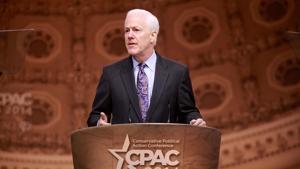
U.S. Sen. John Cornyn, R-Texas, has filed a bill to ban Sharia law in the U.S., another act in a Texas-led effort addressing Islamic ideology.
Cornyn introduced the Defeat Sharia Law in America Act with cosponsor Sen. Tommy Tuberville, R-AL, a member of the Sharia Free America Caucus led by Texas U.S. Reps. Chip Roy and Keith Self. The caucus was launched in December “to counter the alarming rise of Sharia Law in the United States. Sharia is a dominating force that is not compatible with the U.S. Constitution,” they said. Since then, 33 members of Congress from 18 states have joined, The Center Square reported.
“Sharia Law is the antithesis of the rights, beliefs, and values that make Texas and America great, and we must root out and eradicate this existential threat to our way of life,” Cornyn said. He introduced the bill “to ensure anti-American jihadists and those who dare to try and implement Sharia Law’s hateful ideology in our freedom-loving, God-fearing communities are stopped and held accountable for their radical discrimination and flagrant violation of our Constitution.”
The bill amends the Civil Rights Act of 1964 to “improve prohibitions on discrimination by public accommodations” to ensure they apply to any entities attempting to implement Sharia Law. It adds that discrimination includes, “An establishment that provides goods, services, facilities, privileges, advantages or accommodations by implementing Sharia Law.” Those that do “shall be considered discriminating or segregating on the ground of religion under this section.”
Members of the caucus argue Sharia Law is not a religion but a political ideology that is counter to the U.S. Constitution. Cornyn’s cosponsor, Tuberville, said as much.
“Sharia Law is not a religion; it is a death cult and has no place in this country,” Tuberville said in a statement. “People are afraid to call out Sharia Law for what it is: an ideology that calls for the killing of freedom-loving Americans. We have to take action against this poisonous ideology and protect Americans from the growing threat of Radical Islam.”
The bill is the latest action Cornyn has taken to address Islamic ideology. He cosponsored the No Sharia Act filed last fall to prohibit courts from enforcing judgments, decrees, or contracts relying on foreign laws that violate the Constitution. The bill has five cosponsors from Texas, including U.S. Reps. Roy and Self.
Nearly a year ago, Cornyn called on the Department of Justice to investigate the East Plano Islamic Center’s planned Islamic community, EPIC Ranches City, in Josephine, Texas, for potential discrimination. Cornyn also introduced legislation to allow the Treasury Department to terminate the tax-exempt status of groups that provide material support to terrorism, which he argues includes the Council on American-Islamic Relations.
“CAIR is a radical group of terrorist sympathizers with a long history of undermining American values and trying to unconstitutionally impose Sharia Law on Texas,” Cornyn said. Cornyn supports Gov. Greg Abbott designating CAIR as a foreign terror organization in Texas and has called on President Donald Trump to designate CAIR as an FTO at the federal level.
CAIR has sued Abbott, arguing his actions are discriminatory and unconstitutional and denies the terrorism allegations. Abbott has also called on the Treasury Department to strip CAIR of its nonprofit status.
The action comes after Abbott and state lawmakers have taken multiple actions against Islamic groups and ideology, The Center Square reported. Texas Lt. Gov. Dan Patrick has listed banning Sharia law as a top legislative priorities for the next legislative session. A Texas House Republican has called for hearings on the issue; Abbott and the state comptroller are fighting with public schools over Islamic-related issues.
Sen. Ted Cruz, R-Texas, has also filed a bill multiple times over the past 10 years to amend the Anti-Terrorism Act of 1987 to ban all Muslim Brotherhood members from the U.S., The Center Square reported. Last November, President Donald Trump issued an executive order to designate the Muslim Brotherhood as an FTO, which has since been implemented to include multiple branches.
Banning Sharia law is at the top of 10 nonbinding propositions listed on the Republican primary ballot, The Center Square reported.
WATCH: Trump terminates Obama-era climate change policy
The Trump administration on Thursday terminated the Environmental Protection Agency’s “Endangerment Finding,” a landmark policy that led to sweeping climate change regulations and higher costs across the country.
“This action will eliminate over $1.3 trillion in regulatory costs and help bring car prices tumbling down dramatically,” President Donald Trump said. “This radical rule became the legal foundation for the green new scam.”
Trump also said he will terminate green emissions standards on vehicle models produced between 2012 and 2027.
The finding is based on a 2009 action from the Obama administration that restricted greenhouse gas emissions including carbon dioxide and methane. The finding allowed the federal government to restrict these emissions under the Clean Air Act because it claimed the greenhouse gasses posed a threat to public health and welfare.
America’s Power President and CEO Michelle Bloodworth said in a statement provided to The Center Square that the Endangerment Finding threatened the U.S. electric grid by forcing coal plants to shutter.
“EPA’s Endangerment Finding has been used as the basis for regulations that threaten the reliability of our nation’s electric grid,” Bloodworth said . “These regulations, such as President Obama’s Clean Power Plan and President Biden’s Clean Power Plan 2.0, were designed to force the premature retirement of coal power plants across the U.S. and increase our nation’s reliance on electricity sources that are not as reliable as coal.
“Utilities have announced plans to retire more than 55,000 megawatts of coal-fired generation over the next five years,” Bloodworth said. “Reversing these retirement decisions could help offset the need to build new, more expensive electricity sources and prevent the loss of reliability attributes, such as fuel security, that the coal fleet provides. Forcing the retirement of America’s coal fleet and jeopardizing our electricity supply makes no sense because the U.S. coal fleet is responsible for just 2% of global greenhouse gas emissions while China and India’s emissions account for nearly 40%. The U.S. must take advantage of our coal assets, just as our global competitors are relying on coal to fuel their own economic growth.”
Policies like the electric vehicle and corporate average fuel economy mandates raised consumer costs and hurt the overall economy, said Jason Isaac, CEO of the American Energy Institute.
“Getting rid of the bedrock, this foundation will be absolutely tremendous for our automotive manufacturing sector of our economy, which is a massive part of the economy,” Isaac said.
Isaac said the endangerment finding has led to millions of taxpayer dollars supporting electric vehicle production in the United States. In 2023, each electric vehicle sold in the United States brought in roughly $94,000 from subsidies and tax credits, according to Isaac’s research.
Isaac said without these incentives for electric vehicles, the cost of gas operated vehicles will flourish. He added that gas vehicle production has significantly reduced since incentives for electric vehicles pushed forward.
“It’s going to lower the cost of vehicles because you’re just no longer going to have these over burdensome regulations that really don’t do anything to impact the environment or the climate whatsoever,” Isaac said.
While Isaac applauded the administration’s move to loosen regulations for cars, he said this rule is only the first step in climate deregulation across the federal government.
Isaac argued that the high costs of electricity Americans are experiencing across the country is due to the endangerment finding regulations on stationary sources. He said loosening those regulations will lower energy prices.
Kevin Dayaratna, vice president of statistical modeling at Advancing American Freedom, said the scientific conclusions underpinning the endangerment finding are fundamentally flawed. He pointed out that global warming models overestimate temperature findings.
“The proposed policies aren’t going to meaningfully impact the climate because the United States, compared to other countries or compared to the rest of the world, doesn’t emit that much,” Dayaratna said.
Dayaratna explained that climate change models overstated the impacts of carbon on the global temperatures and natural disasters. One way these models did this was to predict the level of damage up to 300 years in advance.
“It is sheer hubris to believe that you could predict what the economy will look like two decades from now, let alone 300 years into the future,” Dayaratna said. “But these models attempted to make such projections about climate damages that far into the future.”
Isaac explained that these federal regulations have significantly affected operations of independently owned energy companies. He pointed to an oil and gas producer in Texas in 2024 that spent $600,000 on compliance with the greenhouse gas reporting program.
“It should be going to the employees, it should be going to building new job opportunities for more people,” Isaac said. “But instead, it was wasted on federal required compliance.”
Looking ahead, advocates for the Trump administration’s move expect legal challenges from environmental groups.
Meredith Hankins, a federal climate legal director at the National Resources Defense Council, said the organization will challenge the Trump administration’s action in court. Additionally, the Environmental Defense Fund promised to pursue legal action.
“The EPA’s slapdash legal arguments will be laughed out of court – and we are going to win,” Hankins said.
However, Isaac argued previous decisions from the U.S. Supreme Court supported actions limiting the EPA’s authority to regulate state emissions guidelines. In 2022, the nation’s high court struck down the EPA’s ability to regulate emissions under the authority of the Clean Air Act.
The Supreme Court said Congress would need to grant the EPA authority to strike down state emissions standards. Isaac also said he expects the 2007 decision in Massachusetts v. EPA to be overturned as a result of future litigation, a key decision that first upheld the endangerment finding.
Bloodworth said Thursday’s action was a good start.
“Overturning bad EPA regulations is necessary but not sufficient,” she said. “The Federal Energy Regulatory Commission, Department of Energy, Congress, state utility commissions, and grid operators must also take action to prevent the closure of more coal power plants.”
Democrats tank DHS bill again, likely triggering partial govt shutdown
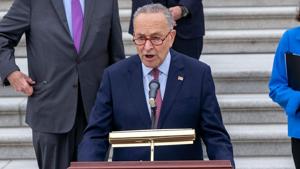
Democrats in the U.S. Senate tanked the Homeland Security full-year funding bill in a last-ditch vote Thursday, all but guaranteeing a partial government shutdown starting Saturday.
This is the second time in less than six months that Democrats have forced a shutdown over policy demands, with the holdup this time centered around immigration enforcement measures.
All but Sen. John Fetterman, D-Pa., refused to fund the Department of Homeland Security unless an “overhaul” to Immigrations and Customs Enforcement is included in the bill, the last remaining fiscal year 2026 appropriations bill.
“Democrats have said it from the start: We need legislation to rein in ICE and end the violence,” Senate Minority Leader Chuck Schumer, D-N.Y., posted on X after his party blocked the advancement of the House-passed bill.
“Without legislation, what Tom Homan says today could be reversed tomorrow on a whim from Donald Turmp [sic]. We will not support a DHS bill that perpetuates the status quo,” Schumer added, referring to the administration ending the immigration enforcement surge in Minneapolis, where two American protestors were fatally shot by ICE agents.
Unlike the other DHS agencies, however, ICE will not even be impacted by a lapse in DHS funding. The agency is already funded for the rest of the Trump administration regardless of annual appropriations, due to a $75 billion boost from Republicans’ budget reconciliation bill.
“Instead of negotiating in good faith, [Democrats are] going to allow TSA agents, FEMA workers, members of our Coast Guard, and countless others to go without a paycheck because they would rather posture to their base,” Sen. Katie Britt, R-Ala., said.
Due to the ICE controversies, Senate Republicans had agreed to strip the Homeland Security bill from a larger funding package and replace it with a two-week funding extension, buying time to negotiate reforms.
With the parties failing to reach a compromise, that Continuing Resolution will expire after midnight Friday, forcing all DHS agencies but ICE to scale back all but the most necessary operations and withhold pay from employees.
Democrats’ demands include prohibiting DHS agents from wearing masks, racially profiling, indiscriminately arresting people, tracking protestors, or entering private property without a judicial warrant in addition to an immigration court warrant.
Other demanded changes include requiring agents to display ID, wear body cameras, and obtain the consent of states and localities to conduct large-scale operations, among other things.
While Republicans and the White House are open to some of these changes, such as body-worn cameras, they have flatly refused others, such as additional warrant requirements.
“I’m not sure if Democrats thought the White House would just accede to every one of their demands or what, but they cannot reasonably expect to reach an agreement without actual negotiation with give and take from both sides,” Senate Majority Leader John Thune, R-S.D., said Thursday.
“Democrats are never going to get their full wish list. That’s not the way this works,” Thune added. “[Republicans] will not agree to measures that make it impossible … for law enforcement officers to do their jobs.”
WATCH: WA to distribute its store of abortion pills to clinics, possibly nationwide
Washington Senators have passed a bill that would allow the state to distribute millions of abortion pills, it purchased after the U.S. Supreme Court decision to reverse Roe v. Wade, free to clinics statewide and perhaps even nationwide.
Senate Bill 5917, sponsored by Sen. Jessica Bateman, D-Olympia, would allow the Department of Corrections to redistribute an enormous supply of abortion pills to clinics in Washington and potentially other states.
Washington state built up a large stockpile of abortion pills when former Gov. Jay Inslee in 2023 ordered a huge supply amid fear that the availability of abortion pills would be restricted when the U.S. Supreme Court returned responsibility for abortion laws to the states.
Another order was placed in 2025 and, according to staff for Senate Republicans, DOC has spent a total of $2.074 million for abortion medications from March 2023 through January 2025.
On the Senate floor this week, Sen. Leonard Christian, R-Spokane Valley, urged fellow lawmaker to adopt an amendment that would require clinics or telehealth providers to educate women seeking the abortion pill that reversing their decision after the first pill is possible within a limited window of time.
Christian grew emotional sharing how deeply he regrets his part in his girlfriend’s abortion when he was 16 years old.
“It is a decision that I will always regret and never forget,” he said.
That girlfriend would later become his wife and Christian said that she still battles depression over the decision to end their first child’s life more than 40 years ago.
Backers of the legislation say the goal is to improve distribution to prevent future waste, as tens of thousands of the doses have had to be destroyed because they expired.
In a Wednesday interview with The Center Square, Christian shared his deep concerns with the legislation.
“The bill would allow the Department of Corrections Pharmacy to become the supplier of free abortion pills to the entire country,” he said. “We tried to give them some amendments that would limit it to Washington state only. We tried to get them to demand at least the cost of payment back. They would not take it.
“In my personal opinion, I think this is them trying to figure out a way to provide abortion pills to states that have stricter laws at our taxpayer’s expense,” he added. “This is the wild west of free abortion pills. Washington state would be leading it, and the Washington citizens could be paying for it.”
Current law requires DOC to recover its costs plus $5 a dose. This legislation also allows abortion pills to be provided without charge and places no limits on distribution.
A news release from Christian after the bill cleared the Senate, called 5917 “a backhanded launch for an ongoing taxpayer-supported program, as long as DOC keeps buying pills in bulk.”
Live Action pro-life correspondent Christina Bennett was concerned the abortion pill and its side-effects can lead to serious complications, infertility and even death.
Live Action recently released a video investigation that reveals insights into how chemical abortion pills are allegedly distributed with minimal oversight and without patients being notified of potentially serious complications.
“Women will suffer from this being on the market in the way that it is. And the more that happens and the more stories are exposed, I think that’ll probably wake up the American public to some extent,” Bennett told The Center Square. “We don’t want that to happen. We don’t want women to be hurt. But we know that it is happening, and unfortunately, when it does happen, sometimes that’s the only thing that wakes people up because they are believing the lies of the industry that this is just about women’s health and safety, and it’s not at all.”
TCS reached out to Planned Parenthood for response to the Live Action video but did not receive a response in time for publication.
According to plannedparenthood.org “medication abortion is very safe. In fact, it’s safer than many other medicines like penicillin, Tylenol, and Viagra.”
Christian said that rather than getting into the business of promoting abortion, the state should put its emphasis on healing women who undergo the procedure and experience regret.
“I can tell you it’s been 40-plus years, and I regret that decision today,” he said. “I should have been a man. I should have taken her out of there. But I didn’t.”
Each one of Christian’s amendments was rejected and SSB 5917 passed on a 32-17 vote, with two Republicans joining all Democrats in voting yes on final passage.
It now awaits consideration by the House.