Center Square
Trump holding out hope deal can be reached with Iran

President Donald Trump is urging diplomacy with Iran following a meeting Wednesday with Israeli Prime Minister Benjamin Netanyahu.
The allies met for a seventh time since the second-term Republican returned to the White House.
In a social media post, the president described the meeting as “very good,” while insisting that “negotiations with Iran continue” to determine whether a deal can be struck with the Islamic Republic.
“If it cannot, we will just have to see what the outcome will be,” Trump wrote. “Last time Iran decided that they were better off not making a deal, and they were hit with Midnight Hammer – that did not work well for them. Hopefully this time they will be more reasonable and responsible.”
The president is weighing an option of deploying a second aircraft carrier and strike group to the Middle East, signaling that another military strike could be on the table. He said, in an interview Tuesday, he would consider the move if the talks with the Islamic Republic fail.
Talks between the U.S. and Iran have been ongoing in Oman since late last week. Tensions are growing.
Israel is reportedly concerned with not only Iran rebuilding its nuclear program, but also ballistic missiles and support for proxy groups, such as Hamas and Hezbollah.
While Trump won’t commit to whether the U.S. will strike Iran for the second time in less than a year, he continues to hurl threats at the Iranian regime, citing a large armada of American naval ships in the region, which has been growing.
Last week, the State Department warned Americans in the Islamic Republic to leave the country. Trump said Iran’s leadership “should be very worried” amid rumors that the talks had hit a snag; that was later rebuffed.
“I’m hearing that Iran wants to restart the new program,” Trump said in a network interview. “If that’s the case, we’ll send the forces to do the job again. They tried to go back to the site, but they couldn’t access it. We discovered that they wanted to open a nuclear site in another part of the country. I said, ‘You do that – we’ll do very bad things to you,’”
The president insists Operation Midnight Hammer, when the U.S. struck Iran’s nuclear sites in June, was a necessary step in pursuing peace in the Middle East.
“If we didn’t take out that nuclear, we wouldn’t have peace in the Middle East, because the Arab countries could’ve never done that,” Trump added. “They were very afraid of Iran. They’re not afraid of Iran anymore.”
During a press conference at the State Department last week, Secretary of State Marco Rubio appeared less optimistic that the U.S. and Iran could reach a deal.
“If the Iranians want to meet, we’re ready,” Rubio said. “I’m not sure you can reach a deal with these guys, but we’re going to try to find out. This is a president that always prefers a peaceful outcome to any conflict or any challenge.”
Last week, the U.S. confirmed it had shot down two Iranian drones flying near the USS Abraham Lincoln, an aircraft carrier sailing in the region.
It is not clear which carrier and strike group would be deployed to join the Lincoln in the Fifth Fleet. The USS Gerald Ford is deployed to the Caribbean to support counter-narco operations in the region.
Norfolk-homeported USS George H.W. Bush could be among contenders. The U.S. Naval Institute reported earlier in the week that the ship was spotted underway in the Western Atlantic.
The president continues to cite the increasingly significant naval presence in the region, hoping to pressure the Islamic Republic to “make a deal.”
“It is moving quickly, with great power, enthusiasm, and purpose,” the president wrote on social media. “It is a larger fleet, headed by the great Aircraft Carrier Abraham Lincoln, than that sent to Venezuela. Like Venezuela, it is ready, willing, and able to rapidly fulfill its mission, with speed and violence, if necessary.”
The president is calling on Iran to “come to the table and negotiate a fair and equitable deal,” underscoring that the Islamic Republic cease trying to rebuild its nuclear program.
First lady charms young patients during NIH visit

Returning for her fourth visit to the National Institute for Health’s Children’s Inn, First Lady Melania Trump met with a group of patients and former patients to mark Valentine’s Day.
The visit goes hand in hand with her Be Best campaign, promoting child wellness. Trump spent time visiting with the young patients while creating Valentine’s crafts.
The first lady was asked an array of questions, including her favorite sport, taste in music and whether she is a queen, to the amusement of Melania Trump.
She previously visited the Children’s Inn in 2018, 2019 and 2020. During her visit on Wednesday, she was seated with a previous patient she had visited in a prior visit.
While Trump visited with patients and their families for nearly an hour, she didn’t make any formal remarks – keeping her conversations informal.
In a statement, she described the impact the Children’s Inn has on young patients and their families at the NIH, located in Bethesda, Md., just north of the nation’s capital.
“Love reveals itself in many forms, especially in the hardest moments of care and compassion,” said the first lady. “The Children’s Inn provides important support to children who have been diagnosed with rare and serious diseases. Returning to The Children’s Inn at NIH is a special reminder of warmth that exists here year-round thanks to the profound resilience of these young people and the dedication of those working to provide comfort, hope, and support during clinical trials.”
The Inn operates as a nonprofit, providing “free residential ‘place like home’ to reduce the burden of illness, make childhood possible, and help advance medical research,” according to a release from the first lady’s office.
WATCH: Newsom signs $90M bill to fund Planned Parenthood

California Gov. Gavin Newsom on Wednesday signed a budget bill into law that would allocate $90 million to Planned Parenthood, a reproductive health care provider.
The funding resolution was quickly voted on and passed in both chambers of the state Legislature earlier this week after a Senate budget hearing cleared the bill last week.
“Planned Parenthood is an extraordinary organization,” Newsom said during a press conference in which he signed the bill. “It’s a point of pride to be the governor and have the opportunity step into the void, and address these assault and attacks on women.”
The funding resolution, which is called Senate Bill 106, makes $90 million worth of grants available to Planned Parenthood in light of the federal budget cuts enacted in the federal budget, H.R. 1, which was enacted last summer. Otherwise known as the One Big Beautiful Bill Act, H.R. 1 restricts any federal money from going to nonprofit health care providers that specialize in reproductive health care, family planning or abortion services.
Those who opposed the passage of Senate Bill 106 said recently they don’t want to see million of dollars go to Planned Parenthood when so many of California’s rural hospitals are in danger of closing. Many have closed already or have closed their labor and maternity wards, according to California lawmakers and organizations such as the California Health Care Foundation.
“Right now, over 60 hospitals in the state of California are on the verge of shutting down, and they have to ask for a hospital stress loan,” Assemblymember David Tangipa, R-Fresno, said on the floor of the Assembly on Monday during debate on the Planned Parenthood funding bill. “In Madera County right now, women must travel outside their county just to give birth, despite a nonprofit [Planned Parenthood] operating an office there. This is not true access to care.”
Tangipa also said on Monday that he opposed the funding measure on fiscal grounds, as well.
“Under the original text of SB 106, we would be funneling millions of dollars to a nonprofit with little to no transparency at a time when it feels like every week brings another case of corruption or misuse of public funds,” Tangipa said during debate over the bill on the Assembly floor. “We should be moving to greater accountability, not away from it.”
Lawmakers also said during a Senate Budget and Fiscal Review Committee meeting last week that the funding package was the result of talks with Planned Parenthood officials specifically, not those who represented other nonprofit health care providers. According to a fact sheet published by Planned Parenthood in 2025, 115 health centers are located in California. The organization touted 1.3 million total annual visits, which resulted in 87,000 cancer screenings, 2.5 million tests for sexually-transmitted infections and 400,000 contraceptive visits.
“The fact of the matter is, they knew exactly what they were doing. They knew the chaos this would create, and they knew the communities that this would harm,” Jodi Hicks, the CEO and president of Planned Parenthood Affiliates of California, said of congressional representatives from California who voted for H.R. 1. “All nine Republican Congress members in California voted yes for that big, horrible bill that had the largest health care cut in history, including completely de-funding Planned Parenthood.”
The governor addressed other questions after the bill signing on Wednesday, including the potential passage of a “billionaire’s tax,” or a one-time tax on the wealth of Californians who have more than $1 billion in assets. The tax could pass if voters pass it as a ballot measure later this year, although those pushing the measure have not yet accumulated enough signatures to get the wealth tax on the ballot, according to news reports.
Some experts warn the measure could drive billionaires out of the state, according to previous reporting Wednesday by The Center Square.
“It’s one-time resources for an ongoing issue,” Newsom said of the billionaire’s tax. “The ongoing burden is to the general fund that will see a decline in revenue as a consequence of the tax.”
U.S. House passes national voter ID bill, sends to Senate
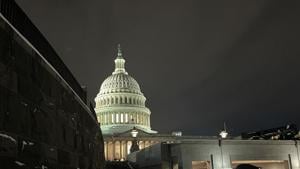
The U.S. House passed legislation Wednesday night that would implement comprehensive election security reforms nationwide, sending it over to the Senate for approval.
The SAVE America Act would require Americans to present proof of citizenship when registering to vote, necessitate in-person voter registration for federal elections, and require states to remove all noncitizens from their voter rolls.
Under the legislation, people would not be able to register to vote with only their driver’s license, since noncitizens can obtain that. They would instead need to present documents proving U.S. citizenship, such as a birth certificate or U.S. passport.
“We require ID for everyday activities like buying cold medicine or boarding a flight. Voting should be no different,” U.S. Rep. Scott Franklin, R-Fla., said on X. “It’s a commonsense step to protect confidence in our system.”
The bill passed 218-213, with one Democrat supporting it.
Democrats have called the legislation an act of voter suppression, given that federal law already prohibits noncitizens from voting.
“They’re trying to say this is a voter ID bill. That’s not what’s happening here,” Democratic Whip Katherine Clark, D-Mass., said Wednesday. “This is election rigging. This is voter suppression. The American people aren’t going to stand for it.”
A majority of Americans actually support the voter ID measure. In the The Center Square Voters’ Voice Poll conducted in October, 70% of voters said they either strongly support (48%) or somewhat support (22%) requiring voter ID at the polls, while 23% either somewhat oppose (10%) or strongly oppose (13%) requiring it. The poll of more than 2,500 registered voters (including 978 Republicans, 948 Democrats, and 639 Independents) is among the most comprehensive in the country.
But since some Americans might not have access to a passport or their birth certificate, Democrats argue, the bill will simply make it harder for veterans, the disabled, minorities, and women who change their last names to register to vote.
“The so-called SAVE America Act will potentially disenfranchise millions of Americans,” Rep. Brad Schneider, D-Ill., said on social media. “It is nothing more than the culmination of Republicans’ ridiculous and shameful attempts to make it harder for people to vote.”
Republicans say the changes, if implemented nationwide, will increase voter confidence in the validity of federal election results and consequently improve turnout.
The Center Square’s Voters’ Voice poll from October also found that nearly half of young adult voters surveyed had “not very much confidence” or “no confidence at all” that the 2026 midterm elections will be conducted fairly.
“Making sure that it’s easy to vote and hard to cheat is a core principle,” Rep. Bryan Steil, R-Wis., told lawmakers. “As we instill election integrity in our system, we will see more people participating because they will have faith in our elections.”
Unless GOP leadership in the Senate tweaks filibuster rules, as many Republicans have recently advocated, the SAVE America Act is unlikely to become law due to the filibuster.
Greenland remains ‘urgent issue’ ahead of Munich Security Conference

Greenland’s strategic significance remains a primary concern for U.S. security policy heading into the Munich Security Conference, according to an expert.
More than 50 heads of state are expected to attend the global security conference held in Germany. Last year’s event featured remarks from Vice President J.D. Vance, who urged Europe to curb migration and criticized some European allies.
Jacob Olidort, chief research officer and director of American Security at the America First Policy Institute, said Greenland remains both an urgent threat and a critical opportunity.
“It’s kind of interesting that Europe doesn’t see the urgency around something in their backyard,” Olidort said Wednesday.
He stressed that security planning for Greenland must focus on missile defense and Arctic territorial defense.
Since returning to the White House in 2025, President Donald Trump has pushed to annex Greenland for more than a year. In January 2026, Trump put the issue at the center of his address to world leaders at the World Economic Forum in Davos, Switzerland.
Trump previously said talks about including the 800,000-square-mile Arctic island under his planned “Golden Dome” missile defense system were ongoing.
After meeting with NATO Secretary General Mark Rutte in Davos, Trump called off threatened tariffs over the issue. Earlier in January, Trump had threatened eight European allies with higher tariffs until Denmark gave up Greenland. However, Trump backed off after reaching what he said was a “framework of a future deal” on Greenland and the rest of the Arctic region.
Trump wants to buy the sparsely populated island, but officials in Denmark and Greenland have said it’s not for sale. Public polling shows Greenlanders overwhelmingly oppose joining America.
As ice melts in the Arctic, more shipping and military ship routes could open in the region, changing the global trade and the defensive relationship between the U.S. and Russia. More mining and drilling exploration could also open up.
Trump maintains that the U.S. acquisition of Greenland is crucial to national security, warning that inaction could allow Russian or Chinese influence. His stated preference remains purchasing Greenland.
Greenland, home to about 57,000 people, depends on Danish subsidies and fishing.
Buying the nation could cost U.S. taxpayers billions or trillions, depending on how the Arctic island is valued.
Greenland is almost entirely reliant on fishing and Danish subsidies of about $1 billion a year. In January, Denmark’s central bank found Greenland faces “challenges for public finances in the form of large deficits and a long-term sustainability problem.”
Lawmakers call for drug price transparency, lower costs

A bipartisan group of lawmakers on Wednesday called on pharmaceutical companies to provide increased price transparency and lower costs for drugs.
Elected leaders on the U.S. House Energy and Commerce subcommittee on Health questioned pharmaceutical company leaders over their role in rising prices for prescription drugs. Several Congressional leaders accused pharmacy benefit managers of inflating drug costs beyond reasonable prices.
UnitedHealthcare, a leading insurance provider, reimburses its own providers an average of 17% more than it pays independent providers for the same services, according to a study published by Health Affairs.
The bipartisan panel offered various solutions to address rising drug costs. U.S. Rep. Morgan Griffith, R-Va., suggested pharmaceutical benefit managers operate as fiduciaries in order to leave them with greater liability in cases where certain treatment or coverage causes suffering and harm to a patient.
“There’s still going to be tough choices that are going to have to be made, but you would have more confidence that those choices are based on doing the right thing as opposed to making the most profit,” said James Gelfand, president and CEO of the ERISA industry committee.
Lawmakers argued the nation’s top insurance providers use vertical integration to take up a large share of the market and drive smaller insurance carriers out.
U.S. Rep. Nanette Barragan, D-Calif., said CVS Health, UnitedHealth Group and Cigna operate nearly 80% of the pharmaceutical benefit managers market. She accused panelists of using this large share to eliminate competition and drive out community pharmacists.
“You are part of the reason why people suffer and why it’s making it harder for people with cancer and HIV to get their drugs,” Barragan told the panelist at the hearing.
Douglas Hoey, president and CEO of the National Community Pharmacists Association, said the consolidation of insurance providers leads to higher drug prices for average Americans. He said the large pharmaceutical benefit managers can sometimes override a doctor’s prescription in favor of a more expensive drug.
“If a patient is prescribed a prescription, the doctor or the pharmacist can sometimes be overruled by the PBM because the PBM makes more money off of a different drug,” Hoey said. “When those patient choices are compromised, there’s less competition and higher prices.”
Lawmakers also highlighted figures that estimate private employer sponsored insurance premiums will rise by 6.5% in 2026, a higher hike than Affordable Care Act premiums.
Lawmakers across the aisle also called for more transparency in financial holdings among large drug manufacturing companies. U.S. Rep. Greg Landsman, D-Ohio, accused leaders of the corporations of prioritizing investments that yield larger profits rather than lowering prices.
Lori Reilly, chief operating officer at PhRMA, said 30% of the company profits are reinvested into research and development. Landsman criticized her for that figure and questioned why more of the remaining roughly 70% does not go toward lowering consumer prices.
“When individuals decide to invest with our companies, there is an expectation for a return on investment just as there is for any for-profit company,” Reilly said.
Billionaires tax appears to send Mark Zuckerberg packing

It appears that Facebook founder Mark Zuckerberg may be moving from California to Florida, where he bought a mansion.
The reason?
A ballot initiative in the Golden State to tax billionaires.
The proposal is sponsored by Service Employees International Union – United Healthcare Workers West. The SEIU UHW says its reason for the one-time tax is to “prevent the collapse of California healthcare and help fund public K-14 education and state food assistance programs.”
“The tax would be paid only by Californians worth more than $1 billion, which is about 200 people who hold a combined wealth of $2 trillion,” the union says on its campaign website.
The Center Square reached out to Meta, Facebook’s parent company, to confirm reports that Zuckerberg plans to move to an island near Miami, but did not get a response before press time.
Susan Shelley, vice president of communications for the Howard Jarvis Taxpayers Association, does not doubt Zuckerberg is leaving. Shelley said there have been several tech billionaires who have bought homes in Austin and Miami.
There is no question that the billionaires’ tax is the reason, Shelley told The Center Square.
“I think what alarmed them is that the Legislature did not stand up in unison and say ‘No, we’ll never allow this,’ so that kind of gave everyone the impression that if it’s not this, it’ll be something else,” Shelley said. “But they’re absolutely targets of the Democrats in Sacramento.”
Supporters of the tax are still collecting signatures to get it on the November ballot. Shelley is not sure that they will be able to make it, as they started late. However, if it gets on the ballot, Shelley said it will only require a simple majority for passage.
“They want to do a 5% seizure of the assets of 200 billionaires, and they want to use it for 90% health care and 10% education,” she said. “And the reasoning seems to be that ‘the Trump administration something something something,’ and therefore they have to raise taxes.”
U.S. Rep. Ro Khanna, D-California, favors the billionaires’ tax.
When U.S. Sen. Ted Cruz, R-Texas, criticized the effort on X in late December, Khanna countered it’s a matter of values.
“We believe billionaires can pay a modest wealth tax so working-class Californians have the Medicaid your party cut,” Khanna told Cruz in a post on X.
Still, Shelley said there’s already “a very progressive income tax in California,” where 1% of the tax filers account for 45% of the state’s personal income tax revenue.
Wayne Winegarden, a senior fellow in business and economics at Pasadena-based Pacific Research Institute, expects lawsuits to be filed if the tax is approved.
“It would be theoretically retroactive to January of this year, which I imagine would be challenged in court,” Winegarden told The Center Square. “For Zuckerberg, it may be too late as he was a resident of the state as of January, so, in theory, he would still be subject to it. But I imagine that would be challenged, and I think they would have a very good case to say that you cannot tax someone like that.”
Meanwhile, Winegarden said, “ballot box budgeting” will make it difficult for lawmakers to make spending plans.
“If you chase away these billionaires, you’re chasing away a substantial sum of our annual income tax revenues,” said Winegarden. “They think you’re going to raise a decent amount in the wealth tax, and perhaps you will. But you’re going to really destabilize the budget in the out years because you’ve chased away all this income and wealth.”
The personal income tax is the largest source of revenue in California. If the tax on billionaires is approved and drives more billionaires away, Shelley warned that it would reduce the amount of revenue that comes into the treasury.
Shelley advised people in other states to pay attention, because this is an entirely new kind of tax, and what often begins in California spreads to other states.
Winegarden agreed.
“This is not an example for other states to follow,” said Winegarden. “Not at all.”
McNabb: Olympics bill protecting women’s sports is next goal

Two proposals in Congress tied to protection of women’s spaces in the Olympics will be the near-term focus of lawmakers, says a former three-sport high school athlete from North Carolina whose career was ended by injury during a volleyball game and a spike by a boy.
Payton McNabb was part of a luncheon on Wednesday led by U.S. House Majority Whip Tom Emmer, R-Minn. She told TCS afterward the encouragement from “leaders who care and want to help every how they can” is immeasurable.
“There are people in power who are willing to say no, and to stand up for women and their safety,” McNabb told TCS. “There was a time when no one was doing that. Four years ago, this didn’t seem possible.
“Now, to share my story, in an intimate way, to pick each other’s brains, what we know from across the country – it’s encouraging. It shows that you do have support and people that are willing, after a time when you didn’t. I’m thankful to be a part of that.”
It was Sept. 1, 2022, at Highlands High School when the spiked volleyball from an opponent changed McNabb’s life. The career of the Hiwassee Dam High athlete, a senior, was done. Today, she still battles medical issues.
Her struggles, she says, are “because of one guy” and adults who were enablers.
She was joined from Independent Women at the table by May Mailman, director of the Law Center at Independent Women, and more than a half a dozen members of Congress.
“When schools and organizations require female athletes to subject themselves to danger, unfairness, and indecency by men claiming to be women, President Trump and key members of Congress are paying attention and will not stand by idly,” Mailman told TCS. “Winning back fairness and common sense will be a flagship issue for Republicans in this era, and we’re grateful to have a champion in Whip Emmer.”
Mailman was an author for second-term Republican President Donald Trump’s Feb. 5, 2025, executive order titled “Keeping Men Out of Women’s Sports.”
Protection of Women in Olympic and Amateur Sports Act, known also as House Resolution 1028 and authored by Florida Republican Rep. Greg Steube, has language to define men and women by reproductive systems. It seeks to amend Title 36 of the United States Code, prohibiting “a person whose sex is male from participating in an amateur athletic competition that is designated for females, women or girls.”
A proposal filed Monday by Texas Republican Rep. Michael Cloud would “require national governing bodies for Olympic and amateur sports to limit participation in events to athletes’ biological sex, defined as immutable and determined at conception.” His bill is known as the SAFE Olympic Sports Act, or Securing Actual Female Events in Olympic Sports Act without the acronym.
Six days before Trump was sworn in, the 119th Congress was in place and Protection of Women and Girls in Sports Act of 2025 – known also as House Resolution 28 – passed the lower chamber 218-206 with just two of 215 Democrats in favor. The proposal amends Title IX, placing a distinction on male or female at birth.
The measure was received in the Senate on Jan. 15, 2025, and since has never even moved to a committee.
“We didn’t spend a lot of time on that,” McNabb said. “A lot of people’s goal for next is getting the Olympics bill, getting that across. This is good timing, and it shows the importance of it.”
Last Friday, Algerian boxer Imane Khelif confirmed what most already believed – he has the male chromosome. He told French sports magazine L’Equipe he also has elevated levels of testosterone. At the 2024 Paris Olympics, Khelif won a gold medal in women’s welterweight boxing.
On Saturday, the International Olympic Committee said a new unified policy with final details still to be determined was coming together for major competitions inclusive of the Olympic Games and world championships. Competitors having experienced full male puberty before any medical transition will face tighter restrictions if wanting to compete in women’s categories.
Mark Adams, for the IOC, at the Milano Cortina Winter Games in Italy said “protecting the female category is one of the key reforms” IOC President Kirsty Coventry wants to bring in. She’s the first woman to lead the nearly 132-year-old organization.
“The Olympics are going to be in Los Angeles in two years,” McNabb said. “Hopefully they’ll get these protections in place before the Olympics come to the states.”
Congressional representation engaging with McNabb and Mailman included, in addition to Emmer, Republican Reps. Stephanie Bice of Oklahoma, Sheri Biggs of South Carolina, Kat Cammack and Steube of Florida, Erin Houchin of Indiana, Jen Kiggans of Virginia, and Mary Miller of Illinois.
“Women’s sports are a huge deal,” McNabb said. “Women’s hockey just blew Canada out. It’s nice to celebrate these times. It shows what we’re fighting for.”
DHS pleads for money; Democrat offers alternative funding bill excluding ICE

With less than 48 hours until the funding stopgap for the Department of Homeland Security expires, a hyper-partisan Congress faces limited options to avoid a partial government shutdown.
Senate Democrats say they will reject any Homeland Security funding bill – the only fiscal year 2026 appropriations bill that isn’t yet law – unless it heavily restricts how DHS can conduct immigration enforcement.
But Republicans have condemned Democrats’ list of ultimatums, pointing out that a partial shutdown wouldn’t affect Immigration and Customs Enforcement operations due to the $75 billion in extra funding it received last year.
Instead, agencies like FEMA, the U.S. Coast Guard, the Secret Service and the Transportation Security Administration will feel the strain.
In a congressional hearing Wednesday that focused on the potential impacts of a shutdown on those agencies, Appropriations Committee Chairman Tom Cole, R-Okla., reminded lawmakers that letting DHS funding lapse “will not achieve the objectives Democrats claim to seek.”
“No matter what Democrats do or say, immigration enforcement will continue,” Cole said. “But if they persist in holding government funding hostage to force their third shutdown in recent months, it will be other critical components of national security that will be harmed.”
TSA Deputy Administrator Ha McNeill told lawmakers that many TSA agents are still financially reeling from the impact of the previous government shutdown that lasted a record 43 days.
“[S]hutdown and funding uncertainties have real and measurable impacts on recruitment, retention, and employee morale,” McNeill stated. “Furthermore, a shutdown would impact TSA’s technology deployment timelines. A shutdown would delay technology improvements and deployments, preventing us from giving our workforce the tools they need to do their jobs.”
Federal employees deemed “essential” – including TSA agents and some members of FEMA, the Coast Guard, and the Secret Service – must work without pay during a shutdown, while the rest are furloughed.
While those agencies won’t shutter, they will cease nonessential operations, which can have both immediate and long-term negative impacts, Vice Admiral Thomas Allan, the Coast Guard’s Vice Commandant, told lawmakers.
“Although missions like law enforcement, national defense, and emergency response continue, a funding lapse has severe and lasting challenges for the Coast Guard’s workforce, operational readiness, and long-term capabilities,” Allan said in prepared statements, mentioning deferred maintenance and backlogs in supplies.
“We are unable to pay our contractors, including small businesses that rely on timely payment to survive,” he added. “We cease activities that do not protect the safety of human life or property from imminent danger, including routine patrols, as well as some fisheries enforcement, maintenance of aids to navigation, and commercial vessel safety inspections.”
Despite the agency heads pleading for funding, both parties are still at a stalemate as Democrats refuse to budge on their demands and Republicans refuse to accept them.
Hoping to buy more time to negotiate, Republican leaders have drafted a four-week Continuing Resolution.
But House Appropriations Ranking Member Rosa DeLauro, D-Conn., introduced on Wednesday another alternative to preventing a partial shutdown: funding all DHS agencies except ICE and Customs and Border Protection.
“Immigration and Customs Enforcement cannot be abolished, but I will not provide a single dime of funding until we see radical changes in how it operates,” DeLauro told the committee. “If Republican leadership blocks this legislation from moving forward, they are responsible for any shuttered agencies, furloughed workers, missed paychecks, or reduced services.”
DeLauro’s counterproposal would also exclude ICE and CBP from DHS’s transfer authority to prevent the department from bypassing congressional intent.
It is unclear how many, if any, Republicans will support the bill. House Republicans still feel jilted that the Senate is recrafting the Homeland Security bill, while Senate Majority Leader John Thune, R-S.D., is still expressing optimism that the parties can reach a compromise.
House opens door to challenge Trump’s tariffs for first time

The U.S. House could soon vote on resolutions seeking to end President Donald Trump’s tariffs around the globe.
Three Republicans joined Democrats to vote down a rule that would have blocked members from offering resolutions related to tariffs until the end of July. The procedural vote opens the door for Democrats to force votes to repeal the president’s numerous tariffs under the International Emergency Economic Powers Act, or IEEPA.
U.S. Reps. Thomas Massie, Don Bacon and Kevin Kiley joined with Democrats to defeat the measure. Bacon said the president’s tariffs are a significant tax on Americans.
“Congress needs to be able to debate on tariffs,” Bacon, R-Neb., said in a social media post. “Tariffs have been a ‘net negative’ for the economy and are a significant tax that American consumers, manufacturers, and farmers are paying.”
The Tax Foundation has said the tariffs will cost the average U.S. household $1,300 this year.
Bacon said taxes and tariffs are not tools of the executive branch and remain the province of Congress.
“For too long, we have handed that authority to the executive branch,” he said. “It’s time for Congress to reclaim that responsibility.”
He also called House Speaker Mike Johnson’s rule barring action on tariffs a gimmick.
“I also oppose using the rules votes to legislate,” he said. “I want the debate and the right to vote on tariffs.”
Phillip Magness, a senior fellow at the Independent Institute, said Congress may focus first on neighbors and allies, including Canada and Mexico.
“Opponents of tariffs in the House will likely focus their efforts on repealing Trump’s IEEPA tariff ’emergency’ declarations against close trading partners such as Canada, Mexico, and Brazil,” he told The Center Square. “This is the strategic move for the short term.”
But Trump still controls the White House and could veto legislation that threatens his policy goals.
Massie, R-Ky., said he voted to “represent the people.”
“Taxing authority is vested in the House of Representatives, not the Executive,” he wrote in a post on X.
Johnson had been using the House rules committee to block members from bringing a vote to the floor on any of the emergencies that underly Trump’s tariffs. Johnson’s rules excluded tariff-related matters from the “calendar days” during which the House conducts its business.
Johnson renewed the rules prohibition on a tariff vote three times and sought a fourth extension, until July 31. But that failed, dealing a blow to both Johnson and Trump.
Johnson said the majority of House Republicans support the president and want to “give him the latitude to continue his trade policy.”
Magness said it could put some Republicans in a tough spot ahead of the midterms.
“There have been rumblings of discontent over tariffs among House Republicans for months. Johnson tried to justify his rule to the GOP caucus on the grounds that it would insulate Republicans from having to go on record for or against tariffs before election day,” he told The Center Square. “National polling trends have shown that tariffs are deeply unpopular with the American public right now. Going on record in support of tariffs could create a political liability for Republicans in November due to public opposition to their stance.”
On Wednesday, Kevin Hassett, director of the National Economic Council, said economists were wrong about Trump’s tariffs.
“People who were naysayers about the tariffs said that we’d have low growth and high inflation,” he said. “Instead, we have low inflation and high growth.”
Last April, Trump imposed import taxes of at least 10% on every U.S. trading partner. Since then, the president has used tariffs under the 1977 International Emergency Economic Powers Act to achieve policy goals at home and abroad. Those tariffs have pushed up prices for U.S. manufacturers and consumers, but the White House says that foreign countries will bear the cost.
A group of states and small businesses challenged Trump’s tariffs under the 1977 law, winning in two lower courts before the administration appealed to the U.S. Supreme Court. The high court agreed to hear the case on an expedited basis. The Supreme Court heard oral arguments in the case in November, but has yet to rule on the matter.