Center Square
Exclusive: Report says Arizona could save billions of dollars if fewer people smoked

A new report shows Arizona could save billions of dollars if it lowered the number of residents who smoke.
Common Sense Institute Arizona released a report on Wednesday morning showing the effects that cigarette smoking has on Arizona’s fiscal costs. CSI discussed the report and smoking’s impact on Medicaid costs with The Center Square during an exclusive interview.
The report found cigarette smoking represents up to $11 billion in yearly total health care expenditures in the state.
Arizonans who smoke have fallen from 19.3% in 2011 to 10.2% in 2026, which ranks the state as the 17th lowest rate in America, the report found.
According to the report, 18.9% of Arizonans enrolled in the state’s Medicaid smoke.
Zachary Milne, a senior economist for CSI, told The Center Square that nationwide smoking rates are higher among Medicaid enrollees compared to the rest of the population.
Milne said the report is “as much about Medicaid costs as it is about cigarette smoking.”
The report is in the context of the federal and state governments seeking ways to reduce Medicaid spending, he said during the exclusive interview.
Milne referenced the changes in H.R. 1, also known as the One Big Beautiful Bill Act, to Medicaid eligibility rules, including who is eligible for the program, how people remain eligible and how states pay for the program.
He added it is becoming “increasingly important” for states to “find ways to limit” Medicaid costs.
Extensive research shows “that medical costs associated with cigarette smoking are quite significant,” Milne noted.
”Given the higher prevalence of cigarette smoking among Arizona’s Medicaid enrollees, it means those costs are disproportionately borne by the Medicaid system,” the economist stated.
Milne told The Center Square if Arizona can reduce its smoking population by 1 percentage point, it could save the state between $257 million and $1.1 billion in personal health care expenditures and decrease productivity losses by nearly $151 million.
On top of this, the report said if Arizona could get its smoking population below 5%, it could save the state $1.2 billion annually.
Milne said “smoking contributes about $182 million annually in excess Medicaid costs from Arizona’s general fund.”
To contextualize this number, he said the $182 million “could fund nearly 7%” of Arizona’s state Medicaid general fund budget.
The report said this excess money spent on Medicaid is around 22% of the average annual increase in Arizona’s general fund “spending over the past decade.”
According to Milne, a concern exists that Arizona’s Medicaid budget will continue to increase, given the numerous expansions over the last two decades.
Enrollment in Arizona’s state Medicaid has increased from 45 per 1,000 residents in 1985 to 260 per 1,000 residents in 2026, Milne noted.
As the number of people being enrolled in state Medicaid increased, its budget has nearly “quintupled in the last 20 years,” he said.
The report stated spending on state Medicaid accounts for almost one-third of Arizona’s total spending and nearly 12% of its general fund.
Based on fiscal year 2026 expenditures, Arizona’s seven Medicaid line items “would yield $3.8 billion in Medicaid expenditures tied to smoking related health care costs,” the report estimated.
San Francisco sued over reparations fund for Black residents

A lawsuit is challenging a San Francisco ordinance that establishes a reparations fund for Black residents.
The ordinance, signed in December by San Francisco Mayor Daniel Lurie, a Democrat, is aimed at addressing systematic harms. Even so, the Pacific Legal Foundation said this is wrong.
“The purpose of the lawsuit is to make sure that the city and county of San Francisco is not spending taxpayer dollars on an unconstitutional, unlawful plan, which is the reparations plan,” Pacific Legal Foundation attorney Andrew Quinio told The Center Square this week. “By having the San Francisco Human Rights Commission administer the funds to implement this reparations plan, San Francisco is engaging in steps that will carry out a plan that violates the Constitution.”
Pacific Legal Foundation filed the pro bono lawsuit on behalf of San Francisco residents Richard “Richie” Greenberg and Arthur Ritchie, as well as the Californians for Equal Rights Foundation.
“I’ve been keenly paying attention to this issue of reparations for several years now, watching as city hall officials (and now the mayor) have consistently ignored law and constitutional rights of us taxpayers,” said Greenberg in a CFER news release. “I have reached out to the Board of Supervisors, the mayor, the city attorney, and the reparations committee itself to demand they cease wasting taxpayers’ money on this unconstitutional plan, and the time has come to bring them to court.”
According to a page on the Pacific Legal Foundation’s website, the ordinance stems from the African American Reparations Advisory Committee, which the city established in 2020 to develop proposals for reparations. In 2023, the committee released suggestions that included programs and benefits such as a one-time payment of $5 million, supplemental income for lower-income households, job and tuition assistance, and the elimination of student loan debt.
The African American Reparations Advisory Committee did not respond to The Center Square’s request for comment.
“You can’t treat people differently based on race. You can’t advantage or disadvantage people based on race, ethnicity and ancestry as the reparations plan does here,” Quinio told The Center Square during a phone interview. “San Francisco is using taxpayer dollars to bring that plan forward and make that plan come to fruition, and they can’t do that.”
The lawsuit is filed in San Francisco Superior Court, which is a state court.
Quinio, who is in Orange County, expects a response from San Francisco in the next month. Depending on how the city responds, Quinio said it might be another month before a judge decides motions.
The Center Square reached out to Mayor Lurie’s office for comment and was told it had not yet received the lawsuit.
“Once we are served, we will review the complaint and respond in court,” Jen Kwart, communications director at the Office of City Attorney David Chiu, told The Center Square.
Meanwhile, Quinio expressed hope the lawsuit will “demonstrate to other cities, counties or states that taxpayers take their taxpayer dollars very seriously,” not to mention the responsibilities of their governments.
“A lot of these cities and counties and states that are studying this are doing it really without regard for the public funds and resources that they are already putting behind these efforts,” said Quinio.
Valero begins shuttering Bay Area refinery, will import fuels

A Valero Energy refinery in the Bay Area that provides about 9% of California’s gasoline supply began shutting down at the end of January, earlier than some anticipated, with potential knock-on effects on gas and motor fuels prices in Nevada, Arizona and other western states.
A former manager at Valero Energy, Mike Aziza, said the San Antonio-based oil company started idling the Benicia, Calif. refinery on Jan. 31, and thermal imaging reports show it is not emitting heat, according to a report in the California Globe.
Californians paid the nation’s highest gas prices as of early Wednesday morning at $4.50 per gallon, according to the American Automobile Association. That’s above the national average of $2.92.
Drivers in neighboring states Nevada and Arizona, some of them supplied by gasoline produced at California’s refineries, paid the fifth and ninth highest fuel prices in the nation.
Philipps 66 closed its Los Angeles refinery in October. Now Valero has begun shutting down production at Benicia, potentially reducing California’s gasoline production by a combined 20% in less than a year’s time.
The closure of the two California refineries could cause prices to rise to $8.44 a gallon by the end of 2026, according to a study by University of Southern California professor Michael A. Mische published in April of last year, as the Center Square reported in September.
In early January, California Gov. Gavin Newsom said Valero confirmed it would continue to supply the state’s gasoline markets with imports as a phased shutdown began at the company’s 144,000-barrel-per-day Benicia refinery in February.
“This marked a constructive development from an earlier announcement that included the possibility of full closure and exit from the Northern California market in early 2026,” Newsom said on Jan. 6.
Newsom’s office said operations remain unchanged at Valero’s other refinery in California, a 135,000-barrel-per-day facility in Wilmington. Valero said the Wilmington refinery will “maintain normal operations.”
Valero said in a statement that it “remains committed to fulfilling its contractual supply obligations in the California market and anticipates importing additional gasoline volumes to the Bay Area in the near term.”
Benicia Mayor Steve Young said the refining facility will likely become a “tank farm” where Valero will continue to import, store, and distribute gasoline. The city anticipates losing annual tax revenues of approximately $7.7 million to $8 million — about 12% of its general fund, Young told KPIX CBS news.
Because California refineries provide approximately 86% of Nevada’s and one-third of Arizona’s motor fuel, these states are also highly vulnerable to significant price increases and supply disruptions.
University of Houston Energy Fellow Ed Hirs said the closure of the Benicia refinery is another step in California’s transition to cleaner fuels that pushes fossils fuels companies to relocate production outside the state. Oil refiner Union 76, Phillips 66 and Valero have all shut down refineries in the state in recent years, Hirs noted.
“In California, it is expensive to produce the oil. It’s difficult to transport the oil, and it’s increasingly more expensive to refine it,” said Hirs. “The refineries must operate under environmental restrictions that it doesn’t compensate anyone to rebuild, refurbish them, because in some cases because they are as much as a hundred years old and it would be expensive.”
Hirs said higher prices paid by California’s drivers will be borne disproportionately by the working poor, who need their vehicles to get to work and farm their lands. The costs of gasoline make up a large percentage of the expenditures of those with low incomes, and their personal finances are sensitive to higher gasoline prices, he said.
Refiners now supplying motor fuels in California will be able to raise their prices to match the higher prices that consumers will pay for gasoline imports, Hirs said.
Phillips 66 and midstream oil and gas company Kinder Morgan are considering a joint venture, called the Western Gateway Pipeline Project, that would pair a 1,300-mile-long pipeline running from Borger, Texas, to Phoenix with a reversed segment of the existing Santa Fe Pacific West system, which could deliver refined fuels to Southern California, according to Industrial Information Resources, an industry publication.
Brian Mandell, head of marketing and commercial operations at Phillips 66, said in a recent quarterly earnings call that his company will continue to import barrels into California by sea. But he added the Western Gateway project could serve the California market. “All our Mid-Continent refineries can make Arizona-grade gasoline and California-grade gasoline. So we see the pipeline as a great opportunity for California, for Arizona, for Nevada and for all the potential shippers.”
California may not reduce pollution overall by adopting policies that lead refiners to process oil outside the state and then import by pipeline, said Hirs. “Through the state’s policies, California isn’t reducing pollution much, they’re just outsourcing it to someplace else.”
California’s drivers pay the nation’s highest taxes and fees on gasoline, which amount to approximately $1.30 of each gallon purchased. This compares with 20 to 30 cents per gallon in most states in the South and Midwest.
U.S. adds 130,000 jobs in January, unemployment 4.3%, defying expectations

The U.S. economy added 130,000 jobs in January, according to new data released from the Bureau of Labor Statistics.
The addition of jobs marks a significant upward shift from previous months. In December, the economy only added 50,000 jobs and in November it added 64,000.
The unemployment rate sat at 4.3%, which is slightly lower than December unemployment at 4.4%.
The health care sector added 82,000 jobs in January, a significant contributor to the overall growth in the month. Ambulatory services added 50,000, hospitals increased by 18,000 and nursing and residential care facilities added 13,000 jobs within the healthcare sector.
Social assistance employment increased by 42,000 in January, with gains primarily coming from individual and family services.
Heather Long, chief economist at Navy Federal, said the report indicated at “January job surge” that was “way above expectations.”
The construction sector followed close behind by adding 33,000 jobs in January.
The federal government lost 34,000 jobs in January. The Bureau said the decline was due to federal employees who accepted deferred resignation offers in 2025 but were only removed from payrolls in January.
Since its peak in October 2024, federal government employment has decreased by 327,000 or 10.9%.
Overall, the unemployment rate remained steady from 2025. Over the course of 2025, unemployment rose from 4% to 4.4%.
Some economists praised the Trump administration for the reports added numbers.
“Trump was handed an economy that was losing private sector jobs and adding [government] payrolls, but he successfully flipped the script, and one year later its all private sector growth while cutting [government] jobs,” said economist E.J. Antoni.
Airspace around El Paso reopened following abrupt closure

All flights in and out of El Paso, Texas, have resumed after the Federal Aviation Administration grounded all flights, issuing a no-fly zone in the region late Tuesday evening.
The FAA initially imposed a 10-day flight restriction, citing security reasons, effective until 11:30 p.m. Feb. 20. The restrictions indicated that flights in the airspace must maintain an altitude of at least 18,000 feet.
Multiple reports indicate Mexican cartel drones had entered U.S. airspace, with the Department of War acting to neutralize potential threats.
In addition to El Paso, airspace south of Las Cruces, N.M., and Santa Teresa, which borders Mexico, were also closed.
Despite El Paso and Santa Teresa bordering Mexico, the airspace across the border remained open throughout the ordeal.
The incident could reignite threats made by President Donald Trump last month that he is considering carrying out strikes against cartels in Mexico.
During an interview with Fox News’ Sean Hannity, Trump made the announcement, with plans to target Mexican drug cartels.
“We are going to start now hitting land, with regard to the cartels. The cartels are running Mexico,” the president told Hannity. “It’s very, very sad to watch and see what’s happened to that country, but the cartels are running and they’re killing 300,000 people in our country every single year.”
Trump touted his war on drugs, saying his administration has “knocked out 97% of the drugs coming in by water.”
FBI warrant called ‘recycled election conspiracy theories’
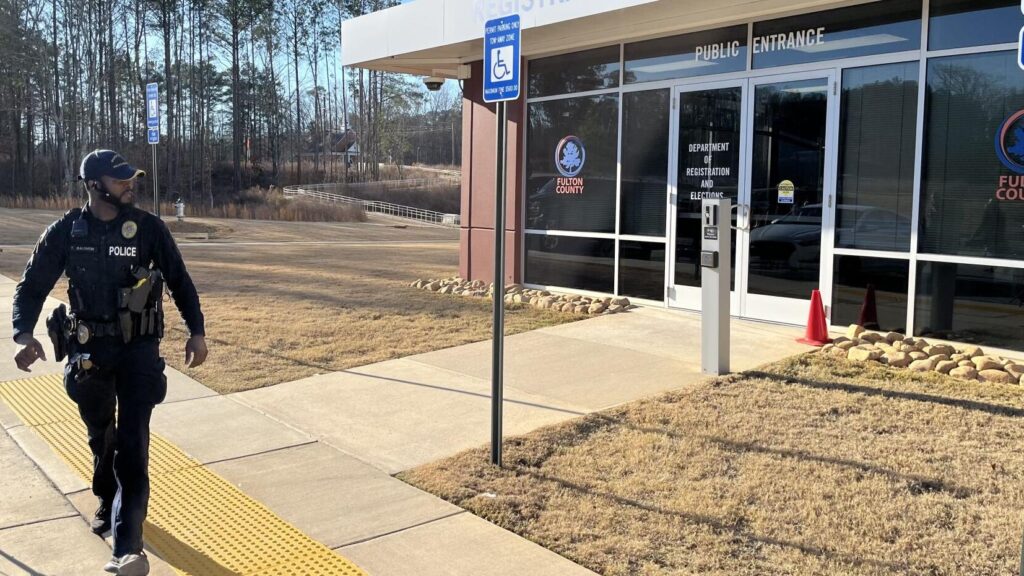
A search warrant for the Fulton County Election Board offices is part of a plan to “dramatically remake” elections, said Lauren Groh-Wargo, CEO of Fair Fight Action.
The FBI raided the Georgia office on Jan. 28, taking physical ballots, tabulator tapes, ballot images and voter rolls. The intention behind the raid is “clear,” Groh-Wargo said in a news conference held by the organization.
“They want to dramatically remake our elections, to curtail who is able to vote, who is able to vote and get their votes counted,” Groh-Wargo said. “They want to dramatically reduce early vote and vote by mail.”
Fulton County is the only county raided by the FBI, but this is the “tip of the iceberg,” she said.
“We all know this is a much larger, broader, right-wing voter suppression conspiracy that is now central to one of the two parties operation procedures,” Groh-Wargo said.
The accusations have already been “debunked,” said Fulton County Commission Chairman Robb Pitts in a news conference broadcast shared on YouTube by WXIA Atlanta.
“Fulton County will fight his with every resource that is at our disposal, and we will not stop fighting,” Pitts said.
President Donald Trump has questioned the outcome of the 2020 presidential contest in Georgia, which he lost to Joe Biden by 11,780 votes. Biden defeated Trump 306-232 in electoral college votes; Georgia contributed 16 to the Democrats’ win, not enough of a swing (32 points) to reverse the 74-point setback. Recounts did not find enough evidence to overturn the results.
The FBI said in the warrant that it wanted all physical ballots, including envelopes, damaged ballots, advanced voting ballots, tabulator tapes, ballot images, and voter rolls, according to the warrant filed in U.S. District Court. Fulton County is suing to get the documents back.
Trump shared an all-caps post on Monday from Jan Johnston, a member of the Georgia State Election Board, that said the records should not be returned to Fulton County until they were “copied, reviewed and investigated.”
The president is using Fulton County and looking at other cities to nationalize elections, Pitts said.
“I am not a constitutional lawyer by any means but I do know that states run elections, not Congress and not the White House,” Pitts said.
Agency heads stand by immigration enforcement efforts

Federal immigration enforcement agency heads defended their leadership and touted agency accomplishments under the Trump administration, while congressional Republicans and Democrats painted very different pictures of those efforts.
On Tuesday, the House Committee on Homeland Security held its first hearing since the shootings of Renee Good and Alex Pretti by ICE officers in Minneapolis, Minn., but agency heads also declined to answer questions about their deaths.
Committee Chairman Rep. Andrew Garbarino, R-N.Y., clarified before questioning began that ongoing investigations limited what agency heads could share. He said the FBI, Department of Homeland Security and the Department of Justice were all conducting investigations, but he obtained commitments from the directors of ICE and Customs and Border Protection that they would provide the investigations’ findings to the committee once they were complete.
“We are fully committed to giving you the full and unabridged investigation,” said ICE Director Todd Lyons.
However, Rep. Dan Goldman, D-N.Y., later questioned that statement because of previous statements from DHS Secretary Kristi Noem, Deputy Attorney General Todd Blanche and others from those organizations were not investigating Good’s killing.
Democrats focused their questions on the more controversial aspects of the Trump administration’s immigration enforcement and deportation efforts, including ICE agents conducting arrests in plain clothes or masks, stories of American citizens being detained, some abridged training programs and excessive use of force. Several argued that ICE, CBP and Citizenship and Immigration Services aren’t being held accountable for their actions.
Goldman recalled his experiences as a federal prosecutor, claiming none of the law enforcement officers he worked with ever wore masks.
“You and your untrained, unqualified, unvetted, unidentified agents are intentionally terrorizing our cities and communities all over this country to avoid accountability for their excessive force and their lawless actions,” Goldman said. “That is why you’re wearing masks – so no one can hold you accountable.”
Rep. Lou Correa, D-Calif., said that American citizens from his district have been detained by ICE. Correa said some of his constituents have asked him what kind of identification they should carry so they’re not deported.
“An American citizen shouldn’t carry or shouldn’t feel the need to carry –” Lyons started to respond.
Correa interrupted him with a story of an American citizen from his district who was pulled over while driving, and ICE agents arrested him even after he showed them his passport.
“No American citizen will be arrested for being an American citizen,” Lyons replied.
Democrats also asked if any ICE agents had been fired or disciplined for inappropriate conduct or the use of excessive force.
Lyons said he would get Democrats “the data” on terminations, disciplinary actions or investigations into ICE agents, but he also said he wasn’t “going to speak on any personnel actions.”
Republicans, on the other hand, asked questions about standard operating procedures and training, and Rep. Michael McCaul, R-Texas, indicated that he believed that Border Czar Tom Homan had made some necessary course corrections after being called in to de-escalate the situation in Minnesota.
Otherwise, Republicans’ questions centered on officer safety and immigration agencies being able to effectively reverse the consequences of the prior administration’s border policies.
“I can’t imagine being a DHS officer, an ice officer, and being threatened with violence, having death threats, being doxed, having your family identified, putting that on the internet and violently telling you that they are going to kill you because you are enforcing the laws that are on this books that were passed by both sides of the aisle in this body,” said Rep. August Pfluger, R-Texas.
“Director Lyons, how many of your agents are being doxxed, threatened or harassed?” Pfluger said.
“We’ve had over an 8,000% increase on death threats,” Lyons responded.
Lyons, CBP Commissioner Rodney Scott and USCIS Director Joseph Edlow cited many statistics on how their agencies have accomplished their missions during their testimonies, including achieving the “most secure border in the nation’s history.”
They listed record-low illegal crossings between ports of entry, daily border encounters dropping by 95%, and a massive increase in drug seizures among their proudest accomplishments. They also cited a 138% increase in fraud referrals from USCIS, stronger prevention of the abuse of public benefits and visas, a more than 900% increase in deputizations of local law enforcement officers to perform immigration enforcement, and the location of 145,000 of the children “lost” by the Biden administration.
They made almost 380,000 arrests in the last year, including 7,000 “suspected gang members” and over 1,400 “known and suspected terrorists.” They’re also working on building a “smart wall” that will optimize technology for enhanced border surveillance.
“I’m proud to serve alongside a workforce that’s deeply committed to advancing the President’s agenda, protecting our communities and restoring integrity to America’s legal immigration system,” Edlow said.
Puyallup teen wrestler says school ignored her claim of sex assault by male opponent

The office of Pierce County Sheriff Keith Swank and the Puyallup School District confirmed Tuesday they are conducting an investigation into an alleged sexual assault against a female Puyallup high school wrestler.
The Rogers High School sophomore reported the alleged assault to school officials and her coach two days after the December incident, but the family contends administration failed to take meaningful action to protect and investigate her claim of sexual assault.
The alleged victim, 16-year-old Kallie Keeler, says the incident happened during a Dec 6, 2025, match in which she was wrestling against a 190-pound transgender wrestler. She did not know he was a biological male at the time.
Video of the match taken by Keeler’s mom and featured in Brandi Kruse’s unDivided podcast, shows the teen’s face grimacing as the opponent’s hand is seen between her legs.
The alleged victim claims the opponent pressed up inside her with his fingers for several seconds, so she then gave up the match moments later.
According to Kruse, school officials did not report the incident to the Pierce County Sheriff’s office until Jan 30, 2026, nearly two months after it happened.
“This series of events suggests that a number of Rogers High School staff and employees knew about Kallie’s allegation of sexual assault and didn’t do anything with it,” Kruse wrote. “Under Washington State law, mandatory reporters are required to report allegations of sexual assault within 48 hours.”
Puyallup School spokeswoman Sarah Gillispie declined comment on the specifics in response to an inquiry from The Center Square.
“This matter is under investigation,” she wrote in the statement. “As such, we cannot share details or discuss specifics. What we can say is that student safety is a top priority and that all reports involving student safety are taken seriously.”
Pierce County Sheriff Keith Swank confirmed the investigation in a brief voicemail to the TCS Tuesday morning.
“We did take a report and it is in the hands of the prosecuting attorney’s office now for them to review for possible charges to be filed,” Swank said.
The Keeler family was unable to provide further comment for TCS on advice from their attorney.
Brian Heywood, founder of Let’s Go Washington, backing an initiative to protect girls sports and private spaces for females, issued a statement in response to the incident.
“We’re grateful to the unDivided podcast for holding the Puyallup School District accountable and forcing the case to be moved to the Pierce County Sheriff’s office for investigation,” the statement said. “How many young women have to be assaulted, violated, bullied, mocked, or even sued before the state takes action to protect them?”
Meantime, following a TCS exclusive interview with Superintendent of Public Instruction Chris Reykdal last week about the initiative, OSPI has tentatively agreed to meet with two 16-year-old girls who became the face of the fight to protect girls sports in Washington.
The families of Ahnaleigh Wilson and Frances Staudt had previously requested to meet with Reykdal but received no response. Now, the Superintendent has indicated he will hear their stories.
Exclusive: Teachers forced to un-teach social media claims

Teachers across the country say social media misinformation is affecting instruction, with many spending class time correcting inaccurate details students learned online, according to a new national survey exclusively given to The Center Square.
Sixty-seven percent of teachers surveyed said they have had to correct or “un-teach” inaccurate information students picked up from YouTube, TikTok or similar media platforms. Over 49% of teachers say this occurs more than once.
The findings suggest that as digital content becomes more integrated into student learning, teachers are increasingly tasked with addressing inaccurate or misleading information alongside traditional instruction.
The survey, conducted by online education provider K12, included responses from 503 parents and 505 K-12 teachers nationwide. The poll was designed to examine how digital creators and platforms are influencing student learning and classroom instruction.
Students spend over 260 hours per year watching educational content on YouTube or other platforms, according to the study. Seventy-three percent of parents said their children watch educational videos online, and 89% said their children’s grades have improved as a result.
At the same time, 37% of teachers said they feel pressure to adjust their teaching style to resemble that of online video creators to keep students engaged.
With the rise of technology, school districts have implemented phone bans to curb distractions in class. The movement to ban the technology from classrooms has gained bipartisan popularity among several state lawmakers. Around 76% of U.S. public schools, from California to Florida, have implemented some form of ban.
While many educators and parents reported benefits from using online educational content, 57% of teachers said such videos are both helping and harming student learning. Sixty-five percent said they have incorporated TikTok or YouTube content into their lessons.
The influence of online platforms is also shaping student aspirations, the survey found. Thirty-seven percent of parents said their child has expressed interest in becoming an educational content creator on platforms such as YouTube or TikTok.
Trump’s proposed firing rule could save taxpayers $6.1 million yearly

The Trump administration proposed a rule on Tuesday to change the appeals process when a federal employee is fired, with possible savings of $6.1 million for taxpayers.
The Office of Personnel Management, the federal government’s human resources agency, proposed a rule that would give it the authority to review the appeals process of a federal employee who is fired, instead of the Merit Systems Protection Board.
The agency said this rule change would reduce costs for federal agencies and allow them to engage in more widespread reductions in force.
Typically, employees furloughed for more than 30 days or demoted by a widespread reduction in force can appeal the action to the Merit Systems Protection Board. OPM would take over that authority, in a move it called “honoring congressional intent.”
The agency argued current federal employee appeals’ processes are expensive, antiquated and lengthy.
“The return of adjudicative responsibility to OPM will likely result in net cost savings to the government,” the agency wrote.
While the agency estimated costs would be saved over time, implementation of the rule is estimated to cost $1.2 million across the whole government.
However, over the long term, OPM estimated that it will save more than $6.1 million for taxpayers due to the rule’s proposed consolidation of litigation. Annually, the new process is estimated to cost taxpayers $1.1 million per year, compared to the $7.2 million under the MSPB.
Some federal employee advocates have slammed the Trump administration’s proposal. Everett Kelley, president of the American Federation of Government Employees, criticized the administration’s move to alter the appeals process.
“Eliminating independent review of federal RIF actions would not only make it harder for employees to challenge their proposed terminations, but it would essentially give the administration free rein to terminate huge swaths of the federal workforce without meaningful independent oversight,” Kelley said.
OPM rule makers said the process would remove unnecessary appeals burdens and allow decisions to be concentrated in one agency that is aligned with the goals of the administration.
“These actions unlawfully concentrate removal authority in OPM and directly undermine the statutory framework Congress established to ensure an independent, professional, and nonpartisan civil service,” Kelley said.
Kelley said he would review legal options if the rule was finalized. Public comment can be submitted on the rule until March 12.