Center Square
Everyday Economics: Cooling jobs, a cautious Fed, and a housing recovery that needs confidence

The week ahead is framed by three macro threads that are increasingly pulling against each other: a Federal Reserve that is debating how restrictive policy still is, a labor market that continues to cool beneath the surface, and a housing market that’s showing pockets of improved affordability – but transaction volume that remains weak against a fragile confidence backdrop.
We’ll start with a heavy lineup of Fed officials on the speaking circuit. But the bigger signal will come from a delayed jobs report, January existing home sales, and the CPI report.
The labor market is cooling — and the openings vs. job seekers picture has flipped
A useful way to summarize the shift is to compare the balance of job openings and job seekers at the peak of the boom versus now.
In late 2025, there were more job seekers than job openings. In fact, by December there were about 16% more unemployed workers than available openings – a meaningful change from the post-pandemic peak. In April 2022, by contrast, there were roughly 2.3 job openings for every unemployed worker, a labor market tight enough to give workers exceptional bargaining power.
That’s not a small rotation – it’s the difference between a job market where workers can move easily and one where mobility is more constrained, and hiring becomes harder to secure.
This is the “low-hire, low-fire” labor market. Employers are reluctant to cut staff aggressively, but they’re also reluctant to expand payrolls. The result is a labor market that looks stable in the headline unemployment rate – until it isn’t. If the number of job openings continues to decline or layoffs rise even modestly, unemployment could move higher fairly quickly.
Waller’s message: policy is still restrictive, labor is the risk.
Fed Governor Chris Waller just delivered one of the clearest “cut sooner” arguments you’ll hear from a top policymaker. He said he dissented at the most recent meeting because he concluded that a 25bp cut was appropriate. In his view, last year’s cuts moved policy closer to neutral, but monetary policy is still restricting activity – and the data make it clear that additional easing is needed.
His case rests on two points.
First, he argues the labor market is weak despite solid economic growth. The unemployment rate has risen over the past year even if it ticked down recently. More importantly, payroll growth in 2025 was very low compared with the prior decade. Waller goes further: he expects upcoming revisions to show payroll employment growth was essentially flat – “zero, zip, nada.” His point isn’t rhetorical flair; it’s a warning that labor demand has cooled materially and that the labor market can deteriorate faster once it begins.
He also notes something that resonates with business leaders: layoffs may be planned for 2026, based on what he has heard in outreach meetings. That doesn’t mean a wave of job cuts is inevitable, but it does mean uncertainty is rising, and that uncertainty itself can suppress hiring, capital spending, and big-ticket consumer purchases.
Second, Waller argues the inflation story is being distorted by tariffs. Even if tariff effects keep inflation elevated in the near term, he believes appropriate monetary policy is to “look through” those effects as long as inflation expectations remain anchored. In his framing, underlying inflation looks closer to the Fed’s goal and on a path consistent with sustainable disinflation. With that backdrop and a weak labor market, he thinks policy should be closer to neutral – around the median longer-run estimate – rather than staying meaningfully above it.
For markets, Waller’s remarks put a marker down: if the upcoming data confirm labor softness and inflation continues to cooperate, the center of gravity at the Fed could shift toward easing sooner, not later.
Existing home sales: improving affordability meets labor market uncertainty
January existing home sales will mostly reflect homes that went pending in late November and December. Existing home sales “bounced along the bottom” throughout 2025.
Seasonality mattered in December. Activity typically softens around the holidays, which can dampen contract signings even when underlying demand is improving. But there’s also a more constructive trend in parts of the market: affordability has improved, especially in many Sun Belt metros where prices and rents have eased and inventory has risen. Those markets have offered buyers more breathing room than they’ve had in years.
Looking ahead, though, the risk mix is changing. Mortgage rates still matter, but two other factors are becoming increasingly central to the 2026 outlook for housing transactions: slowing population growth and a weaker labor market. Transactions are ultimately a confidence product. Even when affordability improves, buyers and sellers hesitate if job security feels less certain.
CPI: shelter should keep providing downward pressure
On inflation, the key tailwind remains shelter. Rental vacancy rates remain elevated – 7.2% in Q4 – and market rent growth continues to moderate. With official shelter inflation measures tending to lag asking rents—adjusting only as renters move and leases renew—that pipeline suggests continued downward pressure ahead, an important offset if tariff-related effects show up in the near-term data.
The takeaway: the labor market cooling is becoming the dominant macro story. If jobs soften further while CPI continues to ease, the policy debate shifts quickly from “how long to hold” to “how soon to cut,” and housing’s tentative recovery becomes more dependent on worker confidence than on rates alone.
Fierce races to determine control of Congress
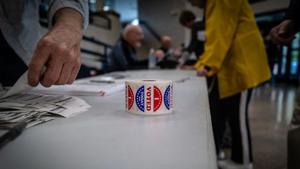
Even as states across the country introduce and pass legislation to reshape congressional districts to favor one political party over another, several states that have not enacted mid-decade redistricting expect fierce congressional races.
In these states, congressional campaigns will have a significant impact on the makeup of Congress as voters head to the polls in the coming months for primary and general elections.
All 435 seats in the U.S. House of Representatives are up for election in 2026. However, the Cook Political Report only ranks 18 races as true “toss ups,” which means either party has a good chance of winning.
Here are some of those races.
Iowa
Incumbent Republican Mariannette Miller-Meeks is seeking to hold onto her seat in Iowa’s first congressional district. Before serving in the U.S. House, Miller-Meeks represented Iowa’s state senate starting in 2019.
David Pautsch and Grant Hill are challenging Miller-Meeks’ in the GOP primary. Pautsch, the executive director of a Christian ministry, proposed banning all red flag laws that place restrictions on gun owners and to limit “excessive medication” of people with psychotropic drugs. Businessman Hill, who spent time in prison, says he’s “seen firsthand how broken our justice and rehabilitation systems are. I believe in second chances and in policies that help people rebuild – not keep them trapped. I’ll work for smart, compassionate reforms that reflect both accountability and mercy,” according to his 2025 survey with Ballotpedia.
Three Democrat challengers have also emerged to unseat Miller-Meeks. Former Iowa Reps. Christina Bohannan and Bob Krause have declared candidacy in the Democratic primary. Additionally, Travis Terrell declared candidacy for Iowa’s Democrat primary.
Terrell completed Ballotpedia’s Candidate Connection survey in 2025 where he called for a $17 minimum wage in Iowa and promised not to accept corporate PAC money or trade stocks while in office.
“I launched this campaign with no corporate donors and no political machine behind me – just the belief that regular people deserve a voice in Washington,” Terrell wrote in Ballotpedia’s candidate survey “We need stronger laws to hold politicians accountable, ban insider trading, expose dark money, and prosecute corruption no matter which party it comes from. If you’re afraid of transparency, you shouldn’t be in office.”
Iowa’s primary election will take place June 2.
New Mexico
In New Mexico, incumbent Democrat Rep. Gabriel Vazquez will look to retain his seat as Democrats seek to regain control of Congress in 2026. Vazquez recently highlighted work he has done in Congress to block funding for the U.S. Department of Homeland Security.
He called for DHS Secretary Kristi Noem’s resignation and declined to vote for funding of the department.
“We’ve all seen the brutality masked agents acting with impunity have brought upon Americans with our own eyes, and it’s got to stop,” Vazquez wrote in a statement.
Tom Wakeley announced a challenge to Vazquez in the Democratic primary. Wakeley called for a $23 minimum wage in New Mexico.
Three Republicans have announced candidacy for the primary elections in New Mexico’s second Congressional district: Eddy Aragon, Greg Cunningham and Jose Orozco.
New Mexico’s primary election is set for June 2.
New Jersey
Incumbent Republican Rep. Thomas Kean is running for reelection in New Jersey’s seventh congressional district. Kean previously served in the New Jersey state Senate from 2003 to 2022.
President Donald Trump endorsed Kean for his reelection bid to the seventh congressional district in 2025.
“Tom is working tirelessly to Secure our Border, Stop Crime, Grow our Economy, Cut Taxes, Champion Small Business, Unleash American Energy DOMINANCE, Support our Brave Military and Veterans, and Protect and Defend our always under siege Second Amendment,” Trump wrote.
A crowded field of Democrat contenders has emerged to challenge Kean in the general election. Eight candidates have declared candidacy in the primary including Michael Roth, former Small Business Administrator in the Biden Administration, and Rebecca Bennett, a health care technology executive.
Roth called for rewriting the tax code in a way to benefit working families. His website does not clearly explain what that would include.
“Republicans have used the tax code to reshape the American economy in favor of ultra-wealthy billionaires and multinational corporations,” Roth’s website reads. “We need Democrats with a vision of how to rewrite the tax code for working families.”
New Jersey’s primary election is scheduled for June 2.
EXCLUSIVE: Superintendent group webinar details school response to ICE

The American Association of School Administrators hosted a members-only virtual webinar last week, providing school leaders with guidance on how to respond to potential encounters with U.S. Immigration and Customs Enforcement on school campuses, according to materials exclusively obtained by The Center Square.
The webinar highlighted that public schools should function as “safe zones” for children and are not legally required to assist federal immigration enforcement without a valid judicial warrant.
The webinar, titled: Operational Readiness: A Practical Playbook for ICE Encounters in Schools, included a “tactical, minute-by-minute” playbook for superintendents and administrators detailing legal response procedures before, during and after a potential ICE incident.
Steve Smith, a former School Resource Officer and senior fellow of urban studies at the Pacific Research Institute, said school leaders should prioritize student safety and avoid elevating anxiety.
“Reaffirming someone’s rights under the Bill of Rights in terms of how encounters with law enforcement are supposed to work isn’t incompatible with safety,” Smith told The Center Square. “But if there’s a political agenda behind it, that’s where concerns arise.”
AASA represents over 10,000 superintendents and education leaders nationwide and is primarily funded through membership dues. Active memberships cost about $485 annually, which local school districts often reimburse as a professional expense.
According to ProPublica, AASA reported more than $20 million in revenue in 2024, with 66.7% of that revenue coming from program services.
The guest speaker in the webinar was Luma Mufleh, founder and director of Fugees Family, a nonprofit organization. The guidance advises that if ICE agents appear on campus, school officials should secure the perimeter, prioritize student and classroom safety, and manage parent communication.
Administrators are instructed to keep doors closed and request to see a judicial warrant before allowing entry. The seminar warned against what the playbook refers to as the “warrant trap,” which shows the difference between a judicial warrant and an administrative warrant issued by the Department of Homeland Security.
The playbook further instructs that School Resource Officers should not assist federal immigration enforcement unless legally compelled by a judicial warrant. Staff must report any such encounters directly to the school principal.
Schools that allow ICE access without a valid judicial warrant could face liability if students are questioned, detained or if student information is shared, the webinar materials stated.
Schools are also encouraged to maintain “red folders” containing response scripts, emergency contact logs, “Know Your Rights” cards, care plan summaries, and witness incident report forms. And that families should prepare for potential detainment scenarios by having four to five emergency contacts who are not at risk of deportation.
On a national level, many school districts are advising students to have “Know Your Rights” cards. The National Immigration Law Center advises individuals to assert their constitutional rights during encounters with immigration authorities, including remaining silent and requesting legal counsel.
The Center Square reached out multiple times to AASA seeking comment on the webinar and playbook, but did not receive a response.
The guidance comes amid heightened public attention to immigration enforcement. The DHS has previously stated that ICE does not conduct enforcement operations at schools.
“ICE is not going to schools to make arrests of children,” DHS Assistant Secretary of Public Affairs Tricia McLaughlin said in a statement.
DHS did not respond to a request for comment from The Center Square regarding the AASA webinar.
Smith added that schools should ensure students do not interpret law enforcement presence as an indication of danger.
“If the superintendents are being careful about how they couch the language and not, you know, raising the anxiety level of students in the process, that it’s a good thing,” Smith said. “If they’re stoking fear and they’re pushing a political agenda, then that’s probably a bad thing.”
11 of 37 Mexican nationals extradited to U.S. being prosecuted in Texas

Eleven of 37 Mexican nationals extradited to the U.S. from Mexico are being prosecuted in Texas. The extradition was the largest transfer of fugitives in U.S.-Mexican history. Several extradited were captured by the Mexican military.
Thirty-seven Mexicans were extradited to 16 districts in 13 U.S. states and the District of Columbia in response to arrest warrants the districts issued. Texas received the most: nine in the Western District and two in the Southern District.
The U.S. Attorney for the Western District says several prosecutions stem from a multiagency investigation into cartel operations, including the Cartel de Jalisco Nueva Generación and Sinaloa Cartel. Both were among several transnational criminal organizations designated as foreign terrorist organizations last year. Gov. Greg Abbott previously designated them and other groups as FTOs in Texas.
One of the fugitives extradited to the district, a woman, is the first Mexican national to be charged with providing material support to a FTO in U.S. history.
Both Texas districts are aggressively prosecuting border crimes, including cartel members. They filed a record number of border related charges last year: the Western District filed 11,542; the Southern District filed 14,131, The Center Square reported.
Both districts were hit hard during the Biden administration, with Texas reporting the greatest number of illegal border crossers in U.S. history, law enforcement targeted a proliferation of human smuggling stash houses, arrested Tren de Aragua members, 55 Texas counties declared an invasion and 60 counties declared a state of emergency, The Center Square exclusively reported. The declarations remain effective.
Abbott launched a border security mission, Operation Lone Star, surged troops from El Paso to the Rio Grande Valley, built border barriers and arrested illegal border crossers, including violent convicted felons and those wanted by Interpol. OLS is ongoing, prioritizing terrorist threats, The Center Square reported. Abbott also fought a barrage of lawsuits against the Biden administration, which he either won or were since dropped.
Those extradited include “prolific human smugglers, violent arms traffickers and alleged members of dangerous drug cartels,” the DOJ said. They are members of the Sinaloa Cartel, Cártel de Jalisco Nueva Generación, Cártel del Noreste (formerly Los Zetas), Cártel de Golfo (Gulf Cartel), La Linea and the former Beltrán-Leyva organization, according to the charges.
They face a range of charges, including narcoterrorism, providing material support to an FTO, firearms trafficking, human smuggling, money laundering and multiple drug offenses. If convicted, the majority face up to life in prison.
“These arrests demonstrate the power of international cooperation in dismantling transnational criminal organizations that threaten our communities,” HSI El Paso acting Special Agent in Charge Taekuk Cho said. “HSI El Paso and our law enforcement partners are committed to bringing fugitives to justice and protecting the safety and security of the United States.”
In the Western District, extraditions stem from investigations led by Homeland Security Task Force/Joint Task Force-A partners, including HSI-El Paso, DEA, FBI, U.S. Marshals, ATF, CBP and Border Patrol. HSI-Presidio, DEA-El Paso and FBI-El Paso also targeted La Linea, a Juarez Cartel faction operating in Ojinaga, Chihuahua, Mexico.
Key extraditions include Maria Del Carmen Navarro Sanchez, Luis Carlos Davalos Lopez and Gustavo Castro-Medina, charged with providing material support to FTOs and narcotics and weapons trafficking and bulk cash and human smuggling offenses.
“Navarro-Sanchez is the first Mexican national to be charged with providing material support to a designated foreign terrorist organization based on her involvement with the CJNG, including providing the cartel with grenades and engaging in alien smuggling, firearms trafficking, bulk cash smuggling, and narcotics trafficking on its behalf,” the DOJ said. “CJNG, which controls a significant portion of the narcotics trafficking trade, also engages in money laundering, bribery, extortion of migrants, and other criminal activities, including acts of violence and intimidation.”
Humberto Rivera-Rivera, a leader of a Sinaloa Cartel faction in Valle de Juarez, Chihuahua, was charged with narcotics trafficking. Roberto Gonzalez-Hernandez, a high-ranking Los Cabrera Cartel member, was charged with narcotics, smuggling and firearm offenses.
Others extradited to the Western District include Francisco Arredondo Colmenero, Heriberto Hernandez Rodriguez, Daniel Manera Macias, Maria del Rosario Navarro Sanchez and Ricardo Gonzalez Sauceda. One name remains sealed.
In the Southern District of Texas, Ricardo Cortez Mateos, a former high-ranking member of the Gulf Cartel, was charged with multiple drug trafficking offenses after being indicted in Brownsville in 2021. Juan Pedro Saldivar Farias, a Zeta Regional Commander and Plaza Boss located in the Falcon Lake area of South Texas, faces multiple charges related to trafficking multiple tons of cocaine a month into the U.S. and charging cartel operatives in the area, The Center Square reported. Saldivar Farias’ brother pleaded guilty to drug trafficking charges in 2017 and is currently serving a 30-year sentence.
The group’s extradition is only the third time Mexico has complied with U.S. extradition requests using its national security law to expel fugitives, the DOJ said.
It was the largest transfer of fugitives in U.S.-Mexican history.
The first large transfer occurred last February of 29 fugitives; the second occurred last August of 26.
Poll: Majority prefer Trump’s immigration policies over Biden’s

A majority of Americans say they prefer President Donald Trump’s approach to border security and immigration than they do former President Joe Biden’s, according to new polling data.
The poll from Napolitan News Service found that 52% prefer Trump’s handling of the issues to 33% who prefer Biden’s. The remaining 15% said they were not sure.
The survey of 1,000 registered voters was conducted by pollster Scott Rasmussen Feb. 4-5, after two people protesting deportation actions in Minneapolis were shot and killed by federal agents in separate incidents.
“Democrats think they have a winning issue by attacking ICE and keeping the center of attention on what happened in Minneapolis. And on one level, they have a point. People don’t like the tactics they saw…” Rasmussen said. “The challenge though, for the Democrats, is you can’t talk about ICE without talking about the larger issues of immigration and border security. And on that, Republicans still have a very significant advantage.”
Opinions, however, are divided along party lines: 90% of Republicans say Trump’s approach is better, and 63% of Democrats say Biden’s was better.
RMG Research, Inc., conducted the field work for the survey, which has a margin of error of +/- 3.1%.
Nation’s first primary states to begin early voting
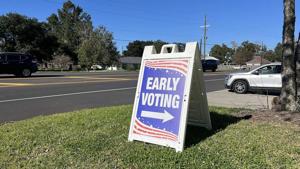
Early voting has begun or is about to begin in states with the earliest 2026 midterm election primaries.
Illinois, North Carolina, Texas, Arkansas, and Mississippi will hold some of the country’s first primaries with March election dates already set.
Each state has different regulations for who can vote in which primaries. Here are guidelines for each race and key players in each primary election.
North Carolina
The 51-day window to vote in the primaries began with absentee early voting Jan. 12. Early in-person voting runs Thursday to Feb. 28, and the primary Election Day is March 3.
Voters registered with a specific party must only vote in that primary election’s contest. However, unaffiliated voters can choose which party’s ballot they select.
Registered voters in the state this cycle will choose a U.S. senator, all 14 U.S. House representatives, one state Supreme Court judge and three appellate justices. All 170 seats in the General Assembly – 50 in the Senate, 120 in the House of Representatives – are also on the ballot. There are no statewide referenda.
Voters can register on the same day as they vote during the early voting period.
For the first time, Republican registrations surpassed Democrats heading into the primary elections. However, both major parties significantly trail those registered unaffiliated.
Texas
Texas is also set to hold several hotly contested primary elections while early voting begins Feb. 17 with the election also set for March 3.
Challengers on both sides of the aisle have emerged for the seat held by U.S. Sen. John Cornyn, R-Texas. On the Republican side, Texas Attorney General Ken Paxton and U.S. Rep. Wesley Hunt are vying to beat the incumbent.
U.S. Rep. Jasmine Crockett and state Rep. James Talarico are vying for the Democratic nomination for the U.S. Senate seat.
Texas operates with an open primary system which means voters do not have to affiliate with a political party to vote in its primary election.
Arkansas
Arkansas will also hold its primary election on March 3. Early voting in Arkansas begins on Feb. 16.
Voters will elect Republican and Democratic candidates for the governor’s race in the state. Incumbent candidate Sarah Huckabee Sanders is running uncontested in the state’s Republican primary. Two Democratic candidates have declared candidacy for Arkansas governor.
U.S. Sen. Tom Cotton, R-Ark., is also running for reelection in 2026.
Arkansas also operates with open primary elections, which allows voters to select from either partisan ballot without registering with a party.
Mississippi
Mississippi voters can cast ballots in the primary election on March 10. Mississippi does not offer in-person early voting opportunities.
Litigation out of Mississippi is also being heard before the U.S. Supreme Court in March over whether states can restrict mail-in voting.
The case, Watson v. Republican National Committee, specifically challenges Mississippi’s law allowing ballots to be counted up to five days after Election Day as long as the ballots are postmarked by Election Day.
Jason Snead, executive director of the Honest Elections Project, said a decision in the case could give uniformity to election laws instead of having states issue different policies.
“What you want to see is that at the end of the voting period, the close of polls on Election Day, you know how many votes have been cast,” Snead said. “The absolute maximum number of ballots should be set when the polls close for all forms of voting.”
Mississippi operates with open primary elections, which means voters do not have to affiliate with a certain party to vote in primary contest.
Illinois
Illinois will hold its primary election on March 17 and early voting in some parts of the state began Feb. 5. Races for governor, U.S. Senate and U.S. House are all on the ballot in Illinois.
As U.S. Sen. Dick Durbin, D-Ill., is not seeking another term, a crowded field of contenders seeks to take his place. In the Democratic primary, U.S. Reps. Robin Kelly and Raja Krishnamoorthi are among those vying to take over Durbin’s seat.
In the Illinois governor’s race, Republicans are looking to keep Gov. J.B. Pritzker from winning a third term. Former Illinois Sen. Darren Bailey and entrepreneur Rick Heidner are among the contenders vying for the Republican nomination to Pritzker’s seat.
Illinois operates closed primaries and requires voters to declare party affiliation in order to vote. However, voters are able to declare their affiliation as they register to vote during a primary election.
Vermont EV buses prove unreliable for transportation this winter

Electric buses are proving unreliable this winter for Vermont’s Green Mountain Transit, as it needs to be over 41 degrees for the buses to charge, but due to a battery recall the buses are a fire hazard and can’t be charged in a garage.
Spokesman for energy workers advocacy group Power the Future Larry Behrens told the Center Square: “Taxpayers were sold an $8 million ‘solution’ that can’t operate in cold weather when the home for these buses is in New England.”
“We’re beyond the point where this looks like incompetence and starts to smell like fraud,” Behrens said.
“When government rushes money out the door to satisfy green mandates, basic questions about performance, safety, and value for taxpayers are always pushed aside,” Behrens said. “Americans deserve to know who approved this purchase and why the red flags were ignored.”
General manager at Green Mountain Transit (GMT) Clayton Clark told The Center Square that “the federal government provides public transit agencies with new buses through a competitive grant application process, and success is not a given.”
“From 2020-2024, the [Federal Transit Administration’s] priority for grants had been low or no emission vehicles, with grant requests for diesel buses often not awarded,” Clark said.
“This was part of a concerted effort of the previous administration to accelerate public transits’ migration to replace diesel buses,” Clark said.
“To be competitive for a grant, GMT…saw electric battery buses as the pathway to get the most new buses,” Clark said. “Green Mountain Transit’s priority is new buses, regardless of the type.”
Clark informed The Center Square that GMT’s “electric battery buses are 90% paid for by federal and Volkswagen settlement funds.”
GMT received five New Flyer SE40 city buses in spring 2025, these buses being a part of “a three year grant cycle for 19 total electric battery buses,” Clark said.
“In September 2025 we ordered 7 additional buses with a 2027 delivery date (but will be delivered with different batteries [than the recalled ones]), and 7 more slated for delivery in 2028,” Clark said. “This is the primary source of new buses for the next three years, as we have only 3 diesel buses anticipated.”
“Canceling the federal grant for electric bus purchases would result in us losing the grant funds,” Clark said. “It would not give us an opportunity to use the funds differently.”
“We will work with FTA to see if the grant can be modified for year 3 since those buses haven’t yet been ordered,” Clark said.
Clark also explained that the five electric buses were “operating well” until November 2025 when the batteries “were recalled for fire hazard.”
The recall prompted a software update from New Flyer to “decrease the likelihood for fire” that “included only allowing the bus to charge to 75% and to not allow charging when the battery is below 41 degrees,” Clark explained.
“Previously we could charge in any temperature to 100%,” Clark said.
As GMT’s bus garage “does not have suitable fire mitigation equipment to store or charge an electric bus indoors at this time,” the transportation system is unable to use its electric buses when temperatures hit below 41.
“Since the barrier to charging under 41 degrees is simply a software update, the manufacturer could find a technical solution that could resolve the problem this week,” Clark said. “We are seeking a financial remedy from New Flyer that could lead to litigation if not resolved.”
“New Flyer has indicated that replacement batteries will be installed within 18-24 months,” Clark said.
Clark also noted GMT is working on improving its fire mitigation equipment via a “pending federal grant.”
Policy analyst at the Institute for Energy Research William Rampe told The Center Square that: “The failure of Green Mountain Transit’s EV buses further highlights the problems with investing in electric vehicle fleets without considering the conditions and infrastructure they need to operate.”
“In Vermont’s case, the cold temperatures of the winter months, alongside the risk of EV batteries catching on fire, make their new bus fleet unusable, putting the level of service GMT provides at risk,” Rampe said.
“This failure adds costs to taxpayers, either by requiring GMT to invest in adequate replacements or by forcing its riders to find alternate means of transportation, which could be especially difficult for low-income riders,” Rampe said.
Rampe told The Center Square that he and those at the Institute for Energy Research “do not believe EVs are reliable in most situations, as the failure of these buses shows.”
“EVs may work fine for drivers who have easy access to charging infrastructure and don’t drive long distances, but for most Americans, limited charging infrastructure, high costs, faster rates of depreciation, and limited range make them an inferior product compared to gas-powered vehicles,” Rampe said.
Rampe also noted that the idea that electric buses are “sustainable” is a failing point “because EVs’ heavier weight and faster acceleration increase particulate emissions from tire wear.”
Senator Bernie Sanders’ media relations has not yet responded to The Center Square’s two requests for comment.
Idaho has least childcare regulations, Vermont the most out of the 50 states

Idaho ranks as the freest of the 50 states when it comes to childcare regulations, while Vermont is the least free, according to a new report from the Archbridge Institute.
Vice president of policy at the Archbridge Institute Edward Timmons told The Center Square that its index “is meant to give state policymakers some guidance on how regulations compare across states.”
“Finding this information is not easy and the index boils down this comparison to a unique and novel ranking,” Timmons said.
“Academic research provides evidence that stricter regulation is associated with higher childcare prices, but there is little evidence that it improves child safety.” Timmons told The Center Square.
“The lack of affordable childcare reduces parent labor force participation, especially for mothers,” Timmons said.
“As states look to improve access to childcare services, special attention should be paid to regulation so that it properly balances safety with affordability and access,” Timmons said.
The Archbridge Institute is a non-partisan public policy think tank as stated on its website.
Archbridge’s 2026 State Childcare Regulations Index shows that “the state with the most childcare freedom and the lowest regulatory burden is Idaho (#1), followed by South Carolina (#2), Arizona (#3), Alabama (#4), and Florida (#5).”
Meanwhile, “the state with the least childcare freedom and highest regulatory burden is Vermont (#50), preceded by New York (#49), Pennsylvania (#48), Maryland (#47), and Massachusetts (#46).”
Regulations do not appear to fall strictly along political lines, with California and Hawaii placing at 13 and 11 respectively, Indiana placing at 40, and Wisconsin at 41.
The report’s authors wrote that “before improving access to affordable childcare for American families, we first need to study the variation across states and evaluate the trade-offs between regulatory intensity and access to care.”
“Rather than pursuing costly taxpayer-funded subsidies and state-sponsored programs, we recommend reducing regulatory burdens on childcare providers that ultimately harm parents by increasing barriers to entry and raising the cost of childcare,” the authors wrote.
“On the issue of childcare, a more affordable America means a less regulated America – from one state to the next,” the authors wrote.
The authors are Archbridge family policy fellow Anna Claire Flowers, professor of Economics and Archbridge social mobility fellow Vincent Geloso, Challey Institute for Global Innovation and Growth research specialist Ricky Feir, and Challey undergraduate research assistant Samuel Tipka.
State policies and regulations considered in Archbridge’s index include “child-to-staff ratio requirements by age, maximum group sizes by age, required annual training hours for staff, and minimum educational requirements for center directors and lead teachers.”
According to an Archbridge release, federal funding as expected plays a role in childcare regulations.
“Federal funding tied to the 2014 reauthorization of the Child Care and Development Block Grant required all states receiving federal funding to implement group size and child-to-staff ratio restrictions, in addition to other new licensure requirements,” the release said.
“This federal program, which aims to preserve parental choice while addressing childcare availability, directly led to an increase in state-based regulations,” the release said.
Archbridge’s release gave New Mexico – which ranked at 18 in the index – as an example of a state that “announced an increase in childcare investment, accompanied by expanded regulatory oversight.”
“Since launching its Early Childhood Education and Care Department in 2020, New Mexico has issued new regulations, including lower child-to-staff ratios and smaller group sizes,” the release said.
U.S. LNG exports hit new high as Turkey buys big
U.S. LNG exports reached a fresh record of 525.1 million cubic feet in November, with shipments to trade partners including Turkey, Egypt and several European nations, according to data release Friday by the Department of Energy.
Overseas shipments of American LNG in November were up 21.9 million cubic feet, or by 4.3%, from 503.2 million cubic feet in the prior month.
Egypt imported 61.4 million cubic feet in November as the country’s shipments of American gas in the first 11 months of 2025 reached a total of 388.2 million cubic feet, up by 260% from 107.7 million cubic feet during the same period in 2024.
Egypt, which imported no U.S. LNG in 2023, received more American gas in the first 11 months of 2025 than all other American trade partners other than the Netherlands and France.
Turkey imported the most U.S. LNG of any country in November, with inbound shipments of American gas totaling 69.6 million cubic feet. The country imported 267.1 million cubic feet of U.S. LNG in 2025 through end of November, up 81% from the same period in 2024.
In the last six months, Turkish officials have signed several long-term deals with U.S. energy companies and global traders, mostly intended to replace pipeline gas from Russia and Iran. Russia supplied about 45% of Turkey’s gas demand in the first half of 2025, according to a report in Reuters.
In September 2025, Turkey’s state-owned BOTAŞ signed a deal with Mercuria to import roughly 4 billion cubic meters of U.S.-sourced LNG annually starting in 2026. The agreement covers a total of approximately 70 billion cubic meters over 20 years.
Over the last 18 months, BOTAŞ has finalized major long-term supply contracts with Shell, TotalEnergies and Woodside for up to 12.4 billion cubic meters annually along with a deal signed with ExxonMobil calling for 2.5 million metric tons per annum. These deals are linked to a goal set by Presidents Erdoğan and Trump in September to reach $100 billion in bilateral trade.
The largest importer of U.S. LNG on an annual basis, the Netherlands, received 43.6 million cubic feet of American gas in November, with total inbound shipments during the first 11 months of 2025 hitting 602.6 million cubic feet, up 38% from 435.5 million cubic feet in the same period in 2024.
France, currently the second biggest buyer of U.S. LNG on an annual basis, received 38 million cubic feet of American gas during the month, as its imports reached 494.3 million cubic feet in the first 11 months of 2025, up 58% from the same period in 2024.
The fourth most popular destination for U.S. LNG during the first 11 months of 2025, Spain, has received 340.1 million cubic feet so far in 2025, following a 2024 in which the country’s imports of American gas dropped sharply during a warm winter.
Germany, the fifth biggest importer of U.S. LNG on an annual basis, received 304.9 million cubic feet of LNG in the first 11 months 2025, up from same period last year but down from 390 million cubic feet at the same time in 2023.
House Oversight probes Rep. Ilhan Omar’s husband’s businesses

The House Oversight Committee is investigating the rapid rise in value of two companies owned by Rep. Ilhan Omar’s husband, amid concerns over financial transparency and potential influence.
House Committee on Oversight and Government Reform Chairman James Comer, R-Ky., said Omar’s husband, Timothy Mynett, has ownership stakes in two companies, eStCru LLC and Rose Lake Capital LLC. The reported value of those positions surged from $51,000 in 2023 to as much as $30 million in 2024.
“Given that these companies do not publicly list their investors or where their money comes from, this sudden jump in value raises concerns that unknown individuals may be investing to gain influence with your wife,” Comer wrote in a letter to Mynett. “Media reports further suggest that you may have raised money from investors using misleading information, meaning some of those funds may have been obtained improperly.”
Omar, a 43-year-old Minnesota Democrat, is a Somalia-born Muslim. She is the first Somali American elected to Congress. She fled Somalia with her family when she was 8 years old. She became a U.S. citizen in 2000.
The Squad member has worked to thwart President Donald Trump’s agenda, and the two have been sparring for years. Trump recently said both Congress and the U.S. Department of Justice are investigating Omar over the mushrooming value of the companies.
Typically, the House Ethics Committee handles allegations involving lawmakers and their family members.
Comer said that Mynett, in 2021, allegedly promised an investor a 200% return on a $300,000 investment in eStCru, plus interest, but did not repay the funds until sued for fraud in 2023. Comer also said that eStCru faced financial trouble in 2023. Rose Lake Capital, identified as a venture capital firm in Omar’s 2024 financial disclosure, has also increased in value.
Omar previously said her husband’s reported income from eStCru was between $5,000 and $15,000. She said he had no income from Rose Lake Capital.
In the letter, Comer demanded that Mynett turn over documents related to both companies, including financial statements and travel records.
Omar’s office didn’t immediately respond to late afternoon requests for comment from The Center Square on Friday.