Center Square
AMA’s medical education infused with political ideology, Do No Harm says

In its ongoing fight against identity politics in medicine, Do No Harm exposed the American Medical Association this week for content related to identity politics and diversity, equity and inclusion in its Continuing Medical Education courses.
Do No Harm Chief Medical Officer Dr. Kurt Miceli told The Center Square: “The level of ideological bias documented in our report raises serious concerns about the integrity of these [Continuing Medical Education] offerings.”
In order to maintain their license to practice medicine, medical professionals must continually keep up with their education – in varying degrees state by state – as explained by Do No Harm’s report, with the American Medical Association (AMA) offering such Continuing Medical Education (CME).
Miceli told The Center Square that the political ideology found in AMA’s CME courses also raises concerns about “whether accreditation standards overseen by the [The Accreditation Council for Continuing Medical Education] are being applied in a way that genuinely safeguards scientific rigor.”
The Accreditation Council for Continuing Medical Education (ACCME) is the only organization providing accreditation to institutions offering CME, according to Do No Harm.
Miceli stressed to The Center Square that “physicians rely on CME to stay informed about best practices and remain licensed.”
“However, when these courses are filled with unverified claims, divisive ideologies, and political activism, they ultimately cause more harm than good, eroding trust in the medical establishment and hindering evidence-based clinical decision-making,” Miceli said.
“To preserve the value of continuing medical education, the ACCME, AMA, and other CME providers must prioritize scientific accuracy and improving patient outcomes over identity politics and pseudoscience,” Miceli said.
The AMA has not yet responded to The Center Square’s request for comment asking whether its courses contain political ideology and whether medicine should be non-political.
According to Do No Harm’s report, there are well more than a thousand mentions of “politicized buzzwords,” in AMA’s CME.
For instance, there are 548 uses of the word “equity,” 296 uses of “health equity,” 291 uses of “health disparities,” and 261 uses of “racism” in the CME courses Do No Harm evaluated, compared to 174 mentions of “telemedicine”/“telehealth,” 148 of “artificial intelligence,” 21 of “gene therapy,” 20 of “mRNA,” and 18 of “CRISPR.”
The report said that “the idea that health disparities deserve greater focus than the great medical breakthroughs of the 21st century combined speaks to extreme ideological capture of both the AMA and ACCME, which have clearly been derelict in their responsibilities.”
According to Do No Harm’s report, “allegedly educational materials” from the AMA also advocate for transgender procedures on children, stating: “the question is not whether to provide gender-affirming health care, but how and when.”
A press release from Do No Harm said that AMA additionally offers “DEI-focused CME modules that rely on ‘academic’ papers written by individuals without medical degrees.”
Do No Harm’s report concluded that “a disturbing amount of ideological content exists all throughout many educational modules provided by the AMA.”
ACCME President and CEO Graham McMahon told The Center Square: “When concerns are raised about a CME activity, ACCME follows established policies and procedures to review the matter fairly and thoroughly.”
“In keeping with these policies, the ACCME does not comment publicly on the existence, status, or outcome of specific inquiries or allegations,” McMahon said.
“ACCME’s standards require that accredited CME activities be based on best available evidence, be scientifically accurate, and present information in a balanced manner appropriate to the educational purpose,” McMahon said.
“Whether specific activities meet these requirements is evaluated through ACCME’s established review processes,” McMahon told The Center Square.
Los Angeles police chief declines to enforce ICE mask ban

California has a new law that prohibits law enforcement from wearing masks, but don’t expect it to be enforced in Los Angeles. At least not when it comes to federal immigration officers.
Los Angeles Police Chief Jim McDonnell said enforcement of Senate Bill 627 would endanger officer safety. McDonnell, who decided against enforcing the ban, added that the Los Angeles Police Department is not the mask police for federal agents.“The reality of one armed agency approaching another armed agency to create conflict over something that would be a misdemeanor at best or an infraction, it doesn’t make any sense,” McDonnell said at a recent news conference. “It’s not a good public policy decision, and it wasn’t well thought out.”Gov. Gavin Newsom signed SB 627 into law in September. At the time, the Democratic governor told lawmakers that “America should never be a country where masked ‘secret police’ grab people off the streets and throw them into unmarked vans and speed away.”Newsom went on to say that “Californians must know that they are interacting with legitimate law enforcement officers, rather than masked vigilantes.”State Sens. Scott Wiener, D-San Francisco, and Jesse Arreguin, D-Berkeley, introduced SB 627, also known as the No Secret Police Act.In their 2025 joint press release, Wiener said federal operations in California have “created an environment of profound terror.” As a result, Wiener said, SB 627 was necessary to maintain public trust.“Law enforcement officers do critically important work to keep our communities safe, and they should be proud to show their faces and provide identifying information when doing so,” Wiener said. “It boosts trust in law enforcement, which makes it easier for law enforcement to do their jobs and makes California safer for all of us.”Arreguin agreed, adding that first responders are responsible for vital work that protects communities, but trust and accountability are also key to keeping neighborhoods safe.“This bill will ensure that law enforcement are easily identifiable, maintaining that trust and accountability,” said Arreguin.Wiener and Arreguin did not respond to The Center Square’s request for additional comments.The Coalition for Humane Immigrant Rights, based in Los Angeles, said it is “deeply troubled” by McDonnell’s comments. Jeannette Zanipatin, CHIRLA director of policy, told The Center Square the department’s position signals acquiescence rather than leadership.“Allowing armed officers to operate anonymously undermines public safety, erodes trust, and contradicts California law designed to prevent secret policing. Immigrant communities already live with fear,” said Zanipatin. “Leadership now requires you to affirm that no law enforcement agency is above accountability and that the LAPD will stand for transparency, civilian oversight, and the rule of law.”Other people are falling on the side of Chief McDonnell.Ira Mehlman, media director for the Federation for American Immigration Reform, said it is not the place of local law enforcement to tell federal law enforcement officers how they can dress.“And we have to look at this in the context of what has been going on,” Mehlman told The Center Square. “Over the past year or so, there has been a 1,300% increase in assaults against ICE officers, and there has been doxxing of these officers that has resulted in harassment of family members, so there is a good reason to protect the identities of these law enforcement officers.”Regardless of how local officials and state legislators feel about immigration enforcement, no officers should be put in danger, Mehlman said.The U.S. Department of Homeland Security will not comply with Gov. Newsom’s “unconstitutional ban,” Homeland Security Assistant Secretary Tricia McLaughlin told The Center Square in September. In November, the U.S. Department of Justice sued California to block the ban.
Surge in gas-fired power for data centers, with Texas leading
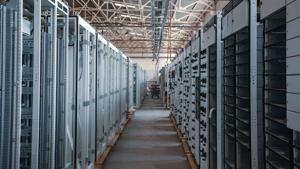
The amount of gas-fired power generation in development in the U.S. nearly tripled over the past year to a record-high 252 gigawatts, with a third of the planned additions in Texas, as utilities and technology companies raced to meet soaring demand from data centers servicing the artificial intelligence boom.
New gas-fired power generation jumped from 4 gigawatts in early 2025 to 97 gigawatts in January 2026, according to a report by the Global Energy Monitor, a nonprofit organization that tracks additions to global energy infrastructure.
Many of the developers of the largest projects want to install natural gas plants directly at the site of new data centers, which allows them to avoid the seven-year wait typically required to get a standard grid connection.
In response, the amount of gas power generation being developed in Texas has surged fourfold in the last year, with the total now more than the next seven states combined, according to the energy-focused nonprofit.
Louisiana, where natural gas power generation projects under development reached 12.2 gigawatts in early 2026, and Pennsylvania, with 8.8 gigawatts of planned capacity additions, rank a distant second and third behind Texas.
“We have seen activity accelerate in the last few months,” said Peter Cook, a partner at Permian Power Connection, an organizer of conferences and events for off-grid power generation developers.
“Several new, very large projects in Texas have been announced since September, and before that there had been talk but no announcements,” Cook said. “Speed to market is critical – long waits to get power from the grid just doesn’t work for a lot of businesses, so these are companies looking at other alternatives and realizing some of the benefits of controlling and owning their own power supplies.”
About half of the gas-generation projects being developed in Texas –with total capacity of 40 gigawatts – will operate off the state’s power grid and provide energy directly at data center sites.
If all of the 252 gigawatts of planned gas-fired power generation capacity were built in 2026, it would dwarf the previous annual record of 100 gigawatts set in 2002, according to the energy-focused nonprofit.
Buildout slowed by grid hookup times, equipment shortages
Long wait times for new users wanting to connect large loads to power grids is driving a race to provide gas-fired power generation directly where data centers are built, often through connections to pipelines nearby.
The states that lead the nation in natural gas production – Texas, Pennsylvania and Louisiana – are the primary locations for the development of off-grid power generation, said Ed Hirs, energy fellow at the University of Houston.
Hirs said recent changes to the regulatory framework now being considered by the Electric Reliability Corporation of Texas, or ERCOT, the grid operator in the state, could speed reviews of off-grid, gas fired power projects.
In late January, ERCOT proposed a new “Batch Study process” to replace the previous method of reviewing projects individually. ERCOT will take a system-wide approach aimed at identifying the total transmission capacity the state grid can deliver, rather than studying projects in isolation. “Batch Zero” would be announced soon and future batches could enter the regulatory process every six months, under ERCOT’s proposed plan.
Hirs said other changes proposed by ERCOT should help make the regulatory process more efficient, including requiring developers to defray some of the costs of regulation with upfront fees.
“Requiring the developers of these big projects to pay a fee up front, in cash, should help us get a good idea of which proposals are serious,” said Hirs. “All of these interconnection requests are overwhelming public utility commissions –not just in Texas – and they need to hire new people.”
In Pennsylvania, Gov. Josh Shapiro on Wednesday announced that data center developers would need to generate their own power or pay the full cost. The directive is aimed at setting up guardrails to ensure that residents and small businesses do not see their utility bills rise to subsidize big technology companies.
At the same time, delays in obtaining the transformers, large turbines and other power equipment needed to serve high-load customers is forcing data center developers to make alternative plans.
Wait times of five to seven years on orders of the highly efficient J-Class and other turbines used to generate power at the biggest gas-fired power plants are pushing so-called hyperscalers and large industrial energy users to turn to smaller alternatives that are faster to deploy, usually in one to four years, but burn 30% to 50% more gas per megawatt hour.
Energy conglomerate Siemens Energy said this week it will resume production of J-Class gas turbines at a factory in Charlotte, North Carolina, where the company plans to invest about $1 billion, as reported by The Center Square. In recent months, gas turbine manufacturers GE Vernova and Mitsubishi Power have announced plans to increase production at their U.S. plants.
In January, GE Vernova reported an 83-gigawatt backlog in its gas power business, while Mitsubishi has already booked most production in 2027 and 2028 for the company’s existing orders.
Off-grid plant in Texas issued record air quality permit
More than 75% of the 80.6 gigawatts of gas-fired power generation now under development in Texas, equal to 57.9 gigawatts of capacity, has either received all permits or the project developers have begun construction, according to Global Energy Monitor data.
Pacifico Energy’s GW Ranch project in Pecos County in west Texas, engineered to host hyperscale data centers and artificial intelligence innovation, received a state-issued air emissions permit allowing 7.65 gigawatts of gas-fired power generation, the largest certificate of its kind ever issued in the U.S.
The permit issued Jan. 30 by the Texas Commission on Environmental Quality also allows for 750 megawatts of solar power generation and 1.8 gigawatts of battery storage at the artificial intelligence campus in west Texas.
The approval “clears a critical path for delivering power at a scale the market urgently needs,” said Constantyn Gieskes, vice president of project development at Pacifico Energy. “With all site delineations complete, permits in-hand, and turbines secured, GW Ranch will provide customers with power in the first half of 2027 with a guaranteed pathway to scale to over 5 gigawatts.”
The air quality permit authorizes annual emission of over 12,000 tons of regulated air pollutants along with 33 million tons of greenhouse gases. For comparison, the 3.7-gigawatt W.A. Parish coal/gas power generation plant near Houston is authorized to emit 38-45 million tons of regulated air pollutants and 14-16 million tons of greenhouse gases on an annual basis.
Local and regional leaders highlight the project’s economic impact, noting that long-term investment, construction activity and ongoing operations will create jobs, spur regional growth and reinforce Texas’s position as a national leader in energy development.
Other major gas-fired projects announced in 2025 include a 11-gigawatt plant proposed by Fermi America for its project Matador, an energy and data complex near Amarillo. Chevron is negotiating to build its first-ever dedicated power plant, which would support a behind-the-meter artificial intelligence data center complex with 5 gigawatts of generation capacity in the Permian Basin of west Texas.
Stargate, a collaboration between OpenAI, SoftBank, Oracle and Abu Dhabi-backed fund MGX, is developing an artificial intelligence training cluster powered by off-grid, gas-fired generation near Abilene with planned capacity of 1.2 gigawatts by 2028. Eventually, the training cluster could require 7 gigawatts of power, according to the project’s developers.
Benghazi attack suspect arrested, will face charges in U.S.
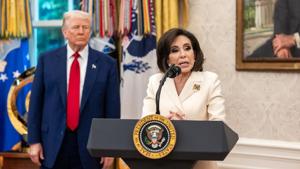
A suspect in a 2012 attack on a United States compound in Benghazi, Libya, that killed four Americans was arrested and will be prosecuted in the U.S., Attorney General Pam Bondi said on Friday.
Jeanine Pirro, U.S. Attorney for the District of Columbia will prosecute Zubayr Al-Bakoush in the United States on eight charges, including murder, arson, attempted murder and conspiracy to provide materials for terrorists.
“Today, President Trump is making sure that American justice is coming for those individuals responsible for the deaths of those four Americans,” Pirro said.
In 2012 members of the group Ansar al-Sharia killed U.S. Ambassador to Libya John Chris Stevens; and U.S. government personnel Sean Smith, Tyrone Woods and Glen Doherty. Pirro said Bakush will be charged with murder of Ambassador Stevens.
Ahmed Abu Khatallah, a participant in the attack, was captured and brought to the U.S. to face charges in 2014. In 2017, Khatallah was sentenced to 22 years in federal prison after being found guilty of multiple charges including conspiracy to provide material support to terrorists.
“Let me be very clear, there are more of them out there,” Pirro said. “Time will not stop us from going after these predators, no matter how long it takes in order to fulfill our obligation to those families who suffered horrific pain at the hands of these violent terrorists.”
Canada looks to shift auto industry away from U.S.

Canadian Prime Minister Mark Carney wants his nation’s auto industry to look far beyond its usual American market with investments in electric vehicles and other trade partners.
U.S. tariffs have hit Canada hard, prompting a shift in Canada’s economic strategy. This pivot has already frustrated U.S. President Donald Trump, who threatened 100% tariffs on Canada over a recent deal between Canada and China on electric vehicles.
Canada’s auto industry is intertwined with the U.S. More than 90% of Canadian-made vehicles and 60% of Canadian-made auto parts are exported to the U.S.
The break between the two countries has left Canada seeking new trade partners.
“Canada’s new government is fundamentally transforming our economy – from one reliant on a single trade partner, to one that is stronger, more independent, and more resilient to global shocks,” Carney said. “We are making strategic decisions and generational investments to build a strong Canadian auto sector, where Canadian workers build the cars of the future.”
Amid these efforts for diversification, Carney also wants Canada to become a global leader in electric vehicle production.
Last month, Trump warned Canada that all its exports to the U.S. could face 100% tariffs if Canada finalizes that EV deal with China.
Since then, Carney has discussed the “rupture” between the two neighbors and sought out deals with countries around the world, including China.
Trump warned that aligning with China could hurt Canada.
“China will eat Canada alive, completely devour it, including the destruction of their businesses, social fabric, and general way of life,” Trump wrote. “If Canada makes a deal with China, it will immediately be hit with a 100% Tariff against all Canadian goods and products coming into the U.S.A.”
Trump later added: “The last thing the World needs is to have China take over Canada. It’s NOT going to happen, or even come close to happening!”
The American Automotive Policy Council and the Canadian Vehicle Manufacturers’ Association – representing Ford, General Motors, and Stellantis in both countries – also raised concerns about Canada’s deal with China, saying it had the “potential to undermine Canada’s auto sector and presents risks to the future of the integrated North American auto supply chain.”
Canada’s economy is directly tied to the U.S. Most of its exports go to the U.S.
Trump imposed 35% tariffs on Canadian goods in early 2025, except for products covered by the 2020 trade deal, the United States–Mexico–Canada Agreement.
Since Trump put tariffs on Canada, Canadian exports dropped, business investment slowed, and tariff uncertainty dragged the nation’s economy, according to a recent report from the International Monetary Fund.
Civil group seeks revival of student loan forgiveness lawsuit
The New Civil Liberties Alliance filed an opening brief this week with the U.S. Court of Appeals for the 6th Circuit, asking the court to bring back a lawsuit brought by the Mackinac Center for Public Policy against the U.S. Department of Education over student loans.
The lawsuit started in April 2023 under the Biden administration. The suit challenged the department’s decision to extend a federal pause on student loan interest accrual and payments beyond the six months originally authorized by Congress.
According to NCLA, the Department of Education continued the policy for nearly three additional years without statutory authority, effectively forgiving 35 months of interest on student loans.
NCLA estimates the cost to taxpayers was at least $175 billion.
In 2024, a federal district court dismissed the case, ruling that the Mackinac Center lacked standing to sue. NCLA is asking the appeals court to reverse that decision and allow the case to proceed.
The Mackinac Center argues that the department’s actions harmed public-service employers by undermining the Public Service Loan Forgiveness program.
Established by Congress, PSLF allows qualifying employees to have their remaining student loan balances forgiven after 10 years of work with public-service employers, including nonprofits.
NCLA Senior Litigation Counsel Russ Ryan said the policy reduced incentives for borrowers to pursue loan forgiveness through public-service employment. “Nonprofits like Mackinac are harmed every time the Department of Education illegally forces taxpayers to bail out student loan debtors,” Ryan told The Center Square.
Ryan also said taxpayers bear the financial burden of the policy. “Taxpayers should care because the department is forcing them to pay off other people’s student loans, which is especially unfair to taxpayers who never went to college, or who have already responsibly paid off their own loans, or who depleted their life savings to pay for college instead of taking out loans.”
NCLA also argues that the Department of Education’s actions violated the Constitution’s appropriations clause by canceling debt without congressional authorization and distorted the labor market in ways that conflicted with Congress’s design for the PSLF program.
“Governmental agencies cannot blithely ignore the law without expecting to answer for the harm their unlawful actions cause organizations like the Mackinac Center,” said Daniel Kelly, senior litigation counsel at NCLA, in a statement. “We trust the Court of Appeals will make that clear to the Department of Education.”
The department has not yet publicly responded to the appeal. The 6th Circuit will determine whether the Mackinac Center has standing to challenge the policy and whether the case can move forward in district court.
Professor: California sees nation’s least affordable electricity
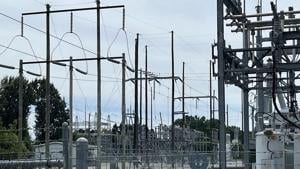
California is experiencing the country’s biggest hikes in electricity rates, according to new research from the Energy Institute at the Haas School of Business at University of California, Berkeley.
The research was detailed in a blog post written by an economics and business professor at the university.
According to the research, electricity rate increases have gone up by 39% between 2019 and 2025, much higher than any other state. The closest jurisdictions to California’s numbers are Maine and Washington, D.C., which are both at 37%; Maryland, 21%; New York, 20%; and New Jersey, 17%.
While there is no one single reason for why electricity has become so unaffordable across the country or state, there are a few reasons for why electricity rates in California have gone up above the national average in the last several years, according to the researcher.
“It isn’t driven primarily by the wholesale cost of electricity,” said Severin Borenstein, a UC Berkeley professor who conducted the research and wrote the blog.
“What has gone way up is the distribution costs,” Borenstein told The Center Square this week.
Distribution costs are up because of the price of responding to wildfires and paying to fix the damage of past wildfires, Borenstein said. Another driver of increased rate costs is shifting onto those who don’t have rooftop solar as the number of people who install solar power goes up, he added.
The biggest driver, Borenstein told The Center Square, is the costs of fixing wildfire damage that utility companies pass on to their customers.
“California has a law on the books that says that if utility equipment causes a wildfire, even if they were not negligent, they are still held responsible,” Borenstein said. “But if they are not negligent, they then go to the regulator and say, ‘This is the cost of doing business. We should be able to pass it through.’ And generally, they are allowed to pass it through, so that’s what’s raising rates.”
The research was published on the heels of investor-owned utility customers starting to see a base surcharge on their monthly bills that is largely meant to make electricity cheaper for those who use large amounts of electricity, while simultaneously making electricity rates higher for those who are trying to conserve energy. The per-kilowatt hour rate for customers of Pacific Gas & Electric Co. and Southern California Edison was scheduled to go down as both companies rolled out the surcharge on customers’ bills, according to previous reporting by The Center Square.
Borenstein’s research shows that as of summer 2024, electricity rates had been steady with inflation across the country. He also found the national average electricity rate had stayed relatively flat, or even gone down, between 2014 and 2024, when adjusted for inflation. During that same time frame, the median weekly earnings of many workers across the country was increasing faster than inflation, Borenstein’s research shows.
The states with the lowest electricity rate increases were Arizona, Minnesota, Missouri, Tennessee, Mississippi and North Carolina, all at 1%, according to the research.
Some states even saw rate decreases between 2019 and 2025, including Nevada, which saw a 12% electricity rate decrease; Iowa, which saw an 8% decline; Alaska, Kansas and South Carolina, which saw rates drop 6%; North Dakota and Nebraska, which saw a 5% decrease in rates; and South Dakota, which saw a 4% decrease. In Idaho, rates decreased 2%, and in New Mexico, Wyoming and New Hampshire, rates dropped 1%.
What California’s politicians say about electricity rates
“There are many different factors at play right now that are leading to higher rates in California,” said Sen. Ben Allen, chair of the Senate Energy, Utilities and Communications Committee.
“While we’re experiencing and continue to expect significant load growth, we’ve also needed to make significant investments in risk management to better protect communities from wildfires,” Allen told The Center Square via email.
Allen said utility rebates, which are paid by polluters through greenhouse gas reduction fund investments, are a tool to relieve the excessive costs many Californians see on their bills. This is only a bandage, Allen said, noting he wants to see real solutions to what drives those costs upward.
“We should be addressing perverse incentives for overbuilding utility infrastructure that provide minimal benefits, while shifting focus toward infrastructure buildout that brings more of our clean energy online,” Allen wrote to The Center Square. “It will also be important to consider how we can ensure the few corporations driving outsized load growth, such as through data centers, are paying their fair share rather than being subsidized by the average ratepayer.”
Republican legislators have also expressed concern about electricity rates soaring in California. Efforts to cap utility rates through legislation and a lack of oversight on utility programs managed by the California Public Utilities Commission have impacted ratepayers’ bills, according to lawmakers responding to The Center Square’s requests for comment.
“I represent a working-class district in Orange County, and constant utility rate increases mean incessant pressure for constituents to make ends meet,” said Assemblymember Tri Ta, R-Westminster, and a member of the Assembly Utilities and Energy Committee.
“I am very concerned about the cost of utilities in California. The main driver of our high costs are public policy decisions that were made long before I joined the Legislature but am tackling now,” Ta told the Center Square via email.
Other lawmakers blame state agencies that are tasked with carrying out programs meant to help ratepayers, a Republican legislator told The Center Square.
“When we talk affordability and our utility bills, one aspect the state should focus on is the ineptitude of the California Public Utilities Commission,” Assemblymember Laurie Davies, R-Oceanside, told The Center Square in an email. “For years, the legislature has mandated certain programs, and we have no idea if they’re working or if the money is going to ratepayers as promised. I would welcome more audits of the CPUC and determine what programs work and which don’t.”
Assemblymember Cottie Petrie-Norris, D-Irvine and chair of the Assembly Utilities and Energy Committee, was not available for an interview this week. Officials from the California Public Utilities Commission sent along reports via email, but did not make anyone available to answer questions.
December job openings lowest in five years

Despite several quarters of strong GDP growth, job openings continued trending downward in December to an estimated 6.5 million – the lowest number in five years and about 1 million less than a year ago.
The total number of hirings was equal to the total number of job separations (whether voluntary, involuntary, permanent or temporary) and both remained little changed from November, at 5.3 million each.
The numbers reflected in the latest Job Openings and Labor Turnover Survey shouldn’t have come as a surprise though, according to Bruce Yandle, distinguished adjunct fellow for the free-market-oriented Mercatus Center.
“The JOLTS report, especially on new job openings, was much weaker than expected, but in a sense, we should have expected a weak report,” Yandle told The Center Square. “The economy on the employment front has been sort of dead in the water for a year.”
Over the course of 2025, unemployment rose from 4% to 4.4%, inflation declined in the first half of the year but climbed back up in the second half and the job openings rate fell from 4.7% to 3.9%.
“What we’re seeing is a continuation of the ‘no-hire, no-fire’ labor market dynamic,” said Revana Sharfuddin, a research fellow at Mercatus, in a statement to The Center Square. “Hiring demand and job-finding probabilities have cooled markedly, even as layoffs haven’t surged.”
More positions opened up in construction in 2025, as job openings either remained stagnant or declined in nearly every other industry.
“That dynamic can push unemployment up slowly without the headline shock of mass layoffs,” Sharfuddin added.
Payroll processing company ADP released its jobs data for January on Wednesday, with a total growth of 22,000 jobs in the private sector. Were it not for health care, there may have been an overall decline. Health care continuously added jobs in 2025 while other industries have lagged.
“In a lackluster month for hiring, health care was a standout, adding 74,000 jobs,” the report reads. “Leading the slowdown was manufacturing, which has lost jobs every month since March 2024, professional and business services, and large employers.”
Yandle did not sound optimistic about what to expect in the coming months, accounting for Winter Storm Fern and other events he said are affecting economic activity.
“There’s no telling what we’re going to see when we see the [government] data on January and February because of the interruptions we’ve had,” Yandle said.
Trump admin moves to more easily fire federal workers
The Trump administration finalized a rule on Thursday that would make it easier to fire an estimated 50,000 federal employees.
The Office of Personnel Management published its final rule Thursday to authorize that policy influencing positions be moved to Schedule Policy/Career designations, which makes them easier to eliminate.
The federal government maintains 2,252162 employees across its various agencies, according to the Department of Government Efficiency. It costs more than $211 billion in wages for these employees across the government.
“This will allow agencies to quickly remove employees from critical positions who engage in misconduct, perform poorly, or obstruct the democratic process by intentionally subverting Presidential directives,” the Office of Personnel Management wrote.
The Office of Personnel Management, the federal government’s human resources agency, said the changes were due to “longstanding performance management challenges” in the federal workforce.
Trump first instituted a similar policy in October 2020 through the creation of “Schedule F,” which would have reduced certain workforce protections for federal workers. Trump’s directive was later canceled by the Biden administration and never went into effect.
The Biden administration also established rules to make it more difficult to fire federal workers. Trump’s rule will take effect in 30 days.
Democrat lawmakers and federal union leaders have sharply criticized the Trump administration’s move and vowed legal action in response. U.S. Sens. Mark Warner, D-Va., and Tim Kaine, D-Va., slammed the administration’s actions.
“The Trump Administration’s move to reclassify federal employees to make it easier to fire them for political reasons will hurt these workers and their families, threaten our national security, and make it harder for Americans to access the services they need,” Kaine and Warner said in a joint statement.
Federal employee unions sued the administration in January before the policy was fully developed. Democracy Forward, one of the groups behind the lawsuit, said it would resume litigation after a federal judge paused the order.
“This rule is a direct assault on a professional, nonpartisan, merit-based civil service and the government services the American people rely on every day,” said Everett Kelly, national president of the American Federation of Government Employees.
White House Press Secretary Karoline Leavitt praised the Office of Personnel Management’s rule and called for scrutiny in the federal workforce.
“This administration has been very much focused on ensuring that we have an efficient and productive workforce for the American taxpayer,” Leavitt said. “If people aren’t doing their jobs, if they aren’t showing up for work, if they’re not working hard on behalf of this president, they’re not welcome to work for him at all.”
Trump’s call for federal oversight intensifies clash over Michigan elections
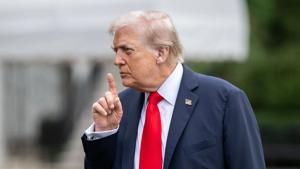
As the 2026 election season ramps up, tensions are rising over oversight of Michigan’s elections as state and federal leaders clash over election integrity.
President Donald Trump this week floated the idea of federalizing elections, prompting swift pushback from Michigan Gov. Gretchen Whitmer, who called the proposal unconstitutional.
“Let me be very clear: elections will continue to be run at the state level in Michigan,” Witmer said in a video posted to social media on Wednesday. “Any attempt by the federal government to take over Michigan elections should be seen for what it is – an attempt to take away your constitutional right to vote. Now, it’s not going to happen on my watch.”
Michigan Republicans, however, say Trump is right to call for increased federal oversight.
“President Trump is 100% right because Michigan voters cannot trust Jocelyn Benson,” said Senate Republican Leader Aric Nesbitt, R-Porter Township. “She continues to fight against transparency and accountability, refuses to remove dead people from our state’s voter rolls and is happy to let noncitizens vote in our elections. She’s the worst secretary of state in America and shouldn’t be running our elections without checks and balances.”
In November, Nesbitt was among 22 Republican state lawmakers who sent a letter to U.S. Attorney General Pam Bondi requesting the Department of Justice deploy election monitors and provide “comprehensive oversight” of Michigan’s 2026 elections.
The lawmakers cited what they described as an “inherent and unavoidable conflict of interest,” noting that Secretary of State Jocelyn Benson will serve as the state’s chief elections official while also running for governor.
That pressure escalated this week when seven members of Michigan’s Republican U.S. congressional delegation sent a letter directly to Benson, urging her to address what they called ongoing “election integrity concerns.”
“A U.S. citizen’s right to vote in elections is a cornerstone of our Republic and one which all elected officials should vigorously defend,” the letter stated. “It is crucial that the public’s confidence in the security of Michigan elections remains strong and any case of a non-citizen voting in an election or being registered to vote erodes the public’s confidence and subverts their will.”
The lawmakers said even a single case is unacceptable and asked Benson to respond to a series of questions by Feb. 27.
The renewed scrutiny follows a January report from Macomb County Clerk Anthony Forlini, a Republican candidate for secretary of state, who said his office identified 14 noncitizens registered to vote in the county.
Benson just recently pushed back on those claims, calling them “reckless” and saying some of the individuals identified were U.S. citizens or had already been removed from the voter rolls.
“Michigan knows how to run safe, secure, transparent elections,” she said. “We don’t need federal agents in our cities, and we don’t need politicians – who know better—accusing eligible voters of fraud to score political points.”
Michigan is also one of 24 states – most led by Democrats – currently suing the U.S. Department of Justice over its request to audit state voter rolls. The states argue the request violates voter privacy, while federal officials say the audits are necessary to protect election integrity.
Trump’s remarks Tuesday marked an escalation in rhetoric. During an Oval Office bill-signing ceremony, he pointed to what he described as “horrible corruption” in Detroit and other major cities.
“A state is an agent for the federal government in elections. I don’t know why the federal government doesn’t do them anyway,” he said. “But when you see some of these states about how horribly they run their elections, what a disgrace it is.”
Whitmer rejected that argument, defending the nation’s decentralized election system.
“Our nation has a long, proud history of running decentralized federal elections,” she said. “This November, Michiganders will once again run another safe, secure election. We’ll do our constitutional duty without interference, and we will honor the results.”