Center Square
California attorney general cites success in tackling fraud

California has recovered nearly $2.7 billion in taxpayers’ money since 2016 through fraud investigations, lawsuits and persecutions, state Attorney General Rob Bonta said Thursday.
Bonta cited that number and other figures during a Los Angeles press conference, where he responded to President Donald Trump forming a task force targeting fraud in the Golden State. Bonta said the California Department of Justice is working diligently to attack fraud, including that related to Medi-Cal, California’s version of Medicaid. He added the state has and will continue to work with the federal government on apprehending fraudsters.
Of the $2.7 billion recovered, almost $2 billion was retrieved under the state’s False Claims Act, Bonta said.
Nearly $740 million in Medi-Cal fraud was recovered through criminal prosecutions, he said.
And over $108 million was retrieved by the state DOJ’s Tax Recovery in Underground Economy task force, Bonta said.
Since 2016, state has conducted 2,490 criminal investigations and 1,121 civil investigations, the attorney general said. Fraud-related charges have been filed against 958 people.
Specifically, the California Department of Justice has tackled fraud related to the COVID-19 pandemic, behavioral health, and recycling, as well as going after tax evaders, Bonta said.
He cited cases such as apprehending a Riverside County restaurant owner who didn’t report $9 million in taxable sales and pocketed more than $1 million in taxes.
“We know unfortunately that Trump is out there falsely claiming California is somehow the problem, saying baselessly that California programs and public servants are perpetuating fraud, when in reality, we are the victims of fraud. We need to get that straight,” Bonta said.
There are fraudsters in California and other states, both blue and red, Bonta said. He cited fraud cases in the Republican-dominated states such as Texas, Florida and Ohio.
“To claim this is a California problem or blue state problem is just fiction,” Bonta said. “It is a figment of President Trump’s imagination.”
“No state is immune from bad actors,” Bonta said.
“California DOJ has been going after bad actors, long before Trump tried to weaponize the words ‘waste, fraud and abuse,’” Bonta said.
California’s programs are helping low-income individuals and families get food and health care, while the Trump administration and the president’s tariffs make life less affordable, Bonta said.
The Center Square reached out Thursday to the White House for comment, but didn’t get a response before press time.
One lawmaker, meanwhile, said he would like the state to take a comprehensive approach, similar to Elon Musk’s Department of Government Efficiency, in tackling fraud, waste and abuse.
“I think they should put together a strong group of oversight folks to look at every department to make sure we’re not wasting dollars,” state Sen. Tony Strickland, R-Huntington Beach, told The Center Square before Bonta’s press conference.
“I think every governor in every state, after what we’ve seen in Minnesota, should be proactively cutting out waste, fraud and abuse,” Strickland said.
“If you look at the high-speed rail project [in California], billions of dollars were spent with nothing to show for it,” he noted.
The senator said he believes there’s a lot of fraud in California with Medi-Cal and other areas.
To report suspected Medi-Cal fraud, visit oag.ca.gov/dmfea/reporting, call 800-722-0432 or mail a written complaint to the California Department of Justice, Division of Medi-Cal Fraud and Elder Abuse, P.O. Box 944255, Sacramento, Calif. 94244-2550.
Legal scholars clash over climate lawsuits against energy companies

A panel of legal scholars and lawyers argued Thursday over what a growing wave of climate lawsuits really represents: a legitimate use of courts to resolve alleged harms and costs tied to emissions, or an attempt to shift climate policymaking from elected branches to judges and juries.
The panel, hosted by the Civitas Institute at the University of Texas at Austin, focused on state and local lawsuits filed over the past decade – largely brought in state courts under state law – seeking to recover climate-related costs such as infrastructure adaptation and disaster response from fossil fuel companies.
Moderator John Yoo, of the Civitas Institute and UC Berkeley, said the cases raise a threshold governance question: “Which branch of government, which level of government, is the appropriate place to regulate these issues,” regardless of where people fall on the science.
Jonathan Adler, an environmental law professor at William & Mary, argued the cases fit within a long legal tradition of using nuisance and tort law to address pollution harms and that courts shouldn’t shut them down at the outset unless Congress clearly says they’re barred.
“Generally, when it comes to tort law, we let plaintiffs try and make their case,” Adler said, though he added he is “very skeptical” plaintiffs can meet the burden of proving specific, local damages traceable to specific defendants.
Adler’s core legal point centered on federal supremacy and preemption – whether federal environmental statutes crowd out state-law claims. He said federal law can displace federal common-law nuisance claims, but it does not automatically preempt state tort claims unless Congress expressly does so.
“All it means is that there’s no legal basis at the front end to say these cases are preempted and have to go away now,” Adler said, describing that threshold issue as a major battleground in the litigation.
Todd Zywicki, a George Mason University law professor, argued the lawsuits invite courts to do something tort law was never designed to do: make nationwide energy and climate policy through scattered state-court rulings. He called that a difference “in kind,” not just degree, from traditional nuisance disputes.
“There is a pretty big difference… between some guy who wants to run a pigsty… and the ability to re-engineer the entire American economy and society,” Zywicki said, warning that if one jurisdiction can sue over global emissions, “basically anybody anywhere can bring one of these… lawsuits,” which he called “cockamamie.”
Michael Toth, a research director for Civitas Institute, argued many of the municipal cases are not simply local regulation but an effort to apply one state’s law to conduct and emissions across the country, raising federalism and constitutional problems. If courts allow that approach, he said, companies could be stuck under a state’s rules even if they avoid the state entirely. “Like Hotel California, and you can never check out,” Toth said.
Adler, while doubtful the lawsuits are a good way to address climate change, said the fix should come from lawmakers rather than courts. “Congress could make all these cases go away,” Adler said. “Why isn’t that legislation been introduced? … why are they, instead, asking courts to play policymaker?”
‘Ridiculous:’ Republicans reject Dems’ 10 demands for DHS reforms
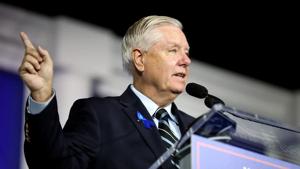
With a partial shutdown looming, U.S. lawmakers have eight days to broker a deal on the Department of Homeland Security’s annual budget.
Progress, however, remains elusive as Republicans have already shot down Democratic leadership’s all-or-nothing list of demands released Wednesday night.
“The Democrats’ proposal is ridiculous because it would stop our ability to deport illegal immigrant criminals who present a danger to America,” U.S. Sen. Lindsey Graham, R-S.C., said Thursday. “They are not serious about working to reform the immigration system or ICE […] I had hoped we would debate and find a solution. But it looks like we’re just going to debate.”
Democratic leaders laid out 10 changes they want added to the Homeland Security appropriations bill – the only fiscal year 2026 appropriations bill not yet law – which includes funding for agencies such as Immigration and Customs Enforcement.
Demands for greater accountability blew up after an ICE agent fatally shot another U.S. citizen protesting in Minneapolis in January, 37-year-old Alex Pretti.
The proposal includes prohibiting DHS agents from wearing masks, racially profiling, indiscriminately arresting people, tracking protestors, or entering private property without a judicial warrant in addition to an immigration court warrant.
Other demanded changes include requiring agents to display ID, wear body cameras, and obtain the consent of states and localities to conduct large-scale operations, among other things.
“Federal immigration agents cannot continue to cause chaos in our cities while using taxpayer money,” Democratic leaders wrote. “It is critical that we come together to impose common sense reforms and accountability measures that the American people are demanding.”
But the entire Senate Republican Conference has come out against it, with Sen. Markwayne Mullin, R-Okla., echoing their Thursday statement that enacting all 10 provisions is “Not going to happen.”
“Thanks to Joe Biden’s either willfulness or incompetence, our border was obliterated,” Graham added, referencing the millions of migrants who crossed U.S. borders illegally and were released into the U.S. “Twelve states have sanctuary city policies. Left unaddressed, these states will always be magnets for future illegal immigration.”
House Republicans, including Speaker Mike Johnson, R-La., are taking the same stance as their Senate colleagues, arguing that many of the requirements, such as making agents obtain an extra warrant, are “unimplementable.”
“Enforcing federal immigration law isn’t optional,” Rep. Keith Self, R-Texas, said Thursday on social media. “The safety of the American people and the rule of law isn’t a game.”
Due to the partisan discord, some lawmakers have expressed doubts that Congress will be able to successfully negotiate a funding bill before the Feb. 13 deadline. If a deal fails and Democrats refuse to extend the current funding stopgap for DHS agencies, the lapse in funding would not even impact ICE operations.
Republicans’ budget reconciliation bill, which became law in July, boosted the agency’s funding by $75 billion, so immigration enforcement efforts would continue while agencies like FEMA and the Coast Guard would flounder.
Bessent spars with lawmakers over tariffs, Trump lawsuits
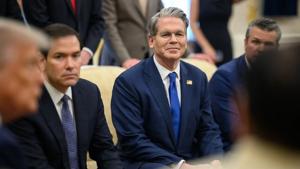
Lawmakers grilled Treasury Secretary Scott Bessent on the Trump administration’s tariff policies and high profile lawsuits in the administration.
Bessent, speaking before the Senate Banking, Housing and Urban Affairs committee, defended the Trump administration’s tariff policies and argued prices were more affordable now than at times under the Biden administration.
Sen. Tim Scott, R-S.C., praised Bessent’s work on affordability and said the shift from climate change policy was essential to reducing costs.
“When families have savings, access to affordable credit and confidence in their financial future, they are better equipped to weather storms, weather economic shocks, and the system becomes more resilient,” Scott said.
Other lawmakers on the panel fiercely criticized Bessent over tariff policies and their effect on affordability. Sen Elizabeth Warren, D-Mass., criticized the tariff policies and questioned whether grocery costs had gone down during the Trump administration.
Bessent pointed to inflation numbers over the past year of the Trump administration. In December 2025, inflation slowed to 2.7%, marking a significant decrease from 3.0% in September. Warren countered with data from the Bureau of Labor Statistics which found grocery prices increased 2.4% by the end of 2025 compared to 2024.
Bessent called for the Federal Reserve to obtain a 2% inflation rate. He said the policy would help Americans with costs across the board. Sen. Catherine Cortez-Masto, D-Nev., blamed the Trump administration’s tariff policies for decreased tourism, which she said her state relies on heavily.
Cortez-Masto said a large portion of Nevada’s economy relies on tourism income. A recent report valued Nevada’s outdoor recreation industry at $24 billion.
“This administration’s blanket tariffs and insulting rhetoric towards our closest allies are damaging America’s tourism economy,” Cortez-Masto said. She pointed to declining numbers of Canadian tourists visiting the United States over the past year.
Bessent argued the Canadian economy itself was a reason for why fewer tourists are visiting the United States. He also refused to lower trade barriers for the sake of increasing tourism.
“Should we pull down all of our trade barriers with China so that 1.4 billion people can fill up the hotel rooms in Las Vegas?” Bessent questioned.
Lawmakers also raised concerns over whether taxpayers would be liable for President Donald Trump’s $10 billion lawsuit against the IRS. Trump and his two sons filed the action over allegations that the IRS failed to prevent their financial data from being leaked in 2019 and 2020, the Center Square previously reported.
During those years, a former employee of Booz Allen Hamilton leaked thousands of wealthy clients’ confidential tax filings, including those of the president, to various media outlets. Booz Allen contracted with the IRS during that time, and the lawsuit accused the IRS of neglecting to enforce proper security measures.
Bessent admitted that if Trump were to prevail in the lawsuit, the funds would come from taxpayers through the U.S. Treasury Department. Sen. Ruben Gallego, D-Ariz., called the move a “shakedown of the American taxpayer.”
Gallego also brought up a $230 million inquiry Trump is pursuing over investigations into his previous presidential candidacy. If Trump were to prevail in that inquiry, Bessent would be responsible for providing the damages.
“This president is basically plundering U.S. taxpayer dollars,” Gallego said. “If this had been happening in any other country, it would absolutely look like a total shakedown of the American taxpayer.”
Poll: Americans say cutting government spending is best way to reduce debt

A majority of Americans say cutting government spending is the best way to lower debt and costs, a new poll from the National Taxpayers Union found.
The nationwide survey of 800 registered voters was conducted from Jan. 12-14. The survey included 38% of those who self-identified as Republicans, 35% as Democrats, and 25% independents or unaffiliated voters.
According to the survey, 89% of those polled think the U.S. is facing an affordability crisis, while 88% say the $37 trillion national debt will eventually impact them and their families personally.
Pete Sepp, president of National Taxpayers Union, said in a statement accompanying the poll data that government over spending has consequences.
“Americans understand that the federal government’s overspending has consequences, and families are paying the price,” Sepp said. “Voters want leaders to rein in spending before the national debt and inflation do even more damage to household budgets.”
The survey asked voters which options they prefer to reduce costs. A majority, 54%, chose cutting government spending; 32% said grow the economy; and 13% said raise taxes.
Minnesota protest investigations spark free speech debate

As the Trump administration moves forward with investigations around protests in Minneapolis, free speech groups are raising red flags.
Aaron Terr, director of public advocacy at the Foundation for Individual Rights and Expression, spoke with TCS in an exclusive interview. He expressed concern with the FBI’s January announcement that they would be probing the alleged systematic organization behind riots in Minnesota.
“It’s important for all Americans to stand against threats to free speech wherever they arise, regardless of the target,” Terr said. “Each time the government overreaches to control what Americans can say, the boundaries of free expression become narrower and more fragile for everyone.”
In another case, federal officials have announced a total of nine arrests in connection with a protest that disrupted a Sunday morning church service in St. Paul on Jan. 18. Journalist Don Lemon, who was on the ground in the church covering the protest, was one of those arrested.
Syracuse University’s Tully Center for Free Speech Director Professor Roy Gutterman explained to TCS his concerns with Lemon’s arrest in particular.
“The arrest and potential prosecution of Don Lemon deals with some potentially conflicting issues,” Gutterman said. “On one hand, he was covering a high-profile public protest that ended up moving into private property and a house of worship. And on the other hand, any house of worship has some legal protections to ensure its services are not disrupted.”
The church protest and the widespread protests throughout the Twin Cities came in the wake of the Jan. 7 killing of 37-year-old Renee Nicole Good during an encounter with ICE officers conducting enhanced immigration enforcement. The additional shooting death of Alex Pretti by federal agents on Jan. 24 only further fueled the protestors.
Officials of the Trump administration have been outspoken about their plan to prosecute those involved in the church protest.
“Listen loud and clear: WE DO NOT TOLERATE ATTACKS ON PLACES OF WORSHIP,” said U.S. Attorney General Pamela Bondi following the first arrests related to the church protest
All nine arrested, including Lemon, were indicted by a federal grand jury in Minnesota last week on two counts:
• conspiracy against right of religious freedom at a place of worship
• and injure, intimidate, and interfere with exercise of the right of religious freedom at a place of worship
Lemon, a former CNN anchor, defended the protesters during his coverage.
“I imagine it’s uncomfortable and traumatic for the people here,” Lemon said. “But, that’s what protesting is about.”
After the story broke, many Republicans called for his arrest. Just days after the incident, Harmeet Dhillon, assistant attorney general for the DOJ’s Civil Rights Division, directly addressed Lemon.
“Don Lemon himself has come out and said he knew exactly what was going to happen inside that facility,” Dhillon said. “He went into the facility, and then he began ‘committing journalism,’ as if that’s sort of a shield from being an embedded part of a criminal conspiracy. It isn’t.”
Lemon’s legal team disagreed with this accusation, citing the First Amendment.
“This unprecedented attack on the First Amendment and transparent attempt to distract attention from the many crises facing this administration will not stand,” said Abbe Lowell, Lemon’s lawyer. “Don will fight these charges vigorously and thoroughly in court.”
Gutterman said the case is complicated, but he is unsure if federal charges were warranted.
“As a criminal matter, covering the news is not the same as intentionally interfering with a religious service. Additionally, if this ends up as more of a trespass issue, like it seems, that is not a federal law enforcement matter. So, there might be some overreach here,” he explained. “There is a First Amendment issue here if law enforcement specifically sought out Don Lemon for arrest and prosecution. But there might also be a private tort or trespass issue.”
In the other case, FBI Director Kash Patel said he is not yet sure if charges will be filed. Instead, agents are investigating what is legal and illegal in the protests and their organization via encrypted Signal group chats that were leaked.
“We look at all this stuff,” Patel said. “We immediately opened up that investigation because that sort of Signal chat, being coordinated with individuals not just locally in Minnesota—but maybe even around the country – if that leads to a break in the federal statute or a violation of some law, then we are going to arrest people.”
Terr said he is unsure what will come of that investigation.
“It’s difficult to predict, but there are examples of the administration publicly threatening investigations over protected speech related to immigration enforcement that ultimately appear not to have gone anywhere,” he said. “On the other hand, the administration has, in many instances, moved beyond mere threats or bluster by using the machinery of government to inflict tangible consequences for disfavored speech, including its retaliation against universities, law firms, media outlets, and non-citizens.”
Both Gutterman and Terr ultimately expressed concern for the potential First Amendment and free speech ramifications of these federal charges and investigations.
“Any time a reporter is singled out for some sort of punishment, it could send a chill into reporting, which would mean the public has less news and information,” Gutterman explained of the Lemon case. “However, for decades, courts have been pretty clear that reporters do not have any greater right of access to private property than anyone else. For news-gatherers that is sometimes a bitter pill to swallow.”
Terr also said it could “chill” Americans’ rights.
“One of the biggest concerns is the chilling effect,” he said. “When the government signals that controversial or dissenting speech will land someone in the feds’ crosshairs, it discourages critics of the government from exercising their First Amendment rights.”
Routh sentenced to life in prison for assassination attempt on Trump

Ryan Routh, the North Carolina native who lived in Hawaii, has been sentenced to life in prison on conviction of going to Florida attempting to kill Donald Trump on the 2024 presidential campaign trail.
Judge Aileen Cannon, in the U.S. District Court for the Southern District of Florida in Fort Pierce, cut off Routh during his chance to speak on Wednesday. Routh had defended himself at trial and was represented by Martin Roth at sentencing.
Among Routh’s final words before being cut off were, “I did everything I could and lived a good life.”
Cannon responded, “Your plot to kill was deliberate and evil. You are not a peaceful man. You are not a good man.”
The life sentence is without parole. Seven years are added for a gun charge. Sentences for three other crimes will run concurrently.
Routh was found guilty of attempted assassination of a major presidential candidate; possessing a firearm in furtherance of a crime of violence; assaulting a federal officer; felon in possession of a firearm and ammunition; and possession of a firearm with an obliterated serial number.
Routh’s defense included three witnesses on the eighth day. A jury of seven women and five men over the first seven days of testimony heard United States’ attorneys and their 38 witnesses.
The panel needed only about two hours, 20 minutes to reach verdicts.
As the trial closed in September, four U.S. marshals responded to an outburst by Routh after the verdict and removed him from the courtroom. He tried to stick his neck with a pen. Cannon permitted his return, in shackles and with no blood showing, to learn of the sentencing date. The original Dec. 18 date was delayed.
Prosecutors say the suspect was going to attempt to take the life of Trump, the eventual winner of the presidency over then-Vice President Kamala Harris, as he golfed on a Sunday afternoon. The Sept. 15, 2024, incident came 65 days after a shooter on a roof struck Trump’s ear with a bullet in Butler, Pa.
Security agents for Trump encountered Routh prior to the golf group reaching the area. Routh is accused of raising a rifle, leading to a shot from agents, a short vehicle chase and the suspect’s apprehension on Interstate 95.
The Center Square confirmed he participated in the Super Tuesday primaries in 2024 from the North Carolina State Board of Elections website, and in Hawaii’s 2024 elections through the Office of the City Clerk for the city and county of Honolulu.
Report: 5 largest U.S. cities don’t have enough money to pay bills

The five largest cities in the United States, all led by Democrats, did not have enough money to pay their bills in 2024, according to a new Truth in Accounting report first provided to The Center Square.
Its Financial State of the Cities 2026 report examines the fiscal health of the cities of Los Angeles, Houston, Philadelphia, Chicago and New York City, with New York City again leading the U.S. with the greatest taxpayer burden.
The analysis is based on the most recent audited Annual Comprehensive Financial Reports from fiscal year 2024. It assesses the amount of money city governments need to pay their bills, dividing this number by the estimated number of city taxpayers. The difference is the taxpayer burden, or what every taxpayer owes in order to pay off the city’s debt, TIA explains.
According to the data, New York City residents have the highest taxpayer burden of $61,700, followed by Chicagoans’ $42,600, Philadelphians’ $17,000, Houstonians’ $4,800 and Los Angeles residents’ $1,300.
Each city’s financial reports are different and not apple-to-apple comparisons.
“Because of varying state laws, cities operate under complex and varied governmental structures, making comparisons difficult and reducing transparency,” TIA say. “For example, New York City includes its school district in its financial reports, while Chicago Public Schools are reported separately. If Chicago and the public school system were combined, it would significantly change Chicago’s reported numbers. These structural differences can obscure what is included in city financial reporting, making it harder, if not impossible, for voters to assess city financial performance when voting.”
TIA has historically issued reports evaluating the top 75 most populous cities every year. This year, the report focuses on the top five cities because “prior analysis found that the five largest cities accounted for over 80 percent of total city debt,” it explains.
At the end of fiscal 2024, all five cities didn’t have enough money to pay their bills despite having balanced budget requirements. In order “to claim their budgets were balanced, as is required by law in the five cities, elected officials” didn’t include “the full cost of government in their budget calculations and shifted costs onto future taxpayers,” TIA said.
Combined, the five cities had $144 billion in assets; their combined debt, including unfunded pension and other post-employment benefits (OPEB), totaled $384 billion. Their combined shortfall was $240 billion, according to the analysis. This included $92 billion in pension debt and $112 billion in OPEB, mainly retiree health care, debt.
A “common and pressing challenge persists” in all five cities, the report notes: “long-term costs of pensions and retiree health care benefits continue to strain their financial health despite short-term improvements or varying circumstances.”
“While investment gains have temporarily eased pension liabilities in cities like New York City and Houston, these gains remain unrealized and uncertain,” it says. New York City’s growing retiree health care obligations “remain vastly underfunded,” as do the other cities’ it notes.
“Chicago exemplifies the consequences of chronic pension underfunding, with liabilities exceeding assets and recurring budget shortfalls,” it adds.
“Los Angeles and Philadelphia, which have made progress in funding, face limitations in financial flexibility due to increased capital investments and rising expenses,” it adds.
The report also grades each city based on its taxpayer burden. New York City and Chicago received F grades; Philadelphia received a D; Houston and Los Angeles received C grades for fiscal health.
The 32-page report expounds on city pension systems, city retirement promises and calls on Congress to amend the Employee Retirement Income Security Act (ERISA) to safeguard private sector pensions.
It also makes recommendations for local governments related to preparing financial reports and encourages citizens and the media to “hold leaders accountable.”
INVESTIGATION: Wisconsin university closes DEI unit but keeps most staff working on equity issues

After concerns were raised about spending on DEI, the University of Wisconsin-Madison shuttered a department but kept most of the staff and their titles working on equity issues, an investigation by The Center Square found.
The former Division of Diversity, Equity and Education Achievement – which employed about 100 people who earned more than $7 million annually – had been mired in financial mismanagement and attacks from Republicans before the university closed it last year.
An audit found that the university had no grasp of its total diversity spending and whether it was effective, and auditors identified problematic employee bonuses, travel and other expenses in the division.
Its former leader, LaVar Charleston, was demoted to a professor job in a different department in January 2025. The university announced the division’s closure in July.
Charleston had been paid more than $360,000 each year. The move slashed his salary by about two-thirds.
Employment data obtained by The Center Square show that – like Charleston – nearly all of the division’s employees were transferred elsewhere in the university, and they retained their diversity-related monikers.
“The closure was purely cosmetic,” said Wisconsin state Rep. Amanda Nedweski, a Republican who is vice chairperson of the House Committee on Colleges and Universities. “Not only is the university not tracking what is being spent, it doesn’t even have a way to measure whether it’s producing the results it was set out to produce.”
The division’s goal had been “to create a diverse, inclusive and excellent learning and work environment,” according to the university.
At the time of its closure, 98 people were employed in the diversity division. Seven of them lost their jobs in August, September and October, university records show.
The other 91 employees moved to other departments. Nearly all of them kept the same job title, including nine whose titles explicitly contain “diversity” and “DEI,” an acronym for diversity, equity and inclusion.
Several of them have annual salaries of at least $100,000.
A university spokesman said the employees’ duties might have changed regardless of their static titles, and that many of the employees had overseen “sponsorship-linked student support programs.”
“These types of programs continue to exist and are working to further broaden or revise programming within their new units,” spokesman John Lucas said in an email.
He said the university has increased the frequency and scope of its financial reviews and made other changes to help prevent future spending problems.
State Rep. Jerry O’Connor, a Republican member of the House universities committee, has been frustrated by university leaders who he says lack transparency and recognition of lawmakers’ concerns.
“The university system doesn’t think they’re accountable to anybody but themselves,” he said in an interview with The Center Square.
State Republican lawmakers commissioned the audit that preceded the closure of the university’s diversity division. But O’Connor said they have little ability to make direct changes to public university functions — even though they hold majorities in the state House and Senate — because Gov. Tony Evers, a Democrat, can block them.
Evers’ office did not respond to an interview request. He is not seeking reelection this year.
Limiting or ending programs in state government that give preference to racial minorities and others has been a priority in recent years for Republicans in state and federal office.
In 2023, Wisconsin state lawmakers withheld $32 million in university funding until its Board of Regents agreed to curtail the expansion and scope of diversity-focused jobs. President Donald Trump last year threatened to investigate and withhold federal funding from universities because of the diversity efforts.
Wisconsin’s 13 public universities get more than $1 billion each year of state funding.
Trump seeks $1B from Harvard in federal funding dispute

President Donald Trump is now seeking a $1 billion payment from Harvard University as part of an effort to resolve an ongoing dispute with the Ivy League over alleged discrimination violations.
Starting in 2025, the Trump administration has threatened to withhold federal funds from Harvard and other universities, citing concerns related to campus protests over the war in Gaza, diversity programs and transgender policies.
Administration officials and Harvard representatives have held discussions for several months. In September, Trump said Harvard would need to pay $500 million to regain access to federal funding.
But Trump this week said he was increasing that number to $1 billion following Harvard’s failure to pay the $500 million.
Former Harvard President Claudine Gay criticized that proposal, calling the amount arbitrary and unjustified.
Harvard has filed two lawsuits challenging the administration’s actions, arguing it is being penalized for declining to adopt the administration’s policy positions.
In December, a federal judge blocked the funding cuts, ruling that the administration had not adequately justified them.
Judge Allison Burroughs of the U.S. District Court for Massachusetts described the administration’s antisemitism reason as insufficient and said the funding freeze conflicted with First Amendment protections.
Burroughs, who was appointed by President Barack Obama, noted the Trump administration “failed to provide a reasoned explanation for how or why freezing and terminating funding would further the goal of ending antisemitism.”
Since beginning his second term, Trump has argued that elite universities are dominated by liberal ideology and have not adequately addressed antisemitism. His administration has frozen significant amounts of federal research funding, which many institutions rely on for scientific and medical research.
In September, the U.S. Department of Education sent a letter to Harvard requesting documents related to its undergraduate admissions process. The department said Harvard previously declined to provide the information and alleged the university continues to engage in “unlawful racial discrimination in its admissions process.”
The Center Square reached out to Harvard University for a comment, but did not receive a response.