Center Square
State financial officers protect, recover $28B in tax dollars in 2025

Conservative state treasurers, auditors and comptrollers protected and recovered $28 billion in taxpayer dollars from “waste, fraud, and abuse” in 2025, according to a report from the State Financial Officers Foundation.
CEO of State Financial Officers Foundation OJ Oleka told The Center Square that the “revelations” in his organization’s report “underscore the fact that accountability matters and that it does not come automatically.”
“Simply put, taxpayer dollars do not protect themselves,” Oleka said.
“In every instance where fraud was stopped, waste was exposed, and money was saved for taxpayers, it was because a principled financial officer demonstrated leadership, vigilance, and courage,” Oleka said. “They upheld their fiduciary duty and went above and beyond.’
“In the places where fraud was able to spread, proactive oversight and accountability could’ve made a difference,” Oleka said.
When asked what can be done to prevent fraud and corruption in the first place, Oleka said: “At least one thing states can do is elect a strong financial officer willing to be a relentless watchdog over public funds.”
Oleka said “the fraud crisis in Minnesota could very well have been prevented had the state not abolished its Treasurer role years ago.”
Oleka told The Center Square that the State Financial Officers Foundation’s report “underscores why, according to surveys, state financial officers are the most trusted elected officials on money matters — more than Congress, state legislators, or governors.
“Stopping fraud is an important tool to improve affordability and reduce the national debt,” Oleka said. “Eliminating fraud and wasteful spending means the government prints less money, which means a higher value for everyone’s dollar.”
According to the report, in 2025, State Financial Officers Foundation (SFOF) members “protected over $28 billion in state funds.”
SFOF is a “cohort of 40 officers from 28 states,” as explained in the report.
These SFOF members “stopped approximately $5.7 billion in waste, fraud, and abuse,” and “oversaw $22.3 billion in investment earnings and unclaimed property returned directly to citizens” in 2025.
For example, according to SFOF, Florida Chief Financial Officer Blaise Ingoglia “identified approximately $1.86 billion in excessive or wasteful local government spending.”
Meanwhile, Kentucky Auditor Allison Ball “identified approximately $1 billion in Medicaid waste and lapsed education funds.”
In a third of dozens of examples of state financial officers exposing fraud and stewarding tax dollars, SFOF revealed that Utah State Treasurer and SFOF national chairman Marlo Oaks oversaw “investment earnings of $1.5 billion and returning ~$43 million in unclaimed property.”
In a statement, Marlo Oaks told The Center Square that the report “makes one thing clear: when you remove independent financial oversight, taxpayers pay the price.”
“The massive fraud uncovered in Minnesota is a stark reminder of what happens when accountability is weakened,” Oaks said.
“Across the country, state financial officers are doing the job taxpayers expect, identifying billions in waste, fraud, and abuse, generating strong investment results, and returning billions in unclaimed property to rightful owners,” Oaks said.
“That’s not partisan; it’s fiduciary duty,” Oaks said. “America’s state financial officers will continue to expose fiscal misconduct and protect the hard-earned dollars of the American people.”
Iran war, Saudi outage to boost U.S. propane, butane exports
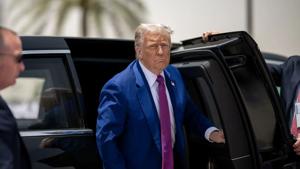
Chaos in global energy markets following the launch of Operation Epic Fury is expected to drive record demand for U.S. exports of propane and butane, analysts said Monday.
Following a military strike by the U.S. and Israel that killed Iran’s supreme leader Ayatollah Ali Khamenei and approximately 40 senior officials, Iran launched missile attacks on Saudi Arabia’s largest oil field and targeted civilian and energy infrastructure in at least nine countries including Saudi Arabia, Qatar, Kuwait, Bahrain, Oman and Jordan.
Propane and butane, together called liquified petroleum gas or LPG, are one of the largest U.S. export products in dollar terms. The U.S. produced more than 10 billion gallons of propane in 2025, about 70% of which was exported to foreign markets, energy department data shows.
LPG has been among the fastest growing U.S. exports in the last two decades, with total overseas shipments in 2024 valued at approximately $29 billion, about the same as soybeans, soymeal and soy oil, which together are the nation’s largest agricultural export category in dollar terms, Census Bureau data shows.
Analysts predict a sustained spike in demand for non-Middle Eastern energy, including U.S. LPG, which is typically a mix of 80% propane and 20% butane used by consumers and businesses across a number of industries that include agriculture, plastics production, petrochemicals, home heating and cooking.
Before the recent conflict with Iran began, Saudi Aramco had already shut down its 450,000-barrel-per-day Juaymah LPG export terminal, one of the world’s largest, due to an accident on Feb. 23 expected to keep the facility offline for more than a month. LPG buyers around the world were already scrambling to find supplies even before Iran shut down the Strait of Hormuz to vessel traffic.
Saudi Aramco is reportedly considering alternative export routes, including pipelines to the Red Sea that would allow shippers to bypass the Strait of Hormuz, according to Price Futures Group commodities analyst Phil Flynn.
U.S. consumers and companies will be mostly unaffected by surging global LPG prices because domestic inventories of both propane and butane are at levels well above average for this time of year, said Eric Smith, associate director at the Tulane Energy Institute in New Orleans.
In the week ended Feb. 23, the energy department reported propane inventories were at a record-high 62.6 million barrels for this time of year.
“We export massive amounts of LPG and the recent events will likely have little to no impact on our domestic propane and butane prices,” Smith said. “We can expect world LPG prices to rise, so our exporters will probably do well in this market environment. In the longer term, maintaining the Fifth Fleet at bases in Bahrain makes it very costly for the United States to police the Strait of Hormuz,” Smith said.
Since 2007 when the shale oil revolution began, the U.S. LPG export sector has seen 18 consecutive years of growth, with most of the shipments going to Asian nations where the two gases are used primarily to manufacture plastics and petrochemicals.
U.S. propane exports averaged about 1.8 million barrels per day in 2025, up slightly from the year prior, while overseas shipments of normal butane reached nearly 500,000 barrels a day in the year, with both at record highs.
“Texas, especially the Mt. Belvieu area near Houston, is the epicenter of world LPG exports,” Smith said.
LPG terminals located along the Texas coast, with daily loading capacity of 2.2 million to 2.4 million barrels per day, currently account for 85% to 90% of total U.S. LPG exports. The remaining U.S. LPG exports are shipped from Marcus Hook, Pennsylvania and Ferndale, Washington.
Although Asian demand softened in mid-2025 due to uncertainty over trade policies, U.S. LPG exports to Europe hit all-time highs during the year while shipments to Africa, primarily Egypt and Morocco, surged fourfold.
WATCH: Trump threatens to end all trade with Spain
President Donald Trump on Tuesday said he wanted to end all trade with Spain over disagreements about military spending.
The president cited Spain’s reluctance to increase defense spending to match other NATO members and its refusal to allow the U.S. to use its bases for the Iran operation.
“We’re going to cut off all trade with Spain. We don’t want anything to do with Spain,” Trump said Tuesday during a bilateral meeting with German Chancellor Friedrich Merz.
Merz agreed with Trump that Spain had failed to invest in defense with other NATO members as required.
“We have all committed to the 5% NATO target,” he said.
Trump’s latest trade threat indicates that the U.S. Supreme Court ruling has not altered his approach to using trade as leverage.
On Sunday, Spain announced it would deny the U.S. permission to use its air bases for operations connected to the war in Iran.
Spain is part of the 27-nation European Union, which recently halted plans to finalize a trade deal with the U.S. after the U.S. Supreme Court said the bulk of Trump’s tariffs were illegal.
On Tuesday, the EU said it expects the Trump administration to honor the trade agreement made with the 27-nation bloc in Scotland last year.
Merz said Spain couldn’t be singled out.
“First, Spain is a member of the European Union, and as such we conduct negotiations on a tariff agreement with the United States only together – or not at all,” the German chancellor said.
Trump previously warned other nations not to use the Supreme Court’s decision to renegotiate deals.
“Any Country that wants to ‘play games’ with the ridiculous supreme court decision, especially those that have ‘Ripped Off’ the U.S.A. for years, and even decades, will be met with a much higher Tariff, and worse, than that which they just recently agreed to. BUYER BEWARE!!!,” Trump wrote in a social media post.
The U.S. trade deal with the European Union called for 15% tariffs on goods coming to the U.S.
The EU deal was the biggest deal Trump made after announcing “Liberation Day” tariffs on April 2, 2025. U.S. total goods trade with the European Union was an estimated $975.9 billion in 2024.
The Supreme Court, divided 6-3, ruled that the International Emergency Economic Powers Act didn’t give Trump expansive tariff powers to tax goods entering the country.
“The Framers gave ‘Congress alone’ the power to impose tariffs during peacetime,” Chief Justice John Roberts wrote for the majority.
Denver City Council votes to ban masks on ICE agents

The U.S. Department of Homeland Security says it will not comply with a new Denver ordinance that bans law enforcement, including federal agents, from wearing face coverings while operating in the city limits.
The ordinance, passed unanimously on Monday by the Denver City Council, says all law enforcement personnel must have their badge or identification number displayed and bans the use of a “facial covering when performing duties.”
The ordinance makes exemptions for special weapons and tactics, tactical operations and undercover work.
According to DHS, federal agents wear face coverings to protect from being doxxed by activists. The department says the city’s ban and others like it are unconstitutional because of the Supremacy Clause.
“Sanctuary politicians attempting to ban our federal law enforcement from wearing masks is despicable and a flagrant attempt to endanger our officers. To be crystal clear: We will not abide by unconstitutional bans,” DHS Deputy Assistant Secretary Lauren Bis told The Center Square on Tuesday, answering a question by email. “The Supremacy Clause makes it clear that state politicians do not control federal law enforcement.”
A federal judge last month blocked a California law that sought to ban U.S. Immigration and Customs Enforcement agents from wearing masks.
Mayor Mike Johnston’s office told The Center Square in an email that Denver’s ordinance is different in that it applies to local, state and federal law enforcement “rather than being tailored toward the federal government.”
The Denver Police Department is working with the city attorney and council members “to determine what implementation could look like” for the ordinance, a police spokesperson told The Center Square.
“Of utmost importance is discretion and prioritizing de-escalation when encountering these situations,” the spokesperson said in an email. “Our goal is to apply this ordinance in a way that builds trust and transparency without putting officers, deputies or the public at risk.”
Johnston plans on signing the ordinance this week, his office said. The ordinance’s final passage comes after the mayor last week signed an executive order that bars federal immigration authorities from using city properties in staging for civil immigration enforcement operations.Bies added that federal law enforcement officers have seen an increase in assaults against them.“The men and women at CBP, ICE and all of our federal law enforcement agencies put their lives on the line every day to arrest violent criminal illegal aliens to protect and defend the lives of American citizens,” the Homeland Security official said. “Make no mistake, this type of demonization is contributing to the surge in assaults of law enforcement officers.”
Trump: U.S. Navy to provide escorts for tankers through Strait of Hormuz

Over concerns that Iran is blocking vital tankers from transiting the Strait of Hormuz, President Donald Trump announced that the U.S. Navy will begin escorting tankers through the area.
“Effective IMMEDIATELY, I have ordered the United States Development Finance Corporation (DFC) to provide, at a very reasonable price, political risk insurance and guarantees for the Financial Security of ALL Maritime Trade, especially Energy, traveling through the Gulf,” the president posted on his Truth Social account Tuesday afternoon. “This will be available to all Shipping Lines. If necessary, the United States Navy will begin escorting tankers through the Strait of Hormuz, as soon as possible. No matter what, the United States will ensure the FREE FLOW of ENERGY to the WORLD. The United States’ ECONOMIC and MILITARY MIGHT is the GREATEST ON EARTH — More actions to come.”
The announcement comes after the Islamic Revolutionary Guard has threatened ships attempting to transit the Strait, which connects the Persian Gulf and the Gulf of Oman.
Over the weekend, ships in the area reportedly received VHF transmissions from the IRGC instructing that no ships are allowed to pass through the Strait.
The reports come as the U.S. Department of Transportation Maritime Administration has issued an alert to vessels in the region, urging them to “keep clear of this area if possible,” citing “significant military activity.”
“Any U.S.-flagged, owned, or crewed commercial vessels that are operating these areas should maintain a standoff of 30 nautical miles from U.S. military vessels to reduce the risk of being mistaken as a threat and are strongly encouraged to maintain close contact with Naval Forces Central Command (NAVCENT) Naval Coordination and Guidance for Shipping,” according to DOT.
Iran has been targeting Arab countries along the Persian Gulf, including Bahrain, Kuwait, Qatar and the United Arab Emirates in response to U.S. strikes inside Iran early Saturday.
U.S. Central Command announced Tuesday afternoon that all IRGC naval ships in the Gulf of Oman had been destroyed.
Minnesota sues Trump administration over $243M Medicaid funding pause

Minnesota announced Tuesday it is suing the federal government for withholding $243 million in Medicaid payments.
State officials say the move puts health care coverage for more than 1 million residents at risk while sidestepping the administrative process already underway.
Minnesota Attorney General Keith Ellison and the Minnesota Department of Human Services filed the lawsuit jointly in federal court. State officials allege the Centers for Medicare and Medicaid Services moved forward with the deferral before completing the required review tied to its January noncompliance notice.
Under Medicaid, the federal government shares costs with the state to provide health coverage to low-income residents, seniors, and people with disabilities. The program covers families earning up to $42,759 annually for a household of four, according to the Minnesota Department of Human Services.
Ellison said the state is challenging what he called an unlawful attempt to cut funding before proving any wrongdoing.
“The Trump Administration’s M.O. is to cut first, no matter what the law says or who gets hurt, and ask questions later, if at all,” Ellison said. “These cuts are the latest in a long series of efforts to go around the law to punish Minnesotans—but just as we fought back and won when they illegally tried to cut funding for childcare, hungry families, and our schools, we are suing them again today to make them follow the law.”
Ellison also noted his office’s record on Medicaid fraud enforcement, which includes more than 300 convictions and $80 million in judgments and restitution, and said the state continues to pursue additional oversight tools.
President Donald Trump has framed the pause as part of a nationwide “War on Fraud,” with Vice President J.D. Vance leading the effort. Vance said the administration would not allow taxpayer dollars to be misused.
“We have decided to temporarily halt certain amounts of Medicaid funding that are going to the state of Minnesota,” Vance said. “Far too many people have gotten rich by taking what is best of the American spirit and getting rich off of it instead of providing services to kids who need it.”
The lawsuit follows the Trump administration’s Feb. 25 announcement that it would pause $259 million in federal Medicaid payments owed to Minnesota. Gov. Tim Walz criticized the decision.
“This isn’t a deferral, it’s a ransom note,” Walz said. “The Trump Administration is using kids as pawns in their campaign of retribution against our state.”
Technically, the pause is a deferral in payments, which Minnesota called an “unprecedented” method to audit funds.
“Deferrals have never been used to categorically deny funds to a state across entire service areas, as is being done here,” Ellison’s office said in a statement. “The unprecedented February 25 deferral is more than 15 times larger than any past deferral Minnesota has been issued.”
The legal dispute comes as fraud investigations across Minnesota continue, with independent and federal investigators estimating potential schemes totaling between $9 billion and $20 billion. The White House described fraud in Minnesota as “pervasive and disturbing.”
The $243 million at issue is part of a broader dispute over more than $2 billion in annual Medicaid funding flagged by the Trump administration in January, pending the completion of the state’s administrative appeal. Minnesota officials say the larger threat underscores what they see as an “unprecedented” approach to addressing fraud.
State officials say withheld payments represent roughly 7% of Minnesota’s quarterly Medicaid funding and warn the loss—even temporarily—could force reductions in healthcare services for low-income families or require lawmakers to shift money from other parts of the state budget.
Minnesota is seeking a temporary restraining order to immediately block the funding pause while the legal challenge proceeds in federal court.
While an initiative of the federal government, state lawmakers are also looking to address fraud.
In the past few weeks, Republicans have renewed calls for a statewide independent Office of the Inspector General, arguing broader oversight is needed amid ongoing probes into alleged fraud in taxpayer-funded programs. Walz has also introduced his own “comprehensive anti-fraud package.”
Pritzker denies flying with Epstein
Illinois Gov. J.B. Pritzker says he never met Jeffery Epstein and was never on a plane with the late sex offender.
The governor made the remarks in Chicago on Tuesday and said former President Bill Clinton corrected his mistake after suggesting that Pritzker had flown with supporters and Clinton Foundation donors on Epstein-connected flights.
“President Clinton clearly was mistaken, and he corrected the mistake,” Pritzker said.
The governor said he had never met Jeffrey Epstein.
“I was never on Jeffrey Epstein’s plane. I was never on any plane with Jeffrey Epstein or with Ghislaine Maxwell,” Pritzker said.
The U.S. House Oversight Committee questioned Clinton over his ties to Epstein in a closed-door hearing in New York last Friday.
The former president was asked if Epstein was on every flight he took that was connected to the former sex offender.
“There will be a record of it, but I think he was or certainly on most of them,” Clinton said.
The former president was then asked who he normally brought on the flights.
“I think it was on one of these trips, I think, that I had my first trip for the man who is now the governor of Illinois, J.B. Pritzker, and his wife. They gave me, they helped me get started,” Clinton said.
Former Clinton staffer Angel Ureña clarified the former president’s remarks.
“President Clinton was simply giving an example of the many people he traveled with to see the Clinton Foundation’s work. Governor Pritzker joined a Clinton Foundation trip in 2008. Not on Epstein’s plane. Not with Epstein. Not with Maxwell,” Ureña posted on social media.
Andrew Rice contributed to this story.
Lawmakers from both parties grill Noem on taxpayer costs
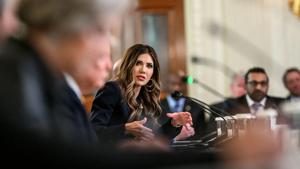
U.S. Senators grilled Kristi Noem, secretary of the Department of Homeland Security, over alleged misuse of taxpayer dollars on Tuesday.
Sen. John Kennedy, R-La., questioned Noem over her agency’s approval processes for multimillion dollar contracts. He specifically brought up an investigation over a $220 million DHS advertising campaign. A review of documents from ProPublica appeared to find that a firm closely linked to Noem was awarded taxpayer dollars for the campaign.
Noem said she approves all DHS contracts that exceed $5 million. She said this policy has saved more than $13.2 billion as the agency negotiates lower price contracts and cancels other contracts.
Noem defended the ad campaign as “extremely effective” and said President Trump tasked her with putting out the materials. She also denied that the ad campaign funds were given to an agency that was closely linked to the secretary.
“It puts the president in a terribly awkward spot,” Kennedy said. “I’m not saying you’re not telling the truth, it’s just hard for me to believe.”
Kennedy said Safe America Media, the company awarded an ad contract from DHS, was formed 11 days before Noem picked it to run the ad campaign. Safe America Media, reportedly funneled large portions of its ad contract to Strategy Group, an organization run by Ben Yoho, husband to DHS spokesperson Tricia McLaughlin. McLaughlin resigned from DHS on Feb. 17.
“Look, we all have friends who are qualified,” Kennedy said. “It troubles me a fifth to a quarter of a billion dollars of taxpayer money when we’re scratching for every penny and we’re fighting over rescission packages, I just can’t agree with Madam Secretary.”
Noem denied she picked the specific contractors who were awarded funds in the ad campaign process.
The Department of Homeland Security has been left without funds by Congress since Feb. 14. The Transportation Security Administration, Coast Guard, Secret Service and Federal Emergency Management Agency are among the few organizations without full funding until Congress reaches an agreement.
TSA and FEMA employees have already started to receive partial paychecks or will receive them starting this week.
Democrats on the committee also accused Noem of misusing taxpayer dollars in the purchase of luxury jets and planes for the department’s purposes. Sheldon Whitehouse, D-R.I., pointed out two jets that were purchased by DHS for $172 million. Noem reportedly has plans to purchase a third jet for $70 million.
Noem said the purchase of jets in the department has saved taxpayer dollars and helped to speed up deportation processes. She said the department spent $1.42 billion on deportation flights in 2025.
She said luxury jets are being refurbished to comply with the law and allow greater savings for taxpayers. Congress provides funding for DHS to purchase jets at their discretion. Recently, Congress appropriated $140 million to DHS specifically for the purchase of jets.
“We are saving the taxpayer 40% by purchasing our own aircraft and operating them rather than being susceptible to the contracts that they have today,” Noem said.
Other senators pointed out fraud schemes happening across the country. Sen. Marsha Blackburn, R-Tenn., called for further extensive investigation into Minnesota fraud, which she said totaled up to $18 billion.
“These programs are there to care for individuals and give services to some of our most vulnerable in society,” Noem said. “[Minnesota leaders] have stolen that from them, allowed individuals to abuse those programs and have done it to the detriment of not just their families there, but also the businesses there and the educational entities and even their credibility to speak.”
State Department working to evacuate Americans from Middle East
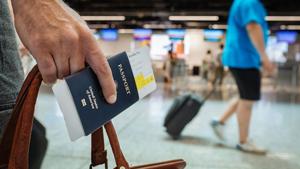
Nearly 3,000 Americans have been in contact with the U.S. State Department seeking to leave the Middle East after a “depart now” was issued for American citizens in the region, as American embassies and consulates in the region are being targeted.
“The State Department is actively securing military aircraft and charter flights for American citizens who wish to leave the Middle East,” according to an X post from Assistant Secretary of State for Global Public Affairs Dylan Johnson.
There are multiple reports that the U.S. consulate in Dubai, UAE, has come under attack in a suspected Iranian attack. Videos circulating on social media show a fire coming from the consulate.
On Monday evening, the U.S. Embassy in Riyadh, Saudi Arabia, was attacked by two Iranian drones. The Saudi Arabian Ministry of Defense reported “limited fire and minor material damage to the building.”
Several U.S. embassies, consulates and military bases in the region have been under attack since Operation Epic Fury began early Saturday morning.
On Monday evening, the State Department issued a “depart now” list for over a dozen Middle Eastern countries, where a majority have seen some attacks from Iranian forces since the strikes began. The countries include: Bahrain, Egypt, Iran, Iraq, Israel (the West Bank and Gaza), Jordan, Kuwait, Lebanon, Oman, Qatar, Saudi Arabia, Syria, the United Arab Emirates and Yemen.
On Tuesday, the U.S. Embassy in Beirut, Lebanon, announced that “due to regional tensions,” it will be closed until further notice. A Beirut neighborhood has been subject to Israeli retaliatory attacks from the Iranian proxy terror group, Hezbollah, which is headquartered in Lebanon.
As of Tuesday afternoon, six U.S. service members have been killed in Iranian attacks since the U.S.-Israeli operation began.
Democrats eye wealth tax for billionaires to fund $3,000 payments
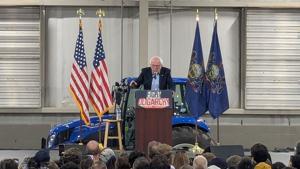
Democrats are pitching a new wealth tax on billionaires to be used to send $3,000 payments to those making $150,000 or less, but the measure faces long odds in the Republican-controlled legislature.
U.S. Sen. Bernie Sanders, I-Vt., and Rep. Ro Khanna, D-Calif., introduced the Make Billionaires Pay Their Fair Share Act, which would establish a 5% annual wealth tax on U.S. billionaires.
Sanders and Khanna said the 938 billionaires in America are collectively worth $8.2 trillion. Two economists from the University of California at Berkeley, Emmanuel Saez and Gabriel Zucman, estimated the measure would raise about $4.4 trillion over a decade.
The bill would use the 5% annual wealth tax to send a $3,000 direct payment to every person in a household with an income of $150,000 or less. That’s $12,000 for a family of four. The rest of the money would be used for other spending. That includes reversing spending changes under the One Big Beautiful Bill Act; expanding Medicare; affordable housing; capping childcare costs; and establishing a $60,000 minimum annual salary for public school teachers.
Under the bill, Tesla boss Elon Musk would owe $42 billion in taxes, Meta boss Mark Zuckerberg would owe $11 billion and Amazon boss Jeff Bezos would owe about $11 billion, Sanders and Khanna said.
Kyle Pomerleau, a senior fellow at the American Enterprise Institute, said the $4.4 trillion estimate was overly optimistic.
“The revenue estimate is too high by nearly a factor of two,” he wrote in an analysis.
Pomerleau said the Berkley estimate “ignores baseline avoidance due to existing taxes.”
“Under current law, many wealthy taxpayers already use legal structures to avoid capital income taxes,” he noted. “A taxpayer who has already hidden an asset from the income tax is not going to voluntarily report that same asset for a new wealth tax.”
Tax Foundation senior fellow Jared Walczak was also skeptical of the $4.4 trillion estimate.
“To accept this revenue estimate as credible, you must believe that a 5% annual wealth tax on billionaires – on their investments and their closely-held businesses – will have no economic ramifications worth mentioning,” he wrote on X.
Sanders said the measure will help Americans.
“This legislation demands that the billionaire class in America finally pay their fair share of taxes so that we can create an economy that works for all of us, not just the 1%,” he said in a statement. “We can no longer tolerate a corrupt tax code that enables billionaires to pay a lower tax rate than the average worker.”
Republicans control both the U.S. House and Senate with slim majorities.