Center Square
WATCH: Supreme Court case could add to $10.8B midterm spending projection
The U.S. Supreme Court could issue a decision by July that could unleash billions more dollars into political campaigns ahead of the 2026 midterm elections.
In December, justices on the court heard arguments in National Republican Senatorial Committee v. Federal Election Commission, a case that could strike down limits on political party spending. The case would determine how much political parties can spend in coordination with candidates for expenditures like advertising.
Alongside Republican groups, former Senate candidate JD Vance, R-Ohio, brought the challenge. He argued rules that prevent coordination go against the First Amendment.
Travis Trawick, CEO of non-partisan political technology firm FullPAC, told The Center Square he is confident the Supreme Court will rule in favor of the Republican groups.
“The Supreme Court has already ruled that political speech is free speech and you can’t put limits on free speech and political [speech] is one of the most protected forms of free speech,” Trawick said.
According to AdImpact, spending in the 2026 midterm elections is projected to reach over $10.8 billion. However, Trawick said this figure does not account for money that could be unleashed after the Supreme Court’s decision.
“They don’t even have figures out for if this ruling was to be approved and have those federal spending limits removed,” Trawick said, “That’s obviously going to open up another avenue of billionaire donors to be able to support candidates.”
Elon Musk, a billionaire, donated $10 million to support Nate Morris, a Republican candidate for Kentucky Senate. Trawick said this kind of spending is expected to increase based on the Supreme Court’s decision.
“We’re going to see that trend continue and that’s just kind of what America allows in our democracies,” Trawick said.
The Federal Elections Campaign Act limits contributions to individual candidates each year. For 2025-2026 federal elections, the maximum individual donor contribution to a national party committee is $132,900.
“We don’t know what it could go to but we definitely know that it will be going up with those limits being removed,” Trawick said.
During oral arguments in December, Justice Sonia Sotomayor appeared skeptical of dealing with the case. She argued the Supreme Court would be elevating the voice of a politician by allowing for greater cooperation between parties and candidates.
“Every time we interfere with the Congressional design, we make matters worse,” Sotomayor said. “Our tinkering causes more harm than it does good.”
“We’re not buying votes here,” Trawick said. “We are spending money in advertising to give the public a better perception of an individual candidate so that they can create a more lasting and favorable relationship to win more votes on Election Day.”
Trawick argued local races will benefit from the Supreme Court’s decision to open funding avenues with elections. He said city council, school board and local judge races could receive the trickle down effects of unlimited funding.
Over the past year, redistricting efforts in states across the country have brought on national attention as political parties battle for control of Congress in 2026. Trawick said the Supreme Court’s decision in this case will be especially important considering mid-decade redistricting efforts.
“It makes some of them more competitive, it flips other ones entirely and makes some way safer,” Trawick said about new congressional districts. “All we do here at FullPAC is making sure that their message is going to their new communities in a way that the voters are educated that they are voting for a different candidate now.”
Justices on the U.S. Supreme Court could take until July to decide NRSC v. FEC, leaving only a few months before midterm Election Day and after many state primary elections take place. Trawick urged justices on the court to quickly issue a decision for funds to be released.
“The Supreme Court needs to make a decision on this relatively quickly before the midterm elections so that these groups that are going to be benefitting from this can make that happen,” Trawick said.
WATCH: WA GOP lawmaker asking Trump administration to investigate fraud allegations
A Washington state lawmaker is asking President Donald Trump and the U.S. Department of Justice to investigate potential self-dealing and fraud within taxpayer subsidized programs that fund race-based housing grants, daycare subsidies and more.
As reported in recent weeks and months by The Center Square, state officials and majority Democrats have so far resisted efforts to call for investigations or outside audits.
“We truly don’t have very good mechanisms set up to track when money is not being spent properly,” said Rep. Jenny Graham, R-North Spokane, in a Friday interview with The Center Square. “There’s nothing that happens when money disappears. Who actually is held accountable for it?”
Graham has introduced House Joint Memorial 4014, asking the Trump administration to get involved and start investigating grant programs and the state agencies responsible for doling out the funds.
Part of HJM 4014 credits TCS investigations and reporting for inspiring the measure, which is similar to a bill.
-WHEREAS, The Center Square has reported on potential fraud in Washington state’s taxpayer-subsidized childcare centers, including instances where licensed facilities received substantial subsidies despite appearing inactive or nonoperational; and
-WHEREAS, The Center Square investigations have drawn parallels to federal raids in Minnesota over similar childcare fraud schemes, spotlighting vulnerabilities in Washington’s Department of Children, Youth, and Families (DCYF) subsidy system that may have cost taxpayers millions; and
-WHEREAS, The Center Square has documented democratic lawmakers criticizing journalistic probes into these allegations, while republican lawmakers call for independent audits to address unaccounted funds nearing $500,000,000; and
-WHEREAS, The Center Square has reported frustration from legitimate day care owners over alleged fraud within the Somali community, with DCYF claiming to investigate reports but downplaying the extent of issues.
Graham told TCS with both Governor Bob Ferguson and Attorney General Brown deflecting questions about the appearance of widespread self-dealing and potential fraud, and majority Democrats telling reporters they should not look into the questionable dealings, her HJM hopes to get the attention of the Trump administration.
Deputy Communications Director Mike Faulk, in the AGO’s office emailed a response about the HJM after initial publication.
“We’ve said many, many, many times that we take fraud allegations seriously,” wrote Faulk. “This frivolous document spotlights the synergy between GOP politicians and right-wing content creators.”
“There are some credible allegations about possible fraud going on and this is one of the reasons why your tax bills keep going up and up and up,” Graham said. “They have to be willing to start looking at where the money is going to stop the bleeding instead of continually going back to passing bills that take more money out of the pockets of the working people.”
The HJM also notes a lawsuit filed by Representative Jim Walsh, who is the Washington State Republican Party Chairman. The suit challenges the “attorney general’s disparagement of efforts to preserve public records related to widespread taxpayer fraud, alleging state employees altered records in violation of the Public Records Act.”
TCS has screenshots from state websites showing large taxpayer subsidies to home daycare providers, where subsidies received since media reporting began have changed.
“We have a situation where you literally have elected officials, including the auditor of the state saying we’re not going to investigate this fraud. And the mayor of Seattle said she’s not going to investigate the fraud because it’s racist,” Graham said. “So, I really honestly feel like I didn’t have much other option but to try to look outside of Washington state….to find out where all the Washington state taxpayer money is going.”
The House Joint Memorial, which is co-sponsored by 13 other Republicans in Olympia was referred to the State Government & Tribal Relations committee.
The committee is chaired by Rep. Sharlett Mena, D-Tacoma. TCS reached out to her office to inquire if the HJM will receive a public hearing but did not receive a response in time for publication.
Senate GOP fails to halt welfare funding for non-citizens
U.S. Senate Republicans failed to halt over $5 billion in funding for refugees, with 20 GOP senators joining every Senate Democrat to continue providing the costly taxpayer benefits to refugees.
U.S. Sen. Rand Paul, R-Ky., introduced the End Welfare for Non-Citizens Act to end taxpayer benefits for refugees, asylees and illegal immigrants earlier this week.
In an impassioned plea on the Senate floor Friday afternoon, Paul argued that the U.S. shouldn’t be “the world’s sugar daddy.”
“Many refugees are good people, frankly, some of the best Americans just got here, but our welcome mat should not be a welfare check. Anyone who sponsors immigrants or refugees should be responsible for their welfare,” the senator argued before the vote.
As previously reported by The Center Square, nearly $6 billion in continual funding for refugees is poised to be approved.
Funding for the refugee program skyrocketed under the Biden administration as part of the Refugee and Entrant Assistant programs.
The funding rose from less than $2 billion in fiscal year 2021, the last year of President Donald Trump’s first term, to nearly $9 billion the next fiscal year – the first year of former President Joe Biden’s administration.
Despite the government admitting many of the refugees were unvetted, taxpayers are poised to remain on the hook for billions of dollars, as many of these refugees continue to qualify for over a dozen taxpayer-funded benefits.
The benefits refugees are eligible to receive include: Supplemental Security Income (SSI), Supplemental Nutrition Assistance Program (SNAP), Women, Infants and Children (WIC), HUD Public Housing and Section 8 housing vouchers, emergency Medicaid, Affordable Care Act health plans and subsidies, full-scope Medicaid, Children’s Health Insurance Program (CHIP), federal student aid and Pell grants, REAL ID, Workforce Innovation and Opportunity Act services, refugee resettlement programs through the Office of Refugee Resettlement and Temporary Assistance for Needy Families (TANF), according to the National Immigration Law Center.
For those who didn’t qualify for SSI or TANF, refugees were eligible for up to 12 months of Refugee Cash Assistance (RCA) through the ORR.
In addition, many refugees qualified for employment assistance through Refugee Support Services, which included: childcare, transportation, “employability services,” job training and preparation, job search assistance, placement and retention, English language training, translation and interpreter services and case management, according to the Administration for Children and Families Office of Refugee Resettlement.
The ORR also noted that “some clients may be eligible for specialized programs such as health services, technical assistance for small business start-ups and financial savings.”
Many refugees also qualified for “immigration-related legal assistance” to assist them “on their pathway to obtaining a permanent status.”
Congressionally appropriated spending on refugee and migrant assistance programs rose sharply under the Biden administration, totaling roughly $30 billion over those four years.
In particular, lawmakers significantly increased appropriations for the Refugee and Entrant Assistance programs – housed in the U.S. Department of Health and Human Services – which provide benefits to eligible refugees.
In fiscal year 2021, the last year of Trump’s first term, Congress appropriated $1.91 billion for REA programs. That number shot up to $8.92 billion the following year, coinciding with the influx of Afghan refugees and record-high border crossings.
Total federal assistance for refugee programs in fiscal year 2023, however, reached $10 billion, as an OpenTheBooks investigation highlighted.
“With a national debt exceeding $38 trillion, Washington should not be running a welfare system on autopilot,” according to a release from Paul’s office. “The End Welfare for Non-Citizens Act puts America First by stopping taxpayer dollars from being siphoned into benefits for non-citizens. If we want a sustainable safety net and responsible stewardship of taxpayer dollars, this bill is a must-pass.”
Among his first acts upon his second inauguration in January 2025, Trump suspended the U.S. Refugee Admissions Program, saying “it would be detrimental to the interests of the United States.”
Senate passes funding deal, sends to House for final approval
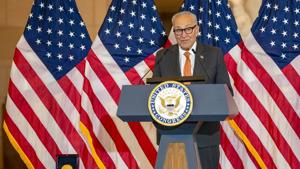
The U.S. Senate sent a $1.2 trillion government funding package back to the House for approval Friday night, ensuring a partial government shutdown over the weekend.
The package includes five of the six remaining appropriations bills – funding State-Foreign Affairs, Financial Services, Defense, Labor-HHS-Education, and Transportation-HUD – and a short-term Continuing Resolution in place of the Homeland Security bill.
The stopgap will freeze DHS funding at current levels for the next two weeks, during which time lawmakers will restructure the Homeland Security bill to add some Democrats’ policy demands.
“The agreement we reached today did precisely what Democrats wanted,” Senate Minority Leader Chuck Schumer, D-N.Y., told reporters after the vote.
The funding compromise resulted from negotiations among party leaders, as well as President Donald Trump directly negotiating with Schumer.
In exchange for securing enough Democratic votes to advance the majority of the remaining appropriations bills, Republicans agreed to include new restrictions on immigration enforcement agents in the Homeland Security bill.
Those could include barring agents from wearing masks, requiring body-worn cameras, and implementing stricter warrant requirements, among other changes.
Many Republicans in both the House and Senate disapproved of the deal and vowed to vote against legislation that overhauls Immigration and Customs Enforcement.
Chamber leaders had originally considered passing the five appropriations bills separately from the CR and sending them to Trump’s desk immediately, but ended up bundling them together for a greater chance of the funding stopgap passing the House.
Sen. Tommy Tuberville, R-Ala., voted for the package but said he was “disturbed that Republicans are negotiating with Democrats on so-called ‘reforms’ to ICE.”
“In two weeks, I will vote against any ‘reforms’ that keep ICE agents from doing their jobs and deporting criminals,” he added.
California group opposes property tax hike, billionaires’ tax

Officials with the Howard Jarvis Taxpayers Association are concerned about efforts to raise property taxes on California’s homeowners, a representative of the organization told The Center Square this week.
The trepidation that the state’s homeowners might see property taxes go up stems from transfer-tax loopholes, the proposed billionaires’ tax and the state’s budget deficit, according to organization officials and a letter sent earlier this month by the group to its members.
The letter explained that California used to have a small 0.11% transfer tax on the transfer of ownership when property changed hands, which was kept from increasing by Proposition 13. A series of court decisions in the years after Prop. 13 passed in 1978 then allowed “charter cities” to institute their own transfer taxes that were much higher than the 0.11% limit imposed by Prop. 13, according to the letter from the well-known taxpayers organization.
“We have a situation in California where there’s not only a state budget deficit, but all the cities and counties are under pressure because of pension obligations and liability judgements,” said Susan Shelley, vice president of communications for the Howard Jarvis Taxpayers Association.
“They’re under tremendous budget pressure, and they’re all looking for tax increases,” Shelley told The Center Square. “So we’ve seen more and more of what we consider to be unconstitutional taxes being enacted anyway.”
The proposed billionaires’ tax, too, is causing concern at the taxpayers association.
The effort to pass the tax is sponsored by Service Employees International Union – Healthcare Workers West (SEIU-UHW). The proposal is to impose a one-time 5% tax on California residents whose wealth exceeds $1 billion, according to documents from the California Attorney General’s Office and previous reporting by The Center Square.
California Gov. Gavin Newsom has voiced his opposition to the measure, according to multiple news reports.
“This is an entirely new kind of tax,” Shelley told The Center Square. “This is not a tax on income. This is not a tax on sales. This is not a tax on capital gains. This is a tax on existing property.”
It’s no consolation that the tax only affects those with $1 billion or more in wealth, Shelley continued.
“Once they put this in place, where everyone has to tell the government everything they own and what its value is every year, then there’s a mechanism in place to tax retirement funds, home equity, possessions,” Shelley told The Center Square. “That’s never happened in America before, where people’s possessions would be taxed just because they own them. We are very concerned about that, and we believe it would totally come down to the middle class very quickly.”
Also at issue is the state’s projected $18 billion budget deficit, which the Legislative Analyst’s Office reported in November.
While Newsom released a budget proposal earlier this month that puts the state’s deficit at only $2.9 billion, the LAO said the multi-year deficits caused by the governor’s budget would prove to be alarming, as previously reported by The Center Square.
“We’re very concerned about the long-term effect of so much debt at the state level,” Shelley told The Center Square.
According to a database compiled by the Washington, D.C.-based Tax Foundation, California had an effective property tax rate of 0.70% of a home’s assessed value in 2023, the last year for which data was available.
The state with the highest property tax rate is Illinois, with a 1.83% property tax rate, according to the database.
New Jersey, Connecticut, Nebraska, Vermont, New Hampshire, Texas, Ohio, New York, Wisconsin, Iowa, Kansas, Pennsylvania, Michigan, Rhode Island, Minnesota, South Dakota, Massachusetts, North Dakota, Maine, Alaska, Maryland, Missouri, Oregon, Oklahoma, Georgia, Indiana, Virginia, Washington State, Florida and Kentucky all had at least marginally higher property tax rates than California, the Tax Foundation data show.
Lawmakers who sit on tax-related committees in the California State Legislature, as well as dozens of homeowners’ associations across the state, did not return calls to The Center Square or were unavailable to answer questions.
Graham blocks govt. funding vote over policy demands as deadline looms
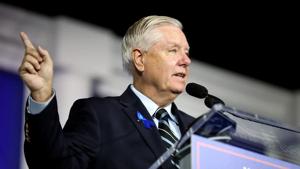
With only hours before the federal government runs out of money, tensions are rising in the U.S. Senate as a handful of Republicans block a vote on federal funding bills over policy demands.
Supported by Sen. Eric Schmitt, R-Mo., Sen. Lindsey Graham, R-S.C., has placed a hold on the vote to advance the remaining funding legislation for fiscal year 2026.
As of Friday afternoon, Graham refused to lift the hold unless he was guaranteed a vote in the near future on legislation prohibiting sanctuary cities.
He also demanded a vote on an amendment to the Homeland Security bill that would prohibit the federal government in most circumstances from collecting Americans’ metadata without their knowledge, as well as allow both senators and private individuals to sue the federal government if it does so.
“I’m asking for two simple things: give me a chance to express myself on what the solution to our problems of immigration are – I’m not asking for an outcome, [just] for a vote,” Graham told lawmakers Friday. “And as to Arctic Frost, I want to have a chance to have a vote on a version that would expand private cause of actions for non-members of Congress who may have a claim against Jack Smith.”
Some of Graham’s colleagues have rebuked his actions, with Sen. Thom Tillis, R-N.C., urging him not to shut down the government “to make a point.”
“The reason why we’re not moving forward today doesn’t have anything to do with the Democrats. It has to do with a handful of Republicans who are refusing to let us move forward,” Tillis said. “We’re going to shut down the government because some Republicans refuse to take the win, refuse to take a negotiated agreement that the president agrees with.”
Senate leaders from both parties struck a funding deal Thursday – which President Donald Trump supported – and had planned to vote that evening.
Under the agreement, the Senate split off the Homeland Security funding bill from the six-bill appropriations package and planned to pass the remaining five, sending them to Trump’s desk.
Lawmakers would then redraft the Homeland Security bill to include Democrats’ demands — bans on mask-wearing and roving patrols, body-worn camera requirements, and warrant rule changes, among other things.
But since restructuring and passing that bill could take weeks, senators will also pass a short-term Continuing Resolution to keep Homeland Security funding on cruise control in the meantime.
The House must approve the CR, however, and it will not return until after Jan. 30, meaning funding for some agencies covered under the Homeland Security bill will lapse.
While a weekend-long partial shutdown would have little negative impact, many Republican congressmen have expressed opposition to severing the House-passed Homeland Security bill and tailoring it to Democrats’ wishes.
“[Senate Minority Leader] Chuck Schumer’s current demands, compounded by a lack of Conservative priorities, are an absolute non-starter,” Rep. Mark Harris, R-N.C., said.
Trump sues the IRS for $10 billion

President Donald Trump, his eldest two sons and the Trump organization have filed a lawsuit against the IRS, seeking at least $10 billion in damages for failing to prevent the leaking of their financial data in 2019 and 2020.
Charles “Chaz” Littlejohn, a former employee of Booz Allen Hamilton, illegally leaked thousands of wealthy clients’ confidential tax filings, including the president’s, to media outlets during those years. Booz Allen contracted with the IRS at the time and the lawsuit alleges that Littlejohn was able to obtain the records because the IRS did not ensure proper security measures were in place.
Littlejohn was convicted of one count of unauthorized disclosure of tax information and is currently serving a five-year sentence in a federal prison.
The Treasury Department also cut ties with the consulting firm earlier this week, cancelling millions in contracts and saying it was also partly responsible for Littlejohn’s crimes. Treasury Secretary Scott Bessent said Booz Allen also “failed to implement adequate safeguards to protect sensitive data” that Littlejohn accessed.
The filing disputes that Trump’s tax documents included “versions of fraud,” as ProPublica reported based on the files it received from Littlejohn, and cites “significant and irreparable harm to the plaintiffs.”
“Defendants have caused plaintiffs reputational and financial harm, public embarrassment, unfairly tarnished their business reputations, portrayed them in a false light, and negatively affected President Trump, and the other plaintiffs’ public standing,” the complaint reads.
The president also filed administrative claims against the Department of Justice in October, seeking hundreds of millions of dollars in compensation for alleged misconduct in the Russia collusion investigation and a later investigation into whether he had improperly retained classified documents after his first term.
Some warn of a conflict of interest in the president suing the government he currently leads.
The lawsuit was filed Thursday in a federal Florida court.
Walz, Ellison to appear before House Oversight Committee
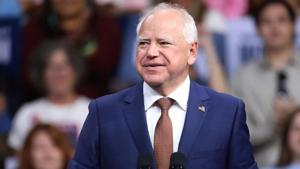
Amid allegations of widespread fraud in Minnesota, the U.S. House Oversight Committee said Friday that Minnesota Gov. Tim Walz and Attorney General Keith Ellison will appear before the committee in March.
The committee will host a second hearing on the “fraud and misuse of federal funds” in the state on Wednesday, March 4, with Walz and Ellison confirming their appearance.
Committee Chairman James Comer, R-Ky., has been leading the committee’s investigation, which was launched in December last year, with the committee hosting its first hearing on the issue in early January, when they heard from state lawmakers who sounded the alarm on fraud.
The committee argues that taxpayers have been defrauded of approximately $9 billion that were meant to provide services to children and disabled Americans.
Comer is requesting Minnesota Democrats’ various records, including documents and communications related to the allegations. In addition, the chairman is tasking the U.S. Department of the Treasury to hand over any “relevant” Suspicious Activity Reports regarding the investigation, as well as any transcribed interviews of “several current” and former state officials.
Comer lamented the allegations of fraud, vowing to hold accountable those responsible for the taxpayers.
“Americans deserve answers about the rampant misuse of taxpayer dollars in Minnesota’s social services programs that occurred on Governor Walz’s and Attorney General Ellison’s watch. The House Oversight Committee recently heard sworn testimony from Minnesota state lawmakers who stated that Governor Walz and Attorney General Ellison failed to act to stop this widespread fraud and retaliated against whistleblowers who raised concerns,” Comer said in a press release. “We look forward to questioning Governor Walz and Attorney General Ellison under oath about this scandal to ensure transparency and accountability for the American people, and to advance solutions to prevent waste, fraud, and abuse and impose stronger penalties on those who defraud taxpayers.”
BREAKING: Don Lemon arrested for involvement in church attack
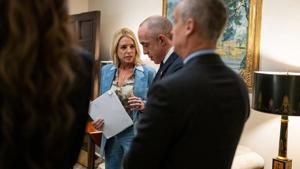
Federal officials announced another series of arrests in connection with a protest that disrupted a Sunday morning church service in St. Paul on Jan. 18.
Journalist Don Lemon, who was on the ground in the church covering the protest, was one of those arrested early Friday morning.
“At my direction, early this morning federal agents arrested Don Lemon, Trahern Jeen Crews, Georgia Fort, and Jamael Lydell Lundy, in connection with the coordinated attack on Cities Church in St. Paul, Minnesota,” said U.S. Attorney General Pamela Bondi at 9 a.m. EST.
She said more information will be released soon.
This follows three arrests that were made last week. When those arrests were made, Bondi promised “more to come.”
This comes following widespread calls for arrests in the wake of the protest, which quickly captured attention far beyond Minnesota.
The U.S. Department of Justice is investigating the protest, which was organized in part by members of Black Lives Matter Minnesota.
Video posted by the group shows protesters chanting “ICE out” and “justice for Renee Good” during the service at Cities Church. Another video circulating on social media shows Kelly calling congregants “pretend Christians” and “comfortable white people.”
Caleb Phillips, a congregant at the church, told The Center Square in an exclusive interview that the protestors were seated throughout the congregation before the service began.
“The entire congregation came alive. Individuals who are planted from front to back throughout the entire place stood up,” Phillips said. “It felt like we were surrounded, because they were all throughout the congregation.”
Reports allege the protesters discovered one of the church’s pastors works for U.S. Immigration and Customs Enforcement, calling the protest a “clandestine mission.”
The Trump administration has been vocal in its displeasure with the protest—promising legal action.
“Listen loud and clear: WE DO NOT TOLERATE ATTACKS ON PLACES OF WORSHIP,” Bondi said following last week’s arrests.
The church protest came in the wake of the Jan. 7 killing of 37-year-old Renee Nicole Good during an encounter with ICE officers conducting enhanced immigration enforcement. Lemon, a former CNN anchor, defended the protesters.
“I imagine it’s uncomfortable and traumatic for the people here,” Lemon said. “But, that’s what protesting is about.”
Since then, many Republicans have been calling for his arrest. Just days after the incident, Harmeet Dhillon, assistant attorney general for the DOJ’s Civil Rights Division, directly addressed Lemon.
“Don Lemon himself has come out and said he knew exactly what was going to happen inside that facility,” Dhillon said. “He went into the facility, and then he began ‘committing journalism,’ as if that’s sort of a shield from being an embedded part of a criminal conspiracy. It isn’t.”
The DOJ and the Federal Bureau of Investigation are working together to pursue charges for federal crimes. Some of those crimes could include violations of the Freedom of Access to Clinic Entrances (FACE) Act of 1994, which prohibits obstruction or threats at abortion clinics and places of worship.
Lemon’s arrest came after a judge last week refused to sign a warrant for his arrest. Abbe Lowell, Lemon’s lawyer, confirmed he was taken into custody while in Los Angeles.
“This unprecedented attack on the First Amendment and transparent attempt to distract attention from the many crises facing this administration will not stand,” Lowell said. “Don will fight these charges vigorously and thoroughly in court.”
Lawmaker calls Pretti shooting an injustice, points to NRA statement as validation
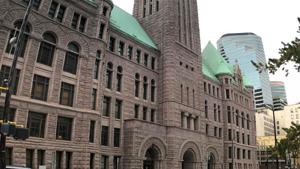
In a video circulating on social media, Illinois state Rep. Bob Morgan seized on comments from the National Rifle Association regarding the controversial shooting of Alex Pretti.
Morgan claimed the NRA’s statement validated his criticism of the Trump administration.
Morgan noted he had never agreed with the NRA until now.
“But here we are, seeing the NRA, this extremist organization, acknowledging what we already know: that this Trump administration murder of Alex Pretti is wrong. It’s an injustice that we all have to stand united against. Even a broken clock like the NRA can be right twice a day.”
Pretti, a Minnesota resident, was fatally shot by federal immigration enforcement agents in Minneapolis on Jan. 24. The incident, captured on multiple videos, has sparked a national debate over civil liberties, law enforcement conduct and gun rights.
However, critics like John Boch, executive director of Guns Save Life, argue that Morgan and others on the left are selectively using the NRA’s statement while ignoring the facts.
“I don’t know any gun owners that are saying this was a bad shoot, at least not ones who can look at something dispassionately and analyze whether it was a righteous shooting or not,” Boch told TCS.
Boch also disputed claims that Pretti was targeted simply for carrying a firearm. He noted that Trump’s comments about protesters not carrying guns, which the NRA publicly rebuked, have contributed to confusion over the incident.
“Whether carrying a firearm is legal depends on the state laws and whether it’s part of an organized protest,” Boch said.
Unlike Minnesota, Illinois generally prohibits carrying firearms at organized demonstrations, even for licensed gun owners.
Boch advised that anyone carrying firearms should use common sense and avoid dangerous situations.
“Don’t put yourself in stupid places with stupid people, or you might win stupid prizes if they do stupid things,” he said.
He explained that Pretti was shot because he attempted to resist arrest and threatened federal agents, not simply because he possessed a gun.
“This incident is a litmus test of people’s attitudes toward the rule of law and law enforcement,” Boch said. “If you support the rule of law, you look at this case dispassionately and ask whether it meets the legal standard for self-defense.”
Boch said attempts by lawmakers to frame the incident as political violence ignore the legal standard officers must follow in real time.
“The law doesn’t demand perfection,” he said. “It demands reasonableness. And under that standard, this was a very reasonable use of force to end an imminent threat.”