Center Square
DOJ to release more than 3 million Epstein documents Friday

The U.S. Department of Justice will release three million documents related to convicted sex offender Jeffrey Epstein throughout the day on Friday, according to a DOJ official.
In a news conference Friday morning, Deputy Attorney General Todd Blanche said the DOJ would release more than three million pages including more than 2,000 videos and 180,000 images associated with the criminal investigation into convicted sex offender Jeffrey Epstein.
Blanche said the photos and videos released would include commercial pornography and images seized from Epstein’s devices.
“Some of the videos, though, and some of the images do appear to be taken by Mr. Epstein or by others around him,” Blanche said.
“We erred on the side of over collecting of materials from various sources to best ensure maximum transparency and compliance, which necessarily means that the number of responsive pages is significantly smaller than the total number of pages initially collected,” Blanche said.
The Justice Department’s release comes weeks after the Dec. 19 deadline set by Congress for full release documents related to Epstein.
Blanche said the Department of Justice would submit reports to the U.S. House and Senate Judiciary Committees with explanations for the legal basis of redactions made and a list of all government officials named or referenced.
He said officials redacted documents containing child sexual abuse materials, personally identifiable victim information, and every woman except for Ghislaine Maxwell.
“To this end, though, and to ensure transparency, if any member of Congress wishes to review any portions of the responsive production in any unredacted form, they’re welcome to make arrangements with the department to do so and we’re happy to do that,” Blanche said.
Trump taps Kevin Warsh as next Fed chair
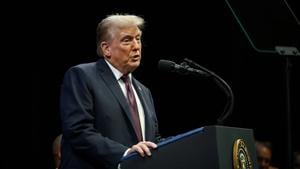
Following months of speculation, President Donald Trump has nominated Kevin Warsh to serve as the Chairman of the Board of Governors for the Federal Reserve.
The president made the announcement Friday morning in a Truth Social post, saying he has known him for a “long period,” arguing that Warsh “will go down as one of the GREAT Fed Chairmen, maybe the best. On top of everything else, he is ‘central casting,’ and he will never let you down.”
If confirmed, Warsh will replace current Fed chair Jerome Powell when his term ends in May. The current Fed chair was appointed by Trump in 2018, but has since fallen out of favor with the president over his reluctance to lower interest rates, with Trump coining him with the nickname, “Too Late Powell.”
Warsh, 55, currently serves as the Shepard Family Distinguished Visiting Fellow in Economics at the Hoover Institution, a lecturer at Stanford University Graduate School of Business, and a partner at Stanley Druckenmiller at Duquesne Family Office LLC, according to a Truth Social post from Trump.
The president added that Warsh received his undergraduate degree in business from Stanford and his law degree from Harvard.
In his post, the president listed several of Warsh’s accomplishments as the basis for his decision.
“He has conducted extensive research in the field of Economics and Finance. Kevin issued an Independent Report to the Bank of England proposing reforms in the conduct of Monetary Policy in the United Kingdom. Parliament adopted the Report’s recommendations,” according to the post.
“Kevin Warsh became the youngest Fed Governor, ever, at 35, and served as a Member of the Board of Governors of the Federal Reserve System from 2006 until 2011, as the Federal Reserve’s Representative to the Group of Twenty (G-20), and as the Board’s Emissary to the Emerging and Advanced Economies in Asia. In addition, he was Administrative Governor, managing and overseeing the Board’s operations, personnel, and financial performance. Prior to his appointment to the Board, from 2002 until 2006, Kevin served as Special Assistant to the President for Economic Policy, and Executive Secretary of the White House National Economic Council. Previously, Kevin was a member of the Mergers & Acquisitions Department at Morgan Stanley & Co., in New York, serving as Vice President and Executive Director,” the president added.
National shutdown, strike planned for Friday, Jan. 30 in protest of ICE

A “national shutdown” and strike has been planned for Friday by several groups in protest of U.S. Immigration and Customs Enforcement.
“No work. No school. No shopping. Stop funding ICE,” the movement states. Hundreds of groups are supporting the strike nationwide, with scheduled events planned in multiple states. Supporting groups include the Palestinian Youth Movement and the Council on American-Islamic Relations, groups that supported anti-Israel protests after the Oct. 7, 2023, Hamas terrorist attack against Israel.
CAIR issued a statement in support of the nationwide strike, demanding “an end to ICE’s violent abuses and lawless conduct in our communities. ICE agents have killed innocent people in broad daylight. They have laid siege to cities, terrorized families, and trampled basic civil rights. These actions are not about safety or law and order; they are about fear, intimidation, and unchecked power. And they must stop.”
“This strike is a way to show that when our government is out of control, we will not be silent — and we will not be divided,” it says.
CAIR has been designated as a foreign terrorist organization by the Republican governors of Texas and Florida and is embroiled in legal battles in both states. Texas Gov. Greg Abbott has taken multiple actions against CAIR, including launching investigations and calling for its nonprofit status to be stripped at the federal and state level, The Center Square reported.
The groups refer to ICE as creating a “reign of terror” by raiding neighborhoods and “kidnapping our neighbors.”
The movement appears to be organizing similar actions and events as those that were organized nationwide after the Oct. 7 Hamas terrorist attacks.
In Texas, “strike” events are scheduled in Austin, Dallas and Houston. In Florida, they’re scheduled statewide. The greatest number of events scheduled for Friday appear to be in California, Washington, and several Midwest and northeastern states, according to its website.
In addition to taking action against CAIR, the Republican governors in Texas and Florida have cracked down on rioters and anti-Israel protesters on college campuses in their states. They and their legislatures also increased funds for grants to be used for security by religious groups, The Center Square reported.
As anti-Israel violence increased nationwide, Florida universities deactivated Palestinian groups expressly supporting Hamas and terrorist acts, and law enforcement efforts were expanded.
In Texas, Abbott issued directives to expand law enforcement efforts and an executive order to combat antisemitism on publicly funded college campuses, including arresting rioters. CAIR sued over the order arguing that protestors have a right to call for the annihilation of Israel. In Texas, college campuses were not shut down by rioters as they were in New York and protestors are not using vehicles to block federal immigration enforcement efforts.
Abbott has since directed enhanced security measures around places of worship in the wake of increased violence targeting churches and also surged antiterrorism resources, The Center Square reported.
Several Texas Republicans have expressed concerns about U.S. citizens being shot and killed by federal agents in Minneapolis. They also point out that similar violence isn’t occurring in Texas, where federal immigration enforcement is ongoing on a daily basis, The Center Square reported.
U.S. Sen. Ted Cruz, R-Texas, said there have been roughly 60,000 ICE arrests in Texas compared to 10,000 in Minnesota, yet “we’re not seeing violent confrontations with ICE in Texas.” One main reason is because Texas officials, including the governor, legislature, mayors and police, are cooperating with ICE, working with the federal immigration enforcement efforts, he said.
Another is because Abbott has been leading on border security efforts for years and Minnesota Gov. Tim Walz, Minneapolis’ mayor and local officials “have all decided to use Tim Waltz’s words, ‘go to war’” with ICE, he said. Anti-ICE protesters are organized, well-funded and operate similar to military groups, he added, pointing to rioters using surveillance and attacking federal officials with their vehicles.
He also suggested that Trump administration officials tone down their language. After each U.S. citizen was killed, Homeland Security Secretary Kristi Noem characterized them as “domestic terrorists.”
“What I think the administration could do better is, is the tone with which they’re describing this,” Cruz said. “We took out a violent terrorist, hurray,” referring to the characterization. “The problem is, particularly for someone not paying attention, if you’re being told this is a mom of three and there’s no indication, you know, she’s not waving an ISIS flag or, or, or doesn’t have a suicide vest around her, escalating the rhetoric doesn’t help. And it actually loses credibility.”
WATCH: Democratic legislators introduce anti-ICE legislation
A coalition of Democratic legislators announced several bills they’re introducing this year to target the activity of U.S. Immigration & Customs Enforcement in California.
“Across our country, we’re seeing federal overreach,” Assembly Speaker Robert Rivas, D-Salinas, said Thursday at the beginning of a press briefing announcing the legislation. “We are seeing an abuse of authority and a dangerous erosion of basic accountability. In California, we’re not going to look away, and we’re certainly not going to normalize what is occurring.”
Legislation introduced by Assemblymember Alex Lee, D-Milpitas, would eliminate state tax breaks from California companies that contract with the U.S. Department of Homeland Security.
The bill, which does not yet have a number assigned to it, aims to keep taxpayer money from going to businesses that aid ICE activity in the state.
“If you are a corporation that has contracts or business with ICE, and profits off the deportation machine, your California tax breaks will be canceled,” Lee told The Center Square in an exclusive interview on Thursday. “This is to push corporations to do the right thing. That will leverage them so they can stop doing business with, and supplying, aiding and abetting ICE.”
California gives $40 billion worth of tax breaks to companies across the state, Lee said. While the amount of money given in tax breaks to companies that do business with agencies like ICE is unclear, Lee hopes to target companies he said conduct business with those agencies. That includes Big Tech companies like Palantir, Lee said.
“There’ll be some, like CoreCivic and GEO Group, which are private detention companies and their whole business practice is pretty reliant on the detention facility process,” Lee said “So they might not come along absolutely.”
However, Lee said, only a small part of some companies’ business depend on have active contracts with federal law enforcement agencies like ICE.
“Depending on the company, it could be a lot of money that is riding on these businesses,” Lee told The Center Square. “It’s also one way to keep the public shame. Their employees, some of their board members, consumers, customers out there are really outraged at ICE right now, and they don’t like any association with ICE. You’re seeing a lot more backlash against those corporations.”
Several other anti-ICE bills announced on Thursday target employment by ICE or its parent agency, the U.S. Department of Homeland Security. A bill by Assemblymember Anamarie Ávila Farías, D-Concord, would disqualify ICE officers or officers from other out-of-state correctional agencies from getting jobs in California as peace officers or educational employees.
A similar bill from Assemblymember Isaac Bryan, D-Los Angeles, would keep a peace officer in the state from working for the Department of Homeland Security, even as a volunteer. He also introduced a bill that would allow families who receive CalWorks benefits to continue receiving those benefits if their child is apprehended by federal immigration authorities.
The efforts to keep current or former federal law enforcement officers who assist in immigration enforcement from pursuing jobs as peace officers later in their careers have implications for federal officers outside of ICE who assist in carrying out immigration enforcement, said one researcher and Coast Guard veteran.
“If my ultimate career goal is to be a peace officer in California, don’t join the Coast Guard,” Steve Smith, a public safety researcher at Pasadena-based Pacific Research Institute, told The Center Square on Thursday. “Now if I’m a border patrol officer and I’m not into enforcing the law, all I have to do is resign. But there’s no way to resign from the Coast Guard.”
The U.S. Coast Guard, U.S. Customs & Border Patrol and ICE are under the direction of the U.S. Department of Homeland Security. The U.S. Department of War oversees the Army, Navy, Marines, Air Force and Space Force.
While it might be hard to predict how some of these bills will impact taxpayers, if some of these laws pass, Smith said, California’s taxpayers and society as whole will pay the price.
“If you’re going to have a system by which you can’t enforce the law, I guess we’re going to have a cost for not assisting in the deportation of felons who have completed their sentences,” Smith told The Center Square. “So there’s certainly a societal cost, and there’s going to be a knock on taxpayer costs.”
The other bills target rental car companies from renting vehicles to officers involved in immigration enforcement, require increased transparency from hotel agreements with federal immigration enforcement agencies, require the California Attorney General to investigate a federal immigration officer-involved shooting and restrict ICE officers’ abilities to go to voting centers during an election.
The move to roll out legislation that targets ICE activities in California comes just days after Assemblymember Jesse Gabriel, D-Encino and chair of the Assembly Budget Committee, told The Center Square that he was introducing two new bills that would keep state resources from being used by federal law enforcement agencies, including ICE.
The flurry of legislation follows a contentious weekend in Minnesota, in which a nurse, 37-year-old Alex Pretti, was fatally shot in a federal officer-involved shooting during a protest in Minneapolis.
Other states have taken action in recent days, anticipating that ICE and other federal law enforcement agencies could carry out similar operations outside Minnesota. The state Senate in Washington passed legislation on Wednesday that would ban law enforcement agents from wearing masks. Similar actions are being considered in Virginia, Pittsburgh, Pennsylvania and Ohio, as well as Congress.
“The overriding theme on this is no one wants to see what’s happening in Minnesota,” Sen. Tony Strickland, R-Huntington Beach, told The Center Square on Thursday afternoon. “But it’s only happening in areas where we have sanctuary city and sanctuary state laws. I don’t think anybody would argue we want to get rid of sex offenders, drug dealers, et cetera, but because of these laws, they’re out on the street.”
Bill Cassidy, facing Trump-backed challenger, bets on ‘who delivers’
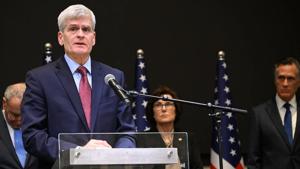
U.S. Sen. Bill Cassidy is running for a third term on a pivotal wager: that a record of delivering federal dollars to Louisiana and pushing bills into law matters more to Republican primary voters than the approval of President Trump.
His willingness to buck Trump might prove too risky for re-election in a state that has overwhelmingly supported the president over the past decade. Trump’s endorsement in the race went to U.S. Rep. Julia Letlow, who announced her candidacy this month after he publicly urged her to run. Five other Republicans had already lined up to challenge Cassidy: state Treasurer and former U.S. Rep. John Fleming, state Sen. Blake Miguez, Public Service Commissioner Eric Skrmetta and St. Tammany Council member Kathy Seiden. State Rep. Julie Emerson ended her bid this month.
Each shares what they consider a crucial advantage over Cassidy: no history of breaking with Trump.
Cassidy’s vote to convict Trump following his impeachment over the Jan. 6, 2021 Capitol riots is a centerpiece of his rivals’ attacks. Miguez branded him a RINO – “Republican In Name Only” – saying “loyalty matters” and “we sure don’t forget.” Fleming posted on X that he has “never violated a promise, opposed President Trump or betrayed the people of Louisiana whom I serve.”
Cassidy appears undeterred. “This race will not be determined by endorsements,” Cassidy told The Center Square. “This race will be determined by who delivers for Louisiana.”
To that end, he has been criss-crossing the state, appearing at a Right to Life March on Saturday in Baton Rouge, an anti-abortion rally that draws tens of thousands of supporters, and reminding voters of his endorsement from anti-abortion groups.
He has noted at least $14 billion for Louisiana roads, bridges and high-speed internet, and $208 million that aims to improve health care in rural communities. While visiting a St. James Parish aluminum production facility, he pointed to grants and loans “so that they can not just stay in business, but expand.”
Cassidy “has the ability to legitimately take credit for a lot of the funding that’s flowed to the state in recent years due to the infrastructure bill,” Robert Hogan, a Louisiana State University political science professor, told The Center Square. “Given all that, you would think, why in the world would he be in what some people are saying is pretty much a pickle here?”
Were it not for his impeachment vote, Hogan said, his seat might be safer.
The tightrope Cassidy has been trying to walk to re-election is featured in his first television ad, where he stands next to Trump as he signs a bill meant to impose harsher penalties on fentanyl traffickers. Cassidy, who backed the bill, notes that Trump called it one of the more important ones to become law.
Nearly a year ago, Cassidy, a physician who supports government efforts to encourage public vaccinations, voted to confirm Robert F. Kennedy Jr., a vaccine skeptic, as Trump’s health care secretary.
But after the fatal shooting this month of Minneapolis nurse Alex Pretti by several ICE agents, Cassidy called for an investigation, saying “the credibility of ICE and DHS is at stake.” Days later, he said “Second Amendment rights don’t disappear when you exercise other rights,” a clear reference to the Trump administration noting that Pretti, a licensed firearm carrier, had a gun at the protest.
Brian Brox, a political science professor at Tulane University, said he wonders if Cassidy is “beginning a strategy of independence.”
“Cassidy came out among the more forceful Republicans in the last few days calling for investigations of the ICE events in Minnesota,” Brox told The Center Square. “He’s walked much farther out on that than any other kind of establishment Republican has.”
In another independent streak, Cassidy told The Center Square that Congress bears some responsibility for expanding the power of presidents, including in the Trump administration.
“A lot of the executive orders have been reversing Biden executive orders, which begs the question: Why have presidents since George W. (Bush) been resorting to executive orders?” he said. “Because, in part, Congress has not worked well.”
“If Congress works better, then Congress is stronger and it pushes back,” he said.
Cassidy’s positions could further complicate his bid in Louisiana’s new closed-party primary system. For the first time since 1975, Republicans and Democrats will pick their nominees in separate primaries. Registered Republicans will vote in the GOP primary, while unaffiliated voters can choose which primary to vote in.
This shift raises Cassidy’s stakes with Republican activists who have been Trump’s biggest supporters, Hogan said. The cross-party support Cassidy has relied on in past statewide races can’t bail him out in a GOP-only contest, Hogan said.
“Who is going to turn out to vote is going to be the party activist, and I think they are going to be strongly favoring Trump,” Hogan said. “He was in a difficult spot before this. He’s in an extremely difficult spot now.”
Cassidy has raised enough for an aggressive primary campaign, with over $11 million in his war chest. He said a recent fundraiser netted $650,000.
“The buzz on the street, the buzz from the fundraising, the buzz from meeting people from all walks of life has been fantastic,” he said.
But his challengers stand a solid chance of unseating him, Hogan said, even those who have not been endorsed by Trump.
“Cassidy was in trouble before Letlow,” Hogan said.
Trump Cabinet meeting: New Fed chair, coal saving lives, Russia and Ukraine
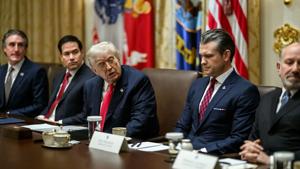
The administration will announce its pick for a new Federal Reserve chair next week. Coal-powered energy saved lives during Winter Storm Fern. An impending Russia-Ukraine peace deal is coming. A million people have signed their babies up for new $1,000 accounts. President Donald Trump held a shorter-than-usual cabinet meeting Thursday, the first of the new year, and these are some of the highlights that were shared.
New Fed chair to come
After a year of publicly pressuring and mocking Federal Reserve Chair Jerome Powell for not lowering interest rates to the president’s liking, Trump said Thursday that the administration plans to announce its replacement pick next week. Powell’s term is up in May, and the Fed’s reduction of interest rates by 0.75% for 2025 does not appear to have dampened Trump’s frustration with the board. In fact, the administration opened a criminal investigation into Powell in January related to his Senate testimony about the over-budget renovation of Federal Reserve office buildings.
Powell has said that the Fed has been reluctant to lower rates too quickly because it doesn’t want inflation to rise, but Trump has criticized the Fed for being too cautious and holding back the economy. Trump said Thursday the U.S. could achieve GDP growth of about eight, nine or 10% with better policies from the central bank.
“They’re afraid of inflation. But growth doesn’t have to have any impact on inflation. It can make inflation go down, in many cases, so, and you’ve seen that with us, maybe we’re growing at a much faster rate than anybody thought was possible,” Trump said. “And by the way, if inflation comes, we’ll take care of it when it comes. But you know, they’re trying to guess it, and they’re trying to get it 10 years before, in advance.”
Oil, gas & “Clean, beautiful coal”
Secretary of Energy Chris Wright relayed some energy statistics during the meeting, including that “U.S. oil production today is greater than Saudi Arabia and Russia combined” and that American natural gas production today is “greater than Russia, China and Iran combined, the second, third and fourth largest natural gas producers.”
But Wright then shifted to a statistic tied to conditions still unfolding for many Americans now in the wake of Winter Storm Fern. Wright said that the storm’s effects would have been much worse had it not been for the administration’s policies on coal.
“I can say with some confidence, hundreds of American lives have been saved because of your leaning in and stopping the killing of coal,” Wright told the president. “Over 200 people died in a smaller cold snap during the Biden administration. This was massively larger.”
The Daily Caller reported Thursday that at least 80 have died from the storm. The death toll will likely continue to rise until the record cold lifts.
Wright said that coal had delivered “20 times more electricity than solar and batteries” over the last few days.
“Geographically, we’ve had no failure of the electricity grid, no failure of long-distance transmission lines,” Wright said.
Wright acknowledged that there are still people without power – roughly 235,000 people in Tennessee, Mississippi and Louisiana, according to a national power outage map – but those are reportedly mostly due to local distribution lines.
Coming peace deal in Russia & Ukraine?
The president said Thursday that the administration had been making “a lot of progress” on the Russia-Ukraine war and asked Special Envoy to the Middle East Steve Witkoff, who attended the cabinet meeting, to elaborate.
“Ukrainians actually said that we’ve made more progress since Geneva than they’ve seen in the last four years of that conflict,” Witkoff said. “I think the people of Ukraine are now hopeful and expectant that we’re going to deliver a peace deal sometime soon.”
Witkoff and others also recently met with five Russian generals in Abu Dhabi.
The parties have been discussing a land deal and have mostly finished a security protocol agreement as well as a “prosperity agreement,” according to Witkoff.
“The talks will continue in about a week,” he added.
There are current reports of ongoing attacks, however, and intransigence from Russian leaders.
Trump Accounts
This program officially launched Wednesday, marked by a special announcement from the Trump administration with rapper Nicki Minaj. The government will contribute $1,000 to tax-advantaged investment accounts for babies born between 2025 and 2028, but American citizens under the age of 18 can also open an account.
On Wednesday, Treasury Secretary Scott Bessent said that 600,000 American children had been enrolled, and Thursday, the number had risen to 1 million.
“We’ve now had a million people sign up for Trump accounts just this week,” Bessent said.
Paul introduces legislation to halt welfare funding for non-citizens

With billions of American taxpayer dollars on the line, and funding for over a dozen welfare benefits for refugees set to continue, U.S. Sen. Rand Paul, R-Ky., is taking a stand.
Paul introduced the End Welfare for Non-Citizens Act to end taxpayer benefits for refugees, asylees and illegal immigrants.
As previously reported by The Center Square, nearly $6 billion in continual funding for refugees is poised to be approved.
Funding for the refugee program skyrocketed under the Biden administration as part of the Refugee and Entrant Assistant programs.
The funding rose from less than $2 billion in fiscal year 2021, the last year of President Donald Trump’s first term, to nearly $9 billion the next fiscal year – the first year of former President Joe Biden’s administration.
Despite the government admitting many of the refugees were unvetted, taxpayers could remain on the hook for billions of dollars, as many of these refugees continue to qualify for over a dozen taxpayer-funded benefits.
The benefits refugees are eligible to receive include: Supplemental Security Income (SSI), Supplemental Nutrition Assistance Program (SNAP), Women, Infants and Children (WIC), HUD Public Housing and Section 8 housing vouchers, emergency Medicaid, Affordable Care Act health plans and subsidies, full-scope Medicaid, Children’s Health Insurance Program (CHIP), federal student aid and Pell grants, REAL ID, Workforce Innovation and Opportunity Act services, refugee resettlement programs through the Office of Refugee Resettlement and Temporary Assistance for Needy Families (TANF), according to the National Immigration Law Center.
For those who didn’t qualify for SSI or TANF, refugees were eligible for up to 12 months of Refugee Cash Assistance (RCA) through the ORR.
In addition, many refugees qualified for employment assistance through Refugee Support Services, which included: childcare, transportation, “employability services,” job training and preparation, job search assistance, placement and retention, English language training, translation and interpreter services and case management, according to the Administration for Children and Families Office of Refugee Resettlement.
The ORR also noted that “some clients may be eligible for specialized programs such as health services, technical assistance for small business start-ups and financial savings.”
Many refugees also qualified for “immigration-related legal assistance” to assist them “on their pathway to obtaining a permanent status.”
Congressionally appropriated spending on refugee and migrant assistance programs rose sharply under the Biden administration, totaling roughly $30 billion over those four years.
In particular, lawmakers significantly increased appropriations for the Refugee and Entrant Assistance programs – housed in the U.S. Department of Health and Human Services – which provide benefits to eligible refugees.
In fiscal year 2021, the last year of Trump’s first term, Congress appropriated $1.91 billion for REA programs. That number shot up to $8.92 billion the following year, coinciding with the influx of Afghan refugees and record-high border crossings.
Total federal assistance for refugee programs in fiscal year 2023, however, reached $10 billion, as an OpenTheBooks investigation highlighted.
“With a national debt exceeding $38 trillion, Washington should not be running a welfare system on autopilot,” according to a release from the Rand’s office. “The End Welfare for Non-Citizens Act puts America First by stopping taxpayer dollars from being siphoned into benefits for non-citizens. If we want a sustainable safety net and responsible stewardship of taxpayer dollars, this bill is a must-pass.”
Among his first acts upon his second inauguration in January 2025, Trump suspended the U.S. Refugee Admissions Program, sayng “it would be detrimental to the interests of the United States.”
Food companies push back on Pennsylvania bills to ban certain food products

Representatives of the American Beverage Association said Tuesday the proposed bans for artificial ingredients in Pennsylvania are unnecessary and advocated for a national FDA-approved standard for processed foods instead of state-by-state restrictions.
Ed Patru, senior vice president of Public Affairs at American Beverage, argued that the policies currently in place already take into account consumers’s health and that the suggested restrictions would create more financial issues than healthier food.
“The disagreement starts when policymakers push mandates and bans on commonly used ingredients that are proven safe,” Patru said. “Ingredient bans impose costs on businesses, limit consumer choice and ultimately drive up grocery prices.”
Several bills have been filed in Pennsylvania, that would ban certain types of food and beverages from being purchase with SNAP benefits, restrict the use of certain additives such as BHA, certain dyes, and others.
Dr. Lyle Burgoon, president and CEO of Raptor Farm & Tox Ltd., argued that the ingredients in question to be banned are some of the most well studied and safe to consume products. He also said that the studies about these artificial ingredients have been dramatized to scare consumers.
“These are studies that are extremely high doses where they’re looking for toxicity. That’s why they treat at such high doses,” Burgoon said. “What they’re trying to do is they’re trying to see some kind of big response. But again, it’s not actually happening in humans.”
Alex Baloga, president and CEO of Pennsylvania Food Merchant Association, was more worried about the packaging legislation. He argued that the reformulation of products and redesigning packaging for the mandatory labels will ultimately result in higher costs for businesses and consumers.
“We would rather see discussion, robust discussion, which I think is taking place around these issues, that takes into account consumer safety, product safety, but also, ultimately, the cost on consumers that could be passed down if some of these processes and policies are implemented,” Baloga said.
Patru stated that consumers want transparency and clarity regarding the food they purchase and thus would be more interested in a national food legislation approved by the FDA.
“What’s approved in one state is not approved in another. It doesn’t create clarity for consumers, and it burdens businesses. And so I think if you ask most Americans, the vast majority of consumers would prefer to have this national standard,” Patru said.
Partial government shutdown looms after funding deal failure

The U.S. Senate failed to advance a package of the six remaining federal funding bills Thursday, leaving less than 40 hours until the federal government partially shuts down.
More than $1.2 trillion is at stake in the House-passed legislation, funding State-Foreign Affairs, Financial Services, Defense, Labor-HHS-Education, Transportation-HUD, and Homeland Security throughout fiscal year 2026.
After the second fatal shooting of a protester in Minneapolis, Democrats are demanding that the Homeland Security appropriations bill include new restrictions on immigration enforcement officers.
“Democrats are ready to avoid a shutdown, but the DHS bill needs serious work,” U.S. Sen. Dick Durbin, D-Ill., said on social media post-vote. “Americans are demanding change to ICE’s conduct – we must deliver for them.”
With multiple sectors of the government facing a funding lapse on Jan. 30, and the U.S. House not scheduled to return until Feb. 2, a partial government shutdown is unavoidable – the only question is the scope.
The most likely outcome is that the Senate splits off the $64 billion Homeland Security bill from the package and passes the remaining five, sending them to President Donald Trump’s desk.
Senate leaders would then redraft the Homeland Security bill and include Democrats’ provisions — bans on mask-wearing and roving patrols, body-worn camera requirements, and warrant rule changes, among other things.
But since restructuring and passing that bill could take weeks, senators will almost certainly pass a short-term Continuing Resolution to keep Homeland Security funding on cruise control in the meantime.
In the best-case scenario, funding for the agencies covered under the Homeland Security bill will lapse over the weekend, then freeze at former levels after the House approves the Senate’s CR when it returns.
The vast majority of Americans would remain unaffected by such a brief, small-scale shutdown, unlike during the record 43-day shutdown last year that impacted flights, food stamps and federal loans.
Homan touts progress; vows Trump administration won’t back down on immigration

“Progress” is being made in Minnesota, Border Czar Tom Homan said during a news conference Thursday after being on the ground since Monday evening.
Homan told reporters that the current mission is to prioritize criminal aliens, while not straying away from the overall mission of reducing illegal immigration.
“We are not surrendering the president’s mission on immigration enforcement. Let’s make that clear,” the border czar told reporters Thursday morning.
Homan announced a possible breakthrough with Minnesota Democratic Attorney General Keith Ellison, that county jails may notify Immigration and Customs Enforcement officials of criminal aliens, while acknowledging that the Department of Corrections has been honoring ICE detainers.
The border czar sent a strong message to protesters and dissenters of the Trump administration’s immigration policies that “ICE is enforcing the law enacted by Congress.” Telling demonstrators to protest Congress, not the officers themselves, by trying to obstruct.
Homan wouldn’t comment on the investigation into Saturday’s shooting death of Alex Pretty, while acknowledging that “certain improvements could and should be made.”
He reiterated the challenges immigration officials face, making their jobs more complicated by the fact that local and state authorities have been unwilling to cooperate with federal officials in controlled environments such as jails.
Homan said that the drawdown of federal agents depends on cooperation from local and state authorities in turning over criminal aliens, explaining that failing to do so requires more agents to support operations that provide safety to officers.
“One agent can arrest one bad guy in the safety and security of a jail where he’s behind wire. We know we don’t have weapons, but when you normally release that public safety threat, illegal alien back in the community, we have a job to do,” Homan said. “We’re going to arrest him. Se we’re going to find them, and what happens is now we got to arrest somebody on his turf, who has access to who knows what weapons, now we got to send the whole team out, cover the back door, cover the front door.”
He added that “hateful rhetoric” is adding to officers being in danger, resulting in the surge of law enforcement officials.
Homan was asked about agitators using violence and harassing immigration officers, with him responding that “justice is coming.”
Homan’s press conference comes on the same day that Minneapolis Democratic Mayor Jacob Frey is traveling to Washington, D.C., to meet with the nation’s mayors.
In a press release from Frey’s office, the mayor reiterated his goal to end Operation Metro Surge.
“Mayor Frey will continue advocating for Minneapolis and working with local, state, and federal leaders to help bring this operation to an end,” the press release read.