Center Square
Sen. Amy Klobuchar announces run for Minnesota governor
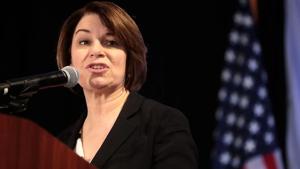
U.S. Sen. Amy Klobuchar announced Thursday morning that she will be running for Minnesota governor in the 2026 election cycle.
This comes after current Gov. Tim Walz unexpectedly announced earlier this month that he would not be seeking reelection.
“Minnesotans, we’ve been through a lot. And I believe this moment calls for grit, resilience, and faith in each other,” Klobuchar said in her announcement. “I believe we must stand up for what’s right. And fix what’s wrong. Today, I’m announcing my candidacy for governor.”
Klobuchar, a Democrat, has held her U.S. Senate seat since 2007. She was Minnesota’s first elected female United States senator.
In 2020, she ran as a Democrat candidate for President, a bid which was short-lived before Klobuchar endorsed Joe Biden.
In her announcement video, Klobuchar called out the Trump administration and its ongoing immigration enforcement efforts in the Twin Cities.
“I believe we must stand up for what is right and fix what is wrong,” Klobuchar said. “I’m running for every Minnesotan who wants ICE and its abusive tactics out of the state we love.”
Klobuchar also addressed the ongoing fraud scandals across the state.
“I don’t like fraud or waste in government,” she said. “I will make sure the people who steal taxpayer money go to jail and root out the fraud by changing the way state government works.”
EXCLUSIVE: Minnesota workers say leaders rejected years of fraud warnings
Claims from current and former Minnesota state employees that have been vetted by state lawmakers allege their bosses ignored and rebuked fraud warnings for years, retaliated against the employees who raised the alarms and protected leaders who oversaw the fraud-laden programs, according to a whistleblowers’ letter obtained by The Center Square.
The claims are made in an unsigned letter to Congress as it investigates fraud schemes that bilked government assistance programs for hundreds of millions of dollars in the state.
Some employees claimed they were accused of racism, in part because the money was flowing to “diverse communities,” the letter said. Most of those who have been federally indicted for the fraud schemes are of Somali descent.
Minnesota state Rep. Kristin Robbins – a Republican who leads a state investigation into the fraud and has communicated with the letter’s authors –submitted the letter as part of her testimony to federal lawmakers this month. Its contents have not been previously reported.
Specifically, the letter focused on the state’s Housing Stabilization Services program, which awarded taxpayer dollars to organizations to ensure housing for older residents and those with disabilities, significant mental illness and substance-abuse disorders.
That program – initially estimated to cost less than $3 million each year when it launched in 2020 – swelled to about $104 million in 2024 and was on track to surpass that figure in 2025 before the program was shuttered, according to federal court records.
More than a dozen people have been indicted in recent months for fraud schemes related to the program.
Eric Grumdahl, an assistant commissioner for the Department of Human Services who oversaw the program, was fired in September, shortly before he was expected to testify before a state committee that is investigating the fraud, Robbins has said.
The whistleblower group that penned the letter said concerns about the program – the first in the nation to offer Medicaid coverage for the housing services – culminated in late 2022, when state employees pressed Grumdahl to act.
“His response to staff was alarming,” the letter said. “Fraud concerns … were strongly dismissed and numerous employees experienced serious retaliation.”
State employees who aired their worries about fraud allege they were the subject of repeated internal investigations and surveillance, work reassignments and veiled threats about their employment.
“You will never get another state job,” one employee was allegedly told.
In January 2023, state workers took their concerns to top Department of Human Services leadership, human resources administrators and auditors, and later to the governor’s office.
The next month, the department’s then-leader, Jodi Harpstead, told hundreds of employees in an all-staff meeting “to stop reporting concerns that she did not feel were relevant,” the letter said.
Harpstead resigned in February 2025.
At the time, Gov. Tim Walz praised her job performance.
“I am proud of her work running the most complex and wide-ranging agency in state government,” he said.
Harpstead’s successor, interim Commissioner Shireen Gandhi, said the department has taken steps to “change the culture” to be more receptive to employee feedback.
“When employees feel heard and trusted, they are better positioned to surface risks early, improve systems, and deliver strong outcomes for Minnesotans,” she said in a statement her department provided to The Center Square.
The department did not directly respond to the contents of the whistleblowers’ letter.
In recent months, 13 people have been accused of federal crimes for fraud schemes related to the housing program. They submitted claims to the state for about $14 million worth of reimbursements, court records show.
The people are accused of drastically overstating the actual help they provided to people who need housing assistance and of using the public money instead for personal expenses, such as buying land in Kenya and investing in cryptocurrency.
“What we see are schemes stacked upon schemes, draining resources meant for those in need,” former U.S. Attorney Joseph Thompson said in September, when the first federal charges related to the Minnesota housing program were announced. “It feels never ending.”
Fraud investigations related to the housing program and other assistance programs in Minnesota are ongoing. They have identified about $300 million of fraud related to the former Feeding Our Future organization, which had claimed it provided meals to children. That government aid was overseen by the state Department of Education.
The whistleblower letter said Human Services employees reported their concerns about contract irregularities, fraud potential, lax oversight, unusual financial transactions, compliance failures, improper promotions and others, repeatedly between 2019 and 2025 about a variety of programs.
Senators weigh American privacy risks in FBI Investigations
The Senate Judiciary Committee heard testimony on Wednesday to consider the reauthorization of a surveillance tool that has improperly collected citizens’ private conversations.
The Foreign Intelligence Surveillance Act was first established by Congress in 1978 to mitigate foreign terrorist threats.
Section 702, established in 2008 to amend FISA, only permits the targeting of non-U.S. citizens for surveillance purposes and does not require a warrant. However, accusations of civilians’ privacy being invaded by the FBI have continued.
“It appears that Americans don’t care for that any more than they did at the time of the British controlling this country,” said Sen. Dick Durbin, D-Ill. “It appears that people want to know, ‘By what right are you doing this to me?’ And that is a legitimate question when it comes to questions of privacy.”
U.S. Sen. Mike Lee, R-Utah, said that issues regarding Section 702 have been repeatedly discussed with similar arguments being made without real progress in protecting U.S. citizens.
“The arguments go something like this: Yes, there have been problems in the past. Yes, there have been abuses of FISA 702, but you need not worry, because we now have procedures in place, administrative procedures, that will fix the problem once and for all. We now have to have even more layers of administrative approval within the agencies charged with administering this framework, and so you need not worry. What you ought to be worried about is another 9/11. What you ought to be worried about is that we are all going to die unless the US government has the ability to collect content of private communications involving US citizens without a warrant,” Lee said. “I find this rather troubling, because that’s that’s not what the Constitution sets up.”
Adam Klein, a professor at the University of Texas in Austin, argued that requiring warrants for queries, which are searches through government databases for information the government already collected, may delay investigations that could potentially prevent future terrorism. He also said American citizens could find comfort if queried, as they are not the subjects of investigation, despite their private conversations being observed by the FBI to investigate foreigners.
Sen. Josh Hawley, R-Mo, rebuffed this idea, arguing that just because U.S. citizens are not the primary targets of investigation does not mean their privacy was not improperly targeted and abused.
“The idea that we would renew 702 without some sort of reforms to protect U.S. citizens, I think, is just totally irresponsible,” Hawley said.
$1,000 Trump accounts to start July 4
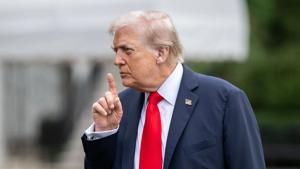
“Trump accounts” will launch beginning July 4, President Donald Trump announced Wednesday.
The “Trump account” initiative was included in the “Big Beautiful Bill” signed into law in July 2025. It provides a $1,000 contribution from the U.S. Treasury Department to a tax-free account for babies born between Jan. 1, 2025, and Dec. 31, 2028.
“A seed contribution of $1,000 which will compound and grow over the course of their lives and could grow into very, very substantial numbers,” Trump said.
Parents can deposit up to $5,000 per year into the tax-free accounts. Employers can deposit up to $2,500 for the parents of children with Trump accounts.
Bank of America and JPMorgan announced they will match $1,000 deposits for eligible employees with children enrolled in Trump Accounts.
White House estimates indicate the initial amount could grow to $5,800 by the time a child turns 18 or $18,100 by 28. With maximum contributions, the account could accrue up to $1 million by age 28.
Some economists have criticized the Trump administration’s initiative for supposed short-sighted funding goals. Critics argued the accounts propose figures that are too small and will not meaningfully lift people out of poverty.
“The size and scale of this wealth will dwarf all government programs ever created to benefit America’s youth,” Trump said.
“Under this administration, we’re going to leave every child with real assets and a shot at financial freedom,” Trump said. “We’ll ensure that Americans don’t just end their lives with a nest egg, but instead all Americans will begin their lives with a beautiful nest egg.”
Rubio explains reasoning behind Trump’s Venezuela strikes in Senate hearing
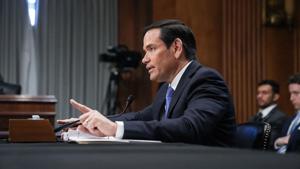
Amid congressional outcry over the Trump administration’s military actions in Venezuela, Secretary of State Marco Rubio defended the moves Wednesday and outlined future plans to U.S. lawmakers.
During a Senate Foreign Relations Committee hearing Wednesday, Rubio justified the large-scale strike against the Venezuelan government in early January.
The strike involved seizing two Venezuelan vessels and arresting Venezuelan President Nicolás Maduro and his wife on charges of running an international narco-terrorism operation.
“We had in our hemisphere a regime operated by an indicted narco-trafficker that became a base of operation for virtually every competitor, adversary, and enemy in the world,” Rubio said, pointing to Venezuela’s partnerships with Iran, Russia and China. “It was an enormous strategic risk for the United States…it was an untenable situation, and it had to be addressed, and it was addressed.”
With the Maduros absent, Venezuelan Vice President Delcy Rodríguez is temporarily heading the country and engaging in negotiations with President Donald Trump. Many lawmakers expressed concerns over the fact that Maduro’s regime is still in power.
They also asked Rubio why the U.S. has not called for democratic elections in Venezuela yet. Opposition leader María Corina Machado – who the U.S. and other countries recognized as the true winner of the country’s 2024 elections – would likely win.
Rubio said the Trump administration is trying to avoid triggering a civil war or refugee crisis in the country, which requires “direct, honest conversations” with the people currently in control of Venezuela’s government.
“What we’re trying to trigger here is a process of stabilization, recovery, and transition, so something that María Corina and others can be a part of,” Rubio told the committee.
“By no means is our policy to leave in place something permanent that’s as corrupt as you’ve described,” he added. “We are just acknowledging reality, and that is, you have to work with the people that are in charge of the elements of government.”
One of the strategic measures the administration is using to help achieve stability and recovery, Rubio said, is temporary oil sanctions.
The current arrangement allows the Venezuelan government to move oil to the market, but they must sell it at market prices, rather than giving large discounts to China. Additionally, the profits from oil sales must be spent for the benefit of the Venezuelan people, which the Trump administration will oversee.
Rubio assured lawmakers that the mechanism will not be permanent, with the end goal being a “friendly, stable, prosperous Venezuela” with a normal oil industry.
“We’re using that short-term mechanism both to stabilize the country, but also to make sure that the oil proceeds that are currently being generated – through the licenses we’ll now begin to issue on this sanctioned oil – go to the benefit of the Venezuelan people, not to fund the system that existed in the past,” he said.
“I am not here to claim to you this is going to be easy or simple,” Rubio added. “I am saying that in three and a half, almost four, weeks, we are much further along on this project than we thought we would be given the complexities of it going into it.”
Many lawmakers, however, remained annoyed at the administration’s lack of communication with Congress when undertaking the strikes.
The Senate had split 50-50 over a war powers resolution two weeks ago that would have curtailed further actions by the Trump administration in Venezuela.
U.S. Sen. Rand Paul, R-Ky., who had supported the resolution, argued that the military actions constituted an act of war, which only Congress can declare.
“If a foreign country bombed our air defense missiles, captured and removed our president, and blockaded our country, would that be considered an act of war?” Paul asked.
“We just don’t believe this operation comes anywhere close to the constitutional definition of a war,” Rubio replied, framing it instead as a law enforcement operation against an illegitimate political leader and criminal. “The U.S. always has the right to act in its national interests and protect itself.”
Other lawmakers, like U.S. Sen. Chris Coons, D-Del., ultimately concluded that the seizure of Maduro was constitutional, but still bristled at the lack of transparency.
“Nicolás Maduro was under indictment in the United States, and his rendition to the United States I think was legal,” Coons said after the hearing. “But the point I was making in my questioning of Secretary Rubio: the administration failed to be truthful and forthcoming with Congress in terms of briefing us, consulting with us, and seeking approval from us.”
U.S. Sen. Rick Scott, R-Fla., however, left the meeting feeling “optimistic,” saying he supported the Trump administration controlling oil flow as a pressure tactic.
“I think Secretary Rubio was being very honest. It’s a very fluid situation, but we’re way better off than we were four weeks ago,” Scott told reporters. “The expectation is that we continue to see political prisoners released, we see a reduction of oppression, and we see more political opponents being able to speak out there.”
WATCH: Kelly to vote against funding Homeland Security
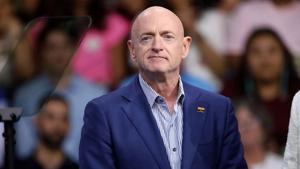
U.S. Sen. Mark Kelly has announced he will vote “no” for the Department of Homeland Security budget this week following the fatal shootings in Minneapolis.
In a speech Wednesday on the Senate floor, the Arizona Democrat said DHS needs an overhaul from the top down and the bottom up.
“Over the weekend, Americans watched what happened to Alex Pretti in Minneapolis,” Kelly told senators. “A U.S. citizen and ICU nurse at the V.A. who took care of veterans, he was shot and killed by federal agents for no good reason.”
Kelly also pointed to the U.S. Immigration and Customs Enforcement’s fatal shooting of Renee Good in Minnesota.
“Renee was a mother and a wife,” said Kelly. “She was shot and killed in her car, and her family will never see her again.”
The Center Square reached out Wednesday to the Department of the Homeland Security and the White House for comment, but did not hear back as of press time.
President Donald Trump has said the ICE officer who shot Good acted in self-defense after Good hit him with her car. Vice President JD Vance also addressed this in an early January White House press briefing.
Meanwhile, Homeland Security Secretary Kristi Noem defended the Border Patrol agent, saying he acted in self-defense when he shot Pretti.
In its report to Congress, Border Patrol said an agent discovered Pretti was carrying a gun.
“This individual showed up to impede a law enforcement operation and assaulted our officers,” Noem said in a story published by The Center Square. “They responded according to their training and took action to defend the officer’s life and those of the public around him.”
Kelly does not see it that way.
He described it as two Americans being dead at the hands of their government.
“This administration has lied to the American people,” said Kelly. “They have slandered these Americans as terrorists. They have told us not to believe what we see with our own eyes. They blamed Alex Pretti because he was in lawful possession of a firearm. They have tried to block the investigations into what happened.”
According to Kelly, these are not isolated incidents.
For example, Kelly said ICE recently conducted “a series of workplace raids at a sports bar in Phoenix” where officers “wore masks and tactical gear.” Kelly also mentioned a video of ICE officers doing a drive-by and spraying a woman with mace when Kelly said she was just standing on the sidewalk.
“They violated her constitutional rights,” said Kelly, the son of police officers. “These are the actions of a rogue agency that is storming cities, violating the constitutional rights of Americans, and creating volatile situations where tragedies happen.”
The Trump administration views tougher law enforcement as a way of making Americans safer. However, Kelly said this is doing the opposite.
“From a very young age, I learned that law enforcement should exist to serve and protect people,” said Kelly, a retired Navy combat pilot and former astronaut. “We can enforce our laws without this chaos. We can enforce our laws without federal agents killing people, killing people in the streets of American cities.”
These may be divisive times, but Kelly said senators should demand things be better and use their power to make it happen.
“That’s why I will not vote for the Department of Homeland Security budget this week because that agency needs an overhaul from the top down and the bottom up,” said Kelly. “The head of Homeland Security, Kristi Noem, and the guy who everybody knows is actually making the decisions and calling the shots and running the show, Stephen Miller, both of them should be out of jobs because they have lost the trust of the American people.”
Miller is the deputy White House chief of staff and homeland security adviser.
Near the end of his remarks, Kelly used the opportunity to promote his legislation known as the Stop Excessive Force in Immigration Act. Co-sponsored by U.S. Sen. Ruben Gallego, D-Arizona, Kelly said the bill sets limits on the use of force, and the use of firearms by immigration agents. It also restricts the use of tear gas, flash bang grenades and pepper balls.
“It requires body cameras to be used, and it restricts the use of face masks,” said Kelly. “It requires accountability and transparency so that when somebody is hurt or killed, the American people will get some answers.”
Census projections show red states to see gains in U.S. House seats, electoral college

Several blue states appear set to lose electoral college votes while red states will make sweeping gains, new data from the U.S. Census Bureau suggests.
On Tuesday, the U.S. Census Bureau announced a significant decrease in U.S. population growth, largely due to less international immigration.
However, analysis of the census data revealed several noteworthy takeaways in domestic migration trends that could affect electoral college and congressional makeup.
Electoral votes are allocated to states based on the Census. Each state is allocated a number of electoral votes based on the number of U.S. Senators and Representatives in that state.
The District of Columbia is allocated three electors in the Electoral College.
The American Redistricting Project estimated Texas would gain four seats in 2030 based on recent Census data and Florida would gain two seats. On the other end, California is projected to lose 4 seats.
North Carolina, Georgia, Idaho, Utah and Arizona would gain one additional seat respectively. However, New York, Pennsylvania, Wisconsin, Minnesota, Illinois and Oregon would lose one seat, respectively.
Democrat leaders expressed concern over these new projections and criticized mid-decade redistricting efforts across the country. John Bisognano, president of the National Democratic Redistricting Committee, called on Democrats to respond to redistricting efforts.
“Republicans have enacted mid-decade gerrymanders in states like Texas and North Carolina by drawing maps that aim to further silence the very communities driving the most population growth,” Bisognano said.
Jonathan Cervas, a redistricting forecaster at Carnegie Mellon University, shared similar predictions as the American Redistricting Project. However, Cervas predicted Florida would gain four seats instead of two and New York would lose two seats instead of one.
David Hogg, a former leader in the Democratic National Committee, called on Democrats to build support in the South to counter reapportionment.
“If we don’t start building infrastructure in the South and start winning states like Texas, Georgia, North Carolina and Florida, we can kiss goodbye any chance of winning the White House in the 2030s,” Hogg said.
DHS: Agents linked to death of Pretti placed on leave

Two federal agents accused of firing the shots in Saturday’s death of Alex Pretti in Minnesota are on administrative leave.
The Department of Homeland Security confirmed that and told TCS it is “standard protocol.”
In the wake of the shooting of Renee Good by a U.S. Immigration and Customs Enforcement officer earlier this month, Homeland Security Secretary Kristi Noem explained that a three-day administrative leave is what is directed by protocol.
“We are following the exact same investigative and review process that we always have under ICE and under the Department of Homeland Security and within the administration,” Noem said in a network interview. “The protocol and the advice and the guidance within that handbook and within our policies is being followed exactly like it has been for years.”
It is unclear when the agents involved in the Pretti shooting were put on leave.
On Sunday, Border Patrol official Gregory Bovino told reporters the agents were still working – just on a different assignment than in the Twin Cities.
“All agents that were involved in that scene are working, not in Minneapolis, but in other locations,” Bovino said. “That’s for their safety. There’s this thing called doxxing, and the safety of our employees is very important to us. We’re going to keep those employees safe.”
It is unclear why there is a discrepancy between Bovino’s weekend announcement and the standard protocol followed by the department.
According to published reports, Bovino will soon be leaving Minneapolis to resume his former post as chief of U.S. Customs and Border Protection’s El Centro Sector.
FBI raids Fulton County election office in 2020 election fraud probe
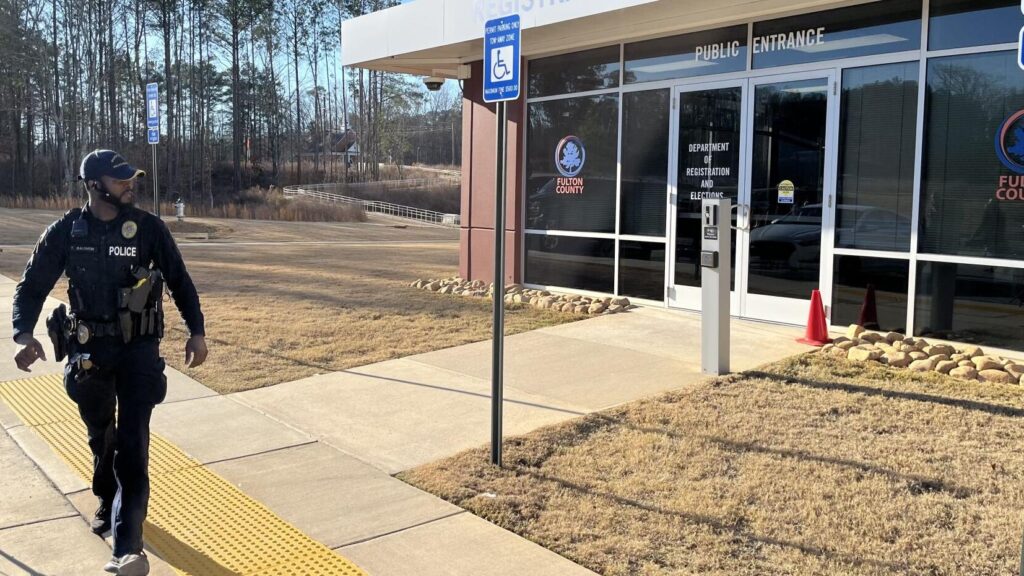
The FBI on Wednesday executed a search warrant on the Fulton County, Ga., election headquarters to obtain voting records related to the 2020 election.
According to Democratic Georgia state Sen. Josh McLaurin, who is running for lieutenant governor and is at the scene, the FBI is interested in about 700 boxes of ballots from the 2020 election. He told The Center Square he got the information from speaking to Fulton County elections office personnel.
Fulton County Commissioner Mo Ivory said the feds removed pallets of boxes Wednesday. At the back of the warehouse, agents could be seen loading boxes into rental trucks backed up to loading docks.
The FBI’s warrants, issued to county Superior and Magistrate Courts Clerk Che Alexander, were for all 2020 ballots including absentees, Ivory said. They also covered 2020 voter rolls.
The commissioner said the county has a team of lawyers looking for ways to fight back.
“All of us are trying to come together to figure out what to do next,” Ivory said. “We’re under assault. I think you know that.”
Fulton County Republican Party Chair Julie Adams disagreed.
“The DOJ wrote to Fulton County in August of last year, asking for the ballots. DOJ wrote another letter in October asking again for the 2020 ballots and other records. Two weeks ago, the FBI delivered a third letter,” Adams said in a statement posted to X. “But the majority of the Fulton County Board of Elections literally denied these requests. The Georgia State Election Board has been trying for 4 years to get the records. Including issuing a subpoena for the ballots and other records. And ALL of those efforts have failed. Until today.”
Outside access to the 2020 ballots has been at the center of several ongoing legal disputes. The State Election Board has subpoenaed them. The U.S. Department of Justice has sued twice seeking ballots and voter information.
McLaurin said agents came from the main FBI office, not the local FBI office in Atlanta.
He blamed the raid on what he called President Donald Trump’s “conspiracy theories.” McLaurin said Trump is trying to “vindicate his agenda” and distract from recent violence in Minneapolis.
Garland Favorito, who leads the nonprofit VoterGA, has been in litigation for five years attempting to gain access to Fulton County’s 2020 ballots through several lawsuits. He arrived at the scene of the raid in a celebratory mood.
“I think it’s maybe our last hope at getting to see the ballots,” Favorito told The Center Square. “”Because both Fulton County elections and the Fulton County judicial system have prevented us from having a transparent election. Hopefully, this will be able to answer the questions that have been lingering for five years over that election.”
The county has been under scrutiny by Republicans and the Trump administration amid allegations of election fraud stemming from the 2020 presidential election.
At a December 2025 meeting of the Georgia State Election Board, it was revealed that poll workers did not properly sign tabulation tapes of more than 300,000 votes that were counted in the 2020 presidential election. Republicans called for a federal investigation.
It’s unclear if the Wednesday raid is tied to the unsigned tabulation tapes.
This is a developing story.
Fed keeps interest rates steady in first meeting of 2026
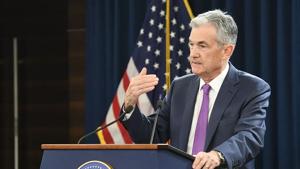
The Federal Reserve kept interest rates steady in its first meeting of 2026, as economists expected.
Federal Reserve officials kept lending rates between 3.5-3.75% after issuing three cuts last year. In a statement, officials pointed to low job gains and stabilization in the unemployment rate behind their decision.
Officials urged a return to the 2% inflation rate and increasing employment numbers. The January inflation report, based on December 2025 data, revealed a 2.7% inflation rate.
In December 2025, the unemployment rate was 4.4%.
“The Committee’s assessments will take into account a wide range of information, including readings on labor market conditions, inflation pressures and inflation expectations, and financial and international developments,” Federal Reserve officials wrote in a statement.
Two governors on the board, Stephen Miran and Christopher Waller, voted against keeping the rates steady, instead suggesting lowering rates by 0.25%. The nine other members of the board voted to keep rates unchanged, including Chair Jerome Powell.
Powell is expected to hold a press conference on the decision Wednesday afternoon.