Center Square
Illinois congressmen call for accountability after fatal Minneapolis shooting
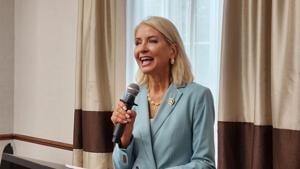
Illinois members of Congress are speaking out following the fatal shooting of Alex Pretti by federal agents in Minneapolis on Saturday, emphasizing the need for a transparent investigation and accountability.
U.S. Rep. Darin LaHood, R-Peoria, said in a statement that the incident “is deeply concerning and demands a comprehensive and transparent investigation with full cooperation between federal, state and local law enforcement.”
“I support the mission of our federal law enforcement officers and the critical role they play in keeping communities safe,” said LaHood. “However, with their authority, officers must be held to the highest professional and ethical standards to maintain public trust. Any use of force must be lawful, justified, and subject to full accountability.”
LaHood’s comments come as accounts of the shooting differ.
Federal officials, including Homeland Security Secretary Kristi Noem, say Pretti “was brandishing” a gun when he was shot, but local authorities say video suggests he may have been shot after a scuffle during which the weapon was removed.
U.S. Rep. Eric Sorensen, D-Rockford, called the shooting “murder.”
“Today is different. What happened in Minneapolis is different,” Sorensen said. “We were right in this country to speak, to protest, to open up a phone and shoot video on the street. We also have a duty as Americans to protect our neighbors, and every person, whether you wear a badge or not, must follow the law. What happened this morning was murder, and I demand that it be called that.”
Sorensen also called for legislative action, urging the Senate to push back against what he called “this blatant assault on the Constitution and the rights of Americans” and encouraging citizens to contact their senators to hold the Department of Homeland Security accountable.
“We can and all should be supportive of law enforcement, but that also means the law enforcement follow the law,” he said.
Democratic senators say they will oppose any Department of Homeland Security funding bill that includes DHS money in the wake of the Minneapolis shooting, a stance that raises the risk of a partial government shutdown this week.
In a recent social media post, U.S. Rep. Mary Miller said, “Democrats aided and abetted a foreign invasion by millions of illegals, and now threaten to shut the government down to obstruct the enforcement of our immigration laws.”
Miller saidPresident Trump and House Republicans put America first and Democrats put America last.
Sorensen urged other leaders to speak out.
“Every elected leader, Democrats and Republicans, I am waiting to hear meaningful words from every one of you,” he said.
Sorensen added that citizens and officials alike must organize to uphold constitutional rights.
“What can we do? Well, we can get organized, and it’s more about being on the right side of history than it is being in any political party. I will continue to use my power to force this administration to abide by the Constitution and its laws,” he said.
Pretti reportedly was active in a Minnesota Signal group aimed at tracking ICE. Encrypted Signal messages reviewed by Fox Newsshow anti-ICE “rapid responders” tracking and calling for “backup” around federal agents near Glam Doll Donuts in Minneapolis before the shooting occurred.
Kavanagh: Mayes must resign, her comments endanger ICE
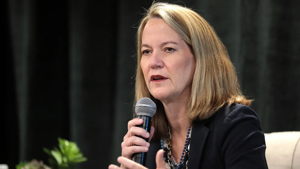
Senate Majority Leader John Kavanagh, R-Fountain Hills, called on Arizona Attorney General Kris Mayes to resign after she said people who feel they are in danger are legally allowed to shoot masked federal law enforcement officers.
Mayes made these comments in an interview with 12News, where she said, “We have a Stand Your Ground law that says that if you reasonably believe that your life is in danger and you’re in your house or your car or on your property, that you can defend yourself with lethal force.”
Mayes told the news outlet she was not advocating for shooting law enforcement. However, she asked, “How do you know they’re a peace officer? That’s the key … If you’re being attacked by someone who is not identified as a peace officer, how do you know?”
Kavanagh told The Center Square that Mayes’ comments about people being able to legally “shoot law enforcement officers if their faces are covered and they’re wearing non-traditional SWAT-type uniforms is false.”
He added that this comment by the attorney general was “irresponsible and incendiary.”
Her comments are “putting the lives of federal and local law enforcement officers engaged in such dangerous work at risk,” the state senator explained.
“She needs to recant her statement and resign in disgrace,” Kavanagh said.
“Kris Mayes is the chief law enforcement officer of the state of Arizona. She has just given drug cartel members [and] dangerous criminals a license to kill cops,” he noted.
Kavanagh said if cartel members or dangerous criminals kill a cop, they will use the attorney general’s comments as a “defense.”
“ I don’t want to see the chief law enforcement officer of Arizona as the star witness for the defense in a gang banger or drug cartel member’s murder trial when they kill a cop,” Kavanagh told The Center Square.
According to Kavanagh, Democrats have “become so insanely anti-immigration enforcement that they’ll demonize immigration officers at every chance they get.”
He described federal law enforcement officers as “sworn officers who took an oath to enforce the immigration law that is law of the land.”
America’s immigration laws are democratic laws “that need to be enforced,” Kavanagh explained.
“President Trump got elected because he said he would enforce [immigration laws], and the Democrats lost because they opened our border,” he told The Center Square.
Besides Kavanagh, U.S. Rep. Abe Hamadeh, R-Surprise, condemned Mayes’ statement.
“Kris Mayes’ comments justifying the murder of our ICE agents were reprehensible but entirely predictable. This is the natural consequence of elevating a far-left political activist to Arizona’s top law enforcement position,” he noted.
Hamadeh said nothing in Arizona’s Stand Your Ground Law gives citizens the right to use lethal force against law enforcement.
Arizona Police Association Executive Director Joe Clure, an organization that represents more than 12,000 police officers, said law enforcement “is inherently dangerous work,” but Mayes’ recent comments “have the potential to make it even more dangerous.”
“ICE agents are sworn federal law enforcement officers carrying out the lawful duties of the federal government. Publicly speculating about how someone might legally justify shooting an ICE agent sends a dangerous and irresponsible message, particularly in an already tense and polarized environment,” Clure said.
“Words from elected officials matter. It only takes one unstable individual to interpret such commentary as permission or encouragement to use deadly force against police officers,” he added.
In a video on Sunday, Mayes said the “idea that [she] would want the life of any member of law enforcement put in danger is wrong and offensive.”
“It is an outright lie,” she added.
Mayes said state residents do “not want masked agents entering their homes without warrants.” She called these actions “un-American” and threatening to “the rights and safety of everyone in our state.”
“ICE’s behavior is destroying the public’s trust in law enforcement and putting every American, including local law enforcement, in danger. It will take years, if not decades, to undo the damage that has been done over the past 12 months,” Mayes noted.
The Center Square reached out to Mayes’ office for comment, but it did not respond before press time.
But Arizona Senate Democrats voiced their support for Mayes in a statement.
“Violence and chaos are not welcome in Arizona,” the Democrats said. “Attorney General Kris Mayes knows this, and she’s fighting to protect Arizonans in a new political reality where Immigration and Customs Enforcement (ICE) is increasingly comfortable violating the civil rights of U.S. Citizens and those here legally. This is about public safety, and Attorney Mayes is right. We are unfortunately likely to experience a tragedy in Arizona if the ICE enforcement actions continue as they have been.”
“The Attorney General was describing our new legal reality – not encouraging anyone to harm law enforcement,” the Senate Democrats continued. “She was warning that unconstitutional and irresponsible procedures can create tragic events and that no one should have to guess whether the armed person breaking in their door is a criminal or a peace officer.”
Riots continue in Twin Cities

Rioting is crippling Minneapolis with local lawmen standing down in the wake of the second shooting by federal agents in the Twin Cities.
Local law enforcement continues to refuse to cooperate with federal forces – standing by as rioters went after a hotel where they believed U.S. Immigration and Customs Enforcement officers were staying.
Videos online show rioters smashing windows, assaulting hotel employees, and throwing bricks and other objects at federal agents Sunday night.
This is just the latest escalation of the violence in the Twin Cities, following Saturday morning’s shooting.
During that incident, an armed Minneapolis man approached a group of U.S. Border Patrol agents who were conducting a targeted operation in south Minneapolis against a person illegally in America.
Department of Homeland Security Secretary Kristi Noem defended the federal agents during a press conference on Saturday afternoon. She said then that the man, identified as 37-year-old Alex Jeffrey Pretti, an ICU nurse and U.S. citizen, was intent on impeding the operation.
“This individual showed up to impede a law enforcement operation and assaulted our officers,” Noem said. “They responded according to their training and took action to defend the officer’s life and those of the public around him.”
Democrats throughout Minnesota and nationally have pushed back against the Trump administration. They say the shooting was unwarranted and have called withdrawal of federal agents from Minneapolis.
Second-term Democratic Gov. Tim Walz, former candidate for vice president and in office when riots burned portions of the city in conjunction with the death of George Floyd, said it is time for Operation Metro Surge to end. He also maintained that the protests are peaceful.
“What do we need to do to get these federal agents out of our state?” Walz said during a press conference on Sunday. “If fear, violence and chaos is what you wanted from us, then you clearly underestimated the people of this state and nation. We are tired, but we’re resolved. We’re peaceful, but we’ll never forget. We believe in law and order in this state. We believe in peace, and we believe that Donald Trump needs to pull these 3,000 untrained agents out of Minnesota.”
To enter America from another country, if not a U.S. citizen, a visa or some other travel authorization is required to be presented at a port of entry.
Walz compared the situation for illegal immigrants in Minnesota to that of the Jewish Holocaust during World War II.
“We have got children in Minnesota hiding in their houses afraid to go outside,” Walz said. “Many of us grew up reading that story of Anne Frank. Somebody is going to write that children’s story about Minnesota.”
That comparison garnered much public outrage from Republicans, who argue that this is just another example of Democrats attempting to incite more violence in the state.
“After previously calling ICE ‘Gestapo,’ Gov. Tim Walz just compared removals pursuant to federal law to capturing people to carry out genocide,” said Jonathan Turley, a professor at George Washington University Law School. “Walz is using this reckless rhetoric as signs appeared in Minneapolis over the weekend calling for people to ‘Kill Nazis.’”
Walz promised the state will also be conducting an investigation into the shooting.
“Minnesota’s justice system will have the last word on this,” Walz said. “The state will handle it.”
That comes as Minnesota state law enforcement says it was blocked from the shooting scene on Saturday. Courts granted Minnesota both a search warrant for access to the scene and an emergency court order barring federal officials “from destroying or altering evidence related to the fatal shooting involving federal officers.”
This is the third shooting in 18 days in Minneapolis by federal officials. On Jan. 7, 37-year-old Renee Nicole Good was fatally shot during an encounter with ICE officers. ICE said Good hit an agent with her car while trying to pull away and the agent fired defensive shots.
One week later, bystanders attacked an agent attempting to execute a detainment. The suspect was shot in the lower body.
Many Republicans are blaming local and state officials for the heightened tension and chaos on the streets in Minneapolis, which led Walz to deploy about 1,500 Minnesota National Guard troops on Saturday.
“This violence is directly fueled by hateful rhetoric from Minnesota’s sanctuary politicians,” Noem said. “It must end now.”
Federal immigration operations continue in Minneapolis, despite Walz’s demands. The U.S. Department of Homeland Security also reports that protestors are being arrested for federal charges.
“Arrested for throwing ice blocks at law enforcement in Minneapolis,” it said in a social media post on Sunday of an arrested individual. “Federal crime. Felony. You will be arrested.”
Former GOP lawmaker urges regulators to block potential Netflix-Warner Bros. merger
A new report from a technology watchdog group is urging federal regulators to block a potential merger between Netflix and Warner Bros., warning the deal would reduce competition, raise consumer prices, and hurt movie theaters.
The report, published by the Digital Progress Institute, argues that a Netflix acquisition of Warner Bros. would give the streaming giant too much market power in the subscription video-on-demand market.
The paper is co-authored by Digital Progress Institute President Joel Thayer and former U.S. Rep. Ken Buck, R-Colo., who represented Colorado’s 4th Congressional District from 2015 until 2024. Buck previously served as the top Republican on the House Judiciary Committee’s antitrust subcommittee and was known for sometimes aligning with Democrats on antitrust policy.
“Netflix, armed with an acquisition of Warner Bros., would be able to raise prices with impunity, reduce consumer choice, and dictate the terms of distribution not only in Hollywood but across global markets,” the authors wrote. “Once Netflix becomes the dominant platform worldwide, there’s no reason to think it will behave differently from other tech monopolies we’ve spent years trying to rein in.”
The report argues that Netflix already holds monopoly power under what it describes as even the most conservative definition of the premium streaming market, citing the company’s global subscriber base and scale advantages over competitors. Absorbing Warner Bros., the authors contend, would further concentrate control over major film and television franchises.
“Allowing it to take control of Warner Bros. would hand it overwhelming dominance of the video streaming space,” the paper states.
The authors compare the proposed deal to allowing AT&T to acquire Sprint rather than breaking up the telecom giant in the 1980s, calling it a red flag for anticompetitive behavior.
The report also warns that consumers would likely face higher prices due to a reduction in meaningful alternatives. Viewers seeking access to Warner Bros. content could be forced to keep a Netflix subscription even after price increases, the authors say.
“A consumer who cancels Netflix after a price increase may still want access to Warner’s catalog,” the paper says. “Under this merger, they would have no choice but to return to Netflix to get it.”
Beyond streaming, the paper raises concerns about the impacts on movie theaters and film distribution. A Netflix-controlled Warner Bros. could shorten theatrical release windows, reduce theater runs, or shift major films to streaming-first releases, hurting local economies.
“The result would be less competition in distribution channels and fewer viable paths for film producers and exhibitors,” the authors wrote.
The report notes that criticism of the proposed merger has been bipartisan, with lawmakers from both parties raising antitrust concerns. Netflix executives and other industry figures will testify at a Senate antitrust hearing next month.
The authors concluded their report with their call for federal regulators to block the merger.
“The Netflix–Warner Bros. merger is unnecessary for business, harmful to consumers, and anticompetitive,” the paper says. “It should be presumed unlawful and blocked.”
U.S. withdrawal from WHO completed over COVID-19 mishandling

The United States completed its withdrawal from the World Health Organization due to the group’s mishandling of the COVID-19 pandemic, with a medical group praising the move and officials stating the withdrawal is for those who died alone in nursing homes and whose businesses were destroyed due to COVID responses induced by WHO.
Medical director for Do No Harm Dr. Kurt Miceli told The Center Square that “the Trump administration is right to stop the flow of taxpayer dollars to an organization that has allowed politics to supersede science.”
“From its deference to China during the COVID 19 pandemic to its broader tendencies toward centralized control and bureaucratic overreach, the WHO has undermined its own credibility – leaving little reason for continued American participation or financial support,” Miceli said.
Do No Harm is an organization of “physicians, nurses, medical students, patients, and policymakers focused on keeping identity politics out of medical education, research, and clinical practice,” according to its website.
The Department of Health and Human Services (HHS) announced Thursday that it had completed its withdrawal from WHO “due to the organization’s mishandling of the COVID-19 pandemic that arose out of Wuhan, China, its failure to adopt urgently needed reforms, and its inability to demonstrate independence from the inappropriate political influence of WHO member states.”
When reached, the HHS referred The Center Square to its press release on the subject.
WHO media relations referred The Center Square to past statements on the topic from its Director-General.
Plans to withdraw the U.S. from WHO began on Jan. 20, 2025 with an announcement from President Donald Trump, according to the HHS’ press release.
Since then, “the U.S. stopped funding WHO, withdrew all personnel from WHO, and began pivoting activities previously conducted with WHO to direct bilateral engagements with other countries and organizations,” the release said.
U.S. relations with WHO will be “solely in a limited fashion to effectuate withdrawal,” the release said.
The HHS stated in its release that before declaring COVID-19 a pandemic, WHO “echoed and praised China’s response despite evidence of early underreporting, suppression of information and delays in confirming human-to-human transmission.”
Additionally, HHS finds fault with WHO for not adopting “meaningful reforms to address political influence, governance weaknesses or poor coordination,” after the pandemic, which HHS stated reinforced “concerns that politics took priority over rapid, independent public health action and [eroded] global trust.”
HHS said in the release that WHO’s report “evaluating the possible origins of COVID-19 rejected the possibility that scientists created the virus.”
WHO rejected this idea “even though China refused to provide genetic sequences from individuals infected early in the pandemic and information on the Wuhan laboratories’ activities and biosafety conditions,” HHS said.
Secretary of State Marco Rubio and Secretary of HHS Robert Kennedy said in a joint statement: “Like many international organizations, the WHO abandoned its core mission and acted repeatedly against the interests of the United States.”
“Today, we right these injustices and bring an end to the bureaucratic inertia, entrenched paradigms, conflicts of interest, and international politics that have rendered the organization beyond repair,” the statement said.
“We will get our flag back for the Americans who died alone in nursing homes, the small businesses devastated by WHO-driven restrictions, and the American lives shattered by this organization’s inactivity,” the statement said. “Our withdrawal is for them.”
U.S. Supreme Court to define decades-old consumer law
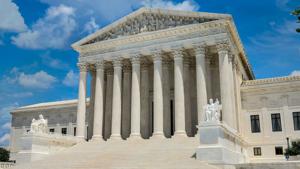
The U.S. Supreme Court agreed on Monday to decide how a 1988 video privacy law applies to the modern age.
Salazar v. Paramount Global seeks to challenge the 1988 Video Privacy Protection Act’s definition of “consumer” in reference to all goods and services or only audiovisual goods and services provided by a video tape service provider.
Michael Salazar subscribed to Paramount’s online newsletter to view videos. According to Salazar’s lawyers, Paramount shared his Facebook ID and video-watching history to Meta.
The primary issue in litigation is how the VPPA defines the term “consumer.” In the legislation drafted by Congress, “consumer” is defined as “a subscriber of goods or services from a video tape service provider.”
The argument lies in whether the statute refers to all goods and services or specifically audiovisual goods or services.
“The VPPA broadly prohibits a video tape service provider—like Paramount here—from knowingly disclosing ‘personally identifiable information concerning any consumer of such provider,’” lawyers for Salazar wrote.
Lawyers for Paramount Global argue that Salazar had access to content on its 247Sports platform, which was available to anyone on the internet.
“All Salazar allegedly did was sign up for a free, written email newsletter. That is not a ‘video cassette tape or similar audio visual material,’ so he is not a ‘consumer’ under the statute,” lawyers for Paramount wrote in a brief to the Supreme Court.
The law originated after a journalist obtained the video rental records of Robert Bork, a nominee to the U.S. Supreme Court. Congress cited privacy concerns as technology evolved and “revolutionized our world.”
In an era of streaming and video rentals, justices on the nation’s highest court will likely provide clarity for consumer privacy protections through this case.
TCS stories about Illinois’ diversity agency prompt call for audit
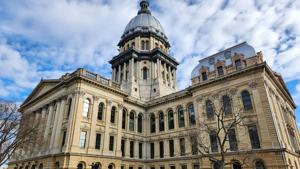
Illinois diversity commissioners are paid tens of thousands more than other state boards but aren’t required to work full time, allowing them to run a digital media company, freelance as a human resources contractor, teach and consult for universities, direct a play and run a business hosting Dungeons and Dragons games at bars, an investigation by The Center Square found.
Lawmakers of both parties expressed concern about what the TCS three-month investigation found – with one state representative calling for an audit of the agency.
The seven Commission on Equity and Inclusion commissioners, who lead Illinois’ diversity efforts, meet less frequently than some of their counterparts elsewhere in state government, take no votes of consequence to the public, and earn substantially more money — each about $150,000 per year, according to records of their activities. The average Illinois state salary is between $54,000 and $80,000 so the commissioners make two to three times as much as the typical worker.
Further, most of the governor-appointed commissioners have also worked other jobs, sometimes earning in excess of what state law requires them to disclose — more than $7,500 in a single year — while they were also being paid by the state.
State Rep. La Shawn Ford, a Chicago Democrat who voted to create the commission, said lawmakers should reevaluate the commissioners’ salaries and requirements for their jobs now that they have been operating for several years. By law, other paid state board members cannot have second jobs.
“We should have some type of parity between commissions,” he told The Center Square. “Why is this one different?”
And the commissioners have overseen decisions that resulted in the cataclysmic loss of state certifications for businesses that are owned by non-white people, women and those with disabilities — a significant problem that has simmered for more than a year. At least one commissioner appeared to be unaware of the extent of the problem until a recent meeting.
“This is a fraud of a commission,” said state Rep. Adam Niemerg, a Dieterich Republican, told The Center Square after learning of the findings of this investigation. “You have people making $150,000 a year. They’re not doing anything. …This is a taxpayer-funded payoff for the woke initiative that doesn’t even do the job of the woke initiative.”
One of the commission’s core functions is to increase the number of those certifications to ensure that more of the state’s contract money is spent with minority-owned businesses. Certified businesses get preference in selection for the contract work and help navigating the contracting process.
During the commission’s tenure, the overall number of certified businesses has plummeted by nearly half, from a high of about 5,400 to about 2,800.
Those numbers have consistently declined for more than a year, after the commission switched to a new computer system that was meant to streamline the certification process. Instead, it has impeded it.
Niemerg said the state’s Legislative Audit Commission needs to review the diversity commission’s work, and that he will personally question representatives from the diversity commission when they report to a House appropriations committee of which he is a member.
The commissioners have not responded to repeated interview requests from The Center Square to discuss their work, including a recent email that explained the main elements of this article. The information in this article was gleaned from public records requests, state reports and data, and by viewing commission meetings and reviewing records of them.
Fewer responsibilities
State lawmakers created the commission in 2022 as part of a renewed push to spend more state money with businesses owned by racial minorities and women. The new goal is 30 percent of the total eligible contract money, which in a recent year totaled more than $33 billion.
The agency is led by seven commissioners who have a staff of more than 30 people. The agency’s annual budget is about $7 million.
The commissioners have considerable education and experience in state contracting, business, and advocacy for racial minorities and people with disabilities, according to their resumes, applications and other biographical information that is publicly available.
But it’s unclear whether the application process was competitive. Only one person applied for the commission other than those who received an appointment from Gov. JB Pritzker. His office did not respond to an interview request.
The person who applied but was not appointed, Alexandria Wilson, was hired as executive director of the commission’s staff. She has a salary of about $155,000 annually, according to state salary data.
That is the same salary as commission Chairperson Nina Harris. The other commissioners have slightly lesser salaries of about $148,000. They have received annual raises.
All of them earn $30,000 more than most of the members of the state Labor Relations Board, which decides hundreds of cases each year for unfair labor practice allegations, union representation and arbitrations, according to a recent annual report.
Until last year, the diversity commissioners earned about $40,000 more than members of the Prisoner Review Board, which in a recent year held more than 23,000 hearings that pertained to the release of prison inmates. Many of the board members, but not all, now have salaries comparable to the diversity commissioners.
The prisoner board “convenes daily/weekly to deliberate and prepare orders which enumerate the conditions that an individual in custody shall abide by while on parole/mandatory supervised release,” an annual report said.
In contrast, the commission meets monthly — often for less than an hour — and the meetings are sometimes canceled. A Center Square review of their individual work calendars showed they often have few other meetings each month that require their participation.
In their regular monthly meetings, commissioners receive prepared reports that are read to them aloud, some commissioners make their own reports about certain projects, and they typically vote three times: To approve the minutes from the previous meeting, to approve the remote participation of one or more commissioners, and to adjourn.
The last time they took official action on something else was in June 2023, when they approved minor revisions to their bylaws, according to their records.
Side jobs
Illinois law forbids members of the labor and prisoner boards from working other jobs for pay.
“Each member shall devote his or her entire time to the duties of the office, and shall hold no other office or position of profit, nor engage in any other business, employment, or vocation,” says the law that governs the labor board.
There is no such requirement for the Commission on Equity and Inclusion.
And most of the commission’s members have engaged in outside work, according to their mandatory annual disclosures and other publicly available information.
Commissioner Bruce Montgomery reported that he earned more than $7,500 in 2023 from Sunshine Enterprises, a not-for-profit organization that seeks “to empower local entrepreneurs in under-resourced communities,” according to its tax filings.
Montgomery is an instructor and coach for the organization, according to Sunshine’s website. He did not report income from the job for 2024, but it’s unclear whether that’s because he earned no money or because it was less than $7,500, which is the state reporting threshold. The commissioners are not required by law to report the specific amount of money they made.
Montgomery’s disclosure for 2025 is not yet available.
He also indicates in publicly available biographies that he is the founder and president of Montgomery and Company, a “digital media, information and communications technology company,” and also hosts a weekly television news show.
Montgomery has not reported income from either of those ventures. State business records show that Montgomery and Company was incorporated by Montgomery and dissolved twice. Its incorporations with the state were active from 1989 to 1991 and from 2019 to 2021.
Commission Chairperson Nina Harris reported more than $7,500 of income in 2023 from the Springfield Urban League, where she worked before her appointment to the commission. She indicated she worked “as needed” as a human resources contractor while she was also a commissioner.
Commissioner Ennedy Rivera, an attorney, reported that she was an instructor in 2023 and 2024 for the University of Illinois, and that she assisted with course development at Dominican University in 2024. Her disclosure for 2025 is not yet available. Rivera’s reports show that she did not earn more than $7,500 in a year from either of those jobs.
Commissioner Richard Costes, a thespian, has not reported income for any other jobs, but a social-media profile says he is a freelance diversity, equity and inclusion and accessibility consultant.
Costes also directed a play in Chicago last fall that was performed four days each week for about five weeks through the Babes with Blades Theatre Company. The runtime was about 135 minutes.
He is also a co-founder of Rough Magic Games, which pairs paid “game masters” with groups to host role-playing games such as Dungeons and Dragons. The business routinely hosts events at taverns titled “Drinking and Dragons.”
None of the commissioners responded to a question from The Center Square about whether they considered their state positions to be full-time employment.
Late to the game
There has been scant ongoing discussion from commissioners about the precipitous drop in business certifications during their monthly meetings. One appeared to be surprised by it during the commission’s meeting in October, even though the decline had begun more than a year earlier.
“Am I reading this right that the total of certified BEP vendors in the portal is now 2,869?” asked Commissioner Van Austin, using an acronym for the Business Enterprise Program diversity designation.
He was alarmed by what he calculated to be a 33-percent reduction in certified businesses, after hearing about it in another non-commission meeting.
In reality the decline was larger and began after the agency switched to a new company to provide the website that facilitates the certifications. The change happened in July 2024 and led to a dramatic reduction in certifications that has somewhat plateaued in recent months.
The problem is that the new computer system cannot automatically download certification data from the systems of other government agencies. That’s important because the commission has historically relied on other agencies’ data for most of its certifications.
Now, businesses that are certified by, for example, the city of Chicago must submit a separate certification request with the state. The commission’s staff has been attempting to contact businesses with lapsed state certifications to instruct them about how to navigate the change and get recertified.
“Have we been trending the last six months in an upward direction on the number of certifications?” Austin asked in the October meeting.
LaTasha Binder, a deputy director for the commission who reports the certification numbers each month, replied that she did not know.
“But we are watching them very closely,” she said. “On a daily basis the numbers are dynamic, in and of itself.”
Binder has an annual salary of about $125,000.
DOE issues emergency orders to mitigate blackouts in New England, Texas

U.S. Energy Secretary Chris Wright issued emergency orders to mitigate blackouts in New England and Texas as 24 states have declared an emergency due to an Arctic blast moving across the U.S. over the weekend.
More than 200 million people are in Storm Fern’s 2,300-mile path, stretching from New Mexico to Maine. The storm has led to roughly 12,000 flight cancellations, impacting airports stretching from Dallas to Boston. More than 31,000 flights were disrupted nationwide since Friday, according to FlightAware data.
Twelve states have reported more than a foot of snow so far, Fox Weather reported. Massachusetts, Maine and New Hampshire are expected to get more than a foot before the storm is over.
Southern states have been hit hard, including in northern Mississippi, where tens of thousands of residents are without power due to ice-laden trees downing power lines.
More than 900,000 electricity customers have lost power nationwide, according to multiple reports.
Wright issued the emergency orders pursuant to Section 202(c) of the Federal Power Act, authorizing ISO New England Inc. and the Electric Reliability Council of Texas (ERCOT) to run specified resources in their regions, overriding environmental permits or state law restrictions. He has issued two emergency orders in response to ERCOT requests to leverage backup generation at data centers and other industrial sites.
There are three major grids in the U.S. New England states fall under the Eastern Interconnection electric grid managed by the North American Electric Reliability Corporation’s Northeast Power Coordinating Council. Texas operates its own grid managed by ERCOT.
Wright argues the orders will help ISO-NE and ERCOT manage power generation, minimize blackouts and reduce electric costs. He also blames the Biden administration for increasing electricity costs and weakening the grids nationwide.
“The previous administration’s energy subtraction policies weakened the grid, leaving Americans more vulnerable during events like Winter Storm Fern,” Wright said. The Trump administration is “reversing those failures and using every available tool to keep the lights on and Americans safe through this storm,” he said in a news release.
On his first day in office, President Donald Trump declared a national energy emergency “after the Biden administration’s energy subtraction agenda left behind a grid increasingly vulnerable to blackouts,” Wright said. The Biden administration’s “premature forced closure of reliable generation such as coal and natural gas plants leaves American families vulnerable to power outages,” he added.
Wright cites a North American Electric Reliability Corporation (NERC) warning stating that “winter electricity demand is rising at the fastest rate in recent years” and a NERC 2025-2026 Winter Reliability Assessment warning about elevated blackouts risks nationwide during extreme weather conditions.
Power outages also cost Americans $44 billion a year, according to DOE Lawrence Berkeley National Laboratory analysis. It cites several extreme weather events in 2021 as examples, including Winter Storm Uri in Texas.
The storm caused wind turbines to freeze and natural gas pipelines were impacted by ice, preventing fuel delivery to many gas-powered plants, the report notes. Systemic failures impacted 40% of Texas’ power generation capacity; subsequent outages impacted roughly 4.5 million customers left without power for one week, the report notes.
State legislative hearings found that ERCOT failures weren’t attributed to Biden administration policies but ERCOT policies and failed state regulatory oversight, The Center Square reported. ERCOT board members didn’t even live in Texas, were using “phantom reserve margins” and systemic failures were identified within the state utility commission, The Center Square reported. Multiple people were fired and resigned.
The Texas legislature enacted a series of reforms that state regulators and the energy industry have since implemented, The Center Square reported.
As a result, electricity customers have seen their electricity rates and bills increase exponentially. They have also not experienced a repeat of the 2021 catastrophic failures.
During last January’s polar vortex, the Texas grid and energy companies set three all-time records for demand and supply and met energy needs during subfreezing temperatures, The Center Square reported.
Storm Fern ushered in thundersleet, snow and ice to most of Texas, including the oil and gas producing Permian Basin and Houston region where refineries are located. Ahead of the extreme weather, the Texas energy industry weatherized operations and says oil and natural gas production will continue to meet increased demand. ERCOT says Texas’ grid remains strong despite issuing the DOE requests, The Center Square reported.
Everyday Economics: Fiscal reality meets Central Bank caution in week ahead
At Davos, Citadel CEO Ken Griffin pointed to Japan’s bond selloff – where super-long yields surged and 40-year yields hit record highs – as an “explicit warning” about what happens when investors start to doubt a government’s fiscal trajectory. His message was blunt: when a country’s “fiscal house is not in order,” “bond vigilantes” can “extract their price.”
That is not political rhetoric. It is bond arithmetic.
Long-term yields can be thought of as a bundle of (1) expected real short rates, (2) expected inflation, and (3) risk premia – especially the term premium and inflation-risk premium. The fiscal channel matters because persistent deficits affect yields through multiple mechanisms simultaneously:
More issuance increases the compensation investors demand. When governments run larger deficits, they supply more duration risk to the market that must be absorbed by private balance sheets. A large economics literature finds that higher deficits and higher debt are associated with higher long-term sovereign yields, with effects that grow when starting debt levels are already elevated.
Inflation tail risk raises premia. When inflation is already above target, deficit-financed demand can sustain price pressures, raising the compensation investors require for bearing inflation uncertainty.
The effects compound through higher term premiums. When fiscal and inflation uncertainty rise together, the compensation investors demand for holding long-duration bonds increases – showing up as higher term premiums embedded in long-term yields.
Griffin’s point matters because higher long-term yields cascade throughout the economy: mortgage rates reprice off Treasuries plus a spread, corporate borrowing costs rise tightening financial conditions, and federal interest expense increases, which worsens future deficits and reinforces the cycle.
The Supply-Side Constraint: Deficits Without Productivity Growth Mean Persistent Inflation
The deeper concern is on the supply side, and this is where Griffin’s warning becomes a story about why interest rate cuts may be off the table for months. If deficit-financed spending remains strong while productivity growth disappoints, the economy faces sustained price pressures without the relief that faster potential growth would provide.
Griffin was explicit about this risk at Davos, expressing skepticism that AI productivity gains – Washington’s hoped-for fiscal savior – would materialize quickly enough to matter for near-term policy. While the AI industry requires “tremendous hype” to fund infrastructure buildout, Griffin cautioned that AI “may or may not be” the economic breakthrough needed to expand the economy’s capacity fast enough to absorb fiscal impulse without inflation.
Without productivity acceleration, inflation could remain sticky and well above the Fed’s target. The Fed cannot cut rates in an environment where demand is being sustained by fiscal policy while supply-side capacity is failing to keep pace. Doing so would risk re-accelerating inflation expectations – exactly what the Federal Open Market Committee spent 2022-2023 fighting to control.
The Fed’s Inflation Problem: Forecasts Keep Getting Revised Higher
Start with the inflation facts. The latest PCE report shows headline PCE inflation at 2.8% year-over-year, up from 2.7% the prior month. Core PCE is also at 2.8%. The direction is not alarming, but it is enough to keep the Fed cautious – because it underscores that inflation is not gliding cleanly back to 2%.
Now compare that outcome to the Fed’s own forecasting record:
December 2024 SEP: median projection of 2.5% for end-2025 PCE, 2.1% for end-2026December 2025 SEP: revised to 2.9% for end-2025 PCE, 2.4% for end-2026 (with core PCE at 3.0% in 2025 and 2.5% in 2026)
That upward revision is the key story: disinflation proved slower than forecast, and the committee has marked up the expected inflation path into 2026. The Fed entered 2025 thinking “close to 2% in 2026” was reasonable. It is entering 2026 with inflation expected to remain in the mid-2s – still 40 basis points above target at year-end.
The committee’s credibility is directly tied to actually delivering 2% inflation, not 2.4% inflation. With the forecast already revised higher once, the bar for delivering additional accommodation is extremely high. Each cut risks being interpreted as the Fed giving up on the 2% target.
The December FOMC minutes framed policy as risk management: inflation remained “somewhat elevated,” uncertainty “remains elevated,” and the committee emphasized assessing “incoming data” and the “balance of risks.” But crucially, several participants argued that incoming data did not suggest significant further weakening in the labor market.
The original justification for the 100 basis points of cuts delivered in the second half of 2025 was insurance against labor-market deterioration. If that deterioration has stopped – or never materialized to the degree feared – then the insurance motive evaporates. The Fed is left with inflation at 2.8% and no compelling reason to ease further.
Putting It Together: The Case for an Extended Hold
Griffin’s fiscal warning and the Fed’s own forecast revisions point in the same direction. When productivity growth disappoints and fiscal policy remains expansionary, inflation stays sticky at 2.8%, and the labor market stabilizes rather than weakens, the Fed faces a simple reality: there is no affirmative case for cutting rates in the first quarter of 2026.
The likely outcome this week is not just “no cut” – it could be the beginning of an extended hold period. The Fed will wait for concrete evidence of one of two things: either inflation convincingly moves toward 2%, or the labor market deteriorates meaningfully enough to justify insurance cuts despite elevated inflation.
How to Treat the 2026 Inflation Projection
Given the Fed’s track record of upward revisions, the right approach to the 2.4% end-2026 projection is:
Treat it as a baseline that may prove optimistic. The 2024→2025 revision demonstrated that persistence can surprise. With fiscal policy likely to remain expansionary and productivity gains uncertain, risks are skewed toward higher inflation outcomes.Recognize it still implies 40 bps above target. Even if the Fed hits its own forecast, 2.4% is not 2.0%. The committee will likely require inflation to actually reach 2% on a sustained basis before resuming cuts.Understand the policy implication: A 2.4% inflation path combined with resilient growth suggests the neutral rate may be higher than the 2010s conditioned us to expect. If inflation proves sticky, “neutral” could be 3.5% or higher – close to where policy already sits.
Here’s the bottom line
The confluence of absent productivity gains, sticky inflation, declining labor supply – partly due to immigration policy – and upwardly-revised Fed forecasts creates powerful constraints on further easing. The most likely outcome is not gradual cuts through 2026, but an extended hold – with any resumption of easing contingent on inflation actually converging to 2%, not just being forecast to do so. For the week ahead, expect no cut and a message that patience is the entirety of 2026 policy.
Tariff uncertainty here to stay regardless of Supreme Court ruling

Even as small businesses wait for the U.S. Supreme Court to rule on President Donald Trump’s tariff authority, a supply chain expert says uncertainty around import duties will continue.
“Tariff uncertainty is here to stay, regardless of the ruling,” said Matt Lekstutis, director at Efficio, a global supply chain and procurement consultancy.
Trump has made tariffs a central part of his second-term agenda. Last April, Trump imposed import taxes of at least 10% on every U.S. trading partner. Since then, the president has repeatedly suspended and changed tariffs under the 1977 International Emergency Economic Powers Act.
A group of states and small businesses challenged Trump’s tariffs under the 1977 law, winning in two lower courts before the administration appealed to the Supreme Court. The high court agreed to hear the case on an expedited basis.
Lekstutis told The Center Square that the most likely outcome is a narrow procedural ruling from the Supreme Court that would clarify limits on presidential tariff authority without invalidating the import taxes.
That would mean tariffs would remain in place with continued pressure on prices.
Lekstutis said most businesses have already taken steps to diversify their supply chains.
“They recognize that they’re living in a world of complex volatility related to geopolitics … and that these kinds of changes are going to continue regardless of how this ruling goes,” he told The Center Square.
If the Supreme Court rules against Trump on tariffs, it could take months to unwind the taxes under the International Emergency Economic Powers Act. Lekstutis said Trump can use other laws that more explicitly give him the power to impose tariffs, but those measures come with limits and more Congressional oversight.
Refunds could be complicated as well.
“That process will likely take a lengthy period of time,” he told The Center Square, saying it could take years.
Trump has previously suggested that a ruling against his tariffs would lead the nation to economic ruin.
Businesses have reported that tariffs have pushed up consumer prices.