Center Square
Nearly 1M without power as massive winter storm rages

Nearly a million American homes are without power as a massive winter storm sweeps the country.
According to poweroutage.com, the most impacted areas are in the south central U.S. to the southeast.
“The worst outages are now in Tennessee and Mississippi as ice continues to build up, bringing down trees and power lines,” the outage tracking site reports.
Nearly 290,000 were without power in Tennessee and 140,500 in Mississippi as of mid-morning Sunday.
In Texas, nearly 134,000 were without power; in Louisiana, 121,000; in Kentucky, 56,000; in Georgia, 125,000.
“A significant winter storm is underway, bringing widespread heavy snow, sleet, and freezing rain from the Southern Rockies to New England through Monday,” the National Weather Service reports. “Extremely cold air will follow, prolonging dangerous travel and infrastructure impacts into next week. Severe thunderstorms may produce damaging gusts and tornadoes across the eastern Gulf Coast states Sunday morning and afternoon.”
New England states are expected to get up to 18 inches of snow into Monday.
“Furthermore, heavy rain will develop over the Lower Mississippi Valley on Sunday and parts of the Tennessee Valley on Monday,” NWS says. “In the wake of the storm, communities from the Southern Plains to the Northeast will contend with bitterly cold temperatures and dangerously cold wind chills. This will cause prolonged hazardous travel and infrastructure impacts.”
Walz deploys 1,500 National Guard troops in Twin Cities
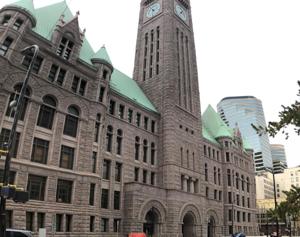
About 1,500 Minnesota National Guard troops went from standby to active following the second fatal shooting by federal agents in Minneapolis on Saturday.
Gov. Tim Walz activated the troops Saturday after agents shot and killed 37-year-old Alex Jeffrey Pretti, an intensive care unit nurse and U.S. citizen. Homeland Security said shots were fired in defense, and Pretti was armed.
There is video as well as dispute about specifics.
Brig. Gen. John Manke, adjutant general of Minnesota National Guard, said at a news conference that guard troops’ first order of business would be to help provide security at the Whipple Federal Building, home to the federal court and U.S. Immigration and Customs Enforcement detention center.
Soldiers have been on standby for nearly a week, Manke said, preparing in the Twin Cities area to respond following a request from Hennepin County sheriff’s officials.
At the same news conference, Walz said he understood frustrations and reiterated his call for federal officers to leave the community.
“I want to use this opportunity to stress to Minnesotans the frustration you have,” Walz said. “They killed a man, created chaos, pushed down protesters indiscriminately and then left the scene, and were left to clean up. I understand the anger. I understand trying to parse who are the law enforcement on the scene when you got there after a man was killed is difficult for the folks who are out there. We can handle this, and Minnesotans can express their First Amendment rights and have our folks on the streets and get these people out of here.”
Homeland Security Secretary Kristi Noem on Saturday said Pretti was attempting to impede lawmen in their duties.
“This individual showed up to impede a law enforcement operation and assaulted our officers,” Noem said at a news conference. “They responded according to their training and took action to defend the officer’s life and those of the public around him.”
Noem defends fatal shooting of armed man in DHS confrontation

Department of Homeland Security Secretary Kristi Noem defended the fatal shooting of a Minneapolis man by a Border Patrol agent as an act of self-defense during a news conference Saturday afternoon.
Noem said the man, identified as 37-year-old Alex Jeffrey Pretti, an ICU nurse and U.S. citizen, arrived at the scene Saturday armed and intent on impeding a federal immigration enforcement operation.
“This individual showed up to impede a law enforcement operation and assaulted our officers,” Noem said. “They responded according to their training and took action to defend the officer’s life and those of the public around him.”
Noem said Minnesota Gov. Tim Walz and Minneapolis Mayor Jacob Frey “choose violence” instead of cooperation with federal officials who are trying to conduct immigration enforcement. “It appears that they want this lawlessness to continue,” Noem said.
“Gov. Walz today, in his press conference, said that our officers were not even law enforcement, which is a lie. He’s called them the Gestapo, he’s encouraged residents and citizens and violent rioters to resist,” she said.
Walz blamed the shooting on the federal surge of forces into the Twin Cities.
“I just spoke with the White House after another horrific shooting by federal agents this morning. Minnesota has had it. This is sickening,” Walz posted to social media. “The President must end this operation. Pull the thousands of violent, untrained officers out of Minnesota. Now.”
Walz also called for the state to lead the investigation.
“Minnesota’s justice system will have the last word on this,” Walz said. “It must have the last word. As I told the White House, in no uncertain terms this morning, the federal government cannot be trusted to lead this investigation. The state will handle it.”
This is the third shooting in Minneapolis by federal officials since the Jan. 7 killing of 37-year-old Renee Nicole Good during an encounter with U.S. Immigration and Customs Enforcement officers. ICE said Good hit an agent with her car while trying to pull away and the agent fired defensive shots.
The Saturday shooting in south Minneapolis occurred during a surge in federal immigration operations under the Trump administration.
Minneapolis Police Chief Brian O’Hara said during a news conference that Pretti had a valid permit to carry a firearm.
In response to the shooting, hundreds of protesters gathered in the frigid streets, overtaking several blocks around the site of the incident and prompting street closures. Demonstrators made a memorial, built barricades out of furniture and Dumpsters, and lit fires in the street.
Law enforcement did not appear to be present where the protesters had gathered, though reports say they were stationed at intersections just outside where the protest is taking place.
Walz activated the Minnesota National Guard Saturday afternoon to help local authorities in maintaining order, citing the risk of escalating violence.
“Minnesota has had it. This is sickening,” Walz said at a separate news conference. “The president must end this operation.”
Federal officials, including Noem, have blamed local leaders like Walz and Frey for stoking the continuing unrest in the state.
The investigation into the shooting is ongoing and officials say more information will be released as it continues.
GOP looks to hold, expand U.S. House majority
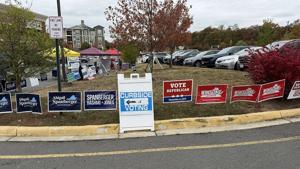
Republican leadership have approved a rule change to allow the party to hold a midterm election convention. While plans for the midterm convention are not final, the decision indicates a desire among GOP leadership to drum up support as 2026 midterm elections are fast approaching.
Over the past month, the Republican majority in the U.S. House of Representatives narrowed to a point where they now have barely enough votes to pass legislation, even if all GOP legislators can agree.
Republicans now have a 218-213 majority in the House, down from the 220 majority they won in the 2024 election. After former U.S. Rep. Marjorie Taylor Greene, R-Ga., resigned and former U.S. Rep. Doug LaMalfa, R-Calif., died, Republicans are awaiting special elections to restore their original majority.
However, an already thin majority in the House has proven to make governing difficult. The thin majority has contributed to a special focus on Republicans holding, and gaining seats in the 2026 midterm elections.
The Cook Political Report ranks 18 seats in the U.S. House as true toss ups. The report said a race defined as a toss up indicates “either party has a good chance of winning.”
Here are some of the “toss up” races Republicans will be focusing on to continue its majority in the House.
Ohio
Incumbent Democrat Greg Landsman will look to defend his seat in Congress after the Ohio legislature redrew congressional district boundaries in October 2025. The new map appears to be aimed at unseating Landsman as more Republican majority areas will now be included in his district.
Landsman has highlighted his work to lower healthcare costs and cap insulin costs. He boasted of his prior city council work designed to get wage increases.
“Greg is focused on investing in job training and small businesses, raising the minimum wage, and protecting the right to organize,” Landsman’s campaign website reads.
Three Republicans have declared candidacy to represent Ohio’s first congressional district. Eric Conroy, Steven Erbeck and Rosemary Oglesby-Henry have thrown their names in the ring for the Republican nomination.
A primary election will be held on May 5.
Michigan
From governor’s races to massive U.S. Senate campaigns, Michigan is also expected to see a competitive race for U.S. House.
Incumbent Republican Tom Barrett is looking to defend his seat in the House against a slew of Democratic candidates.
“Known as a fiscal hawk, he opposed all taxpayer-funded corporate welfare, including the programs now funding Chinese-owned factories, and fought for tax cuts for all Michiganders,” Barrett’s website reads.
LGBT activist Elyon Badger, former U.S. foreign service ambassador Bridget Brink and former Navy SEAL Matt Maasdam are in competition for the Democratic nomination.
Michigan will hold its primary election on Aug. 4.
Virginia
After sweeping victories for Democrats in Virginia in 2025, U.S. Rep. Jennifer Kiggans, R-Va., is looking to hold onto her seat in 2026.
“She successfully fought to reduce federal spending by helping to pass Washington’s first meaningful spending cuts in years” Kiggan’s campaign website reads. “She’s also fought to pass legislation to protect working families and small businesses from government overreach, reduce Executive branch overspending, and bring much needed oversight to federal agencies.”
Elaine Luria, the representative in Kiggans’ seat from 2019 to 2023, is running for election to Virginia’s congressional district.
Wisconsin
Incumbent Republican Derrick Van Orden is set to defend his seat in the U.S. House of Representatives.
Van Orden has highlighted increased funding for infrastructure to support clean drinking water, maintained roads and bridges and rural broadband access.
“In Congress, Derrick has secured millions in funding to provide western Wisconsin with drinking water that is safe from contaminants and has also secured $350 million to transition firefighting foams away from PFAS to safer alternatives,” Van Orden’s website reads.
Among several Democrat and Independent candidates to challenge Van Orden is Emily Berge, president of the Eau Claire, Wisconsin, city council.
“Housing is a human right. But rising rents, home prices, and property taxes are pushing families out of their communities,” Berge’s website reads. “I support a Local Housing Partnership that invests federal dollars directly into communities to expand affordable housing and reduce pressure on property taxes.”
Trump threatens 100% tariffs on Canada over China deal

President Donald Trump warned Canada that all its exports to the U.S. could face 100% tariffs if Canada finalizes a deal with China.
Trump slammed Canadian Prime Minister Mark Carney, who has publicly pivoted away from the U.S. since early 2025 when Trump hit America’s northern neighbor with tariffs over drugs and illegal immigration.
Since then, Carney has discussed the “rupture” between the two neighbors and sought out deals with countries around the world, including China.
Trump wasn’t happy, referring to the Canadian leader as “governor.” Trump did the same thing to Carney’s predecessor, Justin Trudeau. Trump has repeatedly suggested that Canada join the U.S. as its 51st state.
“If Governor Carney thinks he is going to make Canada a ‘Drop Off Port’ for China to send goods and products into the United States, he is sorely mistaken,” Trump wrote in a social media post on Saturday.
Trump warned that aligning with China could hurt Canada.
“China will eat Canada alive, completely devour it, including the destruction of their businesses, social fabric, and general way of life,” Trump wrote. “If Canada makes a deal with China, it will immediately be hit with a 100% Tariff against all Canadian goods and products coming into the U.S.A.”
Trump lated added: “The last thing the World needs is to have China take over Canada. It’s NOT going to happen, or even come close to happening!”
Last week in Beijing, Carney and Chinese officials announced a deal to ease tariffs they had put on each other’s products. China reduced tariffs on Canadian agricultural products, and Canada agreed to import 49,000 Chinese electric cars at a 6.1% tariff.
The deal represents less than 3% of the new-vehicle market in Canada, according to the Prime Minister’s office. However, Carney said it was a starting point.
“It is expected that within three years, this agreement will drive considerable new Chinese joint-venture investment in Canada with trusted partners to protect and create new auto manufacturing careers for Canadian workers, and ensure a robust build-out of Canada’s EV supply chain,” Carney said at the time.
Trump initially brushed off the deal, saying it was “good.” That changed Saturday.
The American Automotive Policy Council and the Canadian Vehicle Manufacturers’ Association – representing Ford, General Motors, and Stellantis in both countries – raised concerns about Canada’s deal with China, saying it had the “potential to undermine Canada’s auto sector and presents risks to the future of the integrated North American auto supply chain.”
Canada’s economy is directly tied to the U.S. Most of its exports go to the U.S. Trump imposed 35% tariffs on Canadian goods in early 2025, except for products covered by the 2020 trade deal, the United States–Mexico–Canada Agreement.
Those tariffs hit Canada’s economy hard. Canadian exports dropped, business investment slowed, and tariff uncertainty dragged the nation’s economy, according to a recent report from the International Monetary Fund.
Last week in Davos, Switzerland, Carney gave a pointed speech to world leaders.
“Let me be direct: We are in the midst of a rupture, not a transition,” he said at the World Economic Forum. “But more recently, great powers have begun using economic integration as weapons. Tariffs as leverage. Financial infrastructure as coercion. Supply chains as vulnerabilities to be exploited. You cannot live within the lie of mutual benefit through integration when integration becomes the source of your subordination.”
Trump has made tariffs a central part of his agenda during his second term. Last April, Trump imposed import taxes of at least 10% on every U.S. trading partner. Since then, the president has used the 1977 law, the International Emergency Economic Powers Act, as a cudgel to get other nations to do what he wants.
A group of states and small businesses challenged Trump’s tariffs under the 1977 law, winning in two lower courts before the administration appealed to the Supreme Court. The high court agreed to hear the case on an expedited basis.
Americans are picking up the tab for Trump’s tariffs. Research shows Americans are paying 96% of the cost of Trump’s tariffs. Nearly all tariff costs fall on American importers and consumers, according to a report from the Kiel Institute for the World Economy, a German think tank. The authors said that for every $100 in tariff revenue the U.S. government collects, $96 comes “out of American pockets” and $4 comes from lower foreign exporter profits.
DHS: ICE agent shoots, kills armed Minneapolis man; protests erupt

Federal agents shot and killed an armed man in Minneapolis Saturday morning, the U.S. Department of Homeland Security said.
“At 9:05 AM CT, as DHS law enforcement officers were conducting a targeted operation in Minneapolis against an illegal alien wanted for violent assault, an individual approached US Border Patrol officers with a 9 MM semi-automatic handgun…” DHS said in a social media post. “The officers attempted to disarm the suspect but the armed suspect violently resisted.”
The DHS post continued: “Fearing for his life and the lives and safety of fellow officers, an agent fired defensive shots. Medics on scene immediately delivered medical aid to the subject but was pronounced dead at the scene.”
Minneapolis Police said the man was a 37-year-old resident of the city.
Protestors gathered at the scene and began clashing with law enforcement shortly after the shooting. DHS said “crowd control measures were deployed for the safety of the public and law enforcement.”
Minneapolis Police Chief Brian O’Hara asked the public to stay away from the area and to remain calm, but hours after the shooting, the protests and clashes with law enforcement continued.
DHS said the suspect had two magazines and no identification: “… this looks like a situation where an individual wanted to do maximum damage and massacre law enforcement.”
Border Patrol Chief Greg Bovino said at an afternoon news conference that federal law enforcement officers were seeking to apprehend a noncitizen in the U.S. illegally who had a criminal history including domestic assault to intentional conflict bodily harm, disorderly conduct and driving without a valid license.
During the operation, agents were confronted by the man with a gun who ultimately was shot and killed, Bovino said.
“The agents attempted to disarm the individual, but he violently resisted, fearing for his life and the lives and safety of fellow officers, a Border Patrol agent fired defensive shots, Bovino said.
In response to the shooting, Minnesota Gov. Tim Walz blamed the federal surge of forces into the Twin Cities.
“I just spoke with the White House after another horrific shooting by federal agents this morning. Minnesota has had it. This is sickening,” Walz posted to social media. “The President must end this operation. Pull the thousands of violent, untrained officers out of Minnesota. Now.”
Walz also called for the state to lead the investigation.
“Minnesota’s justice system will have the last word on this,” Walz said. “It must have the last word. As I told the White House, in no uncertain terms this morning, the federal government cannot be trusted to lead this investigation. The state will handle it.”
This is the third shooting in Minneapolis by federal officials since the Jan. 7 killing of 37-year-old Renee Nicole Good during an encounter with U.S. Immigration and Customs Enforcement officers. ICE said Good hit an agent with her car while trying to pull away and the agent fired defensive shots.
Many Republicans are blaming local and state officials for the heightening tension and chaos on the streets in Minneapolis.
U.S. Rep. Chuck Fleischmann, R-Tennessee, said it is time for the “rule of law” to be restored, joining the chorus of many Republicans calling for President Donald Trump to invoke the Insurrection Act and send military forces into the city.
“What is going on in Minnesota is wrong; it is intolerable,” Fleischmann said. “These radical left-wing states . . . we’ve got to get back to our basics in America – respect for one another, love for one another, and the rule of law.”
Under Trump, Big Bend CBP Sector in Texas making history
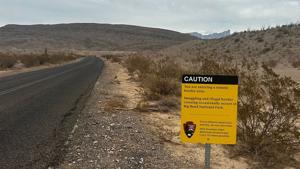
The far west Texas U.S. Customs and Border Protection sector of Big Bend made history under the Biden and Trump administrations – for different reasons.
The sector this week unveiled a first-of-its-kind advanced vehicle barrier system, the GRAB 350, at the Sierra Blanca immigration checkpoint. The checkpoint is located at a critical enforcement location along Interstate 10 in Hudspeth County roughly 90 miles east of El Paso.
It is the first of its kind to be deployed at any of the 45 permanent Border Patrol checkpoints nationwide, CBP says.
The GRAB 350 is a new semi-autonomous vehicle barrier system that combines an energy absorbing ground-retractable barrier with an in-ground tire-shredding system designed to stop extremely large high-speed vehicles.
“Interstate 10 is a major artery connecting communities across the country. When someone attempts to bypass an immigration checkpoint, they are putting innocent motorists and our agents at serious risk,” Big Bend Sector Chief Patrol Agent Lloyd Easterling said. “This system allows us to stop and contain those threats in a controlled environment, before they become dangerous pursuits on public roadways.”
“From a public safety perspective, the technology is designed to reduce the likelihood of high-speed chases, collisions, injuries and loss of life. From an agent safety standpoint, it increases distance and control during enforcement actions and minimizes the need for close-contact vehicle interventions,” CBP said in a statement.
The Sierra Blanca checkpoint is one of four permanent checkpoints in the Big Bend Sector where thousands of vehicles are processed daily in a mountain pass bordering Mexico. Agents there play “a vital role in detecting illegal activity and preventing illegal aliens and narcotics from reaching major population centers,” CBP says.
The new technology represents a marked reversal from the previous administration, which strained resources in one of the most remote regions of the country.
The sector covers the largest geographical area of any sector along the southwest border, representing nearly one-quarter of it It includes 77 Texas counties and the entire state of Oklahoma (78 counties), covering 165,154 square miles. Border Patrol agents also patrol 517 miles along the Rio Grande River.
The sector has historically had the fewest number of agents who haven’t had the necessary equipment and technology to patrol the terrain. They are responsible for patrolling an area including a northward route from northern Chihuahua and Coahuila, Mexico, with a port of entry at Presidio. The region includes rocky ravines, canyons and desert with extreme temperature changes. It includes Big Bend National Park, state parks and wildlife refuges.
Because of the type of terrain, building a border wall is impossible and nearly all illegal border crossers are single military age men who are physically able to climb through canyons and trek through the desert, authorities have told The Center Square.
Despite the difficulty of the terrain, under the Biden administration, at the height of the border crisis, Big Bend Sector Border Patrol agents apprehended a record nearly 12,000 illegal border crossers in 2023. They also reported more than 9,100 who evaded capture, referred to as gotaways, The Center Square exclusively reported.
Big Bend Sector Border Patrol agents had never seen these numbers in Border Patrol history.
Fast forward to the Trump administration and the sector received a surge of resources and an historic drop in illegal border crossings.
In fiscal 2025, Big Bend Sector Border Patrol agents reported slightly more than 3,000 illegal border crossers, according to CBP data excluding gotaways.
This was due to “decisive border security policies and enhanced detection and identification capabilities,” expanded Title 8 enforcement, ending catch and release, and deploying 55 autonomous surveillance towers and other detection technologies, Easterling said. “The decrease in illegal entries is a testament to strong border policy, as well as the tireless efforts of our agents, support personnel, and partners like the Department of War and Texas Military Department,” he said. “The men and women of Big Bend Sector have shown resolve, expertise and heart. They conduct their border security mission with great skill while operating in some of the most rugged terrain in the country.”
By last July, the sector launched a new aerostat near Sanderson, providing 24-hour surveillance capabilities. Under the Biden administration, funding for aerostats was cut. Border Patrol agents rely on the large balloons, referred to as “eyes in the sky,” to detect human traffickers, illegal border crossers and others lost in remote areas. The balloons’ radar is capable of detecting aircraft up to 200 miles away, CBP says.
Under the Trump administration, the Big Bend Sector also celebrated another first. For the first time in Border Patrol’s 100-year history, a new horse was born into its horse patrol detachment last year. Sierra Blanca Independent School District students named her Dolly.
Pro-life marchers say fight against abortion isn’t over
Despite the overturn of Roe v. Wade, the March for Life continues. With the decision to ban or support abortion now in the hands of the states, according to health policy research group KFF, abortion rates have increased and abortion has become more accessible.
“The upward trend in abortion volume is likely due to multiple reasons, including expanded telehealth capacity, the ability to mail medication abortion pills to patients, and the lower costs for telehealth abortions through virtual clinics compared to in-person care,” KFF says when explaining abortion trends after Dobbs.
The Hyde Amendment and Title X are supposed to limit the tax dollars paying for abortion, but the limit is not zero. The Biden Administration used Medicaid and other programs to supply tax dollars into abortion funds across the United States, which Trump’s administration is attempting to put an end to.
“For years now we know that Medicaid funds have skirted the essential protections under the Hyde Amendment and funnel tax dollars to abortion providers. We said no more. The working families tax got the Big Beautiful Bill. For the first time ever we finally defunded big abortion,” Mike Johnson, the Speaker of the U.S. House of Representatives, told attendees at March for Life.
Medicaid is not the only issue. David Bereit, founder of the 40 Days for Life movement and member of Equal Rights Institute’s Board of Advisors, explained how Planned Parenthood has been spending government money, supplied by tax dollars, to fund abortions without having to legally declare so. He said Planned Parenthood used millions of dollars not to help improve healthcare, but instead to put it into legal and political advocacy to advance abortion.
“By having the money come in, it’s very fungible, and they can take the money in and use it for something else, but then that frees up resources for them to be able to do abortion. So it’s an accounting gimmick that they may not be directly using it for abortion, but it is helping to facilitate them doing the abortion and giving them money elsewhere so that they are able to do the abortion,” Bereit said.
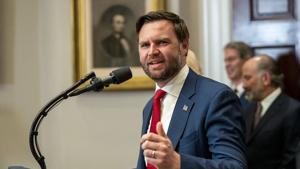
At March for Life, Vice President JD Vance said Planned Parenthood and affiliiates are being investigated for fraud regarding the millions of dollars received from Biden’s administration.
“You should not be able to commit fraud and use taxpayer money for abortion. It’s that simple,” Vance said.
The Biden administration during COVID-19 loosened restrictions on in-person doctor visits, allowing for less safe abortion practices. Dr. Ingrid Skop, Texas OBGYN, director of Medical Affairs for the Charlotte Lozier Institute, and board member of the American Association of pro-life Obstetricians and Gynecologists said abortion drugs are actually harming women.
“The FDA has removed all the guardrails on these drugs. They’re being ordered online. They’re being delivered in the mail to pro-life states. Women are suffering through completely medical, unsupervised abortions without any pre-ordered testing, without any follow-up. More than 20 of these women end up in an emergency room,” Dr. Ingrid Skop said.
Bereit told The Center Square that the pro-life movement will continue to fight for the protection of women and children.
“Until that day when no more women cry, no more children die, and abortion is not only unavailable, but it’s unwanted and it’s unthinkable,” Bereit said.
Govt. funding process close to finish line as Senate preps for final vote
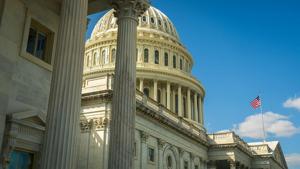
The ball is in the U.S. Senate’s court to avert a government shutdown Jan. 30, with six fiscal year 2026 appropriations bills signed into law and six more having passed the House.
But the Republican-led upper chamber must still contend both with strong Democratic opposition to one of the funding bills and severe winter weather potentially hindering a successful vote.
Because of the winter weather cancelling Monday’s session, senators will vote Tuesday on all six bills in one $1.9 trillion package. The appropriations bills fund State-Foreign Affairs, Financial Services, Defense, Labor-HHS-Education, Transportation-HUD, and Homeland Security.
Given that U.S. Sen. Rand Paul, R-Ky., opposes the package due to fiscal concerns, Republicans need at least eight Democratic votes for the legislation to overcome the filibuster.
Bundling the bills together increases the chances of the legislation succeeding, given that year-long funding for so many sectors of government is on the line. But many Democratic senators are refusing to support it because of the Homeland Security bill.
Even though the bill sets aside $20 million to purchase body cameras for federal immigration officers, Democrats have demanded more guardrails.
“I will not vote for any budget deal that gives more power and funding to Donald Trump so he can make life more dangerous and more expensive for American families,” U.S. Sen. Elizabeth Warren, D-Mass., posted on X Friday. “Congress must restrict spending on forever wars overseas and stop ICE’s terror here at home.”
The debate over whether Immigration and Customs Enforcement agents have overstepped their authority reignited after an ICE agent fatally shot a Minnesota woman, who federal officials say was trying to run over law enforcement officers with her vehicle.
Sens. Cory Booker, D-N.J., Alex Padilla, D-Calif., John Hickenlooper, D-Colo., have also publicly vowed to vote no, while dozens of others have heavily criticized ICE in recent days.
If the package passes and becomes law, Congress will have properly funded the federal government for the first time in nearly two years.
Lawmakers failed to pass a single appropriations bill in fiscal year 2025. They instead resorted to passing four consecutive Continuing Resolutions, keeping funding levels static, rather than complete the regular-order appropriations process.
Dodgers’ first baseman loses $2M on home sale after taxes
Selling a high-value property in Los Angeles? Tax experts advise caution: You could be in the same boat as Los Angeles Dodgers star Freddie Freeman.
The first baseman recently sold his Los Angeles home and lost $2 million due to fees and taxes.
Susan Shelley, vice president of communications at Howard Jarvis Taxpayers Association, blames an initiative tax known as Measure ULA that citizens got on the ballot in 2022 and managed to get approved.
Howard Jarvis is suing, but so far, the courts have upheld the tax.
“This is a transfer tax, a real estate transfer tax, to benefit homelessness and other kinds of services regarding housing or anti-eviction measures things like that, and the groups that get the contracts to do those things are the ones who paid for the initiative to pass this tax,” Shelley told The Center Square. “They called it a mansion tax, but it’s not just on mansions. It’s also on commercial real estate, apartment buildings, shopping centers, grocery stores, hotels, anything that’s in that price range about $5,000,000.”
It adjusts for inflation.
Right now, $5.3 million is the threshold for this tax, and it’s 4% of the sale price whether someone has a loss on the sale or capital gain on the sale.
“It’s a transfer tax just on the value at the time you sell, so even though he (Freeman) sold his house for less than he paid for it, he owes this mansion tax of 4% because the price was between $5.3 million and $10.6 million,” Shelley said. “And if it had been in the price range above $10.6 million, it would have been a 5.5% tax.”
That, said Shelley, is why “this is hitting apartment buildings and other types of real estate so hard.”
Freeman may not be hurting for money. 2025 news reports announced his contract with the Dodgers as being a six-year, $162 million deal. Prior to his arrival in Los Angeles, Freeman played for the Atlanta Braves, where he also had a large contract.
Still, Shelley said this is a big issue for many people.
“It impacts housing development is what it really affects, apartment buildings in particular, because they can’t get financing at the terms that they would otherwise be able to get them because if it goes into foreclosure. And they have to put it on the market to sell it – 5.5% right off the top goes to the city government if it’s in their price range, over $10.6 million,” said Shelley. “So it has really frozen the Los Angeles real estate market as far as the apartment development is concerned, and it’s not done any good for the people in the Pacific Palisades, who were burned out of their property.”
Shelley said “even the damaged houses are more than $5,000,000, leaving the owners to pay the tax.”
All because of what Shelley described as an awful, ill-conceived tax that was written by the people who are going to get the money.
“This is a new thing we’ve got going on in California, where the courts have said that special interest groups can write their own taxes, collect the signatures to put them on the ballot and evade the constitutional requirement for a two-thirds vote,” said Shelley. “The special taxes in California are supposed to go on the ballot for two-thirds vote at the local level. What the courts have said is if it’s a citizens initiative, then that doesn’t apply, which they pulled right out of the air.
“And now every special interest group is writing its own tax increase, and they’re going to be able to pass them with a simple majority, which is insane,” she said.
Shelley added that a so-called mansion tax to get money for services that help the homeless or people in trouble sounds good. “But as we’ve seen, the money is intercepted by these Minnesota-style NGOs that somehow wind up with really nice cars and houses themselves and not helping the people so much.”
Shelley is not alone in her criticism.
Steven Greenhut with Pasadena-based Pacific Research Institute called it a law of unintended consequences.
“It was supposed to create a lot of money for homeless programs, and it has been funding some of those programs. But what’s really happened is people have stopped selling buildings, and they’ve stopped building apartments in Los Angeles,” Greenhut told The Center Square. “Los Angeles desperately needs more housing supply.”
Media reports have showed a decline in construction of new apartments in Los Angeles. In April 2025, UCLA’s Lewis Center for Regional Policy Studies published a report on the “unintended consequences” of Measure ULA.
“Our strongest evidence suggests it was particularly pronounced for non-single-family transactions,” said Greenhut, quoting the UCLA report’s authors. “So it’s not just mansions. It applies to commercial, industrial, multi-family properties.”
According to Ballotpedia, Measure ULA passed with 57.7% approval.