Center Square
California sues Trump administration over oil pipelines

California is suing the Trump administration over its decision to take control of two state pipelines and permit Sable Offshore Corp. to restart pumping oil through them.
With the Pacific Ocean behind him, state Attorney General Rob Bonta announced the suit Friday during a news conference at a Los Angeles beach. It was filed in the U.S. Court of Appeals for the 9th Circuit.
“I brought you here so you can see first hand what Trump and the federal Pipeline and Hazardous Material Safety Administration are putting at risk,” Bonta, a Democrat, told reporters. He cited the value of coastal areas to businesses dependent on tourism.
The lawsuit challenges the PHMSA’s Dec. 17 order to federalize two pipelines that originate at Las Flores Canyon in Santa Barbara County, CA-324 and CA-325, and end in Kern County, where refineries are located. On Dec. 22, PHMSA, which previously classified the pipelines as intrastate and subject to state oversight, re-designated them as “interstate,” making them subject to federal oversight. PHMSA also approved Sable’s plan to restart pumping oil through the pipeline, citing President Donald Trump’s National Energy Emergency Executive Order.
The Center Square reached out to PHMSA, which defended its decisions on the pipelines.
“This pipeline was regulated for decades, under both Republican and Democratic administrations, as an interstate pipeline,” a PHMSA spokesman told The Center Square Friday afternoon, answering questions by email. “The Las Flores pipeline was only redesignated as intrastate in 2016 when it was taken out of service. Based on the facts presented by Sable in their letter to us last November, PHMSA agreed with the operator that returning the pipeline to our jurisdiction was appropriate.
“Restarting the Las Flores Pipeline will bring much needed American energy to a state with the highest gas prices in the country,” the PHMSA spokesperson said.
On Friday, California’s average price was $4.215 a gallon, well above the national average of $2.862 a gallon. The only state with a higher average was Hawaii at $4.413 a gallon, according to AAA.
“We look forward to a swift resolution in this case to provide the operator with regulatory certainty and Californians with affordable American energy,” the PHMSA spokesperson told The Center Square.
In his Jan. 20 executive order, Trump said energy problems “are most pronounced in our Nation’s Northeast and West Coast, where dangerous State and local policies jeopardize our Nation’s core national defense and security needs, and devastate the prosperity of not only local residents but the entire United States population. The United States’ insufficient energy production, transportation, refining, and generation constitutes an unusual and extraordinary threat to our Nation’s economy, national security, and foreign policy. In light of these findings, I hereby declare a national emergency.”
Bonta contended Friday that the emergency doesn’t exist.
In the lawsuit, Bonta and the Office of the State Fire Marshal argue that PHMSA, which is part of the U.S. Department of Transportation, violated the Administrative Procedure Act by federalizing the pipelines and issuing Sable the emergency permit.
The decision to allow the pipelines to be restarted was arbitrary and capricious, according to the lawsuit.
The pipelines have been closed since the 2015 Refugio Beach oil spill when a corroded segment of one pipeline ruptured. Twenty-one thousand gallons of oil reached the ocean, Bonta said.
The Center Square reached out to a nonpartisan think tank, the Pacific Research Institute, for its reactions to the lawsuit. Wayne Winegarden, a senior fellow in business and economics at the Pasadena-based institute, described the federal actions as “disconcerting.”
“My first reaction is this is very much a federalism issue,” Winegarden told The Center Square. “The country is better off when the states can exert their authority and experiment with policy.
“Maybe California is being overprotective. Maybe they’re doing the right amount of protecting,” Winegarden said. “It’s a state call, not a federal call.”
In addition to the pipelines, Sable Offshore Corp. is attempting to restart oil platforms off the Santa Barbara County coast.
In December, the county’ Board of Supervisors voted to deny permits to Sable Offshore Corp., which purchased the platforms, wells and pipeline systems in the county from ExxonMobil, as reported previously by The Center Square. Those offshore platforms are Hondo, Heritage and Harmony, and they can be seen from Haskell’s Beach in Goleta, a city just north of Santa Barbara.
Opponents warn against the environmental risks. Santa Barbara was the site of a massive oil spill in 1969.
But proponents say technology has made drilling safer. They also note offshore drilling could boost America’s energy independence and lower gas prices in California.
Bonta Friday said the new lawsuit is California’s 55th against the Trump administration and that the state will stop suing when the president stops breaking the law.
The White House couldn’t be reached for comment Friday. But earlier this week, White House spokesperson Abigail Jackson told The Center Square in an email that Bonta should focus on the state’s problems, such as illegal immigration, “instead of bragging about filing frivolous lawsuits against the Trump Administration.”
HHS won’t use taxpayer dollars for research using aborted fetal tissue

The U.S. Department of Health and Human Services is banning the use of human fetal tissue sourced from elective abortion in federally funded research.
Under the new policy, researchers and institutions cannot receive National Institutes of Health funding if their research involves “the study, analysis, or use of primary HFT [human fetal tissue], cells, and derivatives, and human fetal primary cell cultures obtained from elective abortions.”
Already-established human fetal cell lines, such as HEK 293, are exempt from the ban, according to NIH’s grant-funded research requirements.
“HHS is ending the use of human fetal tissue from elective abortions in agency-funded research and replacing it with gold-standard science,” HHS Secretary Robert F. Kennedy Jr. said. “The science supports this shift, the ethics demand it, and we will apply this standard consistently across the Department.”
HHS Press Secretary Emily Hilliard also clarified that “elective abortions” refers “to abortion on demand, not for direct medical necessity.”
The announcement came Friday, the day of the National March for Life, where Vice President J.D. Vance praised the Trump administration’s change.
“We have been responsible stewards of your tax dollars on this question of life…we’ve reinstated a ban on fetal tissue in federal research,” Vance said at the event.
“We’ve made tremendous strides over the last year, and we’re going to continue to make strides over the next three years to come,” he added.
The administration also recently launched a fraud investigation into 38 affiliates of Planned Parenthood, which provides abortions.
It alleged that the affiliates may have unlawfully received a total of $88 million through the COVID-19 era Paycheck Protection Program, meant to support struggling small businesses, by misrepresenting their organization size or affiliation.
“Planned Parenthood Federation of America was never eligible to receive a dime in pandemic-era relief from taxpayers,” Small Business Administration Administrator Kelly Loeffler said. “As part of the review underway, not only will we expose the Planned Parenthood affiliates who took advantage of the American people – we will take every necessary step to force every bad actor to pay them back.”
PPFA has denied the accusations and called them “politically motivated intimidation tactics.”
Education Department issues Title 1 consolidation guidance
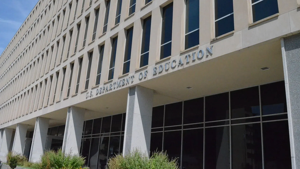
The U.S. Department of Education issued guidance to state education officials urging Title I schools to consolidate federal, state and local funding into a single funding stream.
The letter comes as the department continues efforts to reduce red tape and compliance costs by encouraging greater funding flexibility through consolidation.
Through Title I, the federal government funds schools with large percentages of students from low-income families. The U.S. spends about $18 billion on Title I, according to the American Federation for Children.
“Schoolwide programs, combined with the ability to consolidate funds to support them, are a powerful tool for local decisionmakers to maximize their flexibility in using Federal funds and non-Federal funds to better serve students and improve academic achievement,” the letter stated.
This allows districts to tailor spending to specific student needs like tutoring, advanced courses, or tech support, as part of an ongoing push for broader school choice and efficiency under the Every Student Succeeds Act, which seeks to shift federal oversight in education funding.
The U.S Department of Education told The Center Square that “Title I schools better serve student needs by reducing paperwork and accounting burdens through consolidation of federal, state and local funds.”
Assistant Secretary for Elementary and Secondary Education Kirsten Baesler said schoolwide programs allow districts to break down funding silos.
“Schoolwide programs, which allow for the consolidation of funds, are a powerful tool for local decision-makers to break down silos between federal, state, and local funds,” Baesler said. “[W]e hope leaders will expand Title I schoolwide program eligibility and provide support to districts and schools on how to take advantage of the flexibility afforded through Title I schoolwide consolidation to better serve students and improve academic achievement.”
The push for expanded school choice comes amid broader concerns about education results across the country.
The Center Square reached out to California, Nevada and Texas education departments for a comment on the Title 1 guidance, but did not receive a response.
U.S. Senate postpones Monday votes ahead of govt funding deadline

The U.S. Senate canceled votes originally scheduled for Monday due to inclement weather, shortening the timeframe for legislators to pass necessary funding bills to avoid a government shutdown.
Ryan Wrasse, a representative from Senate Majority Leader John Thune’s office, said votes would be postponed to Tuesday evening in anticipation of “impending weather.”
The National Weather Service has called for heavy snow in Washington, D.C. over the weekend, combined with threats of ice accumulation.
“The importance of funding the remaining portions of the government by Friday remains the same,” Wrasse wrote in a post on social media.
The U.S. House of Representatives passed a $1.2 trillion government funding package on Thursday. The four bills included in Friday’s package leave a total of six pieces of legislation the Senate must approve to avoid a Jan. 30 government shutdown.
At least seven Democrats need to support the six-bill funding package in order to overcome the U.S. Senate’s 60-vote threshold to pass legislation.
Funding bills dissent has festered among Senate Democrats. Sen. Tim Kaine, D-Va., criticized the House’s funding bills in a statement posted on social media.
Kaine called for restrictions on funding for Immigrations and Customs Enforcement, protections for federal workers and health insurance guarantees.
“The President is acting chaotically and unlawfully and we shouldn’t give his deranged decisions the imprimatur of congressional approval without significant amendment,” Kaine wrote.
Leaders highlight policies to end taxpayer-funded abortions at march for life
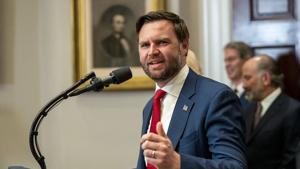
Vice President JD Vance and other elected officials on Friday touted their accomplishments to implement pro-like legislation over the past year at the 53rd annual March for Life in Washington, D.C.
Vance highlighted the U.S. Supreme Court’s 2022 ruling overturning of Roe v. Wade, a case that legalized abortion across the country in 1973.
“What the president did, what the Supreme Court did was put a definitive end to the tyranny of judicial rule on the question of human life,” Vance said.
Vance also highlighted the Trump administration’s efforts to halt federal tax dollars to Planned Parenthood, end research and investigate fraud in facilities that provide abortions.
“The thing that I’m perhaps most proud of is that we have been responsible stewards of your tax dollars on this question of life,” Vance said.
Vance also highlighted the Trump administration’s work to cut foreign aid spending. He said the administration designed its foreign aid cuts to cut money from organizations that perform or promote abortions internationally.
However, some pro-life advocates have called on the Trump administration to do more in support of the organization’s causes. During Vance’s speech, an attendee shouted for the administration to designate policy for abortion drugs like mifepristone.
Vance called for greater unity among the aniti-abortion movement and to engage in “open conversations.”
“There will inevitably be debates in this movement; we love each other,” Vance said. “But we’re going to have open conversations about how best to use our political system to advance life.”
Speaker of the U.S. House of Representatives Mike Johnson, R-La., also called for unity within the movement and acknowledged the introduction of legislation to advance anti-abortion policies. Johnson highlighted provisions to restrict government funding of Planned Parenthood included in the Big Beautiful Bill, passed in July 2025.
“We stand here today with one united voice to confirm the federal government should not be subsidizing any industry that profits from the elimination of human life,” Johnson said.
Kathie Aultman, a demonstrator at the march, said she wants to see more protections to keep taxpayer dollars from contributing to abortion procedures.
“It’s wrong to involuntarily take someone’s money and pay for something that they abhor,” Aultman said.
“The March for Life, my friends, it’s not just about a political issue as important as all this politics stuff is,” Vance said. “It is about whether we will remain a civilization under God or whether we ultimately return to the paganism that dominated the past.”
Poll shows most Americans support legal limits to abortion
Pro-life groups celebrate the 53rd annual March for Life event in the wake of a Knights of Columbus-Marist Poll showing that most Americans support legal limits on abortion.
Director of the Marist Poll Dr. Barbara L. Carvalho told The Center Square: “Despite the publicly heated debates about abortion, there remains a consensus of opinion on this issue among Americans.”
“Americans believe abortion should be limited yet include exceptions for rape, incest, or to save the life of the mother,” Carvalho said.
According to the newly released poll, 67% of Americans “support placing legal limits on abortion.”
Carvalho told The Center Square that “despite the changes in practice that have occurred since the Supreme Court’s landmark Dobbs decision, public opinion has remained consistent.”
The Knights of Columbus Supreme Knight Patrick Kelly told The Center Square that “the Knights of Columbus-Marist Poll continues to show that a majority of Americans support legal restrictions on abortion”
“At the same time, a growing majority support pregnancy resource centers, which provide assistance to mothers and their children in their time of greatest need,” Kelly said.
Kelly explained that “the Knights of Columbus’ mission will continue to be guided by” principles of the sanctity of life “until abortion becomes unthinkable.”
As Kelly alluded to, the poll showed that 84% of Americans support pregnancy centers to help mothers and babies.
Additionally, 63% of Americans “believe healthcare professionals with religious objections to abortions should not be legally required to perform them,” and 88% “believe that laws can protect both the mother and her unborn child,” the poll showed.
The Marist Poll – as “commissioned annually” by the Knights of Columbus – conducted the survey of 1,408 adults in January 2026 that revealed American sentiments towards abortion, according to a news release.
The Knights-Marist Poll came shortly before the 53rd annual March for Life Friday.
Susan B. Anthony Pro-Life America president Marjorie Dannenfelser told The Center Square: “On this pivotal occasion of the 53rd March for Life, in a post-Roe v. Wade nation, pro-life Americans have good reason to celebrate progress.”
Dannenfelser continued: “Roe’s imposition of abortion on demand across the country by seven unelected men is finally overturned, the power to protect babies in the womb and their mothers has been returned to the people and the democratic process, and 20 states have laws in effect protecting life at least by the first trimester.”
“But the end of Roe was not the end of our work by far,” Dannenfelser said, noting that there are more abortions today than before due to Biden’s mail-order abortion move.
Dannenfelser said that the Trump administration must “at a minimum” reinstate an in-person doctor visit for the abortion drug as in his first term and that the GOP majority must “stand firm for the Hyde Amendment and against forcing taxpayers to fund abortions, not suggest that we need ‘flexibility’ on this baseline, broad consensus policy.”
“The hundreds of thousands of pro-life Americans who have filled the National Mall over the years and the millions of pro-life voters nationwide are watching and expect nothing less,” Dannenfelser said.
President at health sharing ministry Solidarity HealthShare Chris Faddis similarly told The Center Square: “As we celebrate the National March for Life, we remind our law and policy makers in Washington, DC to use the remaining years of the Trump term to advance life affirming healthcare policies for the good of us all.”
“The pro-life movement has shifted focus to passing legislation and enacting public policies that strengthen efforts to protect the unborn,” Faddis said.
These policies and efforts include “unwavering defense of the Hyde Amendment and adopting MAHA policies that bolster life affirming healthcare in America,” Faddis said.
CEO of the American Association of Pro-Life Obstetricians and Gynecologists (AAPLOG) Dr. Christina Francis told The Center Square that the March for Life gives “an opportunity to stand up for the dignity of our patients, both mother and child, and to highlight the science and truth of life-affirming healthcare.”
“‘Do no harm” demands a clear rejection of the claim that induced abortion is healthcare, a falsehood that has become pervasive in medicine and our culture at large,” Francis said.
“When leading medical organizations legitimize this false narrative, both mother and child suffer,” Francis said.
Businesses close in Minnesota for anti-ICE ‘economic blackout’

Many businesses across Minnesota closed today as part of an ‘economic blackout’ to protest U.S. Immigration and Customs Enforcement.
This comes in response to calls from community leaders, activists, and union leaders for the event, which has been dubbed “ICE Out of Minnesota: Day of Truth and Freedom.”
“The ICE surge that cost the life of Renee Nicole Good is violating the Constitutional and human rights of Americans and our neighbors,” the website for the event said. “It is time to suspend the normal order of business to demand immediate cessation of ICE actions in MN, accountability for federal agents who have caused loss of life and abuse to Minnesota residents and call for Congress to immediately intervene.”
As part of the protest, organizers are also planning a march and an indoor rally at the Target Center in Minneapolis.
They are calling for the day to be a “statewide day of non-violent moral action,” with no work, shopping, or school. Already, hundreds of Twin Cities students have been marked absent in the past weeks—walking out of class to protest ICE.
The event is being organized by Indivisible Twin Cities, the No Kings Coalition, and dozens of other community organizations. They have listed a number of demands, including:
• ICE leave Minnesota
• Hold the ICE agent that killed Renee Nicole Good “legally accountable”
• Federally defund ICE
• Businesses in Minnesota and nationally refuse to do service with ICE
The protest comes just one day after Vice President JD Vance was on the ground in Minneapolis, calling for a restoration of law and order in the city.
“Tone down the temperature, reduce the chaos, but still allow us to enforce federal immigration laws,” he said at a press conference with ICE officials. “These guys are unable to do their jobs without being harassed, doxxed and assaulted. Totally unacceptable.”
Vance promised repercussions for violence.
“Come out and protest,” he said. “Do it peacefully. If you assault a law enforcement officer, the Trump DOJ will prosecute you.”
Also on Thursday, federal officials announced three arrests in connection with a protest that disrupted a Sunday morning church service in St. Paul.
The arrests were made by FBI agents and the investigative branch of ICE, who have had a strong presence in the city the past few weeks.
The anti-ICE protests throughout the Twin Cities escalated in the wake of the Jan. 7 killing of 37-year-old Renee Nicole Good during an encounter with ICE officers, who were conducting enhanced immigration enforcement.
Vance defended the surge of forces, upwards of 3,000 federal agents, to the Twin Cities during the news conference.
“We are focused on Minneapolis because that’s where we have the highest concentration of people who violated our immigration laws, and that’s also frankly where we see the most assaultive behavior by our law enforcement officers,” he said.
Currently, Minneapolis is a “sanctuary city,” which means law enforcement is not allowed to cooperate with federal officials or enforce federal immigration laws.
Minneapolis Mayor Jacob Frey held a press conference following Vance’s, where he blasted the vice president and ICE.
“We’ve got to find every possible way right now to end this large-scale deployment and send these agents home,” Frey said.
House GOP: Climate lawyers could be improperly influencing judges

WASHINGTON – The U.S. House Judiciary Committee is asking for answers from one of the lawyers pushing climate-change cases against Big Oil, wondering how he had access to materials an activist group gives judges as part of a training program.
That program is possibly intended to sway courts to rule in favor of the dozens of climate cases filed by state and local government officials who have teamed with private lawyers hoping for a jackpot. The committee this month sent four letters seeking more information, including one to lawyer Roger Worthington.
Worthington was previously admonished by an Oregon judge for introducing as evidence studies that he may have financed. It was called a “gobsmacking failure” to reveal potentially biased evidence in Multnomah County’s case against Chevron and others.
Now there are questions about how Worthington had a document prepared by the Environmental Law Institute and its Climate Judiciary Project titled “Drawing the Causal Chain: The Detection and Attribution of Climate Change.”
It was released by CJP in June 2023 as a training tool for judges. But the firm Worthington and Caron posted a pre-publication version of the document on its website two months earlier, and the Judiciary Committee wants to know how by the end of January.
“In addition to pre-dating the publication date of the document, the document hosted on your firm’s website includes what appears to be peer-reviewed comments, indicating the pre-publication nature of the document,” says a letter from the committee, signed by Republicans Jim Jordan, the Judiciary chairman, and Darrell Issa of California.
“Worthington & Caron having pre-publication access to judicial training modules raises significant concerns regarding potential improper ex parte contact with judges as well as calling into question the veracity of representations that ELI has made to the Committee about CJP’s contact and engagement with parties in litigation.”
ELI’s judicial-training strategy has been called into question by 23 state attorneys general who have asked the U.S. Environmental Protection Agency to cancel grants to the group. ELI’s CJP has hosted more than 50 events and trained more than 2,000 judges on its own version of climate science, the AGs said last year.
ELI received about 13% of its revenue from EPA grants in 2023 and 8.4% in 2024. The series of letters from the committee expresses a concern that CJP is improperly attempting to influence federal judges.
State court judges are the ones handling the climate cases, and defendants have asked the U.S. Supreme Court to end them once and for all. They want their appeal of a Colorado Supreme Court decision that allowed Boulder’s case to move forward to be heard.
Boulder’s once-attorney, David Bookbinder of the Environmental Integrity Project, has also received a letter from the Judiciary Committee that asks if he had early access to CJP training materials.
CJP’s program complicated a climate case in Hawaii, where Justice Mark Recktenwald disclosed he spoke at a CJP conference. Hawaii’s supreme court, like Colorado’s, denied the oil companies’ motion to dismiss the case.
The lawsuits allege state-law claims that essentially say the oil industry tricked consumers into using more fossil fuels than they would have by downplaying the risks of climate change.
State and federal judges in Pennsylvania, South Carolina, New York, California, Maryland, New Jersey and Puerto Rico have thrown out climate cases seeking money from oil companies to pay for the effects of global warming, seeing them as an improper attempt to regulate emissions. That is the job of regulators and not judges, they say.
Bucks County, Pa., judge Stephen Corr noted that the county’s complaint used the word “emissions” more than 100 times, while “deceptive” and “deception” were used only 39 times combined. He threw out the case as an attempt to regulate the international emissions market masked in consumer protection.
Judge Videtta Brown, in Baltimore’s case, said the litigation goes beyond the limits of Maryland law, or whatever states other cases are filed in.
“This Court holds that the U.S. Constitution’s federal structure does not allow the application of state court claims like those presented in the instant cases,” Judge Steven Platt wrote in tossing Annapolis’ case.
“The States such as Plaintiffs here… can participate in the efforts to limit emissions collaboratively, but not in the form of litigation… If states and municipalities [or] even private parties are dissatisfied with the federal rulemaking or the outcome of cases, they may seek federal court review.”
ABA can’t end anti-white scholarship discrimination lawsuit

The American Bar Association can’t escape a lawsuit accusing the group, tasked with setting national ethical and professional standards for lawyers and judges, of discriminating against white law school students in doling out certain scholarships.
In the ruling, U.S. District Judge Joan B. Gotschall said the lawsuit could continue because the plaintiffs had done enough to show that the ABA’s refusal to accept scholarship applications from white applicants amounted to a potential violation of federal laws forbidding discrimination in the making of contracts.
The judge, however, explicitly shied away from addressing the ABA’s attempt to argue it couldn’t be sued for ant-white racial discrimination, because the First Amendment protected its right to “advocate for diversity in the legal profession.”
Gottschall delivered the decision on Jan. 21, allowing the American Alliance for Equal Rights (AAER) to continue with its legal claims against the ABA.
The AAER is a conservative legal advocacy group which has filed numerous high profile lawsuits in recent years against governments, law firms, and other businesses and organizations, generally accusing them of anti-white or anti-heterosexual discrimination.
The AAER had filed suit against the ABA in April 2025, accusing the ABA of illegally discriminating against white students under its Legal Opportunity Scholarship Fund.
Under LOSF, the ABA for more than two decades has awarded $15,000 annual scholarships to students beginning law school. However, to be eligible for a LOSF scholarship, applicants must be a member of a non-white racial or ethnic minority group, including black, Latino, Native American or Asian.
In addition to satisfying the ABA’s desired racial and ethnic criteria, LOSF scholarship applicants are also evaluated based on “personal statements” and personal and family finances, among others.
However, in their complaint, the AAER noted that only 39% of ABA LOSF scholarship recipients are considered to be “first in their family to attend college.”
In its lawsuit, the AAER notes that white students are ineligible to apply for the scholarship, “regardless of financial need, academic achievement, or any other factor.”
“The ABA’s scholarship thus rests on racial stereotypes, using whiteness as a proxy for advantage and minority status as a proxy for disadvantage,” the AAER said in its complaint.
In the complaint, the AAER notes that the ABA drafts model rules of professional conduct for attorneys, “including the one barring lawyers from ‘discrimination on the basis of race.'”
“But instead of opposing racial discrimination, the ABA practices it,” the AAER said in its complaint.
In filing the complaint, the AAER asserted the ABA has improperly continued its discriminatory scholarship program even after the U.S. Supreme Court ruled in 2023 that “race-based admissions in higher education” are illegal under federal civil rights law, no matter the race of those receiving preference or being discriminated against.
And they noted in their complaint that the race-based scholarships are in keeping with the ABA’s practice of requiring law schools to “‘demonstrate by concrete action,’ a commitment to diversity, ‘particularly racial and ethnic minorities,'” in order to maintain their accreditation.
In response, the ABA moved in June 2025 to dismiss the lawsuit. Among other defenses, the ABA particularly argued it should be allowed to exclude white applicants when awarding scholarships, regardless of the apparent prohibition on such discrimination in federal law.
They argued the ABA should have a First Amendment right to create scholarship programs open only to non-white applicants because such awards are in keeping with the ABA’s policy of increasing diversity in the ranks of American lawyers.
“As AAER’s own complaint acknowledges, the ABA is an advocate for diversity in the legal profession,” the ABA wrote in its brief. “It is the ABA’s First Amendment right to express its views on this issue, and to engage in expressive conduct consistent with its views—including by awarding scholarship funds to LOSF participants.”
The ABA also urged the judge to reject the AAER’s assertion that the LOSF scholarship program violates potential applicants’ contractual rights under federal non-discrimination law.
The ABA asserted no one has a legal or contractual right to any scholarship funds, which are “discretionary gifts” awarded by the ABA.
In her decision, Gottschall declined to rule on the ABA’s First Amendment arguments. The judge agreed with the AAER that it would “premature” to rule on such claims at this point in the proceedings.
Rather, the judge said the AAER had done enough to move ahead on their claims of discrimination in the makings of contracts.
While the ABA argued the scholarships are “discretionary gifts” and the applications are not contracts, the judge noted the AAER had shown that applicants must sign a release allowing the ABA to, “among other things … use a winner’s application materials for promotional purposes.”
“Since that is effectively a license to use copyrighted application materials, and a license constitutes valuable consideration sufficient to form a contract, the court concludes that the amended complaint pleads a plausible … claim (under federal law),” Gottschall wrote.
The ABA has been represented by attorneys Joseph J. Torres and Katherine M. Funderburg, of the firm of Jenner & Block, of Chicago.
The AAER is represented by attorneys Matt Pociask, Thomas R. McCarthy, Cameron T. Norris and R. Gabriel Anderson, of the firm of Consovoy McCarthy, of Arlington, Virginia; and Adam K. Mortara, of LawFair LLC, of Nashville, Tennessee.
Winter storm to cause widespread disruption, states of emergency

A major winter storm is expected to bring significant snowfall and widespread disruption across the Mid-Atlantic and Northeast this week, according to forecasters monitoring the system.
The storm is projected to intensify as it moves east, generating heavy snow, strong winds, and hazardous travel conditions that could affect infrastructure, emergency services, and households across multiple states.
The National Weather Service said more than 160 million Americans are under winter weather hazards associated with the impending storm.
“Disruptive snowfall is likely from the Southern Rockies to the Northeast, including dangerous ice from the ArkLaTex to the southern Mid-Atlantic,” the National Weather Service wrote in a post on social media.
The Center Square spoke with a meteorologist in Washington, D.C., who indicated the system has the potential to become one of the most impactful weather events of the season.
Atmospheric conditions are aligning in a way that supports extensive snowfall, which is expected to disrupt daily life, transportation networks, and public safety operations, the meteorologist said.
Texas Gov. Greg Abbott, Louisiana Gov. Jeff Landry and Virginia Gov. Abigail Spanberger have declared states of emergency in anticipation of the coming winter weather.
“Our state agencies are preparing for dangerously low temperatures, power outages, and icy road conditions,” Spanberger wrote in a post on social media.
The National Weather Service said freezing temperatures after the initial snowfall may prolong dangerous conditions.
The meteorologist also emphasized that pet owners are likely to be significantly affected due to the depth and rapid accumulation of snow. Large amounts of snow can make it difficult for dogs and other pets to navigate outdoors, reducing safe access to areas where they can relieve themselves. This creates additional challenges for households with animals, particularly in urban and suburban areas where snow removal may be delayed.
Emergency management officials are advising residents to prepare for possible power outages, restricted travel, and limited access to essential services. Heavy snowfall could also delay emergency responders, delivery services, and municipal snow-removal efforts.
North Carolina Gov. Josh Stein encouraged residents to stock up essential supplies including water, medication, nonperishable foods and to avoid traveling on the roads for several days.
Weather models suggest the storm’s track could shift slightly, but widespread snowfall and disruption continues to be expected.