Center Square
AGs call on ‘climate cartel’ to uphold consumer protections

Six state attorneys general called on the nonprofit climate company Ceres, Inc. to halt all conduct they say is in violation of antitrust and consumer protection laws.
The attorneys general, led by Florida Attorney General James Uthmeier, sent a letter to Ceres’ CEO Mindy Lubber calling on the company to refrain from its efforts to “transform industries” and achieve “systemic change” by pressuring companies into ESG investments.
Ceres, Inc., was founded in 1989 after the Exxon Valdez oil spill in Alaska. The nonprofit says it works with companies to “acknowledge their environmental impacts and act more responsibly to help protect our communities and economies.”
The attorneys general allege Ceres focuses on tying company investments to net-zero emissions initiatives.
“Ceres coordinates pressure on financial actors and companies through ‘stakeholder engagement,’ shareholder resolutions, and even ‘investor campaigns to replace directors,'” the attorneys general wrote.
Ceres operates an investor portal for Climate Action 100+, an initiative meant to encourage large corporations to take action on climate change. The attorneys general allege Ceres refused to provide access to the portal when questioned by the U.S. House Judiciary Committee.
The letter claims Ceres’ efforts have led to a decrease in demand for oil and less investments in new supplies of oil.
“Ceres’ efforts to artificially move entire markets and sectors – and in turn artificially change the output and quality of the goods and services produced by those sectors – toward Ceres’ own preferred policy goals bears all the trappings of the ‘adverse, anticompetitive effects’ that antitrust laws seek to prevent,” the attorneys general wrote in a letter.
Ceres did not immediately respond to a request for comment.
Will Hild, executive director of Consumers’ Research, said his organization has been warning of Ceres’ climate activity for years.
“Ceres is a leader of the climate cartel and exploits its ever-growing network to push radical political agendas and ESG policies on companies and organizations, pressuring them to ignore their fiduciary duty, engage in shareholder activism, and adopt radical climate and net-zero goals,” Hild said in a statement provided to The Center Square. “Ceres’ policy goals are blatantly anti-consumer and a direct threat to our nation’s economy.”
The Sherman Antitrust Act is the founding antitrust principal in the United States. It prevents company behavior that restrains trade or engages in monopolization. The attorneys general argued that Ceres violates this law by attempting to reduce output and increase prices of oil and gas corporations.
“Companies that Ceres target that fail to meet its unrealistic goals risk ‘greenwashing’ claims resulting from potentially misleading statements and failure to disclose material facts regarding the viability of a potentially unrealistic and artificial Ceres agenda,” the attorneys general wrote.
Jason Isaac, founder of the American Energy Institute, accused Ceres of using dark money and collusive pressure campaigns to achieve its desired climate goals.
“This is not shareholder engagement or free-market activity, it’s an organized effort to manipulate entire markets and suppress competition,” Isaac said.
Attorneys general Stephen Cox, R-Alaska; Drew Wrigley, R-N.D.; Chris Carr, R-Ga.; Marty Jackley, R-S.D.; and Raúl Labrador, R-Idaho, joined Uthmeier in support of the letter.
“Ceres – a ringleader of the ‘climate cartel’ – is open about its notorious goals to achieve net-zero carbon emissions,” Uthmeier said. “The assault on American families and businesses through what Ceres calls a ‘Global World War’ to achieve net zero must stop.”
Last four government spending bills pass U.S. House
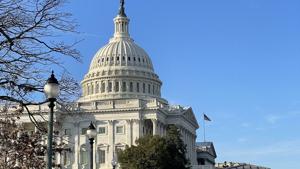
The U.S. House finished the last of its fiscal year 2026 appropriations work Thursday with the passage of the last four government funding bills, sending them over to the Senate for final approval.
The upper chamber has until Jan. 30 to pass the bills, which provide a total of $1.2 trillion for the departments of Defense; Labor, Health and Human Services, and Education; Transportation and Housing and Urban Development; and Homeland Security.
“Despite the noise, despite our slim margins…this team got it done,” House Speaker Mike Johnson, R-La., told reporters after the vote. “The House has now passed all 12 appropriations bills, and soon they’ll become law. Many people in this room said that could never be done before. We’ve had lots of naysayers, but we worked right through that.”
The Defense, Labor-HHS-Education, and Transportation-HUD bills passed as a three-bill minibus with wide bipartisan support.
The Defense appropriations bill allocates $839 billion for military personnel, research, equipment, and other activities. It also directs $13 billion toward President Donald Trump’s “Golden Dome” project, establishes a network of commercial factories able to rapidly transition to military equipment production, and gives military servicemembers a 3.8% pay raise.
The $221 billion Labor-HHS-Education bill funds early childhood education assistance, Pell Grants, rural health and job training programs, and biomedical research.
The Transportation-HUD bill includes $102 billion, with $25 billion of that going to transportation and border security and the remaining authorized for rental and housing assistance programs, mortgage insurance, among other things.
Due to concerns over Immigrations and Customs Enforcement activity across the country, the $64 billion for the Homeland Security bill was voted on separately and received only seven Democratic votes.
Among other things, the Homeland Security bill keeps funding levels for ICE flat at $10 billion and sets aside $20 million to purchase body cameras for federal immigration officers.
But many Democrats had spoken against the bill, arguing that it does not do enough to restrict the authority of ICE officers.
“My ‘no’ vote today is because I do not think the Congress should authorize public money to a department that is being run without proper oversight, accountability, or regard for the rule of law,” Rep. Chris Deluzio, D-Pa., said. “There are real guardrails we need to put around the conduct of ICE in this moment, and I do not think this bill does that.”
When the Senate returns next week, the four bills, along with two more House-passed appropriations bills already waiting, will receive a vote. Three other appropriations bills have become law, and three more currently await the president’s signature.
Vance blasts media, defends ICE during Minneapolis visit

Vice President J.D. Vance called out the mainstream media and protestors during a Thursday afternoon news conference from Minneapolis.
“Frankly, a lot of the media is lying about these guys behind me,” Vance said, flanked by officials from U.S. Immigration and Customs Enforcement. “These people are under an incredible amount of duress and chaos.”
The news conference was part of a visit meant to help restore “law and order” to the Twin Cities, following weeks of widespread unrest and protests.
During his remarks, Vance said it is time to end the chaos, but added that he still respects the right to peacefully protest.
“Tone down the temperature, reduce the chaos, but still allow us to enforce federal immigration laws,” he said. “These guys are unable to do their jobs without being harassed, doxxed and assaulted. Totally unacceptable.”
Vance promised repercussions for violence.
“Come out and protest,” he said. “Do it peacefully. If you assault a law enforcement officer, the Trump DOJ will prosecute you.”
Earlier Thursday, federal officials announced three arrests in connection with a protest that disrupted a Sunday morning church service in St. Paul.
The arrests were made by FBI agents and the investigative branch of ICE, who have had a strong presence in the city the past few weeks.
This comes following widespread calls for arrests in the wake of the church protest, which quickly captured attention far beyond Minnesota.
The U.S. Department of Justice is investigating the protest, which was organized in part by members of Black Lives Matter Minnesota.
Video posted by the group shows protesters chanting “ICE out” and “justice for Renee Good” during the service at Cities Church. Another video circulating on social media shows one of the protesters, who was arrested Thursday, calling congregants “pretend Christians” and “comfortable white people.”
Caleb Phillips, a congregant at the church, told The Center Square in an exclusive interview that the protestors were seated throughout the congregation before the service began.
The anti-ICE protests only escalated in the wake of the Jan. 7 killing of 37-year-old Renee Nicole Good during an encounter with ICE officers conducting enhanced immigration enforcement.
Vance defended the surge of forces to the Twin Cities during the news conference.
“We are focused on Minneapolis because that’s where we have the highest concentration of people who violated our immigration laws, and that’s also frankly where we see the most assaultive behavior by our law enforcement officers,” he said.
Vance added that the chaos in Minneapolis is due to a lack of cooperation from local and state authorities with federal officials.
“Why are we not seeing it anywhere else? We are seeing this level of chaos only in Minneapolis,” he said. “Maybe the problem is unique to Minneapolis, and we believe that it is, and it’s a lack of cooperation between state and local law enforcement and federal law enforcement.”
Currently, Minneapolis is a ‘sanctuary city,’ which means law enforcement is not allowed to cooperate with federal officials or enforce federal immigration laws.
Trump says Greenland deal underway despite few details

President Donald Trump said Thursday a deal structure regarding Greenland is developing after he stepped back from threatened tariffs on European allies, which he previously linked to Denmark handing over control of the semi-autonomous Arctic island.
Danish officials say Greenland’s sovereignty is non-negotiable. Trump, however, asserts that an agreement is being worked on, but he gave no additional details.
“The Greenland structure is being worked on, and will be amazing for the U.S.A.,” Trump wrote in a social media post while flying back to Washington, D.C., on Air Force One.
Trump’s comments come after he announced a “framework” for a future deal on Greenland with NATO Secretary General Mark Rutte on Wednesday in Davos, Switzerland. NATO is a 32-nation political and military alliance that includes the U.S. and much of Europe, including Denmark.
Rutte told reporters Thursday that the agreement involved heightened NATO security in the Arctic.
Trump backed off from threatened tariffs after meeting with Rutte.
Over the weekend, Trump warned that NATO allies who opposed his plans to acquire Greenland would face escalating tariffs: a 10% duty on all exports to the U.S. from Denmark, Norway, Sweden, France, Germany, the United Kingdom, the Netherlands and Finland beginning Feb. 1, rising to 25% by June 1. Trump said the tariffs will remain in effect until Denmark hands over Greenland.
Danish Prime Minister Mette Frederiksen said the two countries can talk, but Denmark and Greenland will remain sovereign.
“We can negotiate on everything political: security, investments, economy. But we cannot negotiate on our sovereignty,” she said in a statement.
She added: “Only Denmark and Greenland themselves can make decisions on issues concerning Denmark and Greenland.”
German Chancellor Friedrich Merz welcomed the change.
“It is good news that we are making steps in that right direction,” he said.
U.S. Rep. Don Bacon, R-Neb., questioned Trump’s diplomatic efforts.
“We had an opportunity to add bases in Greenland without all the drama, hostility, and threats,” he said. “Denmark and Greenland would have welcomed a friendly discussion. This has damaged our relationships with allies, including the most successful alliance in history.”
Trump maintains that U.S. ownership of Greenland is crucial to national security. He argues that Denmark cannot protect the island’s mineral-rich territory from major powers such as China and Russia.
Public polling shows Greenlanders overwhelmingly oppose joining America.
Experts say as ice melts in the Arctic, more shipping and military ship routes could open in the region, changing the global trade and the defensive relationship between the U.S. and Russia. More mining and drilling exploration could also open up.
Buying the nation could cost U.S. taxpayers billions or trillions, depending on how the Arctic island is valued.
Greenland is almost entirely reliant on fishing and Danish subsidies of about $1 billion a year. Earlier this month, Denmark’s central bank found Greenland faces “challenges for public finances in the form of large deficits and a long-term sustainability problem.”
WATCH: Showdown at SCOW: Court takes up voter-approved natural gas protection
The Washington Supreme Court heard arguments Thursday in a case challenging Initiative 2066, a measure approved by voters in Nov. 2024, to make sure natural gas wasn’t phased out as an energy choice.
The courtroom was packed, with extra seats brought in to accommodate the large interest in the case as opponents urged the justices to throw out the measure for violating the single subject rule, while supporters argued the initiative is constitutional and should be upheld to support the will of the people.
The argument was brought to the state’s highest court after a King County Superior Court judge ruled in March, 2025, I-2066 was unconstitutional due to violating the single-subject rule by covering multiple unrelated topics.
I-2066 was approved by nearly 2 million voters in November 2024 and the Building Industry Association of Washington, which backed the measure, argues it did not violate the single-subject rule and should be ruled constitutional.
The Washington Supreme Court accepted direct review of the case and stated that it would consider it “de novo,” meaning the justices will consider the merits of the case without being bound by the lower court’s decision.
During Thursday’s arguments, Paul Lawrence with Climate Solutions, one of the environmental groups that challenged the constitutionality of the initiative, argued the measure deals with more than one subject.
“I-2066 represents a classic case of a logrolling, combining popular proposals with proposals that voters might or might not reject,” Lawrence said. “I think the law is very clear right now that under Article 2, Section 19, if there are multiple subjects, you have to strike the entire initiative.”
Lawrence suggested voters who supported the initiative were confused.
“Having a voter who might want to protect their ability to have gas stoves in their home or gas without understanding that this has significant impacts on the policies of the state, trying to limit gas emissions, trying to look at and promote energy-efficient appliances and energy-efficient housing, I think that just doesn’t work,” said Lawrence.
Attorney Callie Castillo, representing BIAW, argued voters knew exactly what they were voting on when they passed the initiative.
“The people of Washington enacted 2066 for one singular purpose, to ensure that they have the option of gas as a natural source of energy for their homes and their buildings,” said Castillo. “Because all the 2066 provisions are germane to achieving that purpose, the voters knew what they were voting on.”
Chief Justice Debra Stephens then interrupted Castillo.
“Can you tell us whether you now agree with the state as to what the subject of this initiative is?”
“We actually are talking about both sides of the same thing, and this court can actually look to the title of Initiative 2066, in which it says it’s an act relating to promoting energy choice by protecting access to gas for Washington homes and businesses,” Castillo said. “So whether you use the select words of promoting energy choice as intervenors do or protecting access to natural gas that the state does, it’s really the same thing.”
After arguments concluded, BIAW Vice President Greg Lane Told The Center Square that he was optimistic the court would side with giving energy users choices.
“We feel really good about our case and how the arguments went this morning and that we’re going to get a positive outcome that will affirm the initiative,” Lane said. “I think for us it was pretty clear that the court was focused on questions surrounding that single subject and the legal precedents that the court has set previously.”
Lane said he believes the court understands that the consequences of invalidating I-2066.
“Because legislative bills have to meet that same test. So if they are going to rule and agree with the emotional arguments of our opponents, the impact moving forward on legislation that’s being passed, it pretty vast and I think the court understands the ramifications,” Lane said.
The court has discretion as to when a ruling would be issued, but Lane said he’s hopeful the justices will expedite a ruling to potentially come out this summer, rather than waiting until fall.
“It’s been almost two years since we collected 540,000 signatures and then people voted on this in the fall of 2024, so they’ve been waiting and waiting to find out if this law that they approved is going to take effect, so I hope the court will take that in mind,” he said.
Bill would ban gender transition procedures for minors
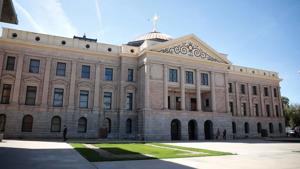
A new bill would ban gender transition procedures for Arizona minors.
State Sen. Mark Finchem, R-Prescott, this week introduced Senate Bill 1095, which would prevent anyone under age 18 from undergoing puberty blockers, cross-sex hormone treatments or any procedure that alters someone’s gender.
All the bill does is push these procedures until someone is an adult, Finchem told The Center Square.
“Adolescence can be a very confusing time for some kids,” the senator said. “I want to make sure we are giving our youth time to work through whatever their issue might be before they make a permanent change in their life because it can’t be undone.”
According to a 2025 University of California, Los Angeles Law School study, Arizona has 15,700 people between the ages of 13 and 17 who identify as transgender.
SB 1095 would limit taxpayer funds from being used to fund gender transition procedures for minors. Furthermore, the bill would also prevent Arizona’s Medicaid program from reimbursing or covering gender transition procedures.
The legislation provides the ability for minors or their parents to take legal action against medical providers who performed gender transition procedures.
If people have an argument that they were not “properly informed” about the risks of gender transition procedures, then those individuals have a right to a “cause of action,” Finchem said.
Arizona court systems can award damages, injunctions and attorney fees, the bill notes.
SB 1095 allows the Arizona attorney general to take legal action to make sure lawsuits are enforced.
If medical providers are found to have violated SB 1095, they would face disciplinary action for their “unprofessional conduct” by an “appropriate licensing entity or health profession regulatory board,” according to the bill’s text.
SB 1095 does provide exceptions to when gender transition procedures can be performed on minors, which include situations where they face medical emergencies, are diagnosed with sex development issues and address complications from prior gender transition procedures.
If the bill became law, it would take effect after March 31, 2027, because it would allow minors who are using “puberty-blocking drugs or cross-sex hormones [to] have time for appropriate medication tapering and discontinuation under the care of the minor’s physician or other health professional.”
In the past, Gov. Katie Hobbs, a Democrat, has taken action to ensure that state employee health plans cover gender transition surgeries. In 2023, she signed an executive order mandating these plans cover medically necessary gender transition procedures.
WATCH: Lawmakers spar over taxpayer-funded Trump investigation
Lawmakers on the U.S. House Judiciary Committee equally slammed and praised former special counsel Jack Smith over his involvement in prosecuting President Donald Trump’s alleged scheme to overturn the results of the 2020 election.
“It’s all about politics,” Rep. Jim Jordan, R-Ohio, said. “To get president Trump they were willing to do just about anything.”
Jordan took aim at the cost of Smith’s inquiry into President Trump. The Department of Justice spent $35.7 between November 2022 and March 2024 on work related to Smith’s office pursuing Trump, according to multiple expenditure reports.
Jordan questioned Smith about a specific $20,000 payment to a confidential source involved in his office’s investigation.
“It was me approving a payment by the FBI to a confidential human source,” Smith said. “I do not know the identity of the source.”
“Thirty-five million dollars and the you’re giving money to people the country doesn’t know who they are and you’re giving their hard earned money to these folks,” Jordan said.
“My recollection and understanding is the payment, the $20,000 that I approved was for a confidential human source to assist in the review of video and photographic evidence showing people who were attacking the Capitol, attacking police officers, obstructing the proceeding,” Smith said.
Smith appeared to indicate the person was hired to determine whether rioters at the U.S. Capitol came from Trump’s speech on the ellipse.
Jordan criticized Smith and others in the Biden administration’s Department of Justice for accessing phone records of prominent Republicans in Congress, including himself. Jordan accused Smith of foregoing proper legal procedures to hinder Trump from running for reelection in 2024.
“In spite of the weaponization efforts of Jim Comey, Alvin Bragg, Fani Willis and Jack Smith we the people saw through it all and we elected Trump twice,” Jordan said.
Democrats on the committee focused on Smith’s personal character and asserted his record of bipartisan litigation.
“You pursued the facts, you followed the law, you stuck with extreme caution to every rule of professional responsibility,” said Rep. Jamie Raskin, D-Md. “You had the audacity to do your job.”
Raskin said that Smith collected phone records from members of Congress to determine the level of involvement with Trump’s election threats. He said the records did not include the contents of phone calls made between members of Congress and the president.
“It was Trump who chose to call them to advance his criminal scheme,” Raskin said. “If Donald Trump had chosen to call a number of Democratic senators, we would have gotten toll records for them too.”
Rep. Hank Johnson, D-Ga., accused Trump of misusing taxpayer dollars to “rewrite history.” He referred to the White House’s recent launch of a website detailing the events of Jan. 6, 2021, and afterwards.
The website claims former Speaker of the House Nancy Pelosi spent three years and $20 million to pursue President Trump.
“Donald Trump is hellbent on misusing taxpayer dollars in a feeble attempt to rewrite his criminal history and the history of what happened on January 6th, 2021,” Johnson said.
Trump watched the proceedings and criticized the former special prosecutor.
“Deranged Jack Smith is being DECIMATED before Congress,” the president wrote in a social media post. “It was over when they discussed his past failures and unfair prosecutions. He destroyed many lives under the guise of legitimacy.”
Adequate preparation missing for GenAI in higher ed

Adequate preparation by university faculty to use generative artificial intelligence for teaching or mentoring is not in place at their respective schools, say 68% of 1,057 college and university faculty members sampled nationwide.
The institutions, say 59%, are not well prepared to use GenAI effectively to prepare students for the future, according to Wednesday’s report from Elon University’s Imagining the Digital Future Center and the American Association of Colleges and Universities.
“Faculty views are not uniformly pessimistic,” says Elon University President Connie Book. “Significant numbers acknowledge AI’s potential to improve aspects of teaching and learning, including the customization of instruction, efficiency in course preparation, and the quality of assignments and research support.
“Moreover, 69% of faculty say they now incorporate AI-literacy topics – such as ethics, hallucinations, bias, privacy and transparency – into their courses, demonstrating growing efforts to prepare students for a world in which AI fluency will be essential.”
The report is authored by Eddie Watson, vice president for Digital Innovation at the American Association of Colleges and Universities, and Lee Rainie, director of Elon’s Imagining the Digital Future Center. Sampling was done Oct. 29-Nov. 26.
In the section about challenges posed to embrace GenAI tools in courses, one faculty member said, “AI tools will be helpful if they are used correctly, to supplement learning and instruction, rather than replace it. Students must be taught to use discretion about what they see in AI and learn how to utilize it effectively.”
Collectively saying a lot or some, 92% have concerns regarding diminished student learning outcomes; 90% lack trust in the safety and security of GenAI; and 88% say there is poor quality of GenAI tools’ output, including false, misleading or biased information. There were 70% saying a challenge is the lack of training and support infrastructure to foster broad adoption of GenAI.
The survey asked an open-ended question about what human skills schools should teach. Watson and Rainie wrote within the report “the most dominant theme by far was that critical thinking becomes more important in an AI-saturated world.”
“Respondents,” they wrote, “repeatedly frame AI as increasing the need for skepticism, verification, reasoning, judgment and discernment. Many argue that without these skills, AI accelerates misinformation, intellectual passivity and epistemic collapse.”
Eighty-seven percent of faculty said they had created guidelines or policies for students’ use of generative artificial intelligence.
“This is not a story of simple resistance to change,” said Lynn Pasquerella, president of the American Association of Colleges and Universities. “It is, instead, a portrait of a profession grappling seriously with how to uphold educational values in a rapidly shifting technological landscape.”
She notes higher education has adapted throughout history with such inventions as the printing press, calculators, computers and the internet.
“Yet,” she says, “few innovations have entered our classrooms with the speed, scale, and impact of generative artificial intelligence. ChatGPT, Gemini, Claude and Copilot – once novel tools – have quickly become woven into everyday academic life. The speed of this transition invites not only attention but also candor as we consider how these technologies are shaping teaching, learning and understanding.”
First arrests made following St. Paul church attack, ‘more to come’

Federal officials have made three arrests in connection with a protest that disrupted a Sunday morning church service in St. Paul.
U.S. Attorney General Pamela Bondi made two of the announcements Thursday morning, with a third announced Thursday afternoon.
“So far, we have arrested Nekima Levy Armstrong, who allegedly played a key role in organizing the coordinated attack on Cities Church in St. Paul, Minnesota,” Bondi said on social media. “Listen loud and clear: WE DO NOT TOLERATE ATTACKS ON PLACES OF WORSHIP.”
Just minutes later, Bondi announced the arrest of Chauntyll Louisa Allen. She promised “more to come.”
At 1 p.m., Bondi announced a third arrest of William Kelly.
Armstrong is a civil rights lawyer who is accused of helping organize the protest. Allen is the clerk of the St. Paul Board of Education. Kelly was one of the protestors at the church and posted a number of videos on his social media from the protest that later went viral.
The arrests were made by agents from the Federal Bureau of Investigation and the investigative branch of U.S. Immigration and Customs Enforcement.
This comes following widespread calls for arrests in the wake of the protest, which quickly captured attention far beyond Minnesota.
The U.S. Department of Justice is investigating the protest, which was organized in part by members of Black Lives Matter Minnesota.
Video posted by the group shows protesters chanting “ICE out” and “justice for Renee Good” during the service at Cities Church. Another video circulating on social media shows Kelly calling congregants “pretend Christians” and “comfortable white people.”
Caleb Phillips, a congregant at the church, told The Center Square in an exclusive interview that the protestors were seated throughout the congregation before the service began.
“The entire congregation came alive. Individuals who are planted from front to back throughout the entire place stood up,” Phillips said. “It felt like we were surrounded, because they were all throughout the congregation.”
Reports allege the protesters discovered one of the church’s pastors works for U.S. Immigration and Customs Enforcement, calling the protest a “clandestine mission.”
The protest comes in the wake of the Jan. 7 killing of 37-year-old Renee Nicole Good during an encounter with ICE officers conducting enhanced immigration enforcement.
Charges have not yet been announced.
Arizona Senate panel backs renaming highway loop after Kirk

The Arizona Senate Public Safety Committee voted 4-3 Wednesday afternoon, along party lines, to back a bill renaming highway Loop 202 as the Charlie Kirk Loop 202.
The legislation will go to the full Senate for consideration.
The loop spans about 77 miles across the Phoenix area and connects with Interstate 10 on both ends. Senate Bill 1010 calls on the state Department of Transportation to install signs reflecting the new name. The Arizona State Senate Republicans Caucus said no fiscal impact is anticipated.
The bill sponsor, Senate President Warren Petersen, R-Gilbert, said segments of the loop would still keep their previous designations. Petersen made the comment after Yvonne Pastor expressed concern that a segment would no longer be named after her father, the late U.S. Rep. Ed Pastor, D-Arizona, who the daughter noted was known for his bipartisan work on the behalf of Arizonans.
Pastor urged the committee to name a highway segment closer to Kirk’s home in Scottsdale and Phoenix-based Turning Point USA, which Kirk started, after the conservative leader. A short while later, Petersen stressed the segment honoring Pastor, which would be part of the Charlie Kirk Loop 202, would still be named after the late congressman.
The four Republicans on the committee backed SB 1010.
Petersen talked about Kirk, the Arizonan who was assassinated Sept. 10 when he was speaking at a rally before thousands at Utah Valley University in Orem, Utah.
“His death was an act of political violence and terror that shocked our nation in renewed discussions on the importance of preserving civic civil discourse,” Petersen told the Senate panel. “Charlie understood better than most the beauty and necessity of the First Amendment. He championed the idea that disagreements should be met with dialogue, not division, and that vigorous debate strengthened our republic rather than weakened it.”
Petersen noted the new designation “ensures that this contribution to civic engagement, free speech and the public square will not be forgotten.”
Several people supported the renaming during a public comment period.
The man accused of killing Kirk is Tyler James Robinson, 22, who appeared at his second in-person pretrial hearing Friday in Provo, Utah, as reported by The Center Square. Robinson is charged with six felonies, including aggravated murder, and one misdemeanor. Utah County Attorney Jeff Gray has said he will seek the death penalty if Robinson is convicted of murder.
Robinson’s attorneys are trying to get the entire prosecution team disqualified on the basis that one of the prosecutors has an adult daughter who was at the rally when Kirk was shot and killed. Gray, whose office told defense attorneys about the daughter, said he doesn’t believe there’s a conflict of interest.