Center Square
Index shows top states that support education freedom
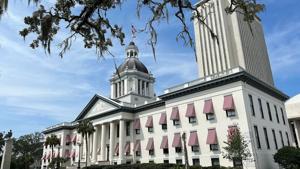
The American Legislative Exchange Council released its annual analysis on state education freedom amid the rise in states opting into school choice programs.
The Index of State Education Freedom ranked all 50 states, looking at how well they provided options to families. There were five categories under which each state was assessed: student-centered funding, charter schools, home schools, virtual schools and open enrollment.
Florida ranked No. 1 overall, followed by Arizona and Arkansas.
For 2025-26, the state education budget for Florida was around $31.5 billion. The state has over three million students enrolled in public schools.
“Florida leads the nation because we provide all students and families with access to high-quality school choice options that meet their individual needs,” Commissioner of Education Anastasios Kamoutsas said in a statement following the Index results.
States that fall at the bottom are Kentucky and New York, with Nebraska ranked last.
Nebraska has over 300,000 students enrolled in public schools, costing the state per-pupil $17,000-18,000 annually.
The Center Square reached out to the Nebraska Department of Education and Gov. Jim Pillen’s office for a comment, but has yet to receive a response.
ALEC Index attempts to make parents and policymakers aware of the education freedom environment in each state and what changes they can implement to expand learning options.
National School Choice Week, scheduled for Jan. 25-31, is designed to raise awareness of school choice around the country through events with schools and organizations where supporters advocate for family choice.
“We are seeing a complete reimagining of the American approach to education,” Education and Workforce Development Task Force Director Andrew Handel told The Center Square.
States are slowly moving away from relying on the public school education system and toward a model of education freedom where students choose what learning model is best for them, Handel explained.
“[W]e need to empower parents with multiple options and let them, not the government, decide which will work best for them,” Handel added.
Trump calls off tariffs over Greenland after deal with NATO leader
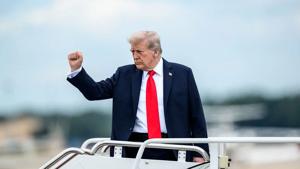
President Donald Trump called off tariffs on U.S. allies opposed to his plans to annex Greenland after announcing a tentative deal with NATO Secretary General Mark Rutte for a future deal on Greenland.
Trump said he won’t impose tariffs over the issue after meeting with Rutte at the World Economic Forum in Davos, Switzerland, on Wednesday.
“We have formed the framework of a future deal with respect to Greenland and, in fact, the entire Arctic Region,” Trump wrote in a social media post. “This solution, if consummated, will be a great one for the United States of America, and all NATO Nations.”
Trump said talks are underway about including the 800,000-square-mile Arctic island under the president’s planned “Golden Dome” missile defense system.
Over the weekend, Trump warned that NATO allies who oppose his plans to acquire Greenland will face escalating tariffs: a 10% duty on all exports to the U.S. from Denmark, Norway, Sweden, France, Germany, the United Kingdom, the Netherlands and Finland beginning Feb. 1, rising to 25% by June 1. Trump has said the tariffs will remain in effect until Denmark hands over Greenland.
European nations balked at the prospect of tariffs.
Trump maintains that U.S. ownership of Greenland is crucial to national security. He argues that Denmark cannot protect the island’s mineral-rich territory from major powers such as China and Russia.
Public polling shows Greenlanders overwhelmingly oppose joining America.
Experts say as ice melts in the Arctic, more shipping and military ship routes could open in the region, changing the global trade and the defensive relationship between the U.S. and Russia. More mining and drilling exploration could also open up.
Buying the nation could cost U.S. taxpayers billions or trillions, depending on how the Arctic island is valued.
Greenland is almost entirely reliant on fishing and Danish subsidies of about $1 billion a year. Earlier this month, Denmark’s central bank found Greenland faces “challenges for public finances in the form of large deficits and a long-term sustainability problem.”
In 1867, when President Andrew Johnson bought Alaska, he also considered buying Greenland. The U.S. also tried to buy Greenland in 1946. The United States proposed paying Denmark $100 million in gold to purchase Greenland.
Trump rails against European powers at World Economic Forum

Despite a warm introduction from World Economic Forum Interim Co-Chair Larry Fink and largely friendly opening remarks, President Donald Trump spent most of his address to the forum berating Europe for failing to repay decades of American generosity.
“The United States is keeping the whole world afloat,” Trump said, arguing Europe has taken advantage of American excellence and goodwill for years.
Just minutes before, Trump had described reluctant cooperation from European leaders as the U.S. worked out deals with major pharmaceutical companies to lower American drug prices. His voice rose sharply in a moment where he broke from his usual laid-back delivery.
“You’ve been screwing us for 30 years,” Trump said. The president has said that the higher prices the U.S. has paid for prescription drugs for years have effectively paid for pharmaceutical companies’ research and development, while other countries have enjoyed the benefits.
He chastised European allies for opposing the proposed U.S. acquisition of Greenland and questioned NATO’s reliability.
“The problem with NATO is that we’ll be there for them 100%, but I’m not sure that they would be there for us if we gave them the call,” Trump said. “I know them all very well. I’m not sure that they’d be there. I know we’d be there for them. I don’t know that they’d be there for us.”
He specifically called out Canadian Prime Minister Mark Carney and Israeli Prime Minister Benjamin Netanyahu – Carney, for not being grateful for the “freebies” his country receives from the U.S. and Netanyahu for “taking credit” for Israel’s missile defense system.
“Canada lives because of the United States. Remember that, Mark, the next time you make your statements,” Trump said, referring to statements Carney made the day before about standing with Denmark and the semiautonomous territory of Greenland.
“And by the way, I told Bibi… stop taking credit for the dome. That’s our technology. That’s our stuff,” Trump added a moment later.
The president spoke at length about the “economic miracle” he said his administration had achieved by stopping “the nation-wrecking policies” of the Biden administration, touching on “soaring” American incomes, accomplishing “no inflation” while staving off a recession and cutting federal spending and government regulations.
He contrasted the picture of American success with a Europe that he said has become riddled with parts “unrecognizable,” which he attributed to Biden-like policies there – though he said he wanted “Europe to do well.’
“I want to see it do great. That’s why issues like energy trade, immigration and economic growth must be central concerns to anyone who wants to see a strong and united West,” he said. “They’re destroying themselves… We want strong allies, not seriously weakened ones.”
Though much of Trump’s speech consisted of familiar themes, the president did provide new statements on the proposed American acquisition of Greenland.
He clarified that the U.S. would not take Greenland by force, and that America was only interested in the island for national security reasons, not its natural resources.
“I don’t have to use force. I don’t want to use force. I won’t use force,” he said.
WATCH: Advocates urge SCOTUS for uniform gun law guidance
Advocates and legal experts urged the U.S. Supreme Court to adopt uniform gun laws across the country after justices heard arguments in a case on whether to uphold Hawaii’s gun control law.
Wolford v. Lopez challenges a Hawaii law that prevents concealed carry permit holders from going to gas stations, bars, restaurants that serve alcohol, beaches and public parks without written or verbal consent from the property owner.
During the arguments on Tuesday, several gun rights advocates came out to the steps of the Supreme Court to express support for Second Amendment protections.
“Private property owners certainly have the right to prohibit firearms on their own property, but it is gross overreach for the government to decide that for them,” said Katie Novotny, a demonstrator outside the court.
An argument analysts were particularly watching was in drawing a distinction between free speech rights and gun rights on private property open to the public. Carrie Severino, president of the Judicial Crisis Network, said without the state law store owners could still place signs restricting guns in their businesses.
“What’s not permissible is the state forcing you to put up the sign the other way and having the default be that no one may carry even with a valid permit on that private property,” Severino said.
Severino pointed out that Hawaii’s law comes with several logistical challenges in getting permission from a property owner. She said gun carriers would be hard pressed to obtain permission without already breaking the law.
Another significant portion of the justice’s arguments focused on what laws in the nation’s history should be used to understand the traditional application of the Second Amendment. Lawyers for Hawaii used examples of Black code laws – which prevented formerly enslaved African Americans from obtaining firearms – to assert a historical tradition of limiting firearms use.
“That just shows the weakness of their position,” Severino said. “If they had any better precedent to rely on, I’m sure they would not be stuck trying to hang their case on these racist laws from the mid-19th century.”
However, Justice Ketanji Brown Jackson appeared to indicate her support for including Black code laws in Hawaii’s justification.
“It was very shocking to hear Justice Jackson in particular defending the use of the racist post-civil war Black codes as body of law that we should be copying in any respect,” Severino said
Justice Clarence Thomas appeared to call for the consideration of later laws like the 14th Amendment that were designed to undo Black codes.
Lawyers for Hawaii also argued the law should remain in place because the state’s customs and culture do not assume most people carry guns with them. Severino said the justices should be focused on the Second Amendment’s customs and traditions rather than an individual state.
“When Hawaii joined the United States, they were adopting United States law as it stood then not not modifying it,” Severino said.
Legislators in California, Maryland, New Jersey and New York have also considered similar restrictions on concealed carry permit holders. Advocates called on the high court’s justices to clarify legal restrictions and provide uniformity among the states.
“We need guidance from the Supreme Court to understand what the outside contours of that are under the Constitution so the other states know what the limits are,” Severino said.
Trump calls for $1.5 trillion military budget despite audit failures
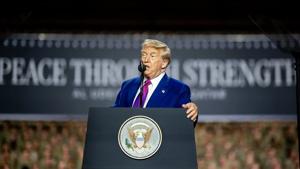
President Donald Trump wants a much larger military budget despite the Pentagon’s continued failure to accurately account for its spending.
Trump proposed a $1.5 trillion budget for the Department of War after talks with lawmakers.
“This will allow us to build the ‘Dream Military’ that we have long been entitled to and, more importantly, that will keep us SAFE and SECURE, regardless of foe,” the president wrote in a social media post.
Trump said that tariff revenue could help cover the 60% military budget increase, along with tariff rebate checks and funds to reduce the federal government’s $38.4 trillion in debt.
An analysis from the Committee for a Responsible Federal Budget estimated Trump’s plan would boost defense spending by $5 trillion over the next decade. When interest is included, that figure would grow to $5.8 trillion. The group noted that tariff revenue wouldn’t cover the bill.
“In reality, the military spending increase would be about twice as large as expected tariff revenue,” according to the analysis.
U.S. Sen. Roger Wicker, R-Miss., chairman of the Senate Armed Services Committee, and U.S. Rep. Mike Rogers, R-Ala., chairman of the House Armed Services Committee, endorsed Trump’s plan to hike military spending.
“This is exactly the kind of investment it will take to rebuild our military and restore American leadership on the world stage,” Wicker and Rogers said in a joint statement. “America faces intensifying global threats from China, Russia, Iran, and narco-terrorists.”
They also said Americans would see the results through “tangible hard power: accelerated shipbuilding and aircraft production, a modernized arsenal, and innovative technologies that ensure our warfighters remain unmatched.”
Secretary of War Pete Hegseth said the proposed $1.5 trillion budget would be “a message to the world.”
Some Democrats slammed the plan, noting the Pentagon can’t fully account for its spending and doesn’t expect to be able to do so before 2027. U.S. Reps. Ilhan Omar, D-Minn., and Mark Pocan, D-Wis., co-chairs of the Defense Spending Reduction Caucus, said the Pentagon should be held to the same budgetary standards as other federal agencies. They noted the Department of War failed its eighth consecutive audit in December 2025.
“We cannot justify continuing to increase the Pentagon’s budget when the agency cannot even successfully pass a fiscal audit,” they said in a statement. “The lack of accountability and transparency at the Pentagon is simply unacceptable, yet Congress continues to pour more and more taxpayer dollars into the agency each year. No other federal agency would be allowed to operate this way.”
Last June, the Department of War told Congress it would be able to successfully account for all of its spending and assets by 2028.
Abbott unloads on CAIR, chastises public schools

In a directive Wednesday issued to a Houston area school district demanding it cancel any planned Islamic Games event, Gov. Greg Abbott blasted the Islamic Council on Foreign Relations (CAIR).
He also chastised public schools, saying any partnership with the group was illegal.
“You cannot invite such dangers through the front doors of our schools. In fact, state law requires public schools to prohibit illegal activities from taking place on school property. It is obvious, then, that you may not use taxpayer-funded public facilities to host events sponsored by a designated terror organization. To do so would violate your duty to taxpayers and the safety of students,” Abbott warned.
“Radical Islamic extremism is not welcome in Texas – and certainly not in our schools.”
At issue is an Islamic Games organization scheduling two events at public school facilities in the Dallas and Houston areas: at Colleyville Heritage High School in Grapevine-Colleyville ISD and Bridgeland High School in Cypress-Fairbanks Independent School District.
The Islamic Games claims to be “the premier Muslim sports and athletic event in North America, dedicated to promoting physical excellence, unity, and community development.”
It lists more than 100 sponsors, including the CAIR-New Jersey.
Abbott designated CAIR as a Foreign Terrorist Organization last November and called for investigations into it and other groups, The Center Square reported. CAIR denies the allegations and has sued.
After GCISD was made aware that Abbott had designated CAIR an FTO, it cancelled hosting the Islamic Games, The Center Square reported. CFISD has yet to do so.
On Wednesday, Abbott sent a letter to CFISD directing it cancel any arrangements to host the event and preserve all records and communications about it. Noncompliance would result in legal action, he said.
But his letter also lambasted CAIR.
Islamic Games “event organizers proudly boasted that [CAIIR NJ] would sponsor the event,” Abbott said.
The FTO designation describes “ample evidence collected by the federal government – and relied on by a federal court – showing that CAIR is a ‘front group’ for Hamas,” Abbott said.
Hamas, a branch of the Muslim Brotherhood, was designated an FTO by former President Bill Clinton in 1997, which remains in effect. Hamas took responsibility for the Oct. 7, 2023, terrorist attack against Israel, including kidnapping and murdering Americans.
Abbott highlights now deleted CAIR NJ social media posts that “praised Hamas’s slaughter of innocent civilians, including Americans.”
One was published on Oct. 7, 2023, stating of the terrorist attacks, “This is not a war. It is an occupation. End the occupation. Free Palestine.”
Two days later, after videos were publicized of the slaughter and kidnapping of concert goers, CAIR NJ said, “the people of Gaza effectively broke out of prison — resisting an occupation that is not only inhumane but also illegal under international law — is inevitable and should not be unexpected.”
Abbott characterizes CAIR NJ as “anti-American and antisemitic.” He pointed to its director, Selaedin Maksut, claiming “to ‘fight against… the Zionism that has infiltrated’ America and boasting that CAIR was ‘working hand in hand with our partners to fight for Palestine’” at a “Building American Muslim Political Strength” event at the Islamic Center of Passaic County in Patterson, N.J.
“CAIR NJ does not hide that it views public schools as the battleground for promoting terrorism; that is why Mr. Maksut sought to disrupt high school operations with a ‘Walkout for Palestine’ protest,” Abbot said.
“This type of division, disruption, and support for terrorism is exactly why I directed the Texas Department of Public Safety to launch investigations into the Muslim Brotherhood, CAIR, and any of their affiliated entities operating in the State,” and called on the U.S. Treasury to suspend CAIR’s 501(c)(3) tax-exempt nonprofit status, he said.
Abbott also warned public school districts that noncompliance with his order would result in legal action. This includes “investigative demands and injunctions to halt public school districts from hosting events sponsored by designated terror organizations like CAIR. Texans deserve immediate action to curb the spread of Islamic extremism, and public facilities funded by their tax dollars will not be utilized to host terrorist related groups.”
Latest Epstein updates: Clintons held in contempt; Maxwell to testify
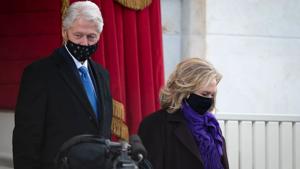
The House Oversight Committee voted Wednesday to hold former President Bill Clinton and his wife, Hilary, in contempt of Congress after neither showed up to their depositions last week.
As part of the committee’s investigation into Jeffrey Epstein, the Clintons were summoned to testify before lawmakers on their previous relationship with the high-profile sex trafficker.
Given the Clintons’ refusal, committee members voted bipartisanly to hold them both in contempt of Congress. The House must approve the measure before referring it to the Department of Justice, which makes the final decision on whether to prosecute.
“No witness—not a former President or a private citizen—may willfully defy a duly issued congressional subpoena without consequence,” Chairman James Comer, R-Ky., said Wednesday. “We must do what is necessary to uphold Congress’s investigative authority, which is imperative to the legislative process.”
The decision comes as the public awaits the release of all federal investigative materials related to Epstein, who died in prison before trial, and his associate Ghislaine Maxwell.
Maxwell, who is serving a 20-year prison sentence, will testify before the committee in a virtual deposition on Feb. 9, lawmakers announced during the hearing.
The DOJ is already a month past the congressionally mandated file release deadline and shows no signs of fulfilling the requirements soon. So far, the agency has published only 12,285 documents, about 1% of the files in its possession.
Although some Republican lawmakers previously called for Attorney General Pam Bondi to also be held in contempt of Congress for violating the deadline, the committee tanked a Democratic motion during the Wednesday hearing, which would have done so.
“Republicans only care about ‘following the rules’ when they can weaponize them. But the second it cuts both ways, they go mute,” Rep. Jasmine Crockett, D-Texas, posted on X after the hearing. “Pam Bondi and the DOJ have failed to comply with the subpoena and discharge petition — and y’all have nothing but excuses for them.”
The DOJ has pleaded for patience, arguing that reviewing the millions of files is “a time-intensive process due to the voluminous materials, the idiosyncratic nature of many of the materials, and the need to protect victim identifying information.”
California lawmakers push back against offshore oil drilling
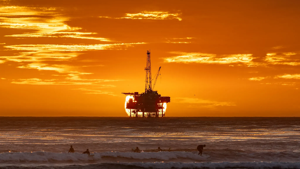
Weeks after California Lt. Gov. Eleni Kounalakis spoke out against federal efforts to expand offshore oil drilling, state lawmakers told The Center Square that increased drilling is deeply unpopular among coastal residents.
Opponents warn against the environmental costs.
But supporters say technology has made drilling safer. They also note offshore drilling could boost America’s energy independence and lower gas prices in California, which typically has the highest in the U.S.
Legislators’ comments opposing the drilling come after the announcement in November 2025 that the U.S. Department of the Interior would expand oil and gas drilling leases not just off the Pacific Coast in areas such as Santa Barbara, but other sites on the nation’s outer continental shelf.
“We have a deep, visceral experience that is seared into the community’s consciousness about the risks of offshore oil development,” Assemblymember Gregg Hart, D-Santa Barbara, told The Center Square. “We are adamantly opposed to the leasing. There’s been a bipartisan consensus for 40 years that we want to wind down offshore oil development, not expand it.”
According to a November 2025 order from the U.S. secretary of the interior, the program to increase oil drilling off American coastlines is meant to increase “national energy resilience” by increasing the number of oil drilling leases. That order mandated that four lease sales were planned for the coming months – one in December 2025, two in March 2026 and one in August 2026.
The first sale was held in December in New Orleans, attracting 219 bids from 26 companies that would include the increased oil production of 1.02 million acres in the Gulf of America, according to previous reporting by The Center Square. The last time oil drilling leases were sold in the Gulf of America, formerly the Gulf of Mexico, was in 2023.
Additional lease sales are planned for the Gulf of America and Cook Inlet in Alaska, according to the Bureau of Ocean Energy Management, which is overseen by the U.S. Department of the Interior.
Despite no lease sales immediately planned off the coast of California, the Bureau of Ocean Energy Management plans to start auctioning six total oil drilling leases off the coast of California starting in 2027, according to a proposed program report from the bureau released in November. Three lease sales are planned in 2027 off the coast of Southern California, another two starting in 2027 off the coast of Central California and one off the coast of Northern California in 2029, the report states.
Community fears repeat of 1969 oil spill
Part of the federal government’s efforts to expand offshore oil drilling off the Southern California coast includes waters off the coast of Santa Barbara, which was the site of the largest oil spill in U.S. waters at the time, according to the Santa Barbara-based Community Environmental Council.
The January 1969 oil spill saw more than 4 million gallons of oil spilled into the Pacific Ocean, killing thousands of sea animals and devastating local residents, lawmakers and community advocates told The Center Square. That oil spill, now the third-largest in the country’s history, was the inspiration for Earth Day, according to the council.
“I was 9 years old in Santa Barbara when the oil spill occurred,” Hart told The Center Square.
“It was a traumatic experience for the entire community,” the Assembly member said. “Pelicans were drowning in the oily goop, and the sounds were surreal because the sound of the waves were muted by the thick sludge.”
Adults at the time tried to shovel hay into the ocean to absorb the oil, Hart said, but noted there was no real plan to respond to a disaster on that scale.
“When there’s a spill – unlike on land, where it’s easily contained and managed – when there’s a catastrophic event that occurs in the ocean, the oil is dispersed along the entire coast,” Hart said. “It has devastating economic effects on the businesses that are truly producing value for the residents of California.”
According to figures sent to The Center Square by Santa Barbara County officials, oil companies have generated $512 million in revenues from oil drilling off the county’s coast. While those companies have been profitable, roughly $330 million of damage has been caused by oil spills near Santa Barbara’s coastline, officials said.
Environmental advocates in Santa Barbara told The Center Square this week that they don’t think expanding oil drilling off the coast is necessary. They say they hold out hope that clean energy will meet the state’s energy needs.
“This move is very tone-deaf to what’s actually happening in the clean energy space,” said Sigrid Wright, CEO and executive director at the Community Environmental Council.
“I don’t think this is intended, necessarily, to help the economy,” Wright told The Center Square. “I think this is a bit of a ruse.”
Developments in clean energy, Wright said, add significantly to the country’s economy.
“It makes no sense to us at all to kneecap the growing and very strong clean energy industry,” Wright said. “There’s considerable concern about spills, regardless of how you transport the oil, and you’re putting the marine environment at risk.”
Increased oil drilling leases, another environmental advocate said, undermine existing policy to protect California’s coastal environment and economy.
“One of our fears is that new leases being approved at the federal level might circumvent some of our strong environmental policies that are in place to protect our coastlines,” said Karina Johnston, executive director of Heal the Ocean, a Santa Barbara nonprofit seeking to reduce pollution.
“A huge portion of our economy is driven by tourism, recreation, beach access. And all that can be impacted on top of the environmental impacts from oil spills,” Johnson told The Center Square.
There is also pushback in Washington, D.C., from congressional representatives who represent California’s coastal districts.
“Despite clear opposition from public officials, environmental experts, and residents across our state, the Administration has proposed to sell California’s coastline to Big Oil. Let me be clear: this is a reckless and dangerous move,” said U.S. Rep. Salud Carbajal, D-Santa Barbara, in an emailed statement to The Center Square. “Trump’s plan puts delicate marine ecosystems at risk, undermines public health, and threatens the coastal economy – all so oil executives can line their pockets. Our community is ready to lead in this fight once again, and I will do everything in my power to ensure we rise to the challenge.”
Local efforts to combat the expansion of offshore oil drilling are underway as well. The Santa Barbara County Board of Supervisors voted in December to deny permits to Sable Offshore Corp., which purchased the platforms, wells and pipeline systems in the county from ExxonMobil. Those offshore platforms are Hondo, Heritage and Harmony, and they can be seen from Haskell’s Beach in Goleta, a city just north of Santa Barbara.
The board’s denial of the permits was part of an ongoing effort to ban new offshore oil and gas drilling operations and phase out existing ones, county officials told The Center Square via email.
Officials said the phase-out would save the county an estimated $100 million mortality-related and climate damage expenses over the next 20 years.
“Environmentalism is in our DNA here in Santa Barbara County,” said Laura Capps, chair of the Santa Barbara County Board of Supervisors.
“I’m one of many who are so opposed to offshore drilling,” Capps told The Center Square. “The expansion is in direct opposition to that.”
Sable Offshore Corp. representatives were not available to answer questions as of press time.
Drilling technology has improved, studies and experts say
Despite the dangers historically inherent in offshore oil drilling, the infrastructure for drilling has improved and grown more sophisticated in the decades since the 1969 oil spill, according to lawmakers and certain studies.
A recent study published in the World Journal of Advanced Research and Reviews found that innovations in oil drilling technology revolutionized the industry, resulting in more advanced drilling rigs, smart sensors and real-time data collection, which ultimately made the technology safer and more environmentally sustainable.
“With new technology and the way we’re developing oil and gas, there is no reason at all that there should be any concern,” said Assemblymember Stan Ellis, R-Bakersfield, who previously worked in the oil and gas industry.
“Now, with today’s technology, there is no reason we should have any fear at all,” Ellis told The Center Square.
The U.S. Department of the Interior oversees the Bureau of Safety and Environmental Enforcement, which department officials said ensures that owners and operators of offshore oil drilling facilities can reduce the threats of an oil spill, as well as respond to actual oil spills.
The Federal Water Pollution Control Act, passed in 1972, as well as the Oil Pollution Act of 1990, provide a blueprint for how the department is supposed to keep oil spills from occurring and how to keep them from getting worse if one occurs, according to department officials.
The economics of oil drilling
Those who support the federal government’s move to expand offshore oil drilling in California say it will help the entire country become more energy independent.
Part of the problem is the shrinking number of oil refineries in the state. California used to have 40 oil refineries in 1980, according to the U.S. Energy Information Administration. The California Energy Commission listed 13 such refineries as of 2024.
Now, there are even fewer in light of recent closures of Phillips’ 66 Wilmington facility and a Valero refinery in Benicia, according to previous reporting by The Center Square.
“California is near a tipping point that is going to lead to the greatest financial crises in our state’s history,” said Andy Caldwell, the executive director of the Coalition of Labor, Agriculture and Business Santa Barbara County.
“We’re in the midst of losing over 20% of our remaining refining capacity, and the reason they’re shutting down is they don’t have enough throughput,” Caldwell told The Center Square, referring to the amount of oil. “It’s kind of like you own an ice cream store, but if you don’t have enough customers, you can’t stay open.”
Refiners don’t have enough oil to process because of the number of refineries in California shutting down, limiting the state’s supply, Caldwell said.
Ultimately, this could serve to impact the price of gas at the pump, he explained.
“If oil goes up two, three or four dollars a gallon, which is what it is expected to do, that directly comes out of people’s pockets,” Caldwell said. “The price of fuel determines the price of everything else. The price of everything will go up accordingly.”
The average price of gas Wednesday in California was $4.199 a gallon, well above the national average of $2.833 a gallon, according to AAA. The only state with a higher gas price was Hawaii, at $4.413 a gallon. Typically California is the state with the highest average.
The U.S. Department of the Interior told The Center Square via email that it is difficult to determine how much money California stands to make from the expansion of oil drilling leases. Officials said factors include the current restrictions on leases and the fact there are no finalized plans.
However, states bordering drilling sites on the Outer Continental Shelf get 50% of revenues generated by offshore drilling. That is for drilling located three to six nautical miles offshore, Department of the Interior officials told The Center Square. The other 50% goes to the federal government.
Those revenues pay for congressionally-funded programs all over the country, including the Land and Water Conservation Fund, which pays for local and state park projects, public land access and land and water conservation. Oil and gas drilling revenues generated from drilling on the Outer Continental Shelf also pay for the National Historic Preservation Fund, which gives money to state, local and tribal agencies to pay for preservation of historical and cultural resources, according to the U.S. Department of the Interior.
UCSB: Not worth the risk
Despite increased revenues that pay for state and local programs, the environmental and economic impacts to the community ultimately aren’t worth the risk, according to a researcher from University of California, Santa Barbara.
“The economic risks are pretty clear,” said Paasha Mahdavi, a professor of energy and environmental politics at UCSB.
“So much of Santa Barbara’s economy relies on coastal activities,” Mahdavi told The Center Square. “It’s coastal fishermen. It’s tourism and hospitality, as well as other related services that depend on a clean and accessible waterfront. That right there is the heart of the county’s economics, not oil and gas.”
As the federal push to expand oil drilling off the coast of California, Mahdavi anticipates that whether the Trump administration is successful will depend on the courts.
“My sense is a lot of the overreach we’re seeing is not going to be held up,” Mahdavi said. “I expect to see some wins from the state side, but it’s going to take time. We’re going to hopefully see some rescinding of what the federal government’s trying to do because of that anticipated loss in court.”
UCSB and the neighboring community of Isla Vista are next to beaches where students and others surf. The university and community are two miles from Holly, an offshore platform.
Platform Holly has been owned by the state of California since the bankruptcy of its operator, Venoco. The California State Lands Commission this month said its staff is preparing a notice of preparation for an Environmental Impact Report to decommission the platform.
“Platform Holly has been powered off and in caretaker status since November 2024,” the commission said on its website.
Las Vegas tourism industry continues to decline
Nevada’s tourism numbers took a hit throughout most of 2025, dropping nearly 7.4% from 2024.
Data from the Las Vegas Convention Visitors Authority report showed more than 35.4 million people visited Las Vegas for the first 11 months of 2025. It comes after the state had experienced several years of booming rebound after the COVID-19 pandemic slump.
“Las Vegas is often a reflection of the broader U.S. economy,” LVCVA wrote to The Center Square. “Because we operate at high volume across every consumer segment, shifts in spending and behavior tend to surface here first.”
The LVCVA released its year-end tourism report from January through November 2025, showing what has been apparent throughout the year – Las Vegas’ tourism numbers have cooled off from their post-pandemic bump.
Las Vegas saw its biggest year for tourism in 2019 at 42.5 million visitors, immediately before the COVID-19 pandemic. But travel limitations cut Las Vegas annual visitors by more than half in 2020, to 19 million.
The following year was the city’s biggest rebound, a near 69.5% increase to 32.2 million in 2021. The boom continued through 2022 (38.8 million), 2023 (40.8 million) and 2024 (41.7 million).
Barring a December that more than doubles the 2025 monthly visitor average of 3.2 million, 2025 will have strayed from a trend that saw Las Vegas nearly return to its pre-pandemic high in four years. Assuming the year’s monthly average, Las Vegas will have welcomed 38.6 million visitors in 2025.
The tourism drop-off impacted hotel revenue, as average daily room rates fell 5% from 2024 to 2025. Similarly, the average revenue per available room fell by 8.5%.
The LVCVA highlighted the steep decline in international travel to the city as a core issue for the decline in visitors. While totals for the year are yet to be reported, the LVCVA estimated a 24% drop in the city’s biggest international tourism group, Canadians. 2024 saw 1.4 million Canadians visit Las Vegas, as per the LVCVA. This comes after U.S. president Donald Trump threatened to make Canada a U.S. state.
The LVCVA also noted the $250 entrance Visa Integrity Fee that Trump introduced in the One Big Beautiful Bill Act to international travelers from some countries. The entrance fee has not yet been applied, but would include visitors from countries such as Mexico, Brazil and India.
“Las Vegas welcomes more than 5 million international visitors annually, and the $250 Visa Integrity Fee sends a message that those visitors aren’t welcome,” wrote the LVCVA.
The LVCVA did not mention the steady rise of online gambling, which was the center focus of the gambling industry’s 2025 G2E conference in Las Vegas. The online gambling world is expected to nearly double in market size between 2024 and 2030, as per Grand View Research.
“In 2026, there is a great deal to be encouraged by, including a strong trade-show calendar and major events such as WrestleMania 42, the Las Vegas Grand Prix, and America 250, along with rising global interest tied to the 2026 World Cup that should lift international travel to the U.S. and benefit Las Vegas as a marquee stop,” wrote the LVCVA. “At the same time, we are realistic about the headwinds we face, including cautious consumer sentiment and new federal policies such as the Visa Integrity Fee and expanded social media screening for Visa Waiver travelers, which could add cost and friction for international visitors. But overall, Las Vegas is well-positioned for a stronger 2026.”
The Center Square reached out to the LVCVA for additional comments, but a representative was not available for an interview.
Trump urges arrests after church protest in St. Paul
President Donald Trump called for for protestors to be “thrown in jail” following a protest which disrupted a Sunday morning service in St. Paul.
Trump’s words join the national outcry that was sparked by the protest, which quickly captured attention far beyond Minnesota.
“Just watched footage of the church raid in Minnesota by the agitators and insurrectionists. These people are professionals,” Trump posted on social media Tuesday morning. “They are troublemakers who should be thrown in jail, or thrown out of the country.”
The U.S. Department of Justice is investigating the protest organized in part by members of Black Lives Matter Minnesota.
Video posted by the group shows protesters chanting “ICE out” and “justice for Renee Good” during the service at Cities Church. Another video circulating on social media shows a protester calling congregants “pretend Christians” and “comfortable white people.”
Caleb Phillips, a congregant at the church, told The Center Square in an exclusive interview that the protestors were seated throughout the congregation before the service began.
“The entire congregation came alive. Individuals who are planted from front to back throughout the entire place stood up,” Phillips said. “It felt like we were surrounded, because they were all throughout the congregation.”
Reports allege the protesters discovered one of the church’s pastors works for U.S. Immigration and Customs Enforcement, calling the protest a “clandestine mission.”
The protest comes in the wake of the Jan. 7 killing of 37-year-old Renee Nicole Good during an encounter with ICE officers conducting enhanced immigration enforcement.
Tricia McLaughlin, assistant secretary of Homeland Security, said Good’s vehicle was “attempting to run over our law enforcement officers” and that an officer fired after fearing for his life. Homeland Security Secretary Kristi Noem called the incident an “act of domestic terrorism.”
City and state leaders have disputed that account, saying ICE’s presence in the community has created chaos and harm. Since the shooting, Minneapolis and St. Paul have experienced widespread protests, school closures and violence.
The Twin Cities have also been embroiled in allegations of widespread welfare fraud, only adding to the tension.
Federal officials said Sunday’s protest will receive significant federal attention, as the DOJ and the FBI work together to pursue charges for federal crimes.
Some of those crimes could include civil rights violations or violations of the Freedom of Access to Clinic Entrances Act of 1994, which prohibits obstruction or threats at abortion clinics and places of worship.
“There are already two prosecutors from my office on their way to Minneapolis,” said Harmeet Dhillon, assistant attorney general for the DOJ’s Civil Rights Division, on Monday. “There is no more sacred right in our Constitution than the right to assemble and pray to God.”
Church officials and Republicans have been responding to the protest. So far, Democrats both in Minnesota and nationally have been largely silent regarding the church protest.
Tuesday morning, Trump specifically called out Gov. Tim Walz, a Democrat and the former Democrat candidate for vice president.
“The first to go should be Walz, and Fake Sleazebag, Ilhan Omar, who is supposedly worth over $30 Million Dollars, even though she’s never had anything but a Government job,” Trump posted to social media. “Investigate these Corrupt Politicians, and do it now!”
Dhillon has promised there will be serious repercussions for those involved in the protest.
“Come next Sunday, nobody should think in the United States that they’re going to be able to get away with this,” she said. “The fullest force of the federal government is going to come down and prevent this from happening and put these people away for a long, long time.”