Center Square
Trump says ‘no going back’ on plans to annex Greenland

President Donald Trump positioned the annexation of Greenland as essential for U.S. and global security, even as European leaders voiced strong resistance during the World Economic Forum in Davos, Switzerland.
Trump said that he planned to meet with European leaders and NATO Secretary General Mark Rutte at the World Economic Forum.
“As I expressed to everyone, very plainly, Greenland is imperative for National and World Security,” Trump said in a social media post. “There can be no going back – On that, everyone agrees!
Over the weekend, Trump warned that NATO allies who oppose his plans to acquire Greenland will face escalating tariffs: a 10% duty on all exports to the U.S. from Denmark, Norway, Sweden, France, Germany, the United Kingdom, the Netherlands and Finland beginning Feb. 1, rising to 25% by June 1. Trump has said the tariffs will remain in effect until Denmark hands over Greenland.
U.S. Treasury Secretary Scott Bessent warned European nations against retaliation.
“I tell everyone, sit back, take a breath, do not retaliate,” he said in Davos. “The president will be here tomorrow and he will get his message across.”
French President Emmanuel Macron denounced Trump’s plans to acquire Greenland. He said the “endless accumulation of new tariffs” is “fundamentally unacceptable.”
“Even more so when they are used as leverage against territorial sovereignty,” Macron said.
Macron also said the European Union “should not hesitate” to use an anti-coercion measure after Trump’s tariff threats over Greenland. The 27-nation bloc could sanction people and institutions found to be putting unreasonable pressure on the EU. The EU has never used the instrument, which has been called its “trade bazooka.”
Danish Prime Minister Mette Frederiksen, speaking in Copenhagen on Tuesday, said the “worst may still be ahead of us.”
“We are now being threatened by our closest ally,” she told lawmakers in Denmark.
Trump said only the U.S. can protect Greenland.
“We are the only POWER that can ensure PEACE throughout the World – And it is done, quite simply, through STRENGTH!,” the U.S. president wrote in a social media post.
Trump also posted a text message from NATO Secretary General Mark Rutte, in which Rutte said, in part, “I am committed to finding a way forward on Greenland.”
Rutte previously tried to keep NATO out of Trump’s plans for Greenland.
Trump maintains that U.S. ownership of Greenland is crucial to national security. He argues that Denmark cannot protect the island’s mineral-rich territory from major powers such as China and Russia.
Public polling shows Greenlanders overwhelmingly oppose joining America.
Experts say as ice melts in the Arctic, more shipping and military ship routes could open in the region, changing the global trade and the defensive relationship between the U.S. and Russia. More mining and drilling exploration could also open up.
Buying the nation could cost U.S. taxpayers billions or trillions, depending on how the Arctic island is valued.
Greenland is almost entirely reliant on fishing and Danish subsidies of about $1 billion a year. Earlier this month, Denmark’s central bank found Greenland faces “challenges for public finances in the form of large deficits and a long-term sustainability problem.” That report noted that investment in Greenland is expensive and supported by taxpayers in Denmark. Total investments amounted to 36% of gross domestic product in 2023. Gross domestic product is a measure of a nation’s total economic activity.
In 1867, when President Andrew Johnson bought Alaska, he also considered buying Greenland. The U.S. also tried to buy Greenland in 1946. The United States proposed to pay Denmark $100 million in gold to buy Greenland, according to documents in the National Archives. The sale never went through, but the U.S. got the military base it wanted on the island.
Pituffik Space Base, previously known as Thule Air Base, is located in Greenland. Pituffik SB is locked in by ice nine months out of the year, but the airfield is open and operated year-round. Pituffik exists due to agreements between the U.S. and the Kingdom of Denmark, specifically addressing mutual defense, according to the Space Force.
SCOTUS declines to hear felony firearm cases
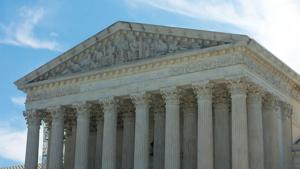
The U.S. Supreme Court on Tuesday declined to take up two cases over whether individuals with felony records can be permanently disarmed under the Second Amendment.
The court declined to hear Zherka v. Bondi and Duarte v. U.S. Each challenge targets laws banning individuals with felony convictions from possessing firearms.
Selim Zherka and Steven Duarte both petitioned the government to possess firearms despite previous non-violent felony convictions. Both Zherka and Duarte were convicted on fraud charges and have been denied the opportunity to possess firearms.
“The government should have had to identify a historical tradition of disarming people like Duarte, whose prior convictions were all for non-violent crimes and whom the government had never claimed was violent towards others,” lawyers for Duarte wrote in a brief to the court.
Lawyers for the government argued founding-era principles supported the death penalty for crimes such as counterfeiting, squatting, theft and smuggling. They argued firearm dispossession is a lesser threat to these crimes.
“Founding-era laws imposing capital punishment for serious crimes support the lesser restriction of disarmament in analogous circumstances,” lawyers wrote.
Justices on the court, however, have yet decide whether they will hear Vincent v. Bondi, a similar case on firearm possession and fraud.
Melynda Vincent, a social worker and nonprofit founder, was convicted of federal bank fraud in 2008 for attempting to pass a fraudulent check. While nonviolent, the felony prohibits Vincent from possessing firearms.
In Vincent v. Bondi, Melynda argued the prohibition violated her Second Amendment rights. She sought to have the law declared unconstitutional and for an injunction to prevent the U.S. attorney general from enforcing it against her.
After denials in lower court, Vincent sought relief from the U.S. Supreme Court.
“Text, history, and tradition show that the government cannot permanently disarm Ms. Vincent – a single mother, social worker, adjunct college professor, and nonprofit founder with two college degrees – soley because of one seventeen-year-old conviction for passing a bad check,” Vincent’s lawyers wrote in a petition to the Supreme Court.
The government disputed Vincent’s claims of a permanent ban from the possession of firearms. In a petition to the court, lawyers for the Trump administration said the government reinstated a process for convicted felons to gain their rights to possess firearms, leaving Vincent’s challenge on a faulty basis.
Even still, lawyers for the government argued the ban on firearm possession for felons aligns with the history and tradition of the Second Amendment.
“American colonies imposed that penalty even for non-violent crimes such as counterfeiting, squatting on Indian land, burning timber intended for house frames, horse theft, and smuggling tobacco,” lawyers for the government wrote in a brief to the court.
If the court were to pick up Vincent’s petition, it could have downstream effects on the arguments in Duarte’s and Zherka’s cases.
Entitlement fraud costs taxpayers billions … or trillions, dwarfing Minnesota
Since 2020, fraudsters have scammed at least $36 billion and as much as $3 trillion in tax money from federal entitlement programs, dwarfing the amount federal prosecutors claim was stolen in Minnesota’s federal food aid scandal known as Feeding Our Future, an investigation by The Center Square found.The Center Square reviewed all the statements about entitlement fraud cases issued by the U.S. Department of Justice from 2020 to last year, which did not include many of the cases prosecuted by U.S. Attorney’s offices in the various districts and any state prosecutions.Public safety net programs such as Social Security, Medicare, and Medicaid lost billions of dollars to scams each year, according to a review of 2,500 DOJ statements, press releases, and fact sheets. The amount ranged from $2.7 billion in 2022 to $14.5 billion in 2025.
Fraud experts said, if anything, the $36 billion figure is too low. “The number doesn’t surprise me,” said Linda Miller, president and co-founder of the Program Integrity Alliance, an independent 501(c)(3) nonprofit, nonpartisan organization that seeks to strengthen government integrity through data, evidence, and public-sector innovation. “That’s fraud that has been identified and investigated, so it represents a fraction of the actual fraud that has occurred or is occurring. Fraud is deceptive, and most agencies lack the tools to proactively prevent it, meaning the actual amount of fraud is much higher.”
Entitlement fraud has been in the news since November when the Manhattan Institute published an article about mostly Somali residents indicted for defrauding at least $250 million in federal food aid programs with allegations that some of the money went to fund terrorists in al-Shabaab.Matt Weidinger, a senior fellow at the conservative-leaning American Enterprise Institute, said in an interview that “(w)hatever the fraud that has been uncovered (in Minnesota) is doubtless a fraction of the fraud occurring nationwide.”He cited a 2024 U.S. Government Accountability Office report concluding that, based on data from 2018 to 2022, the federal government is defrauded of $233 billion to $521 billion annually. While the report examined federal spending overall, Weidinger noted that “entitlement programs constitute the bulk of federal spending and presumably fraud, too.”The public assistance that suffered the most from the fraud was Medicare and Medicaid, according to a review of Justice Department announcements. In the first half of last year alone, the agency announced that it had identified and investigated approximately $14 billion in fraud in the two federal health care programs, as well as Tricare, the health care program primarily for active-duty military, retirees, and their families.The figure is more than twice the $6 billion in fraud to federal health programs that the Justice Department identified in September 2020.The U.S. Sentencing Commission, an independent federal judicial body, concluded that from 2020 to 2024, health care fraud offenses increased by nearly 20 percent. The figures exclude improper payments, an unintentional form of government losses.
Fraud prosecutions around the U.S.
While government officials and experts agree that fraud in Minnesota is substantial, the $250 million figure found in the indictments would barely rank among the ten largest alleged scams from 2020 to last year. Since the Feeding Our Future scandal was announced on September 21, 2022, six other alleged frauds have been larger, with some having nearly as many defendants.Last month alone, the Justice Department announced two developments in scams centered in Maricopa County, Arizona.On Dec. 22, Gary Cox, CEO of Power Mobility Doctor Rx, was sentenced to fifteen years in prison and forced to pay $452 million in restitution for defrauding Medicare of $1 billion. According to the Justice Department, Cox and 78 co-conspirators targeted hundreds of thousands of Medicare beneficiaries and convinced them to sign up for medically unneeded pain creams and orthotic braces through misleading mailers, television ads and from offshore call centers.On Dec. 12, Alexandra Gehrke and her husband, Jeffrey King, agreed to pay $309 million in restitution for defrauding Medicare, Medicaid and Tricare of $900 million from 2022 to 2024. Known as the “glam-flam couple,” they administered unnecessary wound grafts that were ordered because of illegal kickbacks and applied to elderly and terminally ill patients. Each has been sentenced to more than a dozen years behind bars.Earlier, two medical professionals were convicted of defrauding federal medical entitlement programs.On March 6, Dehshid Nourian, a Texas pharmacist, forfeited $405 million in assets for defrauding and laundering money from federal workers. According to the Justice Department, Nourian and two other men defrauded the Department of Labor through the submission of fraudulent claims for prescription compound creams to injured federal workers. He was sentenced to 17 years and six months in prison.In September 2021, Dr. Francisco Patino of Wayne County, Michigan, was convicted of submitting more than $250 million of false and fraudulent claims submitted to Medicaid, Medicare, and other health insurance programs.According to the Justice Department, Patino excessively prescribed highly addictive opioids to his patients at his medical clinic in Livonia, prescriptions that forced his patients to receive lucrative spinal injections. If patients refused, Patino would take away their opioid prescriptions, prosecutors alleged. While another 21 defendants were sentenced in the conspiracy, Patino received the stiffest sentence—16.5 years in prison.In December 2022, Minal Patel of Atlanta, owner of LabSolutions LLC, was convicted of defrauding Medicare of $463 million. According to the Justice Department, Patel conspired with patient brokers, telemedicine companies, and call centers to target Medicare beneficiaries with calls falsely stating that Medicare covered expensive cancer genetic tests. In August 2023, Patel was sentenced to 27 years in prison.In September 2022, Biogen Inc., a Cambridge, Mass-based biopharmaceutical firm, reached a $900 million settlement for defrauding Medicare and Medicaid. According to a whistleblower’s complaint, from January 2009 to March 2014 Biogen gave speaker honoraria, training fees, consulting fees and meals to medical professionals who spoke or attended the company’s programs to convince them to prescribe three of its drugs to treat multiple sclerosis. Biogen denied the accusations, but said it settled the case to focus on its business pursuits.As large as those entitlement frauds were, even they scratch the surface of the nearly 300 cases the Justice Department announced from 2020 to last year. Most were announcements of convictions, guilty pleas, and sentencing. They involved not only doctors and medical firms, but also universities, hospitals, corporations, bookkeepers, accountants and state agencies.
Fraud experts reject the notion that scams are the natural byproduct of government contracts and oversight.In a 2023 article, Miller wrote that cabinet officials and agency leaders should be held responsible for the fraud under their watch. “Fraud is unfortunately not an issue many agency leaders prioritize,” she said in an interview, “and the number of programs that have scaled up their preventative tools and capabilities is woefully small.”Feds crack down in MNOn Dec. 18, Joe Thompson, then the acting U.S. Attorney for Minnesota, said scam artists have defrauded the state’s fourteen Medicaid programs of more than $9 billion. Governor Tim Walz, a Democrat, disputes the figure, though in October he announced that the state would delay fourteen Medicaid payments run by the state’s Department of Human Services. Since the fall, the Trump administration has seized on entitlement fraud in Minnesota, a state where Democrats occupy all the statewide elected offices and hold a narrow majority in the state senate. On Sept. 21, 2022, the Justice Department announced it indicted 47 defendants for committing $250 million of alleged fraud in a federally funded child nutrition program run by the nonprofit organization Feeding Our Future. Minnesota’s office of the legislative auditor released two detailed reports on fraud, on the federal-state childcare assistance program in 2019, and two federal food aid programs in 2024, both of which found fault with state agencies failing to detect scams earlier. Yet the chicanery did not become national news until this fall. On Nov. 19, an article by the Manhattan Institute alleged that the defendants, nearly all of whom were Somali, were sending some of the stolen entitlement money to Al Shabaab, an Islamic terrorist group fighting the government in a decades-long civil war in one of the poorest countries on earth. Two days later, President Trump announced on TruthSocial that he was terminating temporary protected status for Somalis in Minnesota, a designation given to them because the Horn of Africa nation suffered from not only civil war but also famine. The think tank’s accusations of diversions of the money to terrorists have not been proven, but the scandal hit a fever pitch after conservative populist influencer Nick Shirley on Dec. 26 posted a YouTube video of Somali-run daycare centers in Minnesota devoid of children. The video received more than 100 million views. On Jan. 5, the Trump administration froze federal subsidies for childcare, social services, and cash support for poor families in five states, all controlled by Democrats, including Minnesota. On Jan. 8, Vice President J.D. Vance announced the administration would create a new assistant attorney general for fraud detection — a position based in the White House.While the job, which will be subject to U.S. Senate confirmation, was national in scope, Vance said the official will “focus primarily” on Minnesota’s fraud scandals.
One year in: Reviewing Trump’s inaugural promises
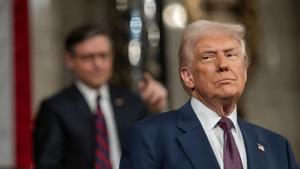
One year ago Tuesday, President Donald Trump told the nation its “golden age” had arrived, promising to spend his second term restoring stability at home and abroad through deportations, tariffs, and cutting government waste.
“For American citizens, January 20th, 2025, is Liberation Day,” he said during his inaugural address inside the U.S. Capitol. “It is my hope that our recent presidential election will be remembered as the greatest and most consequential election in the history of our country.”
After 365 days and 225 executive orders, where does progress stand on some of the president’s more notable priorities?
Immigration
After taking office, Trump promptly declared a national emergency at the southern border and began vigorous deportation proceedings.
“All illegal entry will immediately be halted, and we will begin the process of returning millions and millions of criminal aliens back to the places from which they came,” Trump said.
The U.S. Department of Homeland Security reported millions of immigrants have either been deported or self-deported since Trump took office.
In March, Trump instituted the Alien Enemies Act of 1798 to go after alleged members of Tren de Aragua, a transnational crime organization based in Venezuela.
“[Tren de Aragua] has engaged in and continues to engage in mass illegal migration to the United States to further its objectives of harming United States citizens, undermining public safety, and supporting the Maduro regime’s goal of destabilizing democratic nations in the Americas, including the United States,” Trump wrote in the March executive order.
The order has led to several military strikes on alleged drug boats and the capture of Venezuelan leader Nicolas Maduro.
“As commander in chief, I have no higher responsibility than to defend our country from threats and invasions, and that is exactly what I am going to do. We will do it at a level that nobody has ever seen before,” Trump said.
Energy
During his address, Trump also said he would declare a national energy emergency and use deregulation to open pathways for increased oil and gas production.
Since his address, the Environmental Protection Agency, Transportation Department and other federal agencies have reduced regulations for companies to procure more oil and gas.
Transportation Secretary Sean Duffy estimated that deregulation from his agency alone would save $600 million.
The Trump administration also revoked electric vehicle standards, particularly in California.
“We will build automobiles in America again at a rate that nobody could have dreamt possible just a few years ago,” Trump said.
Trade
President Trump also began to roll out his trade policies with foreign nations during his inaugural address.
“Instead of taxing our citizens to enrich other countries, we will tariff and tax foreign countries to enrich our citizens,” Trump said.
The administration quickly established the External Revenue Service to collect tariffs and other foreign revenues. Trump used powers under the International Emergency Economic Powers Act to implement his desired tariff rates.
He also announced tariffs on specific goods, no matter where they came from. This included a 25% tariff on foreign-made cars and 50% for steel and aluminum.
Several businesses quickly challenged Trump’s authority to issue tariffs under the Emergency Economic Powers Act. He has repeatedly begged for a favorable ruling from the court’s justices.
“The TARIFFS are responsible for the GREAT USA Economic Numbers JUST ANNOUNCED…AND THEY WILL ONLY GET BETTER!” Trump wrote in a social media post. “Also, NO INFLATION & GREAT NATIONAL SECURITY. Pray for the U.S. Supreme Court!!!”
Federal Workforce
Trump’s inaugural address also formally introduced the Department of Government Efficiency, an agency designed to root out “waste, fraud and abuse” in the federal government. The agency spearheaded mass firings, with some estimates suggesting around 300,000 federal workers were laid off.
As of January 2026, the department, often called DOGE, estimated that it has saved $215 billion in mass layoffs and the elimination of grant funds across.
“President Trump created the Department of Government Efficiency (DOGE) to bring accountability and transparency to federal spending, ensuring taxpayer dollars are spent wisely and effectively — and it has already saved taxpayers billions of dollars,” the White House said.
DEI
Trump also promised to end federal policies that “socially engineer race and gender into every aspect of public and private life.”
Over the last several months, his administration has cut millions in federal grants for diversity, equity and inclusion projects. He has proposed eliminating a $315 million grant for early education facilities and $77 million for teacher training programs that included topics on critical race theory.
Trump has been affirmed along the way as he implements these cuts. In August, the U.S. Supreme Court rescinded an order from a Boston judge that blocked $783 million worth of cuts made by the National Institutes of Health on gender identity and diversity, equity and inclusion.
The high court’s majority said the lower court judge did not follow its spring decision allowing the Trump administration to cancel education grants.
“When this court issues a decision, it constitutes a precedent that commands respect in lower courts,” Justice Neil Gorsuch wrote.
Report: Americans pay for 96% of Trump’s foreign tariffs
New research shows Americans are paying almost the entire cost of President Donald Trump’s tariffs, directly challenging his repeated assertion that foreign nations absorb the burden.
Nearly all tariff costs fall on American importers and consumers, underscoring that Americans – not foreign entities – are covering the expense, according to a report from the Kiel Institute for the World Economy, a German think tank.
“The claim that foreign countries pay these tariffs is a myth,” said Julian Hinz, research director at the Kiel Institute and one of the authors of the study. “The data show the opposite: Americans are footing the bill.”
The Kiel Institute report echoes similar studies conducted in the U.S., and reports from U.S. banks, economists and companies.
“The tariff functions not as a tax on foreign producers, but as a consumption tax on Americans,” the Kiel Institute authors wrote. “Every dollar of tariff revenue represents a dollar extracted from American businesses and households.”
The authors said that for every $100 in tariff revenue the U.S. government collects, $96 comes “out of American pockets” and $4 comes from lower foreign exporter profits.
The White House said foreign exporters will pay the cost of tariffs.
“The average tariff imposed by America has increased by almost tenfold under President Trump, and inflation has continued to cool from Biden-era highs,” White House spokesman Kush Desai told The Center Square. “The Administration has consistently maintained that foreign exporters who depend on access to the American economy, the world’s biggest and best consumer market, will ultimately pay the cost of tariffs, and that’s exactly what’s playing out.”
One reason exporters haven’t dropped prices could be that they think the tariffs won’t last, the Kiel Institute authors said.
“If exporters believe tariffs may be temporary or subject to negotiation, they have less incentive to make costly price adjustments,” the report noted. “Cutting prices in response to tariffs could set a precedent that invites further tariff increases in the future. Maintaining prices signals resolve and avoids a race to the bottom.”
Last October, Goldman Sachs economists projected that American consumers will pay 55% of the tariff costs, U.S. businesses will pay 22% and foreign exporters will pay 18%.
That same month, a study from Duke’s Department of Economics found that consumers ultimately paid more than the tariff cost on European wines during a 2019–21 trade dispute. The upshot was that Americans paid higher costs than the federal government collected in tariff revenue.
Not everyone agrees. Peter Navarro, a top trade adviser to Trump, said it comes down to bargaining power.
“Importers remit duties at the border, but who actually pays is determined by bargaining power, not paperwork,” he wrote in an op-ed in December. “In real markets, the burden falls on whoever can’t afford to lose access to the U.S. consumer.”
In November, the Congressional Budget Office changed some of its tariff projections after noting that foreign businesses were picking up about 5% of the cost of the tariffs through lower prices.
“We had previously projected that foreign exporters would not reduce their prices to offset increased tariff rates. We now project that foreign exporters will reduce their prices by an amount equivalent to 5% of the increase in tariff rate,” according to a CBO report.
Also in November, Trump issued an executive order exempting more than 200 food products from tariffs over concerns about higher grocery prices.
Trump has made tariffs a central part of his domestic and foreign agendas during his second term. Last April, Trump imposed import taxes of at least 10% on every U.S. trading partner. Since then, the president has suspended, changed, increased, decreased and reimposed tariffs under a 1977 law, the International Emergency Economic Powers Act.
A group of states and small businesses challenged Trump’s tariffs under the 1977 law, winning in two lower courts before the administration appealed to the Supreme Court. The high court agreed to hear the case on an expedited basis.
Exclusive: St. Paul church congregant says ‘we were surrounded’

A member of Cities Church said protesters who disrupted a Sunday morning service in St. Paul were seated throughout the congregation before the service began.
Caleb Phillips, speaking with The Center Square in an exclusive interview on Monday, said, “The entire congregation came alive. Individuals who are planted from front to back throughout the entire place stood up. It felt like we were surrounded, because they were all throughout the congregation.”
The U.S. Department of Justice is investigating the protest organized in part by Black Lives Matter Minnesota.
Video posted by the group shows protesters chanting “ICE out” and “justice for Renee Good” during the service. Another video circulating on social media shows a protester calling congregants “pretend Christians” and “comfortable white people.”
Phillips said it was a very tense situation for the congregation, and attendees initially were excited to have so many new people at the service.
“Most of them definitely were already sitting in the congregation with other congregants,” Phillips said. “Some of them had talked with these people, assumed that they were visitors or new attendees, and asked them a little bit about themselves, and just tried to welcome them.”
Published reports say the protesters discovered one of the church’s pastors works for U.S. Immigration and Customs Enforcement. A descriptor used is a “clandestine mission.”
Enhanced enforcement of federal immigration law has been increased in the Twin Cities in recent weeks. Tensions have escalated, with federal agents often impeded by people trying to prevent them from doing their work.
Phillips said that the church is standing by David Easterwood, a pastor at Cities Church and also head of a local U.S. Immigration and Customs Enforcement field unit. The congregation met again Sunday evening to finish the interrupted service; Phillips said Pastor Jonathan Parnell addressed the protest.
“He said that David Easterwood has worked in law enforcement for the entire time that he’s known him,” Phillips said. “He also said that David Easterwood is a good man and a just and righteous man.”
Phillips said the church’s support for Easterwood is not political.
“He is our pastor and our brother in Christ,” he said. “We love him and we are going to stand with him, regardless of what the current public opinion on his job is.”
Shootings each of the last two Wednesdays, one fatal, have added more tension and rhetoric in conversations. On Jan. 7, 37-year-old Renee Nicole Good drove onto a street with ICE officers conducting immigration enforcement. Her vehicle struck a federal agent and she was killed by what Homeland Security says were “defensive shots” fired.
Tricia McLaughlin, assistant secretary of Homeland Security, said Good’s vehicle was “attempting to run over our law enforcement officers” and that an officer fired after fearing for his life. Homeland Security Secretary Kristi Noem called the incident an “act of domestic terrorism.”
City and state leaders have disputed that account, saying ICE’s presence in the community has created chaos and harm.
On Jan. 14, an agent trying to detain a person believed illegally in the country was beaten by others before firing a defensive shot. Four suspects, including the initial person wanted by the agents, were taken into custody.
Widespread protests, school closures and violence have risen in the nearly two weeks since Good was killed.
Federal officials said Sunday’s protest will receive significant attention, as the Justice Department and the Federal Bureau of Investigation work together to pursue charges for federal crimes. Some of those crimes could include violations of the Freedom of Access to Clinic Entrances (FACE) Act of 1994, which prohibits obstruction or threats at abortion clinics and places of worship.
“There are already two prosecutors from my office on their way to Minneapolis,” said Harmeet Dhillon, assistant attorney general for the DOJ’s Civil Rights Division. “There is no more sacred right in our Constitution than the right to assemble and pray to God.”
Phillips, who has lived in the Twin Cities his entire life, explained in more detail the events of Sunday morning’s protest. He said the 10:30 a.m. service was proceeding normally until the sermon began.
“The lead pastor gets up, prays and tells us to open our Bibles to John Chapter 13,” he said. “And then this lady stands up in the back and she says, ‘Excuse me, pastor.’”
Phillips said she then accused the church of employing an ICE official as a pastor. As church members attempted to escort her out, dozens of people throughout the congregation then stood up and began chanting.
“A lot of the children just immediately started crying, because it was so sudden and so loud and just frightening for them,” Phillips said, explaining there were a couple different reactions from the congregation to the protest. “Some people helped the families that had young children … a lot of others stayed in the sanctuary, and we were either praying or singing or reading Scripture.”
Phillips said he read aloud from the Bible until he lost his voice and church staff eventually directed remaining members to a smaller chapel while police removed the protesters.
Church officials and Republicans have been responding to the protest, which quickly captured national attention far beyond Minnesota. Alex Plechash, chairman of the Republican Party of Minnesota, called out Democrats.
“When government closed churches, Democrats cheered,” Plechash said. “When mobs disrupt worship, Democrats look the other way. Governor Tim Walz and Senator Klobuchar: condemn this now!”
Phillips said it has been a surreal experience to see his church in the national news, but warned that there has also been a lot of misrepresentations about what actually happened.
“I was there, and I know exactly what happened,” Phillips said. “I’m seeing all these people who are like, ‘Well, I watched a livestream and I know exactly what happened,’ and it’s like, no, you really don’t.”
So far, Democrats both in Minnesota and nationally have been largely silent regarding the church protest. Others, like journalist Don Lemon, who was on the ground in the church covering the protest, defended the protestors’ actions.
“I imagine it’s uncomfortable and traumatic for the people here,” Lemon said. “But, that’s what protesting is about.”
Some commentators are calling for Lemon’s arrest. Dhillon directly addressed those calls during a Monday morning interview.
“Don Lemon himself has come out and said he knew exactly what was going to happen inside that facility,” Dhillon said. “He went into the facility, and then he began ‘committing journalism,’ as if that’s sort of a shield from being an embedded part of a criminal conspiracy. It isn’t.”
Dhillon promised there will be serious repercussions for those involved in the protest.
“Come next Sunday, nobody should think in the United States that they’re going to be able to get away with this,” she added. “The fullest force of the federal government is going to come down and prevent this from happening and put these people away for a long, long time.”
While Phillips said he hopes there is justice in the wake of the protest, he is grateful because of the reaction of “love, forgiveness, and prayer” from the congregation.
“Our response is love for one another,” he said. “Hopefully, in that, even the people who seem to hate us so deeply, will see Jesus Christ in us.”
Advocates celebrate MLK Day, slam Trump administration
Across the country, community leaders gathered to celebrate the life and legacy of civil rights leader Dr. Martin Luther King Jr. on Monday.
Some leaders took the opportunity to criticize the Trump administration. Early in the afternoon, there were no significant disruptions being reported.
Martin Luther King Jr. Day celebrates the Jan. 15 birthday of the civil rights leader on the third Monday of January. He would have been 97.
King delivered his “I have a Dream” speech on Aug. 28, 1963, in sight of the Lincoln Memorial and Washington Monument in Washington. There on Monday, community members gathered for the 21st annual peace walk and parade in the district. The holiday parade was first brought about in 1977 and has been celebrated in various forms since its conception.
“Established to honor the life and legacy of Rev. Dr. Martin Luther King, Jr., the parade united residents of Ward 8, the District, and the entire region in the national movement to make Dr. King’s birthday a federal holiday,” the organizer’s website reads.
Parade goers will march along MLK avenue in Washington D.C., under the theme: “The Struggle is Real! THE FIGHT IS STILL!”
Alongside the parade, organizers held a health and wellness fair. Participants handed out free groceries and provided resources to support mental health initiatives in the city.
The Smithsonian’s African American History and Culture Museum held events for families, including crafts, balloon art, participating in a service project and viewing a presentation on floral art.
In King’s hometown of Atlanta, Ebenezer Baptist Church held a service in honor of the federal holiday. The church, where King served as a copastor, began to honor Jan. 15 as a commemorative holiday in recognition of the civil rights leader shortly after his death.
The service hosted several key leaders in the church community, including Bernice King, Martin Luther King’s daughter and CEO of the King Center.
Bernice King criticized ongoing U.S. Immigration and Customs Enforcement measures across the country and the Trump administration’s efforts to restrict diversity, equity and inclusion programs during her speech. She compared immigration enforcement measures to retaliations against civil rights protestors.
“If no billy club, no biting dogs, no water hoses, no cattle prods could stop them or turn them around, then no ICE or ICE raids will turn us around,” King said. “It will not turn us around or freeze our efforts to protest because, as daddy said, ‘The greatness of America is the right to protest for rights.’”
Bernice King quoted her father’s final speech, “I’ve Been to the Mountaintop,” delivered on April 3, 1968. Her remarks came as the Trump administration has enhanced enforcement of federal immigration law.
To enter America from another country, if not a U.S. citizen, a visa or some other travel authorization is required to be presented at a port of entry.
The Department of Homeland Security has boasted of its efforts to deport immigrants. In October, the agency announced it removed 527,000 illegal immigrants.
ICE removals and other enforcement actions by the federal government has led to mass protests across the country.
“No DEI removals or DEI bans will break our resolve to create a just, equitable and inclusive society,” King added.
King directly criticized Trump over comments he made about the Civil Rights Act of 1964. In an interview with The New York Times, Trump said white people were “very badly treated” in the aftermath of the civil rights era protections.
King said Trump’s statement “rewrites history in a way that fuels fear and resentment.”
On his first day in office, Trump signed an executive order to end diversity programs in the federal government. The order led to termination of grants and programs, many established under the Biden administration, to promote “diversity, equity and inclusion” in the federal workforce.
“To my white brothers and sisters, the Civil Rights Act was never meant to harm you; it was meant to heal a nation broken by injustice,” King said. “Fairness does not steal from you. Justice strengthens us all.”
In New York City, criticism of Trump continued during celebrations of the federal holiday. House Democratic Minority Leader Hakeem Jeffries criticized the president at an event hosted by the Brooklyn Academy of Music in honor of King.
“I think I can say clearly in Brooklyn, the Reverend Dr. Martin Luther King Jr. is the only we celebrate here,” Jeffries said. “Not the wannabe authoritarian down in Washington, D.C.”
In Los Angeles, a parade celebrating Martin Luther King Jr. featured marching bands, floats and community groups. The Los Angeles Sentinel, a historically African American owned newspaper, organized the event.
The parade featured notable celebrities including Cedric the Entertainer as part of the festivities.
In Dallas, community members also celebrated King’s legacy and commitment to civil rights in a parade on Monday. The nonprofit Hope, Encourage, Love, Protect – HELP, as it is known by acronym – organized the city’s parade.
“This is more than a parade – it’s a movement of unity, love, and determination,” HELP’s website reads. “Step forward with us to honor Dr. King’s dream, inspire future generations, and show the world that Dallas stands strong when we walk together.”
European nations join together to oppose Trump’s plans for Greenland

U.S. allies in Europe are banding together against President Donald Trump’s ultimatum: tax imported goods from their countries unless Denmark surrenders control of strategically important Greenland.
Trump said that U.S. ownership of Greenland – an 800,000-square-mile Arctic island and Danish territory – is vital to national security. He says Denmark cannot defend its mineral-rich territory from China and Russia. On Monday, Trump criticized NATO, saying the alliance has failed to compel Denmark to comply.
“NATO has been telling Denmark, for 20 years, that ‘you have to get the Russian threat away from Greenland,'” Trump wrote in a social media post. “Unfortunately, Denmark has been unable to do anything about it.”
Trump has warned that NATO allies who oppose his plans to acquire Greenland will face escalating tariffs: a 10% duty on all exports to the U.S. from Denmark, Norway, Sweden, France, Germany, the United Kingdom, the Netherlands, and Finland beginning Feb. 1, rising to 25% by June 1.
Denmark, Finland, France, Germany, the Netherlands, Norway, Sweden and the United Kingdom responded in unison.
“We stand in full solidarity with the Kingdom of Denmark and the people of Greenland,” they said in a joint statement. “Building on the process begun last week, we stand ready to engage in a dialogue based on the principles of sovereignty and territorial integrity that we stand firmly behind. Tariff threats undermine transatlantic relations and risk a dangerous downward spiral. We will continue to stand united and coordinated in our response. We are committed to upholding our sovereignty.”
The group also said the troops recently sent to Greenland were part of a preplanned Danish military exercise, dubbed “Arctic Endurance,” that shows they are committed to Arctic security.
“It poses no threat to anyone,” the group said.
NATO Secretary General Mark Rutte said he had spoken with Trump after the U.S. president threatened allies with fresh tariffs.
“We will continue working on this, and I look forward to seeing him in Davos later this week,” Rutte wrote in a social media post on Monday.
Trump has said NATO should be leading the effort to get Denmark to hand over Greenland, but Rutte has tried to keep NATO out of it.
Denmark’s Prime Minister Mette Frederiksen said, “Europe will not be blackmailed.”
European Union Commission President Ursula von der Leyen said she spoke to counterparts after Trump’s tariff threats.
“Together we stand firm in our commitment to uphold the sovereignty of Greenland and the Kingdom of Denmark,” she said. “We will always protect our strategic economic and security interests. We will face these challenges to our European solidarity with steadiness and resolve.”
United Kingdom Prime Minister Keir Starmer said Greenland and Denmark will decide the future of Greenland.
“Our position on Greenland is very clear – it is part of the Kingdom of Denmark and its future is a matter for the Greenlanders and the Danes,” he said. “We have also made clear that Arctic Security matters for the whole of NATO and allies should all do more together to address the threat from Russia across different parts of the Arctic.”
Trump’s tariff threats wouldn’t help, the prime minister said.
“Applying tariffs on allies for pursuing the collective security of NATO allies is completely wrong,” Starmer said. “We will of course be pursuing this directly with the U.S. administration.”
On Sunday, Trump connected Greenland to his failure to win the Nobel Peace Prize last year in a text message to Norwegian Prime Minister Jonas Gahr Støre.
“Considering your Country decided not to give me the Nobel Peace Prize … I no longer feel an obligation to think purely of Peace, although it will always be predominant, but can now think about what is good and proper for the United States of America,” Trump said in the message.
Norway’s Prime Minister Jonas Gahr Støre confirmed receiving the message and called for de-escalation.
“Norway’s position on Greenland is clear,” Støre said Monday. “Greenland is a part of the Kingdom of Denmark, and Norway fully supports the Kingdom of Denmark on this matter. We also support that NATO in a responsible way is taking steps to strengthen security and stability in the Arctic.”
Støre said the Noble Peace Prize wasn’t his to award.
“As regards the Nobel Peace Prize, I have clearly explained, including to president Trump what is well known, the prize is awarded by an independent Nobel Committee and not the Norwegian Government,” Støre said.
Trump wants to buy the sparsely populated island, but Denmark and Greenland officials have stated it’s not for sale, and public polling shows Greenlanders overwhelmingly oppose joining America.
Greenland, with about 57,000 people, relies on Danish subsidies and shrimp fishing. A 2025 poll found 85% of Greenlanders opposed joining America.
Experts say as ice melts in the Arctic, more shipping and military ship routes could open in the region, changing the global trade and the defensive relationship between the U.S. and Russia. More mining and drilling exploration could also open up.
In 1867, when President Andrew Johnson bought Alaska, he also considered buying Greenland. The U.S. also tried to buy Greenland in 1946. The United States proposed to pay Denmark $100 million in gold to buy Greenland, according to documents in the National Archives. The sale never went through, but the U.S. got the military base it wanted on the island.
Pituffik Space Base, previously known as Thule Air Base, is located in Greenland. Pituffik SB is locked in by ice nine months out of the year, but the airfield is open and operated year-round. Pituffik exists due to agreements between the U.S. and the Kingdom of Denmark, specifically addressing mutual defense, according to the Space Force.
DOJ investigating anti-ICE protest at St. Paul church
The U.S. Department of Justice is investigating a protest that disrupted a Sunday morning church service in Minnesota.
Video posted by Black Lives Matter Minnesota, one of the organizers for the event, shows anti-ICE protestors disrupting a service at Cities Church in St. Paul. Protesters chanted “ICE out” and “Justice for Renee Good” while the service was in progress.
Another video, which has gone viral on social media, showed a protester confronting members of the congregation calling them “pretend Christians” and “comfortable white people.” Reports allege that the protestors discovered one of the church’s pastors works for U.S Immigration and Customs Enforcement, calling the protest a “clandestine mission.”
This is just the latest development following the killing of 37-year-old Renee Nicole Good by an ICE officer on Jan. 7. Good had driven into a roadway where agents were conducting enhanced immigration enforcement.
Tricia McLaughlin, assistant secretary of Homeland Security, said Good’s vehicle was “attempting to run over our law enforcement officers.” She also said the officer feared for his life and fired defensive shots.
Homeland Security Secretary Kristie Noem called Good’s actions an “act of domestic terrorism.”
City and state leaders have denied this version of events though, stating that ICE’s presence in the community is creating chaos and harm. Since the shooting, Minneapolis-Saint Paul has faced widespread protests, school closures, and violence.
Trump administration officials said the federal government is investigating Sunday’s protests, calling it a “heinous act.”
“There are already two prosecutors from my office on their way to Minneapolis, and they’ll be there this morning. We have an FBI team assembled and local prosecutors as well,” said Harmeet Dhillon, the assistant attorney general for the DOJ’s Civil Rights Division, on Monday morning.
“This is going to get the highest attention from the Department of Justice, because there is no more sacred right in our Constitution than the right to assemble and pray to God, and there are federal laws that protect that right,” Dhillon added. “What happened here was a shameful exercise of virtue signaling, disruption, fear, terror.”
U.S. Attorney General Pam Bondi said that federal officials will act to prosecute federal crimes, especially if state officials refuse to take action.
Church officials and Republicans have also been responding to the protest, which quickly captured national attention far beyond Minnesota.
Alex Plechash, chairman of the Republican Party of Minnesota, called out Democrats following the protest.
“When government closed churches, Democrats cheered,” Plechash said. “When mobs disrupt worship, Democrats look the other way. Governor Tim Walz and Senator Klobuchar: condemn this now!”
So far, Democrats both in Minnesota and nationally have been largely silent regarding the church protest.
Use of Army troops not appearing imminent

Amid mentions by the president, use of active-duty Army troops on American soil to quell unrest via an 1807 federal law hasn’t taken place since verdicts announced in 1992 following the beating of Rodney King.
Published reports indicate troops are ready to go from Alaska to Minnesota, and second-term Republican President Donald Trump’s comments indicate he’s more aware of his choice than actively moving toward using it. A social media post the mercurial 79-year-old made Thursday led to speculation; Friday at the White House he said “right now” wasn’t a time to use the Insurrection Act.
“If I needed it, I’d use it,” he said.
Enhanced enforcement of federal immigration law has taken place in Minneapolis and St. Paul by U.S. Immigration and Customs Enforcement and the U.S. Customs and Border Patrol. Twin Cities’ residents have clashed with agents trying to do their jobs, leading to shootings on consecutive Wednesdays.
Renee Good, 37, lost her life on Jan. 7. Last week, a person Homeland Security said is illegally in the country was being detained when others came to his aid and began to beat the federal agent. He was eventually taken into custody, and a suspect was shot by the agent.
Operation Metro Surge, says Homeland Security, has been successful in removing people illegally in the country with connection to “perpetrators of fraud, thieves, and drug traffickers.” Sexual abuse of a child, second-degree sexual exploitation of a minor and aggravated assault convictions are also on the record of some detained by federal agents as recently as this past week.
Published reports not confirmed or denied by the Pentagon indicated infantry divisions of the 11th Airborne Division have ready-to-deploy orders. The troops’ training in cold conditions in Alaska has been cited in the selection.
In 1992, four police officers were acquitted of beating King in Los Angeles. Republican one-term President George H.W. Bush used the Insurrection Act to help bring peace back to the city as cable television – at the time, having somewhat novel abilities – played the demonstrations live to captive audiences.
In 2020, George Floyd was killed in Minneapolis at the hands of a police officer during a detainment. Trump threatened to use the law then but did not.
The president has also hinted at the law on other occasions during the past 12 months of stepping up immigration enforcement.
To enter America from another country, if not a U.S. citizen, a visa or some other travel authorization is required to be presented at a port of entry.