Center Square
Everyday Economics: An uneven economy, stabilizing housing, why measurement matters

The week ahead begins with Martin Luther King Jr. Day, a moment that invites reflection not only on civil rights, but on how economic systems function – and malfunction – when opportunity is unevenly distributed. That reflection is not merely philosophical. A substantial body of economic research shows that discrimination and segregation impose real, measurable costs on economic output.
Economists have long argued that barriers faced by women and Black Americans distort occupational choice, weaken incentives to invest in human capital, and misallocate talent away from its most productive uses. Quantifying those effects, research by Hsieh, Hurst, Jones, and Klenow estimates that declining barriers to opportunity for women and Black Americans accounted for roughly 15–20% of growth in U.S. output per worker since 1960. In other words, discrimination was not just inequitable – it acted as a persistent drag on growth, suppressing GDP by trillions of dollars over time. Other work shows that racial segregation and labor-market discrimination reduce earnings, employment, and educational attainment in ways that compound across generations, further lowering economy-wide output. Put differently: inclusion is not just a moral imperative; it is a growth strategy. When large segments of the population are prevented from fully participating in the economy, the entire economy underperforms.
That theme – an economy whose headline numbers can mask deeper structural imbalances – runs through this week’s data as well.
The economic calendar itself is relatively light, but the releases we do get will help clarify how growth, housing, and inflation are evolving as we head into 2026. The key reports are December pending home sales and the delayed November personal income, personal spending, and PCE inflation data. None are likely to change the macro narrative outright, but all will sharpen it.
Housing: affordability helps, seasonality still bites
The December pending home sales report should be interpreted through a seasonal lens, and it is worth being explicit about what “seasonality” means in housing markets.
Housing activity reliably slows at the end of the year for reasons that have little to do with interest rates or demand fundamentals. Cold weather in much of the country reduces showings and discourages moves. Christmas, year-end travel, school breaks, and holiday spending shift household attention away from buying and selling homes. Listings decline, showings drop, and fewer contracts are signed – even in years when affordability or demand is improving.
Against that backdrop, Zillow data show that housing affordability improved meaningfully at the end of 2025, with typical monthly mortgage payments down more than 5% from a year earlier. That improvement matters. Lower payments expand the pool of qualified buyers and help stabilize demand at the margin, especially for first-time buyers who are most sensitive to monthly costs.
The Zillow data also capture the seasonal slowdown clearly. Newly pending listings fell sharply on a month-to-month basis in December, a pattern that repeats every year. Importantly, however, activity still ran modestly above year-ago levels, suggesting that improved affordability is providing a floor under demand even if it cannot fully overcome the calendar-driven slowdown in activity.
This is also where measurement matters – and why waiting for the National Association of Realtors’ pending home sales index can sometimes obscure what is already visible in the market.
Zillow’s housing indicators are based on hard counts of observed behavior: listings entering the market, homes going under contract, and buyer engagement occurring in real time on its platform. These data reflect what actually happened, not what respondents believe happened or expect to happen.
By contrast, the NAR pending home sales index is survey-based, relying on responses from real estate professionals to estimate contract activity. While valuable for historical continuity, survey data are inherently noisier, subject to response bias, and often revised as more information becomes available.
That distinction is especially important right now. When activity is already suppressed by holidays and weather, hard-count data provide a more stable and complete read of underlying demand. The NAR data remain useful as confirmation, but by the time they are released, much of the story has already played out in higher-frequency housing indicators.
The takeaway is straightforward: a month-over-month decline in pending sales in December would not signal renewed weakness. It would largely reflect seasonal effects that recur every year. The more meaningful signal is the year-over-year comparison, which is likely to look firmer than earlier in 2025 as affordability conditions gradually improve and carry into the spring selling season.
Income and spending: steady on the surface, uneven underneath
The delayed November personal income and spending report will arrive against a mixed but increasingly familiar macro backdrop.
The labor market has cooled, but it has not collapsed. Layoffs remain low, consistent with still-tight labor markets in some sectors. At the same time, hiring has slowed, limiting upside in aggregate income growth. This “low-fire, low-hire” environment tends to stabilize employment levels while dampening momentum in wages and total income.
That makes a strong acceleration in personal income unlikely in November.
Spending, however, likely tells a different story. November marked the beginning of the holiday shopping season, and private-sector data suggest consumers continued to spend, even as income growth softened. That combination points to downside risk to the personal saving rate, particularly if households relied on credit or drew down accumulated savings to maintain consumption.
But the most important nuance comes from who is doing the spending.
U.S. consumption has increasingly become K-shaped. The top 20% of households by income—those earning roughly $175,000 or more per year—now account for nearly 60% of total personal outlays, the highest share in data going back to 1989. Much of the increase in spending concentration occurred during periods of strong asset-price appreciation, including the late 1990s and the post-pandemic era, when equity values surged.
This matters for interpreting the personal spending data. Aggregate consumption can look resilient even as large portions of the population experience financial strain. An economy that relies heavily on high-income households—whose spending is tied closely to stock market performance—can appear stable right up until asset prices or confidence falter.
In other words, strength in headline consumption does not necessarily signal broad-based economic health.
Inflation: PCE data will help, but it won’t fully clean up the noise
The November Personal Consumption Expenditures (PCE) inflation report will also draw attention, particularly after recent CPI data appeared softer than expected.
Conceptually, PCE inflation is a broader and more flexible measure than CPI. It uses a chain-weighted methodology that accounts for changes in consumer behavior and covers a wider range of expenditures. For that reason, it is the Federal Reserve’s preferred inflation gauge.
However, it is important not to overstate its precision in this release. PCE inflation relies heavily on CPI and PPI inputs, and earlier CPI data were affected by data-collection disruptions that introduced downward bias. As a result, some of that noise can carry through into the PCE estimates.
That means a soft November PCE print would be directionally encouraging – but not definitive. Policymakers and markets will need several clean readings before concluding that inflation pressures are decisively fading again.
Putting it all together
This week’s data are unlikely to shift the macro narrative on their own, but they do sharpen the contours of the current expansion.
Housing activity continues to stabilize as affordability improves, even as predictable seasonal forces suppress December contract activity. Consumer spending remains resilient in aggregate, but that resilience rests increasingly on higher-income households and asset-market performance rather than broad-based income growth. Inflation readings may continue to look softer, but measurement issues mean policymakers and markets should be careful not to over-interpret a single print.
The economy is still growing, but it is doing so in a more uneven and fragile way – one that leaves it increasingly sensitive to labor-market momentum, financial conditions, and confidence as we move deeper into 2026.
U.S. Supreme Court to hear Second Amendment case Tuesday

The U.S. Supreme Court will hear oral arguments on Tuesday in a case over whether states can prevent concealed carry holders on private property that is open to the public.
Wolford v. Lopez challenges a Hawaii law that prevents concealed carry permit holders from bringing handguns to beaches, bars, restaurants that serve alcohol and gas stations without the owners permission.
The Hawaii law stems from the Supreme Court’s decision in New York State Rifle & Pistol Association v. Bruen, where justices struck down a New York law requiring concealed carry holders to display the need to defend themselves.
“The Second and Fourteenth Amendments protect an individual’s right to carry a handgun for self-defense outside the home,” Justice Clarence Thomas wrote in the court’s 2022 decision.
Thomas further elaborated that gun restrictions should only be upheld if they are consistent with the “historical tradition” of the United States.
In 2023, Hawaii implemented a law making it a misdemeanor for concealed carry holders to bring a gun on private property. The misdemeanor carries a sentence of up to a year in prison.
Hawaii residents with concealed-carry permits challenged the state’s law. The residents, alongside a gun-rights group, argued that the government has no imperative to prohibit citizens from carrying concealed weapons in public spaces.
“There is no comparable historical – or even modern-day – tradition of allowing the government to create a no-carry default rule for private property open to the public,” lawyers for the residents wrote to the Supreme Court.
Lawyers for the gun-rights group also pointed to the disproportionate effect Hawaii’s law will have on rural areas with parks and beaches.
“These bans are applicable to hundreds of thousands of acres of public land throughout Hawaii, even though the State allows hunting with firearms in many areas of these parks and forests,” lawyers wrote in a petition to the court.
In a brief to the Supreme Court, Hawaii Attorney General Anne Lopez said the state instituted its law to protect citizens from hosting armed individuals on private property. Lopez points to a longstanding history of limiting the right of Hawaiian citizens to carry weapons in public spaces.
“Property owners in Hawai’i could assume that – unless they made express arrangements to the contrary – firearms would not be carried onto their property, even if it was open to the public,” Lopez wrote in a brief to the nation’s highest court.
Lawyers for Hawaii also argue that the Second Amendment, at the time of the nation’s founding, did not include the right to enter private property with a weapon.
“The Founders recognized a property owner’s right to exclude,” the lawyers wrote. “Accordingly, at the Founding, a person had no right to enter private property with a gun unless he had the owner’s express consent or an implied license based on local law or custom.”
In lower court litigation, Hawaii pointed to a 1771 New Jersey law and an 1865 Louisiana law that explicitly required consent before entering a private property of any kind with a gun. Lower courts upheld Hawaii’s arguments on the basis of these laws.
“The overall purpose of all the laws was plainly to protect a property owner’s right to exclude firearms,” lawyers for Hawaii wrote. “Variation in the specific reasons why owners might wish to preclude guns – from preventing unwanted hunting to promoting safety, comfort or self-defense – does not undermine the basic fact that laws that vindicate the fundamental right to exclude are well within the tradition of American firearm regulation.”
Lawyers for the concealed-carry holders argued Hawaii relied on faulty evidence to assert other laws were similar to the state’s ban. They argued certain public spaces, like beaches and public parks, would not be considered in the original bans, which fundamentally alters the state’s argument.
“Under that approach, ‘the original understanding of the Second Amendment,’” the lawyers wrote, referencing a lower court judge’s opinion, “‘Would not apply to any new types of public spaces that would develop in the future.’”
Gun rights and gun control advocates will be watching as the justices hear arguments in one of the court’s most consequential Second Amendment cases of the year, with a decision expected by July.
Trump’s health plan could save billions or add billions

An early appraisal of President Donald Trump’s health care plan found the changes could save $50 billion or add as much $350 billion in new costs over a decade.
Trump on Thursday called on Congress to enact his Great Healthcare Plan, which he said would lower drug prices and insurance premiums. The plan has parts similar to the Republican’s Lower Health Care Premiums for All Americans Act, which the Congressional Budget Office estimated could save $35.6 billion over a decade.
However, the CBO also estimated it would decrease the number of people with health insurance by an average of 100,000. It also estimated it would reduce premiums by about 11% through 2035.
Trump’s proposal won’t change Medicare, Medicaid or the health insurance plans people get through their jobs.
An analysis from the Committee for a Responsible Federal Budget estimated the cost-reducing provisions of Trump’s plan could reduce primary deficits by about $50 billion over a decade. Depending on the details, Trump’s proposed Affordable Care Act changes could generate some additional savings or increase primary deficits by up to $350 billion, the group estimated.
Trump’s plan would codify his Most Favored Nation drug price deals with drug makers, allow for more over-the-counter drugs, fund cost-sharing reductions under the ACA, make changes to payments to pharmacy benefit managers and increase price transparency for insurers and providers.
The plan proposes sending money directly to consumers, rather than insurers. Trump has said for months that he wants to send money to Americans, not insurance companies.
“Obamacare was designed to make insurance companies rich,” Trump said in a video message announcing the plan. “I want to end this flagrant scam and put extra money straight into the healthcare savings account in your name, and you go out and buy your own healthcare, and you’ll make a great deal, you’ll get better healthcare for less money – that way you can choose the care that is right for your family.”
The details matter. Committee for a Responsible Federal Budget noted “the fiscal impact of this provision depends heavily on what the White House means.”
“The White House’s Great Healthcare Plan contains some ideas that could help to modestly reduce health care costs for the federal government and consumers of health care,” Committee for a Responsible Federal Budget wrote. “However, authorizing up to $350 billion of additional subsidies to cover premiums and out-of-pocket costs would be extremely costly, regardless of whether those subsidies go directly to the insurance company or to health consumers.”
SCOTUS to hear Fed firing case Wednesday

The U.S. Supreme Court will hear arguments on Wednesday to decide whether President Donald Trump can fire Lisa Cook, a member of the Federal Reserve Board of Governors.
In Trump v. Cook, justices of the Supreme Court will review a decision from a lower court judge that reinstated Cook after Trump fired her.
President Joe Biden appointed Cook to a 14-year term on the Federal Reserve’s board of governors in 2023. Members on the board are appointed by the president and confirmed by the U.S. Senate to serve the terms.
Trump accused Cook of committing mortgage fraud before she joined the Federal Reserve. He said Cook listed homes in both Michigan and Georgia as her “primary residence” for the next year.
“At a minimum, the conduct at issue exhibits the sort of gross negligence in financial transactions that calls into question your competence and trustworthiness as a financial regulator,” Trump wrote in a letter to Cook in August 2025.
According to the Federal Reserve Act, members of the board of governors can only be fired by the president “for cause.” Cook sued, asking the court to be reinstated.
Judge Jia Cobb, a U.S. District Court judge for the District of Columbia, issued a temporary order to reinstate Cook as the litigation continued. Cobb argued Cook has similar rights to a lower-level civil servant or teacher and is entitled to notice and a hearing before being fired.
“This theory is untenable and would wreak havoc on sensitive presidential decision-making,” the Trump administration wrote in a petition to the Supreme Court. “The statutory text at issue here imposes only the former, requiring ‘cause’ but saying nothing about notice of a hearing.”
Cobb also argued that Cook’s firing needed to be based on an action she committed while in office at the Federal Reserve.
“The most relevant sources of preexisting law are the federal statutes governing presidential removals of other executive officers – statutes that limited removals to instances of inefficiency, neglect or malfeasance in office,” lawyers for Cook wrote.
It is unclear whether justices on the Supreme Court will weigh in on the merits of Cook’s case, instead, they are more likely to decide whether the lower court’s pause is justified. However, the justices have already heard oral arguments in Trump v. Slaughter, a case challenging Trump’s removal of Rebecca Slaughter, a member of the Federal Trade Commission.
If the court upholds the president’s authority, it could undo an almost 90-year-old precedent that prevented President Franklin Delano Roosevelt from firing members of federal boards like the FTC.
“The court said that where a multi-member commission exercises substantial executive power, the president has the plenary power to remove that official,” said Kannon Shanmugam, a Supreme Court and appellate litigator.
The Supreme Court heard oral arguments in Trump v. Slaughter on Dec. 8 and will issue a decision in the case by July.
Trump v. Cook represents another test of the president’s relationship with the Federal Reserve. Over the last several months, Trump has publicly criticized Federal Reserve Chair Jerome Powell over his decision not to lower interest rates.
“‘Too Late’ MUST NOW LOWER THE RATE. No Inflation! Let people buy, and refinance, their homes!,” the president wrote on social media.
The Federal Reserve lowered interest rates three times in 2025. The relationship between the president and Powell intensified recently as the U.S. Department of Justice launched an investigation into the chair.
“The threat of criminal charges is a consequence of the Federal Reserve setting interest rates based on our best assessment of what will serve the public, rather than following the preferences of the President,” Powell said in a video posted Jan. 11 announcing the investigation.
After hearing oral arguments on Wednesday, the Supreme Court will decide whether the order to keep Cook on the board will remain in place by July.
Committee highlights failures of Afghan vetting, as funding for refugees in limbo

Amid a scathing committee hearing on the vetting process of Afghan parolees under the Biden administration, nearly $6 billion in continual funding for refugees is poised to be voted on in Congress.
The Senate Judiciary Committee hosted a hearing last week on the Biden administration’s vetting practices surrounding nearly 100,000 Afghan evacuees admitted to the U.S. following the 2021 pullout of American forces from Afghanistan, under Operation Allies Welcome.
U.S. Sen. John Cornyn, R-Texas, says the Biden administration gave an “easy pass” to hundreds of thousands of noncitizens, including the Afghan evacuees, that he argues would “not be eligible to come, but for this discretionary issuance.”
Officials testifying during the hearing admitted that many of the parolees were admitted into the U.S. without critical biographic data, including a person’s name and date of birth. They noted that 1,300 Afghan nationals were admitted into the country before any biometrics, fingerprints, or photographs were required to run background checks on the individuals.
Officials admitted that several agencies lost track of the evacuees once they were resettled in the country, across over 176 communities, and that the government hasn’t been able to locate many of them.
Cornyn highlighted that “18,000 of them were known or suspected terrorists” with the National Counter Terrorism Center identifying “2,000 individuals with ties to terrorist organizations and is actively working with the FBI on their cases.”
U.S. Sen. Josh Hawley, R-Mo., pointed out that “Congress appropriated one and a half billion dollars for this operation on the part of the Biden admittance of all these refugees and parolees.”
The senator claimed that “tens of millions of dollars, went to pro terrorist organizations in this country that were supposed to help monitor these refugees and move them along the parole system, but in fact, took the money and did who knows what with it.”
Hawley highlighted the recent allegations of fraud surrounding the Somali community in Minnesota and how it parallels those of Afghan refugees.
“No, we’re going to find that it happened in this case, in this instance, in multiple states, tens of millions of taxpayer dollars going to organizations that support Hamas, that support terrorism, that have praised the attacks of Oct. 7, that have consistently defended, apologized for and justified terrorist attacks around the nation, around the world, that got money from our own government in order to participate in this boondoggle,” Hawley lamented.
Congress is poised to vote on continued funding for the refugee program, which skyrocketed under the Biden administration as part of the Refugee and Entrant Assistant programs.
The funding rose from less than $2 billion in fiscal year 2021, the last year of President Donald Trump’s first term, to nearly $9 billion the next fiscal year – the first year of former President Joe Biden’s administration.
Despite the government admitting many of the refugees were unvetted, taxpayers could remain on the hook for billions of dollars, as many of these refugees continue to qualify for over a dozen taxpayer-funded benefits.
As part of Operations Allies Welcome, the Biden administration admitted nearly 200,000 Afghan evacuees between 2021 and 2023.
The influx of Afghan refugees contributed significantly to the substantial increase in refugee funding.
The benefits refugees are eligible to receive include: Supplemental Security Income (SSI), Supplemental Nutrition Assistance Program (SNAP), Women, Infants and Children (WIC), HUD Public Housing and Section 8 housing vouchers, emergency Medicaid, Affordable Care Act health plans and subsidies, full-scope Medicaid, Children’s Health Insurance Program (CHIP), federal student aid and Pell grants, REAL ID, Workforce Innovation and Opportunity Act services, refugee resettlement programs through the Office of Refugee Resettlement and Temporary Assistance for Needy Families (TANF), according to the National Immigration Law Center.
For those who didn’t qualify for SSI or TANF, refugees were eligible for up to 12 months of Refugee Cash Assistance (RCA) through the ORR.
In addition, many refugees qualified for employment assistance through Refugee Support Services, which included: childcare, transportation, “employability services,” job training and preparation, job search assistance, placement and retention, English language training, translation and interpreter services and case management, according to the Administration for Children and Families Office of Refugee Resettlement.
The ORR also noted that “some clients may be eligible for specialized programs such as health services, technical assistance for small business start-ups and financial savings.”
Many refugees also qualified for “immigration-related legal assistance” to assist them “on their pathway to obtaining a permanent status.”
Congressionally-appropriated spending on refugee and migrant assistance programs rose sharply under the Biden administration, totaling roughly $30 billion over those four years.
In particular, lawmakers significantly increased appropriations for the Refugee and Entrant Assistance programs – housed in the U.S. Department of Health and Human Services – which provide benefits to eligible refugees.
In fiscal year 2021, the last year of Trump’s first term, Congress appropriated $1.91 billion for REA programs. That number shot up to $8.92 billion the following year, coinciding with the influx of Afghan refugees and record-high border crossings.
Total federal assistance for refugee programs in fiscal year 2023, however, reached $10 billion, as an OpenTheBooks investigation highlighted.
Approximately $6.42 billion of that amount came from the annual HHS appropriations bill, while lawmakers added an additional $2.4 billion of “emergency” designated spending on REA programs in a supplemental appropriations bill. The remaining $1.53 billion, tucked into another supplemental appropriations bill, went to the Department of State for “migration and refugee assistance.”
Spending on REA programs decreased slightly in the last fiscal year of Biden’s term, with the fiscal year 2024 appropriations bill and another supplemental emergency appropriations bill together allocating more than $8.6 billion.
Despite the multitude of costly taxpayer services provided to refugees, some groups in particular, including Afghans, continue to have higher rates of poverty, many continuing to rely on taxpayer-funded programs.
The Migration Policy Institute reported that Afghan refugees “are less likely to be proficient in English, have lower educational attainment, and lower labor force participation” compared to other immigrants in the U.S. Additionally, “compared to both the native born and the overall foreign-born population, they are much more likely to be living in poverty.”
The institute highlighted the “relatively low labor force participation rate” among Afghan immigrants ages 16 and older, showing that in 2022, 61% were in the civilian labor force, compared to 67% for other immigrant populations and 63% for U.S.-born individuals.
The funding is part of a set of appropriations bills up for vote that fund federal agencies in fiscal year 2026, including a bill for Labor, Health and Human Services, and Education, which allocates $5.69 billion for refugee assistance services.
EU threatens to blow up trade deal over Trump’s plans for Greenland

A top European official said President Donald Trump’s comments could sink a trade deal between the U.S. and the 27-nation European Union.
Manfred Weber, president of the European People’s Party, the largest political party in the EU, said the party wouldn’t back a deal with the U.S.
“The EPP is in favour of the EU–U.S. trade deal, but given Donald Trump’s threats regarding Greenland, approval is not possible at this stage,” he wrote in a post on X. “The 0% tariffs on U.S. products must be put on hold.”
Weber’s comments came after Trump said Saturday that he will impose fresh tariffs on European countries until the U.S. reaches a deal to annex Greenland.
Trump wants to buy the sparsely populated island, but hasn’t ruled out other methods for acquiring the semi-autonomous Danish territory. Officials from Denmark and Greenland have said the nation isn’t for sale, and public polling shows Greenlanders don’t want to join America.
European Union Commission President Ursula von der Leyen said the EU stands behind Denmark, which owns the semi-autonomous Arctic island.
“The EU stands in full solidarity with Denmark and the people of Greenland,” she wrote in a post on X. “Dialogue remains essential, and we are committed to building on the process begun already last week between the Kingdom of Denmark and the US.”
She added that tariffs could make the situation worse.
“Tariffs would undermine transatlantic relations and risk a dangerous downward spiral,” Leyen said. “Europe will remain united, coordinated, and committed to upholding its sovereignty.”
Trump said Denmark, Norway, Sweden, France, Germany, the United Kingdom, the Netherlands and Finland would face a 10% tariff on all goods sent to the U.S. starting Feb. 1.
The U.S. president said that the tariff rate would increase to 25% starting June 1.
“This Tariff will be due and payable until such time as a Deal is reached for the Complete and Total purchase of Greenland,” Trump wrote. “The United States has been trying to do this transaction for over 150 years. Many Presidents have tried, and for good reason, but Denmark has always refused. Now, because of The Golden Dome, and Modern Day Weapons Systems, both Offensive and Defensive, the need to ACQUIRE is especially important.”
In recent days, as Trump’s talks about acquiring Greenland have ramped up, U.S. allies in Europe have sent a symbolic number of troops to Greenland.
Last July, Trump announced a trade deal with the European Union that will require imports from the 27-nation bloc to face a 15% tariff.
Q1 border crossings plummet 95% from Biden era, lowest in history

The lowest number of illegal border crossings were reported for the first quarter of a fiscal year in U.S. history in President Donald Trump’s first year in office.
In the first quarter of fiscal 2026 (October, November and December 2025), U.S. Customs and Border Protection recorded the lowest illegal border crosser encounter/apprehension totals ever reported at the beginning of a fiscal year.
A total of 91,603 encounters/apprehensions were reported nationwide – lower than any prior fiscal year to date, according to the latest CBP data.
By comparison, record highs were reported under the Biden administration of 392,196 in Q1 of fiscal 2025; 988,512 in Q1 of fiscal 2024; and 865,333 in Q1 fiscal 2023, according to the data.
Border Patrol agents also apprehended the lowest number of illegal border crossers at the southwest border in U.S. history in the first quarter of a fiscal year of just 21,815.
The total is 95% lower than the first quarter average under the Biden administration.
In December, Border Patrol agents apprehended 6,478 illegal border crossers between ports of entry at the southwest border, a 96% drop from the monthly average during the Biden administration.
The total is also less than the number apprehended in just four days in December 2024.
To put this in perspective, Border Patrol agents apprehended 209 illegal border crossers a day along the entire southwest border in four states in December 2025.
That is less than the number apprehended every 1.5 hours during the Biden administration, according to CBP data.
Nationwide, illegal border crossings in December remained historically low, totaling 30,698. This is the lowest total ever reported for the month of December in U.S. history.
By contrast, 370,883 were reported nationwide in December 2024 under the Biden administration, according to the data.
Border Patrol officers also released zero illegal border crossers into the country through parole programs in December and over the last eight months, CBP says. This is after the Trump administration terminated Biden-era parole programs, including catch and release, and implemented expedited removal processes, The Center Square reported.
By comparison, Border Patrol agents were ordered to release illegal border crossers into the country by the Biden administration. In December 2024, they released 7,041 along the southwest border, according to CBP data.
“Thanks to President Trump’s leadership and the dedication of DHS law enforcement, America’s borders are safer than any time in our nation’s history. What President Trump and our CBP agents and officers have been able to do in a single year is nothing short of extraordinary,” U.S. Department of Homeland Security Secretary Kristi Noem said. “Once again, we have a record low number of encounters at the border and the eighth straight month of zero releases. Month after month, we are delivering results that were once thought impossible: the most secure border in history and unmatched enforcement successes.”
The numbers are a complete reversal from the Biden era that saw a minimum of 14 million illegal border crossers, The Center Square reported. This included more than two million gotaways, those who illegally entered between ports of entry to evade capture. It also excludes millions released through more than a dozen parole programs and multiple visa programs the previous administration created and expanded. The Trump administration either terminated or revamped them. It is also implementing new policies and procedures to identify waste, fraud and abuse in several federal immigration programs and agencies.
Trump says Europe will face tariffs until Denmark gives up Greenland

President Donald Trump said Saturday that he will impose fresh tariffs on European countries until the U.S. reaches a deal to annex Greenland.
Trump said only the U.S. can protect Greenland from falling to China or Russia. Greenland is an Arctic island with critical mineral reserves, proximity to key shipping lanes and a strategic location.
“We have subsidized Denmark, and all of the Countries of the European Union, and others, for many years by not charging them Tariffs, or any other forms of remuneration. Now, after Centuries, it is time for Denmark to give back — World Peace is at stake!” Trump wrote in a lengthy social media post Saturday from Florida. “China and Russia want Greenland, and there is not a thing that Denmark can do about it.”
Trump also posted photos of himself, one with the caption “The Tariff King” and another with the caption “Mister Tariff.”
Trump wants to buy the sparsely populated island, but hasn’t ruled out other methods for acquiring the semi-autonomous Danish territory. Officials from Denmark and Greenland have said the nation isn’t for sale and public polling shows Greenlanders don’t want to join America.
Trump said Denmark, Norway, Sweden, France, Germany, the United Kingdom, the Netherlands and Finland would face a 10% tariff on all goods sent to the U.S. starting Feb. 1.
The U.S. president said that the tariff rate would increase to 25% starting June 1.
“This Tariff will be due and payable until such time as a Deal is reached for the Complete and Total purchase of Greenland,” Trump wrote. “The United States has been trying to do this transaction for over 150 years. Many Presidents have tried, and for good reason, but Denmark has always refused. Now, because of The Golden Dome, and Modern Day Weapons Systems, both Offensive and Defensive, the need to ACQUIRE is especially important.”
In recent days, as Trump’s talks about acquiring Greenland have ramped up, U.S. allies in Europe have sent a symbolic number of troops to Greenland.
“On top of everything else, Denmark, Norway, Sweden, France, Germany, The United Kingdom, The Netherlands, and Finland have journeyed to Greenland, for purposes unknown,” Trump wrote. “This is a very dangerous situation for the Safety, Security, and Survival of our Planet. These Countries, who are playing this very dangerous game, have put a level of risk in play that is not tenable or sustainable. Therefore, it is imperative that, in order to protect Global Peace and Security, strong measures be taken so that this potentially perilous situation end quickly, and without question.”
Officials from Greenland and Denmark visited the U.S. earlier this week to try to get Trump to stop talking about annexing the island. The meeting ended with disagreement.
Trump’s new tariffs on European nations come after he inked framework deals with both the EU and the UK on tariffs last year.
Cato scholar Scott Lincicome said Trump’s action was revealing.
“Trump’s tariff announcement confirms what trade policy experts have long warned: First, because Trump’s trade deals are unilateral and non-binding, they can be easily changed on a whim and are unlikely to constrain his daily tariff impulses – impulses that have likely been emboldened by foreign governments’ efforts to placate the President,” he said. “Second, today’s threat underscores the empty justifications for Trump’s so-called ’emergency’ and ‘national security’ tariffs, which instead reveal the economic and geopolitical problems that unbounded executive power creates.”
Trump said U.S. ownership of Greenland is vital to national security, citing concerns that the island could otherwise fall under Chinese or Russian control. He has said his preference is to buy Greenland.
“I would like to make a deal the easy way, but if we don’t do it the easy way, we’re going to do it the hard way,” Trump said last week.
Greenland, home to about 57,000 people, depends on Danish subsidies and fishing. An independent poll done in 2025 found that about 85% of Greenlanders don’t want to join America.
Experts say as ice melts in the Arctic, more shipping and military ship routes could open in the region, changing the global trade and the defensive relationship between the U.S. and Russia. More mining and drilling exploration could also open up.
In 1867, when President Andrew Johnson bought Alaska, he also considered buying Greenland. The U.S. also tried to buy Greenland in 1946. The United States proposed to pay Denmark $100 million in gold to buy Greenland, according to documents in the National Archives. The sale never went through, but the U.S. got the military base it wanted on the island.
Pituffik Space Base, previously known as Thule Air Base, is located in Greenland. Pituffik SB is locked in by ice nine months out of the year, but the airfield is open and operated year-round. Pituffik exists due to agreements between the U.S. and the Kingdom of Denmark, specifically addressing mutual defense, according to the Space Force.
Trump has made tariffs a central part of both his domestic and foreign agendas during his second term. Last April, Trump imposed import taxes of at least 10% on every U.S. trading partner. Since then, the president has suspended, changed, increased, decreased and reimposed tariffs under the 1977 law.
A group of states and small businesses challenged Trump’s tariffs under the 1977 law, winning in two lower courts before the administration appealed to the Supreme Court.
The high court agreed to hear the case on an expedited basis, given the economic stakes at issue. The Trump administration could be forced to refund more than $133.5 billion in tariff revenue to importers if the Supreme Court sides with the states and small businesses in the case.
Lincicome said if the Supreme Court rules against Trump’s tariffs under the 1977 International Emergency Economic Powers Act, tariff uncertainty won’t end.
“Even if the Court invalidates Trump’s emergency tariffs, however, it will still be up to Congress to amend the several other U.S. tariff laws that give the president similar tariff powers and, in the process, reclaim its constitutional authority over trade policy,” he said. “Finally, for those who predicted that investment-stifling tariff uncertainty would fade in 2026, it’s time to revise those projections.”
Trump’s Great Healthcare Plan ‘central’ to long-term policy solutions, health sharing ministry says
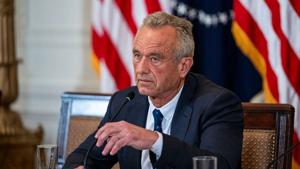
A health sharing ministry is expressing its support for President Donald Trump’s newly announced “Great Healthcare Plan,” stating the plan’s promise of transparency and affordability will be “central” to long-term policy solutions.
President of America’s HealthShare David Lejune told The Center Square: “While the President and GOP Leaders make good on promises to fix serious problems with a broken, woke, overly expensive health care system, private sector developments are emerging in strong support of President Trump’s – Make America Healthy Again (MAHA) initiatives.
“Transparency and affordability will be central to long-term policy solutions to America’s healthcare system,” Lejune said.
“Americans need clarity regarding their medical costs, to have direct access to affordable care, and within a system they can trust,” he added.
Lejune told The Center Square that “America’s HealthShare supports this movement by creating a community of America-loving people who deserve healthcare sovereignty and medical services that are effective, principled, affordable, and individualized.”
“People need healthcare plans that are affordable, clear about costs, and allow informed decisions – without skyrocketing premiums, surprise bills, or financial uncertainty.” Lejune said.
America’s HealthShare (AHS) is a “member-driven, free-market alternative,” its media relations told The Center Square
AHS launched in October 2025 and “allows for affordability and personalized care without funding procedures individuals may morally oppose,” The Center Square reported.
Neither traditional insurance plans UnitedHealthcare nor McKesson responded to The Center Square’s multiple individual requests for comment.
Trump’s Great Healthcare Plan was announced Thursday.
According to a White House release, the plan is intended to “slash prescription drug prices, reduce insurance premiums, hold big insurance companies accountable, and maximize price transparency in the American healthcare system.”
“This plan will deliver money directly to the American people, not insurance companies, big pharma and special interest groups – putting patients over industry leaders’ profits, just as [Trump] promised,” the release said.
Trump said he was “thrilled” to announce the plan, stating: “We will have maximum price transparency and costs will come down incredibly.”
The plan “will require any hospital or insurer who accepts Medicare or Medicaid to prominently post all prices of their place of business so that you are never surprised, and you can easily shop for a better deal or better care,” the president said.
“I’m calling on Congress to pass this framework into law without delay – we have to do it right now so that we can get immediate relief to the American people, the people I love,” Trump said.
When asked to comment on the Great Healthcare Plan, the HHS referred The Center Square to the White House and a release on the plan.
The White House has not yet responded to The Center Square’s request for comment.
Senate takes recess, leaving only five days to pass six govt funding bills
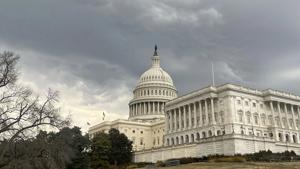
U.S. senators have left town for a week-long recess, leaving themselves only five days to pass the six remaining federal government funding bills.
Congress is already three months overdue on finishing the regular order appropriations process for fiscal year 2026, which consists of passing 12 full-year funding bills that allocate money for federal agencies.
Four of those massive bills, which are also the thorniest, have not even passed the lower chamber, though House leaders hope to advance them in a package next week while the Senate is off.
If they accomplish this, the Senate will likely pair the four-bill minibus with the two-bill minibus that passed the House Wednesday.
Senate Majority John Thune, R-S.D., believes it’s possible for the six bills to reach President Donald Trump’s desk by the Jan. 30 deadline, when government runs out.
If Congress fails to meet the deadline – which many, including the National Governors Association, anticipate – they face a partial government shutdown.
In that instance, the only way lawmakers could prevent a shutdown would be by punting the deadline via a Continuing Resolution, keeping agency funding levels on autopilot.
That would mark the fifth consecutive time Congress resorted to a stopgap instead of finishing appropriations on time.
In fact, nearly two years have passed since Congress refreshed annual federal funding levels, meaning dozens of departments, agencies and offices are still operating on funding levels from the Biden administration. Those include the departments of Defense, Transportation, Education, Homeland Security, Health and Human Services, Labor, and others.
But the departments of Commerce, Justice, Energy, and Interior, as well as the Environmental Protection Agency and Drug Enforcement Agency, will soon receive fresh funding once Trump signs a trio of funding bills the Senate passed Thursday into law.
The departments of Veterans Affairs and Agriculture, the Food and Drug Administration, and the Legislative branch are also covered for fiscal year 2026, with Congress attaching the three bills covering those sectors onto the most recent CR in November.