Center Square
Utah County’s chief prosecutor testifies at Tyler Robinson’s hearing

The second in-person pretrial hearing for Tyler James Robinson, charged with the murder of conservative leader and Arizona resident Charlie Kirk, took an extraordinary turn mid-Friday afternoon when the chief prosecutor took the witness stand.
Utah County Attorney Jeff Gray, the elected official who oversees the prosecution office, testified he learned about the fatal shooting of Kirk when one of his prosecutors in the Robinson case told him about a text from his adult daughter. She was at the Sept. 10 rally where Kirk, on stage, was killed at Utah Valley University in Orem, Utah.
It’s unusual for a chief prosecutor such as Gray to testify in a case his office is prosecuting.
Under questioning from defense attorney Richard Novak, Gray said he and the prosecutor, whose name hasn’t been released, drove together in Gray’s car to the university after getting the daughter’s text. She had left the scene of the killing by the time they arrived, Gray said.
When asked by Novak, Gray, who was subpoenaed to appear, said he didn’t set up a firewall separating the prosecutor whose child was at the university from the rest of the prosecution. Earlier on Friday, Novak noted the prosecutor’s child was 85 feet from Kirk.
Robinson, 22, wearing a light blue buttoned shirt and a striped tie, sat in the Fourth District Court in Provo, Utah, as Novak questioned Gray as part of a hearing on the question on whether Gray’s office has a conflict of interest in the case. Robinson’s lawyers are trying to disqualify the entire prosecution team based on the connection with the unnamed prosecutor and the fact the prosecutor wasn’t removed from the case.
“He showed me the text: ‘Charlie Kirk got shot,’ ” Gray told Novak as Judge Tony Graf listened.
Gray continued to testify until a little after 5 p.m. Mountain Standard Time. As of press time, the court was in another recess before testimony for Gray and potentially other witnesses such as the unnamed prosecutor and the prosecutor’s daughter could resume.
Robinson’s reactions couldn’t be seen during the live-stream because Graf directed that the pool camera not be on Robinson. That ruling came after defense showed the judge close-ups of Robinson earlier whispering to his attorney, raising concerns that viewers might read Robinson’s lips.
Novak, who started with basic questions before building his case, had Gray on the witness stand for about a half-hour before the recess.
Gray stressed that his office’s decision to tell the defense attorneys about the unnamed prosecutor wasn’t an indication of a conflict of interest.
“That was out of an abundance of caution,” Gray told Novak.
In addition to the prosecutor, Gray said there were two families in his Church of Jesus Christ of Latter-day Saints ward who had adult children at the Utah Valley University rally when Kirk was shot and killed. He said he was told one child was doing fine. “The other one was shook up.”
Gray said he didn’t know where those children were located at the amphitheater where Kirk spoke.
“Did you share that information with the prosecution team?” Novak asked, referring to those families.
“I don’t remember,” Gray said. “I may have in passing.”
Novak asked Gray if he suggested to law enforcement that anyone be interviewed in regard to the murder of Kirk.
“No. We don’t interfere with the investigation” Gray said. “We try to assist. Law enforcement identifies who they want to interview. I leave that to them.”
Novak also asked Gray about his office’s policies on conflict of interest. Gray answered that his office turns cases over to other agencies if there’s a conflict.
Robinson is charged with seven counts, six of which are felonies. They include aggravated murder and multiple counts of witness tampering and obstruction of justice. Gray filed a notice with the court that he intends to seek the death penalty if Robinson is convicted of murder.
Kirk was shot and killed before a crowd of up to 3,000 people at Utah Valley University. The conservative leader had a home in Scottsdale, Ariz., and his organization, Turning Point USA, is headquartered in Phoenix.
WATCH: San Francisco gets $40M to address homelessness

San Francisco is getting new state funding for homelessness and mental health services.
Speaking Friday at a San Francisco event titled “Treatments, Not Tents,” Gov. Gavin Newsom said this will build on the state’s recent 9% reduction in unsheltered homelessness.
“Extraordinary progress is being made in San Francisco,” Newsom, a Democrat, told reporters at a news conference with Mayor Daniel Lurie. “It’s not just the data that’s presented, people are feeling it again, they’re experiencing it again, and that’s the most difficult perhaps thing to move, and that’s perception, and no one has done that more effectively than Mayor Lurie.”
The state is giving $419 million to San Francisco, Los Angeles and San Diego as part of the Homeless Housing, Assistance and Prevention program. HHAP is designed to assist local efforts to end homelessness through support services as well as interim and permanent housing.
These funds add to those from Proposition 1, a voter-approved initiative to help communities in their efforts to combat housing, mental, and behavioral health problems.
Of the $419 million, $328.8 million will go to Los Angeles. San Diego will receive $50,9 million. And $39.9 million will go to San Francisco, where Mayor Lurie, a Democrat who describes himself as a centrist, said the city is already “changing its approach to homelessness” to get people off the street and on a path to stability.
“We launched our Breaking the Cycle plan to bring together health services, social services, law enforcement and emergency responders,” said Lurie. “We combined nine different neighborhood outreach teams into one, breaking down silos and increasing shelter placements by 40% this past year.”
Lurie also pointed to new legislation that moves families living in RVs into housing and restores public spaces.
“Just this past year, we opened 600 new treatment-focused beds so people on the street can get inside and get help,” said Lurie. “In December, we reached a record low number of encampments, down 44% over the prior year.”
Lurie said the new resources from the state are “crucial,” whether it is Proposition One, HHAP dollars or funding to make sure freeway off-ramps and on-ramps are clean.
“So, governor, thank you for providing us with real money that funds real solutions for people exiting homelessness throughout our community,” said Lurie.
Education dept. launches 18 Title IX probes as Supreme Court hears cases

The Trump administration has launched a series of investigations into various public schools and state departments of education across the country over Title IX allegations related to the participation of transgender athletes in girls’ sports.
The investigation led by the U.S. Department of Education’s Office for Civil Rights coincides with the U.S. Supreme Court beginning oral arguments on transgender sports cases.
The core of the complaints asserts that these K-12 districts and state agencies maintain policies that discriminate based on sex. By permitting transgender students to participate in sports, the Department argues that these institutions are violating Title IX protections.
According to the Department of Education, these policies jeopardize both the safety and the equal opportunities of women in educational programs and activities, the Department said.
“In the same week that the Supreme Court hears oral arguments on the future of Title IX, OCR is aggressively pursuing allegations of discrimination against women and girls by entities which reportedly allow males to compete in women’s sports,” Assistant Secretary for Civil Rights Kimberly Richey said.
“We are currently reviewing the letter and will respond appropriately through the proper legal and administrative channels,” the University of Nevada, Reno, one of the schools under investigation, told Fox News. “The University remains committed to fostering an inclusive, supportive, and respectful campus environment for all of our students. We recognize and uphold our responsibilities under state and federal law, and we will continue to act in accordance with the U.S. and Nevada Constitutions.”
The department has also announced this week an investigation into the California Community College Athletic Association over its Transgender Participation Policy, which allows transgender females to compete on women’s teams after one calendar year of testosterone suppression treatment.
Sarah Parshall Perry, vice president and legal fellow at Defending Education, said during a webinar that allowing transgender athletes to compete in female sports has done violence toward women’s equality.
“[Title IX] a federal statute, only 37 words long, something that was really the crown jewel of the women’s liberation movement in the ’60s and early ’70s. To expand it to transgender status and gender identity did a significant amount of violence to the notion of women’s equality, not just within athletic contexts, but within all sex-separated offerings,” Perry said.
The following entities are currently under investigation:
Jurupa School District (California).Placentia-Yorba School District (California).Santa Monica College (California).Santa Rosa Junior College (California).Waterbury Public Schools (Connecticut).Hawaii State Department of Education (Hawaii).Regional School Unit 19 (Maine).Regional School Unit 57 (Maine)Foxborough Public Schools (Massachusetts).University of Nevada – Reno (Nevada).Bellmore-Merrick Central High School District (New York).New York City Department of Education (New York).Great Valley School District (Pennsylvania).Champlain Valley School District (Vermont).Cheney Public Schools (Washington).Sultan School District No. 311 (Washington).Tacoma Public Schools (Washington).Vancouver Public Schools (Washington).
Tyler Robinson’s defense seeks to disqualify prosecutors
Attorneys representing Tyler James Robinson, charged with the murder of conservative leader and Arizona resident Charlie Kirk, are trying to disqualify the team of prosecutors.
The lawyers point to what they call a conflict of interest because one of the prosecutors has an adult child who was near Kirk when he was shot and killed Sept. 10 at a rally at Utah Valley University in Orem, Utah.
One of Robinson’s lawyers, Richard Novak, on Friday asked Judge Tony Graf to determine the Utah County Attorney’s Office can’t represent itself during the conflict-of-interest motion and must instead be represented by the Utah Attorney General’s Office.
In response, Utah County Attorney Jeff Gray went to the podium in the Fourth District Court in Provo, Utah, and said, “This is an ambush and another stalling tactic to delay these proceedings.”
Novak denied Gray’s accusation as Robinson, 22, listened quietly.
The defendant was dressed in a light blue buttoned shirt and a striped tie for his second in-person pretrial hearing. Occasionally during breaks during the live-streamed hearing, close-ups showed Robinson whispering with one of his lawyers.
Novak cited case law and statues showing that the Utah County Attorney’s Office could not represent itself as a motion is debated on whether there’s a conflict of interest with one of the prosecutors.
Novak noted Utah County Attorney’s Office told defense in October that the prosecutor’s offspring was at the Utah Valley University rally where Kirk, on stage, was shot and killed on Sept. 10 and was 85 feet from Kirk. He also noted the prosecutor wasn’t screened properly by the Utah County Attorney’s Office.
The names of the prosecutor and the prosecutor’s adult child have not been released.
Graf asked Novak why the defense didn’t file a motion earlier on the attorney general issue. Novak said the defense assumed prosecutors would refer the matter to the attorney general’s office and was surprised to learn the attorney general’s office had not been consulted.
Novak added Graf had the authority to bring the attorney general’s office into the case.
But prosecutor Ryan McBride argued there’s no need to refer the case to the attorney general’s office unless Graf first determines there’s a conflict of interest.
In a related matter, defense, prosecution and a lawyer representing media outlets told Graf they had no objection to the hearing being closed to protect the identities of witnesses. McBride noted it’s not uncommon for courts to refer to witnesses by their initials to protect their privacy.
“The case has polarized the nation in many ways,” McBride told Graf. “There have been death threats made against other witnesses, death threats made against counsel. Doxxing is a real thing: finding people online, harassing online. With today’s technology, it’s not hard to find out every detail about a person.”
Graf told McBride he was sensitive to safety concerns and could rule to close the hearing on a witness-by-witness basis. But the judge said he could not close the entire evidentiary hearing on the conflict-of-interest question because at some point, the name of the prosecutor with the potential conflict of interest would have to be said.
“I have to make findings of fact that are very specific. I can’t redact myself when I issue my order,” Graf said. “The name of the prosecutor is a relevant fact. I can’t simply glaze over it.
“Since I’m going to do that anyway, I’d rather address it in open court,” Graf said.
Defense witnesses for the evidentiary hearing on the conflict-of-interest question include Gray as well as the prosecutor who’s being reviewed and the prosecutor’s offspring, Novak said.
By mid-afternoon, the court was in the midst of another of several recesses that happened since the hearing started at 1 p.m. Mountain Standard Time.
Robinson is charged with seven counts, six of which are felonies. They include aggravated murder and multiple counts of witness tampering and obstruction of justice.
Gray filed a notice with the court that he intends to seek the death penalty if Robinson is convicted of murdering Kirk, who had a home in Scottsdale, Arizona. Kirk’s organization, Turning Point USA, is headquartered in Phoenix.
GOP senators introduce bill to increase penalties for assaulting ICE officers

Republican U.S. senators, led by U.S. Sen. John Cornyn, R-Texas, have introduced the ICE Protection Act to increase penalties for those who assault and injure U.S. Immigration and Customs Enforcement officers.
The bill was filed as an unprecedented amount of assaults continue against U.S. Immigration and Customs Enforcement officers as they perform daily immigration enforcement duties.
“The Radical Left has taken up a senseless crusade against our brave men and women in law enforcement, and Democrats’ inflammatory rhetoric has fueled an alarming rise in violence that not only endangers our communities but also harms the very people sworn to keep them safe,” Cornyn said in a statement. “This legislation would increase penalties for any offender who violently assaults a law enforcement officer, including by using a car or truck as a weapon, and sends a clear message that attacks on those who protect and serve will not be tolerated.”
The bill, which has several cosponsors, would increase penalties for those who assault ICE officers, resist arrest and interfere with law enforcement official duties while using a deadly or dangerous weapon. It also would increase penalties if an officer is injured during the assault. It also adds mandatory minimum sentences for those who use vehicles to attack officers.
It would amend Title 18 U.S. Code to enhance penalties for those who use a deadly or dangerous weapon, “including a weapon that is intended to cause death or danger but fails to do so by reason of a defective component or inflicts bodily injury,” according to the bill language. The penalty includes fines and a prison sentence of up to 40 years.
It would double the statutory maximum sentence under current law from 20 years to 40 years in prison for assaulting, resisting arrest, impeding or interfering with law enforcement while using a deadly or dangerous weapon, or injuring an officer during an assault.
The bill also establishes minimum penalties for those who use a motor vehicle to attack an ICE officer and cause bodily injury. Minimum penalties are based on the level of injury: a minimum of five years in prison if the vehicular attack results in bodily injury, seven years if it results in substantial bodily injury and 10 years if it results in serious bodily injury.
The bill was filed as a Cuban national rammed his vehicle into two ICE vehicles as ICE officers attempted to arrest him in northern San Antonio. One officer went to the hospital with neck injuries, The Center Square reported.
It was also filed after assaults against ICE officers are up 1,300%, vehicular attacks are up 3,200% and death threats are up 8,000% in one year, The Center Square reported. From Jan. 21, 2025, to Jan. 7, 2026, there were 66 vehicular attacks against ICE officers, compared to two during the same timeframe during the previous year, the Department of Homeland Security said.
An historic surge of vehicular attacks against ICE officers have proven to be dangerous, and deadly, for federal agents and those committing them. In the last week, a U.S. citizen was shot and killed during an alleged vehicular attack in Minneapolis. Two alleged Tren de Aragua members and Venezuelans were shot in Portland, Ore., by Border Patrol agents, and another Venezuelan was shot Wednesday night during an enforcement action in Minneapolis.
Democrats have blamed ICE for instigating or escalating the incidents.
“The surge in vehicular attacks and violence against law enforcement is a result of increasingly inflammatory rhetoric from the Left,” Cornyn said. “From outgoing Minnesota Governor Tim Walz calling ICE law enforcement the ‘modern-day Gestapo,’ to Minneapolis Mayor Jacob Frey saying ICE should ‘get the f**k out of Minneapolis,’ to Illinois Governor JB Pritzker outlandishly accusing the United States of ‘essentially’ becoming Nazi Germany, this type of rhetoric and dehumanization against law enforcement must end.”
By contrast, Texas Gov. Greg Abbott has taken the opposite approach, arguing those attacking ICE officers should be arrested and prosecuted to the fullest extend of the law. He has also surged law enforcement resources to support ICE officers and created specialized task forces to target violent crime, terrorist threats and Tren de Aragua and other foreign terrorist organization members, The Center Square reported.
Abbott and Cornyn, who are both running for reelection, have been endorsed by numerous law enforcement agencies in Texas.
Oz: Your zip code will no longer determine your life expectancy

President Donald Trump and senior health administration officials touted the $50 billion set aside in the One Big Beautiful Bill for rural health care during a round table Friday, saying it will transform the care available to rural Americans.
Rural health care has long been a concern for lawmakers, as it can be difficult for hospitals and medical centers to maintain patient volumes high enough to remain financially sustainable. Rural populations also tend to be older and lower income, so rural hospitals often see a lot of patients on Medicare or Medicaid, which typically reimburse at lower rates than private insurance.
The funding is the largest ever federal investment in rural health care in American history, according to the administration. It has been used to start the Rural Health Transformation Program, which will provide $50 million to states in health care improvement funds over a five-year period, from 2026 to 2030. Fifty percent of the funding is distributed equally among the states, and the states compete for the other 50%.
According to Mehmet Oz, administrator for the Centers for Medicare and Medicaid Services, if rural Americans find themselves in certain “vulnerable situations,” their life expectancy is on average nine years shorter.
“Your zip code will no longer dictate whether you have excellent healthcare. Your zip code will no longer be your destiny. It’s not going to dictate your life expectancy,” Oz said Friday. “We don’t want rural America left behind anymore.”
Oz listed some of the ways states have proposed reaching rural communities as part of this initiative.
North Carolina and Pennsylvania, he said, use “regional spoke models.”
“[That] means you’ve got a big hospital in the city, and they adopt or work closely with some rural hospitals to solve the challenges of fragmented care. And that actually works,” Oz said. “You share administrative back office work, you group purchase your stuff, you save money, you exchange medical records.”
Where there’s a dearth of OB-GYNs in Alabama, the state is using “robots to do ultrasounds” on pregnant women, according to Oz. Delaware is creating “their first ever medical school in a rural part of the state,” Oz said, to promote health care services in rural areas.
The states “gave us brilliant ideas that they’re talking with each other about,” Oz said.
States’ first program awards for 2026 have already been determined and range from $147 million to $281 million, with the largest awards going to Texas, Alaska, California, Montana, Oklahoma and Kansas.
Experts dispute Arizona governor’s claims about state-funded school choice program
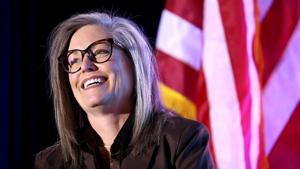
Arizona education experts are pushing back on claims Gov. Katie Hobbs made about the Empowerment Scholarship Account program during her State of the State this week.
Hobbs claimed the state-funded school choice program operates unchecked in Arizona and squanders taxpayer money.
“It seems like every day, we learn about new shopping sprees happening at the expense of taxpayers … Diamond jewelry, high-end clothing and furniture … Who knows what taxpayers will be footing the bill for tomorrow?” the Democratic governor asked during her speech on Monday before a joint session of the Republican-controlled Legislature.
She also said the ESA program’s “most ardent supporters must agree: It’s time we tackle the waste, fraud, and abuse to ensure taxpayer dollars are going towards true educational purposes.”
According to Matt Beienburg, the Goldwater Institute’s director of education policy, many of the claims made by Hobbs in her State of the State address “don’t hold up under scrutiny.”
Arizona’s ESA program requires parents to “document every single purchase they make,” he said.
“ Every item and every penny spent has to be reported to the state of Arizona. That is maximum transparency,” Beienburg told The Center Square.
Katie Ratlief, the Common Sense Institute Arizona’s executive director, said if people in the ESA program make a purchase “not permissible under law,” their “account is immediately frozen.”
She also said people who make unauthorized purchases with their ESA funds have to repay them.
The same level of transparency in the ESA program does not apply to public schools, Ratlief told The Center Square.
Beinburg agreed with Ratlief. “It’s pretty clear that despite the talking points against the ESA program, if there’s actually concern about transparency, the focus should be upon our state-operated government schools, who in many cases are failing to disclose both finances and curriculum.”
For example, Beinburg brought up an incident in which state Rep. Matt Gress, R-Phoenix, attempted to obtain financial transaction data for Telleson Union High School last year. However, the school told the representative that it would cost over $26,000 in fees to fill his request.
Arizona Superintendent of Public Instruction Tom Horne said under his leadership, the state Department of Education “has done a full-court press against waste and fraud.”
“I hired both a program auditor and an investigator, which had not been done before. I require that every expenditure be for a valid educational purpose and have been attacked for doing that,” Horne said in a statement to The Center Square.
“The governor needs to pay more attention to what is going on. She gets an ‘F,’” he added.
Regarding Hobbs’ claim the ESA program is squandering taxpayer money, “the vast majority” of Arizona’s K-12 spending goes to public and charter schools, Ratlief noted.
CSI Arizona said the ESA program for fiscal year 2026 costs $1 billion, while K-12 public school costs $7.1 billion, and charter school costs $2.1 billion. This means that public school funding accounts for nearly 70% of the state’s K-12 spending in fiscal year 2026.
Ratlief said around half of that money goes to students with special needs who have qualified for ESAs since 2011.
Beienburg noted Arizona public school funding has increased by $2.5 billion since 2022, when the ESA program opened to all students.
”Even adjusting for inflation on a per student basis. Arizona public school students are getting over $500 more a year today than they were prior to the expansion,” he stated.
In 2022, the state added $600 million in discretionary funding to its public schools, Beienburg explained.
“ That increase in public school funding in 2022 alone was larger than the entire net change in award amounts for the ESA program since the expansion. The net change in education dollars resulting from the ESA expansion is less than one year’s increase in the public school system that state lawmakers gave,” he noted.
The governor recycled many “false talking points” from “teachers unions and radical activist organizations that oppose parental choice and students having the opportunity to pursue the best education possible if that happens to fall outside of an institution they control,” Beienburg said.
Since 2012, Arizona public school enrollment has gone down, Ratlief stated.
The reason Arizona public schools are closing is that school districts kept constructing new buildings while keeping buildings open “that weren’t operating at a capacity that was sustainable,” Ratlief explained.
She said Arizona school districts are realizing they need to close schools because “demographics have fundamentally changed.”
Looking at the data, public schools are facing “enrollment pressures,” but the main drivers are “competition amongst public schools and the drop in birth rates,” Beienburg stated.
Since 2017, an estimated 40,000 students have left public schools to enter the state’s ESA program, Beienburg noted.
Furthermore, he stated Arizona birth rates have fallen by 36% since 2007. He estimated the state is having 10,000 to 20,000 fewer kids yearly being born in Arizona than it did 19 years ago.
According to Beienburg, this means that there are around 200,000 fewer kids in Arizona who need to be educated.
“ We just don’t have as many school-aged kids in Arizona as we used to. Things have changed fundamentally,” Ratlief noted.
Looking ahead, Ratlief said she encouraged lawmakers to view the ESA program through a “forward-focused lens.”
“Parents are used to choice in Arizona now. They want access to open enrollment, charter schools, ESAs, homeschooling, micro schools, all this,” she stated.
Ratlief noted Arizona needs to ask how it can “continue to improve things for parents and taxpayers in an environment they’ve come to expect,” rather than figuring out how to go backward.
DOJ claims ‘substantial progress’ made on Epstein files, but no new releases

Four weeks after the congressionally-mandated release deadline, the Department of Justice says it is making “substantial progress” in its review of the millions of remaining unclassified Epstein files.
Since 2026 began, however, the agency hasn’t released any more files related to the deceased convicted sex trafficker.
According to DOJ’s own analyses, at least 2 million more files have yet to be released. So far, the DOJ has published 12,285 documents, about 125,575 pages of material.
The agency argued in a Thursday court filing that its violation of the Dec. 19 deadline imposed by the Epstein Files Transparency Act is due to the number of redactions it is making. More than 500 reviewers are tasked with this job, the DOJ revealed.
“The Department has made substantial progress and remains focused on releasing materials under the Act promptly while protecting victim privacy,” the DOJ said. “Compliance with the Act is a substantial undertaking, principally because, for a substantial number of documents, careful, manual review is necessary to ensure that victim-identifying information is redacted before materials are released.”
It added, “This is a time-intensive process due to the voluminous materials, the idiosyncratic nature of many of the materials, and the need to protect victim identifying information.”
U.S. lawmakers have criticized both the ongoing delay in releasing the files and the excessive redactions the DOJ has made. The Epstein Files Transparency Act expressly forbids the DOJ from redacting relevant information unless it could potentially jeopardize victim privacy, national security, or prosecution efforts.
But, as revealed on social media by political commentator Ed Krassenstein, the DOJ apparently violated that edict in at least one of the documents. One of the uncovered redactions included information on how Epstein attempted to pay off witnesses of his sex trafficking operations and destroy evidence of his crimes.
Lawmakers on both sides of the aisle are threatening to hold Attorney General Pam Bondi in contempt of Congress.
Most recently, Reps. Ro Khanna, D-Calif., and Thomas Massie, R-Ky., who sponsored the Epstein Files Transparency Act, requested a court-appointed, independent monitor to ensure the DOJ fully complies with the law’s transparency requirements.
Trump eyes tariffs to pressure Greenland

President Donald Trump said Friday that he could use tariffs in his bid to annex Greenland, an Arctic island with critical mineral reserves, proximity to shipping lanes and a strategic location.
Trump wants to buy the sparsely populated island, but hasn’t ruled out other methods for acquiring the semi-autonomous Danish territory. Officials from Denmark and Greenland have said the nation isn’t for sale and public polling shows Greenlanders don’t want to join America.
Trump said that he could use tariffs to pressure Greenland during a meeting on rural health care Friday at the White House. The U.S. president said import duties would also put pressure on U.S. allies that don’t support his plans.
“I may do that for Greenland on countries if they don’t go along with Greenland because we need Greenland for national security,” he said.
Officials from Greenland and Denmark visited the U.S. earlier this week to try to get Trump to stop talking about annexing the island. The meeting ended with disagreement.
Trump said U.S. ownership of Greenland is vital to national security, citing concerns that the island could otherwise be controlled by China or Russia. He has said his preference is to buy Greenland.
“I would like to make a deal the easy way, but if we don’t do it the easy way, we’re going to do it the hard way,” Trump said last week.
Greenland, where about 57,000 people live, is dependent on Danish subsidies and fishing. An independent poll done in 2025 found that about 85% of Greenlanders don’t want to join America.
Experts say as ice melts in the Arctic, more shipping and military ship routes could open in the region, changing the global trade and the defensive relationship between the U.S. and Russia. More mining and drilling exploration could also open up.
U.S. Ambassador to Poland Tom Rose said the U.S. has had a vested interest in Greenland for more than 70 years.
“Its geo-strategic importance grows by the day, by the hour,” he said at an event at the Ronald Reagan Presidential Foundation & Institute on Thursday. “Everybody that I speak with understands and acknowledges that Denmark, as wonderful as it is, is incapable of providing even a fraction of the resources that will be required to bring Greenland up to standard in terms of its infrastructure, in terms of its ability to extract rare earths.”
In 1867, when President Andrew Johnson bought Alaska, he also considered buying Greenland. The U.S. also tried to buy Greenland in 1946. The United States proposed to pay Denmark $100 million in gold to buy Greenland, according to documents in the National Archives. The sale never went through, but the U.S. got the military base it wanted on the island.
Pituffik Space Base, previously known as Thule Air Base, is located in Greenland. Pituffik SB is locked in by ice nine months out of the year, but the airfield is open and operated year-round. Pituffik exists due to agreements between the U.S. and the Kingdom of Denmark, specifically addressing mutual defense, according to the Space Force.
Group wants records on Minnesota child care assistance program

A Washington, D.C.–based oversight organization has formally asked the Minnesota Department of Children, Youth, and Families to provide internal records that relate to the state’s Child Care Assistance Program, citing concerns about fraud.
On Jan. 13, Empower Oversight filed a request under the Minnesota Data Practices Act for their records regarding CCAP oversight and enforcement activities. The group said the program, which distributes millions of taxpayer dollars annually to child care providers, has been the subject of “numerous reports of waste, fraud and abuse of taxpayer dollars.”
In a news release, Empower Oversight noted Minnesota receives about $185 million in federal funds for CCAP each year, totaling more than $1 billion since 2019. It also said recent reporting and public scrutiny have “raised serious questions about widespread fraud and misuse of CCAP funds, as well as the adequacy of state oversight.”
“Given the scale of public funding involved and the importance of protecting both taxpayer dollars and vulnerable families, it is critical to understand what the agency knew about these issues and how it responded,” said Empower Oversight President Tristan Leavitt in the organization’s announcement. “Ensuring appropriate protections for anyone who helps bring transparency to the program is essential to restoring public trust.”
The records request letter submitted to DCYF Commissioner Tikki Brown asks for documents, including investigative reports that found providers with no children present, since Jan. 7, 2019, and all communications regarding providers connected to the Feeding Our Future scandal.
Empower Oversight described itself in the letter as “a nonpartisan, nonprofit educational organization … dedicated to enhancing independent oversight of government and corporate wrongdoing” that helps insiders safely report waste and misconduct.
In a statement to TCS, Empower Oversight said that the state has acknowledged receipt of the data request, but they are unsure when they will receive results. Laws in the state of Minnesota only require that they return the data in a “reasonable time.”
“Unless there are concerted efforts to proactively detect and redress fraud, programs like this are ripe for abuse. Turning your head and ignoring the problem only allows those willing to commit fraud to be even bolder with their transgressions,” Leavitt told TCS. “Transparency through records requests like ours, and whistleblowers coming forward, is the first step to ensuring officials can get to the root cause.”
DCYF said they would look into the situation with the records request but did not share any further comment at the time of publication.