Center Square
Group wants records on Minnesota child care assistance program

A Washington, D.C.–based oversight organization has formally asked the Minnesota Department of Children, Youth, and Families to provide internal records that relate to the state’s Child Care Assistance Program, citing concerns about fraud.
On Jan. 13, Empower Oversight filed a request under the Minnesota Data Practices Act for their records regarding CCAP oversight and enforcement activities. The group said the program, which distributes millions of taxpayer dollars annually to child care providers, has been the subject of “numerous reports of waste, fraud and abuse of taxpayer dollars.”
In a news release, Empower Oversight noted Minnesota receives about $185 million in federal funds for CCAP each year, totaling more than $1 billion since 2019. It also said recent reporting and public scrutiny have “raised serious questions about widespread fraud and misuse of CCAP funds, as well as the adequacy of state oversight.”
“Given the scale of public funding involved and the importance of protecting both taxpayer dollars and vulnerable families, it is critical to understand what the agency knew about these issues and how it responded,” said Empower Oversight President Tristan Leavitt in the organization’s announcement. “Ensuring appropriate protections for anyone who helps bring transparency to the program is essential to restoring public trust.”
The records request letter submitted to DCYF Commissioner Tikki Brown asks for documents, including investigative reports that found providers with no children present, since Jan. 7, 2019, and all communications regarding providers connected to the Feeding Our Future scandal.
Empower Oversight described itself in the letter as “a nonpartisan, nonprofit educational organization … dedicated to enhancing independent oversight of government and corporate wrongdoing” that helps insiders safely report waste and misconduct.
In a statement to TCS, Empower Oversight said that the state has acknowledged receipt of the data request, but they are unsure when they will receive results. Laws in the state of Minnesota only require that they return the data in a “reasonable time.”
“Unless there are concerted efforts to proactively detect and redress fraud, programs like this are ripe for abuse. Turning your head and ignoring the problem only allows those willing to commit fraud to be even bolder with their transgressions,” Leavitt told TCS. “Transparency through records requests like ours, and whistleblowers coming forward, is the first step to ensuring officials can get to the root cause.”
DCYF said they would look into the situation with the records request but did not share any further comment at the time of publication.
Firms team up with states to scrutinize health care spending

A number of companies have responded to state financial officers’ December letter urging them to audit their health care spending.
In line with multiple initiatives from the Trump administration pressing for greater price transparency in health care, a little over a month ago, a group of state treasurers and auditors submitted a letter to Fortune 500 companies imploring them to review their health care spending and respond to their letter by Jan. 15.
Publicly traded companies have a responsibility to their shareholders to make informed financial decisions. For Fortune 500 companies, that includes a responsibility to the public dollars – like pension funds for teachers, first responders and others — that state financial officers have invested in them with the expectation of strong returns.
State financial officers encouraged the companies to leverage an executive order signed by the president in February to ensure they’re not overpaying for health care.
“When large companies overspend on excessive healthcare costs, shareholder value drops and Americans’ retirement security is put at risk,” according to a statement from the officers.
The order built upon an earlier order from the president’s first term in 2019. That order had primarily required hospitals to publicly post what they charge for common medical goods and services so that patients could compare prices across hospitals.
The newer order went one step further in attempting to ensure transparency, calling for the “disclosure of the actual prices of items and services” instead of mere estimates, as well as updated enforcement policies to ensure compliance with reporting requirements.
The state financial officers argued that if companies will now have greater access to health care pricing data, then their fiduciary duty compels them to make more informed decisions about the health care coverage they provide to their employees and how their employees utilize that coverage.
On Thursday, the administration unveiled “The Great Healthcare Plan,” a “comprehensive plan to lower drug prices, lower insurance premiums, hold big insurance companies accountable, and maximize price transparency” in the health care industry.
It calls on Congress to codify what the administration has done with most-favored-nation pricing and aims to lower insurance premiums and force insurance companies to make their rate and coverage information readily available in “plain English.”
OJ Oleka, the CEO of the State Financial Officers Foundation, expressed support for the newly revealed plan in a statement shared with The Center Square, viewing it as a continuation and expansion of initiatives already underway.
“As over a dozen state financial officers told the Fortune 500 last month, fully enforced price transparency empowers fiduciaries to hold insurers accountable, reduce waste, and redirect savings into growth and returns for shareholder. As President Trump surely knows, that can make an enormous difference in pension value and the retirement security for millions of American households,” Oleka said.
State financial officers are working with companies to help them leverage new federal health care price transparency rules to their benefit and their shareholders’.
Oleka added that he was “thrilled to see price transparency as the centerpiece” of the president’s plan and said he believed it would help Americans “tired of high health care costs,” as well as “every leader working hard to lower them.”
State financial officers are working with companies to help them leverage new federal health care price transparency rules to their benefit and their shareholders.
St. Paul students marked absent after protests against ICE

Hundreds of students from high schools in St. Paul, Minnesota, walked out of class this week to protest the presence of Immigration and Customs Enforcement agents in the Twin Cities, leading the district to mark participating students absent or tardy.
On Wednesday afternoon, students from multiple schools in the Saint Paul Public Schools district marched to the steps of the Minnesota Capitol, carrying signs and chanting slogans expressing opposition to U.S. Immigration and Customs Enforcement shootings.
The Saint Paul district includes 69 schools and seven comprehensive high schools, and serves more than 30,000 students. While many students participated in the walkout, others remained in class and continued their school day as usual.
The Center Square spoke with Ryan Stanzel, senior associate of communications at the district, who said a letter was sent to parents explaining that students who miss all or part of a class to participate in the protest would be marked absent or tardy.
“This was not a SPPS-sponsored or -sanctioned walkout,” Stanzel told The Center Square. “SPPS does not discipline students for peaceful protests … If a student chooses to participate in a walkout and leave campus, SPPS staff will not accompany them or provide supervision.”
The district supports the role of protesting to create change, Stanzel said, adding it respects the rights of those who do or do not wish to participate.
Dr. Stacie Stanley, the superintendent of Saint Paul Public Schools, announced in a video posted Wednesday on the district’s website that the school would be implementing a new temporary virtual learning option.
Due to the safety concerns related to the presence of federal agents, Stanley explained that there will be no school on Monday in observance of Martin Luther King Jr. Day, Tuesday and Wednesday. Starting Jan. 22, students will have the option of temporary virtual learning.
“Our goal is to ensure that all students can stay connected to the school, whether that is in-person or virtually,” Stanley said.
Registration opens Jan. 15 for parents and students to sign up for virtual classes.
The Center Square previously reported that other Minneapolis Public Schools can choose remote learning for at least a month in the wake of the shooting of Renee Good by an ICE officer on Wednesday.
The Center Square reached out to the SPPS parents’ advisory council for a comment, but did not receive a response.
Poll: Trump’s approval rating falls 16% in Arizona
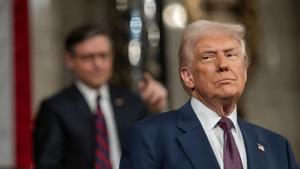
President Donald Trump’s approval rating among Arizonans declined 16 percentage points from February to December, a new poll shows.
Noble Predictive Insights released a poll showing that Arizonans’ favorability toward Trump fell from +3% to -13% over a nine-month period.
Mike Noble, CEO of Noble Predictive Insights, told The Center Square that Trump’s unfavorable approval rating goes back to pocketbook issues.
“There’s been a lot of uncertainty created with a lot of the rapid changes in domestic policy that give voters a little bit of unease,” he explained.
Noble said Trump’s sliding approval rating in Arizona is “a flashing red warning light for Republicans – and a clear opening for Democrats.”
“In a state decided on the margins, an unpopular president changes the math,” he noted.
Like Trump, Democratic Gov. Katie Hobbs’ approval rating has gone down, according to the poll. In February, it stood at +6%, but in December 2025, it fell to +1%, a decrease of 5 percentage points.
“Incumbents can survive middling approval numbers, but sustained growth in disapproval is harder to outrun,” Noble noted. “Republicans will look at these trends and see a governor who has not consolidated public confidence heading into a critical election year.”
The poll found the main issues Arizonans cared about were inflation (48%), affordable housing (46%) and health care (41%). Health care and affordable housing saw the largest increases in Arizonans voting them as important issues from February to December, the poll showed.
Immigration (38%) used to be among the top three issues Arizonans cared most about, but that slipped from February to December.
Noble said this was due to border-crossing numbers declining under the Trump administration compared to the Biden administration.
The poll showed 52% of Arizonans view their state heading in the wrong direction, while 48% say it’s in the right direction. These numbers are a far change from March 2021, when 56% of Arizonans thought the state was going in the correct direction.
Noble said the cost of pocketbook issues is the “primary driver” of why Arizonans feel the state is going the wrong way.
“For Arizonans who have been here for more than five years, Arizona’s always been known as a low-cost-of-living state. You look at every metric [and] that is not the case,” Noble stated.
In politics, Noble told The Center Square that this year’s gubernatorial race will be “very competitive” and that Arizona will be another key battleground state for Democrats and Republicans.
An Emerson College poll from December showed Hobbs beating the Arizona Republican gubernatorial candidates, Andy Biggs or Karrin Taylor Robson, by 1 percentage point. Biggs and Robson were both endorsed by President Donald Trump.
The other Republican candidate, Rep. David Schweikert, R-Scottsdale, trailed Hobbs by 5 percentage points.
The margin of error for the Emerson College poll was plus or minus 3.3%, which means Hobbs is in a statistical tie with Biggs or Taylor Robson.
Cook Political Report, a nonpartisan election analyzer, rates the Arizona gubernatorial race as a toss up.
SCOTUS to consider second election law case
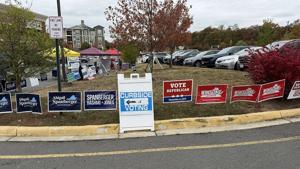
The U.S. Supreme Court ruled this week that an Illinois congressman had the right to sue the state over ballot counting after Election Day.
The high court’s decision in Bost v. Illinois State Board of Elections brought praise from election integrity advocates, including Jason Snead, director of the Honest Elections Project.
Snead told The Center Square he has seen inequity of access to the courts for conservative candidates compared to liberal candidates.
“It’s been far, far easier for candidates on the left or for interest groups as well as political parties to get into court and use courts to throw out those election integrity laws than it has been for candidates and parties on the right to try to uphold them,” Snead said.
U.S. Rep. Mike Bost, R-Murphysboro, filed the original lawsuit against the state in 2022 for counting ballots postmarked on Election Day up to two weeks later. The court affirmed Bost had legal standing to sue without addressing whether states could allow mail-in ballots received after Election Day to be counted.
Sixteen states and the District of Columbia accept mail-in ballots as much as two weeks after Election Day. The nation’s highest court is set to determine whether federal election laws prohibit states from accepting ballots after Election Day.
The case, Watson v. Republican National Committee, specifically challenges Mississippi’s law allowing ballots to be counted up to five days after an Election Day as long as the ballots are postmarked by Election Day.
“That is the day for consummating the election, meaning that all ballots have to be cast by the close of polls on election day in order to be counted,” Snead said.
With the midterm elections closing in, Snead urged state lawmakers to implement provisions to block delayed mail-in ballot receipt deadlines. He said there is a “good chance” that the Supreme Court strikes down the various state laws allowing for late mail-in ballot deadlines.
“States are just beginning to come into session in their legislatures and they have plenty of time and plenty of runway to adjust their state statutes right now to protect against any mid-year changes that the Supreme Court might force them to make,” Snead said.
In December, Ohio Gov. Mike DeWine signed a law restricting mail-in ballots after Election Day. DeWine acknowledged the Supreme Court’s pending decision in Watson v. RNC as justification for his signature of the legislation.
Some voting rights advocates have criticized the court for taking up the decision during a consequential midterm election year. However, Snead said as long as the court makes a decision by June or July it will give enough time to educate the public on the issue.
“I don’t think that this is going to be particularly disruptive,” Snead said. “The most important thing is going to be getting the word out to voters if they’re casting mail ballots that they need to do so early.”
Medical device manufacturer invests $110M to expand Nebraska plant, boost drug supply

A major American medical device manufacturer is investing $110 million to expand production in Nebraska as part of an effort to restore pharmaceutical manufacturing and improve domestic supply chains.
Becton, Dickinson and Company (BD) announced this week that it will expand its facility in Columbus, Nebraska, to increase production of prefillable syringes used in biologic drugs, including GLP-1 weight loss medications like Ozempic and Wegovy. The investment is expected to create about 120 new jobs, according to a press release from the company.
The expansion comes as the Trump administration has urged pharmaceutical and medical manufacturers to move production back to the United States, citing supply chain vulnerabilities exposed during the coronavirus pandemic and increased demand for various medications.
BD said the Nebraska investment is part of a bigger commitment to spend over $2.5 billion on U.S. manufacturing over the next five years.
“This is good news for Nebraska,” Sen. Pete Ricketts, R-Nebraska, said in the release. “It has the potential to bring over 100 new jobs to our state. This investment further underscores BD’s ongoing commitment to keep critical manufacturing in states like Nebraska.”
The company plans to spend roughly $100 million to establish production of its BD Neopak glass prefillable syringe platform at the Columbus site. It expects production to start around the middle of this year. BD will use another $10 million to expand cannula manufacturing at the facility.
BD designed the syringes for injectable biologic drugs. They are compatible with autoinjectors used in both clinical and at-home settings. Demand for these delivery systems increased alongside the fast growth of GLP-1 medications used to treat diabetes and obesity.
“As demand for biologics and GLP-1s accelerates, BD is strengthening its American manufacturing footprint to support U.S.-based drug delivery innovation and supply chain resiliency,” Patrick Jeukenne, president of BD Pharmaceutical Systems, said in the release.
Nebraska Gov. Jim Pillen praised the announcement. He said it will benefit the local economy.
“This is another perfect example of a company with global reach producing high value, cutting-edge products at its plant right here in Nebraska,” Pillen said.
BD said the Columbus facility has been a big part of its manufacturing network for over 75 years. The new expansion builds upon a previous $35 million investment announced last year to expand prefilled flush syringe production at the same site. That expansion added about 50 jobs.
The company said localizing production of drug delivery components will help improve reliability and speed to market as demand for its products increases.
WATCH: U.S.ambassadors stress Greenland’s importance
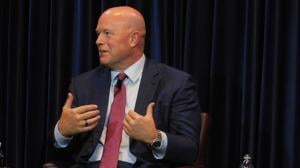
America is crucial to the defense of Greenland, which in turn is vital to protecting NATO, according to four U.S. ambassadors who expressed optimism about the Danish territory’s relationship with the U.S.
Tom Rose, the ambassador to Poland, predicted Greenland and Denmark will become more interested in President Donald Trump’s offer to buy Greenland when Trump provides a specific dollar amount.
“Let’s see what they say when the president offers them a half-trillion dollars over a 10-year period,” Rose said during a talk Wednesday evening at the Ronald Reagan Presidential Library and Museum.
He noted Greenland’s strategic importance “grows by the day, by the hour.”
Rose was joined on stage by Ambassador Matthew Whitaker, the permanent U.S. representative to NATO; Joseph Popolo, the U.S. ambassador to the Netherlands, and Nicholas Merrick, the ambassador to the Czech Republic. The ambassadors are touring the U.S. to discuss defense innovations with American technology companies, some of which are based in California.
They answered questions from David Trulio, president and CEO of the Ronald Reagan Presidential Foundation, in a packed auditorium at the library in Simi Valley, near Los Angeles. While Trulio and the ambassadors largely discussed new military technologies and innovations such as artificial intelligence in defense, they spent some time talking about Greenland, following Wednesday’s meeting at the White House between Vice President JD Vance and foreign ministers from Denmark and Greenland.
Trump has said he would prefer to buy Greenland but is willing to take it by military force, but the ambassadors Wednesday evening kept their focus on diplomatic progress.
“The president has made some straightforward, declarative statements,” Whitaker said. “Ultimately, what they all surround is the security of the western hemisphere, of the United States and how important it is to Greenland, for several reasons.”
Whitaker cited the risk of ballistic missiles flying over the Arctic region from Russia and China.
“Greenland would be the first place those would be intercepted,” Whitaker said.
He also cited the increased risks to NATO and the U.S. as the Arctic region thaws, making it easier for submarines to go by Iceland and Greenland and threaten America’s East Coast.
“The security of Greenland is the security of the United States of America and the entire North Atlantic Treaty Organization,” Whitaker said. “We need to take this very seriously and fix it sooner than later because it is going to be a problem in the coming years.”
Wednesday’s meeting at the White House was a good one for Vance and Lars Løkke Rasmussen, the Danish foreign minister, and Vivian Motzfeldt, Greenland’s minister of foreign affairs, according to Whitaker.
“Everyone was able to say their positions and talk about how we can work together to solve these challenges,” Whitaker said. He added that although no deal was reached Wednesday, diplomacy is about how differences are eventually resolved.
The ambassadors stressed the importance of an American presence in Greenland.
“There is no way Greenland, Denmark and NATO can protect Greenland alone. There has to be a solution that involves the United States. I think the president has been clear on that,” Popolo said.
The ambassador to the Netherlands noted Greenland has rare earth minerals that American companies are currently getting from China but lacks the capacity to extract them.
Rose later noted the private reaction to Trump’s proposed acquisition of Greenland differs from the public reaction.
“Privately, everybody I speak with understands and acknowledges that Denmark, as wonderful as it is, is incapable of providing even a fraction of the resources that will be required to bring Greenland up to standards in terms of its infrastructure and in terms of its ability to extract the rare earths you were speaking of earlier,” Rose said, referring to Popolo’s comments.
Earlier, Whitaker emphasized the importance of the four ambassadors’ tour of America in showcasing U.S. technology such as drones and autonomous sea vessels.
He said European countries’ commitment to spend 5% of their gross domestic product on NATO will make a difference.
“It makes a huge difference if all of our allies are strong,” Whitaker said, stressing President Ronald Reagan’s and Trump’s belief in peace through strength.
Rose noted Poland already spends 5% of its GDP on NATO and demonstrated a commitment to defense.
Likewise, “the Czech Republic has a great partner of the U.S.,” Merrick said.
He noted the nation is supplying half of the artillery shells for Ukraine’s defense against the Russian invasion and has reduced its reliance on Russian natural gas from 100% of its supply to 0.
Merrick agreed with Whitaker that in order for European countries to spend more on defense, they must grow their economies.
The ambassador to the Czech Republic said the gross domestic product for the European Union and the U.S. was the same in 2009, but today the U.S. GDP is 70% larger.
U.S. technological companies, including those based in California, are working to reduce the costs of weapon systems being sold to European countries, Merrick said.
Govt. funding process advances as three more bills to become law; six remain
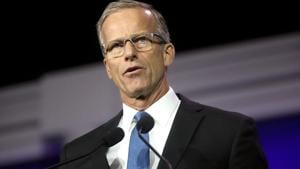
With the U.S. Senate sending a roughly $180 billion funding package to the president’s desk Thursday, Congress has now knocked out half of the annual appropriations bills funding federal agencies in fiscal year 2026.
The three-bill minibus, which passed the House last week, grants full-year appropriations for the departments of Commerce; Justice; Energy; Interior; the Environmental Protection Agency, and more.
“For too many years, we’ve had massive omnibus bills written behind closed doors. That’s not how I want to operate,” Senate Majority Leader John Thune, R-S.D., told lawmakers Thursday. “My hope is that we’ll be able to build on the progress we’ve made this past year to get the appropriations process back to what it should be – an open process that every senator can participate in.”
Among other things, the minibus provides $37 billion for the Department of Justice, $63 billion for water and energy infrastructure, $8.8 billion for the EPA, and $25 billion for the National Nuclear Safety Administration.
Although both parties made compromises, they also scored wins. Democrats are celebrating billions allocated for scientific research, including climate research, while Republicans are highlighting the increased funds for drug enforcement programs.
Lawmakers’ work is far from over, however. Congress has until Jan. 30 to pass the remaining six appropriations bills or else risk a government shutdown.
In order to have a chance of meeting that deadline, the Senate must pass and send to the president’s desk another House-passed minibus by the end of this week, before the upper chamber takes a week-long break.
If they do so, Congress will have knocked out eight appropriations bills, leaving only the last four, which are also the thorniest. According to Thune, appropriators are already assembling those bills into a minibus.
Lawmakers have little appetite for another government closure after the record 43-day shutdown last year, but it is unlikely they will pass all 12 bills by Jan. 30.
Instead, they will likely pass a funding stopgap covering whichever appropriations bills remain unpassed by that deadline to buy themselves more time to finish the funding process.
Bankers push back on Trump’s plan to reduce swipe fees, cap interest rates
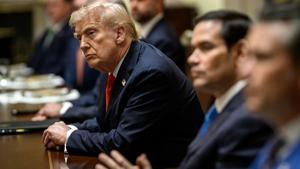
Banks are pushing back against renewed efforts to cap interest rates for consumers, after President Donald Trump endorsed the move as he seeks to show Americans he’s working to make life in America more affordable ahead of the 2026 midterms.
Trump recently called for a 10% cap on credit card interest rates for a year and has endorsed the bipartisan Credit Card Competition Act, which would require big banks to enable at least two unaffiliated card networks, including one other than Visa or Mastercard. The goal is to increase competition and lower swipe fees, which credit card issuers charge to process transactions. Retailers, including the National Retail Federation, support the Credit Card Competition Act.
The president said banks are overcharging.
“We will no longer let the American Public be ‘ripped off’ by Credit Card Companies that are charging Interest Rates of 20 to 30%, and even more, which festered unimpeded during the Sleepy Joe Biden Administration. AFFORDABILITY!,” Trump wrote in a recent social media post.
The president also encouraged Congress to pass the Credit Card Competition Act to “stop the out of control Swipe Fee ripoff.”
The American Bankers Association and other credit card issuers called the measure “misguided” and a “surefire way to make life less affordable for Americans.” The group also said the measure would spell the end of credit card reward programs.
“Lawmakers have rightly rejected past attempts at legislation and amendments to mandate the reengineering of the nation’s trusted, resilient and efficient credit card payments system just to boost the profits of the nation’s largest retailers,” a coalition of banking groups wrote in a statement. “This Congress should again reject this harmful proposal. Anyone supporting Durbin-Marshall is voting to make credit card transactions less secure and to take away the credit card reward programs that make life more affordable for millions of Americans.”
U.S. Sens. Dr. Roger Marshall, R-Kansas, and Dick Durbin, D-Illinois, reintroduced the Credit Card Competition Act to end “the Visa-Mastercard duopoly that is squeezing small businesses – and, ultimately, consumers.”
Marshall and Durbin said Visa and Mastercard control about 85% of the credit card market and won’t negotiate with retailers. They said the average American family pays nearly $1,200 per year in swipe fees, while banks take in $111.2 billion annually from swipe fees.
“The average American family is being ripped off by Big Banks, who profit billions from swipe fees while hardworking Americans pay the price. It’s time to bring real competition to a credit card network market dominated by Visa and Mastercard – and drive down the cost of everyday goods,” Marshall said.
Tommy Aiello, senior director of government affairs at the National Taxpayers Union, said the Credit Card Competition Act could hurt consumers if card issuers are forced to charge higher fees, cut popular reward programs or limit access to credit. He said Trump’s endorsement changed the tone of talks in Washington.
“The president throwing his support out there is definitely dropping a bomb on what was a pretty stagnant conversation,” Aiello told The Center Square.
Trump also said that next Tuesday he would call for a 10% cap on credit card interest rates for one year.
Aiello said price caps have backfired in the past, pointing to gasoline shortages in the 1970s. If Trump were to issue an executive order on cap credit card interest rates, Aiello said he’d expect a legal challenge. He also said the cap wouldn’t help the millions of Americans who don’t carry credit card balances.
State lawmaker calls for hearings on banning Sharia law in Texas

A Texas lawmaker is calling for the state legislature to hold hearings on actions the legislature can take to ban Sharia law in the state.
He did so as a new Rasmussen poll published Thursday finding, “The influence of radical Islam in the United States is a cause for concern for a majority of voters, who oppose Muslims forming separate communities here.”
U.S. Rep. Brian Harrison, R-Midlothian, has called on House Speaker Dustin Burrow, R-Lubbock, to hold interim legislative hearings “to combat Sharia law” in Texas.
The Texas legislature meets every two years and passed hundreds of bills last year, including during special legislative sessions, The Center Square reported. In the interim year between legislative sessions, legislative committees hold hearings and lawmakers begin working on bills for the next legislative term. Next year, both Gov. Greg Abbott and Lt. Gov. Dan Patrick have cited property tax reform as a primary agenda for the legislature to address. Both have also proposed competing plans they claim will reduce, and in some cases, eliminate, property taxes, The Center Square reported.
Harrison is also requesting Burrows call for interim hearings to be held to address other issues, including eliminating property taxes, “saving Christian camps,” stopping taxpayer funded “DEI, LGBTQ indoctrination, and liberal Hollywood,” repealing “all excessive spending increases from previous bloated budgets” and banning “taxpayer funded lobbying.”
“Texas is the line in the sand for the future of our country and the future of Western Civilization,” Harrison wrote Burrows. “Bold, conservative leadership from the Texas government has never been more necessary.”
Addressing these issues now are necessary, he says, because last year “the Texas House failed to act on the most pressing issues facing Texans during three sessions.” The governor, lieutenant governor and speaker have all argued the legislature passed a conservative agenda, including passing school choice for the first time in Texas history.
“The House should spend the interim exercising our oversight responsibilities and advancing solutions,” including to “combat the threat from Sharia law in Texas,” Harrison said. “Despite public statements to the contrary, Texas has NOT banned Sharia within our borders. We must explore options to end taxpayer funding, expand prohibitions on Sharia courts to all parts of the Texas code, close loopholes such as the statutory exemption that protected EPIC City, legislatively designate CAIR and Muslim Brotherhood as terror organizations, and gather input.”
Harrison made the plea after Texas leaders are already leading on the issue nationally, The Center Square reported. Abbott has taken multiple actions, including designating CAIR and the Muslim Brotherhood as terrorist organizations, launching criminal investigations into them and calling on the U.S. Treasury Department to take action. A Texas mayor has banned Sharia law and the state comptroller has held school choice applications submitted by private schools with potential connections to foreign adversaries, including to Sharia law. Texas congressional members also launched a Sharia Caucus.
The Republican Party of Texas included banning Sharia law in Texas as a proposition on the March Republican primary ballot, The Center Square reported.
According to the latest Rasmussen Reports national telephone and online survey released Thursday, 77% of likely U.S. voters are concerned about the influence of radical Islam in America; 41% say they are very concerned. Only 18% polled say they “aren’t concerned about radical Islam.”
President Donald Trump issued an executive order designating the Muslim Brotherhood and its chapters as foreign terrorist organizations, The Center Square reported.