Center Square
Retired military officials warn CMS bidding expansion poses national security risks
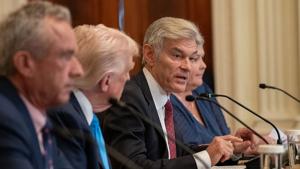
A coalition of retired military officers and former national security officials is urging the Centers for Medicare & Medicaid Services to halt an expansion of its medical equipment bidding program, warning it could create national security risks.
In a letter to CMS Administrator Dr. Mehmet Oz, the group raised concerns about plans to expand the Durable Medical Equipment, Prosthetics, Orthotics, and Supplies Competitive Bidding Program to include more advanced medical devices, including continuous glucose monitors and insulin pumps.
“We are writing to share our strong concerns about the Centers for Medicare & Medicaid Services’ proposal to expand the Durable Medical Equipment, Prosthetics, Orthotics, and Supplies (DMEPOS) Competitive Bidding Program to include a range of highly specialized medical products,” the officials wrote.
The letter notes that many of the products are no longer simple tools.
“Digitally connected devices such as CGMs and insulin pumps transmit real-time health data to providers, caregivers, and cloud-based platforms,” they wrote.
The coalition warned that placing these products in a cost-based bidding system could let foreign manufacturers, including companies with ties to the Chinese Communist Party, enter the Medicare supply chain. Since the program awards contracts largely on price, they argued that foreign firms benefiting from state subsidies could undercut American companies.
“This is more than a matter of economics or procurement policy. It is a question of strategic vulnerability,” the letter states.
The group noted potential risks for military personnel, veterans, and government employees who rely on federal health systems.
“There is also the question of patient data,” the officials wrote. “Many of the products in question are capable of collecting, storing, and transmitting detailed biometric information.”
They argued that when companies manufacture and service devices outside the United States, it becomes harder to ensure sensitive health data remains protected domestically and does not fall into the hands of American adversaries.
The coalition also warned that forcing domestic firms to compete solely on price could also reduce investment in research and development and weaken American leadership in medical technology.
They urged CMS to “disallow foreign entities access to millions of Medicare patients’ health information by excluding them from competing for DMEPOS contracts” and to “pause the proposed expansion of the competitive bidding program and conduct a full national security and economic impact assessment before proceeding.”
CMS has said it uses the competitive bidding program to lower costs and protect Medicare trust funds. The next round of contracts will take effect on or before Jan. 1, 2028.
U.S. Supreme Court appears skeptical of drug user gun ban
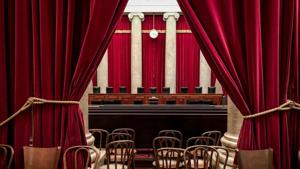
U.S. Supreme Court justices appeared skeptical during arguments on Monday over a law that disarms habitual drug users.
The case, U.S. v. Hemani, challenged a law that prohibits a person who “is an unlawful user of or addicted to any controlled substance” from possessing a firearm. The case centers on a Texas man who was charged with a felony when FBI agents found a pistol, marijuana and cocaine in his home after obtaining a search warrant, a petition to the court read.
The Trump administration petitioned the high court to hear the case after a lower court struck down the law barring people who use drugs such as marijuana from possessing firearms.
Lawyers for the U.S. government argued founding era laws against drunkards compel a similar standard to prohibit habitual drug users from possessing firearms. Sarah Harris, deputy solicitor general for the Department of Justice, said early 20th century drug use laws could be read similarly to founding era drunkard laws.
“Drugs are similar in the sense that there is a similar tradition by use of the intoxicants on a habitual basis,” Harris said.
Justices on the court appeared skeptical of Harris’ claim. Justice Neil Gorsuch argued that founding era laws against drunkards categorized the term drunkard very differently than what it is understood as in the modern era. He also questioned how the Trump administration defined a habitual user.
“The government has not been able to define what a user is,” Gorsuch said.
Justice Ketanji Brown Jackson appeared to agree with Gorsuch and further questioned the frequency of drug use in determining whether someone should be barred from possessing a firearm.
“Someone who only drinks or takes an intoxicant once every other day and is not doing so while he is using a firearm is irrelevant,” Jackson said. “The dangerous people at the founding were well beyond just one item every other day.”
Justice Amy Coney Barrett also agreed and posed a hypothetical question where an individual used a prescription drug that did not belong to them. She asked whether this law would disarm that individual.
Harris indicated that an individual could be disarmed if they regularly engage in using another person’s prescription. She also mentioned marijuana – the drug primarily at issue in the case – was under consideration by the government to be rescheduled to be included for research purposes, which would lessen the seriousness of this case.
Marijuana is a Schedule I drug under the Controlled Substances Act, a policy that deems the substance as having a high potential for abuse and no accepted medical use. Heroin is also considered a schedule I drug.
“The government has not made any final decisions for what to do with marijuana,” Harris said.
Justice Clarence Thomas questioned Harris’ reliance on the legal status of marijuana in making a determination in the case.
“You seem to rely quite a bit on the illegality of marijuana,” Thomas said.
Lawyers for Hemani further refuted the idea that drunkard standards could equate to the use of a controlled substance. Erin Murphy, a lawyer for Hemani, said drunkard laws had to be based on specific public displays of drunkenness before rights were taken away.
“The habitual drunkard tradition,” Murphy said, “cannot support disarming someone based on the fact he consumes a few times a week a controlled substance.”
Jackson questioned whether the law against drug users from possessing firearms meaningfully contributed to less overall violence.
“Congress’ purpose here to prevent dangerous people from having guns is not furthered by including this kind of person under this statute,” Jackson said.
The court is expected to decide the drug use gun possession case by July.
Poll: 47% of U.S. voters oppose bombing Iran
A new survey found that a plurality of United States voters oppose the bombing of Iran.
With Operation Epic Fury underway, Napolitan News Service conducted the survey to gauge Americans’ sentiments of President Donald Trump’s decision to bomb Iran and found that 47% of 1,000 voters opposed the bombings while 40% supported it.
Scott Rasmussen, founder of Napolitan Institute, briefly explained the results of the survey.
“This is a foreign policy issue, something that most voters don’t pay attention to a whole lot. One of the really interesting tidbits in the survey is that Donald Trump’s job approval didn’t budge,” Rasmussen said. “That gives us a hint that probably what we’re going to find in the survey is less about Iran and more about the perceptions of the president.”
Although 47% opposed bombing Iran, 48% agreed Iran is a national security threat to the United States, while 50% believe the attack on Iran will lead to a wider war with China and Russia.
Upon learning Saudi Arabia and other gulf nations support the attacks on Iran, voters’ opinions of the bombing changed to 50% approval and 38% opposition.
“This is not saying, ‘Oh, if we just educate people and get the messaging and the talking points right now, we’ll build support.’ It’s just that people have very little information to go on, and they’re looking for any kind of clues to guide their response,” Rasmussen said.
With the majority of voters believing the attack will result in a quick victory, 55% of voters believe the attack will wipe out the Iranian regime. Specifically regarding political parties, two thirds of Republicans (66%) at least somewhat favor the attack, while 71% of Democrats oppose it.
“The downside, the danger for the president, for Republicans, and for the military forces, is that if this does begin to drag on, there will be disillusionment and support will erode,” Rasmussen said. “But here’s the reality: if it’s successful, this is going to be looked at as a great victory that will benefit – that will have support among the American people.”
Also, 46% of voters believe the attack on Iran will be good for America, while 45% believe the attack will be bad.
WATCH/EXCLUSIVE: Title IX debate continues with Supreme Court decision pending
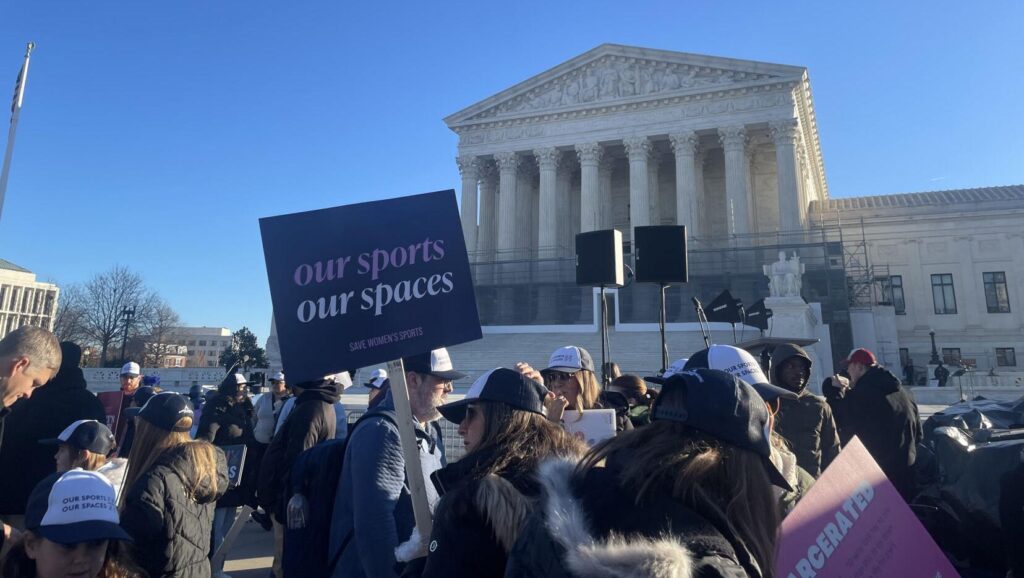
A national debate over Title IX enforcement continues as the Trump administration investigates schools and universities that allow transgender students to compete in women’s sports.
Critics argue federal officials are neglecting other core protections under the law.
The Trump administration maintains that allowing transgender athletes to compete in girls’ sports violates the law’s protections for women and girls. In February 2025, President Donald Trump signed the Keep Men Out of Women’s Sports executive order.
Title IX, the 1972 federal statute prohibiting sex-based discrimination in federally funded education programs, has become a focal point in disputes over athletics and student safety.
In an exclusive interview with The Center Square, Caius Willingham, senior policy analyst at Advocates for Trans Equality (A4TE), said the shift in enforcement priorities undermines the broader purpose of the statute.
“It is inexcusable for the Trump administration to investigate trans athletes when they’re failing to live up to their responsibility under the federal law to enforce other provisions of Title IX,” Willingham told The Center Square.
Willingham argues that policies restricting transgender participation in sports and access to facilities harm both transgender and cisgender individuals by increasing scrutiny, harassment and invasive investigations.
Willingham said there’s “no scientific consensus that transgender women athletes have an advantage in sports that would justify any claim that they are somehow outcompeting cisgender athletes.”
Describing the national debate as “a moral panic fueled by misinformation and hate mongering,” Willingham added that it presents a false choice between the safety of trans people and the comfort of cisgender people.
Federal officials and conservative advocacy organizations argue the opposite. U.S. Secretary of Education Linda McMahon said recent federal policy changes are necessary for protecting women and girls.
“We have seen the consequences of the Biden administration’s advocacy of a radical transgender agenda,” McMahon said. “Institutions stripped women and girls of their access to fair competition and dignified private facilities. They forced women into unfair and humiliating situations that have led to sexual assault, harassment, and in some cases, permanent injury. To say the least, the last four years have been hell for these girls.”
McMahon said the administration is working with organizations, including Alliance Defending Freedom and Do No Harm, to restore what McMahon called an understanding of sex grounded in biological distinctions.
At a recent congressional session on legislation concerning women’s sports, U.S. Rep. Harriet Hageman, R-Wyo., criticized the inclusion of gender identity within Title IX interpretations.
“Cisgender is a made-up word. That means nothing. Do not call me cisgender. I am a woman,” Hageman said.
Advocates for stricter enforcement say allowing transgender athletes to compete in girls’ sports discriminates against female students.
A decision from the U.S. Supreme Court on related Title IX questions is pending, and education officials across the country are awaiting further guidance on how federal law will be interpreted.
DOJ indicts 30 more in St. Paul church protest case

Dozens have now been indicted on federal charges related to a protest that disrupted a Jan. 18 church service in St. Paul.
U.S. Attorney General Pamela Bondi announced another round of arrests following the release of an indictment charging 30 additional people.
“YOU CANNOT ATTACK A HOUSE OF WORSHIP. If you do so, you cannot hide from us — we will find you, arrest you, and prosecute you,” Bondi said in a statement on social media. “This Department of Justice STANDS for Christians and all Americans of faith.”
This comes following widespread calls for arrests in the wake of the protest, which quickly captured attention far beyond Minnesota. The U.S. Department of Justice is investigating the protest, which was organized in part by members of Black Lives Matter Minnesota.
Video posted by the group shows protesters chanting “ICE out” and “justice for Renee Good” during the Sunday morning service at Cities Church. Another video circulating on social media shows Kelly calling congregants “pretend Christians” and “comfortable white people.”
Caleb Phillips, a congregant at the church, told The Center Square in an exclusive interview that the protestors were seated throughout the congregation before the service began.
“The entire congregation came alive. Individuals who are planted from front to back throughout the entire place stood up,” Phillips said. “It felt like we were surrounded, because they were all throughout the congregation.”
Reports allege the protesters discovered one of the church’s pastors works for U.S. Immigration and Customs Enforcement, calling the protest a “clandestine mission.”
The church protest came in the wake of the Jan. 7 killing of 37-year-old Renee Nicole Good during an encounter with ICE officers conducting enhanced immigration enforcement.
Journalist Don Lemon, a former CNN anchor who was inside the church covering the protest, is one of the most high-profile arrests made in conjunction with the protest. At the time, he defended the protestors.
“I imagine it’s uncomfortable and traumatic for the people here,” Lemon said during a livestream of the protest at service. “But, that’s what protesting is about.”
Lemon joined others who were indicted by a federal grand jury in Minnesota in January on two counts:
• conspiracy against right of religious freedom at a place of worship
• and injure, intimidate, and interfere with exercise of the right of religious freedom at a place of worship
Those charges stem from the Freedom of Access to Clinic Entrances (FACE) Act of 1994, which prohibits obstruction or threats at abortion clinics and places of worship.
When Bondi made the announcement on Friday, 25 of the 30 had already been arrested, while more were expected to come throughout the day. That brings the total to 39 people who have been arrested for their part in the protest.
True North Legal Director of Litigation Doug Wardlow, the firm representing Cities Church, released a statement applauding the arrests.
“The indictment . . . sends a clear message: houses of worship are off limits for those who would use chaos and intimidation to advance a political agenda,” Wardlow said. “Cities Church is grateful for the Department of Justice’s continued commitment to enforcing federal law to protect churches and other places of worship. The Department’s aggressive prosecution of this case affirms a foundational principle: in the United States, the sanctuary remains a sanctuary.”
Hegseth: Operation Epic Fury ‘just the beginning’ of U.S. action in Iran
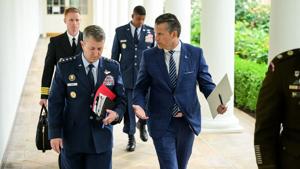
Operation Epic Fury is “just the beginning” of American combat operations in Iran, Secretary of War Pete Hegseth and General Dan Caine told reporters Monday.
Hegseth and Caine said the joint coordinated U.S.-Israeli strikes, which killed Iran’s Supreme Leader Ayatollah Ali Khamenei, resulted from months of planning with President Donald Trump and will continue “on his terms.”
“This is not a single overnight operation,” Caine said. “Our military objectives are clear: our mission is to protect and defend ourselves, and together with our regional partners prevent Iran from the ability to project power outside of its borders and be ready for follow-on actions as appropriate.”
Hegseth gave no timeframe for how long American military action will continue in Iran, adding that while no American troops are currently on the ground, “we are not going to go into the exercise of what we will or will not do.”
“We’ll go as far as we need to go to advance American interests. But we’re not dumb about it – you don’t have to roll 200,000 people in there and stay for 20 years,” Hegseth said. “We’ve proven that we can achieve objectives that advance American interests without being foolish about it.”
He also defended the controversial strikes, which key members of Congress received advance notice of but did not vote to authorize.
Iran’s “nuclear ambitions,” Hegseth argued, “had to be addressed” because “Iran has the ability to project power against us and our allies in ways that we can’t tolerate” even without nuclear weapons.
“They were building up this conventional arsenal in order to ensure that no one would ever block them from their ability to get nuclear weapons,” Hegseth said. “So we’re very clear-eyed about the nature of this Iranian threat […] radical Islamists can’t have a nuclear bomb that they wield against the world.”
He added that American casualties, including the three U.S. service members killed in action by Iranian counterstrikes, “only stiffen our resolve to ensure that we do this properly.”
“We fight to win,” Hegseth said. “We fight to achieve the objectives the President of the United States has laid out, and we will do so unapologetically.”
Trump administration tells court tariff refunds ‘will take time’

Attorneys for the federal government said refunding tariffs to the U.S. businesses that paid them could take time and urged a court not to rush, a move opponents said would cost taxpayers even more.
A group of small businesses, represented by the Liberty Justice Center, had asked a federal appeals court for quick action on refunds after the Supreme Court voided President Donald Trump’s tariffs under the 1977 International Emergency Economic Powers Act. The high court said Congress alone has the power to issue tariffs under the law.
Attorneys for the federal government urged the court to move deliberately.
“Plaintiffs claim speed is of the essence because they suffer harm from being ‘forced to operate’ without refunds in the interim,” attorneys for Brett Shumate, the assistant attorney general, wrote in response. “But a compensable monetary loss is a classic harm that can be remedied by payment of money with appropriate interest, and a plaintiff’s bare desire to be paid immediately is not a basis to demand this Court comply with his every whim.”
The government, instead, asked for a 90-day delay “to allow the political branches an opportunity to consider options.”
Rather, the federal attorneys indicated that the “coming process will take time,” citing another case in which much less money was involved, and refunds took seven years.
Shumate’s team noted that Trump’s IEEPA tariffs “have been replaced by vigorous new tariffs.” Trump’s most recent global tariffs are more limited in scope and only remain in place for 150 days without action from Congress.
“Complexity in the future counsels appropriately careful process, not breakneck speed,” the federal attorneys wrote.
Cato Institute scholars Scott Lincicome, Nathan Miller and Alfredo Carrillo Obregon said the delays could cost taxpayers billions in interest.
“These delays would leave American taxpayers on the hook for billions in interest that the government would owe importers on top of the tariff refunds,” they wrote.
The group estimated that each month of delay will add $700 million in interest costs for U.S. taxpayers, “or around $23 million per day.”
A slew of business groups asked the Trump administration to move swiftly with the refund process after the Supreme Court ruled the tariffs were invalid.
The Penn Wharton Budget Model projected that reversing the tariffs would generate up to $175 billion in refunds.
Supreme Court declines to hear felony gun possession case
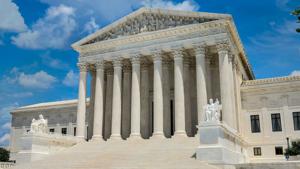
The U.S. Supreme Court on Monday declined to decide whether individuals with felony records can be permanently disarmed under the Second Amendment.
The court declined to hear Vincent v. Bondi on Monday. The challenge targeted laws banning individuals with felony convictions from possessing firearms.
Melynda Vincent, a social worker and nonprofit founder, was convicted of federal bank fraud in 2008 for attempting to pass a fraudulent check. While nonviolent, the felony prohibits Vincent from possessing firearms.
In Vincent v. Bondi, Vincent argued the prohibition violated her Second Amendment rights. She sought to have the law declared unconstitutional and for an injunction to prevent the U.S. attorney general from enforcing it against her.
After denials in lower court, Vincent sought relief from the U.S. Supreme Court.
“Text, history, and tradition show that the government cannot permanently disarm Ms. Vincent – a single mother, social worker, adjunct college professor, and nonprofit founder with two college degrees – solely because of one seventeen-year-old conviction for passing a bad check,” Vincent’s lawyers wrote in a petition to the Supreme Court.
The government disputed Vincent’s claims of a permanent ban from the possession of firearms. In a petition to the court, lawyers for the Trump administration said the government reinstated a process for convicted felons to gain their rights to possess firearms, leaving Vincent’s challenge on a faulty basis.
Even still, lawyers for the government argued the ban on firearm possession for felons aligns with the history and tradition of the Second Amendment.
“American colonies imposed that penalty even for non-violent crimes such as counterfeiting, squatting on Indian land, burning timber intended for house frames, horse theft, and smuggling tobacco,” lawyers for the government wrote in a brief to the court.
Additionally, the Supreme Court denied similar petitions from Selim Zherka and Steven Duarte, who both sought permission from the government to possess firearms despite previous non-violent felony convictions.
The Supreme Court’s denial comes as justices on the bench prepare to hear a significant case on Second Amendment rights for individuals who engage in regular drug use on Monday. The case, U.S. v. Hemani, could drastically expand gun rights in the United States.
Plastics industry applauds Trump’s focus on strengthening manufacturing
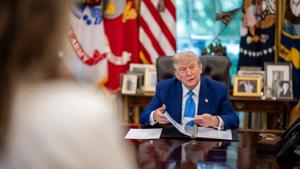
The plastics industry is pleased by President Donald Trump’s mention at the State of the Union of strengthening manufacturing in the nation, with an industry president stressing the importance of next modernizing the recycling infrastructure.
Ross Eisenberg, president of America’s Plastic Makers, told The Center Square that at the State of the Union “the President made clear that strengthening American manufacturing remains a national priority.”
“That’s exactly where the plastics industry is focused,” Eisenberg said.
America’s Plastic Makers is a division of the American Chemistry Council.
Eisenberg told The Center Square: “Our sector already supports more than five million U.S. jobs and over one trillion dollars in economic output.”
“The next step” in the area of plastics “is to modernize America’s recycling infrastructure,” Eiisenberg said.
“We could make more here; we could recycle more here; we just need the policies that get us there,” Eisenberg said.
Eisenberg said that “the fastest way to strengthen U.S. manufacturing is to give companies the policy certainty they need.”
“Two bills now before Congress, the Recycling Technology Innovation Act and the bipartisan Recycled Materials Attribution Act, would help modernize our recycling system, provide national standards for recycled content marketing claims, and help unlock investment in new American facilities,” Eisenberg said.
“Plastics are essential to the U.S. economy in sectors like automotive, agriculture, healthcare, clean energy and advanced technology,” Eisenberg stated.
“We also know we need to keep more plastic out of the environment,” Eisenberg said.
“With the right policies, the United States can lead in both manufacturing and recycling innovation,” Eisenberg said.
Strengthening manufacturing is important to the plastics industry, because, as The Center Square previously reported, the industry is “one of the ‘most powerful economic engines’ in the U.S.“
As Eisenberg alluded to, the plastics industry generates “more than $1.1 trillion in total economic output,” and operates with a large number of other industries reliant on itself, The Center Square reported.
Eisenberg told The Center Square last year that “expanding and modernizing U.S. recycling infrastructure presents a clear opportunity to create new jobs, keep valuable materials in use, and reduce waste.”
Everyday Economics: The Fed’s labor-market reality check
Last week wasn’t about a single data point. It was about a shift in tone from policymakers: the labor market may be weaker than the headlines imply, and the economy is increasingly being supported by a narrower set of households and sectors. This week, that narrative gets tested in two places: the February jobs report on Friday, and markets’ evolving assessment of geopolitical risk involving Iran – an oil producer in a region where worst-case scenarios can change the global macro outlook fast.
What Fed speakers said last week: Waller put the labor market in the crosshairs
The most important Fed remarks last week came from Governor Christopher Waller, who delivered a substantive economic outlook speech on Feb. 23. His message was sobering on the labor market.
First, Waller highlighted the annual benchmark revisions to payrolls, which dramatically changed the story of 2025. The revisions turned last year into one of the weakest years for job creation in decades outside of a recession: 181,000 jobs added in total – about 15,000 per month. That’s essentially stall speed for an economy of this size.
Then he went further. Waller argued the revised numbers likely still carry an upward bias – suggesting payroll employment may have actually fallen in 2025, a rare occurrence outside of a recession. The implication is straightforward: don’t anchor on month-to-month volatility. The relevant signal is the trend.
On the broader economy, Waller noted that Q4 2025 real GDP growth came in at 1.4%. But he argued that the government shutdown likely distorted both Q4 and Q1, so a better read is the combined six-month window – where he expects growth to average above 2%.
He also flagged a K-shaped spending dynamic that matters for 2026: higher-income households remain resilient – helped by wealth effects tied to last year’s stock-market gains – while lower- and middle-income consumers are trading down. Demand is still there, but it is becoming more price-sensitive and more unequal.
The broader Fed message remains patience. But Waller’s emphasis on labor-market fragility effectively raises the sensitivity of the reaction function to downside labor surprises: if jobs weaken, the threshold for a rate cut falls – even if inflation is merely drifting lower rather than rapidly converging to 2%.
What to expect from the February jobs report
January reset expectations. Payrolls came in at +130,000, above consensus, and the unemployment rate ticked down to 4.3%. Wages rose 0.4% month over month and 3.7% year over year. After a surprise like that, markets want to know whether January marked stabilization – or noise.
For February, the key is not just the headline payroll number. It’s whether the report confirms breadth and durability, especially given a major comparability break in the household survey.
Three things to watch:
(1) Population controls: a comparability break in the household survey
The BLS delayed the annual population control adjustments that usually appear with January household-survey estimates. Those updated population controls will instead be introduced with the February 2026 release. That means unemployment and labor force participation will reflect a methodological break, and January household estimates will also be revised. Translation: don’t over-interpret a one-tenth move in the unemployment rate this month.
(2) Breadth vs. narrow strength
January’s gains were concentrated. If February job growth broadens across sectors – especially cyclicals and private services – it signals genuine stabilization. If it’s narrow again, it raises questions about durability and reinforces Waller’s argument that the trend is weaker than the monthly prints may suggest.
(3) Hours and wage momentum
In a low-hire environment, hours worked and wage growth can be more informative than payroll counts alone. Softer payrolls with steady hours is a very different signal than softer payrolls with hours rolling over.
Policy implications remain straightforward: the Fed is firmly on hold for March. A weak February print would accelerate market pricing for a June cut. A solid, broad-based number keeps the Fed comfortable staying put well into the summer.
The Iran shock: why the oil market has a buffer — and why yields may still fall in a risk-off episode
Geopolitical risk involving Iran is the type of shock markets price quickly because energy supply risks are nonlinear. But it is equally important to understand what has changed about the oil backdrop relative to past Middle East shocks – and what markets actually did the last time the Strait of Hormuz was in the headlines.
Start with today’s setup: the oil market has a cushion. Supply has been running ahead of demand, inventories have been building, and that inventory accumulation provides an initial buffer against disruptions. Add in potential shock absorbers – OPEC+ spare capacity, emergency reserves, a more flexible U.S. supply response, and shipping and logistics that have proven more resilient through recent stress tests – and the base case looks more like a risk-premium episode than an immediate physical shortage.
That buffered starting point matters because it changes the borrowing-cost story. A key point investors sometimes miss is that an oil shock does not automatically push Treasury yields higher. In past Hormuz-risk flareups, the first move has often been oil up but yields down – because investors rotate into safe havens.
During the June 2019 tanker-attack episode near the Strait of Hormuz, oil rose while Treasury yields fell as markets treated the event as risk-off and growth-negative. Even in September 2019, when attacks on Saudi facilities triggered an outsized intraday oil spike, the bond-market response again reflected competing forces rather than a mechanical rise in yields – safe-haven demand and growth fears can offset inflation optics.
So the real question for markets – and for corporate borrowing costs – is not simply “did oil jump on the headline?” It is whether the shock becomes persistent enough to lift inflation compensation and term premia, or remains a temporary episode that tightens financial conditions mainly through risk-off behavior.
Historically, oil and gasoline price shocks tend to be front-loaded, with limited persistence in headline inflation and muted effects on core inflation and long-run expectations – unless the shock becomes sustained enough to generate second-round effects.
Where the risk gets serious is in the tail scenarios: a broader regional conflict that threatens Strait of Hormuz shipping flows, or internal destabilization within Iran that curtails production or exports for an extended period. Those are the paths that can overwhelm buffers and turn a headline risk premium into a true supply constraint.
If you want one clean scoreboard before overreacting to crude, watch real-time indicators of whether shipping is actually tightening: AIS (Automatic Identification System) signals for tanker transits, speeds, and anchorage “loitering” through Hormuz (MarineTraffic is one widely used source), plus tanker freight rates via the Baltic Exchange (BDTI/BCTI). For the “risk price,” monitor insurance stress through Lloyd’s Joint War Committee Listed Areas updates and market reporting on war-risk premia.