Center Square
Judiciary Comm. to take on bill targeting lawsuit investors
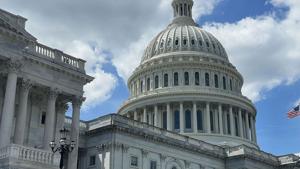
The House Judiciary Committee is set to consider action against companies that invest in American lawsuits – an often-lucrative arrangement that encourages mass litigation.
Third-party litigation funding doesn’t have to be disclosed in most federal and state courts, but that would change if H.R. 1109 passes. A mark-up session for the committee to discuss and vote on it is scheduled for Tuesday.
It was introduced by Darrell Issa, a California Republican.
“Our legislation targets serious and continuing abuses in our litigation system that distort our system of justice by obscuring public detection and exploiting loopholes in the law for financial gain,” Issa said last year.
The legislation targets agreements in which litigation-funders advance money to plaintiffs attorneys in return for a percentage of whatever is won in court. Since they aren’t traditional loans, they aren’t subject to usury laws, and critics worry that investors ultimately control when or if litigation is settled.
H.R. 1109 won’t prohibit the funding. Instead, the agreements will be disclosed in court, much like defendants must do with their insurance policies. A related bill that forbids funding from sovereign wealth funds and foreign governments is headed to the full House.
TPLF has long been a sore spot for defendants who claim it encourages frivolous lawsuits and allows foreign funders to pursue objectives in court like filing lawsuits to weaken the American energy industry. Oklahoma and Georgia passed measures targeting TPLF last year, joining Wisconsin, Indiana, Montana, West Virginia, Louisiana and Kansas.
In federal courts, Delaware, New Jersey and the Northern District of California require disclosure of TPLF agreements.
Groups including Consumer Action for a Strong Economy wrote Judiciary chair Jim Jordan, R-Ohio, to support the bill.
“All parties deserve to know who’s financing a case and influencing outcomes,” the letter said.
“Judges need to see who’s driving cases in their courtrooms, and plaintiffs need to understand if secret funding is involved so they can stay in control of their own cases. And defendants need to know who might have access to their intellectual property, who could be calling the shots in the litigation for the other side, and who is really pulling the strings during negotiations.”
Defendants are required to disclose insurance policies that are available for plaintiffs to collect from, but plaintiffs currently don’t need to show who is funding their cases. Resistance for TPLF reform includes the claim a plaintiff’s financial situation could be made public.
Some insight into how outside money affects cases comes from arguments between plaintiff lawyers.
As Johnson & Johnson attempted a mass settlement of tens of thousands of ovarian cancer claims in a Texas federal court, some plaintiffs firms stood in the way of what would have been a $9 billion agreement. The company felt litigation-funding complicated what was an ultimately unsuccessful plan.
Court documents say Fortress Investment Group lent $24 million to Smith Law Firm, which repaid it with the proceeds of another loan from Elliott Associates. Smith fought to accept J&J’s multibillion-dollar deal, but Beasley Allen led a fight against approval.
Beasley Allen sued Smith and claimed Smith voted yes on the settlement because it owes $240 million to third-party financiers. J&J wondered whether Beasley Allen had its own bills to pay, though partner Andy Birchfield testified his firm did not obtain litigation funding for its claims.
“Litigation funding has permeated the talc litigation,” J&J said in a court filing, in which it accused plaintiff law firms of neglecting their duty to represent clients to meet the demands of their hedge fund financiers instead. “Beasley Allen’s conduct suggests that other undisclosed financial interests are actually driving its decisions relating to the resolution of the talc litigation.”
Plaintiffs lawyers and investors spend hundreds of millions of dollars in advertisements and marketing services, and there’s no financial incentive to screen for bad claims when a mass filing of thousands could pressure a defendant to settle rather than investigate each lawsuit.
The U.S. Chamber of Commerce has long pushed for a measure like the Litigation Transparency Act to pass. Though it’s a multibillion-dollar industry, “funders operate in the shadows,” the Chamber’s Institute for Legal Reform says.
Trump announces 25% tariff on nations doing business with Iran
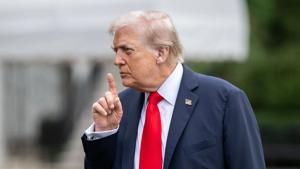
President Donald Trump on Monday said any nation that does business with Iran will face a 25% tariff on imports as massive protests in the Islamic Republic continue into a third week.
Trump’s tariff threat comes after he had threatened potential military intervention in Iran.
“Effective immediately, any Country doing business with the Islamic Republic of Iran will pay a Tariff of 25% on any and all business being done with the United States of America,” Trump wrote in a social media post. “This Order is final and conclusive.”
Trump told reporters late Sunday evening on board Air Force One that he was considering responding to reports that the Iranian regime is killing protesters. Earlier in the month, the president issued a stern warning to the regime if it retaliated against protesters, as The Center Square previously reported.
“If Iran shoots and violently kills peaceful protesters, which is their custom, the United State of America will come to their rescue. We are locked and loaded and ready to go,” the president posted to Truth Social.
A tariff is a tax on imported goods.
Trump has said he has used tariffs and the threat of tariffs to end eight wars around the globe since re-taking the White House in January 2025.
The Supreme Court is considering a legal challenge over Trump’s use of tariffs under a 1977 law that has never been used for that purpose.
Trump has made tariffs a key part of both his domestic and foreign agendas during his second term. Last April, Trump imposed import taxes of at least 10% on every U.S. trading partner. Since then, the president has suspended, changed, increased, decreased and reimposed tariffs under the 1977 law.
A group of states and small businesses challenged Trump’s tariffs under the 1977 law, winning in two lower courts before the administration appealed to the Supreme Court.
The high court agreed to hear the case on an expedited basis, given the economic stakes at issue. The Trump administration could be forced to refund more than $133.5 billion in tariff revenue to importers if the Supreme Court sides with the states and small businesses in the case.
Businesses have reported that tariffs have pushed up prices for consumers.
Boston, Seattle, Madison top list of best cities for students

Access to high-quality education remains a top priority for many families, and a new study suggests strong academic performance often goes hand in hand with a high quality of life.
The study by Melbourne Business School Online examined school performance across major U.S. cities, analyzing factors such as grades, pupil-to-teacher ratios and standardized test scores. Researchers also evaluated quality-of-life indicators, including housing costs, access to parks and libraries, walkability and other community amenities.
According to the study, Boston ranks as the top city for families seeking strong educational outcomes. Seattle and Madison, Wisconsin, follow closely behind.
“While Boston and Seattle come with steep housing costs, Madison stands out as a more affordable alternative that still delivers top academic results, safety, and family-friendly amenities,” the study states.
A spokesperson for Melbourne Business School Online told The Center Square that the data suggest that academic success is driven by a myriad of factors. One cannot look at classrooms alone, but the ecosystem that surrounds them, the spokesperson said.
Cities like Boston, Seattle and Madison not only have smaller class sizes but also supportive living conditions that contribute to higher graduation rates and test scores. according to the study.
“What stands out in these results is how closely strong test scores align with the wider learning environment of a city,” the spokesperson said. “Places like Boston, Madison and Seattle don’t just perform well in Grade 8 reading and maths or on the SAT and ACT, they also have higher shares of college-educated adults, better access to libraries, and more stable neighborhoods. These factors reinforce one another.”
The study found Boston has a pupil-to-teacher ratio of 14.8, compared with 16.1 in Seattle and 15.9 in Madison. Boston also led in American College Testing scores, averaging 26.1, followed by Seattle at 24.5 and Madison at 19.4. The highest possible ACT is 36.
Though these cities may be successful on a national scale, the broader K–12 education system continues to face challenges.
According to the National Center for Education Statistics, average reading scores fell three points, while eighth-grade math dropped eight points. These declines were largely due to the COVID-19 pandemic, while total nationwide school district debt rose more than 2.1% from $532.5 billion in 2021 to $543.9 billion in 2022, according to the U.S. Census Bureau.
Trump says U.S. is ‘SCREWED’ without tariffs
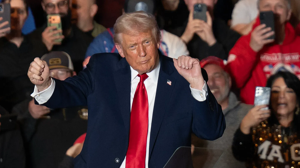
President Donald Trump said Monday that repaying tariff revenue and related investments from his tariffs on imports would be “almost impossible.”
It was the latest indication that the president remains concerned about a potentially adverse ruling from the U.S. Supreme Court on a legal challenge to his authority to issue tariffs under the 1977 International Emergency Economic Powers Act. Trump has previously suggested that a ruling against his tariffs would lead the nation to economic ruin. That came up again on Monday.
“The actual numbers that we would have to pay back if, for any reason, the Supreme Court were to rule against the United States of America on Tariffs, would be many Hundreds of Billions of Dollars, and that doesn’t include the amount of ‘payback’ that Countries and Companies would require for the Investments they are making on building Plants, Factories, and Equipment, for the purpose of being able to avoid the payment of Tariffs,” Trump wrote in a social media post. “When these Investments are added, we are talking about Trillions of Dollars!”
In a filing with the Court of International Trade on Thursday, attorneys for the federal government said they will reimburse the tariffs under the 1977 law if required to do so.
In that case, U.S. Customs and Border Protection wrote that they won’t “oppose the Court’s authority to order reliquidation of entries of merchandise subject to the challenged IEEPA duties and that they will refund any IEEPA duties found to have been unlawfully collected, after a final and unappealable decision has been issued finding the duties to have been unlawfully collected and ordering defendants to refund the duties.”
Trump said it would be a disaster.
“It would be a complete mess, and almost impossible for our Country to pay. Anybody who says that it can be quickly and easily done would be making a false, inaccurate, or totally misunderstood answer to this very large and complex question,” Trump wrote on Truth Social. “It may not be possible but, if it were, it would be Dollars that would be so large that it would take many years to figure out what number we are talking about and even, who, when, and where, to pay.”
The president added: “In other words, if the Supreme Court rules against the United States of America on this National Security bonanza, WE’RE SCREWED!”
Phillip Magness, senior fellow at the Independent Institute, previously told The Center Square that Trump’s claims of ruin are exaggerated.
“Trump has made a number of wildly exaggerated economic claims,” Magness said. “These numbers are nonsensical and appear to have zero basis in reality.”
Trump has made tariffs a central part of both his domestic and foreign agendas during his second term. Last April, Trump imposed import taxes of at least 10% on every U.S. trading partner. Since then, the president has suspended, changed, increased, decreased and reimposed tariffs under the 1977 law.
A group of states and small businesses challenged Trump’s tariffs under the 1977 law, winning in two lower courts before the administration appealed to the Supreme Court.
The high court agreed to hear the case on an expedited basis, given the economic stakes at issue. The Trump administration could be forced to refund more than $133.5 billion in tariff revenue to importers if the Supreme Court sides with the states and small businesses in the case.
Businesses have reported that tariffs have pushed up prices for consumers.
Chevron asks Supreme Court for rematch in Louisiana wetlands case

A Louisiana jury last April determined oil giant Chevron owed $744 million for environmental damage to the state’s coastline. Chevron, seeking a rematch in a potentially friendlier arena, told the U.S. Supreme Court on Monday that a federal court should decide the case.
Chevron’s argument centers on a federal law that allows defendants to move certain lawsuits from state court to federal court when the claims are tied to actions taken under federal authority. Chevron, whose case has been joined by the Trump administration, says its World War II-era work supplying aviation gasoline for the U.S. brings it within that rule. The justices must decide whether that is enough to allow Chevron to move the case, previously decided by jurors in Plaquemines Parish, to federal court.
Chevron attorney Paul Clement argued the link is straightforward: Chevron’s predecessors produced the specific crude oil that was the “indispensable component” of the gas they refined for the government. He said the contracts themselves “drew the connection” by tying what the government paid for the gas to the market price of crude and by promising to reimburse any new crude-oil taxes. That, according to Clement, shows crude production and gas refining were part of the same federally-directed effort.
Louisiana and Plaquemines Parish argue the opposite: that no federal contract is at issue in the lawsuit. Louisiana Attorney General Liz Murrill says the allegations focus on activities in Louisiana’s coastal zone that were not directed by the federal government.
“The statute itself requires acting under an officer. They’ve never identified a particular officer that they were purportedly acting under instructions,” state Solicitor General Ben Aguiñaga told the court.
The outcome has the potential for broad implications beyond Plaquemines Parish. Local governments in Louisiana have filed more than 40 lawsuits in local courts seeking billions of dollars from energy companies.
In 2016, then–Attorney General Jeff Landry, now Louisiana’s governor, signed a joint prosecution agreement with plaintiffs’ lawyer John Carmouche, who is working on dozens of cases similar to the one in Plaquemines Parish. The agreement committed the state to not “expressly or impliedly endorse” substantive defenses raised by any defendant in the coastal cases.
Legal scholars called it a form of bias that can’t be tolerated by the U.S. Constitution.
“You just can’t have this in our federal system,” said former Justice Department attorney Mike Fragoso. “The fact of the matter is that there’s a broader issue of constitutional principles of federal supremacy in all these kinds of cases.”
Murrill laughed when asked about that argument, calling it “convenient.”
“They certainly wanted to get President Trump’s attention by trying to tether this issue and these cases to the president’s policy agenda,” Murrill said. “This has nothing to do with federal supremacy, and it is not in conflict with that.”
A decision in either direction has a variety of other implications, to varying degrees.
Two former Joint Chiefs of Staff, Navy Admiral Michael Mullen and Air Force General Richard Myers, warned that requiring extreme contractual detail as a standard could slow wartime contracting and discourage companies from helping the government in future emergencies for fear of later liability in state court.
Meanwhile, the pursuit of billions of dollars in damages comes at a time when the U.S. demand for energy is expected to increase 25% by 2030. Louisiana is welcoming billions of dollars in industrial development and growth, including a $10 billion Meta data center in the northeast portion of the state.
The lawsuits are in a state whose economy is unusually rife with oil and gas activity, and they “harm the very citizens they purport to protect,” according to the Pelican Institute, a Louisiana-based conservative think tank that argues the litigation costs taxpayers, reduces offshore drilling activity and eliminates jobs.
“A lot of the communities recognize the good that businesses like Chevron can do in terms of not only the number of jobs, but the things that they offer to the community,” Sarah Harbison, legal counsel for the Pelican Institute, said in an interview.
SCOTUS to hear transgender athlete cases Tuesday
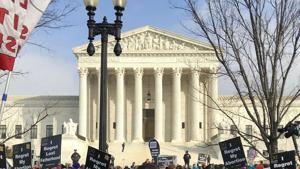
The U.S. Supreme Court on Tuesday will hear arguments in two cases on whether biological men can compete in women’s and girls sports.
The cases, Little v. Hecox and B.P.J. v. West Virginia, challenged state laws in Idaho and West Virginia, respectively, that bar transgender individuals from competing in girls and women’s sports.
In April 2021, West Virginia passed the Save Women’s Sports Act, which bars transgender individuals from participating in girls and women’s sports in public secondary schools and colleges.
B.P.J., a 15-year-old student who has identified as transgender since the third grade, said the law violated sex discrimination rules laid out in Title IX and questioned whether the 14th Amendment’s Equal Protection Clause prevented states from offering separate sports teams based on biological sex.
The law was then blocked from going into effect by the Fourth Circuit Court of Appeals. Lawyers for the state argued the West Virginia law aligned with Title IX and prevents unnecessary barriers to sports participation in the future.
“If a school official determines that a male student has a sufficient female identity, that could be enough to participate on the girls’ team under the Fourth Circuit’s ruling – no matter the male student’s appearance or athletic performance,” lawyers for the state warned in a brief to the Supreme Court.
Carrie Severino, president of the Judicial Crisis Network, told The Center Square there is no constitutional basis for biological men to participate in women’s sports. She said state legislators and voters should be able to decide whether they want to allow transgender individuals to compete.
“Whatever you think of the wisdom of allowing biological men to play in women’s sports, they don’t have a constitutional argument for why they need to play in women’s sports,” Severino said. “That’s just never been historically part of our Constitution.”
In 2020, Idaho enacted the Fairness in Women’s Sports Act, which imposes a ban on participation of transgender women and girls on public school sports teams from elementary school through college. In Idaho, Lindsay Hecox, a transgender woman, filed a lawsuit after attempting to join the Boise State University track and cross country team.
Similarly to B.P.J., Hecox argued the state ban violated Title IX protections and the Constitution’s Equal Protection Clause under the Fourteenth Amendment.
The Ninth Circuit Court of Appeals blocked Idaho’s law from going into effect, allowing Hecox to participate in sports at Boise State University. Lawyers for Hecox said the case is meant to focus on one situation, rather than apply to all transgender athlete participation across the country.
“Petitioners seek to create a false sense of national emergency when nothing of the sort is presented in this case,” lawyers for Hecox wrote in a brief to the court.
Lawyers for Hecox also said the National College Athletics Association allowed transgender individuals to participate in women’s sports so long as they suppressed testosterone for one year.
“H.B. 500 was passed specifically to exclude girls and women who are transgender from girls’ and women’s teams,” lawyers for Hecox wrote.
Idaho Gov. Bradley Little, in a brief to the court, defended the state’s law as an enforcement measure to protect women and girls from safety hazards and unfair competition standards. He cited examples in Idaho of women’s sports teams that refused to participate in competition against transgender athletes for fear of injury.
While the injunction only applies to Hecox, Little said it prevents other states from enacting similar legislation because the ninth circuit defines “sex” using subjective tests.
“These holdings stop Idaho from enforcing its law and thwart similar laws passed to protect women’s sports in Alaska, Arizona, and Montana,” lawyers for Little wrote in a brief to the court.
As the U.S. Supreme Court prepares to hear both cases on Tuesday, Severino said she is hopeful for an outcome that upholds both Idaho’s and West Virginia’s laws. She said the abundance of justices on the court who prescribe to originalist legal theories will affect the court’s decision.
“There’s just no way to use an originalist analysis and get to the point where you can say states must force their public schools to allow boys in girls sports,” Severino said.
House to vote on two more govt funding bills costing $76 billion
As a potential Jan. 30 government shutdown looms, the U.S. House plans to vote this week on the next batch of appropriations bills funding the federal government in fiscal year 2026.
The House Rules Committee will mark up Tuesday a two-bill minibus appropriating $50 billion for national security-related activities, and $26.5 billion for financial and general government services.
If the minibus becomes law, the departments of State and Treasury, the IRS, the Executive and Judiciary branches, and related agencies will be fully funded until October.
Senate and House appropriators in both parties made compromises in the legislation, including Democrats accepting a 16% funding cut in the national security bill and Republicans allowing for more foreign aid funding than President Donald Trump wanted.
“These were tough negotiations under extremely challenging circumstances, and while I strongly disagree with some of the difficult spending decisions that were ultimately made, there is no doubt in my mind that this bipartisan compromise is a significantly better outcome than another yearlong continuing resolution,” Senate appropriator Patty Murray, D-Wash., said.
Out of the 12 fiscal year appropriations bills, so far only three have been signed into law, providing money for Veterans Affairs, military construction, the Department of Agriculture and rural development, and the Legislative branch.
Three more funding bills passed the House last week in the form of a three-bill minibus, granting appropriations for the departments of Commerce; Justice; Energy; Interior; and the Environmental Protection Agency, among others.
The Senate will begin votes to advance that legislation Monday, though if any amendments are adopted, it must go back to the lower chamber for final approval.
Congress has only three weeks to finish the remaining nine bills, some of which lawmakers are still hotly debating, like the Labor and Health and Human Services bill. It is likely that they will fail to pass all twelve on time, meaning either the government will shut down or Congress will pass yet another funding stopgap to cover the remaining agencies.
Former Federal Reserve leaders, Senators slam DOJ’s inquiry

Former Federal Reserve leaders and a top Republican Senator raised concerns about the independence of the U.S. central bank after Chairman Jerome Powell announced a Justice Department investigation.
In a rare move, Powell on Sunday released a video statement publicly disclosing the probe and saying it was filed because the central bank hasn’t bowed to President Donald Trump’s pressure campaign to lower interest rates.
Powell said the Department of Justice served the Federal Reserve with grand jury subpoenas on Friday, threatening a criminal indictment related to Powell’s testimony before the Senate Banking Committee last June about a multi-year Federal Reserve renovation project.
“This new threat is not about my testimony last June or about the renovation of the Federal Reserve buildings. It is not about Congress’s oversight role; the Fed through testimony and other public disclosures made every effort to keep Congress informed about the renovation project,” Powell said in the video. “Those are pretexts. The threat of criminal charges is a consequence of the Federal Reserve setting interest rates based on our best assessment of what will serve the public, rather than following the preferences of the President.”
Sen. Thom Tillis, R-N.C., a member of the Senate Banking Committee, said Monday he plans to block confirmation of any new nominees to the central bank until the matter is resolved. He also took a shot at the Justice Department.
“If there were any remaining doubt whether advisers within the Trump Administration are actively pushing to end the independence of the Federal Reserve, there should now be none,” Tillis said in a statement. “It is now the independence and credibility of the Department of Justice that are in question.”
Former Federal Reserve leaders, including Ben Bernanke, Alan Greenspan and Janet Yellen, were also critical of the Justice Department investigation.
“The Federal Reserve’s independence and the public’s perception of that independence are critical for economic performance, including achieving the goals Congress has set for the Federal Reserve of stable prices, maximum employment, and moderate long-term interest rates,” they wrote in a statement. “The reported criminal inquiry into Federal Reserve Chair Jay Powell is an unprecedented attempt to use prosecutorial attacks to undermine that independence.”
The group, which also included other former economic leaders, said Trump’s move would undermine the bank’s independence from politics.
“This is how monetary policy is made in emerging markets with weak institutions, with highly negative consequences for inflation and the functioning of their economies more broadly,” they wrote. “It has no place in the United States whose greatest strength is the rule of law, which is at the foundation of our economic success.”
U.S. Senator Lisa Murkowski, R-Alaska, said she spoke with Powell on Monday morning.
“It’s clear the administration’s investigation is nothing more than an attempt at coercion,” she said. “If the Department of Justice believes an investigation into Chair Powell is warranted based on project cost overruns – which are not unusual – then Congress needs to investigate the Department of Justice.”
She added: “The stakes are too high to look the other way: if the Federal Reserve loses its independence, the stability of our markets and the broader economy will suffer.”
Powell’s term as chairman ends in May. Trump has made it clear that he plans to replace Powell with someone who wants to lower benchmark interest rates.
Sen. Elizabeth Warren, D-Mass., told CNN on Monday that the president was “weaponizing the Department of Justice” and that the move would be bad for the U.S. economy and consumers.
Trump personally toured the Federal Reserve renovation project last summer with Powell. The president used the visit to once again publicly call for lower interest rates. Tillis joined the president at the time.
Back in July, Powell defended work on the renovation project, which he said was hampered by multiple challenges. The project was estimated to cost $1.9 billion in 2023. By last summer, the costs had grown to $2.5 billion after issues with the high water table, asbestos and toxic contamination in the soil.
Cato scholar Jai Kedia said that past interventions haven’t worked out.
“Historical episodes of executive interference with monetary policy always lead to bad economic outcomes like high inflation,” he said. “This episode demonstrates that our current system of setting the federal funds rate target is too arbitrary and discretionary. It leaves too much scope for subjectivity and thereby invites criticism from politicians seeking a scapegoat. It is imperative that we instill objective, rules-based, monetary policy to both improve economic outcomes and shield the Fed’s independence.”
White House press secretary Karoline Leavitt said Trump’s comments didn’t spark the investigation.
“The president has every right to criticize the Fed chair. He has a First Amendment right, just like all of you do. And one thing for sure, the president has made it quite clear, Jerome Powell is bad at his job,” she said Monday. “As for whether or not Jerome Powell if a criminal, that’s an answer for the Department of Justice.”
Until Sunday, Powell had taken Trump’s name-calling and public pressure campaign in stride. Last July, when asked about how Trump’s comments had affected him, Powell said he was focused on doing his job. The line drew applause from a stage filled with other central bankers.
Since returning to the White House for his second term, Trump has called Powell every name in the book. One of the president’s favorites for Powell has been “numbskull.” He’s also given Powell the nickname “Too Late” for not cutting interest rates as fast as Trump would like.
Powell has largely ducked Trump’s criticism. When Trump criticized cost overruns on the remodel, the Fed chairman referred the matter to the central bank’s inspector general.
Trump has wanted to fire Powell for years and has been openly searching for a replacement.
Trump weighing ‘strong options’ against Iran
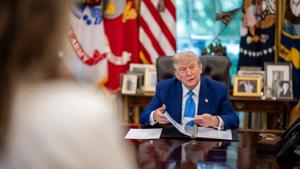
The U.S. could be inching closer to striking Iran for a second time, with President Donald Trump voicing his support for protesters of the Islamic Republic’s regime.
Trump told reporters late Sunday evening on board Air Force One that he and the military are looking very seriously at responding to reports that the Iranian regime is killing protesters.
Earlier in the month, the president issued a stern warning to the regime if it retaliated against protesters.
“If Iran shoots and violently kills peaceful protesters, which is their custom, the United State of America will come to their rescue. We are locked and loaded and ready to go,” the president posted to his Truth Social Account.
Trump told reporters Sunday evening that he is receiving “hourly updates,” and that he is “looking at some very strong options.”
The president said Iranian officials have reached out to the White House to negotiate. He added that a meeting is being set up, but indicated it may be too little, too late.
“Iran wants to negotiate, yes. We may meet with them … But we may have to act, because of what’s happening, before the meeting,” Trump told reporters.
Retaliation against protesters in Iran adds more fuel to the fire as the president is eyeing the Islamic Republic’s nuclear program.
During the last week of December, Trump hosted Israeli Prime Minister Benjamin Netanyahu, when the two leaders reportedly discussed the potential of future strikes on Iran if the Islamic Republic attempts to rebuild its nuclear capabilities, after U.S. strikes in June that targeted the country’s nuclear sites.
“I hear Iran is looking to rebuild its facilities again, and if they do we will have to knock them down again,” the president told reporters during a news conference in late December. “We’re going to have no choice but very quickly to eradicate that build up. So I hope Iran is not trying to build up, as I’ve been reading.”
The civil uprising in Iran follows a pattern of Iranian citizens protesting the brutal regime’s grip on its citizens. The most recent unrest occurred in 2019, with one of the most significant events taking place in 2009, known as the Green Movement, which resulted in millions of Iranian citizens demonstrating against the government.
Law professor’s book unmasks ugly underside of mass torts

Plaintiff lawyers could have done the right thing when they began seeing reports of women suffering painful side effects from pelvic mesh implants. They could have represented clients with legitimate complaints that the product, used mostly to fix pregnancy-related incontinence, was defective or overhyped.
Too many lawyers chose a different course: They spent millions of dollars on ads to recruit any woman with an implant, then flew them to shoddy medical clinics where doctors removed their implants to magnify the value of their claims. These women signed contracts putting the entire tab on them – the airfare, the hotel room, the surgeon’s inflated bill – at usurious interest rates.
By the time their cases settled, some were left with nothing while everyone else in the ring walked away with millions.
University of Georgia Law School Professor Elizabeth Burch exposes this seamy business in her new book, “The Pain Brokers.” It’s a common tale in the world of mass-tort litigation, where law firms represent thousands of claimants at once and use gaps in the rules to collect large fees while producing little of value for claimants.
“A lot of what I wrote about is already prohibited,” said Burch, who as a scholar favors using tort law to correct corporate misbehavior. “The problem is there is not regular enforcement of the law on the books.”
Most states prohibit lawyers from paying for referrals, for example, but the plaintiff lawyers in Burch’s book found a loophole in Washington D.C. that allowed them to ally with a LINO – law firm in name only – that funneled women with pelvic mesh implants to them in exchange for the bulk of any fees collected. In reality, this practice is common across mass torts, where the law firms that advertise on TV are effectively marketing operations that collect a fee for collecting names and selling them to trial lawyers.
It is also illegal for lawyers to collect kickbacks from lenders, medical providers and others feeding off tort lawsuits. But thanks to a skeptical judge in the implant case, defense lawyers used subpoenas to uncover a network that fed off women’s pain by directing them to allied doctors and lenders who financed everything.
One example: Barbara Shepard signed a contract with Coast to Coast Legal Funding for a $1,700 advance on her lawsuit against Johnson & Johnson. What she didn’t know was she’d actually borrowed $4,000, including $536 in fees to the lender and $2,300 paid to a preexisting creditor, Medical Funding Consultants, that had paid for her trip to the surgeon to have her implant removed.
The interest rate was so high she would owe $9,000 if she paid off the loan the next day. In reality, most mass-tort cases take years to settle, meaning the interest on numerous charges chews up most of what a client receives after paying the lawyer’s contingency fee, which can be 50%.
While two men ultimately pled guilty to fraudulently pressuring women to receive unnecessary surgery in the pelvic implant case, the rest of the characters in Burch’s book escaped prosecution. The ringleader of the scheme was Vince Chhabra, who’d already done time in prison for running a pill mill. The names of pelvic implant patients were obtained from data centers in India that processed insurance claims, a clear violation of U.S. law.
But while the FBI investigated and obtained two convictions, the rest of the players seem to have faded into the background.
For Burch, pelvic implants represent the dark side of American tort law, a system that enriches lawyers and the supporting characters that surround them, from unscrupulous doctors to hedge fund-financed lenders. Unlike most legal academics, Burch engages in shoe-leather reporting, actually interviewing some 150 people and digging through 200,000 court records to understand how the scheme worked.
That’s work judges, bar associations and regulators should be doing, Burch maintains. Plaintiff lawyers regularly sign unethical agreements with defendant companies under which they commit to obtaining agreements from all of their clients, for example, a clear violation of their duty to represent each person as an individual. Many also appear to have close ties to lenders who finance cases at outrageous interest rates, which they can charge since most states treat lawsuit loans as investments exempt from usury laws.
“Plaintiffs are complaining regularly and nothing happens,” Burch said. “Judges in general have the ability to look into whatever it is they want to get to the bottom of,” but don’t. Medical boards also have a “protectionist agenda,” she said, and don’t intervene even when there is clear evidence doctors are performing unnecessary procedures to inflate the value of legal claims.
Burch teaches a mass torts seminar at the University of Georgia, where she introduces students to how the system actually works, as opposed to in theory. It’s an eye-opener, she said.
“I get so many questions, because everything they’re learning in all their other classes say you can’t do this,” she said with a laugh.