Center Square
Everyday Economics: A stalled labor market and why the next data points matter

Last week’s jobs report wasn’t a “good” report, but it wasn’t a collapse either. Payrolls are still growing modestly, and the unemployment rate hasn’t spiked. Even so, the underlying message is clear: the labor market has lost momentum. That distinction matters with the Federal Reserve’s next rate decision just two weeks away.
What We Learned From the Jobs Report
Two features of the report deserve more attention than the headline payroll number.
First, job growth remains narrow and uneven.
Hiring rates are low, employment gains lack breadth, and fewer industries are adding workers. That’s not what a healthy expansion looks like. It’s consistent with an economy where firms are cautious – slowing hiring rather than cutting aggressively.
Second, labor supply now exceeds labor demand.
There are roughly 7.5 million people actively looking for work, up by 583,000 over the course of 2025. At the same time, job openings have fallen to around 7.1 million. That crossover matters. When job openings exceed unemployed workers, firms compete aggressively for labor. When unemployed workers outnumber openings, hiring slows and bargaining power shifts back toward employers.
That shift has real consequences. Slower bargaining power translates into weaker real wage growth – and in some cases outright declines. Even without a surge in layoffs, that dynamic alone can cool consumer spending.
Third, hires and separations confirm a “low-hire, low-fire” environment.
The hires rate remains near cycle lows, signaling limited appetite to add workers. At the same time, layoffs and discharges remain subdued, and total separations are historically low. Employers are holding onto the workers they have, but they’re reluctant to expand payrolls.
That combination – weak hiring alongside restrained layoffs – is the hallmark of a labor market that is stuck rather than breaking. Historically, this type of labor hoarding tends to appear late in the business cycle. Firms initially preserve headcount because hiring was costly and labor remains hard to replace, but when demand fails to re-accelerate, this restraint often precedes sharper pullbacks in hiring, investment and, eventually, employment.
Finally, revisions matter.
October and November payrolls were revised lower, meaning the labor market entered year-end weaker than initially reported. Momentum was already fading before the calendar turned.
Put simply: things aren’t getting worse – but they aren’t getting better either.
In fact, 2025 was a notably weak year for job creation. The U.S. added just 584,000 net jobs, a 71% decline from the 2.0 million jobs added in 2024. Excluding the pandemic year, this was the weakest year for job growth since the aftermath of the Great Financial Crisis.
The takeaway is not that the labor market is collapsing – it’s that it is losing forward motion.
Why This Week’s Data Matters
This week’s data calendar is unusually dense – and unusually important.
The main event is the release of delayed CPI and PPI inflation reports, which will help determine whether price pressures are easing enough to allow further policy normalization.
We’ll also get the November retail sales report, which will offer an early read on whether softer real wage growth was already weighing on household spending.
On the housing side, both new home sales and existing home sales are expected to have declined at the end of the year.
For all of 2025, existing home sales are expected to come in roughly in line with 2024 levels – marking another year of historically weak housing activity. The market has now spent multiple years bouncing along the bottom, constrained by affordability pressures.
Looking ahead, Zillow forecasts a modest rebound in existing home sales to around 4.2 million in 2026, as affordability gradually improves. Slower home price growth, easing mortgage rates, and income growth outpacing housing costs should help bring more buyers and sellers back into the market.
A fragile labor market complicates that outlook. When job prospects feel uncertain, renters are more likely to stay put, fewer first-time buyers enter the market, and some would-be sellers delay listing their homes. Even modest labor market softening can therefore restrain housing turnover, limiting how quickly activity can recover.
What This Means for Policy Right Now
With inflation still above target and the labor market no longer deteriorating meaningfully, the Federal Reserve is likely to hold rates steady at its January meeting. Eighteen days out from the next FOMC decision, market pricing implies only about a 5% probability of a rate cut.
For policymakers, the current data argue for patience: growth is slowing but not collapsing, and inflation risks still dominate. Until either inflation cools more convincingly or labor market conditions weaken further, policy is likely to remain on hold.
Assaults against ICE up 1300%, vehicular attacks up 3200%, death threats up 8000%

Assaults against U.S. Immigration and Customs Enforcement officers are up 1,300%, vehicular attacks are up 3,200% and death threats are up 8,000%, the Department of Homeland Security said after a U.S. citizen was shot and killed during an alleged vehicular attack in Minneapolis this week.
Federal authorities argue the shooting was justified and in self-defense. Local and state officials say otherwise.
One day after the Minneapolis shooting, two Venezuelan nationals were shot by a Border Patrol agent after they attempted to run him over with their vehicle in Portland, Ore., the Department of Homeland Security said. DHS also describes the shooting as self-defense and justified.
The two Venezuelans and alleged Tren de Aragua members “weaponized their vehicle against Border Patrol in Portland. The agent took immediate action to defend himself and others, shooting them,” DHS said.
After the shooting in Portland, the Venezuelans fled the scene, DHS said. They reportedly drove nearly five miles to an apartment complex where they called emergency medical services and were transported to separate hospitals, DHS said.
Venezuelans Luis David Nino-Moncada suffered an injury to his arm and Yorlenys Betzabeth Zambrano-Contreras was hit in her chest. Nino-Moncada is currently in FBI custody.
“Only one day after an ICE officer was almost ran over in Minneapolis, two vicious Tren de Aragua gang members – let loose on American streets by Joe Biden – weaponized their vehicle against Border Patrol in Portland,” DHS Assistant Secretary Tricia McLaughlin said. “The agent took immediate action to defend himself and others, shooting them. Thankfully, no law enforcement was injured as these criminals fled.”
Zambrano-Contreras illegally entered the U.S. in 2023 near El Paso, Texas, and was released into the country by the Biden administration, according to DHS. Since illegally entering, she’s “played an active role in a Tren de Aragua prostitution ring and was involved with a prior shooting in Portland in July,” DHS said.
Nino-Moncada illegally entered the U.S. in 2022 and was released into the country by the Biden administration. Since then, he’s been arrested on a DUI charge and unauthorized use of a vehicle, DHS said. He also has a final order of removal from a federal immigration judge, according to ICE records.
Enforcement actions continue as attacks against ICE officers have increased by unprecedented numbers in less than one year. By November, assaults against ICE officers had increased by 1,000% and death threats by 8,000%, The Center Square reported.
ICE and Border Patrol officers also experienced an historic surge of vehicular attacks. By November, there had been 71 reported vehicular attacks against U.S. Customs and Border Protection officers, including Border Patrol, compared to 45 vehicular attacks during the same period in 2024, a 58% increase, The Center Square reported.
Over the same time frame, 28 vehicular attacks were reported against ICE officers compared to two attacks in 2024, a 1,300% increase.
That percentage has since increased nearly three-fold to 3,200% as of last week, DHS said.
The Minneapolis and Portland shootings are the latest of several that have occurred since last fall.
In September, Mexican national Silverio Villegas-Gonzalez was shot and killed after he “refused to follow law enforcements commands and drove his car at law enforcement officers. One of the ICE officers was hit by the car and dragged a significant distance. Fearing for his own life, the officer fired his weapon,” DHS said.
In October, Mexican national Carlitos Ricardo Parias, a TikTok content creator, was shot after ramming his vehicle into a law enforcement vehicle and then fleeing the scene, DHS said. He was hit in the elbow; a U.S. Marshal’s hand was struck by a ricocheted bullet. A federal judge recently dismissed federal assault charges brought against Parias.
Also in October, U.S. citizen Carlos Jimenez was shot in the shoulder after federal authorities claim he allegedly accelerated towards federal agents during an immigration enforcement operation in Los Angeles.
Bipartisan bill to cap annual deficits at 3% could curb debt growth
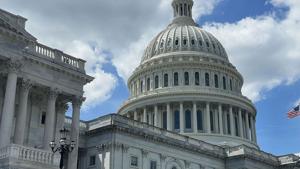
Lawmakers introduced a bipartisan proposal to cap annual deficits at 3% of GDP, but this resolution would still permit spending beyond annual revenue.
House Resolution 981 would limit annual deficits to 3% of gross domestic product, or GDP, a measure of the nation’s total economic activity, by 2030 or sooner. Last year’s budget deficit was about double that at 6%.
The measure sets a fiscal target of reducing the deficit to 3% of GDP or less. Congress would then aim for a balanced budget. The House Budget Committee must recommend enforcement options within 180 days, such as procedures for when the target is not met.
The Rules Committee must suggest rule changes to help meet the target, including making budget rules more difficult to waive and requiring the Congressional Budget Office to analyze the impact of major bills. The resolution also urges Congress to avoid budget gimmicks.
The last budget surplus was in 2001. Since then, spending has outpaced revenues, with annual deficits growing sharply during the COVID-19 pandemic. The FY2025 deficit was $1.7 trillion, or about 6% of GDP.
The last time Congress passed a budget below the 3% target was in 2015, according to the resolution.
Bipartisan Fiscal Forum Co-Chairs Bill Huizenga, R-Mich., and Scott Peters, D-Calif., introduced the resolution. Huizenga said it shows Republicans and Democrats recognize the gravity of the federal government’s debt problem.
“This is not an aspirational target; it is the minimum standard necessary to preserve America’s long-term economic security,” Huizenga said in a statement.
Rep. Lloyd Smucker, R-Pa., called the 3% target an “achievable goal.”
“If left unchecked, interest on the debt will crowd out spending on defense, health care, and every other government service,” Congressman Mike Quigley, D-Ill., said in a statement.
Last year, the federal government spent more on interest costs to service its $38 trillion in debt than it did on the U.S. military. The growing national debt is largely the result of Congress spending more money than it collects, along with rising costs for Medicare and Social Security as the U.S. population ages and healthcare costs continue to increase. The federal government has to pay more in interest as it accumulates debt.
Budget watchdogs lined up in support of the resolution.
Maya MacGuineas, president of the Committee for a Responsible Federal Budget, called it a good start.
“A 3% of GDP deficit target is realistic enough to be achievable, and aggressive enough to reassure markets and lenders that the debt is on a sustainable path,” she said.
Concord Action Executive Director Carolyn Bourdeaux said reducing annual deficits would cut the risk of “a debt-induced economic meltdown.”
“We encourage members of Congress from both parties to support it – and then to take real action to build this benchmark into budget resolutions and budget bills,” she said.
One year in, a ‘ho-hum’ jobs report

December’s jobs data changed little from November, rounding out an underwhelming year for the U.S. labor market.
Initial estimates put job gains at 50,000, though if December is like every other month this year, that number will be revised downward in the coming months.
By comparison, last December saw an increase roughly 6.5 times greater, with 323,000 jobs added from the previous month. Payrolls rose by an estimated 269,000 from November to December 2023, while pre-pandemic December 2019 posted nonfarm employment growth of 127,000 jobs.
Bruce Yandle, an adjunct fellow at George Mason University’s market-oriented Mercatus Center, described it as “ho-hum.”
“We have about the same level of total employment here in December as we had in January, when the year was starting. And so in a sense, when you look at the report and stare at it… it looks like the world is flat,” Yandle told The Center Square.
The year started off stronger than it finished, with monthly job creation exceeding 100,000 January through April. But May added fewer than 20,000 jobs, and payrolls shrunk by 13,000 from May to June. The rest of the year was inconsistent — modest gains mixed with outright losses.
The latest Job Openings and Labor Turnover Survey provided a sobering glimpse into the realities of the current job market, according to Dave Hebert, a senior research fellow at the American Institute for Economic Research. The JOLTS report reflected a low-hire, low-fire market.
“We’ve been told that a lot of new jobs are going to be coming,” Hebert said. “The claim was that by Q4 of 2025, the economy would be humming.”
GDP growth did accelerate, however, from 3.8% to 4.3% in the third quarter, though fourth quarter growth has yet to be released. But GDP growth is of limited practical value if it doesn’t translate into more jobs.
“We don’t eat GDP growth rates. People work,” Hebert said.
A cooling labor market and strong economic growth might seem incongruous, but Yandle pointed to third-quarter productivity gains of 4.9% as an explanation.
“We’ve had zero growth in employment for a year, and we’ve had 4.9% growth in productivity. Zero plus 4.9 is 4.9,” Yandle said.
Yandle and others, including Stanford University economics professor Nicholas Bloom, have said the productivity gains without corresponding labor growth can likely be attributed in part to the proliferation of artificial intelligence. Otherwise, many economists believe the economic uncertainty caused by the continually shifting tariff policy is stifling the labor market.
Though unemployment has remained relatively low, finishing 2025 at 4.4%, job growth has remained subdued.
“We’re just not seeing that job growth that I think everyone wants,” Hebert said.
Five battleground governor’s races for 2026
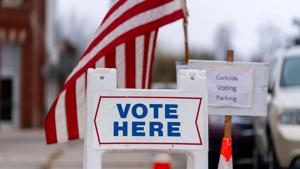
Voters from 36 states across the country will return to the polls to elect their next governors in 2026.
Several governors races are expected to see fierce competition between parties as they battle for control of their states. In other states, like California, primary challenges are likely to determine who will be elected to state leadership.
Out of 36 governors races in 2026, the Cook Political Report ranks five as “toss ups” where “either party has a good chance of winning.”
Here are those races.
Arizona
Incumbent Democratic Gov. Katie Hobbs is seeking reelection in a race that appears to be hotly contested.
Karrin Robson, a former candidate for Arizona governor, and Arizona U.S. Reps. Andy Biggs and David Schweikert will face off in a three-way primary election for the Republican nomination. Both Biggs and Robson received endorsements from President Donald Trump in the race for governor.
Robson has run on implementing principles of Trump’s Department of Government Efficiency to reduce government spending in Arizona.
“While Katie Hobbs misplaces hundreds of millions of taxpayer funds and grows the government, Karrin will shrink it,” Robson’s website reads. “She will streamline operations, prioritize responsible spending, and hold every agency accountable.”
Biggs has focused on border security throughout his campaign so far, with a focus on implementing Trump’s immigration agenda.
Hobbs has made affordability a focus of her campaign, touting her record over the past four years of reducing budget deficits in the state and providing tax cuts to middle class families. She also highlighted her work to order National Guard troops to the southern border.
Arizona’s primary election to determine who Hobbs will face off against in the general election is set for Aug. 4.
Michigan
Democratic Gov. Gretchen Whitmer is term-limited and a crowded group looks to succeed her.
Secretary of State Jocelyn Benson and Lt. Gov. Garlin Gilchrest, are looking to win the Democratic nomination for the Great Lakes State. They are joined by Democrats Marni Sawicki, former mayor of Cape Coral, Fla., and Chris Swanson, sheriff of Genesee County.
U.S. Rep. John James, former Michigan attorney general Mike Cox and Tom Leonard, former speaker of the Michigan House of Representatives, are vying for the Republican nomination to be Michigan’s governor.
Benson, seen as a frontrunner for the Democratic nomination according to recent polling data, has focused her campaign on highlighting past achievements as the secretary of state. She has highlighted past achievements in voter security, reducing government bureaucracy, and reducing costs.
“As Secretary of State, Jocelyn has overseen the highest turnout, most secure elections in Michigan’s history by making it easier to vote and harder to cheat,” Benson’s campaign website reads.
As frontrunner for the Republican nomination, James has focused his campaign on lowering taxes and healthcare expenses.
“John will audit wasteful DEI programs, eliminate foreign influence in our institutions, and rebuild trust in government,” James’ website reads.
Michigan will hold its primary election on Aug. 4.
Wisconsin
Democratic Gov. Tony Evers announced in July he is retiring from politics. Evers’ retirement has left a field open for others hoping to fill his post.
Lt. Gov. Sara Rodriguez, former lieutenant Gov. Mandela Barnes, state Rep. Francesca Hong and Milwaukee County executive David Crowley are among a crowded field seeking the Democratic nomination.
In a less crowded race, Republicans in Wisconsin are looking to take back the governor’s mansion as U.S. Rep. Tom Tiffany, Washington County executive Josh Schoemann and Andy Manske have declared campaigns for candidacy.
Barnes has highlighted past issues from his campaign that he plans to focus on as governor. He focused on using public funding to lower energy costs in the state and expanded voting opportunities.
As Republicans look to retake the Wisconsin governorship, frontrunner Tiffany has touted his past legislative experience and pushed for an end to sanctuary jurisdiction laws in Wisconsin.
Wisconsin will hold its partisan primary elections on Aug. 11.
Georgia
Term-limited Gov. Brian Kemp will end his two-term run as the governor of Georgia and hand the reins off to another candidate in the Peach State.
On the federal level, Georgia is considered a swing state with two Democratic U.S. senators and the state’s preferring Joe Biden in 2020 but Trump in 2024. However, on the state level, Republicans have consistently had the advantage.
Several members of Kemp’s cabinet have declared their candidacy for the seat. Attorney General Chris Carr, Lt. Gov. Burt Jones and Secretary of State Brad Raffensberger are each vying for the Republican nomination.
President Donald Trump offered Jones his “Complete and Total Endorsement” for governor in August 2025, giving a boost to the lieutenant governor’s bid.
“We’re fighting for election integrity, lower taxes, and to secure Georgia values,” Jones wrote in a post on social media.
Democrats in Georgia are hopeful to capitalize on their wins in the U.S. Senate by flipping the governor’s mansion.
Former Republican Lt. Gov. Geoff Duncan, former mayor of Atlanta Keisha Lance Bottoms and Mike Thurmond have all declared candidacy for the Democratic governor nomination.
Lance Bottoms has focused on expanding Medicaid as a key component of her campaign for governor.
“Keisha will work to eliminate income taxes for teachers, crack down on corporate landlords that are buying up houses and making it harder for families to buy a home or afford rent, and she will invest in education so our children have better pathways to success through career training or college,” Lance Bottom’s website reads.
Georgia’s primary election is set for May 19.
Nevada
Incumbent Republican Gov. Joe Lombardo is running for a second term in Nevada. With less competition compared to other battleground states, Attorney General Aaron Ford looks to be the Democrat poised to take on Lombardo.
In 2024, Trump won Nevada as the first Republican president to do so since 2004.
Ford has received endorsements from both Democrat U.S. Sens. Catherine Cortez Masto and Jacky Rosen in his bid for governor.
Trump has endorsed Lombardo is his reelection campaign.
“As governor, he is fighting tirelessly to Grow the Economy, Cut Taxes and Regulations, Ensure NO TAX ON TIPS, Advance MADE IN THE U.S.A., Unleash American Energy DOMINANCE,” Trump wrote on social media. “Joe Lombardo is SMART, STRONG, AND TOUGH.”
Trump signs order protecting Venezuelan oil revenue from legal claims

President Donald Trump on Saturday signed an executive order to protect revenue from all sales of Venezuelan oil held in U.S. Treasury accounts from seizure by courts or creditors.
Citing the International Emergency Economic Powers Act and the National Emergencies Act, Trump said the executive order is necessary to protect the national security and foreign policy of the United States and its efforts to bring political stability to Venezuela.
“Specifically, the attachment or the imposition of other judicial process against the Foreign Government Deposit Funds will substantially interfere with our critical efforts to ensure economic and political stability in Venezuela,” the order reads. :The failure of these critical efforts would jeopardize major foreign policy objectives of the United States, including: ending the dangerous influx of illegal immigrants and the flood of illicit narcotics, which has resulted in the death of countless thousands of American citizens; protecting American interests against malign actors such as Iran and Hezbollah; and bringing peace, prosperity, and stability to the Venezuelan people and to the Western Hemisphere more generally.”
A week ago, the U.S. carried out an air, land and sea operation in Venezuela’s capital and apprehended Venezuelan President Nicolas Maduro and his wife, who are now being held in New York on federal charges related to running an international narco-terrorism operation.
Trump later said the U.S. would help run Venezuela until it is politically and economically stable.
The Foreign Government Deposit Funds are sovereign assets of Venezuela and need to be protected from private legal claims, according to a White House statement.
“The Foreign Government Deposit Funds constitute property of the Government of Venezuela and do not constitute the property of any private party, including judgment creditors of Venezuela or its agencies or instrumentalities, or commercial actors that transacted or are transacting business with Venezuela or its agencies or instrumentalities,” the order reads.
“The United States Government will hold the Foreign Government Deposit Funds solely in a custodial and governmental capacity, and not as a market participant.”
Retirements and resignations to impact midterms as balance of power at stake
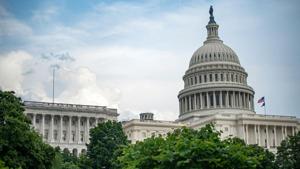
Over the past several months, politicians once regarded as central to their party have bowed out of reelection campaigns or resigned from their positions altogether.
In the past week, Minnesota Gov. Tim Walz ended his reelection campaign and Marjorie Taylor Greene left Congress. The two figures appeared central to their respective parties with Walz running alongside Democrat presidential nominee Kamala Harris in 2024 and Greene a key U.S. representative from Georgia.
However, a year of scandal (rampant fraud in Minnesota in Walz’ case) and party infighting (disputes with President Donald Trump in Greene’s) led to their decisions as the country looks toward the midterm elections.
Across the country, elected officials have undergone significant changes that will have major implications for the balance of power in the 2026 midterms.
In North Carolina, two-term governor Roy Cooper left his position in 2024 with seemingly few aspirations for further office. However, as Sen. Thom Tillis, R-N.C., bowed out of a reelection bid, a seat without an incumbent became prime real estate for Cooper to pursue federal office.
Now, Cooper is engaged in a race for the U.S. Senate against Trump-endorsed Michael Whatley, a North Carolina native and former chair of the Republican National Committee.
“Right now, our country is facing a moment as fragile as any I can remember, and the decisions we make in the next election will determine if we have a middle class in America anymore,” Cooper said in a video posted to social media announcing his candidacy.
“I never really wanted to go to Washington. I just wanted to serve the people of North Carolina, right here where I’ve lived all my life. But these are not ordinary times,” Cooper said.
To the north, U.S. Rep. Elise Stefanik, R-N.Y., entered the race for New York governor before suspending her campaign late last year.
The suspension came months after Trump pulled her nomination for U.S. ambassador to the United Nations, as Republicans held a thin majority in the House.
“With a very tight Majority, I don’t want to take a chance on anyone else running for Elise’s seat,” Trump wrote in a post to social media about pulling her nomination for ambassador. “The people love Elise and, with her, we have nothing to worry about come Election Day.”
Announcing the suspension of her campaign for governor, Stefanik wrote on social media: “While we would have overwhelmingly won this primary, it is not an effective use of our time or your generous resources to spend the first half of next year in an unnecessary and protracted Republican primary, especially in a challenging state like New York.”
Nassau County executive Bruce Blakeman is now the favorite to secure the Republican nomination for New York governor with an endorsement from Trump.
“Bruce will continue to fight hard to Grow the economy, Cut Taxes, and Regulations, Promote MADE IN THE USA, Champion American Energy DOMINANCE, Strengthen our Military/Veterans, Advance Election Integrity, and Protect our always under siege Second Amendment!” True wrote.
Without an incumbent for reelection in Minnesota, some Democrats have looked to Sen. Amy Klobuchar to fill the vacancy as Republicans seek to flip the governor’s mansion red.
Additionally, several older members of Congress are stepping down from their duties, leaving open positions across the country that could determine the balance of power.
U.S. Rep. Nancy Pelosi, 85, D-Calif., will not seek reelection in 2026 along with 83-year-old U.S. Sen. Mitch McConnell, R-Ky., 86-year-old Rep. Steny Hoyer, D-Md., and 78-year-old Jerrod Nadler, D-N.Y.
“We have always led the way and now we must do so by remaining full participants of our democracy, and fighting for the American ideals we hold dear,” Pelosi said.
Congressional retirements and career revivals dot many of the major races across the country as voters head to the polls to determine the balance of power in 2026.
U.S. Supreme Court to hear anti-oil cases with energy costs on the line

Energy advocates have been warning against green energy demands driving up prices across the country. As anti-oil and gas activists seek legal pathways to straddle the energy industry, U.S. companies are making less effective products at higher prices to comply with demands while customers suffer, industry insiders argue.
On Monday, justices in the U.S. Supreme Court will hear arguments in Plaquemines Parish v. Chevron. The legal battle centers around whether Chevron can move a case to federal court when federal government contracts are involved.
Plaquemines Parish, in Louisiana, originally sought damages from multiple oil and gas companies for allegedly engaging in oil and gas production on the coast without securing proper permits or violating preexisting permits.
Some of the violations date back to the World War II-era, when the federal government had production contracts with energy companies now owned by Chevron. The parish argues these contracts did not detail the methods by which companies were to obtain the oil and gas, leaving them liable for violating state permitting laws.
Louisiana’s coastal parishes have filed more than 40 similar lawsuits, claiming that oil and gas companies are responsible for coastal land loss in Louisiana. As the first case to reach a jury, Plaquemines Parish won a verdict of $744.6 million in damages against Chevron, which appealed.
Jason Isaac, founder of the American Energy Institute, told The Center Square a Supreme Court ruling in favor of Plaquemines Parish could be “devastating” for American energy companies.
“It’s essentially a tax on energy,” Isaac said. “This could be bad for consumers, it could be really bad for American energy independence and American energy dominance.”
He said the case is an attempt to pin the loss of coastal wetlands and certain weather events to a particular company over a period of several decades.
“They’re trying to make the claim that they can go back and look at every single bit of emissions and attribute certain weather events to that,” Isaac said.
A separate case, Suncor Energy v. Boulder County Commissioners, has also caught the attention of the nation’s highest court. The case focuses on whether state and local governments can file public nuisance lawsuits against oil and gas companies for global climate change effects.
“Public nuisance can’t be used for global problems. It can be used for local problems,” O.H. Skinner, executive director of Alliance for Consumers, told The Center Square.
The U.S. Supreme Court distributed the case for its Dec. 12 conference but did not decide whether to deny it or pick it up. The court relisted the case for its Jan. 9 conference and may decide whether to take it on Monday.
Isaac said the only reason the high court is still considering another energy case is because lower courts have yet to hear its merits.
“Courts recognize that cities can’t use local lawsuits to control global climate policy or rewrite federal energy law,” Isaac said. “Boulder’s longevity reflects delay and avoidance, not legal strength.”
While not all are being heard before the Supreme Court, similar litigation against energy companies is occurring throughout the country. Wrongful death lawsuits, state nuisance laws and near-total plastic bans are seeing fierce litigation.
Isaac said the cases stem from political desires to affect lasting change in the U.S. energy industry. He said Democrat-backed organizations will offer to cover attorneys and legal fees in law firms across the country to pursue litigation against large energy companies.
“They’re essentially a private firm becoming a de-facto government agency going after legitimate businesses here in the United States,” Isaac said. “The implications of these cases are to the tunes of billions of dollars.
Some companies and independent producers have experienced uncertainty due to fears associated with energy procurement lawsuits. Isaac said American Energy Institute’s member companies have settled certain lawsuits to avoid expensive court proceedings.
“That increases the cost that gets passed on to the consumer in the end,” Isaac said.
Increased consumer prices lead to less effective appliances in the home, Skinner told The Center Square. As executive director of the Alliance for Consumers, he said rules imposed on manufacturers to be climate friendly results in a less effective product.
“If you keep telling somebody that they have to use less water, less heat, less electricity, things take longer and they don’t do as well,” Skinner said.
As climate litigation is pursued across the country, Isaac and Skinner said they are concerned about increasing regulations that straddle companies from making the most efficient product.
“I don’t think people are recognizing that they’re truly getting hammered with their electric utility bills because these companies and states continue to mandate so-called green energy,” Isaac said.
Newsom predicts smaller budget shortfall than state agency
In his proposed budget, California Gov. Gavin Newsom is predicting a shortfall of $2.9 billion. That’s much less than the $18 billion shortfall projected by the Legislative Analyst’s Office.
Newsom, who released his 2026-27 budget Friday, expects much higher general fund revenues than the LAO, a nonpartisan agency.
The Democratic governor’s proposed budget estimates that general fund revenues will exceed $42 billion over the 2025 budget, fueled mainly by higher cash receipts, higher stock market levels and an improved economic outlook.
“The biggest difference in the factors and forecasts is that the LAO incorporated significant risk of a stock market downturn in their forecast,” Joe Stephenshaw, the director of the California Department of Finance, said during a news conference announcing the governor’s budget. “We do not do that.
“We don’t build in downturns into our forecast,” Stephenshaw told reporters Friday at the Capitol in Sacramento. “We do know that if there is a stock market correction to the tune of about 20%, that will have an impact on our revenues in the budget window to the degree of up to $30 billion.”
The LAO previously released a budget outlook that projected an $18 billion budget deficit in 2026-27.
While LAO representatives weren’t able to answer most questions from The Center Square, analysts in the office are reviewing the governor’s proposal and expect to release an assessment on Monday.
“The administration’s revenue estimates are notably higher than ours,” Carolyn Chu, one of two analysts to work on the Legislative Analyst’s Office budget review in November, told The Center Square on Friday. “You see that play through in the deficit estimates.”
Overall, the governor’s proposal projects a $348.9 billion budget for fiscal year 2026-27, fueled by an optimistic economic outlook. The higher state revenues would in large part be funded by high company valuations of big tech companies, particularly in the realm of artificial intelligence, according to the governor’s proposal.
However, the Pacific Research Institute, a Pasadena-based think tank, has a more skeptical view of the economy’s performance, its economist told The Center Square on Friday.
“The LAO says we’re going to have an $18 billion deficit. [The governor] says we’re going to have a $3 billion deficit,” Wayne Winegarden, an economist with Pacific Research Institute, told The Center Square. “The difference is because he’s saying we’re going to have lots of revenue from AI. We have surging revenues from income taxes because of AI, and that’s going to end, possibly, because who knows the future? We should be saving more of that money because we have difficult times ahead.”
The governor’s budget would allocate $101.5 billion to health, $17.6 billion to transportation, $41.5 billion to human services, $18 billion to corrections and rehabilitation, $27.4 billion to higher education, $90.2 billion to K-12 education and $52.4 billion to other expenditures, according to the proposal.
Notably, federal expenditures are expected to decrease, leaving California on the hook for $1.1 billion in increased costs to Medi-Cal, California’s version of the federally-funded Medicaid program, according to the proposal. An additional $300 million is expected in additional costs to the state for CalFresh.
“He’s trying to put lipstick on a pig and say that the deficit’s not what it really is,” Sen. Tony Strickland, R-Huntington Beach, told The Center Square on Friday. “What I get out of this is revenues are way up, and what that really points out is California doesn’t have a revenue problem, it has a wasteful spending problem. Yet again, another year where the governor is proposing to spend more than what we take in.”
The chair of the Senate Budget and Fiscal Review Committee, however, said he thought that the governor’s budget was more accurately based on current economic circumstances than the November Legislative Analyst’s Office report.
“I was pleasantly surprised that we might be able to do a status-quo budget, and what’s missing is extensive cuts,” Sen. John Laird, D-Monterey, told The Center Square on Friday. “It means we can continue existing levels of service into the next year with the governor’s budget.”
Colorado ordered to pay $5.4M after abortion law blocked

Colorado must pay back legal fees after it was sued for a law banning abortion pill reversals, a federal court ruled this week.
The state will pay $5.4 million in attorneys’ fees to Becket, a nonprofit legal advocacy group, which represented a Denver-area Catholic crisis pregnancy center in the lawsuit against the state.
Rebekah Ricketts, senior counsel at Becket and an attorney for Bella Health and Wellness, spoke with The Center Square in an exclusive interview regarding the ruling.
“Colorado enacted a law banning doctors and nurses from offering life-saving care to women who have taken the first abortion pill but then decide to continue their pregnancies,” Ricketts explained. “A federal court blocked the law, holding that Colorado’s law was unconstitutional.”
In 2023, the Colorado legislature passed a law making it “unprofessional conduct” for Colorado health care providers to prescribe medications for women who were seeking medical help in reversing the effects of abortion drugs.
State Sen. Janice Marchman, D-Loveland, sponsored the bill.
“In Colorado and across America, maternal outcomes are declining, and anti-abortion centers that use deceptive advertising to draw in vulnerable people seeking care and misleading them with biased and inaccurate information about abortions and contraceptives are only making the problem worse,” Marchman said. “Our bill will crack down on deceptive practices used by some of these bad actors, and is a proactive step we can take towards a future where Coloradans’ freedom to access essential and affirming reproductive health care is truly protected.”
Just like Marchman, the law labeled centers like Bella Health and Wellness “anti-abortion centers.” Before the law, the center was providing abortion pill reversals. The same day Colorado Gov. Jared Polis signed the bill into law, the center filed its lawsuit against the state.
Just a few months later, in October, a federal judge issued a preliminary injunction stopping that law. Two years later, the same judge issued a permanent injunction in favor of Bella Health and Wellness, citing its First Amendment rights.
“While the clinical efficacy of abortion pill reversal remains debatable, nobody has been injured by the treatment and a number of women have successfully given birth after receiving it,” the August ruling said. “The defendants have thus failed to show that they have a compelling interest in regulating this practice.”
That decision struck down Colorado’s attempt to ban abortion pill reversals, which was the first law of its kind in the nation.
“The court’s ruling last August ensured that clinics like Bella can continue offering life-saving care to women and their babies across Colorado,” Ricketts said. “Colorado’s attempt to deprive women of medical help was unscientific, unkind, and unconstitutional.”
She added that, just during the litigation of the past few years, 18 babies have been born because of abortion pill reversal treatment provided by Bella Health and Wellness.
“Those children may never have been born if the state’s ban had gone into effect,” Ricketts said.