Center Square
WATCH: Newsom says he’s an alternate to White House ‘chaos’ in his final State of the State
In California Gov. Gavin Newsom’s final State of the State address Thursday, the potential presidential candidate positioned himself as an alternative to what he described as “purposeful chaos” in Washington, D.C.
“In Washington, the president believes that might makes right, that democracy is a nuisance to be circumvented.” the San Francisco native said before a joint session of the Legislature in Sacramento. “Purposeful chaos is emanating from 1600 Pennsylvania Ave.”
Newsom’s State of the State address follows a November interview with CBS Sunday Morning in which he said he would consider a presidential run after the 2026 midterm elections in November. However, some believe the governor’s speech at the Capitol was meant to position him to campaign.
“I think it was more of a campaign speech than a State of the State speech,” Sen. Tony Strickland, R-Huntington Beach, told The Center Square. “He wants to launch his campaign for president, and he doesn’t have a great record, so he’s trying to put lipstick on that pig.”
Among the issues Newsom addressed in his speech were the 52 lawsuits filed against the federal government by California Attorney General Rob Bonta, the state’s economy, artificial intelligence, education, labor, law enforcement, firefighters and the Los Angeles wildfires in January 2025.
But he also addressed concerns about the state’s tax policy.
“We built one of the most progressive tax systems in the nation,” Newsom said during the speech. “One that asks high-income residents to pay a little bit more without punishing those who are making a little bit less.”
He also addressed California’s budgetary challenges starting this year, which the Legislative Analyst’s Office projected in November would result in an $18 billion shortfall for the 2026-27 fiscal year. The deficit is caused by obligations to pay for school and community college funding mandated by Proposition 98, which California voters passed in 1988, and debt and reserve deposit requirements, according to previous reporting by The Center Square.
The state’s budget woes are expected despite $11 billion in revenue gain made in the last year, according to the Legislative Analyst’s Office report. The governor’s proposed budget will be announced in a press conference Friday in Sacramento.
“[We are] mindful, as we should be, of the nature of our state budget and the longterm structural challenges,” Newsom told legislators during his speech. “We’re going to rebuild our reserves, $7.3 billion, pay down our longterm pensions, and of those obligations, over $11.8 billion will be met in the next few years, including $3 billion just in next year’s budget.”
A Democratic legislator who spoke to The Center Square on Thursday said Newsom’s speech illustrated that California is still a strong, resilient state with a competitive economy.
“Overall, I was pleased he was able to dispel some of the myths people have been putting out about California,” Assemblymember Rhodesia Ransom, D-Stockton, said at the Capitol. “He did a good job of reminding us that California is strong and California is resilient, and people are not flocking to leave California. There are still people coming here, we’re still innovative, and I thought he did a good job of showing the strength of California and why we are still one of the largest economies.”
But Ransom said she was surprised Newsom didn’t address the fentanyl crisis. According to CalMatters, it killed 5,942 people between September 2021 and September 2022 alone.
Republican reactions to Newsom’s speech included concerns that he was taking credit for actions he didn’t take and that he was reusing a speech he gave more than a decade ago.
“I believe Gov. Newsom was gaslighting the legislature,” Assemblymember David Tangipa, R-Fresno, told The Center Square. “There was nothing we heard today that really showed how California is actually leading the nation other than monumental failures. The only areas that actually have been doing better are not because of the governor’s policies.”
Prosecutor calls Newsom ‘king of fraud’ for oversight failures
Editor’s note: This story was updated since its initial publication with information from the White House.
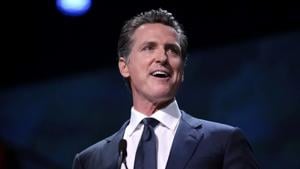
U.S. First Assistant Attorney Bill Essayli Thursday called California Gov. Gavin Newsom “the king of fraud,” accusing him of a lack of oversight on spending to address homelessness.
Essayli made the comments on the “Fox and Friends” telecast, during which he discussed the federal fraud charges that were filed in October against real estate executives Steven Taylor and Cody Holmes for allegedly misusing grant money meant for homeless housing.
Holmes, 31, of Beverly Hills was charged with mail fraud charge that was allegedly linked to millions of dollars in grant money that the state paid Shangri-La Industries to purchase, build and operate homeless housing in Thousand Oaks, just north of Los Angeles. Holmes was Shangri-La’s chief financial officer.
Taylor, 44, of Brentwood, was charged with seven counts of bank fraud, one count of aggravated identity theft and one count of money laundering.
Essayli Thursday said the charges are the “tip of the iceberg” in an investigation he launched with a task force in April. He said more charges would be coming, probably later this month.
The state spent $24 billion in the last five years to address homelessness and can’t account for where the money went, Essayli said on “Fox and Friends.”
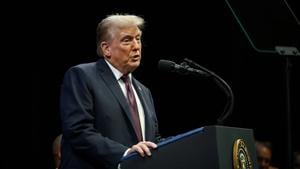
President Donald Trump on Tuesday on X said, “California, under Governor Gavin Newscum, is more corrupt than Minnesota, if that’s possible??? The Fraud investigation of California has begun.”
Newsom’s press office fired back on X. It called Trump a liar and noted Newsom has “BLOCKED $125 billion in fraud, arrested criminal parasites leaching off of taxpayers, and protected taxpayers from the exact kind of scam artists Trump celebrates, excuses, and pardons.”
The Center Square reached out Thursday afternoon to the governor’s office, but did not get a response.
When The Center Square asked the White House Thursday about Newsom, the press office pointed to Press Secretary Karoline Leavitt’s comments during a press briefing on Wednesday. Leavitt told reporters that Trump has directed all agencies to look at federal spending programs “in not just Minnesota, but also in the state of California, to identify fraud and to prosecute to the fullest extent of the law, all those who have committed it.”
The Center Square also reached out to the U.S. Department of Justice, but spokesperson Ciaran McEvoy said the DOJ had no additional comment.
But two Republican legislators in Sacramento Thursday shared their views about Newsom with The Center Square.
“When you talk about the amounts of billions of dollars the governor’s spent in homelessness, he could almost buy a home for every homeless person,” state Sen. Tony Strickland, R-Huntington Beach, told The Center Square at the Capitol after Newsom’s final State of the State address.
“There’s no question there is waste in there, and certainly, we need to look to see if there’s fraud and abuse,” Strickland said. “So I welcome the investigation, because we need to maximize every dollar that comes into the state coffers.”
Strickland stressed he wants to learn the truth.
“Those who abused the power and those who wasted dollars and abused tax dollars should be prosecuted,” he said. “Then we should root out waste, because every dollar that is wasted is a dollar that we take from a hard-working citizen who is just trying to make it.
“In California right now, we have an affordability crisis and these are precious dollars, and by Gov. Newsom’s own admission, revenues are up, so California doesn’t have a revenue problem,” Strickland said. “It has a wasteful spending problem.”
Izzy Swindler, a spokesperson for Assemblymember Tom Lackey, said the Palmdale Republican has always supported oversight on spending.
“It is his belief that we should be accountable to our dollars and be able to track the results that come from the taxpayer funded programs,” Swindler said, answering The Center Square’s questions by email. “Accountability should always be at the forefront of discussions. Especially when we are referring to homelessness programs that have been allocated billions of dollars over the past few years.”
Madeline Shannon, a staff writer with The Center Square, contributed to this report.
Seattle’s new mayor has no plans to look into possible local daycare fraud

It seems new Seattle Mayor Katie Wilson has no plans in her capacity as such to investigate allegations of local daycare fraud.
When asked by KOMO News on Wednesday whether she intended to have the Office of Immigration and Refugee Affairs or the Seattle Police Department follow up on looking into possible daycare fraud in Seattle, she said, “No.”
In a post on X on New Year’s Day – a day before she was inaugurated and sworn in – Wilson wrote, “I stand with the Somali childcare providers who have experienced targeted harassment, and condemn the surveillance campaign promoted by extremist influencers. If you believe yourself to be the victim of a hate crime, please call this hotline: https://atg.wa.gov/report-hate”
In late December, YouTuber and self-described independent journalist Nick Shirley released a video alleging widespread child care fraud in Minnesota, some involving Somali providers. The video garnered significant media traction and caught the attention of the Trump administration, prompting the Department of Health and Human Services to freeze roughly $185 million in federal child care funding in the state.
The video and subsequent political fallout – including Minnesota Gov. Tim Walz dropping his reelection bid – have spread to other states, such as Washington, where The Center Square had been investigating possible child care fraud.
In early December, Walz was the guest of honor at a Seattle fundraising luncheon for Gov. Bob Ferguson, telling those in attendance that Somalis were being “demonized” and vowing to bring more into his state.
The Center Square reached out to Wilson’s office seeking comment on her remarks about not investigating possible local daycare fraud. There was no response to an email inquiry or a voicemail that was left.
Washington State Republican Party Chair and state Rep. Jim Walsh, R-Aberdeen, had no qualms about sharing his take on Wilson’s comments.
In a Thursday post on X, Walsh said, “She’s stupid. But she’s more honest than the current WA State Attorney General.”
That same day, U.S. Rep. Michael Baumgartner, R-Wash., sent a letter to Health and Human Services Secretary Robert F. Kennedy Jr. and Agriculture Secretary Brooke Rollins, calling on them to conduct a program‑integrity review of federally funded benefits in Washington state.
“Washington families deserve to know their tax dollars are paying for real meals and real care, not padding the pockets of scammers,” according to the letter. “Minnesota is a cautionary tale for every state: when state authorities fast track welfare payments with weak front‑end controls and lax enforcement, fraudsters will pounce. My goal is simple: get independent confirmation that Washington’s safeguards are working, and if they are not, fix the problems now rather than after a headline‑grabbing scandal.”
Tariffs sink Canadian couples’ long-running e-commerce operation
Lana Bain and her husband had been selling antiques online for nearly 30 years when the U.S. tariffs hit.
At first it was higher prices and confusion. And then, in August 2025, it was the end of the de minimis loophole, which had previously allowed goods valued at less than $800 to cross the border without import duties.
For Bain, who lives just across the U.S. border in Canada with her husband, Brad, her livelihood was on the line. They live in the Okanagan region near Penticton in British Columbia.
The couple operates two standalone websites, three shops on Ruby Lane, a Shopify shop, multiple shops on Etsy and one on eBay.
The Bains started on AuctionWeb, which eventually became eBay. At the time, in 1995, there were no photos on the website.
That last week in August 2025, everything changed, Lana Bain said.
“There was no method of us to go and ship our orders. It was horrific because we had outstanding orders,” she told The Center Square. “But our Canada Post suspended all shipping to the U.S., as did around the world, and so we were just scrambling. It was a nightmare, and we ended up having to go and refund all those customers.”
Bain said she didn’t sleep for a month.
“It was like, what is happening here, 29 years on the internet, and look what’s happening to us? It was frightening,” she said. “It was horrible. I mean, you still have bills, you still have to buy groceries, and what do you do?”
In addition to bills, the couple had two warehouses full of antiques. Brad Bain said most of the stuff was bought with American customers in mind.
As soon as the Canada Post allowed pre-payment of the tariffs, the Bains started doing that so their customers wouldn’t face even higher taxes on the other end.
Taxes and fees now take up a larger share of the Bain’s operation. She pointed to a $35 vintage handkerchief. The taxes and fees for each one add up to about $17 or roughly half the cost of the item.
“We’re pre-paying every tariff, we’re prepaying everything so we may make anywhere from possibly 40% to maybe 10% of a profit, if we’re lucky, and we are actually,” she told The Center Square.
The couple will shift tactics in the coming year with plans to open a 1,200-square-foot store on their property.
“We’re going to open our brick-and-mortar shop in the spring, because we can’t exist this way,” Lana Bain said.
We Pay the Tariffs, a grassroots group opposed to tariffs, said that American businesses and consumers paid $175 billion in tariffs on U.S. imports from March to October 2025.
“The October tariff data shows unprecedented costs for American businesses and consumers, and the full scope of impacts becomes clearer with each month’s data release,” said Dan Anthony, executive director of We Pay the Tariffs. “The administration clearly understands tariffs are hurting affordability.”
The U.S. Supreme Court is expected to rule on a legal challenge to President Donald Trump’s tariffs as soon as Friday after agreeing to take up the case on a expedited basis.
Attorneys file request to Supreme Court over gender secrecy
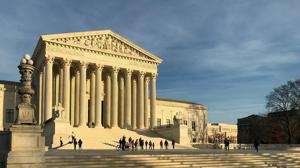
The Thomas More Society has filed an emergency application with the U.S. Supreme Court, requesting intervention in the Mirabelli v. Bonta lawsuit over gender secrecy policies in California schools.
Before the emergency application request, the U.S. Court for Appeals for the 9th Circuit granted California’s motion to pause the permanent injunction, stating that there was no clear evidence that the policies prevent parents from obtaining information about their children.
“California parents’ religious and fundamental parental rights — and the health and safety of their children — are too precious for them to delay seeking relief from this Court,” the emergency request stated.
The request also highlighted that the Parental Exclusion Policies directly interfere with the rights of all class member parents to direct their children’s upbringing, education, and medical treatment, as well as all plaintiffs’ First Amendment rights.
In December, U.S. District Judge Roger Benitez certified a class action lawsuit in Mirabelli v. Bonta. A few weeks later, the 9th Circuit granted California’s emergency motion for a freeze, temporarily suspending a class-wide permanent injunction against the state’s gender secrecy policies in public schools.
“The Constitution does not allow the state to replace parents or conscript teachers into deception,” Paul M. Jonna, Special Counsel for Thomas More Society and Partner at LiMandri & Jonna LLP, said. “The Supreme Court must act now.”
In addition to the Thomas More Society attorneys’ emergency request to the U.S. Supreme Court, they have also filed a request for en banc reconsideration of the 9th Circuit’s freeze order. “En banc” means an 11-judge panel from the 9th Circuit would hear the case instead of a typical three-judge panel.
The case began in April 2023, when two Escondido teachers sued the Escondido Unified School District in San Diego County, the California Department of Education and Attorney General Rob Bonta after being denied a religious accommodation from school policies. These gender policies required staff to use students’ preferred pronouns and, upon request, withhold information about a child’s gender identity from parents. Parents later joined the suit.
Trump orders $200 billion mortgage bond buy to lower rates

President Donald Trump said Thursday afternoon that the federal government will buy $200 billion in mortgage bonds to bring down interest rates and monthly payments.
In recent days, the U.S. president has floated a number of ideas to bring down housing costs. He said in a social media post Thursday that Fannie Mae and Freddie Mac, government-created entities designed to help the U.S. housing market, are worth “a fortune” and have about $200 billion in cash.
“Because of this, I am instructing my Representatives to BUY $200 BILLION DOLLARS IN MORTGAGE BONDS,” Trump wrote in the Truth Social post. “This will drive Mortgage Rates DOWN, monthly payments DOWN, and make the cost of owning a home more affordable.”
Housing has grown increasingly expensive in recent decades.
Shannon McGahn, the National Association of Realtors’ executive vice president and chief advocacy officer, said the move could help bring down mortgage rates.
“President Trump’s plan to purchase $200 billion in mortgage-backed securities (MBS) will help address the high spread between mortgage rates and Treasury yields and help bring costs down for American families,” she said. “Today’s announcement reflects the kind of market-stabilizing policy we’ve championed. We stand ready to work with the Administration to ensure it delivers real relief for homebuyers and the broader housing market.”
The median age for a first-time home buyer recently hit 40, a record high, according to a November 2025 report from the National Association of Realtors.
The median buyer age increased to a peak of 59 years in 2025, up from 56 the previous year. The median age of first-time buyers increased to 40 this year from 38 the previous year, while the typical age of repeat buyers also rose to 62 from 61.
First-time homebuyers decreased to 21% of the market share, down from 24% last year. That marks the lowest share since NAR began collecting the data in 1981. Before the Great Recession, the historical norm was 40%. The report noted the division in the housing market.
The Treasury Department has bought mortgage bonds in the past, including during the housing crisis of 2008 and 2009.
Coal and power groups back UP–Norfolk Southern rail merger

Several major coal producers and power industry groups are urging federal regulators to approve the proposed Union Pacific–Norfolk Southern merger.
The producers argue that reliable rail service plays a key role in keeping the nation’s electric grid dependable as electricity demand increases.
The two railroads recently filed their merger application with the Surface Transportation Board, which must approve any consolidation in the freight rail industry. If approved, the deal would create the country’s first transcontinental railroad.
Supporters of the merger argue that the stakes extend beyond rail logistics and directly impact energy reliability, particularly as data centers, artificial intelligence, and domestic manufacturing create increased electricity demand.
America’s Power, a national trade association representing coal-fired power plants and their supply chain, told the Surface Transportation Board that rail transportation of coal is “a crucial link” in maintaining reliable and affordable electricity.
The group noted that railroads transport about 70% of the coal used by American power plants, adding that many plants depend exclusively on rail service for fuel deliveries.
America’s Power warned that coal’s role in the electric grid is becoming increasingly important as policymakers confront warnings of potential electricity shortages caused, in part, by the rapid growth of AI and data centers.
Major coal producers echoed that message in separate filings.
Peabody Energy, the largest coal producer in the United States, said it relies heavily on rail service to meet customer demand nationwide and abroad. The company wrote that “the American freight rail network is a critical component of our supply chain, allowing us to move large volumes efficiently and sustainably.”
Peabody also said the proposed merger would deliver immense benefits, including better service reliability, shorter transit times, and increased investment in rail infrastructure and technology.
Alliance Resource Partners, one of the largest coal producers in the eastern United States, told regulators that its business depends on “efficient, reliable, and cost-effective rail service to meet the needs of our customers and ensure the safe, timely delivery of our products.”
The company said the American freight rail network is essential not only to its business but also to employees, customers, and the broader national economy.
Core Natural Resources made similar arguments in its filing, writing that “the American freight rail network is a critical component of our supply chain, enabling the efficient and sustainable movement of large volumes of product.”
The company said that the merger could improve competition and facilitate better coordination, investment, and reliability across the rail system.
The Surface Transportation Board has not yet issued a decision on the merger. The review process is expected to draw intense scrutiny from shippers, regulators, and policymakers concerned about competition, safety and national infrastructure.
WATCH: U.S. House votes to extend ACA subsidies, heads to Senate
The U.S. House of Representatives passed a bill to extend Affordable Care Act subsidies for another three years.
The bill passed in a 230-196 vote on Thursday.
Seventeen House Republicans joined 213 House Democrats to pass extensions of the tax subsidies.
The Biden administration provided enhanced subsidies to those under the Affordable Care Act during the COVID-19 pandemic. The enhanced subsidies expired at the end of last year, raising premiums for millions of Americans.
With Republican support, House Democrats gained enough signatures in December to force a vote on the floor to extend subsidies for three more years.
In debate on the House floor Thursday, Republicans and Democrats displayed deep divisions over the extension of enhanced subsidies.
House Republicans said the Affordable Care Act allowed fraudulent payments, overpayments and payments for ineligible recipients to run rampant.
“I take greater access to affordable health care any day over shoveling more tax dollars into Democrats’ health care fraud schemes,” said U.S. Rep. Jason Smith, R-Mo.
Democrats highlighted the rising cost of premiums for individuals without the extension of subsidies.
“Our enhanced credits make sure that nobody would pay more than 8.5% of their income for coverage,” said U.S. Rep. Richard Neal, D-Mass.
Republicans also pointed to their recently proposed Lower Health Care Premiums for All Americans Act, which was set to lower premiums by 11%. The bill was passed the House along party lines and is unlikely to pass in the Senate as a 60-vote majority is needed.
“We need less mandates, less taxes, less regulations, and we need more freedom, more choice, more competition,” said U.S. Rep. Jodey Arrington, R-Texas. “We’re willing to work with you, but this is beyond the pale, and it’s audacious to call it affordable health care.”
U.S. Rep. Aaron Bean, R-Fla., argued the recipients under the tax credits provided during the COVID-19 pandemic went to individuals who did not need the subsidies. He said families making income well above the poverty level are still eligible for assistance under the subsidies.
“We made these premium tax credits during COVID,” Bean said. “COVID is over, and these subsidies should be over with it.”
Bean said Congress should look to solutions with health savings accounts, and the Republicans’ healthcare premiums act.
“It’s time to give more choice and more competition,” Bean said. “Those are the only ingredients that are going to make costs lower.”
Some Republicans also called for added protections to prevent taxpayer dollars from contributing to abortion. U.S. Rep. Christopher Smith, R-N.J., said the Hyde Amendment, which is designed to prevent taxpayer dollars from contributing to abortion, needs to be included in the Affordable Care Act.
“Polling shows that the majority of Americans do not want public funding for abortion. Abortion is the polar opposite of health care,” Smith said. “It is not health care.”
Democrats celebrated the extension of healthcare subsidies and called for the Senate to pass the measure.
“Every Democrat supports this bill because we believe health care is a right for all, not a privilege for the few,” said U.S. Rep. Nancy Pelosi, D-Calif. “No family should be pushed out of coverage.”
“Our vote today represents hope, the hope of millions to access their family physician,” said U.S. Rep. LLoyd Dogett, D-Texas. “The hope for so many Americans who’ve wondered how they will be able to afford health care, hope that by using an extraordinary measure today in the house, we can address an extraordinary need.”
The bill will head to the U.S. Senate, where it faces a tougher challenge. Senate Majority Leader John Thune has repeatedly said an extension of subsidies as House Democrats proposed is unlikely.
WATCH: Vance addresses Minneapolis shooting, questions leftwing influence
Vice President JD Vance on Thursday questioned potential leftwing involvement in the shooting death of a woman by an Immigration and Customs Enforcement officer in Minneapolis.
Vance hosted a press briefing at the White House on Thursday afternoon, addressing questions swirling around the death of Renee Good, 37, who was shot and killed on Wednesday after an ICE officer opened fire on her vehicle, claiming self-defense. Tricia McLaughlin, assistant secretary of the U.S. Department of Homeland Security, said the vehicle was “attempting to run over our law enforcement officers.” She also said the officer feared for his life and fired defensive shots. The agent struck by Good’s car was treated and released from a hospital.
The vice president and the administration are raising concerns that the incident may have been a part of a rise in leftwing protests and violence.
The Center Square asked the vice president if there were any indications that Good may have been a paid agitator?
“I wouldn’t say that she was paid. I don’t have the evidence to say that one way or the other. What I do know is that she was violating the law, and if you just look at the eyewitness accounts, they were saying she was there to prevent the enforcement of the law, she was trying to obstruct a legitimate law enforcement operation, that much is obviously clear. The rest of it, of course, is part of the reason why we investigate,” the vice president told The Center Square.
City and state leaders challenged DHS’ assertion that the ICE officer was acting in self defense after several videos surfaced showing the incident.
“Having seen the video myself, I want to tell people directly, that is bulls—,” Minneapolis Mayor Jacob Frey said at a news conference Wednesday.
Assaults against ICE officers increased by 1,000% increase in 2025, The Center Square first reported, including the use of vehicles in attempts to block ICE agents from doing their jobs. Car attacks on officers and agents are up over 3,200% since last year. Death threats against U.S. Immigration and Customs Enforcement officers are up by 8,000% compared to the same timeframe last year, DHS has said.
In addition to fielding questions regarding the shooting, Vance announced the creation of a new assistant attorney general position with nationwide jurisdiction over fraud. The position arises amid allegations of fraud in Minnesota, specifically involvng the Somali community.
The vice president said the administration plans to nominate someone to the position in the next few days, with “swift confirmation” in the U.S. Senate.
U.S. House clears $180B funding bills to avoid Jan. 30 shutdown
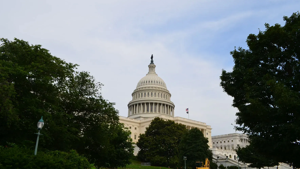
The U.S. House of Representatives on Thursday cleared three nearly $180 billion government funding bills that will take a step toward preventing a federal government shutdown at the end of January.
The House passed the bills in a vote of 397-28 on Thursday.
The funding bills outline appropriations for the Department of Commerce, Department of Justice, Department of Energy, the Department of the Interior, the Environmental Protection Agency and several others through Sept. 30.
The proposed appropriations received bipartisan approval in debate on the House floor Thursday. The proposals suggest trimming budgets for federal agencies while also providing increased funding for federal scientific research and law enforcement.
“The power of the purse is once again being exercised by lawmakers through the committee process as Article One intended,” Rep. Tom Cole, R-Okla.., said on the House floor Thursday.
In debate on the House floor, Democrats boasted of the bill’s proposals to increase funding for federal scientific research. The appropriations bill surpassed White House recommendations for the National Science Foundation by an additional $4.8 billion.
The bill also provides $8.8 billion for the Environmental Protection Agency, half of the White House’s recommendation but a decrease of 4% from previously budgeted years.
Rep. Rosa DeLauro, D-Conn., praised the bill’s appropriations and warned against funding through stop gap measures and continuing resolutions. She said the appropriations process gives Congress greater control over federal spending and prevents the Trump administration from having as much discretion.
“The more ambiguity we afford them, the more they exploit it,” DeLauro said. “One of the best ways to reign in this reckless administration is by providing precise spending levels for the specific projects that they are bound to carry out by law. That is exactly what this bill does.”
On the other side of the aisle Republican lawmakers highlighted the bill’s proposals to increase grant funding for state and local law enforcement. The bill also provides $63 million to the Drug Enforcement Agency as a means of targeting drug cartels, according to Rep. Harold Rogers, R-Ky.
“This has been a courageous effort,” Rogers said, “to restore regular order to the way we apportion the taxpayer monies that are entrusted to us.”
Rep. Chuck Fleishmann, R-Tenn., praised the bill’s provisions for national security and investments in nuclear power. The bill provides $25.4 billion for the National Nuclear Security administration.
“The bill strengthens our nation’s energy security by advancing American leadership and deploying new nuclear technologies and supporting the administration’s efforts to make full use of for our nation to vast fossil fuel resources,” Fleischmann said. “The bill will reduce reliance on foreign materials and secure full supply chain of critical minerals.”
Several lawmakers highlighted the bill’s funds for increased energy funding toward the U.S. Department of Energy. The bill allotted $63.3 billion for energy and water infrastructure development, a $2.4 billion increase over last year.
“Our bill aims to help address significantly rising energy bills coast to coast for families as well as climate-caused water shortages in the west,” said Rep. Marcy Kaptur, D-Ohio.
With passage of the funding bill, the House cleared a critical hurdle to averting a government shutdown but it still must pass six appropriations bills to avoid a government shutdown on Jan. 30.
“We haven’t stopped the conversations in order for us to meet that January 30 deadline, and I remain confident that we can meet the deadline and avoid another continuing resolution,” DeLauro said.