Center Square
Trump invites Colombian president to White House
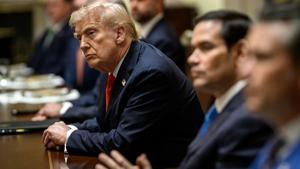
In a matter of days, President Donald Trump has gone from threatening to strike Colombia to inviting its leader to the White House.
Following a call between Trump and Colombian President Gustavo Petro on Wednesday evening, the pair appears to have had a productive conversation leading to a White House meeting in the “near future.”
“It was a Great Honor to speak with the President of Colombia, Gustavo Petro, who called to explain the situation of drugs and other disagreements that we have had,” the president posted to his Truth Social account. “I appreciated his call and tone.”
Prior to the call, tensions between the two leaders appeared high, with Trump threatening military action as of Sunday evening.
Onboard Air Force One during his return to Washington, the president was asked if the U.S. could target Colombia next on the heels of Saturday’s strike in Venezuela and the capture of deposed Venezuelan President Nicolas Maduro.
Trump responded: “It sounds good to me.”
The president accused Petro of making and selling drugs to the U.S.
“Colombia is very sick, too, run by a sick man, who likes making cocaine and selling it to the United States, and he’s not going to be doing it very long,” Trump told reporters.
The South American leader posted a warning to Trump, indicating any U.S. action in Colombia would be met with resistance.
“If you detain a president whom much of my people want and respect, you will unleash the people’s jaguar,” Petro posted on X.
Petro appears to be trying to reassure the U.S. of his country’s commitment to fighting drug trafficking ahead of the proposed meeting.
“Dear U.S. Representative, Colombia has put 300,000 killed in the fight against drug trafficking, and in my government we have already seized 2,800 tons of cocaine and in the world’s seizure operations, Colombian intelligence has participated in 63% of them,” Petro posted to X on Thursday morning. “We have destroyed 13,000 cocaine laboratories in just three years. Remember it: my government is the one that has seized the most cocaine in the entire history of that substance in the world.”
Pro life org to Congress: Hyde Amendment is non-negotiable
An American pro-life group told President Donald Trump and Congress that the Hyde Amendment is “non-negotiable,” following comments from the president that Republicans should be flexible on the issue and preceding a healthcare vote Thursday.
President of Susan B. Anthony Pro-Life America Marjorie Dannenfelser told The Center Square that “abandoning Hyde is not just bad policy that harms babies in the womb and their mothers, it is not politically smart or helpful for the future of the GOP either.”
“The Hyde Amendment has saved more than 2.6 million lives over its 50-year existence by protecting taxpayers from being forced to fund abortion on demand,” Dannenfelser said.
As explained by a letter pro-life organizations sent to Congress in October concerning taxpayer funded abortion, the Hyde Amendment for decades worked to protect “the unborn by stopping taxpayers from being forced to pay for abortion and for health insurance plans that include coverage of abortion” until Obamacare ruptured the policy in 2010.
Dannenfelser told The Center Square that Hyde “reflects the will of nearly 6 in 10 voters, including 58% of Independents, a full third of rank-and-file Democrats, and more than 40% of self-described pro-choice voters.
“The pro-life movement is definitely not ‘flexible’ on requiring people to pay for the deaths of other human beings, which is longstanding consensus and really the minimum expectation,” Dannenfelser said.
“The GOP cannot expect to abandon this bedrock principle, betray their base, and depress turnout especially in a midterm year and win elections,” Dannenfelser said.
“We’ve seen, for example, critical Senate elections in midterm years decided by about 10,000 votes, with the help of the largest pro-life voter contact program in the nation – built by SBA Pro-Life America and fueled by the enthusiasm of grassroots Americans meeting millions of voters right at their doors to persuade and motivate,” Dannenfelser said.
“When margins are so tight it does not take much to swing outcomes either direction,” Dannenfelser said.
The Center Square previously noted the role pro-life voters play in elections
SBA Pro-Life America’s state public affairs director Kelsey Pritchard said in November Trump would have lost the 2024 presidential election “if 1-2% of [pro-life] voters had stayed home.”
Dannenfelser told The Center Square that “it is very important to know that when Democrats claim Hyde protections already cover Obamacare, they are lying.”
“If that were true when Obamacare was passed in 2010, we would not be in this position today,” Dannenfelser said.
“Then-President Obama offered the fig leaf of an executive order in exchange for the votes of ‘pro-life’ Democrats for his signature agenda item, but it was no more than a gimmick and everyone knew that,” Dannenfelser said.
“The reality is that the Democrats craftily wrote the language of the law to evade the Hyde Amendment, a huge departure that resulted in the biggest expansion of taxpayer-funded abortion since Roe v. Wade,” Dannenfelser said.
“When this betrayal was exposed, 15 House Democrats ran afoul of their constituents and ended up losing their seats in Congress,” Dannenfelser said.
“The consequences were far-reaching with the GOP gaining in battleground states like Michigan, Pennsylvania and Wisconsin,” Dannenfelser said.
In response to Trump’s comment that Republicans should be “flexible” on the Hyde Amendment as reported by the Daily Signal’s Elizabeth Mitchell, SBA Pro-Life America issued a press release stating that Hyde is “non-negotiable.”
“The pro-life movement has been very clear: No Hyde, no deal,” SBA said on X.
Florida joins redistricting push, schedules special session
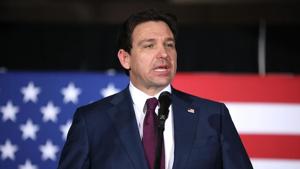
Florida is joining a growing list of states seeking to redraw their congressional maps and gain an advantage in the November midterm elections.
Gov. Ron DeSantis on Wednesday announced a special legislative session, scheduled for April 20-24, to address redistricting.
The session will “take place after the regular legislative session, which will allow the Legislature to first focus on the pressing issues facing Floridians before devoting its full attention to congressional redistricting in April,” he posted on X.
“Every Florida resident deserves to be represented fairly and constitutionally,” he added.
The maps are typically redrawn at the beginning of each decade after Census results are released. But President Donald Trump has been pushing Republican-led states to redraw ahead of the midterms to boost the party’s chances of keeping its narrow majority in the U.S. House.
Texas, Missouri, North Carolina and Ohio have redrawn maps favoring Republicans. In California, Democrats responded with a new map, and Virginia Democrats have tried to do the same.
Republicans hold 20 of Florida’s 28 congressional districts. The current deadline for candidates to file is April 24, although the date could be moved.
DeSantis, a Republican, wants to delay considering a new map in anticipation of a potential U.S. Supreme Court ruling that could weaken the Voting Rights Act and make it easier for states to add GOP-friendly districts.
Justices are currently considering whether Louisiana’s new congressional map, which created a second majority-Black district, complies with the U.S. constitution. It’s not clear when a ruling will be issued this year.
Other Florida Republicans have appeared willing to begin redrawing maps sooner.
In September, House Speaker Daniel Perez created a special committee to examine a Florida Supreme Court ruling that upheld the redrawing of a majority-Black district in Florida’s 2022 maps.
Perez said at the time the decision “raises important and district questions” about the interpretation of the Fair Districts provision of Florida’s constitution and how it interacts with federal law.
“Exploring these questions now, at the mid-decade point, would potentially allow us to seek legal guidance from our Supreme Court without the uncertainty associated with deferring those questions until after the next decennial census and reapportionment,” Perez said.
Senate takes first vote to limit military action in Venezuela

The U.S. Senate took a bipartisan step on Thursday to pass a resolution limiting President Donald Trump from the use of further military force in Venezuela.
An initial vote passed 52-47. A final vote is expected next week.
Sens. Rand Paul, R-Ky., Susan Collins, R-Maine, Lisa Murkowski, R-Alaska, Todd Young, R-Ind., and Josh Hawley, R-Mo., joined Democrats in asserting Congressional war powers authority.
The resolution would end further military operations involving Venezuela without approval from Congress. Last week, the United States conducted Operation Absolute Resolve to capture Venezuelan leader Nicolas Maduro.
The Venezuelan president is now on trial in New York.
While several Republicans joined Democrats in the vote, other members of the GOP voiced their frustration. U.S. Sen. James Risch, R-Idaho, said the resolution is attempting to stop military action in Venezuela that is no longer occurring.
“The United States conducted a limited operation that removed an indicted narco-terrorist – Nicolas Maduro – from Venezuela and brought him to the United States to face justice for his crimes,” Risch said on the Senate floor Thursday.
Senate Minority Leader Chuck Schumer, D-N.Y., said Trump’s pursuits in Venezuela are an “endless war” and said the president should focus on affordability instead of foreign affairs.
“We must send Donald Trump a clear message on behalf of the American people, no more endless wars,” Schumer said.
Risch further criticized the resolution and said it does not attempt to solve problems that are occurring in Venezuela.
“The purpose of this resolution is to slap the President in the face. It will do nothing that it proposed,” Risch said. “Efforts to do because it can’t stop something that isn’t going on right now.”
U.S. Sen. Tim Kaine, D-Va., who called up the resolution to a vote, clarified that the resolution is not seeking to challenge Maduro’s arrest.
“Under the War Powers resolution, I’m not even sure that the execution of an arrest warrant, even if accompanied by military escort, would rise to the level of hostilities that would allow such a challenge, and I certainly wouldn’t be calling it up for a vote on the floor,” Kaine said.
However, Kaine argued, the Trump administration’s strikes against suspected drug boats and bombing in Venezuela during Maduro’s capture amount to an issue the Senate must challenge.
“This is not an attack on the arrest warrant, but it is merely a statement that going forward, U.S. troops should not be used in hostilities in Venezuela without a vote of Congress, as the Constitution requires,” Kaine said.
“Mr. President, before you send our sons and daughters to war, come to Congress, that is a vote that no one has ever regretted, and no one will ever regret,” Kaine added.
Dem officials urge Trump EPA to keep Biden’s PFAS rules
Democrat state attorneys general are resisting changes made by the Trump administration that affect what companies must disclose about the use of chemicals known as PFAS.
They have been nicknamed “forever chemicals” because of their persistence in the human body, but the exact health effects are unknown. States have set their own toxicity levels for water and ground soil and hired private lawyers to sue companies like DuPont and 3M on contingency fees.
Biden-era rules would have had businesses issuing reports on PFAS use from 2011-2022. The Trump EPA’s changes include a delay in when reports would be submitted, and those amendments are currently in the public-comment period.
At least two groups of AGs have filed comments, as have many business groups supporting Trump’s changes. The main point of debate is exemptions typically afforded under the Toxic Substances Control Act that weren’t initially provided by Biden’s EPA but now are by Trump’s.
Businesses, under Trump’s rule, would not have to report PFAS imported as part of a product and PFAS that are byproducts not used for a commercial purpose.
“In effect, the Proposal would gut the Reporting Rule – by adding exemptions which effectively would reduce the number of responding entities by over 98% – and thus impede important data collection,” wrote a coalition of 15 AGs, 14 of whom are Democrats and one is technically nonpartisan.
Their lawsuits are often transferred to a federal court in South Carolina, where a multidistrict litigation proceeding has led to billions of dollars in settlements of some types of claims. Disclosure by companies could give ammunition to lawyers, as an EPA press release from 2023 said the agency “looks forward to sharing that data with our partners and the public.”
Business groups cite the costs of finding PFAS in products they have imported and sold since 2011 in supporting Trump’s changes. The U.S. Chamber of Commerce and several trade groups asked for more exemptions, including the omission of PFAS releases that are above the 0.1% minimum standard but were in such low volume that they had no impact.
“The proposed rule demonstrates an understanding of the operational realities faced by regulated entities, including to what extent certain information about PFAS is known or reasonably ascertainable by regulated entities,” the groups wrote Dec. 29.
PFAS are dubbed “forever chemicals” because they persist in groundwater and human tissue for years. They are found in firefighting foam and consumer products.
Biden’s EPA set a maximum contaminant level for PFAS, even as groups call the move premature. Much of the research regarding their effect on the human body is disputed, with the American Chemistry Council calling the EPA’s regulation “rushed” and “unscientific.”
Trump rescinded that level in May for some PFAS chemicals and extended the deadline for companies to comply. A lawsuit by environmental advocates like Earthjustice targets the four chemicals that would not be regulated.
Protests continue Thursday in Minneapolis; schools canceled

(The Center Squares) – Protests continued Thursday after thousands of protesters took to the streets in Minneapolis on Wednesday night, rallying against ICE agents in the community and mourning the death of a woman killed by agents.
According to media reports, demonstrations were planned to start at the Whipple Building in St. Paul, near the area where U.S. Immigration and Customs Enforcemet has operated in the Twin Cities.
Minneapolis Mayor Jacob Frey continued Thursday to push for the removal of ICE agents, posting on social media the Trump administration’s narrative about the 2,000 federal agents sent to Minneapolis-St. Paul is wrong.
“The Trump admin will tell you ICE is here for safety. That is a lie. They are creating chaos and danger while tearing families apart. Enough. We want them out,” Frey posted on social media on Thursday.
Frey’s comments echoed those of the Minneapolis City Council and Gov. Tim Walz from Wednesday, both saying the presence of ICE is creating chaos and harm to the cities.
On Wednesday, an ICE agent shot and killed 37-year-old Renee Nicole Good. She was in a roadway where agents were working.
Tricia McLaughlin, assistant secretary of Homeland Security, said the vehicle was “attempting to run over our law enforcement officers.” She also said the officer feared for his life and fired defensive shots.
City and state leaders challenged that assertion after several videos surfaced showing the incident.
“Having seen the video myself, I want to tell people directly, that is bulls—,” Frey said at a news conference Wednesday.
An agent struck by her car was treated and released from a hospital.
Following the shooting, Minneapolis Public Schools canceled classes for the rest of the week.
“Out of an abundance of caution, there will be no school on Thursday, Jan. 8 and Friday, Jan. 9 due to safety concerns related to today’s incidents around the city,” the district posted on its website. “MPS will continue collaborating with the City of Minneapolis and other partners.”
Cato scholar: Fraud being investigated in Minnesota likely occurring across U.S.
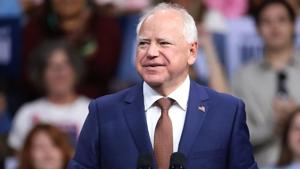
The widespread fraud in Minnesota that’s made national headlines in recent weeks is likely occurring in states across the country, Cato Institute scholar Chris Edwards told The Center Square in an exclusive interview. He called it a “remarkable cascade of fraud scandals.”
Edwards, an expert on federal and state tax and budget issues, wrote a detailed analysis of the fraud allegations for the Cato Institute.
The fraud in Minnesota highlights what he calls financial vulnerabilities in programs that rely mostly on federal versus state funding. “If we dug into many states, the problems would be just as bad,” Edwards said in an interview. “I’ve been writing about this for 20 years, a lot of these social welfare problems are and have been experiencing fraud.”
Taxpayers have been defrauded of a minimum of $250 million in just the Feeding our Future meal scandal alone. Congress has begun an investigation into the welfare fraud in Minnesota, with Gov. Tim Walz being called upon to testify before a congressional oversight committee.
Edwards’ analysis outlines the many Minnesota programs that are dealing with fraud, including housing services, child care, behavioral programming and autism centers, and the Integrated Community Supports (ICS) program.
“Because state governments are getting ‘free’ money from Washington, they don’t have the incentive to run them in a lean, efficient manner,” Edwards said.
Edwards said that he was also recently digging into the Supplemental Nutrition Assistance Program (SNAP) and said that the program has similar issues to child care and health care fraud. “States just aren’t taking initiative to crack down on it,” he said.
Edwards said that while congressional oversight committees are supposed to help keep fraud in check for these federally funded programs, most of the time those aren’t happening like they should be.
“If these programs, childcare and food programs, if they had been funded locally, I think Gov. Walz would’ve taken these problems a lot more seriously,” he said.
Edwards says that he believes the solution to the fraud would take some longer-term reform. “My reform is a longer term one in pushing the states to fund a higher share of these programs so that they have more skin in the game,” he said. “States need to put thresholds in for if a program spends a certain amount of money, then they receive more on site visits. We need actual state administrators visiting these places.”
He also expressed that the public interest in the fraud stories is a good thing and will help push for more change to happen. “We need to look at the data in more states, those run by both Democrats and Republicans,” Edwards said.
Supreme Court could rule on Trump’s tariff authority Friday

The U.S. Supreme Court could issue a landmark ruling Friday on President Donald Trump’s authority to use tariffs, potentially reshaping presidential power.
Alan Morrison, a law professor at The George Washington University, said signs indicate a ruling on tariffs is expected on Friday.
“It seems highly unlikely that the court would come back for anything but a very, very important case three days before they’re going to come back anyway,” he told The Center Square.
Morrison said if Trump wins on tariffs, the scope of presidential power would grow significantly for the administration and all future presidents.
“If the court upholds these taxes, then essentially they’re telling the President he can do anything he wants to do, and the court is going to step aside,” Morrison said.
Trump has made tariffs, which are taxes on products imported from outside the U.S., central to both his domestic and foreign agendas during his second term. Last April, Trump imposed import taxes of at least 10% on every U.S. trading partner. Since then, the president has suspended, changed, increased, decreased and re-imposed tariffs under the 1977 International Emergency Economic Powers Act.
That law doesn’t mention the word “tariff” and had never been used to impose them before Trump did so last year. A group of states and small businesses challenged Trump’s tariffs under the 1977 law, winning in two lower courts before the Trump administration appealed to the Supreme Court.
The high court agreed to hear the case on an expedited basis, given the economic stakes at issue. The Trump administration could be forced to refund more than $133.5 billion in tariffs to importers if the Supreme Court sides with the states and small businesses in the case.
Trump has called the case one of the most important of all time and said that an unfavorable ruling could result in economic ruin for the U.S.
Phillip Magness, senior fellow at the Independent Institute, said Trump’s claims of ruin are exaggerated.
“Trump has made a number of wildly exaggerated economic claims,” Magness told The Center Square. “These numbers are nonsensical and appear to have zero basis in reality.”
More realistically, the U.S. would have to refund about $200 billion in tariff revenue it has collected so far, Magness said.
“While this is a loss of revenue to the government, it’s also a tax refund that will go to U.S. companies,” he said.
Those businesses could pass savings along to consumers, Magness added.
Magness said a ruling against the administration could lower consumer prices and end tariff uncertainty.
Companies have already started lining up for potential refunds. Hundreds of companies, including some big ones such as Costco, have filed for refunds with the U.S. Court of International Trade.
The scope of the Supreme Court’s ruling could determine what happens next, Magness said.
“The Supreme Court has wide leeway on how it will rule in this case,” he said. “One possibility is that they limit relief (i.e. a refund) only to the companies that are parties to the lawsuit in the case. That would precipitate additional litigation though at the U.S. Court of International Trade, which has already signalled that it will require the government to refund illegal IEEPA tariffs in other lawsuits going forward.”
Magness said other U.S. laws that allow the president to impose tariffs are “substantially more restrictive” than the authority Trump cites under the IEEPA to issue tariffs of any rate for any length of time.
Arraignment postponed for Nick Reiner in murder trial

Nick Reiner, charged with murdering his parents Rob Reiner and Michele Singer Reiner, saw his arraignment postponed Wednesday after his second appearance in a downtown Los Angeles court.
The delay came when Reiner’s high-profile attorney Alan Jackson told Los Angeles County Superior Court Judge Theresa McGonigle that he had to withdraw from the case. Jackson, who has defended celebrities such as actor Kevin Spacey and producer Harvey Weinstein, didn’t give a reason. But he told reporters afterward Reiner is not guilty.
Reiner didn’t enter a plea. Instead his arraignment is now set for Feb. 23, at the request of Los Angeles County public defender Kimberly Greene.
Reiner, who has talked openly about his history of substance abuse and attempts at rehabilitation, is charged with two counts of first-degree murder with a special circumstance for allegedly committing multiple murders. He also is charged with a special allegation of using a dangerous and deadly weapon. If he’s convicted of murder, he could get a life sentence without the possibility of parole or the death penalty. Los Angeles County District Attorney Nathan Hochman hasn’t announced if he will seek the death penalty, but Gov. Gavin Newsom has issued a statewide moratorium on it.
The district attorney’s office has alleged Reiner, 32, stabbed Rob Reiner, 78, and Michele Singer Reiner, 70, to death early in the morning of Dec. 14 at the couple’s home in the affluent Brentwood area of Los Angeles. Nick Reiner lived with them.
The Los Angeles County Medical Examiner’s Office reported that the couple died from multiple sharp force injuries and that the manner of death was homicide.
Rob Reiner is known for everything from acting in the hit CBS sitcom “All in the Family” to directing popular movies such as “The Princess Bride” and “When Harry Met Sally.” His father, Carl Reiner, was a writer, producer and actor who created the 1960s sitcom “The Dick Van Dyke Show,” in which Carl Reiner had a recurring role as fictional TV variety show host Alan Brady.
Court halts injunction on California gender secrecy policy

In Mirabelli v. Bonta, the U.S. Court of Appeals for the 9th Circuit granted California’s emergency motion for a freeze, temporarily suspending a class-wide permanent injunction against the state’s gender secrecy policies in public schools.
Since 2023, the Thomas More Society, a nonprofit law firm, has been representing the plaintiffs in the federal lawsuit against the Escondido Union School District, the California Department of Education and California Attorney General Rob Bonta. Before the appeal, U.S. District Judge Roger Benitez certified a class action lawsuit in Mirabelli v. Bonta.
The appellate court had granted the motion to pause the permanent injunction, finding that there was no clear evidence that the policies prevent parents from obtaining information about their children.
“Because the policies at issue do not categorically forbid disclosure of information about students’ gender identities to parents without student consent, other parties in this action, including the Plaintiffs, will not be substantially injured from the issuance of a stay,” the order stated. “Additionally, the public interest in protecting students and avoiding confusion among schoolteachers and administrators weighs in favor of a stay.”
The suit began in April 2023, when two Escondido teachers, Elizabeth Mirabelli and Lori West, sued their San Diego County school district and the California Department of Education after the district refused to grant them a religious accommodation.
“We are deeply disappointed that this three-judge panel has taken the extraordinary step of staying a class-wide permanent injunction, disregarding the severe irreparable harm that will now occur to our clients and all members of the classes,” Paul M. Jonna, special counsel for Thomas More Society and a partner at LiMandri & Jonna LLP, said in a statement.
Thomas More Society attorneys plan to file their request for en banc reconsideration of the case, as well as an emergency request to the U.S. Supreme Court for the Ninth Circuit’s freeze order.
“We are pleased that the Ninth Circuit has agreed we are likely to succeed on appeal in arguing that the district court’s injunction is unnecessarily vague, far more sweeping than necessary to remedy the alleged harms, reliant on faulty readings of the policies at issue, and contrary to longstanding principles of constitutional law,” California Attorney General Rob Bonta’s press office told The Center Square. “The stay protects vulnerable students and avoids confusion for teachers and schools while we appeal the district court’s decision. We look forward to continuing to make our case in court.”
The school policies require teachers and administrators to use a student’s preferred pronouns and, at the student’s request, withhold information about the child’s gender identity from parents. Biological pronouns and legal names are used when communicating with parents if the student asks that the parents not be informed.
The Center Square reached out to the California Department of Education for a comment, but did not receive a response.