Center Square
WATCH: Minn. agencies suppressed fraud reports, punished whistleblowers
Officials within the administration of Minnesota Gov. Tim Walz enabled some of the state’s now estimated $9 billion in taxpayeer-funded social services fraud by suppressing some fraud reports, retaliating against whistleblowers and changing protocols to mask criminal behavior., Republican Minnesota state lawmakers testified at a congressional hearing Wednesday.
State Reps. Walter Hudson, Marion Rarick, and Kristin Robbins are members of their legislature’s committee on fraud prevention, which has been investigating some of the same instances of fraud that have captured the national spotlight in the last several months. All three of them were invited to testify at the House Committee on Oversight and Government Reform’s first of at least two scheduled hearings on the rampant social services fraud that led Walz to withdraw his bid for reelection in 2026.
Rarick in particular spoke about the pressure and opposition whistleblowers have said they have faced. According to Rarick, what was once a group of about 480 disenchanted current and former state Department of Health Services employees has grown to over 1,000 people across multiple state agencies. Those DHS employees started an account on X called Minnesota Staff Fraud Reporting Commentary, and many have been more than willing to talk with the fraud prevention committee about what they have found and experienced.
“They have explained that they live in a constant state of fear of retaliation,” Rarick told the House committee, citing the example of Faye Bernstein reported by Newsweek.
Bernstein was a compliance specialist who had reported some “sloppy contracting practices” to Minnesota DHS officials and was later “escorted out of the building” and transferred involuntarily to another agency. She now discourages others from reporting fraud without concealing their identity, calling it “career suicide” and more. Others that Rarick and fellow fraud prevention committee members have met with have backed up Bernstein’s story with anecdotes of their own, according to Rarick.
“In our face to face meetings with a group of whistleblowers, they revealed that retaliation now includes threats of being fired with cause, which means you do not get unemployment insurance in the state of Minnesota, being blacklisted from all state agencies… and then there was a veiled threat of the use of military intelligence against them,” Rarick said.
Some whistleblowers told committee members that pictures of their homes or cars were found in some of their personnel files and supervisors asked them questions like where their kids went to school and “where their bus stops are.”
Minnesota Lt. Gov. Peggy Flanagan has publicly disparaged the whistleblowers who formed the X account, and she was on the legislative committee that held hearings on child care fraud before becoming the state’s lieutenant governor, according to Robbins.
Robbins also said that after an important whistleblower report came out in 2019 exposing fraud in Minnesota’s state-sponsored child care services, the Office of Inspector General within the state’s DHS was shut down and “told they could no longer do criminal investigations.” The department also went from calling suspicious activity “fraud” to calling it “overbilling,” and created a committee that reviewed cases to decide whether the state would even attempt to recoup the money.
Committee Chairman U.S. Rep. James Comer, R-Ky., also cited a newly released report by the Minnesota’s Office of the Legislative Auditor that found evidence of various documents being created or backdated after investigative audits had been performed.
House Committee Democrats, while acknowledging that abuse of government assistance programs should be punished, expressed frustration at the administration’s aggressive response to fraud in blue states and what they see as a much softer response to red states.
The Wall Street Journal reported Monday on a $77 million welfare scheme that U.S. Rep. Robert Garcia,D-Calif., claimed hasn’t received as much attention from the administration because it’s a red state.
“Republicans like to talk about fraud in states with Democratic governors exclusively,” Garcia said. “Republicans aren’t calling in [Mississippi] Governor Tate [Reeces].”
In response to the staggering fraud that has taken place in Minnesota with fake child care, autism, adult day care, housing and non-emergency medical transportation services programs, the Trump administration has frozen federal social services funding to Minnesota, California, Colorado, Illinois, and New York – all states with Democratic governors. Garcia said justice should be distributed evenly and those in power should be careful not to punish innocent people for others’ crimes.
“What we should not do is use fraud as an excuse to rip away aid from innocent people who follow the rules and need help in our society,” Garcia said.
Collectively, the administration withholding social services funding from a number of states could impact hundreds of thousands of children.
“These kids didn’t commit fraud, so I want to know why they should be punished,” Garcia said.
Flags lowered on anniversary of Palisades, Eaton fires

California Gov. Gavin Newsom ordered flags lowered to half-staff Wednesday for all state buildings on the one-year anniversary of the devastating Los Angeles County wildfires.
Newsom’s proclamation for a day of remembrance noted 31 people died in the Palisades and Eaton fires, which together burned more than 35,000 acres. Both fires started Jan. 7, 2025, and continued throughout that month, burning homes, businesses and schools.
As the governor ordered the flags lowered, Democratic and Republican members of California’s congressional delegation urged President Donald Trump to continue funds for federal disaster relief.
The request for aid was made in a letter dated Wednesday and signed by all of California’s U.S. House representatives and its U.S. senators, Democrats Alex Padilla and Adam Schiff. The effort for more funding was led by the senators and U.S. Rep. Ken Calvert, who chairs the state’s Republican delegation in the House, and U.S. Rep. Zoe Lofgren, the Democratic delegation chair, all of whose names appear at the top of the signatories.
“At the one-year anniversary of the devastating Palisades and Eaton Fires in Los Angeles County, we write to highlight the historic response, the ongoing recovery, and to urge continued and additional support,” the members of Congress wrote Trump.
They went on to praise the Trump administration for the Army Corps of Engineers’ quick cleanup of hazardous debris and the billions of dollars in aid from the Federal Emergency Management Agency and the U.S. Small Business Administration.
“As the recovery process continues, additional federal support is needed, and our entire delegation looks forward to working cooperatively with your administration to ensure the communities of Southern California receive their fair share of federal disaster assistance,” the lawmakers wrote Trump.
The Palisades Fire burned 23,448 acres in the coastal Pacific Palisades neighborhood of Los Angeles, nearby Malibu and rural communities. It left the lush Topanga Canyon looking like a moonscape, and the coastline visible through the frames of homes that once stood along the Pacific Coast Highway in Malibu.
The fire killed 12 people and destroyed 6,833 structures, according to the California Department of Forestry and Fire Protection.
In October, the U.S. Department of Justice charged Jonathan Rinderknecht, a 29-year-old Melbourne, Fla., resident, with starting the Palisades Fire. Rinderknecht was brought to Los Angeles and is awaiting a trial set for April 21. He has pleaded not guilty.
The Eaton Fire burned 14,021 acres in Pasadena and the neighboring unincorporated community of Altadena, Cal Fire reported. It resulted in 17 deaths and the destruction of 9,418 structures.
The Eaton Fire was caused by faulty equipment maintained by Southern California Edison, according to government entities suing the utility company. Those entities vary from the cities of Pasadena and Sierra Madre to the Pasadena Unified School District and the U.S. Department of Justice.
Southern California Edison has been working on a program to reimburse victims of the fire.
The day of remembrance on Wednesday honors the victims, as well as first responders, community leaders and public servants “who ran toward danger and went above and beyond to protect Angelenos,” Newsom said.
“This past decade has seen fires on a scale once unimaginable – driven by hotter temperatures, prolonged drought, and the accelerating realities of a changing climate,” Newsom said. “Humanity cannot defy nature, but we can meet its challenges with resolve and preparation. California must continue to advance our understanding of wildfire behavior, further strengthen prevention efforts, and continue to enhance emergency response.”
The governor on Tuesday announced expanded access for the CalAssist Mortgage Fund eligibility for survivors of the wildfires. He also announced additional commitments from banks to provide extended forbearance for approved borrowers.
Newsom added he’s exploring a new financing program to bridge the gap between insurance payouts and the cost of rebuilding.
“This disaster was unprecedented, and it’s created challenges unlike anything we’ve seen before — demanding flexibility, partnership, and a willingness to adapt in real time,” Newsom said.
Los Angeles Mayor Karen Bass on Tuesday said full recovery from the Palisades Fire would be a multi-year effort. She said she would use the full force of her mayoral power to restore the Palisades community and “return families to their homes as quickly and safely as possible.”
Federal funding bill decreases spending, limits firing power
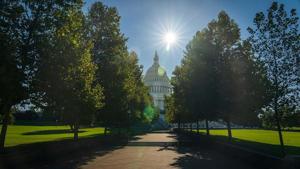
The U.S. House of Representatives is expected to pass a funding bill on Thursday that would take a step toward averting a partial government shutdown at the end of the month and limit the ability to fire federal workers.
The package would fund the Department of Commerce, Department of Justice, Department of Energy, the Department of the Interior, the Environmental Protection Agency and several others.
The proposed appropriations would trim budgets for the Departments of Justice, Interior, Commerce and Energy from previous levels.
The bill calls for cutting the Environmental Protection Agency’s budget by 4%, compared to 55% called for by the Trump administration. The budget also allotted $24.43 billion for NASA, which serves as a 2% decrease from the previous appropriations levels.
The lawmakers also proposed a $3.27 billion budget for the National Park Service, a 2% decrease from previous budget appropriations.
House and Senate Democrats hailed the proposed budgets as fighting back against President Donald Trump’s federal agency cuts and providing more funding for scientific research.
“Democrats defeated heartless cuts that would have increased Americans’ costs and extreme proposals that would have jeopardized people’s safety and enshrined backwards policies in laws for years to come,” said Sen. Patty Murray, D-Wash.
U.S. Rep. Rosa DeLauro, D-Conn., also praised the legislation for protecting congressional power of the purse and funding for “Democratic priorities.”
Republicans highlighted the remainder of essential services provided through the government agencies Congress is funding.
“The Department of Justice will be able to fulfill its important mission protecting Americans from wrongdoers, including combating illicit drugs like the scourge of fentanyl,” said Rep. Tom Cole, R-Okla. “We prioritize American energy dominance and safeguarding critical mineral resources. National parks will be open and operating, and essential wildfire protection programs will remain in place.”
Lawmakers’ budget also proposed a $160 million increase for the Department of Energy’s Office of Science. The office supports research at 17 national labs across the country.
“This is a fiscally responsible package that restrains spending while providing essential federal investments that will improve water infrastructure in our country, enhance our nation’s energy and national security, and spur scientific research necessary to maintain U.S. competitiveness,” said Sen. Susan Collins, R-Maine.
Critically, the bill prevents listed agencies from using congressionally appropriated funds to engage in reorganization efforts. The provision appears aimed at preventing the mass firings and federal funding cuts that the Trump administration underwent last year.
“Importantly, passing these bills will help ensure that Congress, not President Trump and Russ Vought, decides how taxpayer dollars are spent – by once again providing hundreds of detailed spending directives and reasserting congressional control over these incredibly important spending decisions,” said Murray.
If this legislation is passed by both chambers and signed into law by Trump, Congress would still need to pass six more appropriations bills by Jan. 30.
Feds freeze $10B in aid to Colorado, four other states

The Trump administration froze certain federal funding to Colorado this week amid growing national concerns about fraud in government-funded programs.
The U.S. Department of Health and Human Services made the announcement on Tuesday. The freeze targets billions in funding to five Democrat-led states: Colorado, California, Illinois, Minnesota and New York.
The federal government cited concerns about “widespread fraud and misuse of taxpayer dollars in state-administered programs.”
“Families who rely on child care and family assistance programs deserve confidence that these resources are used lawfully and for their intended purpose,” said Deputy Secretary of DHHS Jim O’Neill. “This action reflects our commitment to program integrity, fiscal responsibility, and compliance with federal requirements.”
Funding was frozen to three specific programs which are overseen by the Administration for Children and Families, which is part of the department. Those programs are the Child Care and Development Fund ($2.4 billion), Temporary Assistance for Needy Families ($7.35 billion), and Social Services Block Grant ($869 million).
That means over $10 billion in funding has been paused to those states, pending “further review,” according to DHHS.
Many Democrats have spoken out against the pause, including U.S. Sen. Michael Bennet, D-Colorado.
“Donald Trump has declared war on Colorado,” Bennet said in a post on social media on Tuesday. “He is now robbing thousands of vulnerable Colorado families of the critical support they need to afford food, housing and health care. I will pursue all available options to ensure that Trump’s latest political attack against our state is stopped.”
This freeze comes following weeks of national turmoil over suspected widespread fraud in a number of different taxpayer-funded programs – including child care centers.
According to the department, it also has “concerns that these benefits intended for American citizens and lawful residents may have been improperly provided to individuals who are not eligible under federal law.”
Minnesota has been the epicenter of the fraud scandal, though it is slowly spreading to other states. So far, fallout in Minnesota includes federal funding cuts to day care centers and Gov. Tim Walz announcing he will not run for reelection this year.
Lawmakers in many other states are also requesting audits of their own state’s programs to ensure against fraud.
The three programs affected help fund child care costs and even provide temporary cash aid to low-income families for food, housing, and utilities, along with job training and work support.
Illinois Gov. JB Pritzker, a Democrat, joined lawmakers from the other affected states in saying that they will fight this funding freeze.
“Rather than making it more affordable for families, Trump is stripping away child care from those just trying to go to work,” he said on social media on Tuesday. “Thousands depend on these programs, and now their livelihoods are at risk. It’s wrong and cruel — we’ll take every step possible to defend Illinoisians.”
The Trump administration said it will consider restoring the funding once the states are compliant and submit a “justification and receipt documentation.”
“We have a responsibility to protect taxpayer dollars and ensure these programs serve the families they were created to help,” said Assistant Secretary for Children and Families Alex J. Adams. “When there are credible concerns about fraud or misuse, we will act.”
Republicans go on attack in hearing over $9 billion of social services fraud
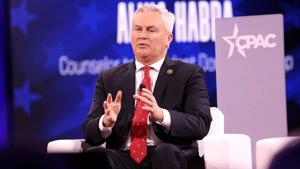
Democratic Minnesota Gov. Tim Walz and the state attorney general were either “complicit” in the now-estimated $9 billion of social services fraud that has taken place in the state in recent years or “asleep at the wheel,” according to Republican Rep. James Comer, R-Ky.
“How could they allow this massive fraud to go on for years? This is why we’re here today. We must expose this theft of taxpayer dollars and hold everybody accountable who let it happen,” Comer said.
Comer chairs the House Committee on Oversight and Government Reform, which on Wednesday held the first of at least two scheduled hearings looking into the fraud that has occurred in Minnesota and how to respond.
The committee’s ranking member, Rep. Robert Garcia, D-Calif., agreed that defrauding the government and abusing taxpayer dollars should be punished, but he questioned the administration’s enforcement practices. The Wall Street Journal reported Monday on a $77 million welfare scheme that Garcia said hasn’t received as much attention from the administration because it’s a red state, Mississippi.
“Republicans like to talk about fraud in states with Democratic governors exclusively,” Garcia said. “Republicans aren’t calling in Governor Tate.”
Garcia also disagreed with the administration’s strategy of halting federal social services funding to states where fraud has been detected. Fraudsters should be held accountable, he said, but those in power should be careful not to punish innocent people for others’ crimes.
“What we should not do is use fraud as an excuse to rip away aid from innocent people who follow the rules and need help in our society,” Garcia said.
Collectively, the administration withholding social services funding from a number of states could affect hundreds of thousands of children.
“These kids didn’t commit fraud, so I want to know why they should be punished,” Garcia said.
Testifying Wednesday were Republican lawmakers Walter Hudson, Marion Rarick, and Kristin Robbins, the last of which announced a bid for governor in 2025. Democrats also called Brendan Ballou, former special counsel for the Department of Justice, to testify.
Trump admin dietary guidelines prioritize protein, avoid added sugars
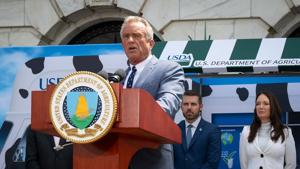
The Trump administration on Wednesday released new dietary guidelines alongside an updated food pyramid that prioritizes protein, dairy, fruits and vegetables.
The federal government is required to release dietary guidelines for Americans every five years, according to a mandate from the 1990 Nutrition Monitoring and Related Research Act. The guidelines will determine what kinds of foods should be prioritized in the federal food assistance program, prison system, veterans meals, active duty military and school lunches across the country.
The new guidelines recommend daily servings 1.2-1.6 grams of protein daily per kilogram of body weight, three servings of vegetables, two servings of fruit and 2-4 servings of whole grains each day.
The previous guidelines recommended six cups of grains, three cups of dairy, 2.5 cups of vegetables, two cups of fruit and 5.5 cups of “protein foods” per day.
“Protein and healthy fats are essential and were wrongly discouraged in prior dietary guidelines,” said Robert F. Kennedy Jr., secretary of U.S. Health and Human Services department. “We are ending the war on saturated fats.”
Kennedy explained that bad dietary guidelines lead to chronic disease which exacerbates the burden on taxpayer’s for health care. He said a large share of taxpayer dollars go to health care that can be prevented through better nutrition guidelines.
In fiscal year 2024, $1.9 trillion or 27% of federal outlay funds were spent on health care, according to KFF.
The dietary guidelines also included warnings against highly processed foods, added sugars and artificial additives.
“Avoid highly processed packaged, prepared, ready-to-eat, or other foods that are salty or sweet,” the guidelines advised.
Specifically, the guidelines advised including no more than 10 grams of added sugars in one meal. In a breakdown of various foods, the guidelines suggested for grain snacks like crackers to not exceed five grams of added sugars per 3/4 ounce and dairy snacks, like yogurt, to avoid exceeding 2.5 grams of added sugars per 2/3 cup.
“We are finally putting real food back at the center of the American diet,” said Brooke Rollins, secretary of the U.S. Department of Agriculture. “Real food that nourishes the body, restores health, fuels energy and builds strength.”
Marty Makary, commissioner of the U.S. Food and Drug Administration, criticized past nutrition guidance from the federal government and boasted of the updated guidance provided by the Trump administration. He said years of emphasis on refined carbohydrates, added sugars and ultra-processed foods has led to health crises in the United States.
“We are going to finally address the root causes of our broken health care system: insulin resistance and general body inflammation advanced by the protein poor, macronutrient poor, ultra-processed, refined carbohydrate diet that kids are addicted to today,” Makary said.
Federal officials also addressed the change to alcohol recommendations in the nutrition guidelines. Previous federal health recommendations advised two drinks a day or less for men and one drink per day or less for women.
However, new guidelines from the Trump administration does not offer specific amounts of alcohol to consume and instead recommends to “consume less alcohol for better overall health.”
Dr. Mehmet Oz, administrator for the centers for Medicare and Medicaid services, said the previous administration’s recommendations were not based on good data.
“That data was probably primarily confused with data about broader social connectedness,” Oz said to reporters Wednesday. “There is alcohol on these guidelines but the implication is don’t have it for breakfast.”
State leaders slam $10 billion child care freeze, promise action
State lawmakers slammed the U.S. Department of Health and Human Services after it announced it would freeze more than $10 billion in taxpayer dollars to five Democrat-led states.
The federal health agency froze funds for childcare and family assistance programs in California, Colorado, Minnesota, Illinois and New York.
“Families who rely on child care and family assistance programs deserve confidence that these resources are used lawfully and for their intended purpose,” Deputy Secretary of HHS Jim O’Neill said.
Illinois Gov. J.B. Pritzker slammed the Trump administration’s actions. He said freezing child care funds will put thousands of people’s livelihoods at risk.
“Rather than making it more affordable for families, Trump is stripping away child care from those just trying to go to work,” Pritzker wrote on social media. “It’s wrong and cruel – we’ll take every step possible to defend Illinoisians.”
Temporary Assistance for Needy Families and the Social Services Block Grant are two funds the federal health agency froze. The funds are designed to be used by states to support families with children, adding additional support for child care costs and other services.
HHS’ Administration for Children and Families said it identified concerns that some federal funds were not used for American citizens and lawful permanent residents.
The federal health agency has ramped up its enforcement actions against state governments as allegations of fraud in Minnesota daycare centers have increased.
Independent journalist Nick Shirley posted a video to social media alleging more than $110 million in fraud stemming from Minnesota day care centers. Since then, journalists across the country have sought to uncover fraud schemes in other states.
New York Gov. Kathy Hochul, also criticized the Trump administration in a video posted to social media before HHS officially announced its freeze.
“Our kids should not be political pawns in a fight that Donald Trump seems to have with blue state governors,” Hochul said. “This is a fight we’re going to have to take on.”
While the federal government freezes funds in the five states, the states will also be required to submit a justification and receipt documentation before future federal payments are released, according to HHS.
Funds to the five states will be frozen until the federal health agency completes a review of state compliance with federal requirements.
“We have a responsibility to protect taxpayer dollars and ensure these programs serve the families they were created to help,” said Alex Adams, assistant secretary for children and families. “When there are credible concerns about fraud or misuse, we will act.”
GOP lawmaker calls for U.S. to destroy more drug cartels
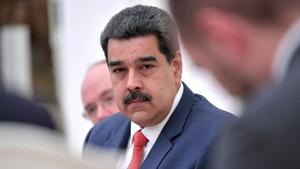
A Florida Republican said Wednesday the U.S. must bring the fight over illegal drugs to other cartels after the ouster of Venezuelan leader Nicolás Maduro.
Rep. Carlos Giménez, R-Fla., said more must be done to stop the flow of drugs coming into the U.S.
“This is the beginning, this is not the end of this struggle because we have other cartels that we have to look at and destroy as they’ve had a hand in killing us here in America,” he said Wednesday at a news conference.
Drug overdose deaths are a leading cause of American deaths, but Venezuela is not a cocaine or opioid producing nation, according to experts and U.S. government reports. Most of the world’s cocaine supply comes from nearby Colombia. China and other Asian nations produce most of the precursor chemicals needed to make fentanyl, the potent opioid responsible for most U.S. overdose deaths in recent years.
Trump recently declared illicit fentanyl was a weapon of mass destruction. The president has promised to bring the fight to the cartels, but so far, his use of the military has been limited to destroying suspected drug boats off the coast of Venezuela.
The U.S. military, through Operation Southern Spear, has attacked at least 35 suspected drug boats since early September 2025. Those strikes have killed at least 115 people, according to figures reported by the Trump administration.
U.S. officials have not estimated how many drugs have been destroyed in the suspected boat strikes. However, in September 2025, agents from the Dominican Republic’s National Drug Control Directorate and the Dominican Republic Navy seized 377 packages of suspected cocaine about 80 nautical miles south of Beata Island, Pedernales province, after a U.S. air strike against the speedboat.
Global cocaine production reached an all-time high in 2025, according to the United Nations Office on Drugs and Crime. While most cocaine comes from Colombia, Venezuela acts mainly as a transshipment point and does not produce cocaine or fentanyl. Both drugs remain leading causes of U.S. overdose deaths in 2024, per the Centers for Disease Control and Prevention. Illicit production in Colombia jumped by 50% last year.
Most fentanyl and its precursors are manufactured in Asian countries, including China. Mexican cartels transport these chemicals into the U.S. as fentanyl, a powerful opioid and the leading cause of U.S. overdose deaths in 2024, based on the latest CDC data. In 2024, the CDC estimated 48,422 fentanyl overdose deaths, compared to 22,174 from cocaine. The CDC notes that many deaths involve multiple drugs.
Republicans, with a few exceptions, have largely backed Trump’s use of military force to stop suspected drug boats.
Last month, Republican House Speaker Mike Johnson, R-La., said drug smugglers off the coast of Venezuela pose a “clear and present danger” to the U.S. after a confidential briefing on Capitol Hill.
Johnson defended the military strikes against suspected drug traffickers. He said drug overdoses were responsible for more deaths than all recent wars.
“Over the last four years alone, America has lost more lives to drug overdoses and other drug related deaths than we did to the enemy actions in World War II, Korea, Vietnam, Afghanistan and Iraq combined,” Johnson said. “This is a serious problem that a serious administration is addressing.”
Johnson compared Trump’s military actions to President Barack Obama’s strikes against overseas terrorists during his time in the White House. Johnson said that Obama carried out more than 500 drone strikes that killed more than 3,700 people, including American citizens, from 2009 to 2015.
Democrats, a few Republicans, and human rights groups have criticized the strikes.
Mexican cartels represent a bigger threat to the U.S., although Trump has been working with leaders from that country to address the issue.
Over the weekend, Trump said Washington may have to “do something” about cartels “running Mexico.”
U.S. seizes two ‘sanctioned’ ships

After the weekend strikes in Venezuela and the capture of Venezuelan President Nicolas Maduro, the U.S. continues to seize sanctioned vessels operating in the Caribbean and North Atlantic.
Two sanctioned ships were seized Wednesday morning in support of the U.S. operation to secure the Western Hemisphere.
U.S. European Command confirmed the seizure of the reported Russian-flagged tanker after a U.S. federal court issued a warrant after the vessel violated sanctions.
In a social media post, Secretary of War Pete Hegseth underscored that the “blockade of sanctioned and illicit Venezuelan oil remains in FULL EFFECT—anywhere in the world.”
Multiple reports claim the U.S. had pursued the now-seized vessel for two weeks.
The U.S. European Command confirmed that the Department of Homeland Security conducted the operation in support of the Department of War.
In addition, the U.S. Southern Command announced a “pre-dawn” operation conducted by the Department of War and Homeland Security, that “apprehended a stateless, sanctioned dark fleet motor tanker” accused of “conducting illicit activities in the Caribbean Sea.”
The Coast Guard is escorting the vessel, named the M/T Sophia, to the U.S. “for final disposition.”
Tuesday evening, President Donald Trump announced that Venezuelan interim authorities turned over “over 30-50 million” barrels of oil to the U.S., and officials have seized an oil tanker in the North Atlantic.
Lt. Gov. Eleni Kounalakis pushes back on federal oil drilling
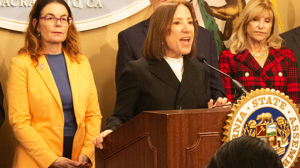
California Lt. Gov. Eleni Kounalakis, along with other state officials and environmental advocates, announced her opposition Tuesday afternoon to President Donald Trump’s efforts to expand oil drilling off the California Coast.
The announcement follows a letter to the U.S. Department of the Interior that Kounalakis sent in November. She urged the federal government to remove California from the Trump administration’s plan to expand offshore oil drilling. The letter stated that moving forward with offshore drilling would cause immense harm to the environment and communities of California’s coast.
“This is no place to try to re-open offshore drilling,” Kounalakis said during a news conference in the state Capitol in Sacramento. “The costs are just too high. We are saying no way – not over our efforts to ensure that we keep the Trump administration off of our coastline.”
Assemblymember Dawn Addis, D-San Luis Obispo, also sent a letter to the Sable Offshore Corp., alleging that well testing in May of last year signaled that the company was planning to re-start oil drilling operations at the Santa Ynez Unit, a crude oil and natural gas processing facility in the Santa Barbara Channel.
“For the first time in 40 years, we have a president who is pushing to expand oil drilling off our shores,” Addis said during the news conference. “It’s a threat to the industries that sustain us while providing minimal economic benefit for the people, as well as disastrous consequences for public health and vulnerable marine habitats.”
According to Kounalakis’ letter, more than $80 billion in revenue is generated from industries along the coast, including agriculture, tourism and clean technology. Worries abound that the coast along Santa Barbara, which would be the site of most of the new oil drilling leases the federal government proposed, would endanger the area in the same ways as the 1969 Santa Barbara Oil Spill and the 2015 Refugio Spill, the letter stated.
“We know exactly what happens when marine life is destroyed,” Assemblymember Gail Pellerin, D-Santa Cruz, said during the press conference. “Fisheries are shut down. Tourism collapses, and communities lose millions in revenue. This is not speculation, this is history.”
California’s latest move to oppose offshore drilling follows an auction of oil and gas drilling rights in the Gulf of America in December, a major win for the Trump administration to expand energy production off American shores, according to The Center Square’s previous reporting.
The Center Square reported that U.S. oil production rose by 44,000 barrels a day in September 2025, putting the country’s oil production at a record 13.84 million barrels daily.