Center Square
Flags flown at half-staff in Sacramento in LaMalfa’s honor

California Gov. Gavin Newsom Tuesday ordered flags in Sacramento flown at half-staff at the Capitol and Capitol Annex Swing Space in honor of U.S. Rep. Doug LaMalfa.
The Republican, who died suddenly Monday night at age 65, represented Northern California’s rural 1st Congressional District for more than 16 years, after a decade in the state Legislature.
LaMalfa died during emergency surgery at Enloe Health hospital in the Northern California city of Chico, according to the Butte County Sheriff’s Office. The agency said LaMalfa was taken to the hospital after medical personnel went to his home immediately after the sheriff’s office received a 911 call around 6:50 p.m. The office’s Coroner’s Unit is investigating the cause of death.
The congressman was praised by Democrats and Republicans Tuesday for his advocacy for his constituents.
Newsom, a Democrat, called LaMalfa, R-Yuba City, “a devoted public servant who deeply loved his country, his state, and the communities he represented.
“While we often approached issues from different perspectives, he fought every day for the people of California with conviction and care,” Newsom said in a statement. “He will be deeply missed.”
California Assembly Minority Leader James Gallagher, R-Nicolaus, called LaMalfa “a one of a kind, humble and dedicated public servant.”
“I’m in shock. My mentor, a man who was like a big brother to me, is suddenly gone,” Gallagher said in a statement emailed to The Center Square.
He recalled LaMalfa would wait until the end of every State of Union to talk to the president, Republican or Democrat, about his district.
“His focus was always on the people of his district and the American values he cherished so deeply,” Gallagher said. “There was no one who took the job of representative more seriously than Doug. He traversed the district, going to every dinner and community event. He demanded answers from bureaucrats. He pushed hard for the things his people needed.”
Gallagher expressed his condolences to LaMalfa’s wife, Jill, and their family, which includes the couple’s four children and grandchild.
U.S. Rep. Young Kim, a Republican who represents parts of Southern California’s Orange, San Bernardino and Riverside counties, said she was “heartbroken to hear of the loss of my dear friend and colleague, Doug LaMalfa.
“For more than a decade, Doug served the people of California with integrity, conviction, and a deep love for our country,” Kim posted on Facebook. “He was a strong conservative lawmaker who never wavered in his commitment to keeping the American Dream alive in California — standing up for working families, farmers, and small businesses when it mattered most.”
A longtime Democrat, Los Angeles Mayor Karen Bass, said she was saddened by the loss of LaMalfa, who she called “my good friend.”
“He was an upstanding colleague, warm and engaging, and a fierce advocate for his constituents,” said Bass, who knew LaMalfa when she was speaker of the California Assembly and a member of the U.S. House.
“Working across the aisle, we had many issues we disagreed upon but collaborated where we could, always with great respect for one another,” Bass said in a statement emailed to The Center Square. “I will always remember him as a leader who worked hard for his community, remembered where he came from and fought for his constituents in the state we both call home.”
Another California Democrat, U.S. Rep. John Garamendi, called LaMalfa a “close friend and colleague who cared deeply about the farmers in his district, as well as the extraordinary natural resources of Northern California.”
Both LaMalfa and Garamendi represented districts in the Sacramento Valley.
Garamendi recalled working with LaMalfa on bipartisan bills to secure water infrastructure investments, advocate for California farmers and protect the Sacramento watershed.
“We traveled together every week, back and forth on the same plane for nearly fifteen years, and our friendship deepened as did our work for the betterment of the Sacramento Valley,” Garamendi said in a statement.
House Dems, Trump offer competing visions of Jan. 6
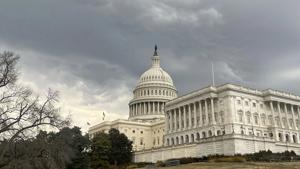
Democrat lawmakers and the Trump administration have offered competing visions on the fifth anniversary of the Jan. 6 storming of the U.S. Capitol.
The lawmakers questioned several individuals who had connections to the events on Jan. 6.
“We gather to continue to uphold our oath to support and defend the Constitution against all enemies, foreign and domestic, to defend against the lawlessness of that day and the lawlessness we continue to see today,” said U.S. Rep. Bennie Thompson, D-Miss, who led the select committee that investigated the events of Jan. 6.
Winston Pingeon, a former Capitol police officer, recounted his experience on Jan. 6, 2021. He said he was beaten by individuals who attempted to breach the capitol building and criticized President Donald Trump for offering pardons to those who went to the capitol.
“Pardoning criminals who severely beat me and my fellow officers that day is completely unacceptable,” Pingeon said. “We cannot accept violent felons being pardoned and released back into our neighborhoods without consequence.”
Lawmakers and other witnesses on the panel joined Pingeon in criticizing Trump’s pardons. U.S. Rep. Jamie Raskin, D-Md., said Trump handed out pardons indiscriminately, causing danger to communities.
“Those pardons were raw spoils shared indiscriminately without regard to their actual offenses, their criminal sentences, their prior records, their contrition, their repentance, or their reform and rehabilitation,” Raskin said.
Pam Hemphill, another participant on the panel, was among the crowd storming the capitol on Jan. 6. She was offered a pardon for the crimes of which she was convicted but declined to accept the offer.
“Accepting that pardon would be lying about what happened on January the sixth,” Hemphill said. “I am guilty and I own that guilt.”
The Trump administration launched a page on Tuesday with a timeline of events on Jan. 6, 2021, and explanations for the president’s pardons. The website said many who participated in the events were “mere trespassers or peaceful protestors treated as insurrectionists by a weaponized Biden [Department of Justice.]”
The administration’s website accuses former U.S. Speaker of the House Nancy Pelosi of spending more than $20 million in taxpayer funds to blame Trump for the events of Jan. 6.
“It was the Democrats who staged the real insurrection by certifying a fraud-ridden election, ignoring widespread irregularities, and weaponizing federal agencies to hunt down dissenters,” the administration’s website reads.
Mary McCord, a witness on the House Democrats’ panel, said misinformation about the results of the 2020 presidential election led to the violence on Jan. 6.
“We cannot afford to ignore the false narratives that this administration seeks to rely on to suppress voting rights and public protest,” McCord said. “Mis- and disinformation are the primary drivers of political violence.”
House committee to hold hearing on Minnesota fraud
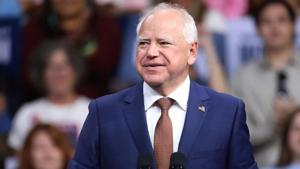
The House Committee on Oversight and Government Reform is set to hold its first of two scheduled hearings on the “fraud and misuse of federal funds in Minnesota” Wednesday, Jan. 7.
Three Republican Minnesota state lawmakers who have reportedly “sounded the alarm” in the past on some of the rampant fraud of its social services programs have been called to testify. Minnesota Gov. Tim Walz – who just announced Monday that he’s dropping out of the 2026 governor’s race – and the state’s attorney general have been invited to testify in the next hearing, currently scheduled for Feb. 10.
“American taxpayers demand and deserve accountability for the theft of their hard-earned money,” said Rep. James Comer, R-Ky., the committee’s chairman. “The U.S. Department of Justice is actively investigating, prosecuting, and charging fraudsters who have stolen billions from taxpayers and Congress has a duty to… hold offenders accountable.”
Investigations have identified roughly $9 billion in government funds awarded to alleged fraudulent businesses or individuals posing as legitimate providers within Minnesota’s taxpayer-funded social services programs – and those investigations are still ongoing. The $250 million Feeding Our Future pandemic relief scheme was the first major case in what has since been revealed to be a suspected broader pattern of high-dollar fraudulent enterprises taking advantage of those programs.
The magnitude of the fraud, coupled with reports that concerns were raised internally but potentially dismissed for political reasons, pressured Walz to withdraw his bid for reelection.
“This misconduct cannot be swept aside, and Congress will not stop until taxpayers get the answers and accountability they deserve,” Comer said in a statement.
The committee hopes to uncover why this type of fraud has been so prolific in Minnesota and some potential solutions to prevent it going forward.
As numerous examples of fraudulent child care centers have been exposed, the Trump administration has halted federal child care funding to Minnesota.
Court blocks Trump admin’s medical research funding cuts

The U.S. Court of Appeals for the 1st Circuit has affirmed a lower court’s decision barring the Trump administration from cutting funding for medical and public health research at universities and other institutions, following a lawsuit by 22 attorneys general.
In February 2025, the Trump administration announced through its Supplemental Guidance that it would impose a 15% indirect cost across the board, affecting medical and research institutions, including the University of California and California State University.
California Attorney General Rob Bonta, as part of the coalition with 21 other attorneys general, sued the U.S Department of Health and Human Services and the National Institutes of Health.
In 2023, UC received over $2 billion in NIH grant funding, and CSU campuses received roughly $158 million in NIH funds.
After the Trump administration attempted to appeal the lower court’s decision, the appellate court’s decision permanently bars the administration from cutting those funds.
“We agree with the district court that it had jurisdiction over the plaintiffs’ claims and that NIH’s action is unlawful because it violates a statute and regulations,” the decision states.
The Center Square reached out to the HHS, but Press Secretary Emily Hilliard responded that the HHS does not comment on litigation. The NIH did not respond for comment.
The decision reached on Monday concludes that the NIH-funded research is essential and that the 15% indirect cost rate “violates the congressionally enacted appropriations rider and HHS’s duly adopted regulations.”
“My fellow attorneys general and I stepped in to stop these illegal actions. The district court sided with us, and now, the First Circuit has, too. We’re starting the new year by building on our previous successes and securing yet another important victory against the Trump Administration,” Bonta said in a news release.
In addition to California, the lawsuit was filed by Arizona, Connecticut, Colorado, Delaware, Hawaii, Illinois, Maine, Maryland, Massachusetts, Michigan, Minnesota, Nevada, New Jersey, New Mexico, New York, North Carolina, Oregon, Rhode Island, Vermont, Washington and Wisconsin.
Trump takes aim at defense contractors as he looks to speed arms production
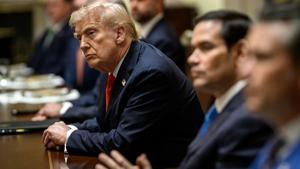
President Donald Trump criticized U.S. defense contractors on Tuesday, saying that he wants to produce the advanced weapons that the U.S. relies on for military dominance more quickly.
Trump’s comments came as he spoke about the U.S. special forces strike that captured longtime Venezuela leader Nicolás Maduro, who faces drug and weapons charges in the U.S.
“Nobody has our weapons,” Trump said. “The problem is we don’t produce them fast enough. We’re going to start producing them much faster. We’re going to be very tough on the companies.”
Trump said U.S. military might depends on these companies.
“We have the best weapons in the world, but it takes too long to get them,” he said. “Including allies. When allies want to buy them, they have to wait four years for a plane. Five years for a helicopter. We’re not letting that happen any more. We’re telling our defense contractors: You’re going to start building faster.”
The president spoke plainly: “I have a big problem with it.”
In November, the National Defense Industrial Association, a trade group, praised efforts to ramp up production.
“Paving a smoother process and compliance path will have a positive effect on the speed at which the defense industrial base meets the moment in support of our warfighters and our foreign partners,” the group said in a statement at the time.
During a January 2025 hearing, defense contractors urged Congress to take action.
Margaret Boatner, of the Aerospace Industries Association, noted a 2024 study from the Government Accountability Office that found the average amount of time for major defense acquisition programs to deliver capability was 11 years.
That raises costs for taxpayers.
Last June, the GAO reported that “major weapon costs continue to rise as DOD struggles to deliver innovative tech quickly.”
Comptroller General Gene Dodaro, the head of the GAO, said at the time that the warning bells were growing louder.
“Our findings over my 15 years have grown increasingly dire,” he wrote in a letter to Congress. “DOD weapon systems continue to cost more and take even longer to deliver, notwithstanding recent reforms.”
That GAO report noted that “DOD plans to invest nearly $2.4 trillion to develop and acquire its costliest weapon programs. But it continues to struggle with delivering timely and effective solutions to the warfighter.”
Trump has made military production a priority and has used tariffs as leverage to try to bring back more manufacturing to the U.S.
More recently, he has focused on shipbuilding. Last month, Trump announced the U.S. would be building two new battleships to be part of the Navy’s “Golden Fleet.”
Hegseth seeks to reduce Sen. Kelly’s Navy retirement pay

Editor’s note: This story has been updated since its initial publication to include a comment from the White House.
Secretary of War Pete Hegseth plans to reduce the Navy retirement pay for U.S. Sen. Mark Kelly, D-Arizona, following Kelly’s participation in a video telling members of the military to “refuse illegal orders.”
“These actions are based on Captain Kelly’s public statements from June through December 2025 in which he characterized lawful military operations as illegal and counseled members of the Armed Forces to refuse lawful orders,” Hegseth said in a post Monday on X.
Kelly said he will fight the pay cut — “with everything I’ve got — not for myself, but to send a message back that Pete Hegseth and Donald Trump don’t get to decide what Americans in this country get to say about their government.”
Hegseth accused Kelly, a retired Navy combat pilot, of “seditious statements” and a “pattern of reckless misconduct.”
The secretary said the Department of War was taking administrative action to reduce Kelly’s rank at retirement, which would also mean a cut in pay. Hegseth added he issued a formal letter of censure, which will be placed in Kelly’s permanent military personnel file.
According to media reports, Kelly’s rank would decrease from captain to commander, meaning his retirement pay would fall from roughly $6,000 a month to approximately $5,000 month. The Center Square Tuesday asked the Pentagon about this detail and others about Kelly and was told there would be no comment beyond Hegseth’s post on X.
“Six weeks ago, Senator Mark Kelly — and five other members of Congress — released a reckless and seditious video that was clearly intended to undermine good order and military discipline,” Hegseth wrote.
The secretary was referring to a video in which the lawmakers told service members to “refuse illegal orders.”
Hegseth previously noted four of the lawmakers are former, but not retired, military service members. He said that leaves Kelly as the only one still subject to the U.S. Code of Military Justice.
Kelly’s remarks from June through December 2025 were seditious and violated the code’s Articles 133 and 134, Hegseth said in Monday’s post.
“As a retired Navy Captain who is still receiving a military pension, Captain Kelly knows he is still accountable to military justice,” Hegseth said. “And the Department of War — and the American people — expect justice.”
After Hegseth’s announcement, Kelly, a former astronaut, said he never imagined such an action would be taken against him.
“Over twenty-five years in the U.S. Navy, thirty-nine combat missions, and four missions to space, I risked my life for this country and to defend our Constitution — including the First Amendment rights of every American to speak out,” Kelly said in a statement Monday. “I never expected that the President of the United States and the Secretary of Defense would attack me for doing exactly that.
“My rank and retirement are things that I earned through my service and sacrifice for this country,” Kelly said. “I got shot at. I missed holidays and birthdays.”
He continued: “Generations of servicemembers have made these same patriotic sacrifices for this country, earning the respect, appreciation, and rank they deserve.”
Kelly noted he commanded a space shuttle mission while his wife, former U.S. Rep. Gabby Giffords, D-Arizona, recovered from a gunshot wound to her head during a shooting that killed six people and injured 12 others on Jan. 8, 2011, at a constituent event in the Tucson area.
The Center Square reached out to Kelly’s press office for further comment, but did not get a response.
Hegseth said Kelly has been provided a notice for the action and has 30 days to submit a response. He said the retirement grade determination process will be completed in 45 days.
“Captain Kelly’s status as a sitting United States Senator does not exempt him from accountability, and further violations could result in further action,” Hegseth warned on X.
The Center Square reached out Tuesday to the White House, which commented on Kelly.
“Mark Kelly sowed doubt in a clear chain of command, which is reckless, dangerous, and deeply irresponsible for an elected official,” White House spokesperson Anna Kelly told The Center Square in an email. “Actions have consequences, and, as Secretary Hegseth said, Kelly’s status as a sitting U.S. senator does not exempt him from accountability.”
Special election for Greene’s seat set for March 10

Former U.S. Rep. Marjorie Taylor Greene’s congressional seat will be empty at least two months, likely three, as a special election already drawing 24 candidates will not take place until March 10.
If a runoff is needed, April 7 would be the earliest the seat could be decided, Secretary of State Brad Raffensperger said Tuesday. Georgia law requires winning candidates to receive 50% of the vote plus one.
The timing is pivotal for many reasons, including potential government shutdowns. Republicans have a 218-213 advantage with four vacancies in the U.S. House of Representatives, the trend has been four to five continuing resolutions per year.
The next possibility is Jan. 30.
Texas (18th Congressional District, seat of the late Rep. Sylvester Turner) has a special election Jan. 31 and New Jersey (11th Congressional District, seat of resigned Rep. Mikie Sherrill) has a primary Feb. 5 and the special election April 16. Each seat was held by a Democrat.
The death of California Republican Rep. Doug LaMalfa was announced Tuesday after a medical emergency on Monday. It could be June before a special election for the seat.
Republicans held a 220-215 edge after the November 2024 elections.
Greene announced her resignation in November and her official last day was Monday.
The position encompasses Catoosa, Chattooga, Dade, Floyd, Murray, Paulding, Polk, Walker, Whitfield counties and portions of Cobb County.
Twenty Republicans, two Democrats and one unaffiliated candidate have filed paperwork with the Federal Elections Commission as candidates for the position.
On the Democratic side, Shawn Harris, who challenged Greene in the 2024 general election, is running. Harris received 35% of the vote in the 2024 race. Also running as a Democrat is Clarence Blalock of Paulding County.
The Republicans who filed paperwork are Star Black, Beau Brown, James Marty Brown, Regan Box, Elvis Casely, Jeff Criswell, Daniel Davenport, Christian Michael Hurt, Uloma Expete Kama, Benjamin Pope, Michael Allen Corbin, Thomas Jonathan Jackson Gray, Nicky Lama, state Sen. Colton Moore, Linvel Risner, Brian Stover, Meg Strickland, Jim Tully, Jenna Turnipseed and Jacqueline Cherise Wilmer.
Republican Eric Cunningham told TCS in an email that he has filed paperwork with the Federal Elections Commission, but it has not appeared on the website as of Tuesday.
Greene has said she will not endorse a candidate.
Trump lays out ‘roadmap for victory’ during GOP House retreat
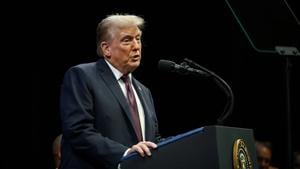
As the country is about to embark on a pivotal election year, President Donald Trump addressed the GOP U.S. House of Representatives retreat.
During a nearly 90-minute speech held at the newly renamed, Trump-Kennedy Center, the president laid out what he calls a “roadmap to victory for the House GOP.
He spotlighted election reform, his administration’s success on the border, health care and energy among issues for the Republicans to run on as they begin to hit the campaign trail ahead of this year’s midterm elections, when each House seat is on the ballot.
The president began his speech remarking on the sudden death of Rep. Doug LaMalfa, R-Calif., announced Tuesday morning, narrowing the GOP majority in the House to five seats.
Trump briefly noted the fifth anniversary of the Jan. 6, 2021, Capitol riots, accusing the media and Democrats of failing to mention that the president told supporters on Jan. 6 to “walk or march peacefully and patriotically to the Capitol.”
He also highlighted Saturday’s early morning strike and raid in Venezuela, underscoring its success, while noting the organized protests that followed.
The president spent some time discussing the autopen scandal surrounding former President Joe Biden, which segued into the elections, pressing the representatives to pass the SAVE Act, requiring ID to vote. The president suggested renaming it the Save America Act.
“If you would put that up for a vote, it’s got my total endorsement, and all it is common sense things about the election, and they’ll fight it like crazy because they cheat. That’s the only way they can win,” the president told the members.
Trump touted his immigration and border policies, telling the members: “We can’t let them forget that we did such a great job on the border.”
The president touched on his decision to declare a crime emergency in Washington, D.C., leading him to label the shooting of two National Guard members the evening before Thanksgiving a “terrorist attack” – despite no official terrorism charges.
Trump warned the members that if Republicans don’t win, the country is “going to go to hell…So we can’t play games.”
He highlighted his administration’s efforts to lower drug prices, stressing the resistance he faced from European leaders, defending his use of tariffs. Trump says the prior high drug costs were “subsidizing the entire world.”
Trump told the members that they need to focus on health care.
“One thing on health care, it’s never been our issue. It should be our issue,” said the president.
Trump told the members that Republicans “have all the policy,” but that they have to “stay together.”
“If you look at what we’re trying to solve, the health care problem, we’re trying to get better health care at a lower price,” the president told the members.
“You work on favorite nations, you work on borders, you work on all the things we talked about, but now you take the health care issue away from them, and they want to fight it. You know why? They’re all owned by the insurance companies and cannot fight it successfully,” Trump claimed.
However, he cautioned the members to be flexible on the health care issue, citing the Hyde Act.
He instructed the members to approve a plan that would allow the money to go directly to the American people, enabling them to buy their own health care instead of letting it go directly to insurance companies, whom he called “big fat cats.”
He suggested the money “goes into a health care account,” adding “there are numerous things you can do, but you have to let no money for the insurance companies.”
He also stressed that members tout lower energy costs while out on the campaign trail, pointing to lower costs at the gas pumps since the president took office a year ago.
In closing, he told the members that it is essential for them to stick together, noting it as a strength for Democrats.
“We have great, solid, commonsense policy. They have horrendous policy. What they do is they stick together. They never have a no vote,” he told them. “You have so many good nuggets. You have to use them. If you have to sell them.”
Longtime GOP California congressman dies
Republican Rep. Doug LaMalfa, a staunch conservative who represented California’s rural 1st congressional district for just over 16 years after a decade serving in the state legislature, died suddenly on Monday at the age of 65.
LaMalfa’s death further narrows the majority Republicans now hold in the U.S. House of Representatives.
The cause of death is still unknown, as he recently appeared in good health, according to reports.
His colleagues lamented his death Tuesday, with many expressing condolences and reflections online.
House Speaker Mike Johnson, R-La., released a statement Tuesday morning, which he also shared on X.
“Congress is devastated to learn this morning about the passing of our dear friend and colleague, Doug LaMalfa,” Johnson wrote. “He was as fierce of a fighter for his state’s vast natural resources and beauty as we have ever known.”
Johnson went on to voice support for LaMalfa’s wife and family he leaves behind.
President Donald Trump also marked LaMalfa’s passing during his address to House Republicans at the House GOP member retreat Tuesday morning.
“I want to express our tremendous sorrow at the loss of a great member,” Trump said, describing LaMalfa as a “fierce champion on California water issues.”
He also said that LaMalfa voted with him “100% of the time.”
LaMalfa’s death coincided with former Georgia Republican Rep. Marjorie Taylor Greene’s resignation from Congress. Monday was her last day. Republicans now hold a five-member majority over Democrats in the House, 218-213.
Georgia will hold a special election to replace Greene, and California may do the same for LaMalfa.
Congressional midterm elections will take place in November. All 435 seats in the House will be up for re-election, as will 35 seats in the Senate.
Law enforcement deaths hit 80-year low in 2025

Police deaths on the job fell 25% in 2025 to 111, an 80-year low not seen since World War II.
The number of law enforcement professionals nationwide who died in 2025 declined by a quarter compared to the same time period last year, according to preliminary data provided by the National Law Enforcement Officers Memorial Fund.
The NLEOMF data shows that 111 federal, state, county, municipal, and U.S. Territories officers died in the line of duty in 2025. That’s a 25% decrease compared to the 148 officers who died in 2024, according to the organization.
“This encouraging downward trend in fatalities likely reflects the continued adoption of proven best practices by police, sheriff, and corrections agencies, as well as a growing emphasis on the physical and psychological health of the men and women who work to keep our communities safe,” National Law Enforcement Officers Memorial Fund CEO Bill Alexander said.
The 111 line-of-duty deaths in 2025 represents a near-historic low. The last time annual officer fatalities were at a comparable level was in 1943, when 94 officers were killed in the line of duty.
Of the 111 line-of-duty deaths, 44 officers were killed in firearms-related fatalities, 34 were traffic-related fatalities and 33 were listed as “other.” That category contains a variety of health-related deaths and other line-of-duty fatalities, according to the group.
Most of the deaths were male officers. There were 102 male officers killed in the line of duty, and 9 female officers.
The average age of the fallen officers is 44, with an average of 14 years of service.
On average, officers left behind two children, according to the group.
The report comes as politicians look for ways to reduce violence against police amid a number of high-profile attacks during President Donald Trump’s controversial nationwide immigration enforcement campaign.
Trump’s crackdowns have led to protests, disruptions and attacks on federal officers.
In November, an attacker shot two National Guard members from West Virginia near the White House.
In another high-profile attack, suspects ambushed authorities at the Prairieland Immigration and Customs Enforcement facility in Texas.
On July 4, a planned ambush occurred at a detention facility south of Fort Worth in which several dozen rounds were fired at a detention facility in Alvarado in Johnson County. One Alvarado police officer was struck in the neck during the attack.
Assaults against ICE officers are up more than 1,000% compared to the same time period last year, according to U.S. Department of Homeland Security data, The Center Square previously reported.