Center Square
Michigan GOP leader seeks audit of $540M child care program

Michigan’s Senate Republican Leader Aric Nesbitt has requested the state’s independent auditor general investigate taxpayer-funded child care centers for fraud.
Nesbitt, R-Porter Township, sent the request to Auditor General Doug Ringler on Friday.
“Given the Whitmer administration’s disastrous record of oversight failures, I’ve asked the state auditor to discover if Michigan’s child care program is plagued by rampant fraud and abuse like we are seeing in other parts of the country,” Nesbitt said. “We must make sure these taxpayer dollars are being spent to help Michigan families, not foreign scammers. We cannot afford to wait until the money is all gone to start asking questions.”
This comes as other states, especially Minnesota, face national scrutiny for suspected widespread fraud in a number of different taxpayer-funded programs – including child care centers.
“Finding affordable child care is one of the biggest challenges facing families in Michigan,” Nesbitt said. “We must ensure they aren’t being fleeced by criminals like the taxpayers have been in Minnesota.”
Minnesota has been the epicenter of the scandal so far, though it is slowly spreading to other states.
So far, fallout in Minnesota includes federal funding cuts to day care centers and Gov. Tim Walz announcing he will not run for reelection this year.
In Michigan, the Department of Lifelong Education, Advancement, and Potential operates Michigan’s Child Development and Care Program. That program provides taxpayer-funded subsidies for child care throughout the state.
It receives significant funding from Michigan’s budget. This year totaled over $540 million in taxpayer support.
Southwest congressional members discuss Venezuela
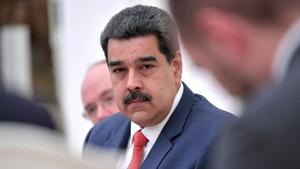
Southwestern members of Congress reacted along party lines after the U.S. military captured Venezuela President Nicolás Maduro and his wife.
U.S. Rep. Abe Hamadeh, R-Arizona, supports the Trump administration’s actions on Saturday, which included a military strike on the capital city of Caracas and the arrest of Maduro and his wife Cilia Flores. The couple was flown out of Venezuela and taken to New York City, where they pleaded not guilty Monday in a federal court to drug and weapons charges.
“As an America First Republican, I believe our foremost responsibility is to protect the safety, sovereignty and future of the American people,” Hamadeh told The Center Square. “That means confronting threats decisively, not appeasing them or allowing chaos to spill across our borders.”
Hamadeh, a former U.S. Army Reserve captain and intelligence officer, said Maduro is “not a legitimate leader.”
The congressman called Maduro “the brutal head of a criminal drug cartel masquerading as a government,” one that has “oppressed its own people and fueled the flow of deadly narcotics” into the United States.
“President Trump’s decisive action sends a clear message that the United States will defend its backyard and will not tolerate narco-dictators who destabilize our hemisphere,” Hamadeh told The Center Square. “This is peace through strength in action, confronting danger at its source before it reaches American communities. Strong leadership like this restores order, protects lives and reasserts American resolve on the world stage.”
After months of airstrikes on alleged drug boats from Venezuela, the United States carried out a “large scale strike against Venezuela” in the overnight hours Saturday, capturing Maduro and his wife. President Donald Trump made the announcement in a post on Truth Social and noted the operation was “done in conjunction with U.S. Law Enforcement.”
U.S. Sen. Mark Kelly, D-Arizona, does not agree with Trump’s actions.
“The President of the United States just overthrew a foreign ruler and explained to the American people that this is about taking control of the oil reserves of a foreign nation,” Kelly said in a statement Saturday. “He said that the U.S. will ‘run the country’ until a proper transition can take place and went right into how U.S. oil companies will benefit from this takeover.”
Kelly, a retired Navy combat pilot who made headlines last fall for urging military service members to disobey “illegal orders,” went on to say that Trump “does not understand the risks and costs involved with these poorly thought-out decisions” that do not make Americans any safer.
“Nicolás Maduro is a brutal, illegitimate dictator who deserves to face justice,” said Kelly, a former astronaut. “I want the people of Venezuela to be free to choose their own future, but if we learned anything from the Iraq war, it’s that dropping bombs or toppling a leader does not guarantee democracy, stability or make Americans safer.”
According to Kelly, such actions more often leads to chaos or drags the U.S. into a war and lengthy occupation for which the senator does not think the Trump administration has a plan, timeline or price tag.
Kelly is not alone in his criticism. U.S. Sens. Michael Bennet, D-Colorado, and Jacky Rosen, D-Nevada, issued similar statements.
In a post on X, Bennet agreed that Maduro “is an illegitimate, brutal leader who lost, then stole the 2024 elections” in Venezuela.
“Nevertheless, as a member of the U.S. Senate Intelligence Committee, I have seen no evidence justifying the administration acting alone without Congressional authorization,” said Bennet. “I certainly have seen no justification for putting U.S. troops on the ground to ‘run the country’ or rebuild and exploit Venezuela’s oil infrastructure for our own economic purposes.”
Rosen agreed with Bennet’s description of Maduro and added, “The Trump administration needs to be held accountable and explain why it lied to us when it claimed in its briefings that regime change was not the U.S. goal” in Venezuela.
“Congress must also pass Senator Kaine’s bipartisan War Powers Resolution next week to prohibit Donald Trump from carrying out additional strikes without our input,” said Rosen in a press release.
Sen. Tim Kaine, D-Virginia, introduced the War Powers Resolution in early December to block the use of U.S. military service members to engage in hostilities within or against Venezuela unless authorized by Congress. At the time, Trump was saying that land strikes in Venezuela were imminent.
“We should not be risking the lives of our nation’s service members to engage in military action within Venezuela without a robust debate in Congress,” said Kaine in a Dec. 3 statement. “This is why the Framers gave the power to declare war to Congress, not the President.”
Co-sponsors of the War Powers Resolution on Venezuela include Senate Minority Leader Charles E. Schumer, D-New York; U.S. Sen. Rand Paul, R-Kentucky, and U.S. Sen. Adam Schiff, D-California.
Schiff on Saturday commented about the U.S. strike in Venezuela.
“Nicolás Maduro was a thug and an illegitimate leader of Venezuela, terrorizing and oppressing its people for far too long and forcing many to leave the country,” Schiff said in a statement.
“But starting a war to remove Maduro doesn’t just continue Donald Trump’s trampling of the Constitution, it further erodes America’s standing on the world stage and risks our adversaries mirroring this brazen illegal escalation,” he said.
“Acting without Congressional approval or the buy-in of the public, Trump risks plunging a hemisphere into chaos and has broken his promise to end wars instead of starting them,” Schiff said.
But U.S. Rep. Kevin Kiley, R-California, thinks Trump did America and the world a favor.
“The United States, Venezuela, and the entire Western Hemisphere and international order are immeasurably better off with Nicolás Maduro removed from power,” Kiley posted Saturday on X. “Today marks the end of Maduro’s illegitimate rule and narco terrorist reign, and the beginning of a legal process for bringing him to justice.”
Kiley also said Maduro’s capture gives the people of Venezuela a chance at a new beginning with democracy, freedom and prosperity instead of dictatorship, socialism and poverty.
“The role of the United States in helping usher in that future must integrally involve Congress moving forward,” said Kiley. “Thank you to our incredible service members who carried out this operation with unmatched skill and courage.”
U.S. companies dodge global tax in OECD deal
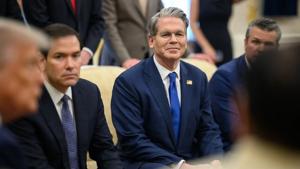
U.S. multinational companies will be exempt from paying additional corporate taxes in a deal reached by the Organization for Economic Co-operation and Development, a global economic policy group.
The OECD announced Monday that its 147 countries agreed on a plan to prevent global companies from shifting profits to low-tax countries regardless of where they operate. The amended agreement means U.S.-based companies won’t have to pay the 15% global minimum tax.
U.S. Secretary of the Treasury Scott Bessent said the agreement is good for the U.S.
“This side-by-side agreement recognizes the tax sovereignty of the United States over the worldwide operations of U.S companies and the tax sovereignty of other countries over business activity within their own borders,” Bessent said in a statement.
OECD Secretary-General Mathias Cormann called it a “landmark decision.”
“The Members of the Inclusive Framework are to be commended for their work in finalizing this package, which enhances tax certainty, reduces complexity, and protects tax bases,” he said in a statement.
Bessent said the deal protects the value of the U.S. R&D credit and other incentives for investment and job creation in the U.S.
“This agreement represents a historic victory in preserving U.S. sovereignty and protecting American workers and businesses from extraterritorial overreach,” he said.
National Association of Manufacturers President and CEO Jay Timmons said the deal ensures a level playing field.
He said the deal “will protect both domestic and foreign-headquartered manufacturers investing in the United States from oppressive, job-killing taxes.”
“This deal will shield manufacturers from damaging taxes that unfairly stifle job creation in the U.S.,” he said in a statement.
The FACT Coalition, a financial accountability group, called the deal a setback.
“This deal risks nearly a decade of global progress on corporate taxation only to allow the largest, most profitable American companies to keep parking profits in tax havens,” FACT policy director Zorka Milin said in a statement. “The Trump administration has chosen to prioritize maintaining rock-bottom taxes for big corporations to the detriment of ordinary Americans and our allies across the globe.”
Trump frets over looming Supreme Court decision on tariffs
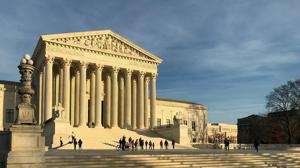
Days after deposing a foreign dictator, President Donald Trump said his worldwide taxes on imports are more crucial than ever to U.S. security.
The president’s remarks came after U.S. authorities captured and arrested Venezuelan President Nicolás Maduro on drug trafficking charges and amid fresh concerns about the Western Hemisphere. Trump said Sunday that the communist island state of Cuba “looks like it’s ready to fall” without money from Venezuelan oil.
However, Trump needs a favorable ruling from the U.S. Supreme Court to maintain his tariffs.
“We have taken in, and will soon be receiving, more than 600 Billion Dollars in Tariffs, but the Fake News Media refuses to talk about it because they hate and disrespect our Country, and want to interfere with the upcoming Tariff decision, one of the most important ever, of the United States Supreme Court,” Trump wrote Monday.
Trump has been publicly fretting about the decision for months, predicting economic ruin for the nation along with the loss of a key foreign policy tool. Trump has said his use of tariffs helped end eight wars and prevented other nations from taking advantage of the U.S.
“Because of Tariffs, our Country is financially, AND FROM A NATIONAL SECURITY STANDPOINT, FAR STRONGER AND MORE RESPECTED THAN EVER BEFORE,” Trump wrote Monday in a Truth Social post.
Trump’s claims about tariff revenues vary from week to week and with official government estimates. The federal government collected $195 billion in customs duties in fiscal year 2025. That’s 250% more than fiscal year 2024, according to the last Monthly Treasury Statement for fiscal year 2025.
In November, the Congressional Budget office projected tariff revenue would reduce deficits by $3 trillion over the next decade. That’s down from an earlier estimate of $4 trillion in August.
A lawsuit, filed last year and now pending before the U.S. Supreme Court stands in the way. A group of states, small businesses, and others alleged Trump overstepped his authority by using the 1977 International Emergency Economic Powers Act to impose import taxes on every nation in the world.
Tariffs are taxes on imported products paid by the importer, but who ends up paying can get complex in business deals.
The U.S. Supreme Court heard oral arguments in November over Trump’s authority to implement tariffs without Congressional approval under the International Emergency Economic Powers Act. That law, passed in 1977, does not mention the word “tariff” and had never been used to impose tariffs prior to Trump’s action.
Even conservative justices seemed skeptical of the government’s case for tariffs. Chief Justice John Roberts called the tariffs “taxes on Americans,” which he said had long been a “core power of Congress,” not the president.
Before reaching the Supreme Court, two lower courts had rejected Trump’s tariffs at earlier stages in the legal process. In August, the U.S. Court of Appeals for the Federal Circuit affirmed a ruling by the Court of International Trade that Trump did not have the authority. In the 7-4 decision, the majority of the Federal Circuit said that tariff authority rests with Congress.
The Supreme Court agreed to take the case on an expedited basis. Both businesses groups, the states and the federal government said a quick ruling is crucial.
Greene posts about burgers, appropriation bill on final day in office

U.S. Rep. Marjorie Taylor Greene spent her last day in Congress criticizing an upcoming appropriations bill and posting to social media about her lunch in her home state of Georgia.
Fifteen months since going on stage at the Republican National Convention supportive of Donald Trump, Greene announced in November that she was leaving office. She cited conflicts with the president she helped elect over the Epstein files and concerns about health care.
On Monday, she said a provision in an appropriations bill that would update warnings on pesticides and limit lawsuits against chemical companies “has no place in Republican bills.”
U.S. Rep. Thomas Massie, R-Ky., also posted about the provision on social media and later said it was removed from the bill.
Greene indicated she was in Rome – Georgia, not Italy – on her personal social media page in a post saying she had a “double steakburger and beef tallow fries” at a local franchise restaurant that sponsored a billboard about the late Charlie Kirk.
“Stand up. Speak out. Stay bold,” Greene posted.
Greene spent her final weekend in office denouncing Saturday’s U.S. military action on Venezuela, which led to the arrest of Nicolás Maduro and his wife on drug charges. She appeared on NBC’s Meet the Press on Sunday.
“If U.S. military action and regime change in Venezuela was really about saving American lives from deadly drugs then why hasn’t the Trump administration taken action against Mexican cartels?” Greene said on social media. “And if prosecuting narco-terrorists is a high priority then why did President Trump pardon the former Honduran President Juan Orlando Hernandez who was convicted and sentenced for 45 years for trafficking hundreds of tons of cocaine into America?”
Greene was first elected in 2020 and reelected in 2022 and 2024 to represent Georgia’s 14th district. A special election will be called by Gov. Brian Kemp in the next 10 days, per Georgia law. Until then, the position will remain empty, trimming the Republican majority in the House of Representatives to 219-213 with her seat becoming the third vacancy.
Twenty Republicans, two Democrats and one unaffiliated candidate have filed paperwork with the Federal Elections Commission as candidates for the position.
In wake of Minnesota fraud, Abbott directs investigation into childcare programs

In the wake of what appears to be billions of dollars worth of welfare fraud committed against 14 Minnesota Medicaid-funded welfare programs, Texas Gov. Greg Abott on Monday directed two state agencies to investigate the potential misuse of taxpayer money in one program, Texas’ Child Care Services Program (CCSP).
So far, at least 98 people have been charged, including 85 Somalians, for their role in an alleged fraud scheme targeting 14 high-risk Medicaid-funded services through Minnesota Department of Human Services programs, Attorney General Pam Bondi announced last week. Sixty have already been found guilty, with some pleading guilty last month, The Center Square reported. The charges stem from a multi-year investigation.
In October, Minnesota Gov. Tim Walz shut down all 14 programs and ordered a third-party audit of Medicaid billing at DHS. In December, he appointed a new director to implement a statewide fraud prevention program.
He did so as Assistant U.S. Attorney Joseph Thompson announced additional indictments stemming from a multi-year investigation into a scheme defrauding DHS programs created to help disabled children and adults, including those diagnosed with autism.
Three programs were targeted by alleged fraudsters for years, which have nothing to do with childcare facilities: Minnesota’s Housing Stabilization Services (HSS), Early Intensive Developmental and Behavioral Intervention Autism (EIDBI) and Integrated Community Services (ICS).
Less than a month after appointing a new fraud director, Walz announced Monday he is not running for reelection . Congressional hearings also are scheduled for next month to address extensive fraud allegations.
While several state-administered welfare programs in Texas do accept Medicaid funding, Texas does not have Medicaid-funded housing or similar programs that were created by the Walz administration. Texas is also one of several Republican-led states that chose not to expand Medicaid provisions.
Texas has also been the target of billions of dollars worth of healthcare fraud schemes involving Medicaid. In July, 55 people involved in a $15 billion healthcare fraud scam were federally charged in the Houston area, The Center Square reported.
Attorney General Ken Paxton claims the OAG’s Medicaid Fraud Control Unit played a key role in the “largest health care fraud takedown in U.S. history.” Their efforts resulted in federal criminal charges brought against 30 defendants last July connected to more than a dozen fraudulent health care schemes in Texas.
“The schemes collectively accounted for more than $177 million in fraudulent billings, $1.7 million in illegal kickbacks, and the unlawful diversion of over 10 million opioid pills,” Paxton said last July. “Charges brought through MFCU investigations included conspiracy to commit health care fraud, unlawful distribution of controlled substances, and violations of federal anti-kickback statutes.”
Despite this, Abbott’s directive does not mention Medicaid fraud.
In a letter to the heads of the Texas Workforce Commission and Texas Health and Human Services Commission, Abbott directed them to investigate any potential fraud within the CCSP.
He acknowledged that the agencies “already have strong anti-fraud processes in place like routine audits of providers and in-person site visits to facilities to ensure the physical safety of Texas children and the good stewardship of state dollars.” Their “strong anti-fraud measures have shown results,” Abbott said, adding that Texas’ percentage of improper payment rates is 0.43% compared to Minnesota’s approximate 11%, citing federal data.
Despite this, he said, “more can be done” because “schemes like the ones uncovered in Minnesota harm taxpayers as well as other families and children waiting to participate” in the CCSP. “Waste, fraud, and abuse of taxpayer dollars will not be tolerated and will be punished to the fullest extent of the law in Texas,” he added.
The TWC has broad authority under Chapter 301 of the Texas Labor Code to enhance fraud detection and prevention efforts, Abbott said. HHSC also has authority under Chapter 42 of the Texas Human Resources Code to regulate childcare facilities, he said.
Abbott directed the state agencies to “identify high-risk providers who participate in the [CCSP] and conduct additional site visits of those providers to ensure compliance with all applicable state and federal laws and regulations; “review current data collection efforts … to prevent, detect, and eliminate fraudulent activity;” ensure all providers participating in the CCSP “are accurately and verifiably reporting the number of children enrolled in the program;” review CCSP oversight processes for Local Workforce Development Boards to verify standards are uniformly upheld and take corrective action for those that aren’t; enhance access to the agencies’ online portal and hotline to make it easier for Texans to report fraud; and submit all completed provider fraud investigations to federal or state prosecutors.
The agencies were directed to provide a progress report to his office by the end of the month and a final report on their efforts by Feb. 27.
Trump admin signals possible shift as Myanmar election takes place
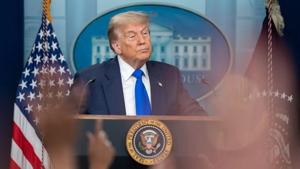
Myanmar started a multi-phase national election late last month as the Trump administration showed openness to renewed engagement with the Southeast Asian country.
The first phase of voting began on Dec. 28. Additional rounds will take place on Jan. 11 and Jan. 25. Election officials said 52% of eligible voters participated in the first phase.
A total of 139 international observers monitored the first round of voting.
Yich Samethy, a member of Cambodia’s election commission, said polling stations were orderly.
“I observed that the preparation and conduct of the polling stations were extremely well organized, complete, and peaceful,” he wrote, as reported by the Global New Light of Myanmar. “Voters were able to participate in the election in an orderly manner, exercising their democratic rights without any external interference, obstruction, sabotage, or intimidation.”
Myanmar’s military government hopes the election will restore stability after years of civil conflict.
The Trump administration has avoided the public condemnations of Myanmar used by previous administrations.
Last November, the Department of Homeland Security ended Temporary Protected Status for Burmese nationals living in the United States, citing progress toward “free and fair elections.”
Earlier in 2025, Secretary of State Marco Rubio instructed U.S. officials to “avoid opining on the fairness or integrity of an electoral process, its legitimacy, or the democratic values of the country in question.”
During the election period, Myanmar granted release to over more than 6,100 prisoners and cut the sentences of others to mark the country’s 78th anniversary of independence from the United Kingdom.
Senate Minority Leader Mitch McConnell, R-Ky., criticized the Burmese election.
“These ‘elections’ are a sham,” McConnell wrote. “We should stand WITH the people of Burma and AGAINST a PRC-backed junta.”
The Trump administration has taken actions expressing confidence in the country.
In July 2025, President Donald Trump exchanged letters with Myanmar leader Min Aung Hlaing after implementing new tariffs. The Treasury Department later removed four Burmese individuals and their companies from the Office of Foreign Assets Control sanctions list.
American officials also refrained from publicly criticizing Myanmar’s leadership at the October 2025 ASEAN (Association of Southeast Asian Nations) summit.
Violence continues in parts of Myanmar as anti-government groups try to disrupt the vote. However, regional officials have expressed cautious optimism.
Notably, Thailand’s Naresuan Force said Myanmar’s election “could be positive for border stability” over the long term, ar reported by NationThailand.com.
The election comes as the Trump administration prioritizes access to natural resources, including energy and minerals. Myanmar holds significant amounts of oil, natural gas, and rare earth minerals. China operates a major oil and gas pipeline linking Myanmar’s coast to the Yunnan province.
Most U.S. companies left Myanmar after sanctions were imposed in 2021 under President Joe Biden’s Executive Order 14014. The order will expire in February 2026, unless renewed.
Analysts say easing sanctions would be a major step toward restoring American business activity and curbing China’s influence in the country.
Maduro, wife plead not guilty in first court appearance

Deposed Venezuelan President Nicolas Maduro pleaded not guilty as he was arraigned in a New York court on Monday, facing federal drug and weapons charges.
Maduro described himself as a “decent man,” claiming to be the president of Venezuela, despite the U.S. and dozens of countries contradicting him as a legitimate leader.
“I am not guilty … I am a decent man. I am still the president of my country,” Maduro told the court. “I am the president of Venezuela. I was captured at my home in Caracas, Venezuela.”
Maduro is being represented by attorney Barry Pollack, whose notable clients include Julian Assange, founder of WikiLeaks. Pollack told the court that Maduro isn’t currently seeking release, but left the door open at a later time.
Cilia Flores, the former first lady of Venezuela, retained Mark Donnelly. She also entered a not guilty plea.
Judge Alvin Hellerstein, 92, who was appointed to the United States District Court for the Southern District of New York in 1998 by former Democratic President Bill Clinton, will be presiding over the case. He is no stranger to high-profile cases, presiding over cases involving the Sept. 11, 2001, terror attack and a lawsuit against Hollywood producer Harvey Weinstein.
Maduro and Flores face a slew of charges dating back decades, prompting the U.S. to issue a $50 million reward leading to the arrest of Maduro.
The arraignment marks the first time the former dictator and his wife, Cilia Flores, appear in a U.S. court following their capture carried out by elite U.S. military forces in the early hours of Saturday.
In a social media post Saturday morning, Attorney General Pam Bondi promptly confirmed that Maduro and Flores have been indicted, charged with “narco-terrorism conspiracy, cocaine importation conspiracy, possession of machine guns and destructive devices, and conspiracy to possess machine guns and destructive devices against the United States.”
The attorney general underscored that the couple would “face the full wrath of American justice on American soil in American courts.”
The next court hearing is scheduled for March.
Trump’s capture of Maduro unlikely to slow U.S. overdose deaths
President Donald Trump’s capture of former Venezuelan dictator Nicolás Maduro is unlikely to reduce U.S. drug deaths.
Global cocaine production reached an all-time high in 2025, according to the United Nations Office on Drugs and Crime. While most cocaine comes from Colombia, Venezuela acts mainly as a transshipment point and does not produce cocaine or fentanyl. Both drugs remain leading causes of U.S. overdose deaths in 2024, per the Centers for Disease Control and Prevention. Illicit production in Colombia jumped by 50% last year.
Dr. Jeffrey Singer, a senior health policy expert at the Cato Institute, said Maduro’s arrest is largely unrelated to cocaine trafficking. Federal prosecutors allege up to 250 tons of cocaine moved through Venezuela yearly under Maduro.
“Venezuela doesn’t produce cocaine, but it’s a transit point for cocaine because it’s right next door to Colombia,” Singer told The Center Square. “About 5% of Colombian cocaine makes its way through Venezuela and from Venezuela, it usually goes to Europe and western Africa.”
But not the U.S.
Most fentanyl and its precursors are manufactured in Asian countries, including China, according to Singer. Mexican cartels transport these chemicals into the U.S. as fentanyl, a powerful opioid and the leading cause of U.S. overdose deaths in 2024, based on the latest CDC data. In 2024, the CDC estimated 48,422 fentanyl overdose deaths, compared to 22,174 from cocaine. The CDC notes that many deaths involve multiple drugs.
Singer said Trump has talked at length about Venezuela’s oil. The president has said he plans to work with Venezuelan Vice President Delcy Rodriguez, who was part of Maduro’s inner circle.
Going after fentanyl and other drugs is popular politically, but Trump has been critical of regime change and involvement in foreign wars. Trump also pardoned former Honduran President Juan Orlando Hernandez in December. Hernandez was convicted of conspiring with drug traffickers and using his power to help move hundreds of tons of cocaine into the U.S.
Singer said cocaine and fentanyl may be a cover for other political moves.
“I can tell you that it has nothing to do with drugs,” he told The Center Square “Now, maybe using the drug thing resonates well with the general public.”
Secretary of State Marco Rubio said the attack was a war on drug trafficking.
“We are at war against drug trafficking organizations – not a war against Venezuela,” Rubio told NBC’s “Meet the Press” over the weekend.
A new indictment unsealed in federal court in New York charges Maduro with narco-terrorism conspiracy, cocaine-importation conspiracy and weapons charges.
Maduro and his wife pleaded not guilty to those charges on Monday in New York. During the brief hearing, Madura said he is “still the president of Venezuela.”
Two arrested after $7M cocaine seizure in Indiana

Indiana State Police seized an estimated $7 million worth of cocaine during a search of a semi truck on Interstate 70.
Two men were arrested following the discovery of the 309 pounds of narcotics during a routine Department of Transportation compliance inspection on Saturday afternoon.
Indiana Gov. Mike Braun applauded the seizure.
“Indiana has zero tolerance for drug traffickers,” he said. “Through coordinated efforts with federal and local partners, the Indiana State Police are proactively stopping dangerous drugs from entering our communities and harming Hoosier families.”
The truck was traveling from Joplin, Missouri, to Richmond, Indiana. During the inspection, officials said the Indiana State Police trooper noticed some criminal indicators – leading to a K-9 search and then a probable search. The drugs were found in the driver’s sleeping area.
Both California residents, 25-year-old Gurpreet Singh and 30-year-old Jasveer Singh have been charged with felony drug dealing. U.S. Immigration and Customs Enforcement also placed deportation holds on both.
Those holds, also known as immigration detainers, are federal requests asking the local jail to keep both in custody for up to 48 hours after their scheduled release so they can be taken into federal immigration custody.
Both suspects were taken to the Putnam County Jail outside of Indianapolis.
This seizure was part of an ongoing effort by the Indiana State Police to address drug trafficking, police said in a statement:
“Through the efforts of the Indiana State Police and their partners, positive results are occurring through significant seizures and dismantling large-scale drug organizations.”