Center Square
CENTCOM reports minimal damage to U.S. bases; no casualties
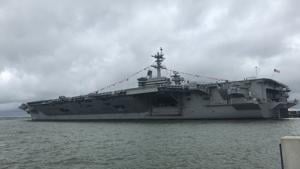
U.S. Central Command has confirmed that despite missile and drone attacks on bases in the Middle East, there are no reports of casualties or “combat-related injuries,” and damage to American installations has been “minimal.”
CENTCOM added that damage done to U.S. military installations “has not impacted operations.”
Multiple videos have circulated showing missiles and drones striking structures believed to be at Naval Support Activity Bahrain, headquarters of the U.S. Navy’s Fifth Fleet.
Multiple reports also indicate that Iran has been targeting other military bases in the region, including bases in Kuwait, Qatar, and the United Arab Emirates, carried out by Iran in retaliation for Operation Epic Fury.
Iran closes the Strait of Hormuz

One of the major global maritime passageways for oil transport, the Strait of Hormuz, has been closed, according to multiple reports.
The Strait of Hormuz, which connects the Persian Gulf and the Gulf of Oman, has reportedly been receiving VHF transmissions from the Iranian Revolutionary Guard instructing that no ships are allowed to pass through the strait.
The reports come as the U.S. Department of Transportation Maritime Administration has issued an alert to vessels in the region, urging them to “keep clear of this area if possible,” citing “significant military activity.”
“Any U.S.-flagged, owned, or crewed commercial vessels that are operating these areas should maintain a standoff of 30 nautical miles from U.S. military vessels to reduce the risk of being mistaken as a threat and are strongly encouraged to maintain close contact with Naval Forces Central Command (NAVCENT) Naval Coordination and Guidance for Shipping,” according to DOT.
Iran has been targeting Arab countries along the Persian Gulf, including Bahrain, Kuwait, Qatar and the United Arab Emirates in response to U.S. strikes inside of Iran early Saturday.
The reported closure comes on the heels of Operation Epic Fury, joint coordinated strikes by the U.S. and Israel on Iran.
World leaders call for peace after U.S. strikes on Iran
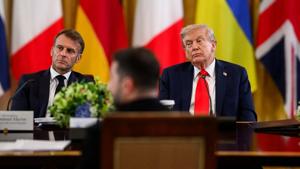
World leaders including U.S. allies called for peace in the Middle East after the United States launched strikes into Iran on Saturday.
French President Emmanuel Macron said war between the U.S., Israel and Iran brings “grave consequences for international peace and security.”
“The ongoing escalation is dangerous for all. It must stop,” Macron wrote on social media. “The Iranian regime must understand that it now has no other option but to engage in good faith negotiations to end its nuclear and ballistic program.”
Macron called for a meeting of the United Nations Security Council to further discuss the actions in Iran.
UN Secretary General Antonio Guterres condemned the military actions and warned of risks to international peace and security.
“I call for an immediate cessation of hostilities and de-escalation. Failing to do so risks a wider regional conflict with grave consequences for civilians and regional stability,” Gutteres said in a statement.
Oman’s foreign minister, Badr Albusaidi, who helped mediate negotiations between the U.S. and Iran, warned against further military action in Iran.
“Active and serious negotiations have yet again been undermined,” he wrote on social media. “I urge the United States not to get sucked in further. This is not your war.”
U.K. Prime Minister Keir Starmer, German chancellor Friedrich Merz and Macron issued a joint statement calling on Iran to reach a negotiated settlement.
“We urge the Iranian leadership to seek a negotiated solution. Ultimately, the Iranian people must be allowed to determine their future,” they said.
Saudi Arabia criticized Iran’s counterattack strikes on Bahrain, Qatar and Jordan.
“The Kingdom [of Saudi Arabia] affirms its full solidarity with and unwavering support for the brotherly countries, and its readiness to place all its capabilities at their disposal in support of any measures they may undertake,” the foreign ministry said in a statement.
Mark Carney, prime minister of Canada, criticized Iran for not backing down on its nuclear program.
“Canada supports the United States acting to prevent Iran from obtaining a nuclear weapon and to prevent its regime from further threatening international peace and security,” Carney wrote.
Lawmakers vow war powers vote on Iran strikes

Lawmakers said they would force a Congressional vote on war with Iran after the U.S. and Israel launched strikes in the country on Saturday.
U.S. Rep. Thomas Massie, R-Ken., said he and Rep. Ro Khanna, D-Calif., will work together to force the vote in Congress once it returns to session.
“I am opposed to this War,” Massie wrote on social media. “The Constitution requires a vote and your Representative needs to be on record as opposing or supporting this war.”
The War Powers Act requires the president to notify Congress within 48 hours of committing U.S. armed forces abroad.
“Trump has launched an illegal regime change war in Iran with American lives at risk,” Khanna wrote on social media. “Every member of Congress should go on record this weekend on how they will vote.”
Lawmakers across the aisle praised and slammed President Donald Trump for the military strikes on Iran, dubbed “Operation Epic Fury.”
U.S. Sen. Chuck Schumer, D-N.Y., said Congress was not briefed on the scope and severity of the threat in Iran.
“Confronting Iran’s malign regional activities, nuclear ambitions, and harsh oppression of Iranian people demands American strength, resolve, regional coordination, and strategic clarity,” Schumer wrote. “Unfortunately, President Trump’s fitful cycles of lashing out and risking wider conflict are not a viable strategy.”
U.S. Sen. John Fetterman, D-Penn., praised Trump for moving forward with the military action.
“President Trump has been willing to do what’s right and necessary to produce real peace in the region,” Fetterman wrote in a post on social media.
Lawmakers who praised Trump’s actions also sharply criticized Iran’s Ayatollah Ali Khamenei and called for regime change in the country. Sen. Lindsey Graham, R-S.C., said military action in the region could cause the “biggest change in the Middle East in a thousand years.”
Graham called on peace between Saudi Arabia and Israel in the wake of the military strikes on Iran. He said the operation in the region will be “extensive.”
“The operation has been well-planned. It will be violent, extensive and I believe, at the end of the day, successful,” Graham wrote on social media. “The demise of the ayatollah’s regime with American blood on its hands is necessary and more than justified.”
The War Powers Act requires hostilies to terminate 60 days after a vote unless Congress authorizes an extension or formally declares war.
U.S. Coast Guard is expanding its fleet, crew
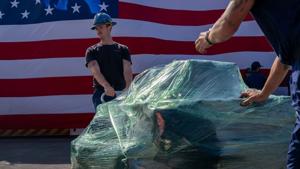
Under President Donald Trump, the U.S. Coast Guard continues to break records.
Through Force Design 2028, made possible through a surge of $25 billion in federal funds, the Coast Guard is implementing major structural reforms. It has established a Deployable Specialized Forces Command, is expanding training capacity and is rapidly acquiring next-generation assets.
The surge of funding has enabled the Coast Guard to procure an estimated 17 new icebreakers, 21 new cutters, more than 40 helicopters and six C-130J aircraft and modernize its shore infrastructure and maritime surveillance systems. This will strengthen its ability to interdict illegal foreign nationals, drug and human traffickers at sea, strengthen search and rescue operations, enhance navigational safety and enable maritime trade, The Center Square reported. The maritime force, housed within the Department of Homeland Security, celebrates its 236th anniversary on Aug. 4.
In Trump’s first year in office, the Coast Guard broke recruitment records. It exceeded 110% of active-duty enlisted goals, reporting more than 6,000 new members, the highest since 1991. It’s also on track to expand its ranks by 15,000 members.
Under Trump, the Coast Guard also expanded border security efforts, ramping up interdictions at sea as well as providing support along the southwest border, The Center Square reported. This included deploying advanced unmanned systems and intelligence-driven patrols to secure more than 100,000 miles of the U.S. border.
Coast Guard crew interdicted, deterred or transported more than 12,000 illegal foreign nationals last year, representing an increase in interdictions of 44% in some regions, DHS says.
Since December, Coast Guard elite tactical teams working with the departments of War, Justice, and State, led operations against “dark fleet” ships, seizing nine illegal vessels, DHS says.
Last year, Coast Guard crew seized a record more than 547,000 pounds of illegal narcotics. This represents nearly three times the normal seizure average and a street value of more than $3.9 billion.
Coast Guard counter drug operations “disrupted transnational criminal organizations and prevented more than 206 million lethal doses from reaching U.S. communities,” DHS says, saving taxpayers more than “$10 billion in avoided costs, including $2.27 billion in healthcare expenses.”
Through thousands of search and rescue missions conducted last year, Coast Guard crew members saved more than 5,200 lives and protected more than $1 billion in property, DHS says. Among those saved were 165 people by Petty Officer 2nd Class Scott Ruskan during the Texas Hill Country flood disaster last July 4. Ruskan was awarded the Legion of Merit this week “for extraordinary heroism” while leading recovering efforts.
The Coast Guard also enabled the safe transport of 1.8 billion tons of cargo last year, an increase of 13% over the year. Coast Guard crew are projected to move $5.4 trillion in goods this year, DHS said.
During Winter Storm Fern alone, Coast Guard cutters implemented the largest domestic icebreaking operation in the U.S. in the Great Lakes region. They logged more than 3,245 ice-breaking hours to assist 142 vessels transit dangerous water, DHS said.
Federal funding is enabling the historic building of new ice breakers in shipyards in Galveston and Port Arthur, Texas and Lockport, Louisiana, The Center Square reported.
The Coast Guard has played a key role in national security since its founding, including during WWII in the Arctic. Under Trump, Coast Guard crew are expected to expand operations there as well.
Through Force Design 2028, the Coast Guard says it is “building a more agile, capable, and responsive fighting force to defeat adversaries and protect the Homeland.”
Senate, House key leaders briefed ahead of strikes
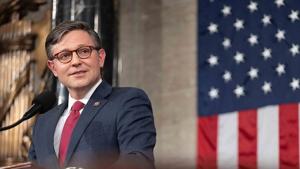
The Gang of Eight was briefed ahead of the U.S.-Israeli joint strikes against Iran, according to House Speaker Mike Johnson.
In a social media post Saturday morning, the Louisiana Republican said the eight members of Congress were briefed in detail earlier in the week by Secretary of State Marco Rubio.
The Gang of Eight is a reference to Johnson plus Sens. John Thune, R-S.D., Tom Cotton, R-Ark., Mark Warner, D-Va., and Chuck Schumer, D-N.Y.; and Reps. Rick Crawford, R-Ark., Jim Himes, D-Conn., and Hakeem Jeffries, D-N.Y. The are chairmen of pivotal committees – Cotton and Warner from the Senate Committee on Intelligence; Crawford and Himes the House Committee on Intelligence; and respective majority and minority party leadership of each chamber, Thune and Schumer in the Senate and Johnson and Jeffries in the House.
Johnson wrote in part the group “was briefed in detail earlier this week that military action may become necessary to protect American citizens in Iran. I received updates from Secretary Rubio thereafter, and I will remain in close contact with the president and the Department of War as this operation proceeds.”
Jeffries put out a statement criticizing second-term Republican President Donald Trump. He said Trump “failed to seek congressional authorization prior to striking Iran,” and said the administration “must seek authorization for the preemptive use of military force that constitutes as an act of war.”
Declaration of “war” has not been made by Trump or his senior-most leaders.
Warner echoed Jeffries’ message, while acknowledging that the Islamic Republic’s “leadership has long supported terrorism across the region, undermined regional stability, continued to advance its nuclear ambitions, and brutally repressed its own people.”
However, the senator says that Congress “must be fully briefed,” with the Trump administration to make “clear legal justification” for actions in Iran.
Cotton came out in support of Trump’s decision to strike Iran, citing Iran’s history of supporting terrorism against the U.S.
Writing on social media, Cotton said in part, “A nuclear-weapons program. Thousands of missiles. State sponsorship of terror. Iran has waged war against the U.S. for 47 years: the hostage crisis, the Beirut Marine barracks, Khobar Towers, roadside bombs in Iraq and Afghanistan that killed and maimed thousands of American soldiers, the attempted assassination of President Trump. The butcher’s bill has finally come due for the ayatollahs.”
Iran retaliates against American bases; State Department issues ‘shelter in place’

The U.S. State Department is warning Americans across the Middle East to shelter in place until further notice, following U.S. strikes against Iran overnight, leading to retaliatory strikes throughout the region.
In Manama, Bahrain, home of the headquarters for the U.S. Navy’s Fifth Fleet, the U.S. Embassy put out a security alert, citing an “imminent drone/missile attack” on the small island off the coast of Saudi Arabia in the Persian Gulf.
Multiple reports and videos circulating show an explosion at the headquarters of the U.S. Naval Support Activity Bahrain. Large plumes of dark smoke can be seen billowing from the headquarters area. There has been no official confirmation of any American casualties or whether the missile struck a mission-essential building.
“There are media reported threats of missiles/drones over Bahrain. The U.S. Embassy in Manama urges U.S. citizens in Bahrain to shelter in place, review security plans in the event of an attack, and to stay alert in case of additional future attacks. U.S. Embassy personnel are sheltering in place,” according to an alert put out by the U.S. Embassy Manama.
With sirens roaring across Israel, the U.S. Embassy in Jerusalem directed all U.S. government employees and their family members “to shelter in place until further notice.” The embassy noted that the Israeli government closed the airspace for civilian flights, with all flights from Ben Gurion Airport cancelled.
U.S. Ambassador to Israel Mike Huckabee urged Americans in Israel to enroll in the Smart Traveler Enrollment Program (STEP), allowing American citizens to receive emergency updates from the U.S. Department of State.
The Israeli Defense Forces have warned Israelis that a “barrage of missiles” has been launched towards Israel from Iran.
There are multiple reports that Iran has also targeted U.S. bases around the Persian Gulf in Kuwait, Qatar, the United Arab Emirates, and Saudi Arabia. UAE state news says the country has intercepted Iranian missiles.
The Kingdom of Saudi Arabia released a statement saying it will be joining the U.S. in military action against the Iranian regime.
“The Kingdom of Saudi Arabia condemns and denounces in the strongest terms the blatant Iranian aggression and the flagrant violation of the sovereignty of the United Arab Emirates, the Kingdom of Bahrain, the State of Qatar, the State of Kuwait, and the Hashemite Kingdom of Jordan. The Kingdom affirms its full solidarity with and unwavering support for the brotherly countries, and its readiness to place all its capabilities at their disposal in support of any measures they may undertake,” according to a statement from the Ministry of Foreign Affairs of the Kingdom of Saudi Arabia. “The Kingdom of Saudi Arabia calls on the international community to condemn these blatant attacks and to take all firm measures necessary to confront Iranian violations that undermine the security and stability of the region.”
The Ministry of Foreign Affairs for Qatar released a similar statement, condemning Iranian forces targeting Qatar with “ballistic missiles,” adding that the “State of Qatar reserves its full right to respond to this attack.”
ALEC urges states to adopt ‘light-touch’ AI regulation
The American Legislative Exchange Council called on state legislatures to embrace limited tax regulation and greater investment in artificial intelligence to facilitate effective government processes.
The council released its AI policy toolkit calling for a “light-touch” policy approach to AI.
“U.S. regulators risk jeopardizing A.I.’s massive potential and benefits to consumers by stifling this technology in its infancy with inflexible, burdensome regulations,” the report reads.
ALEC found that more than 1,000 AI-related bills were introduced across all 50 states in 2025, with 118 becoming law. ALEC urged lawmakers to use existing laws to address concerns about AI regulation.
“In many cases, the federal government, states and localities already have sufficient laws on the books designed to address fraud or discrimination in a technology-neutral way,” the report reads.
The report outlined the Artificial Intelligence Tax Non-Discrimination Act, a piece of legislation that is meant to prevent states from targeting AI-powered services from state tax measures. The policy would restrict taxes based on computing power and AI subscriptions and would prevent an AI service from being taxed similarly to a phone service.
“Tax policy must remain neutral toward the mode of delivery or technological implementation of services,” the report reads. “It does require any taxes to remain neutral, technology-agnostic, and avoid singling out one industry segment in favor of another.”
The report criticized a New York state law that imposed taxes on businesses for implementing AI to replace human labor.
Jake Morabito, senior director of policy at ALEC, pointed out examples in Texas where AI has been implemented to increase government efficiency. He said Texas found agencies using AI turned two weeks of paperwork processes into a 13 second task.
Additionally, the Texas Department of Transportation used AI to use machine video learning to clear crashes and debris and respond to emergencies.
“States should thoughtfully deploy AI and ensure new regulations are narrowly tailored on specific objectives that improve the lives of constituents,” Morabito said.
He pointed to legislation under former Virginia Gov. Glen Youngkin that regulated AI integration in government and schools.
ALEC also proposed the Right to Compute Act, legislation modeled after a bill passed in Montana. The legislation would require the government to justify any restrictions on AI or emerging technologies it attempted to implement in law.
“Any government restriction on the lawful use of technology must be narrowly tailored and fulfill a compelling government interest,” the report reads. “This approach to technology regulation preserves individual liberties and limits government overreach.”
ALEC said the policy would allow the government to focus on tangible, proven threats in the emergence of new technologies including fraud scams, deepfake content and nuisances caused by physical data center infrastructure.
Additionally, ALEC promoted a Technology-Neutral Anti-Discrimination Clarification Act to prevent AI companies from being discriminated against. The report cited examples of burdensome regulations in Colorado that have prevented AI companies from further developing.
ALEC warned against forcing AI companies to divert resources to comply with governmental regulations and encouraged state lawmakers to use existing laws when incidents arise.
“States can allay the public’s fears of discriminatory or biased AI by focusing on the harmful conduct and bad actors responsible for unlawful discrimination, not the underlying tools used,” the report reads.
ALEC’s report also calls on state legislatures to invest in creating advisory AI offices to assess regulation barriers and oversee programs. The offices would be in charge of managing state regulatory capacity, granting mitigation agreements and establishing a voluntary AI learning laboratory.
“The Office is tasked with identifying regulatory barriers to AI development, cutting regulatory red tape that hinders innovation, and fostering collaboration with the private sector and other states on AI public policy,” the report reads.
ALEC urged state lawmakers to adopt an approach that embraces AI and limits burdensome regulation. The group called on lawmakers to avoid regulating based on “science-fiction narratives” and embrace the possibility of AI innovation.
“Policy makers should keep in mind that, at its core, artificial intelligence is a tool that works to augment humans for the better, not replace them entirely,” the report reads. “Continued human oversight and direction will remain essential for the forseeable future.”
WATCH: U.S., Israel strike Iran in Operation Epic Fury
Massive strikes by the United States against Iran in Operation Epic Fury started overnight, with allied support from Israel.
Second-term Republican President Donald Trump addressed the nation and the Iranian people shortly after the strikes began. He told the Iranian people the “hour of your freedom is at hand. When we are finished, take over your government. It will be yours to take.”
Trump instructed the Iranian people to “stay sheltered. Don’t leave your home.”
The president underscored that the objective of the mission is to “defend the American people by eliminating imminent threats from the Iranian regime.”
“Iran is the world’s No. 1 state sponsor of terror,” said the president.
In response to the large, coordinated attack, Iran has been carrying out strikes against several American military bases in the region, including striking the U.S. Fifth Fleet Naval headquarters in Bahrain, according to multiple reports.
In his address, the president warned there could be American casualties. He said his administration “has taken every possible step to minimize the risk to U.S. personnel in the region.”
“I do not make this statement lightly, the Iranian regime seeks to kill the lives of courageous American heroes,” Trump said. “We may have causalities, that often happens in war, but we’re doing this, not for now, we’re doing this for the future, and it is a noble mission. We pray for every service member as they selflessly risk their lives to ensure that Americans and our children will never be threatened by a nuclear armed Iran.”
The president warned members of the Iranian Revolutionary Guard and the Iranian police to “lay down” their weapons. If not, he said, they would “face certain death.”
This is the second strike against the Islamic State in less than a year. In June, the U.S. carried out Operation Midnight Hammer, targeting Iran’s nuclear sites.
Trump touts Venezuelan oil at Corpus event
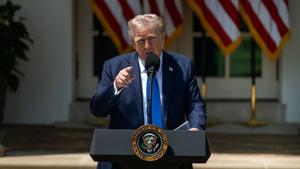
At a Texas port known for handling record volumes of Texas-produced liquified natural gas, President Donald Trump touted importing Venezuelan oil with a Venezuelan oil tanker in the background.
Trump spoke at the Port of Corpus Christi, a key hub for LNG exports, referring to it as a “national treasure, one of the largest energy export hubs anywhere in the world.”
His administration was “unleashing America’s potential, strengthening our security, increasing our prosperity,” Trump said, referring to reversing Biden administration policies. “We have the most successful country anywhere in the world. A year and a half ago, we had a dead country. Our country was dead.”
Instead of citing Texas oil and natural gas industry production or methane reduction records, he said, “America’s status as the number one energy superpower by far anywhere on earth” and thanked Venezuela. “I want to thank Venezuela because our relationship is a very good one. We’re having a very good relationship. That ship is from Venezuela,” he said, pointing to an oil tanker behind him.
Trump also repeatedly attacked former President Joe Biden, saying he “was one of the worst presidents in history” and “had no idea what the hell was happening. It was his administration of horrible … radical left people. No, he used the auto pen” to implement “crippling regulations on producers and refiners,” cancelled the Keystone XL pipeline, imposed an LNG export ban and imposed the “Green New Scam, one of the greatest scams in history.” These policies caused prices at the pump to top $6 a gallon in some states, Trump said.
High gas prices helped create “the worst inflation in the history of our country,” which he said he turned around after declaring a national energy emergency on his first day in office and reversing Biden-era policies, he said.
“I ended the Biden LNG export ban. I told our great Texas energy workers to very simply ‘drill, baby, drill.’ Since my inauguration, U.S. oil production is now up by 600,000 barrels a day. Natural gas production is at an all-time-record high by far. Right here in Corpus Christi, the price of gasoline is down to $2.30. We’re witnessing an historic American energy boom like we’ve never seen. This port is at the center of the action,” Trump said.
Energy companies have expressed concerns about lower gas prices, which directly correlate to declining rig counts. Contrary to Trump’s claims, rig counts are down by nearly 50 since he’s been in office and energy giants based in Houston laid off thousands of workers last year, The Center Square reported. Layoffs are ongoing.
Instead of discussing creating policies to foster investment in Texas production, Trump called Texas oil executives to Washington, D.C., last month, urging them to invest in Venezuela. The leaders of Exxon Mobile, ConocoPhillips and Chevron, all based in Houston, described the challenges they’ve faced in Venezuela, including losing billions of dollars and having their assets seized in the past by despotic regimes. They explained that long term investment would require extensive legal and structural changes with security and investment guarantees.
They met at the White House as rig counts in the Permian Basin, the price per barrel of oil and extraction jobs continued to drop. The first quarter this year is also presenting challenges for the industry, now complicated by conflict with Iran, industry experts warn.
Trump claimed to create tens of thousands of jobs and generate billions of dollars of revenue for the Corpus community. The Texas oil and natural gas and LNG industry was already contributing billions of dollars to the community, exceeding $60 billion in 2023 in Texas coastal counties alone, The Center Square reported.
Trump doubled down on touting Venezuelan oil imports, stating, “we just started [importing] 80 million barrels of fuel. It’s great for Venezuela and it’s great for us. A lot of [Venezuelan oil] comes right here. With our new friend and partner, Venezuela, we’re going to do a lot of other things.” The Venezuelans have never “witnessed anything so beautiful, so decisive and so popular,” referring to his administration removing Venezuela’s former president from office last month, he said. “In fact, 360,000 barrels of Venezuelan crude are right now sitting in the tanker,” he said, pointing to the ship again.
“We’re going to refine their oil right here in America and right here in Texas, and then export it to all over the world. We’re going to keep some for ourselves. We’re going to give some to them and they’re going to make more money than they’ve ever made before. We’ll help build their country again, which was a disaster.”
Trump also pointed to Texas Republican lawmakers in the crowd, including U.S. Rep. Chip Roy, who is running for attorney general and whom he has repeatedly criticized. He also pointed to Attorney General Ken Paxton, U.S. Sen. John Cornyn and U.S. Rep. Wesley Hunt who are embroiled in a bitter primary race for U.S. Senate. He has endorsed no one in these races.