Center Square
Congress to tackle housing, farm bill, election security, and more

U.S. lawmakers face a busy week ahead of them, aiming to advance legislation related to agriculture, housing, election security, and more while the partial government shutdown enters its third week.
Due to bad weather, the House Committee on Agriculture had postponed its February markup of the 2026 U.S. farm bill; now, it will do so March 3. Though Democrats have loudly opposed deregulatory provisions within the massive agricultural support package, congressional leaders expect bipartisan support.
Farm bills authorize various nutrition, rural development and farm support programs for a span of typically five years, but Congress has not passed a farm bill since 2018. Failing to renew authorization for crop insurance, rural health care, and other critical programs is not a scenario lawmakers on either side of the aisle wish to be in.
Yet while House Democrats might split over whether to support a bill that is mostly bipartisan, they have united behind an Iran War Powers Resolution, which they will force a floor vote on as soon as possible next week.
After the Trump administration’s unapproved military actions in Venezuela, where U.S. troops seized two vessels and arrested Venezuelan President Nicolás Maduro and his wife, Democrats and Republicans alike want to prevent a similar situation from occurring in Iran.
The resolution would prohibit President Donald Trump from using military force against Iran – which the administration has hinted may imminently happen – unless Congress is consulted and authorizes the decision.
If the resolution passes the House, it must receive approval by U.S. senators as well, who will be swamped in their own legislative priorities.
The Senate could vote as soon as Monday on the ROAD to Housing Act, a sweeping legislative package aimed at expanding affordable housing supply, reducing repair expenses for homeowners, improving rental assistance options, and more.
The package may face delays, however, depending on how ongoing negotiations to reopen the Department of Homeland Security play out.
Funding lapsed for DHS over two weeks ago, when Senate Democrats tanked a Continuing Resolution that would have extended current funding levels. A second vote to reopen the department – which houses agencies responsible for transportation security, disaster support, immigration enforcement, and others – failed Tuesday.
With Democrats demanding an extensive list of immigration enforcement reforms, and Republicans refusing to grant all of them, the standoff continues, much to Senate Majority Leader John Thune’s, R-S.D., frustration.
Thune also has his hands full with some lawmakers in his own party, who have urged him to revive the “talking filibuster” in order for Republicans to have a chance at getting their election security bill through the upper chamber.
While Thune said the House-passed SAVE Act will hit the Senate floor next week, he effectively ruled out a talking filibuster and said the bill being subject to the typical 60-vote threshold is “a very real possibility.”
Los Angeles school district puts superintendent on paid leave

Alberto Carvalho, the Los Angeles Unified School District superintendent, was placed on paid administrative leave by the Board of Education late Friday afternoon pending an FBI investigation.
Carvalho’s home in the coastal San Pedro neighborhood of Los Angeles was searched Wednesday by FBI agents who arrived with a warrant and left carrying boxes. Media reports have said the investigation may be linked to possible kickbacks when Carvalho was superintendent of Miami-Dade County schools. Other news reports say the search was tied to AllHere, an artificial intelligence company that the LAUSD hired in 2024 for a $6 million chatbot that was never created.
Carvalho has not been charged with any crime and has not commented on the search. The U.S. Attorney’s Office and the FBI’s Los Angeles Office told The Center Square they could not comment and that the search warrant affidavit was under seal.
The Board of Education of the nation’s second-largest school district voted 7-0 in favor of putting Carvalho on leave during a closed session that lasted more than three hours on Friday. The decision was announced during an open session that was just a few minutes.
Andres Chait, who has served as the district’s chief of school operations, will begin work immediately as acting superintendent, the board announced.
Board President Scott Schmerelson said employees will take their directions from Chait.
“The board believes in you, supports you, knows you will always continue to do your very best,” Schemerelson said, addressing district staff during the open session.
The school board’s closed session on Thursday about Carvalho followed a five-minute public comment period during which three people called on the district to show greater transparency and accountability. They also asked board members to consider matters such as special needs students as they discuss the district’s leadership.
Texas oil & gas leaders welcome Trump reversal of Biden policies

The leaders of the Texas oil and natural gas industry are expressing optimism about President Donald Trump’s visit to Texas.
Trump is expected to tout his economic and pro-energy policies at the Port of Corpus Christi, a major Gulf port for liquified natural gas exports and commerce hub.
Trump’s policy reversals are a welcome change from former President Joe Biden’s, they say, who took more than 200 actions against the industry, including canceling LNG export permits. Biden claimed LNG exports would increase domestic energy costs and worsen the “perilous impacts of methane,” claims The Center Square fact checked as false.
Despite these actions, the Texas oil and natural gas industry broke production and emissions reductions records for a number of reasons including extensive support from Gov. Greg Abbott, the state legislature, Railroad Commission, which regulates the industry, and a bipartisan congressional delegation. Trump’s cabinet members, including EPA Administrator Lee Zeldin and Energy Secretary Chris Wright have been rolling back regulatory actions, expanding LNG authorizations and implementing new permitting reforms, The Center Square reported.
“Under President Donald Trump’s leadership, we are seeing a clear shift toward energy dominance — from support for LNG exports and domestic production to a regulatory approach that respects state expertise and reins in federal overreach. That matters for Texas,” Railroad Commissioner Christi Craddick told The Center Square.
“At the Railroad Commission, our mission is to ensure energy is produced safely, responsibly, and efficiently. When Washington recognizes state primacy and works collaboratively instead of imposing one-size-fits-all mandates, it strengthens our ability to do that job,” she said. “Texas leads the nation in oil and natural gas production. Our industry supports hundreds of thousands of jobs, funds our schools and infrastructure, and plays a critical role in national security. A pro-energy federal policy environment doesn’t just benefit producers — it benefits every Texas family.”
Todd Staples, president of the Texas Oil & Gas Association, agreed, telling The Center Square, “President Trump’s visit to Corpus Christi today underscores the fact that American energy dominance starts in Texas. The Lone Star State has reached a high-water mark in crude oil and natural gas production, benefitting American consumers by dramatically increasing supply and lowering prices at home, and exporting the remainder to allies and trading partners.
“A vast amount of energy exports move through the Port of Corpus Christi via substantial investments made by the oil and natural gas industry over the last decade. As a direct result of industry’s robust infrastructure of production, pipelines, processing and ports, the Coastal Bend is a global gateway for American energy, powering not just the state, but the world.”
He emphasized that “Even as companies adjust to lower prices and shifting market conditions, the Texas oil and natural gas industry employs hundreds of thousands of Texans across the value chain because of the industry’s regional breadth and diverse activities, from LNG exports to pipeline construction. With a favorable policy environment and a commitment to infrastructure development, our industry is well-positioned to continue providing the reliable, affordable energy that powers our modern way of life.”
Ed Longanecker, president of the Texas Independent Producers and Royalty Owners Association (TIPRO), also noted that, “President Trump understands that Corpus Christi serves as a premier gateway for American energy exports. A stable and predictable regulatory environment is essential to sustain and expand these strengths and the build out of essential energy infrastructure. Continued progress on permitting reform remains vital. Streamlining approvals, eliminating unwarranted delays, and reducing excessive regulatory burdens facilitate ongoing investment in export terminals, pipelines, and related infrastructure. These measures ensure competitive and reliable access to global markets and reinforce Texas’s position as the nation’s leading producer and exporter of oil and natural gas.
“While we are experiencing some challenging market conditions, including a contraction in upstream employment due to lower commodity prices, many industry executives remain more bullish than some official forecasts, expressing confidence that demand will continue to outpace supply concerns in the medium to longer term. This optimism stems from expectations of sustained economic growth in non-OECD countries, resilient petro chemical and transportation needs, and potential underinvestment risks that could lead to structural tightness beyond the near-term surplus,” he told The Center Square.
“It’s essential that we continue to support a balanced approach from an energy policy and global supply/demand perspective to ensure that domestic producers can continue to provide access to reliable and affordable energy.”
Thure Cannon, president of the Texas Pipeline Association, agrees, telling The Center Square, “President Trump’s visit to Corpus Christi highlights the strategic importance of the Gulf Coast – particularly South Texas – in America’s energy supply chain. Corpus is central to U.S. LNG exports and refining, and those facilities depend on a reliable network of pipelines and infrastructure across Texas.
“While the current federal tone is supportive of domestic energy development, Texas pipeline companies make decisions based on market fundamentals – such as commodity prices, capital discipline and global demand. Moving forward, consistent permitting processes and coordination between state and federal regulators will be key to ensuring that Texas can maintain its leadership in energy production and exports, with the Texas pipeline market standing ready to assist in these efforts.”
Whitmer criticizes tariffs; Republicans cite study showing economic gains

Gov. Gretchen Whitmer used her State of the State address Wednesday to renew criticism of President Donald Trump’s tariff policy, while Michigan Republicans are pointing to a recent study which shows the tariffs are boosting Michigan auto production and jobs.
Whitmer, who has met with the president multiple times to discuss trade, said uncertainty in the national economy is weighing on Michigan families and businesses. She also blamed tariffs for rising prices.
“People are nervous about the national economy, and, while your paycheck may have grown, the cost of everything else has too,” she said. “Many middle class families tread water, struggle to pay the bills, find good jobs and get ahead . . . Tariffs have jacked up prices.”
Whitmer added that she is hopeful in the wake of the recent Supreme Court ruling which struck down some of the tariffs.
“Businesses of all sizes are facing higher costs and massive uncertainty,” she said. “I’m hopeful that last week’s Supreme Court decision will force Congress and the president to work out a more strategic trade policy.”
That ruling has not led to an end to tariffs though, just a shift from the Trump administration in how they are set.
Michigan House Republicans countered Whitmer’s criticisms by highlighting findings from the University of Michigan that suggest the long-term impact of tariffs could be positive for the state’s automotive industry.
In a statement, House Republicans said, “Shortly after University of Michigan found that tariffs are growing Michigan’s economy and boosting jobs, Gov. Whitmer and Michigan Dems are saying POTUS should change his trade policy.”
Michigan House Speaker Matt Hall, R-Richland Township, pointed out that tariff policy is working as intended.
“When you have tariffs, you are trying to disincentivize the purchase of foreign cars and foreign components, and you’re trying to incentivize the purchase of domestic cars in Michigan and domestic manufacturing. That’s exactly what’s happening,” Hall said in a recent press conference. “Tariffs are creating jobs in the Michigan automotive manufacturing industry, and so that’s a good thing. The tariffs are working.”
The University of Michigan study, released late last year, noted that earlier projections showed tariffs would reduce employment in Michigan’s auto sector.
However, researchers revised those projections, writing that “recent changes such as the extension of rebates on parts tariffs for domestically assembled vehicles have shifted our estimate of the tariffs’ eventual impact on domestic auto production from a small negative to a small positive.”
The study now estimates that current trade policy will increase U.S. light vehicle production by 2.7% in the medium run, instead of reducing it by 3.1% as previously forecast.
Researchers added that they “believe they will eventually provide net support for employment and economic activity in Michigan.”
While they admitted that “tariffs are expected to provide a strong protective effect,” researchers still cautioned that the state’s economy is “highly exposed to trade.”
“Although we believe the Trump Administration is approaching a more settled trade policy,” they said, “Michigan’s economy has recently been navigating choppy waters.”
Rocket, Compass partnership aims to boost housing supply

Rocket Companies and Compass International Holdings announced a three-year alliance this week designed to expand housing inventory on Redfin’s platform and provide sellers more flexibility in how they list their homes.
Rocket, the Detroit-based mortgage lender and parent company of Redfin, said Compass’ “Coming Soon” listings will now appear immediately on Redfin.com. “Private Exclusive” properties will soon follow.
The companies said the move could bring over 500,000 additional listings to Redfin through Compass’ network, which includes brands such as @properties, Better Homes and Gardens Real Estate, CENTURY 21, Christie’s International Real Estate, Coldwell Banker, Corcoran, ERA, and Sotheby’s International Realty.
Through the partnership, sellers working with Compass can display homes on Redfin with no days on market, no price history, and no automated home valuation estimates. Listings remain compliant with Multiple Listing Service rules, the companies said.
“Some sellers want maximum exposure immediately,” Redfin said in a press release. “Others want to test pricing before going fully public. Some prefer privacy. Others do not want their home syndicated across thousands of websites that begin tracking negative insights like days on market and price history on day one.”
“Offering seller choice and making it easier to test the market without negative insights has the potential to increase overall inventory coming on the market, resulting in improved access and affordability for homebuyers,” the company added.
Rocket CEO Varun Krishna said supply remains the central problem.
“When barriers are removed, and supply grows, affordability improves,” Krishna said. “Today’s challenge is friction in the homebuying process and a lack of inventory. By bringing search, agents, and financing into one connected platform, we can help more sellers enter the market, reduce complexity for buyers, and make homeownership more attainable.”
Compass Chairman and CEO Robert Reffkin said sellers want more control.
“We believe listing agents should be connected directly with interested buyers, and sellers should have the freedom to list their homes in the manner and method they choose without fear of misleading insights that damage its value,” Reffkin said.
Rocket also announced mortgage incentives for Compass clients, including a one-percentage-point interest-rate reduction for the first year of a loan or a lender credit of up to $6,000 to reduce upfront costs or first-year payments.
The announcement comes as President Donald Trump has made housing affordability a focus of his second term.
“Mortgage rates are the lowest in four years and falling fast, and the annual cost of a typical new mortgage is down almost $5,000 just since I took office,” Trump said during his State of the Union address.
“Low interest rates will solve the Biden-created housing problem while at the same time protecting the values of those people who already own a house,” he added.
Economists have long argued that expanding supply remains the most direct way to address housing costs.
Walz unveils anti-fraud plan; GOP urges independent watchdog
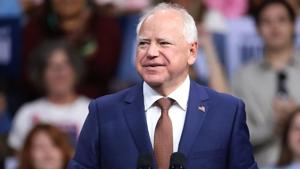
Fraud investigations in Minnesota are heating up as state Republicans push for stricter oversight and accountability measures.
As part of that effort, they are highlighting the need for a statewide independent Office of the Inspector General.
State Senator Michael Kreun, R-Blaine, helped sponsor the legislation to form that office and has been a staunch advocate for it.
“An independent statewide Office of the Inspector General is essential to provide nonpartisan oversight, promoting transparency and accountability by investigating fraud, waste, abuse, and mismanagement across government agencies,” Kreun told The Center Square in an interview. “Operating independently ensures that audits are objective, free from political interference, and focused on protecting taxpayer funds and upholding ethics.”
The office would have broad authority to investigate all providers, recipients, and agencies. Similar legislation was proposed last year but died without Democrat support.
Democrats say they are serious about addressing fraud though. On Thursday, Gov. Tim Walz announced his own “comprehensive anti-fraud package.”
“You can trust me on this. The person who’s angriest about this fraud is me,” Walz said during a press conference.
Yet, the Democrat also expressed doubt about fraud in Minnesota and concern with President Donald Trump and his recent announcement that his administration is declaring a “war on fraud.”
“They used false pretense to come in on Metro Surge and we saw the catastrophic damage that was done and the deaths,” Walz said. “Now we’re seeing them turn to this . . . they’re gonna freeze the money because of fraud. What specific fraud? What did you see that the state didn’t knew [sic]?”
Walz’ comments sparked backlash from Republicans, especially as Minnesota state officials are being accused of being complicit in the alleged fraud.
“While there is no current evidence that Governor Walz personally committed fraud, the evidence has shown that his administration looked the other way while the fraud was occurring,” Kreun said. “The Walz Administration ignored whistleblower warnings and failed to exercise proper oversight, which was a failure of leadership.”
This all comes as independent and federal investigations are ongoing after billions of dollars in taxpayer-funded fraud schemes were uncovered in recent months, as extensively reported by The Center Square, with claims the fraud could total between $9 billion and $20 billion in Minnesota alone.
Kreun said he is hopeful Democrats will support the effort this time.
“With the US Attorney’s Office estimating that our fraud problem may be in excess of $9 Billion, this is not the time to make this bill partisan. Even though the House Democrats killed the bill in 2025, I remain hopeful they will get on board and do the right thing this year,” he said. “In 2026, we should be past the discussion about if an OIG is necessary, and the focus should be on how to best structure it to be effective and truly independent.”
So far, that has not been the case. Democrats have been reluctant to support the bill and Republicans allege they are attempting to “gut it,” even when they have been supportive.
“Democrats have already voted against advancing the massively-bipartisan Office of Inspector General seven times,” said a joint statement from House Speaker Lisa Demuth, R-Cold Spring, and Republican Floor Leader Harry Niska, R-Ramsey. “Weeks into the legislative session and years late on fraud, they clearly aren’t serious about stopping fraudsters. It’s time for action, not more words and delays.”
Negotiations over how to mitigate fraud in Minnesota will likely continue to be tense in the divided legislature.
In the Minnesota State Senate, the Democratic-Farmer-Labor Party holds a slim majority by just one seat. DFL has 34 seats, compared to the Republicans’ 33. In the Minnesota State House, DFL and Republicans are tied – both holding exactly 67 seats.
Bill Clinton says he had ‘no idea’ about Epstein’s crimes

Former President Bill Clinton said he had “no idea” of the crimes convicted sex offender Jeffrey Epstein committed.
The U.S. House Oversight Committee questioned Clinton over his ties to Epstein in a closed-door hearing on Friday in New York.
“I had no idea of the crimes Epstein was committing,” Clinton wrote in an opening statement posted to social media. “I saw nothing, and I did nothing wrong.”
Rep. James Comer, R-Ky., chairman of the committee, said he plans to question former President Clinton on his inclusion in the Epstein files. He said Clinton flew on Epstein’s plane at least 27 times and Epstein was in the White House 17 times during Clinton’s presidency.
Comer also said he plans to ask about Clinton’s appearance in pictures released by the U.S. Department of Justice. Several photos released in the Epstein files show Clinton in close proximity with women whose faces are redacted.
“No matter how many photos you show me, I have two things that at the end of the day matter more than those 20-year old photos,” Clinton wrote in his opening statement.
Virginia Giuffre, a victim of Epstein, previously stated she saw and met former President Clinton on Little St. James, the island owned by Jeffrey Epstein.
Comer said Hillary Clinton deferred answers on at least a dozen questions to her husband during a deposition on Thursday. He said those questions, including Epstein’s ties to the Clinton’s charitable foundations, will be asked during Friday’s deposition.
“We had a big portfolio of questions for him, and that increased yesterday,” Comer said.
Hillary Clinton described the deposition as “repetitive” in a news conference on Thursday. Comer explained that many questions had to be raised due to apparent evidence in the Epstein files that Hillary Clinton had a relationship with Epstein.
“It may have seemed repetitive because there was a lot of documentation that would suggest that she had a relationship with Epstein,” Comer said.
Rep. Anna Paulina Luna, R-Fla., questioned whether Hillary Clinton was honest in her responses to questions during the deposition on Thursday. If an individual is found to knowingly make false statements before a congressional body in a deposition, they can be found guilty of perjury. Rep. Nancy Mace, R-S.C., described Hillary Clinton as “unhinged” during Thursday’s deposition.
“I hope that President Clinton is less unhinged today than his wife was yesterday,” Mace said.
House Democrats refuted Mace’s claim about Hillary Clinton’s behavior, calling it a “mischaracterization.”
Rep. Robert Garcia, D-Calif., pointed out that Hillary Clinton did not invoke the Fifth Amendment right against self-incrimination once during Thursday’s deposition. House Democrats called on President Trump to be subpoenaed over his knowledge and association with Jeffrey Epstein.
“Now we have the Clinton rule, which is that presidents and their families have to testify when Congress issues a subpoena, and that means that Donald Trump needs to come before our committee and explain what he knew about Epstein and explain why we have not had a full release of the documents,” said Rep. Ro Khanna, D-Calif.
Clinton said he might not be able to recall all of the details in his relationship with Epstein. He also said he saw “nothing that ever gave me pause.”
“I’m not going to say something I’m not sure of. This was all a long time ago. And I am bound by my oath not to speculate, or to guess,” Clinton wrote. “This is not merely for my benefit, but because it doesn’t help you for me to play detective 24 years later.”
“As someone who grew up in a home with domestic abuse, not only would I not have flown on his plane if I had any inkling of what he was doing – I would have turned him in myself and led the call for justice for his crimes, not sweetheart deals.”
U.S. departures from Middle East indicate Iran strikes may be imminent

Signaling U.S. strikes against Iran could be imminent, the State Department is urging non-essential government employees and their families to leave Israel.
The State Department issued an authorized departure for non-emergency and family members of U.S. personnel from Mission Israel Friday morning, citing “safety risks.” The message added, “persons may wish to consider leaving Israel while commercial flights are available.”
The alert comes as multiple reports indicate American personnel are being evacuated from Iraq.
The departures come as the USS Gerald Ford and its strike group have been spotted near the coast of Israel.
In recent weeks, there has been a massive build-up of American military forces in the Middle East.
The latest developments come amid reports that talks between the U.S. and Iran regarding the Islamic Republic’s nuclear program have stalled.
During President Donald Trump’s State of the Union Address Tuesday night, he underscored the atrocities carried out by Iran as he is weighing another operation against the Islamic Republic.
The president warned that Iran has developed missiles “that can threaten Europe and our bases overseas, and they’re working to build missiles that will soon reach the United States of America.”
Trump said he would prefer diplomacy, but “will never allow the world’s number one sponsor of terror, which they are by far, to have a nuclear weapon.”
“I will never let the world’s number one sponsor of terror have a nuclear weapon,” the president vowed.
Appeals court allows Trump to kick unions out of federal agencies

A federal appeals court will allow the Trump administration to end collective bargaining rights for thousands of government employees, in a blow for public-sector unions.
The Ninth Circuit panel’s decision allows the administration to proceed with an executive order that allows some federal agencies to cut union ties for national security reasons.
Six unions representing about 800,000 federal civilian employees sued the administration last year, alleging violations of the First Amendment. A lower court previously found that President Donald Trump’s order was designed to retaliate against unions. However, the Ninth Circuit panel ended that preliminary injunction.
The panel noted that Trump’s executive order, issued in March 2025, was “the largest single effort to date to exclude agencies and subdivisions from collective bargaining on national security grounds.”
The three judges considered only whether the lower court’s injunction should remain in place while the case continues. The panel did not determine if the Trump administration overstepped its legal authority.
“Today’s ruling is not a final decision on the legality of this Executive Order,” said Everett Kelley, the national president of the American Federation of Government Employees. “The court addressed only whether a preliminary injunction should remain in place while litigation continues. This case is not over. The merits of this case are still very much alive.”
Kelley said the unions are considering options and would “continue to build our case and pursue every legal avenue available.”
Some agencies had already moved ahead with plans to eliminate collective bargaining. For example, the Department of Veterans Affairs cancelled its contracts with most unions in August 2025. VA Secretary Doug Collins said the unions were working against veterans’ best interests.
VA officials said in 2024, more than 1,900 VA bargaining-unit employees worked more than 750,000 hours on taxpayer-funded union time.
“With no collective bargaining obligations, those hours can now be used to serve veterans instead of union bosses,” the agency said.
It also frees up space. Union representatives are currently using more than 187,000 square feet of VA’s office and clinical space.
“This has cost VA millions of dollars in lost rent and expenses for union bosses’ government phones and computer equipment,” the agency said.
Mamdani pitches Trump on housing, secures release of Columbia student

New York City Mayor Zohran Mamdani secured the release of a Columbia student detained by ICE after a surprise meeting with President Donald Trump at the White House on Thursday, where he also urged the president to support a long-stalled housing project in his hometown.
At Thursday’s Oval Office meeting, which wasn’t announced in advance, Mamdani reportedly urged Trump to back the city’s plans to build 12,000 new affordable homes on the site of an old rail yard in Queens by securing more than $21 billion in federal grants.
To win over the president, Mamdani also gifted Trump a mock New York Daily News front page with stories praising the Queens native as a “hometown hero” for providing federal funding for the long-stalled housing project. The banner headline read: “Trump to City” Let’s Build. Backs New Era of Housing.”
The mayor also presented Trump with a copy of the Daily News’ famous Oct. 30, 1975 “FORD TO CITY: DROP DEAD” front page, which lamented Democratic President Gerald Ford’s refusal to bail out New York City during the 1975 financial crisis.
“I had a productive meeting with President Trump this afternoon,” Mamdani said in a post on social media that showed the two in the oval office displaying the mock newspapers. “I’m looking forward to building more housing in New York City.”
I had a productive meeting with President Trump this afternoon.I’m looking forward to building more housing in New York City. pic.twitter.com/XnPbt0KXYU— Mayor Zohran Kwame Mamdani (@NYCMayor) February 26, 2026
After the meeting, Mamdani announced that he had secured the release of Elmina Aghayeva, a Columbia University student who had been detained by ICE earlier in the day. The mayor also reportedly gave White House staff a list of four other New York City students detained by ICE — Mahmoud Khalil, Yunseo Chung, Mohsen Mahdawi and Leqaa Kordia — in an effort to get them released.
Thursday’s surprise meeting was another turn in the unlikely ‘bromance’ between Trump and Mamdani, a democratic socialist the president previously threatened to deport. The two Queens men have developed a relationship despite their vast political differences.
Trump held a meeting at the White House about two weeks after Mamdani won the November election, and the two shocked observers by engaging in a cordial conversation and posting photos on social media of the two of them.
In the months ahead of the election, Trump labeled Mamdani a “communist” and warned of the ruin of his hometown, New York, if the 34-year-old former Queens assemblyman was elected. He also claimed Mamdani, a naturalized U.S. citizen who was born in Uganda, was an “illegal alien” and threatened to withhold billions of dollars in federal funding from the city.
Mamdani, meanwhile, vowed on the campaign trail last year to “Trump proof” New York City as mayor, but has also softened his tone since winning City Hall and says he is interested in working with the president and other members of his administration to help New Yorkers.
During Tuesday’s State of the Union address, Trump called Mamdani a “nice guy” but criticized his administration for requiring two forms of ID and a Social Security card to get paid by the city for an emergency snow-shoveling program, while rejecting a plan to require ID to vote.
“The new communist mayor of New York City, I think he’s a nice guy, actually” Trump said in Tuesday’s speech at the Capitol. “I speak to him a lot. Bad policy, but nice guy.”