Iran retaliates against American bases; State Department issues ‘shelter in place’

The U.S. State Department is warning Americans across the Middle East to shelter in place until further notice, following U.S. strikes against Iran overnight, leading to retaliatory strikes throughout the region.
In Manama, Bahrain, home of the headquarters for the U.S. Navy’s Fifth Fleet, the U.S. Embassy put out a security alert, citing an “imminent drone/missile attack” on the small island off the coast of Saudi Arabia in the Persian Gulf.
Multiple reports and videos circulating show an explosion at the headquarters of the U.S. Naval Support Activity Bahrain. Large plumes of dark smoke can be seen billowing from the headquarters area. There has been no official confirmation of any American casualties or whether the missile struck a mission-essential building.
“There are media reported threats of missiles/drones over Bahrain. The U.S. Embassy in Manama urges U.S. citizens in Bahrain to shelter in place, review security plans in the event of an attack, and to stay alert in case of additional future attacks. U.S. Embassy personnel are sheltering in place,” according to an alert put out by the U.S. Embassy Manama.
With sirens roaring across Israel, the U.S. Embassy in Jerusalem directed all U.S. government employees and their family members “to shelter in place until further notice.” The embassy noted that the Israeli government closed the airspace for civilian flights, with all flights from Ben Gurion Airport cancelled.
U.S. Ambassador to Israel Mike Huckabee urged Americans in Israel to enroll in the Smart Traveler Enrollment Program (STEP), allowing American citizens to receive emergency updates from the U.S. Department of State.
The Israeli Defense Forces have warned Israelis that a “barrage of missiles” has been launched towards Israel from Iran.
There are multiple reports that Iran has also targeted U.S. bases around the Persian Gulf in Kuwait, Qatar, the United Arab Emirates, and Saudi Arabia. UAE state news says the country has intercepted Iranian missiles.
The Kingdom of Saudi Arabia released a statement saying it will be joining the U.S. in military action against the Iranian regime.
“The Kingdom of Saudi Arabia condemns and denounces in the strongest terms the blatant Iranian aggression and the flagrant violation of the sovereignty of the United Arab Emirates, the Kingdom of Bahrain, the State of Qatar, the State of Kuwait, and the Hashemite Kingdom of Jordan. The Kingdom affirms its full solidarity with and unwavering support for the brotherly countries, and its readiness to place all its capabilities at their disposal in support of any measures they may undertake,” according to a statement from the Ministry of Foreign Affairs of the Kingdom of Saudi Arabia. “The Kingdom of Saudi Arabia calls on the international community to condemn these blatant attacks and to take all firm measures necessary to confront Iranian violations that undermine the security and stability of the region.”
The Ministry of Foreign Affairs for Qatar released a similar statement, condemning Iranian forces targeting Qatar with “ballistic missiles,” adding that the “State of Qatar reserves its full right to respond to this attack.”
ALEC urges states to adopt ‘light-touch’ AI regulation

The American Legislative Exchange Council called on state legislatures to embrace limited tax regulation and greater investment in artificial intelligence to facilitate effective government processes.
The council released its AI policy toolkit calling for a “light-touch” policy approach to AI.
“U.S. regulators risk jeopardizing A.I.’s massive potential and benefits to consumers by stifling this technology in its infancy with inflexible, burdensome regulations,” the report reads.
ALEC found that more than 1,000 AI-related bills were introduced across all 50 states in 2025, with 118 becoming law. ALEC urged lawmakers to use existing laws to address concerns about AI regulation.
“In many cases, the federal government, states and localities already have sufficient laws on the books designed to address fraud or discrimination in a technology-neutral way,” the report reads.
The report outlined the Artificial Intelligence Tax Non-Discrimination Act, a piece of legislation that is meant to prevent states from targeting AI-powered services from state tax measures. The policy would restrict taxes based on computing power and AI subscriptions and would prevent an AI service from being taxed similarly to a phone service.
“Tax policy must remain neutral toward the mode of delivery or technological implementation of services,” the report reads. “It does require any taxes to remain neutral, technology-agnostic, and avoid singling out one industry segment in favor of another.”
The report criticized a New York state law that imposed taxes on businesses for implementing AI to replace human labor.
Jake Morabito, senior director of policy at ALEC, pointed out examples in Texas where AI has been implemented to increase government efficiency. He said Texas found agencies using AI turned two weeks of paperwork processes into a 13 second task.
Additionally, the Texas Department of Transportation used AI to use machine video learning to clear crashes and debris and respond to emergencies.
“States should thoughtfully deploy AI and ensure new regulations are narrowly tailored on specific objectives that improve the lives of constituents,” Morabito said.
He pointed to legislation under former Virginia Gov. Glen Youngkin that regulated AI integration in government and schools.
ALEC also proposed the Right to Compute Act, legislation modeled after a bill passed in Montana. The legislation would require the government to justify any restrictions on AI or emerging technologies it attempted to implement in law.
“Any government restriction on the lawful use of technology must be narrowly tailored and fulfill a compelling government interest,” the report reads. “This approach to technology regulation preserves individual liberties and limits government overreach.”
ALEC said the policy would allow the government to focus on tangible, proven threats in the emergence of new technologies including fraud scams, deepfake content and nuisances caused by physical data center infrastructure.
Additionally, ALEC promoted a Technology-Neutral Anti-Discrimination Clarification Act to prevent AI companies from being discriminated against. The report cited examples of burdensome regulations in Colorado that have prevented AI companies from further developing.
ALEC warned against forcing AI companies to divert resources to comply with governmental regulations and encouraged state lawmakers to use existing laws when incidents arise.
“States can allay the public’s fears of discriminatory or biased AI by focusing on the harmful conduct and bad actors responsible for unlawful discrimination, not the underlying tools used,” the report reads.
ALEC’s report also calls on state legislatures to invest in creating advisory AI offices to assess regulation barriers and oversee programs. The offices would be in charge of managing state regulatory capacity, granting mitigation agreements and establishing a voluntary AI learning laboratory.
“The Office is tasked with identifying regulatory barriers to AI development, cutting regulatory red tape that hinders innovation, and fostering collaboration with the private sector and other states on AI public policy,” the report reads.
ALEC urged state lawmakers to adopt an approach that embraces AI and limits burdensome regulation. The group called on lawmakers to avoid regulating based on “science-fiction narratives” and embrace the possibility of AI innovation.
“Policy makers should keep in mind that, at its core, artificial intelligence is a tool that works to augment humans for the better, not replace them entirely,” the report reads. “Continued human oversight and direction will remain essential for the forseeable future.”
Even amid partial DHS shutdown, Illinois remains on edge over ICE coming back
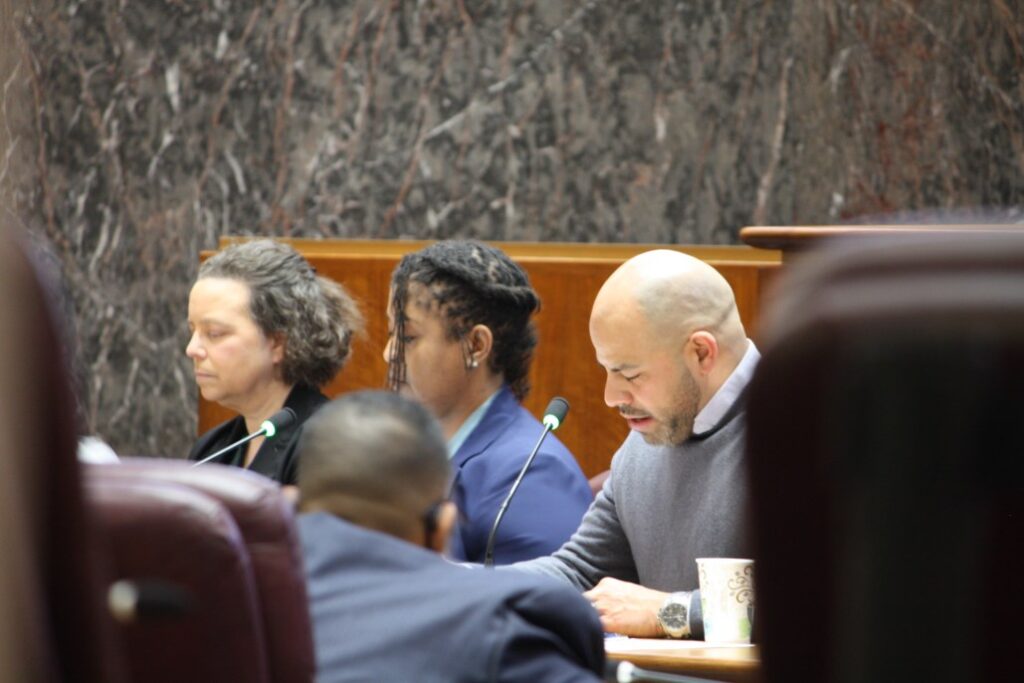
Chicago police will be required to report violations of federal immigration enforcement.
Read MoreWATCH: U.S., Israel strike Iran in Operation Epic Fury
Massive strikes by the United States against Iran in Operation Epic Fury started overnight, with allied support from Israel.
Second-term Republican President Donald Trump addressed the nation and the Iranian people shortly after the strikes began. He told the Iranian people the “hour of your freedom is at hand. When we are finished, take over your government. It will be yours to take.”
Trump instructed the Iranian people to “stay sheltered. Don’t leave your home.”
The president underscored that the objective of the mission is to “defend the American people by eliminating imminent threats from the Iranian regime.”
“Iran is the world’s No. 1 state sponsor of terror,” said the president.
In response to the large, coordinated attack, Iran has been carrying out strikes against several American military bases in the region, including striking the U.S. Fifth Fleet Naval headquarters in Bahrain, according to multiple reports.
In his address, the president warned there could be American casualties. He said his administration “has taken every possible step to minimize the risk to U.S. personnel in the region.”
“I do not make this statement lightly, the Iranian regime seeks to kill the lives of courageous American heroes,” Trump said. “We may have causalities, that often happens in war, but we’re doing this, not for now, we’re doing this for the future, and it is a noble mission. We pray for every service member as they selflessly risk their lives to ensure that Americans and our children will never be threatened by a nuclear armed Iran.”
The president warned members of the Iranian Revolutionary Guard and the Iranian police to “lay down” their weapons. If not, he said, they would “face certain death.”
This is the second strike against the Islamic State in less than a year. In June, the U.S. carried out Operation Midnight Hammer, targeting Iran’s nuclear sites.
Trump touts Venezuelan oil at Corpus event
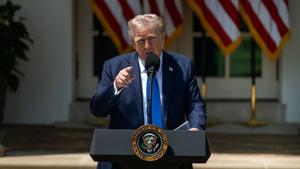
At a Texas port known for handling record volumes of Texas-produced liquified natural gas, President Donald Trump touted importing Venezuelan oil with a Venezuelan oil tanker in the background.
Trump spoke at the Port of Corpus Christi, a key hub for LNG exports, referring to it as a “national treasure, one of the largest energy export hubs anywhere in the world.”
His administration was “unleashing America’s potential, strengthening our security, increasing our prosperity,” Trump said, referring to reversing Biden administration policies. “We have the most successful country anywhere in the world. A year and a half ago, we had a dead country. Our country was dead.”
Instead of citing Texas oil and natural gas industry production or methane reduction records, he said, “America’s status as the number one energy superpower by far anywhere on earth” and thanked Venezuela. “I want to thank Venezuela because our relationship is a very good one. We’re having a very good relationship. That ship is from Venezuela,” he said, pointing to an oil tanker behind him.
Trump also repeatedly attacked former President Joe Biden, saying he “was one of the worst presidents in history” and “had no idea what the hell was happening. It was his administration of horrible … radical left people. No, he used the auto pen” to implement “crippling regulations on producers and refiners,” cancelled the Keystone XL pipeline, imposed an LNG export ban and imposed the “Green New Scam, one of the greatest scams in history.” These policies caused prices at the pump to top $6 a gallon in some states, Trump said.
High gas prices helped create “the worst inflation in the history of our country,” which he said he turned around after declaring a national energy emergency on his first day in office and reversing Biden-era policies, he said.
“I ended the Biden LNG export ban. I told our great Texas energy workers to very simply ‘drill, baby, drill.’ Since my inauguration, U.S. oil production is now up by 600,000 barrels a day. Natural gas production is at an all-time-record high by far. Right here in Corpus Christi, the price of gasoline is down to $2.30. We’re witnessing an historic American energy boom like we’ve never seen. This port is at the center of the action,” Trump said.
Energy companies have expressed concerns about lower gas prices, which directly correlate to declining rig counts. Contrary to Trump’s claims, rig counts are down by nearly 50 since he’s been in office and energy giants based in Houston laid off thousands of workers last year, The Center Square reported. Layoffs are ongoing.
Instead of discussing creating policies to foster investment in Texas production, Trump called Texas oil executives to Washington, D.C., last month, urging them to invest in Venezuela. The leaders of Exxon Mobile, ConocoPhillips and Chevron, all based in Houston, described the challenges they’ve faced in Venezuela, including losing billions of dollars and having their assets seized in the past by despotic regimes. They explained that long term investment would require extensive legal and structural changes with security and investment guarantees.
They met at the White House as rig counts in the Permian Basin, the price per barrel of oil and extraction jobs continued to drop. The first quarter this year is also presenting challenges for the industry, now complicated by conflict with Iran, industry experts warn.
Trump claimed to create tens of thousands of jobs and generate billions of dollars of revenue for the Corpus community. The Texas oil and natural gas and LNG industry was already contributing billions of dollars to the community, exceeding $60 billion in 2023 in Texas coastal counties alone, The Center Square reported.
Trump doubled down on touting Venezuelan oil imports, stating, “we just started [importing] 80 million barrels of fuel. It’s great for Venezuela and it’s great for us. A lot of [Venezuelan oil] comes right here. With our new friend and partner, Venezuela, we’re going to do a lot of other things.” The Venezuelans have never “witnessed anything so beautiful, so decisive and so popular,” referring to his administration removing Venezuela’s former president from office last month, he said. “In fact, 360,000 barrels of Venezuelan crude are right now sitting in the tanker,” he said, pointing to the ship again.
“We’re going to refine their oil right here in America and right here in Texas, and then export it to all over the world. We’re going to keep some for ourselves. We’re going to give some to them and they’re going to make more money than they’ve ever made before. We’ll help build their country again, which was a disaster.”
Trump also pointed to Texas Republican lawmakers in the crowd, including U.S. Rep. Chip Roy, who is running for attorney general and whom he has repeatedly criticized. He also pointed to Attorney General Ken Paxton, U.S. Sen. John Cornyn and U.S. Rep. Wesley Hunt who are embroiled in a bitter primary race for U.S. Senate. He has endorsed no one in these races.
Judge orders release of dozens of immigrants detained illegally by ICE in Chicago
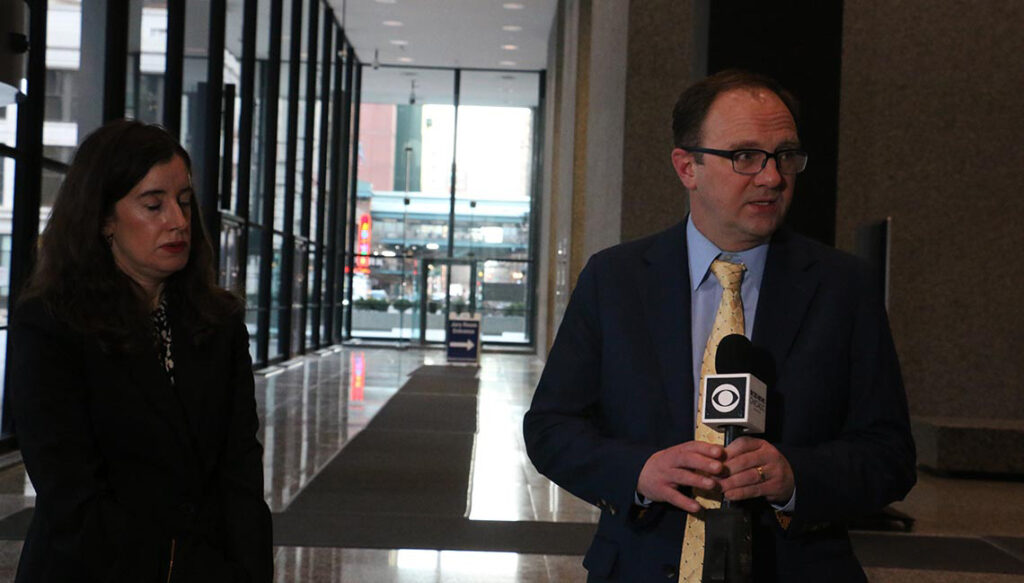
The judge went through more than 50 cases individually during an hours-long hearing Friday afternoon.
Read MoreCongress to tackle housing, farm bill, election security, and more
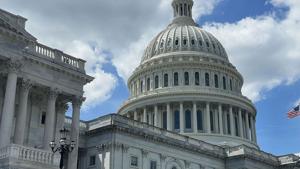
U.S. lawmakers face a busy week ahead of them, aiming to advance legislation related to agriculture, housing, election security, and more while the partial government shutdown enters its third week.
Due to bad weather, the House Committee on Agriculture had postponed its February markup of the 2026 U.S. farm bill; now, it will do so March 3. Though Democrats have loudly opposed deregulatory provisions within the massive agricultural support package, congressional leaders expect bipartisan support.
Farm bills authorize various nutrition, rural development and farm support programs for a span of typically five years, but Congress has not passed a farm bill since 2018. Failing to renew authorization for crop insurance, rural health care, and other critical programs is not a scenario lawmakers on either side of the aisle wish to be in.
Yet while House Democrats might split over whether to support a bill that is mostly bipartisan, they have united behind an Iran War Powers Resolution, which they will force a floor vote on as soon as possible next week.
After the Trump administration’s unapproved military actions in Venezuela, where U.S. troops seized two vessels and arrested Venezuelan President Nicolás Maduro and his wife, Democrats and Republicans alike want to prevent a similar situation from occurring in Iran.
The resolution would prohibit President Donald Trump from using military force against Iran – which the administration has hinted may imminently happen – unless Congress is consulted and authorizes the decision.
If the resolution passes the House, it must receive approval by U.S. senators as well, who will be swamped in their own legislative priorities.
The Senate could vote as soon as Monday on the ROAD to Housing Act, a sweeping legislative package aimed at expanding affordable housing supply, reducing repair expenses for homeowners, improving rental assistance options, and more.
The package may face delays, however, depending on how ongoing negotiations to reopen the Department of Homeland Security play out.
Funding lapsed for DHS over two weeks ago, when Senate Democrats tanked a Continuing Resolution that would have extended current funding levels. A second vote to reopen the department – which houses agencies responsible for transportation security, disaster support, immigration enforcement, and others – failed Tuesday.
With Democrats demanding an extensive list of immigration enforcement reforms, and Republicans refusing to grant all of them, the standoff continues, much to Senate Majority Leader John Thune’s, R-S.D., frustration.
Thune also has his hands full with some lawmakers in his own party, who have urged him to revive the “talking filibuster” in order for Republicans to have a chance at getting their election security bill through the upper chamber.
While Thune said the House-passed SAVE Act will hit the Senate floor next week, he effectively ruled out a talking filibuster and said the bill being subject to the typical 60-vote threshold is “a very real possibility.”
Los Angeles school district puts superintendent on paid leave

Alberto Carvalho, the Los Angeles Unified School District superintendent, was placed on paid administrative leave by the Board of Education late Friday afternoon pending an FBI investigation.
Carvalho’s home in the coastal San Pedro neighborhood of Los Angeles was searched Wednesday by FBI agents who arrived with a warrant and left carrying boxes. Media reports have said the investigation may be linked to possible kickbacks when Carvalho was superintendent of Miami-Dade County schools. Other news reports say the search was tied to AllHere, an artificial intelligence company that the LAUSD hired in 2024 for a $6 million chatbot that was never created.
Carvalho has not been charged with any crime and has not commented on the search. The U.S. Attorney’s Office and the FBI’s Los Angeles Office told The Center Square they could not comment and that the search warrant affidavit was under seal.
The Board of Education of the nation’s second-largest school district voted 7-0 in favor of putting Carvalho on leave during a closed session that lasted more than three hours on Friday. The decision was announced during an open session that was just a few minutes.
Andres Chait, who has served as the district’s chief of school operations, will begin work immediately as acting superintendent, the board announced.
Board President Scott Schmerelson said employees will take their directions from Chait.
“The board believes in you, supports you, knows you will always continue to do your very best,” Schemerelson said, addressing district staff during the open session.
The school board’s closed session on Thursday about Carvalho followed a five-minute public comment period during which three people called on the district to show greater transparency and accountability. They also asked board members to consider matters such as special needs students as they discuss the district’s leadership.
Texas oil & gas leaders welcome Trump reversal of Biden policies

The leaders of the Texas oil and natural gas industry are expressing optimism about President Donald Trump’s visit to Texas.
Trump is expected to tout his economic and pro-energy policies at the Port of Corpus Christi, a major Gulf port for liquified natural gas exports and commerce hub.
Trump’s policy reversals are a welcome change from former President Joe Biden’s, they say, who took more than 200 actions against the industry, including canceling LNG export permits. Biden claimed LNG exports would increase domestic energy costs and worsen the “perilous impacts of methane,” claims The Center Square fact checked as false.
Despite these actions, the Texas oil and natural gas industry broke production and emissions reductions records for a number of reasons including extensive support from Gov. Greg Abbott, the state legislature, Railroad Commission, which regulates the industry, and a bipartisan congressional delegation. Trump’s cabinet members, including EPA Administrator Lee Zeldin and Energy Secretary Chris Wright have been rolling back regulatory actions, expanding LNG authorizations and implementing new permitting reforms, The Center Square reported.
“Under President Donald Trump’s leadership, we are seeing a clear shift toward energy dominance — from support for LNG exports and domestic production to a regulatory approach that respects state expertise and reins in federal overreach. That matters for Texas,” Railroad Commissioner Christi Craddick told The Center Square.
“At the Railroad Commission, our mission is to ensure energy is produced safely, responsibly, and efficiently. When Washington recognizes state primacy and works collaboratively instead of imposing one-size-fits-all mandates, it strengthens our ability to do that job,” she said. “Texas leads the nation in oil and natural gas production. Our industry supports hundreds of thousands of jobs, funds our schools and infrastructure, and plays a critical role in national security. A pro-energy federal policy environment doesn’t just benefit producers — it benefits every Texas family.”
Todd Staples, president of the Texas Oil & Gas Association, agreed, telling The Center Square, “President Trump’s visit to Corpus Christi today underscores the fact that American energy dominance starts in Texas. The Lone Star State has reached a high-water mark in crude oil and natural gas production, benefitting American consumers by dramatically increasing supply and lowering prices at home, and exporting the remainder to allies and trading partners.
“A vast amount of energy exports move through the Port of Corpus Christi via substantial investments made by the oil and natural gas industry over the last decade. As a direct result of industry’s robust infrastructure of production, pipelines, processing and ports, the Coastal Bend is a global gateway for American energy, powering not just the state, but the world.”
He emphasized that “Even as companies adjust to lower prices and shifting market conditions, the Texas oil and natural gas industry employs hundreds of thousands of Texans across the value chain because of the industry’s regional breadth and diverse activities, from LNG exports to pipeline construction. With a favorable policy environment and a commitment to infrastructure development, our industry is well-positioned to continue providing the reliable, affordable energy that powers our modern way of life.”
Ed Longanecker, president of the Texas Independent Producers and Royalty Owners Association (TIPRO), also noted that, “President Trump understands that Corpus Christi serves as a premier gateway for American energy exports. A stable and predictable regulatory environment is essential to sustain and expand these strengths and the build out of essential energy infrastructure. Continued progress on permitting reform remains vital. Streamlining approvals, eliminating unwarranted delays, and reducing excessive regulatory burdens facilitate ongoing investment in export terminals, pipelines, and related infrastructure. These measures ensure competitive and reliable access to global markets and reinforce Texas’s position as the nation’s leading producer and exporter of oil and natural gas.
“While we are experiencing some challenging market conditions, including a contraction in upstream employment due to lower commodity prices, many industry executives remain more bullish than some official forecasts, expressing confidence that demand will continue to outpace supply concerns in the medium to longer term. This optimism stems from expectations of sustained economic growth in non-OECD countries, resilient petro chemical and transportation needs, and potential underinvestment risks that could lead to structural tightness beyond the near-term surplus,” he told The Center Square.
“It’s essential that we continue to support a balanced approach from an energy policy and global supply/demand perspective to ensure that domestic producers can continue to provide access to reliable and affordable energy.”
Thure Cannon, president of the Texas Pipeline Association, agrees, telling The Center Square, “President Trump’s visit to Corpus Christi highlights the strategic importance of the Gulf Coast – particularly South Texas – in America’s energy supply chain. Corpus is central to U.S. LNG exports and refining, and those facilities depend on a reliable network of pipelines and infrastructure across Texas.
“While the current federal tone is supportive of domestic energy development, Texas pipeline companies make decisions based on market fundamentals – such as commodity prices, capital discipline and global demand. Moving forward, consistent permitting processes and coordination between state and federal regulators will be key to ensuring that Texas can maintain its leadership in energy production and exports, with the Texas pipeline market standing ready to assist in these efforts.”
High schoolers flood state Capitol to advocate for drug abuse prevention bills
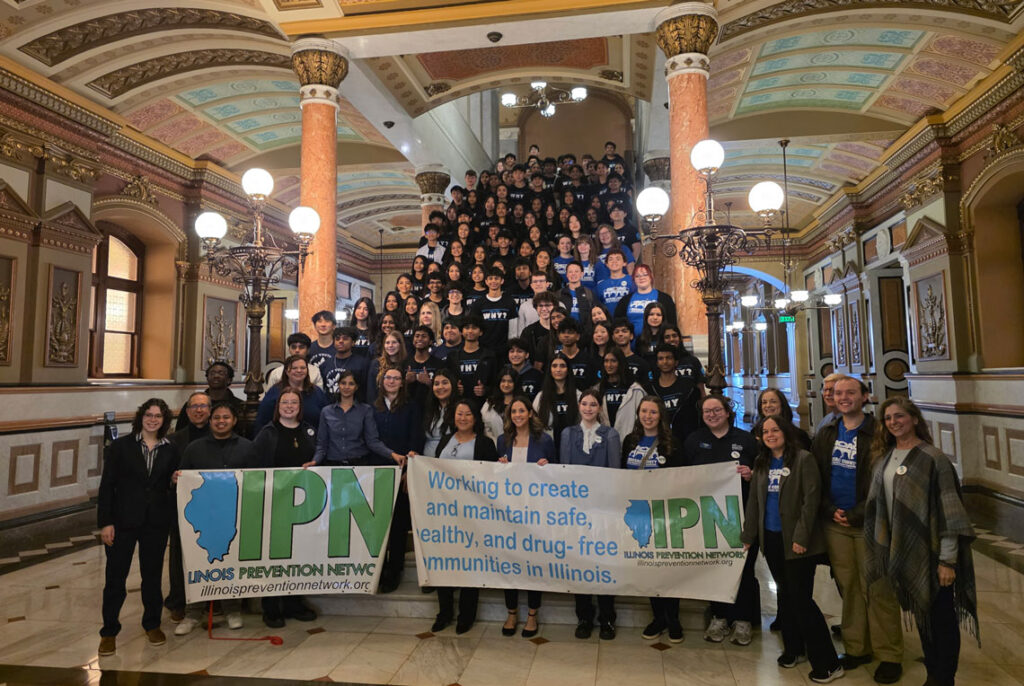
The students rallied with the Illinois Prevention Network for issues related to stopping substance abuse.
Read More