Measles spreads across some Southwestern states

The area along the Arizona and Utah border is continuing to see the measles outbreak that started in August, and California and Colorado have seen a number of cases.
Nevada hasn’t seen any, but is monitoring the national trend.
Meanwhile, the Arizona Department of Health Services is concerned about the outbreak and is closely monitoring it, said Dr. Joel Terriquez, the department’s medical director of the bureau of infectious diseases services. He urges people to get vaccinated.
Terriquez told The Center Square that Mojave County is the state’s most affected county.
“The number of measles cases in that area has been significantly higher than any other area of the state,” he noted.
Measles cases that have not been in Mohave County are not associated with an outbreak, but rather “independent clusters of cases,” Terriquez said.
Since the outbreak that started in August, Arizona has a total of 261 cases, he noted, including 56 cases so far this year.
He told The Center Square that 67% of people who have gotten measles have been younger than 18.
On top of this, Terriquez said 97% of people who have gotten measles have been unvaccinated.
He added that despite the concerns of some people, the measles, mumps and rubella vaccine is “very safe and effective.” He said that conclusion is based on decades of research.
“It only takes one vaccine to potentially prevent an outbreak. It takes one vaccine to protect a kid from getting measles and potentially protecting them from complications,” Terriquez said.
Measles among an unvaccinated population is “gonna spread like wildfire,” Terriquez said, noting the disease is “extremely contagious.”
The Centers for Disease Control and Prevention said nearly 89% of people in Arizona are vaccinated against measles.
One dose of the MMR vaccine protects a person against 93% of potential measles cases, while two doses can protect a person up to 97% of potential measles cases, according to Terriquez.
Terriquez noted no one in Arizona who has contracted measles has died from it.
CDC data, which was updated Thursday, shows 1,281 people have contracted measles in 2026. Last year, 2,281 people contracted measles.
In total, 300 people have been hospitalized due to measles. This means that 9% of all measles cases in America in 2025 and in 2026 have resulted in hospitalization.
Terriquez said America last year experienced three measles-related deaths, which is 0.09% of all cases.
According to the CDC, no one has died from measles this year.
Terriquez said the “vast majority of individuals” who get measles “will not develop any complications.” However, if people do develop complications from measles, Terriquez pointed out, it “can be very severe.”
Complications from measles, such as pneumonia, measles encephalitis and meningitis, could potentially kill someone, he explained.
“Long-term complications can come years after the initial measles infection,” with them being “very unpredictable with high mortality,” Terriquez said.
In Arizona’s neighboring state, Utah, there is a measles outbreak.
Dr. Leisha Nolen held a press conference on Thursday to address the spread of measles throughout Utah.
The state has had 358 people diagnosed with measles since June 2025, Nolen told reporters.
According to Nolen, 120 people have gone to the emergency room, with 31 requiring hospitalization overnight. She added that three people have gone to the intensive care unit.
No one in Utah has died from measles, she said.
Nolen said measles is spreading across Utah. She noted the measles cases were initially limited to the southern part of Utah, but have now expanded to every part of the state, largely through school events.
She encouraged people to get vaccinated against measles. The CDC said 89% of people in Utah are vaccinated against measles.
Colorado, meanwhile, has seen fewer measles cases than Arizona and Utah.
Colorado has had eight measles cases in 2026, compared with 36 last year.
Hope Shuler, interim communications director for the Colorado Department of Public Health and Environment’s division of disease control and public health response, said the state has collaborated closely with its local partners.
She told The Center Square this collaboration is meant to “ensure rapid response to any potential transmission.”
Shuler added that they have “conducted thorough case investigations in order to alert the public to potential exposures and provide the steps they can take to protect themselves from further spread.”
Due to the state’s media campaign, website updates and provider webinars, Shuler said Colorado and its partners “successfully drove a 30.55% increase in MMR vaccine doses given compared to 2024.”
“We have also performed direct outreach to families whose children are overdue for their MMR vaccines. In 2025 and 2026, six rounds of outreach to families of children overdue for their MMR vaccines led to 48% of those contacted becoming up-to-date,” she explained.
Colorado’s measles vaccination rate is 88%, the CDC said.
Another state with some measles cases is California. The Golden State has seen 26 confirmed cases in 2026. This amount exceeds the total for all of 2025, which reported 25 measles cases.
Sacramento and Placer counties have reported recent measles incidents. The California Department of Public Health said it was working with those counties to alert people who may have been exposed to measles.
Dr. Erica Pan, CDPH director, urged people to get the MMR vaccine.
“Measles, one of the most contagious infections, can lead to severe life-long consequences including permanent brain damage and can also be fatal, especially for children,” he said.
The CDC noted California’s measles vaccination rate is 96%.
Unlike all these other states, Nevada has not had any measles cases so far this year.
The state actively monitors the nationwide measles situation, said Daniel Vezmar, public information officer for the Nevada Department of Health and Human Services’ division of public and behavioral health.
Nevada does this by reviewing regular updates from the CDC and “by working with other states to understand the risks of travel-associated cases coming to Nevada,” Vezmar told The Center Square.
“In 2025, there were more measles cases nationally than in any one year since 1992, and so far in 2026 there have been 10 outbreaks in the United States,” he said.
“As transmission continues throughout the country, there is a risk of measles cases occurring in Nevada, highlighting the importance of vaccination and staying away from others during illness to prevent the spread,” Vezmar noted.
Even with no confirmed cases of the measles, Nevada “continuously reviews case data and wastewater testing results to identify potential cases and initiate early response measures,” he said.
Nevada has a vaccination rate of 91%, the CDC said.
Former Sangamon County deputy who killed unarmed woman undergoing cancer treatment
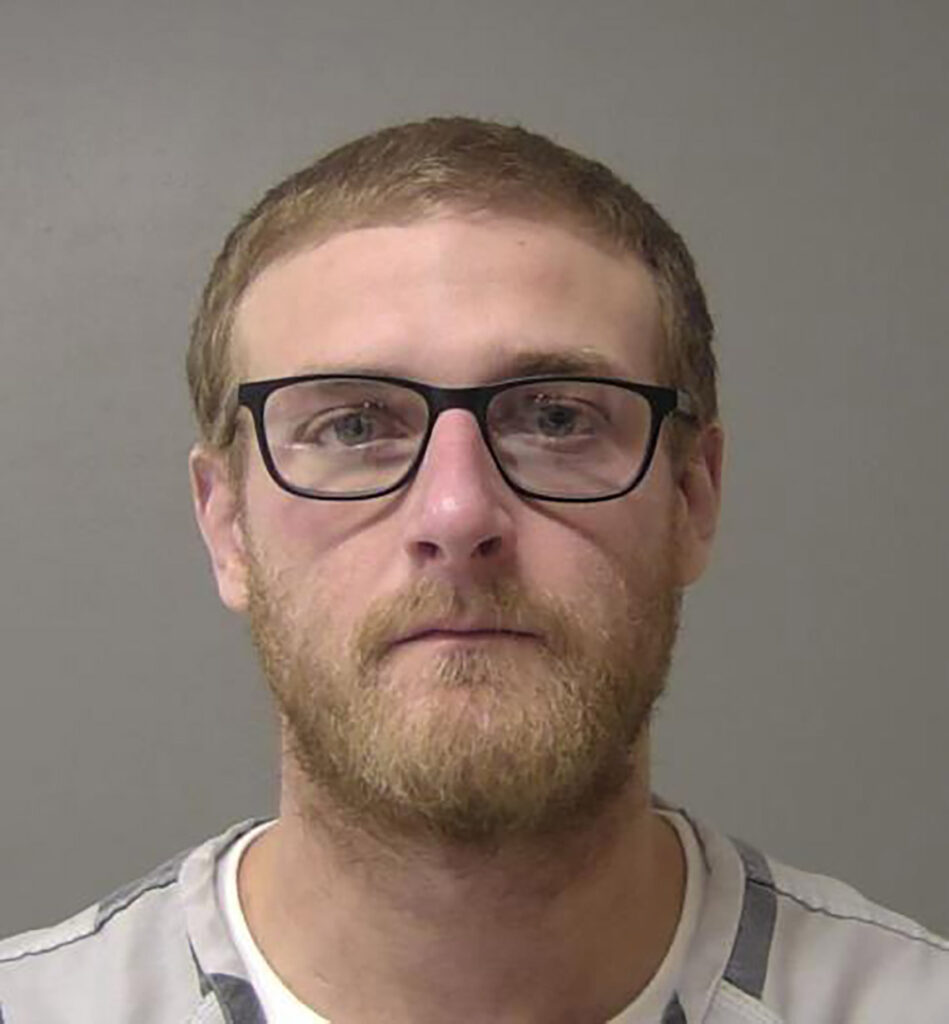
Lawyers for Grayson have asked a judge to delay a hearing on his request for a reduction in his 20-year sentence.
Read MoreEXCLUSIVE: Inside one Michigan town’s fight against solar expansion
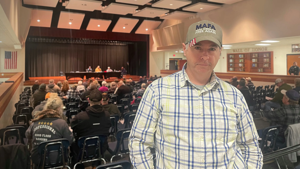
In Fayette Township in southwest Michigan, a series of utility-scale solar projects has drawn hundreds of residents to local meetings and sparked a grassroots campaign opposing the development.
Ranger Power, which currently runs Heartwood Solar I, is hoping Heartwood Solar II and Heartwood Solar III will expand solar development onto hundreds more acres of farmland across Hillsdale County.
The controversy highlights the growing tension between Michigan’s statewide clean energy mandates and the communities expected to host the projects that advocates say are needed to meet them. (Read the first installment of this series HERE.)
When Solar Comes Knocking
A knock on the door changed everything, Stephen Oleszkowicz told The Center Square in an exclusive interview. That was when a Ranger Power representative handed his in-laws a flyer about a solar project planned to border their land.
“We were not notified at all about this project from the township,” Oleszkowicz said. “We found out when Ranger Power knocked on my in-laws’ door and handed them a flyer talking about solar being on the property right next to them.”
With the news delivered the week before Thanksgiving, Oleszkowicz and his wife, along with neighbors, began organizing immediately.
“We all pitched our money in together to do a mailing. And we mailed out Christmas card-looking flyers that have a melting snowman on the front with a field of solar panels in the background,” Oleszkowicz said. “We sent it out to try to get people to come to the December meeting, which was in two weeks at that time.”
That first meeting, there were just a handful of residents, but interest grew quickly.
Oleszkowicz built a website over the Thanksgiving weekend to share information and coordinate efforts against the project. By January, more than 200 residents showed up at a rescheduled township meeting, forcing officials to move the gathering to a larger venue.
“We were hammering the internet, calling neighbors, doing whatever we could to let people know what was going on,” Oleszkowicz said.
An Uphill Battle
Oleszkowicz described township meetings regarding the solar development’s expansion as chaotic and confusing, leaving residents scrambling to make their voices heard.
“When we went to the December meeting . . . the township supervisor argued his point that there’s nothing we can do; it’s going to happen anyways,” Oleszkowicz said. “I tried to explain to them from my research, that’s not the case. There’s a way to fight this.”
He said residents quickly realized that even basic information about the project was often being withheld.
“We asked them specifically during public comment if anything had been submitted, and they said no,” Oleszkowicz said. “And then I found out from the minutes three weeks later that it [the map of the planned solar project] had been submitted in October to the planning commission.”
Oleszkowicz said this situation has made him realize that Fayette Township is not the only community experiencing this. Once he started taking steps to organize the community, Oleszkowicz began hearing from Michiganders all over the state in similar positions.
“It has been overwhelming the sheer number of people reaching out and places where this same stuff is going on,” he explained. “Rangers is not the only company out there doing it, but they are doing it all over.”
Oleszkowicz remains hopeful though, especially seeing how his community has come together over this issue.
“I’ve made a lot of new friends in this, as well as a lot of strange bedfellows,” he explained. “We have people from all ends of the spectrum and everywhere in between, from judges to lawyers to college professors to business owners to retirees.”
The Downsides to Solar
For Oleszkowicz, this project isn’t just a policy debate – it has a direct impact on his family and their future. Though Heartwood Solar found “no impact on adjacent residential property values,” property owners near these projects disagree.
“My property value alone is going to take close to a $100,000 hit,” Oleszkowicz said. “The buyer markets shrivel up, and the property values go down if I ever need to sell. So that’s stealing equity from my family in order to give a small payout to seven families for Heartwood.”
Reflecting on the stakes involved, he said simply:
“I don’t have a choice. They’re stealing my future from my kids.”
He emphasized that he has never been anti-solar, but drew a firm line when it comes to farmland.
“I’ve actually had a hobbyist interest in solar,” he explained. “It has its place, and that’s on a rooftop. It doesn’t have its place in our farm fields.”
Oleszkowicz warned that these industrial-scale projects can have a cascading effect.
“It’s far beyond just a little localized thing. When they bring in solar like this, and they stabilize and enhance the grid to this effect, what surely follows is . . . battery storage . . . then data centers,” Oleszkowicz said. “It’s all a cascading effect.”
He explained how these ever-expanding projects can have a massive impact on small, rural communities.
“When you look at a township the size of Fayette, we have roughly 13,000 acres in the township. There’s roughly 1,300 acres enrolled in the entire project on Heartwood I,” Oleszkowicz explained. “Now, they are asking for another 1,350. That’s 20% of our township right there.”
A Wider Debate Over Solar
While Fayette residents wrestle with local implications, Michigan is pushing ambitious statewide renewable energy goals. In 2023, Gov. Gretchen Whitmer and Democratic lawmakers passed legislation requiring utilities to generate 80% of electricity from clean sources by 2035 and 100% by 2040.
Rep. Jennifer Wortz, R-Quincy, represents Fayette Township as part of her district in the state House. She spoke with The Center Square in an exclusive interview. Wortz warned that subsidies and incentives, while intended to promote renewable energy, lead to companies disproportionately targeting rural communities with these projects.
“These are large corporations coming in because they’ve gotten large federal kickbacks and state tax incentives to do so,” Wortz said. “We are more of a target because we’re labeled a poor, economically-depressed community.”
Additionally, local governments are also receiving massive incentives to bring in these projects. According to a June 2025 press release from the Michigan Department of Environment, Great Lakes, and Energy, Fayette Township received $675,000 for the Heartwood Solar project as part of the Renewables Ready Communities Award program.
First funded in 2024, the program has paid out $26.1 million to 48 local governments for community improvements to incentivize “communities to host large-scale renewable energy projects.”
Wortz is continuing to work with townships in her district to inform them of their options, though limited, to address these large-scale projects.
Supporters of solar energy argue that projects like Heartwood Solar can provide economic opportunities while helping Michigan meet clean energy targets. In the case of Heartwood Solar, it is a $150 million investment that is projected to generate over $2 million in tax revenue in the first year alone. It is also expected to create between two and four permanent solar operations jobs in Fayette Township.
State Rep. Ranjeev Puri, D-Canton, told The Center Square that Michigan utilities are transitioning toward renewable energy for many different reasons.
“Solar energy is an important piece to our clean energy future. We’re seeing more and more energy companies in Michigan and even around the country transitioning and expanding their renewable energy portfolios,” Puri said. “I don’t think they’re doing it just because . . . it’s the right thing to do, or even because of these mandates. I think it’s because it has shown to be an economically viable option that is going to help them improve their bottom line.”
Puri also highlighted benefits such as local construction jobs and state programs offering financial incentives to municipalities hosting renewable energy projects.
“In Michigan here we can make sure that our energy is going to be Michigan made, and that will ultimately lead to more reliability and lower costs and an improved grid,” he said.
Puri said he believes that many community fears about solar projects often stem from misinformation.
“I had a chance to see a lot of the misinformation campaigns,” Puri said. “You would see these pictures of solar arrays right up to the property line . . . and that’s just not the reality.”
According to Heartwood Solar, it is maintaining a minimum distance of 150 feet between all residences and solar arrays.
Looking Ahead
For Oleszkowicz and other Fayette residents, the fight is far from over. Even if the township board decides against the solar project’s expansion, Ranger Power is already preparing to take it to the Michigan Public Service Commission for their overriding approval.
For Oleszkowicz, staying involved isn’t optional. He stressed that vigilance and community engagement are key, especially as similar battles are unfolding across the state.
“Just get the word out there to as many people as you can,” he said. “It’s going on everywhere. We’re not the only ones. We’re not the first nor near the last.”
Check back for next week’s installment in this series, which will look at clean energy reliability, affordability, and the relationship between the Michigan Public Service Commission and local communities.
Trump demands unconditional surrender from Iran, mentions regime change

President Donald Trump has said he will accept nothing less from Iran than unconditional surrender, according to a social media post on Friday morning.
“There will be no deal with Iran except unconditional surrender!” the president wrote on Truth Social.
He also wrote about the selection of a new leader for the country – potentially indicating there may be an expanded U.S. presence in Iran until that is complete – in the same post.
“After [unconditional surrender], and the selection of a great and acceptable leader(s), we, and many of our wonderful and very brave allies and partners, will work tirelessly to bring Iran back from the brink of destruction, making it economically bigger, better, and stronger than ever before,” the president wrote.
“Iran will have a great future. Make Iran Great Again (MIGA!),” Trump concluded in his notorious all-caps style.
The administration has been asked many times since the start of the conflict whether regime change was one of its conditions for a successful military campaign in Iran. At a press briefing Wednesday, White House Press Secretary Karoline Leavitt said that it was not one of the goals of Operation Epic Fury, but the administration wants broader political rights for Iranians.
“As for what comes next for Iran, the president has said of course, it’s a good thing for the United States to want freedom for the Iranian people, and ultimately, we hope that freedom rests in their hands,” Leavitt said.
Leavitt also responded to questions about America’s “post-conflict” role in Iran, saying the president was “actively considering and discussing with his advisors and his national security team.”
Some of the supporters of the late Ayatollah Ali Khameini, who was killed in the U.S. and Israel’s initial airstrikes on Saturday, reportedly favor his son, Mojtaba Khameini, to replace him.
Reza Pahlavi, the son of Iran’s last Shah and the country’s exiled crown prince, has long advocated for regime change. He has lived in the U.S. since 1978, and has spoken about leading the country now that the ayatollah is dead.
‘I didn’t believe it’: Illinois, Cook County wipe out $2B in medical debt for pennies on dollar
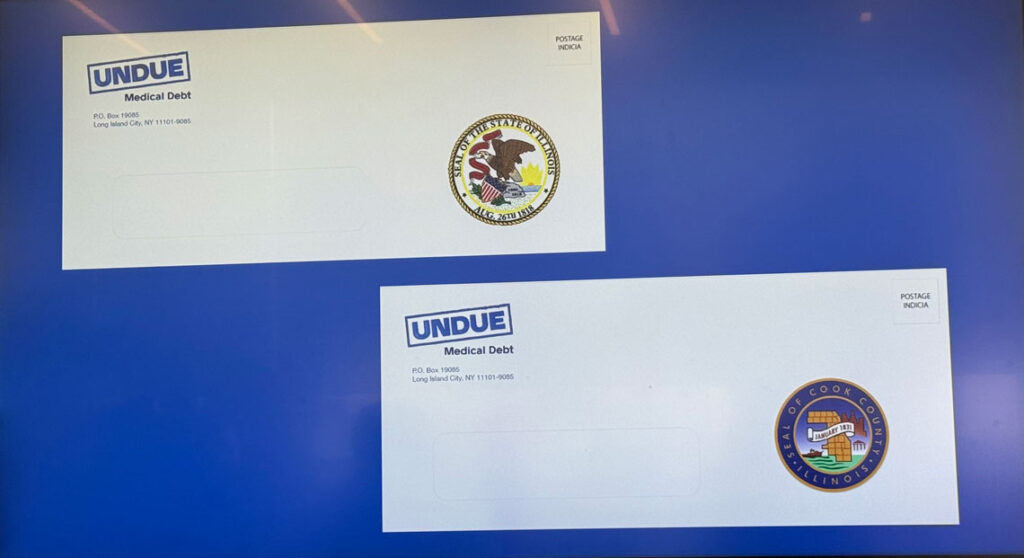
The state partnered with a nonprofit programs buy medical debt for pennies on the dollar.
Read MoreU.S. cut 92,000 jobs in ‘dismal’ February report, unemployment 4.4%

The U.S. economy lost 92,000 jobs in February, a significant cut after January saw a better-than-expected report, according to the Bureau of Labor Statistics.
The unemployment rate remained steady at 4.4%. The rate only marginally increased from its 4.3% rate in January. Interestingly, health care employment decreased in February, reflecting a rare instance that the BLS attributed to strike activity. Over the past several weeks in California, thousands of nurses went on strike to protest pay, working conditions and staffing.
Additionally, a nurses strike in New York City may have had additional effects on the health care sector, which typically drives most job growth in the report. Overall, the health-care sector lost 28,000 in February after adding 77,000 in January.
Over the past 12 months, the health care industry has added roughly 36,000 jobs per month.
Employment in the information and federal government sectors trended down in February as well. Jobs in the information sector decreased by 11,000 in February.
Federal government jobs continued to decrease in February with a loss of 10,000. Since October 2024, federal government employment has decreased by 330,000.
Heather Long, chief economist at Navy Federal, described February’s report as “dismal.” She said, overall, the U.S. economy has lost jobs since April 2025 based on the February report.
She estimated jobs from May 2025 to February 2026 decreased by 19,000.
“Companies are not hiring in the face of all these headwinds and uncertainty,” Long wrote on social media. “Even healthcare is starting to slow down.”
Social assistance employment was one of the few sectors to see an increase during the month of February. The sector saw an increase of 9,000 jobs, largely driven by a 12,000 job increase from the individual and family services sector.
Nearly all major employment sectors lost jobs in February. The hospitality sector lost 27,000 jobs; manufacturing lost 12,000 jobs; and the construction sector lost 11,000 jobs.
Prizker CNI exclusive: ‘We’ve turned this battleship around’
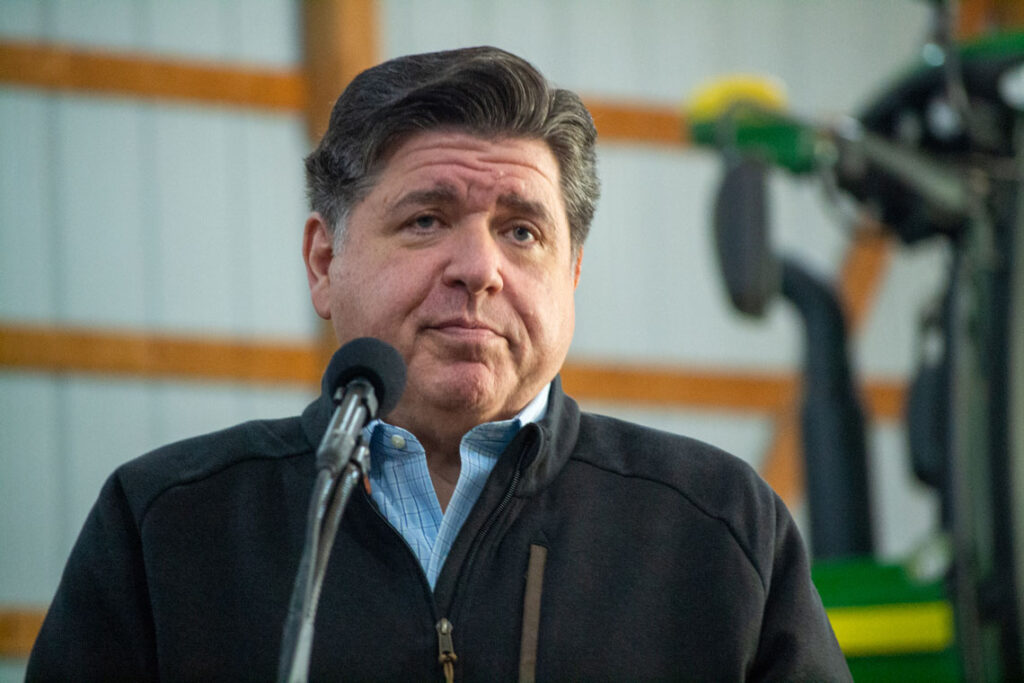
In a wide-ranging interview with Capitol News Illinois, Gov. JB. Pritzker touted progress in his first seven years but said there’s “more work to do” economically as he ramps up his bid for a third term.
Read MoreMoore: Pritzker embraces ‘abundance’ agenda with housing, nuclear proposals
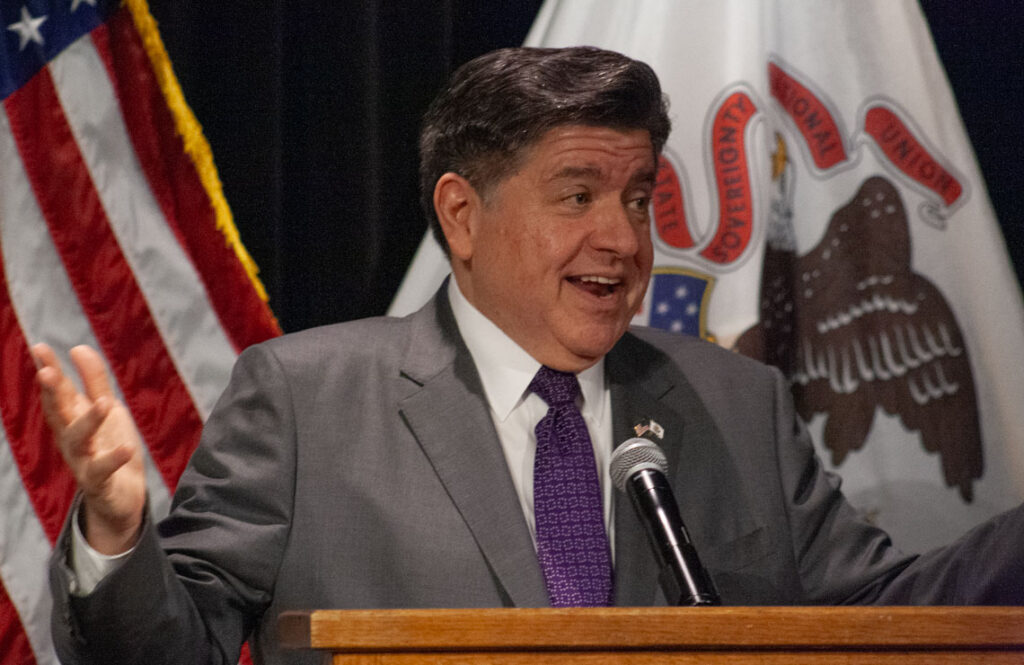
With major housing and nuclear proposals, Gov. JB Pritzker is embracing an “abundance” agenda, writes Brenden Moore. The governor’s observation that he’s repeated at least twice: “Everything’s too damned expensive.”
Read MoreTurmoil in Texas: Concerns for Paxton to drop out, Gonzales drops reelection bid
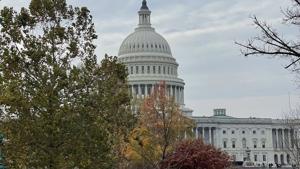
Within two days of the March primary election, two high-profile races are already in turmoil. Republican leaders are taking actions to keep the seats red, expressing support for one incumbent and calling for another to end his reelection campaign.
On Tuesday, U.S. Sen. John Cornyn led the primary results heading into a runoff with Attorney General Ken Paxton. By Wednesday, President Donald Trump said he’d soon issue an endorsement. Paxton has issued conflicting statements, saying he won’t drop out regardless of who Trump endorses and he’d consider dropping out if the Senate passes the SAVE Act.
Meanwhile, House leadership called on disgraced U.S. Rep. Tony Gonzales, a Republican representing a west Texas border district, to end his reelection campaign after he admitted this week to having an affair with his staffer who then killed herself. Gonzales was forced into a runoff election by Second Amendment advocate Brandon Herrerra, who political analysts believe could keep the seat red in November. Late Thursday night, Gonzales acquiesced after months of denying the affair and saying he wouldn’t drop out or resign.
Trump said in a social media post the divisive U.S. Senate race in Texas “cannot, for the good of the Party, and our Country, itself, be allowed to go on any longer. IT MUST STOP NOW! I will be making my Endorsement soon, and will be asking the candidate that I don’t Endorse to immediately DROP OUT OF THE RACE! Is that fair? We must win in November!!!”
Polls show Cornyn defeating Democratic nominee state Rep. James Talarico, D-Austin, in November but a matchup with Paxton shows Republicans likely losing the seat for the first time in more than 30 years. The Texas U.S. Senate seat has been considered a safe Republican seat, but with Paxton challenging Cornyn an estimated $100 million or more would need to be spent to defend the seat instead of on other senate races to keep a Republican majority in the Senate, political analysts argue.
On Thursday, Paxton said he’d consider dropping out of the race if the Senate passes the SAVE Act, which includes additional requirements to ensure only U.S. citizens are voting.
“I would consider dropping out of this race if Senate Leadership agrees to lift the filibuster and passes the SAVE America Act,” Paxton said. He also attacked Cornyn for not abolishing the filibuster and “Fake News reporters and the establishment are trying to destroy me with misinformation,” claiming “No one has been more loyal to Donald Trump than me.”
Within 24 hours of making that statement, he’d also told online websites and podcasters he would not drop out of the race regardless of who Trump endorses.
U.S. Senate Majority Leader John Thune said he’s spoken with Trump on several occasions asking him to endorse Cornyn. He says Cornyn “is an incredibly effective senator for the state of Texas, a strong conservative voice here in the United States Senate. He represents by far our very best hope of making sure that Texas stays red in November. I’ve certainly weighed in many, many times in support of Senator Cornyn.”
On Thursday, in a joint statement, House Speaker Mike Johnson, Leader Steve Scalise, Whip Tom Emmer and Chairwoman Lisa McClain called on Gonzales to end his reelection campaign.
“The Ethics Committee has announced an investigation into Congressman Tony Gonzales’s conduct, and we urge them to act expeditiously. Congressman Gonzales has said he will fully cooperate with the investigation. We have encouraged him to address these very serious allegations directly with his constituents and his colleagues. In the meantime, Leadership has asked Congressman Gonzales to withdraw from his race for re-election,” they said in a joint statement.
Several hours later, Gonzales agreed, stating, “After deep reflection and with the support of my loving family, I have decided not to seek reelection while serving out the rest” of his term. He did not apologize to the former staffer’s family or husband or his constituents.
Herrerra thanked the House leaders “for holding Congressman Tony Gonzales accountable for actions that have tarnished the office. I’m looking forward to representing the district the way the people of West Texas have always deserved.”
The runoff election is May 26.
HHS and DOC announce nutrition education initiative for medical schools
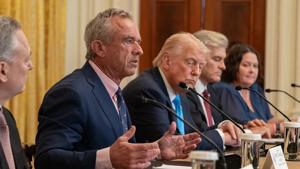
Nutrition education for medical students will become more prominent in curriculum beginning this upcoming fall.
U.S. Department of Health and Human Services Secretary Robert F. Kennedy Jr. and U.S. Department of Education Secretary Linda E. McMahon announced the advancement of nutrition education for medical students on Thursday.
According to Kennedy, chronic disease is overwhelming America and is accelerating.
“Today, we spend $4.5 trillion a year on health care, and 90% of it goes to managing chronic disease,” Kennedy said.
According to McMahon, diet-related chronic diseases contribute to roughly 1 million deaths each year, impose enormous economic and emotional costs on the American population, and 14.7 million school-aged children currently suffer from obesity.
“Today’s announcement puts nutrition and prevention front and center in how we train tomorrow’s doctors and healthcare leaders,” McMahon said.
To improve the health of American citizens, the Health and Human Services and Education departments have created a taxpayer-funded initiative that 53 universities across 31 states will use to guarantee medical students learn more about nutritional health.
“The Department of Education will never mandate curriculum, that is not our job, but we can and will spotlight promising evidence-based models, convene leaders who are improving health outcomes, and celebrate institution-driven curriculum reforms that are reforming medical education,” McMahon said.
The HHS will invest $5 million taxpayer dollars through a multi-phase National Institues of Health nutrition education challenge, to support curriculum development and fund clinical training in gold standard science. The effort will expand beyond medical schools to residency programs, nursing dietitian and nutrition science programs nationwide.
“It has always been the goal of healthcare professionals to not just treat but to prevent disease,” Jeffry P. Gold, M.D., president of University of Nebraska System, said.
The Advancing Nutrition Education Across the Medical Continuum initiative readjusts curricumlum for health and nutrition benefit, ensuring medical students will be required 40 hours of comprehensive nutrition training prior to graduation. Prior to this initiative, less than two hours were required in some schools and 75% of schools did not require any hours.
“Nutrition has been treated as an elective in medical education,” Bobby Mukkamala, MD, president of the American Medical Association said. “It should be a basic foundational training, because it impacts every one of our patients.”
According to Kennedy, more than 30,000 physicians each year will now graduate equipped with nutrition education to help prevent, treat and reverse chronic disease.
“This is how we make America healthy again,” Kennedy said.
More information, including the schools that now follow the initiative, can be found at hhs.gov/nutrition-education.