Trump demands unconditional surrender from Iran, mentions regime change

President Donald Trump has said he will accept nothing less from Iran than unconditional surrender, according to a social media post on Friday morning.
“There will be no deal with Iran except unconditional surrender!” the president wrote on Truth Social.
He also wrote about the selection of a new leader for the country – potentially indicating there may be an expanded U.S. presence in Iran until that is complete – in the same post.
“After [unconditional surrender], and the selection of a great and acceptable leader(s), we, and many of our wonderful and very brave allies and partners, will work tirelessly to bring Iran back from the brink of destruction, making it economically bigger, better, and stronger than ever before,” the president wrote.
“Iran will have a great future. Make Iran Great Again (MIGA!),” Trump concluded in his notorious all-caps style.
The administration has been asked many times since the start of the conflict whether regime change was one of its conditions for a successful military campaign in Iran. At a press briefing Wednesday, White House Press Secretary Karoline Leavitt said that it was not one of the goals of Operation Epic Fury, but the administration wants broader political rights for Iranians.
“As for what comes next for Iran, the president has said of course, it’s a good thing for the United States to want freedom for the Iranian people, and ultimately, we hope that freedom rests in their hands,” Leavitt said.
Leavitt also responded to questions about America’s “post-conflict” role in Iran, saying the president was “actively considering and discussing with his advisors and his national security team.”
Some of the supporters of the late Ayatollah Ali Khameini, who was killed in the U.S. and Israel’s initial airstrikes on Saturday, reportedly favor his son, Mojtaba Khameini, to replace him.
Reza Pahlavi, the son of Iran’s last Shah and the country’s exiled crown prince, has long advocated for regime change. He has lived in the U.S. since 1978, and has spoken about leading the country now that the ayatollah is dead.
‘I didn’t believe it’: Illinois, Cook County wipe out $2B in medical debt for pennies on dollar
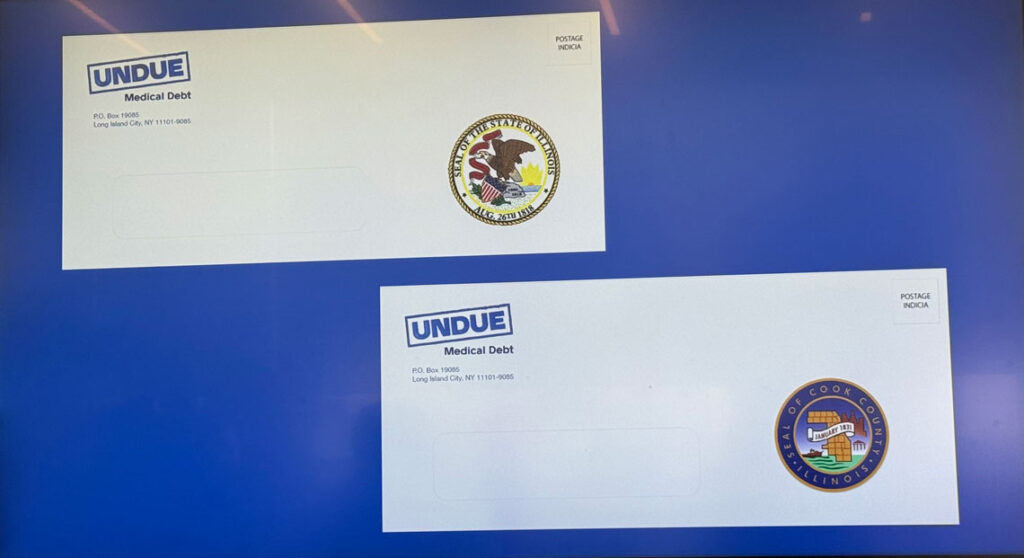
The state partnered with a nonprofit programs buy medical debt for pennies on the dollar.
Read MoreU.S. cut 92,000 jobs in ‘dismal’ February report, unemployment 4.4%

The U.S. economy lost 92,000 jobs in February, a significant cut after January saw a better-than-expected report, according to the Bureau of Labor Statistics.
The unemployment rate remained steady at 4.4%. The rate only marginally increased from its 4.3% rate in January. Interestingly, health care employment decreased in February, reflecting a rare instance that the BLS attributed to strike activity. Over the past several weeks in California, thousands of nurses went on strike to protest pay, working conditions and staffing.
Additionally, a nurses strike in New York City may have had additional effects on the health care sector, which typically drives most job growth in the report. Overall, the health-care sector lost 28,000 in February after adding 77,000 in January.
Over the past 12 months, the health care industry has added roughly 36,000 jobs per month.
Employment in the information and federal government sectors trended down in February as well. Jobs in the information sector decreased by 11,000 in February.
Federal government jobs continued to decrease in February with a loss of 10,000. Since October 2024, federal government employment has decreased by 330,000.
Heather Long, chief economist at Navy Federal, described February’s report as “dismal.” She said, overall, the U.S. economy has lost jobs since April 2025 based on the February report.
She estimated jobs from May 2025 to February 2026 decreased by 19,000.
“Companies are not hiring in the face of all these headwinds and uncertainty,” Long wrote on social media. “Even healthcare is starting to slow down.”
Social assistance employment was one of the few sectors to see an increase during the month of February. The sector saw an increase of 9,000 jobs, largely driven by a 12,000 job increase from the individual and family services sector.
Nearly all major employment sectors lost jobs in February. The hospitality sector lost 27,000 jobs; manufacturing lost 12,000 jobs; and the construction sector lost 11,000 jobs.
Prizker CNI exclusive: ‘We’ve turned this battleship around’
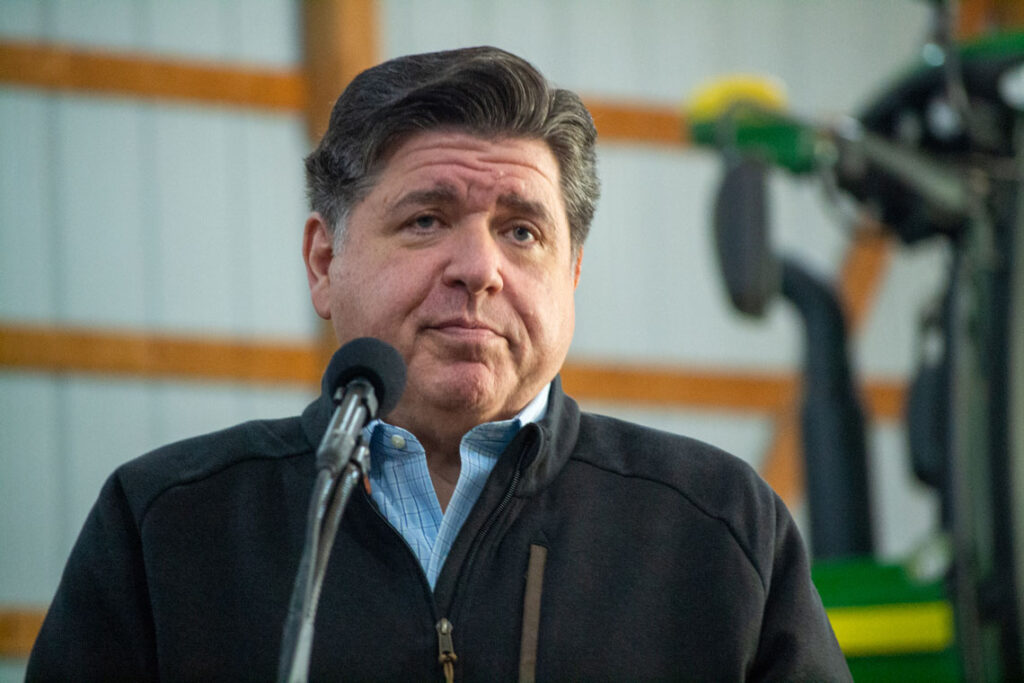
In a wide-ranging interview with Capitol News Illinois, Gov. JB. Pritzker touted progress in his first seven years but said there’s “more work to do” economically as he ramps up his bid for a third term.
Read MoreMoore: Pritzker embraces ‘abundance’ agenda with housing, nuclear proposals
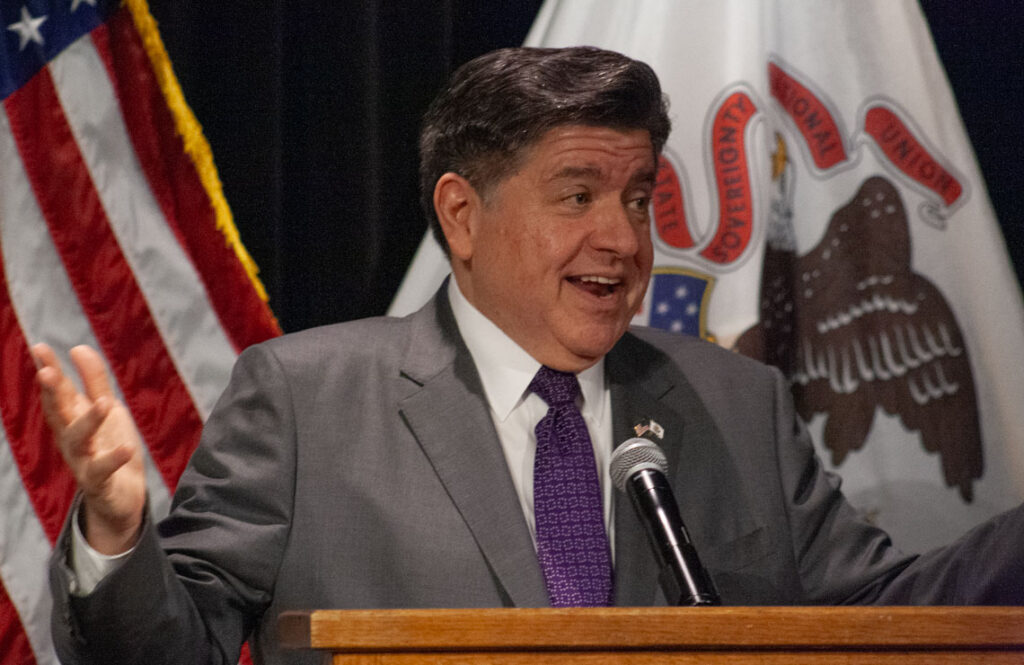
With major housing and nuclear proposals, Gov. JB Pritzker is embracing an “abundance” agenda, writes Brenden Moore. The governor’s observation that he’s repeated at least twice: “Everything’s too damned expensive.”
Read MoreTurmoil in Texas: Concerns for Paxton to drop out, Gonzales drops reelection bid
Within two days of the March primary election, two high-profile races are already in turmoil. Republican leaders are taking actions to keep the seats red, expressing support for one incumbent and calling for another to end his reelection campaign.
On Tuesday, U.S. Sen. John Cornyn led the primary results heading into a runoff with Attorney General Ken Paxton. By Wednesday, President Donald Trump said he’d soon issue an endorsement. Paxton has issued conflicting statements, saying he won’t drop out regardless of who Trump endorses and he’d consider dropping out if the Senate passes the SAVE Act.
Meanwhile, House leadership called on disgraced U.S. Rep. Tony Gonzales, a Republican representing a west Texas border district, to end his reelection campaign after he admitted this week to having an affair with his staffer who then killed herself. Gonzales was forced into a runoff election by Second Amendment advocate Brandon Herrerra, who political analysts believe could keep the seat red in November. Late Thursday night, Gonzales acquiesced after months of denying the affair and saying he wouldn’t drop out or resign.
Trump said in a social media post the divisive U.S. Senate race in Texas “cannot, for the good of the Party, and our Country, itself, be allowed to go on any longer. IT MUST STOP NOW! I will be making my Endorsement soon, and will be asking the candidate that I don’t Endorse to immediately DROP OUT OF THE RACE! Is that fair? We must win in November!!!”
Polls show Cornyn defeating Democratic nominee state Rep. James Talarico, D-Austin, in November but a matchup with Paxton shows Republicans likely losing the seat for the first time in more than 30 years. The Texas U.S. Senate seat has been considered a safe Republican seat, but with Paxton challenging Cornyn an estimated $100 million or more would need to be spent to defend the seat instead of on other senate races to keep a Republican majority in the Senate, political analysts argue.
On Thursday, Paxton said he’d consider dropping out of the race if the Senate passes the SAVE Act, which includes additional requirements to ensure only U.S. citizens are voting.
“I would consider dropping out of this race if Senate Leadership agrees to lift the filibuster and passes the SAVE America Act,” Paxton said. He also attacked Cornyn for not abolishing the filibuster and “Fake News reporters and the establishment are trying to destroy me with misinformation,” claiming “No one has been more loyal to Donald Trump than me.”
Within 24 hours of making that statement, he’d also told online websites and podcasters he would not drop out of the race regardless of who Trump endorses.
U.S. Senate Majority Leader John Thune said he’s spoken with Trump on several occasions asking him to endorse Cornyn. He says Cornyn “is an incredibly effective senator for the state of Texas, a strong conservative voice here in the United States Senate. He represents by far our very best hope of making sure that Texas stays red in November. I’ve certainly weighed in many, many times in support of Senator Cornyn.”
On Thursday, in a joint statement, House Speaker Mike Johnson, Leader Steve Scalise, Whip Tom Emmer and Chairwoman Lisa McClain called on Gonzales to end his reelection campaign.
“The Ethics Committee has announced an investigation into Congressman Tony Gonzales’s conduct, and we urge them to act expeditiously. Congressman Gonzales has said he will fully cooperate with the investigation. We have encouraged him to address these very serious allegations directly with his constituents and his colleagues. In the meantime, Leadership has asked Congressman Gonzales to withdraw from his race for re-election,” they said in a joint statement.
Several hours later, Gonzales agreed, stating, “After deep reflection and with the support of my loving family, I have decided not to seek reelection while serving out the rest” of his term. He did not apologize to the former staffer’s family or husband or his constituents.
Herrerra thanked the House leaders “for holding Congressman Tony Gonzales accountable for actions that have tarnished the office. I’m looking forward to representing the district the way the people of West Texas have always deserved.”
The runoff election is May 26.
HHS and DOC announce nutrition education initiative for medical schools
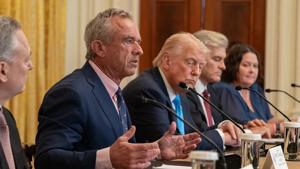
Nutrition education for medical students will become more prominent in curriculum beginning this upcoming fall.
U.S. Department of Health and Human Services Secretary Robert F. Kennedy Jr. and U.S. Department of Education Secretary Linda E. McMahon announced the advancement of nutrition education for medical students on Thursday.
According to Kennedy, chronic disease is overwhelming America and is accelerating.
“Today, we spend $4.5 trillion a year on health care, and 90% of it goes to managing chronic disease,” Kennedy said.
According to McMahon, diet-related chronic diseases contribute to roughly 1 million deaths each year, impose enormous economic and emotional costs on the American population, and 14.7 million school-aged children currently suffer from obesity.
“Today’s announcement puts nutrition and prevention front and center in how we train tomorrow’s doctors and healthcare leaders,” McMahon said.
To improve the health of American citizens, the Health and Human Services and Education departments have created a taxpayer-funded initiative that 53 universities across 31 states will use to guarantee medical students learn more about nutritional health.
“The Department of Education will never mandate curriculum, that is not our job, but we can and will spotlight promising evidence-based models, convene leaders who are improving health outcomes, and celebrate institution-driven curriculum reforms that are reforming medical education,” McMahon said.
The HHS will invest $5 million taxpayer dollars through a multi-phase National Institues of Health nutrition education challenge, to support curriculum development and fund clinical training in gold standard science. The effort will expand beyond medical schools to residency programs, nursing dietitian and nutrition science programs nationwide.
“It has always been the goal of healthcare professionals to not just treat but to prevent disease,” Jeffry P. Gold, M.D., president of University of Nebraska System, said.
The Advancing Nutrition Education Across the Medical Continuum initiative readjusts curricumlum for health and nutrition benefit, ensuring medical students will be required 40 hours of comprehensive nutrition training prior to graduation. Prior to this initiative, less than two hours were required in some schools and 75% of schools did not require any hours.
“Nutrition has been treated as an elective in medical education,” Bobby Mukkamala, MD, president of the American Medical Association said. “It should be a basic foundational training, because it impacts every one of our patients.”
According to Kennedy, more than 30,000 physicians each year will now graduate equipped with nutrition education to help prevent, treat and reverse chronic disease.
“This is how we make America healthy again,” Kennedy said.
More information, including the schools that now follow the initiative, can be found at hhs.gov/nutrition-education.
Farm bill, with changes, heads to U.S. House for vote

After more than 22 hours of debate, the Agriculture Committee in the House of Representatives voted early Thursday morning to advance the Farm, Food, and National Security Act of 2026.
Seven Democrats – despite voicing objections to measures limiting federal investments into farmland solar projects and loosening restrictions on PFAS chemicals and pesticides – ultimately supported the bill.
Those included Democratic Reps. Adam Gray and Jim Costa of California, Josh Riley from New York, Sharice Davids of Kansas, Don Davis of North Carolina, Gabe Vasquez of New Mexico, and Kristen McDonald Rivet of Michigan.
The five-year bipartisan farm bill renews and enhances crop insurance, disaster assistance, risk management programs, loans for farmers, and federal agricultural research.
It also invests in rural broadband connectivity, forestry management, rural water infrastructure and hospital assistance, and the Rural Energy for America Program.
Additionally, it transfers authority over the Food for Peace initiative from USAID to the U.S. Department of Agriculture, requiring at least 50% of food distributed to be sourced from the U.S.
Committee Chairman Glenn Thompson, R-Pa., said the bill totals roughly $1.3 trillion and “reflects the will of the committee, and it is filled with bipartisan provisions that will move the needle for farmers, ranchers, and rural Americans across the country.”
Out of the dozens of amendments put forward during the markup, lawmakers adopted less than 10 into the bill. The proposal heads to the House floor for a vote as soon as next week.
Key amendments include increasing research on food waste, broadening eligibility for grants to volunteer fire departments, creating a reserve fund for REAP, and requiring a report on the effects of proposed changes to the United States-Mexico-Canada Agreement.
Democratic amendments rolling back the cost-cutting reforms to the Supplemental Nutrition Assistance Program in Republicans’ One Big Beautiful Bill Act all failed.
House Agriculture Committee Ranking Member Angie Craig, D-Minn., called the legislation “a shell of a farm bill” and refused to support it Thursday.
“Have we made some bipartisan improvements to the bill during the amendment process? Sure,” Craig said. “But despite that, this remains a lackluster, disappointing farm bill that does not meet the moment. And it is going to have challenges getting broad bipartisan support on the floor.”
Stakeholders held mixed reactions to the bill. Some sided with Democrats, condemning the bill for its lack of SNAP support.
In a Thursday statement, the Food Research & Action Center said the bill “blatantly ignores the robust impact of SNAP in supporting families, farmers, food retailers, and America’s overall economy.”
Other organizations, however, rejoiced that Congress finally made progress on a farm bill after eight years. The American Farm Bureau Federation said the legislation is “critical as farmers face headwinds not seen in a generation.”
“The farm bill has a ripple effect across the country by supporting the farmers who grow the food that stocks every kitchen pantry in America,” President Zippy Duvall of the federation said. “We urge House leaders to continue the momentum and bring this important legislation to a vote on the floor.”
These are the members of Congress who voted against disclosing sexual harassment claims

Nearly all members of Congress, 357 Republicans and Democrats, don’t want taxpayers to know which members have used taxpayer funds to pay sexual harassment claims.
An untold number of members of Congress have spent a combined roughly $17 million of taxpayer money to settle sexual harassment claims made against them, according to House records, U.S. Rep. Thomas Massie, R-KY, says.
U.S. Rep. Nancy Mace, R-SC, this week proposed forcing a vote on a resolution she filed directing the U.S. House Committee on Ethics to “preserve and publicly release all records related to investigations into Members of Congress for sexual harassment, unwelcome sexual advances, and sexual assault under House rules.”
“Congress has been sweeping this under the rug for far too long. Tony Gonzales may be the latest example, but he’s not the only one,” Mace said, referring to U.S. Rep. Tony Gonzales, R-TX, who is refusing to resign after months of denying he had an affair with his former staffer, Regina Ann Santos-Aviles, who later killed herself.
Gonzales, who is running for reelection, received roughly 42% of the vote and heads to a runoff. As constituents continue to call for him to resign, he admitted to the affair on Wednesday on a podcast saying he “made a mistake, had a lapse in judgment and a lack of faith.”
The admission, critics argue, is too late. The Office of Congressional Conduct had been investigating Gonzales for months, the San Antonio Express-News reported. The news outlet also published text messages sent between Gonzales and Santos-Aviles in which she said he’d “gone too far,” provided by her husband. Now the House Ethics Committee has opened an investigation.
“Staff deserve to come to work without being harassed by their bosses. Women deserve to be safe,” Mace said. “And the American people deserve to know when their so-called ‘representative’ is abusing power instead of serving their constituents. No more hiding. No more excuses. It’s time to end the cover-up and drag the truth into the light.”
The majority of Congress on Wednesday, 357, disagreed. Nearly all Republicans, 175, and nearly all Democrats, 182, voted to refer the resolution to the committee, essentially killing it. One member voted present not voting, nine didn’t vote, according to the roll call vote.
Those who voted to “refer it to committee” did so knowing the “resolution ain’t ever making it out of committee,” U.S. Rep. Thomas Massie, R-KY, said. Massie has been calling for the release of names for years.
Only 65: 38 Republicans and 27 Democrats, voted in support of the resolution by voting against the motion to refer it to the committee.
U.S. Rep. Lauren Boebert, R-Colorado, said she was “disgusted,” saying, “Don’t we all campaign on transparency? Millions of dollars have been used in this slush fund as hush money to silence victims who have been sexually harassed, sexually abused by members of Congress. Now Congress is going to do exactly what it does best: investigate itself. And we know that none of that ever goes anywhere. The American people demand transparency.”
To all the members of Congress that voted today to continue to conceal Congress’s sexual harassment slush fund, go home and tell your daughters what you’ve done. pic.twitter.com/3K84hYOJNs— Rep. Lauren Boebert (@RepBoebert) March 4, 2026
U.S. Rep. Anna Paulina Luna, R-FL, also chastised members for “protecting” Gonzales, arguing they care more about winning elections and keeping a majority in Congress than about victims.
The 357 who voted to send the resolution to the committee “know it’s going to die. We know that members of Congress are using taxpayer dollars to pay off sexual harassment. We just had a member of Congress literally sexually harass someone who lit herself on fire and you guys all protected him. … It’s wrong that we cover up … and won’t censure our own side,” she said.
.@RepLuna: “I think it’s really disgusting how this institution protects itself…we just had a Member of Congress literally sexually harass a woman that then lit herself on fire and you all protected him! You guys all protected him! My own side, your side.” pic.twitter.com/b7M8RaQ4Ru— CSPAN (@cspan) March 4, 2026
After the 357 members voted to keep congressional sexual harassment records buried, Mace said, “Both parties colluded to protect predators. They voted to keep sexual harassment records buried, and they did it together.
“Every Member who voted against this resolution voted to protect the cover-up instead of the victims.”
She warned the American people: “This is the establishment in action, always protecting itself, never the victims. Ask yourself why. Remember their names when they ask for your vote.”
Feds accuse former Carlyle police chief of wire fraud, theft

The indictment alleges that Pingsterhaus took more than $100,000 from the city and the Carlyle Fire Protection District.
Read More