Southwestern states react to U.S. airstrikes in Iran
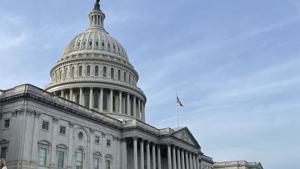
Politicians and others in the Southwest remain divided over U.S. airstrikes in Iran.
The Operation Epic Fury strikes began over the weekend and were in coordination with Israel. Many Iranian weapons were destroyed, and dozens of top Iranian officials were killed, including longtime Supreme Leader Ayatollah Ali Khamenei.
Within hours of his death, people took to the streets of U.S. cities, including San Francisco, Los Angeles and Phoenix. Some were opposed. Others supported the strikes.
“We do understand democracy,” said Kamyar Majlan, an Iranian native who is in favor of the U.S. attacks and attended a San Francisco demonstration supporting America’s efforts. “We [Iranians] are not just people hiding in a cave, and suddenly now they kill the supreme leader, we are happy. No, we’ve been fighting this fight for more than 50 years.”
Majilan – who fled Iran in the early 2000s and studied in Texas and is now a U.S. citizen living in San Ramon, a city near San Francisco – said Iranians appreciate the U.S. efforts.
“Everything we have right now, we owe it to the U.S. government, to U.S. citizens,” Majilan told The Center Square. “We will become better citizens from today until our future.”
Majilan envisioned a future Iran where people help rebuild and make the nation a vibrant one.
Because of the “47 years of suppression” and “47 years of dictatorship,” Majilan said that all some people know about Iran is “Persian cat, Persian rug, and caviar.”
There’s a lot more to Iran than that, he said.
“No, we have many scientists, physicists, educated people,” said Majilan.
Others voiced opposition to the strikes.
Actress and anti-war activist Jane Fonda spoke at a demonstration in Los Angeles that “this dangerous and insane war” violates international law and the U.S. Constitution. Fonda also warned that it risks igniting a larger war.
“It is yet again another war based on false information,” said Fonda.
California Gov. Gavin Newsom is also opposed to the strikes. Speaking at an Alameda County press conference about homelessness, Newsom told an inquiring reporter that Americans did not want this to happen.
“We’ve had to have conversations over the last few days that we haven’t had to have prior to this, as it relates to emergency preparedness and planning and unintended consequences, the uncertainty that Donald Trump has unleashed around the world,” the Democratic governor said. “Four service members died today, and Donald Trump spent more time talking about his ballroom than he did about the loss of those lives.”
The number of American service members killed in action had risen to six by mid-Monday afternoon, as reported by The Center Square.
“He still has not articulated a clear vision of what the endgame is,” Newsom said. “There’s no War Powers Act that has been exercised.”
Newsom said oil prices are rising because of the war with Iran and noted every $10 increase in barrel prices will mean paying 24 cents more per gallon at the pump. He criticized Trump for an unfunded war during a time when the president has cut money for food stamps and Medicaid while cutting taxes for those who are well off.
But Texas Gov. Greg Abbott said on X that his state “stands with President Trump.”
According to the Republican governor, Trump’s message to Iran is clear: ‘Aggression toward America and our allies will no longer be tolerated.”
The mixed feelings are also along party lines on Capitol Hill.
Republicans such as U.S. Rep. Juan Ciscomani, R-Arizona, responded positively to the strikes.
In an X post, Ciscomani wrote that the action from President Trump “sends a clear message” to the leaders of Iran.
“The Iranian regime’s aggression and destabilizing threats will not go unanswered,” wrote Ciscomani. “For decades, the Iranian regime has funded terror, attacked our allies, and threatened American service members.”
Ciscomani added that President Trump and his administration have continually been seeking peace, but Iran chose escalation.
U.S. Rep. Abe Hamadeh, R-Arizona, also agreed with the U.S. operations. Hamadeh, a veteran, said that the Iranian regime has for years chanted “Death to America” while having “the blood of hundreds, if not thousands, of Americans on its hands through terror proxies and direct attacks” on our forces.
“President Trump has been absolutely clear: America does not seek war, but we will never apologize for defending our nation, our allies and our interests,” Hamadeh told The Center Square. “Peace comes through projecting maximum strength. When our adversaries know the United States is serious and prepared to act, that is what prevents conflict in the first place.”
Hamadeh added that when Americans are forced into combat, it will be fast, decisive and overwhelming. He said there would be no endless half-measures, no drawn-out nation-building experiments.
“Every decision is grounded in one simple principle: Does this advance American security?” said Hamadeh. “If it does, we will act with overwhelming force, and we act to win. America First does not mean America Alone.”
U.S. Sen. Ruben Gallego, D-Arizona, said he views the war as “dumb.” A veteran of the Iraq War of the early 2000s, Gallego also downplayed the pro-strikes demonstrations. Gallego said on X that “this happened after Saddam was toppled,” and it did not stop Iraqi insurgents from shooting rocket-propelled grenades at him years later.
“We’re going to send a bunch of working-class kids to go down for a bunch of rich countries, a bunch of rich men here, and it’s not a good feeling,” said Gallego in a video he posted on social media. “Congress needs to get back in session, we need to get control, we need to stop this war, we need to hear from the president why we should be going to war in the first place.”
U.S. Sen. Adam Schiff, D-California, also pushed for Congress to return to Washington, D.C.
“Americans do not want another forever war in the Middle East,” said Schiff in a video post.
U.S. Sen. Jacky Rosen, D-Nevada, voiced her concerns about Iran’s nuclear ambitions and how the regime has treated citizens. Rosen also spoke of being “grateful for our brave men and women who are conducting Operation Epic Fury” and even mentioned that she is “praying for those service members who are under attack” in the region. Still, Rosen wants more information from the Trump administration.
“I am concerned that the president’s approach to armed conflict over the past year and his administration’s history of repeatedly withholding information and misleading Congress could lead us into another protracted Middle East conflict, without authorization from Congress,” said Rosen. “The American people are wary of prolonged military engagements abroad, especially when the objectives are unclear.”
That, said Rosen, is why “the Constitution is clear that only Congress has the ability to declare war and authorize the use of military force.”
California native and television personality Alyssa Farah Griffin, who’s on ABC’s “The View,” said on X that Congress has only itself to blame.
“It has ceded its war-making powers to the Executive Branch for decades,” said Griffin, who worked in government before television.
Appeals court won’t delay tariff refunds

A federal appeals court on Monday rejected the Trump administration’s request to delay a step toward granting tariff refunds.
The government had asked for a 90-day delay “to allow the political branches an opportunity to consider options.” The U.S. Court of Appeals for the Federal Circuit granted the motion from the Liberty Justice Center, which represents a group of small businesses in the case. The case now heads back to the Court of International Trade.
Attorneys for the federal government said refunding tariffs to the U.S. businesses that paid them could take time and urged a court not to rush, a move opponents said would cost taxpayers even more.
Last month, the Supreme Court ruled that the International Emergency Economic Powers Act didn’t give Trump expansive tariff powers. The high court said Congress alone has the power to impose tariffs.
Oil, gas prices jump as Iran war disrupts Middle East output

U.S. and global oil and gas prices surged higher Monday as concerns grew that attacks by Israel and the U.S. on Iran could spiral into a broader war and disrupt global energy supplies.The U.S. and Israel launched strikes on Iran on Saturday that killed Supreme Leader Ayatollah Ali Khamenei and dozens of other senior government officials while talks between Washington and Tehran over the Islamic Republic’s nuclear program were reported to be ongoing.European benchmark Brent crude oil surged by as much as 13% in early trade on Monday, hitting $82 a barrel, before settling up 6.8% at $77.74 per barrel, while U.S. West Texas Intermediate crude oil rose by as much as 8.8% in the morning and finished the day 6.3% higher at $71.23.Initially, the Islamic Republic launched counterattacks on targets in Israel and U.S. military assets in Bahrain, Saudi Arabia, Iraq, Qatar and the United Arab Emirates.On Sunday, Iranian forces closed the Strait of Hormuz, a vital sea lane which serves as passage for about 20% of the world’s seaborne oil, and attacked oil and gas infrastructure in Isreal, Saudi Arabia, Qatar and Oman with drones and missiles.About 150 ships including tankers carrying oil and liquefied natural gas had dropped anchor in the Strait of Hormuz and surrounding waters on Sunday, according to shipping data reported by Reuters.A rebound in ship traffic through the Strait of Hormuz and the extent of Iranian retaliation will determine the direction of oil prices in the U.S. and globally during the next days and weeks, said Eric Smith, associate director at the Tulane Energy Institute in New Orleans.“A long-term closure of the Strait, like would occur if a ship is sunk in the middle of it, would disrupt exports from the Middle East so that China, India, Japan, Korea and other countries in Asia would then bid up the price of the oil still available in the market because they don’t have any choice,” Smith said. “Almost all the ships carrying oil, LNG and refined products like gasoline produced in the Middle East must pass through the Strait to get to Asia.”The longer Iran keeps the Strait closed to shipping, the higher prices will rise, said Smith.On Sunday, at least one Iranian drone struck Qatar’s Ras Laffan LNG export terminal, the largest of its kind with 77 million tons of annual production capacity and the source of about 20% of global LNG supplies. The LNG facility was shut down indefinitely. In 2025, about 81% of LNG shipped from the terminal went to Asian nations, all of which passed through the Strait of Hormuz.Other Iranian drones struck the Mesaieed crude oil export hub in Qatar and Saudi Arabia’s massive Ras Tanura refinery, both of which were shut down.“It will be a contest to see who has the last drone flying, I think,” said Smith. “The oil and gas infrastructure in Saudi Arabia is most vulnerable to long-term damage caused by Iranian drone and missile attacks, and this is a country that is a major exporter of both crude and refined products.”U.S. wholesale gasoline prices, as reflected by so-called RBOB futures, were up 11 cents per gallon in early trade Monday but settled 4.8% higher $2.3997 a gallon. The price of wholesale diesel fuel rose 12.1 cents Monday or 5.1% to $2.399 per gallon.The European benchmark natural gas price at the Dutch Transfer Pricing Point in the Netherlands settled Monday at €37.45 per megawatt-hour, up 44% on the day.Long-term disruptions to shipping in through the Strait or damage to oil and gas infrastructure in the Middle East would adversely affect low-income consumers in the U.S., who pay a high percentage of their incomes for energy, and farmers, now beginning spring planting, said University of Houston Energy Fellow Ed Hirs.“A doubling of the gasoline price to five bucks a gallon, say, would really hurt lower income consumers,” said Hirs. “And farmers are really taking it on the chin. China isn’t a buyer of U.S. crops lately, the farm bailout is still being withheld by the administration, and an extended conflict in the Middle East could send the send prices of diesel and fertilizer much higher just as they’re beginning planting,” he said.
Read MoreNumber of service members killed in action rises to six

The number of American service members killed in action as part of Operation Epic Fury has climbed from four to six, as Secretary of State Marco Rubio vows “the hardest hits are yet to come from the U.S. military.”
CENTCOM announced that two additional service members had been killed in action who had been previously unaccounted for “from a facility that was struck during Iran’s initial attacks.”
In addition, CENTCOM is reporting that all 11 Iranian ships in the Gulf of Oman have been destroyed, as the U.S. struck more than 1,250 Iranian Targets since the operation was launched in the early morning hours on Saturday.
Rubio was on Capitol Hill Monday to brief the Gang of Eight, which includes House and Senate leadership and the chairs of House and Senate intelligence committees.
The secretary warned that the offensive against the Islamic regime is ramping up.
“The next phase will be even more punishing on Iran that it is now … The world will be a safer place when we’re done with this operation,” Rubio told reporters.
Rubio defended the Trump administration’s decision to launch strikes, even as the administration has come under fire from most Democrats and some Republicans. He indicated the strikes were preemptive, citing the Islamic Republic’s nuclear and ballistic threat.
“There was absolutely an imminent threat,” said Rubio. “We knew that if Iran was attacked – they knew they would immediately come after us, and we were not going to sit there and absorb a blow before we responded … We went proactively, in a defensive way, to prevent them from inflicting higher damage,” the secretary told reporters. “Had we not done so, there would have been hearings on Capitol Hill about how we knew that this was going to happen and we didn’t act preemptively to prevent more casualties and more loss of life.”
During a Medal of Honor Ceremony held in the East Room of the White House Monday morning, President Donald Trump delivered some remarks on the operation, defending the strikes.
“Our objectives are clear. First we’re destroying Iran’s missile capabilities…Second, we’re annihilating their navy…Third we’re ensuring that the world’s number one sponsor of terror can never obtain a nuclear weapon,” said the president during the somber White House ceremony.
Rubio echoed the president’s sentiments while addressing concerns about regime change in Iran.
“We hope that the Iranian people can overthrow this government. We would love for that to be possible—but the objective for this mission is the destruction of their ballistic capabilities and their naval capabilities,” Rubio made clear.
As the president and secretary of state continue to make the case for the operation, the Department of State has issued a “depart now” list for over a dozen Middle Eastern countries, where a majority have seen some attack from Iranian forces since the strikes began. The countries include: Bahrain, Egypt, Iran, Iraq, Israel (the West Bank and Gaza), Jordan, Kuwait, Lebanon, Oman, Qatar, Saudi Arabia, Syria, the United Arab Emirates and Yemen.
Lawmakers request DOJ probe into whether Somali fraud and ICE protests are linked
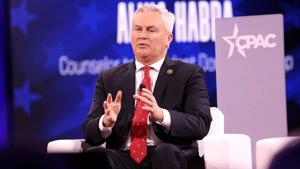
The U.S. House Oversight Committee is requesting that the Department of Justice investigate whether the Somali welfare fraud and anti-immigration enforcement protests in Minnesota are connected.
In a letter to Attorney General Pam Bondi, Republican lawmakers suggested the possibility that there exists “organized efforts to obstruct law enforcement with foreign influences and criminal activities, including fraud.”
“The Committee believes it is imperative to assess whether foreign-sourced funding and/or proceeds of financial crimes, particularly those involving federal funds, may be contributing to, or otherwise exacerbating unrest and efforts to obstruct law enforcement,” the lawmakers, led by Chairman James Comer, R-Ky., wrote Monday.
Their request for a DOJ briefing on the matter follows President Donald Trump’s previous comments that the Minnesota Somali fraud scandal “is at least partially responsible for the violent organized protests going on in the streets.”
The estimated $9 billion in welfare fraud was uncovered in October, and by December nearly 100 people – including 85 Somali immigrants – faced criminal charges, with dozens pleading guilty.
Among other schemes, fraudsters had falsely claimed children had autism to obtain benefits and enrolled ineligible individuals in food assistance programs.
On Jan. 7, protests in the Twin Cities region erupted after a federal immigration enforcement officer fatally shot a Minnesota resident and American citizen who authorities say attempted to hit agents with her car.
The committee believes the incidents “suggest coordinated or systemic activity” and is urging the DOJ to investigate “whether large-scale financial crimes involving federal funds may contribute to broader public safety or civil order challenges” related to immigration.
“The scale and duration of these schemes have raised concerns regarding whether fraud proceeds are being laundered or otherwise routed through nonprofit or organizational entities in ways that evade oversight,” lawmakers wrote. “As much of this fraud has disproportionally involved Minnesota’s immigrant community, targeted enforcement operations by ICE play a key role in stopping this systemic corruption.”
Fraudsters have taken advantage of Medicaid-funded services through Minnesota Department of Human Services programs for years, particularly targeting COVID-19 era programs, The Center Square reported.
In light of the newest revelations, Republicans have accused state officials of suppressing fraud reports and punishing whistleblowers, which Minnesota Attorney General Keith Ellison has denied.
Gov. Tim Walz recently unveiled his “comprehensive anti-fraud package,” but only after the Trump administration halted nearly $260 million in Medicaid funds to the state.
Illinois lawmakers call for governor-appointed Epstein investigatory commission
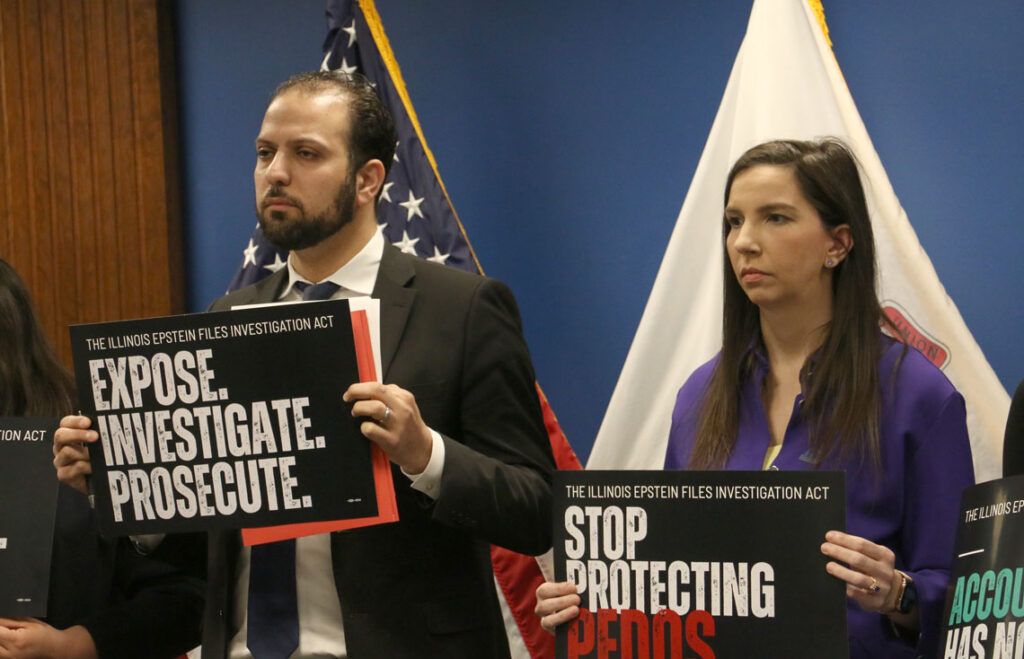
Lawmakers hope the commission will fill a void left at the federal level.
Read MoreQuestions remain on Trump’s plans for $2,000 tariff rebate checks
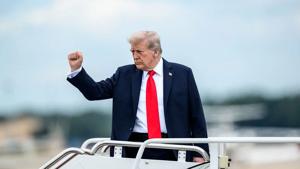
American consumers hoping for tariff refunds could be disappointed.
The U.S. Supreme Court invalidated President Donald Trump’s tariffs under the 1977 International Emergency Economic Powers Act in February. Trump used a different law to impose a 10% global tariff on U.S. imports, with exceptions, after the high court’s ruling.
Importers paid those taxes to the federal government, and more than 900 have already filed lawsuits to get that money back. Consumers aren’t entitled to a direct refund, though at least one company has said it will issue refunds.
Trump used tariffs to underpin key promises he made since re-taking the White House in 2025, including a proposed $2,000 tariff rebate check for everyone but the wealthy. He has also said tariffs could cover the cost of increased military spending, replace income taxes and pay down the federal government’s $38.7 trillion in debt. Tax watchdogs have said Trump’s tariffs won’t bring in enough money to cover the cost of those plans.
Trump has not spoken about the $2,000 rebate checks since the Supreme Court’s Feb. 20 decision, but his campaign said he’s still considering it.
A campaign email sent Feb. 27 read: “I’m looking into these checks very seriously. … I haven’t made the commitment yet, but I may make the commitment.”
The White House did not respond to questions on Monday from The Center Square about Trump’s tariff rebate plans in the wake of the 6-3 Supreme Court decision.
U.S. Customs and Border Protection reported it assessed $253.3 billion in tariffs, taxes, and fees since Jan. 20, 2025. The Penn Wharton Budget Model projected that the Supreme Court’s tariff ruling would generate up to $175 billion in refunds.
FedEx, one of the large companies that has already filed a lawsuit seeking tariff refunds, said it would give that money back to the people who paid it.
“Our intent is straightforward: if refunds are issued to FedEx, we will issue refunds to the shippers and consumers who originally bore those charges,” the company said in a post on its website. “When that will happen and the exact process for requesting and issuing refunds will depend in part on future guidance from the government and the court.”
Some Democrats have already called for refunds. U.S. Rep. Jasmine Crockett, D-Texas, introduced the Payback Act, which would require the Treasury Department to develop a transparent consumer refund formula and send out payments.
U.S. Treasury Secretary Scott Bessent wasn’t as optimistic about American consumers getting money back.
“I got a feeling the American people won’t see it,” he told the Economic Club of Dallas last month.
Retired military officials warn CMS bidding expansion poses national security risks
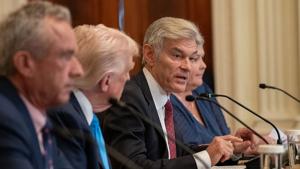
A coalition of retired military officers and former national security officials is urging the Centers for Medicare & Medicaid Services to halt an expansion of its medical equipment bidding program, warning it could create national security risks.
In a letter to CMS Administrator Dr. Mehmet Oz, the group raised concerns about plans to expand the Durable Medical Equipment, Prosthetics, Orthotics, and Supplies Competitive Bidding Program to include more advanced medical devices, including continuous glucose monitors and insulin pumps.
“We are writing to share our strong concerns about the Centers for Medicare & Medicaid Services’ proposal to expand the Durable Medical Equipment, Prosthetics, Orthotics, and Supplies (DMEPOS) Competitive Bidding Program to include a range of highly specialized medical products,” the officials wrote.
The letter notes that many of the products are no longer simple tools.
“Digitally connected devices such as CGMs and insulin pumps transmit real-time health data to providers, caregivers, and cloud-based platforms,” they wrote.
The coalition warned that placing these products in a cost-based bidding system could let foreign manufacturers, including companies with ties to the Chinese Communist Party, enter the Medicare supply chain. Since the program awards contracts largely on price, they argued that foreign firms benefiting from state subsidies could undercut American companies.
“This is more than a matter of economics or procurement policy. It is a question of strategic vulnerability,” the letter states.
The group noted potential risks for military personnel, veterans, and government employees who rely on federal health systems.
“There is also the question of patient data,” the officials wrote. “Many of the products in question are capable of collecting, storing, and transmitting detailed biometric information.”
They argued that when companies manufacture and service devices outside the United States, it becomes harder to ensure sensitive health data remains protected domestically and does not fall into the hands of American adversaries.
The coalition also warned that forcing domestic firms to compete solely on price could also reduce investment in research and development and weaken American leadership in medical technology.
They urged CMS to “disallow foreign entities access to millions of Medicare patients’ health information by excluding them from competing for DMEPOS contracts” and to “pause the proposed expansion of the competitive bidding program and conduct a full national security and economic impact assessment before proceeding.”
CMS has said it uses the competitive bidding program to lower costs and protect Medicare trust funds. The next round of contracts will take effect on or before Jan. 1, 2028.
U.S. Supreme Court appears skeptical of drug user gun ban
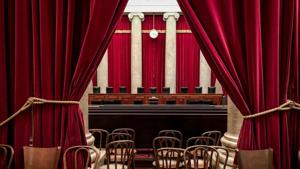
U.S. Supreme Court justices appeared skeptical during arguments on Monday over a law that disarms habitual drug users.
The case, U.S. v. Hemani, challenged a law that prohibits a person who “is an unlawful user of or addicted to any controlled substance” from possessing a firearm. The case centers on a Texas man who was charged with a felony when FBI agents found a pistol, marijuana and cocaine in his home after obtaining a search warrant, a petition to the court read.
The Trump administration petitioned the high court to hear the case after a lower court struck down the law barring people who use drugs such as marijuana from possessing firearms.
Lawyers for the U.S. government argued founding era laws against drunkards compel a similar standard to prohibit habitual drug users from possessing firearms. Sarah Harris, deputy solicitor general for the Department of Justice, said early 20th century drug use laws could be read similarly to founding era drunkard laws.
“Drugs are similar in the sense that there is a similar tradition by use of the intoxicants on a habitual basis,” Harris said.
Justices on the court appeared skeptical of Harris’ claim. Justice Neil Gorsuch argued that founding era laws against drunkards categorized the term drunkard very differently than what it is understood as in the modern era. He also questioned how the Trump administration defined a habitual user.
“The government has not been able to define what a user is,” Gorsuch said.
Justice Ketanji Brown Jackson appeared to agree with Gorsuch and further questioned the frequency of drug use in determining whether someone should be barred from possessing a firearm.
“Someone who only drinks or takes an intoxicant once every other day and is not doing so while he is using a firearm is irrelevant,” Jackson said. “The dangerous people at the founding were well beyond just one item every other day.”
Justice Amy Coney Barrett also agreed and posed a hypothetical question where an individual used a prescription drug that did not belong to them. She asked whether this law would disarm that individual.
Harris indicated that an individual could be disarmed if they regularly engage in using another person’s prescription. She also mentioned marijuana – the drug primarily at issue in the case – was under consideration by the government to be rescheduled to be included for research purposes, which would lessen the seriousness of this case.
Marijuana is a Schedule I drug under the Controlled Substances Act, a policy that deems the substance as having a high potential for abuse and no accepted medical use. Heroin is also considered a schedule I drug.
“The government has not made any final decisions for what to do with marijuana,” Harris said.
Justice Clarence Thomas questioned Harris’ reliance on the legal status of marijuana in making a determination in the case.
“You seem to rely quite a bit on the illegality of marijuana,” Thomas said.
Lawyers for Hemani further refuted the idea that drunkard standards could equate to the use of a controlled substance. Erin Murphy, a lawyer for Hemani, said drunkard laws had to be based on specific public displays of drunkenness before rights were taken away.
“The habitual drunkard tradition,” Murphy said, “cannot support disarming someone based on the fact he consumes a few times a week a controlled substance.”
Jackson questioned whether the law against drug users from possessing firearms meaningfully contributed to less overall violence.
“Congress’ purpose here to prevent dangerous people from having guns is not furthered by including this kind of person under this statute,” Jackson said.
The court is expected to decide the drug use gun possession case by July.
Poll: 47% of U.S. voters oppose bombing Iran
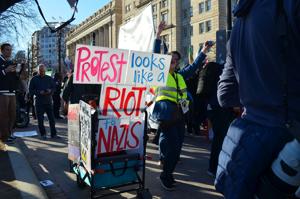
A new survey found that a plurality of United States voters oppose the bombing of Iran.
With Operation Epic Fury underway, Napolitan News Service conducted the survey to gauge Americans’ sentiments of President Donald Trump’s decision to bomb Iran and found that 47% of 1,000 voters opposed the bombings while 40% supported it.
Scott Rasmussen, founder of Napolitan Institute, briefly explained the results of the survey.
“This is a foreign policy issue, something that most voters don’t pay attention to a whole lot. One of the really interesting tidbits in the survey is that Donald Trump’s job approval didn’t budge,” Rasmussen said. “That gives us a hint that probably what we’re going to find in the survey is less about Iran and more about the perceptions of the president.”
Although 47% opposed bombing Iran, 48% agreed Iran is a national security threat to the United States, while 50% believe the attack on Iran will lead to a wider war with China and Russia.
Upon learning Saudi Arabia and other gulf nations support the attacks on Iran, voters’ opinions of the bombing changed to 50% approval and 38% opposition.
“This is not saying, ‘Oh, if we just educate people and get the messaging and the talking points right now, we’ll build support.’ It’s just that people have very little information to go on, and they’re looking for any kind of clues to guide their response,” Rasmussen said.
With the majority of voters believing the attack will result in a quick victory, 55% of voters believe the attack will wipe out the Iranian regime. Specifically regarding political parties, two thirds of Republicans (66%) at least somewhat favor the attack, while 71% of Democrats oppose it.
“The downside, the danger for the president, for Republicans, and for the military forces, is that if this does begin to drag on, there will be disillusionment and support will erode,” Rasmussen said. “But here’s the reality: if it’s successful, this is going to be looked at as a great victory that will benefit – that will have support among the American people.”
Also, 46% of voters believe the attack on Iran will be good for America, while 45% believe the attack will be bad.