Supreme Court declines to hear felony gun possession case

The U.S. Supreme Court on Monday declined to decide whether individuals with felony records can be permanently disarmed under the Second Amendment.
The court declined to hear Vincent v. Bondi on Monday. The challenge targeted laws banning individuals with felony convictions from possessing firearms.
Melynda Vincent, a social worker and nonprofit founder, was convicted of federal bank fraud in 2008 for attempting to pass a fraudulent check. While nonviolent, the felony prohibits Vincent from possessing firearms.
In Vincent v. Bondi, Vincent argued the prohibition violated her Second Amendment rights. She sought to have the law declared unconstitutional and for an injunction to prevent the U.S. attorney general from enforcing it against her.
After denials in lower court, Vincent sought relief from the U.S. Supreme Court.
“Text, history, and tradition show that the government cannot permanently disarm Ms. Vincent – a single mother, social worker, adjunct college professor, and nonprofit founder with two college degrees – solely because of one seventeen-year-old conviction for passing a bad check,” Vincent’s lawyers wrote in a petition to the Supreme Court.
The government disputed Vincent’s claims of a permanent ban from the possession of firearms. In a petition to the court, lawyers for the Trump administration said the government reinstated a process for convicted felons to gain their rights to possess firearms, leaving Vincent’s challenge on a faulty basis.
Even still, lawyers for the government argued the ban on firearm possession for felons aligns with the history and tradition of the Second Amendment.
“American colonies imposed that penalty even for non-violent crimes such as counterfeiting, squatting on Indian land, burning timber intended for house frames, horse theft, and smuggling tobacco,” lawyers for the government wrote in a brief to the court.
Additionally, the Supreme Court denied similar petitions from Selim Zherka and Steven Duarte, who both sought permission from the government to possess firearms despite previous non-violent felony convictions.
The Supreme Court’s denial comes as justices on the bench prepare to hear a significant case on Second Amendment rights for individuals who engage in regular drug use on Monday. The case, U.S. v. Hemani, could drastically expand gun rights in the United States.
Plastics industry applauds Trump’s focus on strengthening manufacturing
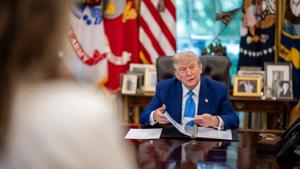
The plastics industry is pleased by President Donald Trump’s mention at the State of the Union of strengthening manufacturing in the nation, with an industry president stressing the importance of next modernizing the recycling infrastructure.
Ross Eisenberg, president of America’s Plastic Makers, told The Center Square that at the State of the Union “the President made clear that strengthening American manufacturing remains a national priority.”
“That’s exactly where the plastics industry is focused,” Eisenberg said.
America’s Plastic Makers is a division of the American Chemistry Council.
Eisenberg told The Center Square: “Our sector already supports more than five million U.S. jobs and over one trillion dollars in economic output.”
“The next step” in the area of plastics “is to modernize America’s recycling infrastructure,” Eiisenberg said.
“We could make more here; we could recycle more here; we just need the policies that get us there,” Eisenberg said.
Eisenberg said that “the fastest way to strengthen U.S. manufacturing is to give companies the policy certainty they need.”
“Two bills now before Congress, the Recycling Technology Innovation Act and the bipartisan Recycled Materials Attribution Act, would help modernize our recycling system, provide national standards for recycled content marketing claims, and help unlock investment in new American facilities,” Eisenberg said.
“Plastics are essential to the U.S. economy in sectors like automotive, agriculture, healthcare, clean energy and advanced technology,” Eisenberg stated.
“We also know we need to keep more plastic out of the environment,” Eisenberg said.
“With the right policies, the United States can lead in both manufacturing and recycling innovation,” Eisenberg said.
Strengthening manufacturing is important to the plastics industry, because, as The Center Square previously reported, the industry is “one of the ‘most powerful economic engines’ in the U.S.“
As Eisenberg alluded to, the plastics industry generates “more than $1.1 trillion in total economic output,” and operates with a large number of other industries reliant on itself, The Center Square reported.
Eisenberg told The Center Square last year that “expanding and modernizing U.S. recycling infrastructure presents a clear opportunity to create new jobs, keep valuable materials in use, and reduce waste.”
How Illinois’ Road Fund will help fund transit, especially in the Chicago region
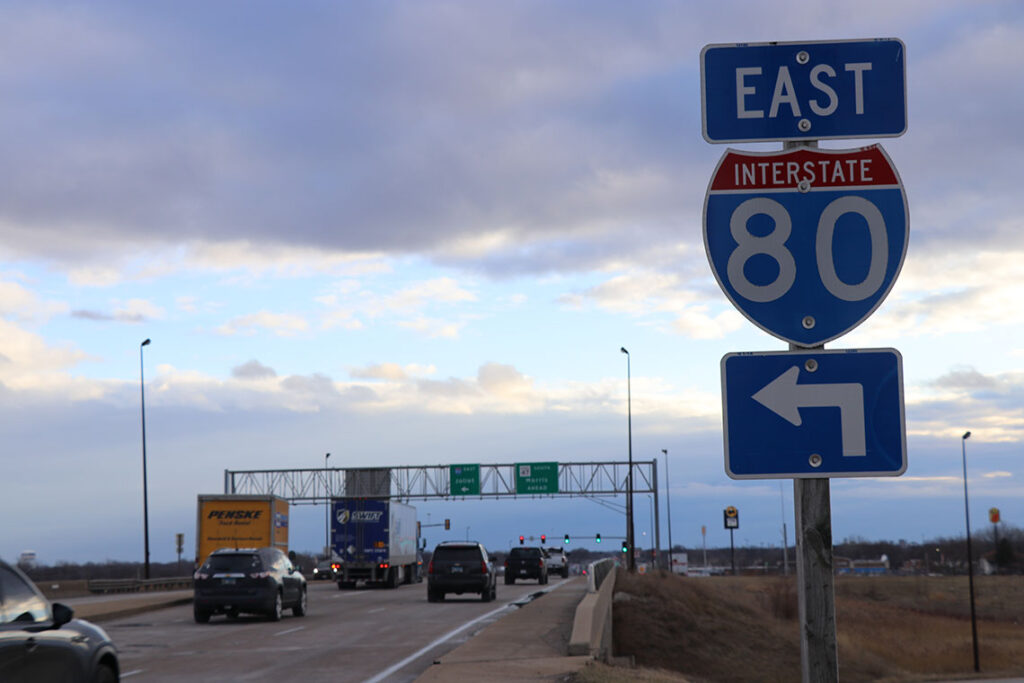
With the passage of SB 2111, money largely will be shifted from the Road Fund to Chicago’s public transit.
Read MoreEveryday Economics: The Fed’s labor-market reality check
Last week wasn’t about a single data point. It was about a shift in tone from policymakers: the labor market may be weaker than the headlines imply, and the economy is increasingly being supported by a narrower set of households and sectors. This week, that narrative gets tested in two places: the February jobs report on Friday, and markets’ evolving assessment of geopolitical risk involving Iran – an oil producer in a region where worst-case scenarios can change the global macro outlook fast.
What Fed speakers said last week: Waller put the labor market in the crosshairs
The most important Fed remarks last week came from Governor Christopher Waller, who delivered a substantive economic outlook speech on Feb. 23. His message was sobering on the labor market.
First, Waller highlighted the annual benchmark revisions to payrolls, which dramatically changed the story of 2025. The revisions turned last year into one of the weakest years for job creation in decades outside of a recession: 181,000 jobs added in total – about 15,000 per month. That’s essentially stall speed for an economy of this size.
Then he went further. Waller argued the revised numbers likely still carry an upward bias – suggesting payroll employment may have actually fallen in 2025, a rare occurrence outside of a recession. The implication is straightforward: don’t anchor on month-to-month volatility. The relevant signal is the trend.
On the broader economy, Waller noted that Q4 2025 real GDP growth came in at 1.4%. But he argued that the government shutdown likely distorted both Q4 and Q1, so a better read is the combined six-month window – where he expects growth to average above 2%.
He also flagged a K-shaped spending dynamic that matters for 2026: higher-income households remain resilient – helped by wealth effects tied to last year’s stock-market gains – while lower- and middle-income consumers are trading down. Demand is still there, but it is becoming more price-sensitive and more unequal.
The broader Fed message remains patience. But Waller’s emphasis on labor-market fragility effectively raises the sensitivity of the reaction function to downside labor surprises: if jobs weaken, the threshold for a rate cut falls – even if inflation is merely drifting lower rather than rapidly converging to 2%.
What to expect from the February jobs report
January reset expectations. Payrolls came in at +130,000, above consensus, and the unemployment rate ticked down to 4.3%. Wages rose 0.4% month over month and 3.7% year over year. After a surprise like that, markets want to know whether January marked stabilization – or noise.
For February, the key is not just the headline payroll number. It’s whether the report confirms breadth and durability, especially given a major comparability break in the household survey.
Three things to watch:
(1) Population controls: a comparability break in the household survey
The BLS delayed the annual population control adjustments that usually appear with January household-survey estimates. Those updated population controls will instead be introduced with the February 2026 release. That means unemployment and labor force participation will reflect a methodological break, and January household estimates will also be revised. Translation: don’t over-interpret a one-tenth move in the unemployment rate this month.
(2) Breadth vs. narrow strength
January’s gains were concentrated. If February job growth broadens across sectors – especially cyclicals and private services – it signals genuine stabilization. If it’s narrow again, it raises questions about durability and reinforces Waller’s argument that the trend is weaker than the monthly prints may suggest.
(3) Hours and wage momentum
In a low-hire environment, hours worked and wage growth can be more informative than payroll counts alone. Softer payrolls with steady hours is a very different signal than softer payrolls with hours rolling over.
Policy implications remain straightforward: the Fed is firmly on hold for March. A weak February print would accelerate market pricing for a June cut. A solid, broad-based number keeps the Fed comfortable staying put well into the summer.
The Iran shock: why the oil market has a buffer — and why yields may still fall in a risk-off episode
Geopolitical risk involving Iran is the type of shock markets price quickly because energy supply risks are nonlinear. But it is equally important to understand what has changed about the oil backdrop relative to past Middle East shocks – and what markets actually did the last time the Strait of Hormuz was in the headlines.
Start with today’s setup: the oil market has a cushion. Supply has been running ahead of demand, inventories have been building, and that inventory accumulation provides an initial buffer against disruptions. Add in potential shock absorbers – OPEC+ spare capacity, emergency reserves, a more flexible U.S. supply response, and shipping and logistics that have proven more resilient through recent stress tests – and the base case looks more like a risk-premium episode than an immediate physical shortage.
That buffered starting point matters because it changes the borrowing-cost story. A key point investors sometimes miss is that an oil shock does not automatically push Treasury yields higher. In past Hormuz-risk flareups, the first move has often been oil up but yields down – because investors rotate into safe havens.
During the June 2019 tanker-attack episode near the Strait of Hormuz, oil rose while Treasury yields fell as markets treated the event as risk-off and growth-negative. Even in September 2019, when attacks on Saudi facilities triggered an outsized intraday oil spike, the bond-market response again reflected competing forces rather than a mechanical rise in yields – safe-haven demand and growth fears can offset inflation optics.
So the real question for markets – and for corporate borrowing costs – is not simply “did oil jump on the headline?” It is whether the shock becomes persistent enough to lift inflation compensation and term premia, or remains a temporary episode that tightens financial conditions mainly through risk-off behavior.
Historically, oil and gasoline price shocks tend to be front-loaded, with limited persistence in headline inflation and muted effects on core inflation and long-run expectations – unless the shock becomes sustained enough to generate second-round effects.
Where the risk gets serious is in the tail scenarios: a broader regional conflict that threatens Strait of Hormuz shipping flows, or internal destabilization within Iran that curtails production or exports for an extended period. Those are the paths that can overwhelm buffers and turn a headline risk premium into a true supply constraint.
If you want one clean scoreboard before overreacting to crude, watch real-time indicators of whether shipping is actually tightening: AIS (Automatic Identification System) signals for tanker transits, speeds, and anchorage “loitering” through Hormuz (MarineTraffic is one widely used source), plus tanker freight rates via the Baltic Exchange (BDTI/BCTI). For the “risk price,” monitor insurance stress through Lloyd’s Joint War Committee Listed Areas updates and market reporting on war-risk premia.
Trump: Iran operations to continue until objectives achieved
Combat operations will continue in Iran at “full force” until American “objectives are achieved,” President Donald Trump said during his second address to the nation since Operation Epic Fury commenced.
Trump described the operation as the “largest, most complex, most overwhelming military offensive the world has ever seen,” adding thatr American forces have hit “hundreds of targets in Iran.”
He called Iran’s Supreme Leader Ayatollah Ali Khamenei, who was killed in the initial strikes, a “wretched and vile man” who had the “blood of hundreds and even thousands of Americans on his hands.”
The president claims that the “entire” Iranian military command is gone, adding that thousands are offering to surrender. Trump reiterated that he gave the Iranian regime weeks to make a deal, but they declined.
Trump remarked on the announcement from U.S. Central Command Sunday morning that three service members were killed in action as a result of Iranian strikes.
“As one nation, we grieve for the true American patriots who have made the ultimate sacrifice for our nation, even as we continue the righteous mission for which they gave their lives, we pray for the full recovery of the wounded and send our immense love and eternal gratitude to the families of the fallen,” said the president.
He warned that “there will likely be more before it ends,” adding that the U.S. will do everything it can to deter further casualties.
“America will avenge their deaths and deliver the most punishing blow to the terrorists who have waged war against basically … They have waged war against civilization itself. Our resolve and, likewise, that of Israel, has never been stronger. America is now again the richest, most powerful nation in the world by far. But the only reason we enjoy the quality of life that we do and the freedom and security is we have done things that others are unable to do, but it’s because of warriors who are willing to lay down their lives to do battle with our enemies, and they do battle better than anybody,” Trump lamented.
The president repeated concerns over the Iranian regime possessing long-range missiles and nuclear weapons, underscoring the threat to America.
“We’re undertaking this massive operation not merely to ensure security for our own time and place, but for our children and their children, just as our ancestors have done for us many, many years ago. This is the duty and the burden of a free people. These actions are right and they are necessary to ensure that Americans will never have to face a radical, bloodthirsty terrorist regime armed with nuclear weapons and lots of threats,” said the president.
Trump: Nine Iranian ships destroyed; Iran wants to talk
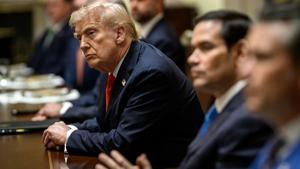
Nine Iranian ships have been “destroyed and sunk” by U.S. forces as part of Operation Epic Fury, according to President Donald Trump.
The president’s announcement comes as the joint coordinated U.S.-Israeli strikes enter their second day.
“I have just been informed that we have destroyed and sunk 9 Iranian Naval Ships, some of them relatively large and important. We are going after the rest — They will soon be floating at the bottom of the sea, also! In a different attack, we largely destroyed their Naval Headquarters. Other than that, their Navy is doing very well!” Trump wrote in the Truth Social post.
In addition, U.S. Central Command said that American B-2 stealth bombers “armed with 2,000 lb. bombs, struck Iran’s hardened ballistic missile facilities.”
The targeting of Iranian military assets comes as Israeli Prime Minister Benjamin Netanyahu said on Sunday that Israeli forces were “striking at the heart of Tehran with intensifying force, and this will only grow stronger in the coming days.”
Trump issued a message to Iran overnight, warning the Iranian Revolutionary Guard Corps not to escalate the situation further.
“Iran just stated that they are going to hit very hard today, harder than they have ever hit before. THEY BETTER NOT DO THAT, HOWEVER, BECAUSE IF THEY DO, WE WILL HIT THEM WITH A FORCE THAT HAS NEVER BEEN SEEN BEFORE!” Trump posted to his Truth Social account.
CENTCOM announced Sunday morning that U.S. forces sustained their first casualties, with three service members killed in action as a result of the strikes. Five have been seriously injured.
Trump told The Atlantic in an interview Sunday morning that Iranian officials want to talk.
“They want to talk, and I have agreed to talk, so I will be talking to them. They should have done it sooner. They should have given what was very practical and easy to do sooner. They waited too long,” the president told the publication.
It is unclear with whom officials Trump would be speaking following confirmation from the president and Israeli officials that nearly 50 of Iran’s top leadership have been eliminated, including their Supreme Leader, Ayatollah Ali Khamenei.
Supreme Court to hear gun possession for drug users case

The U.S. Supreme Court will hear arguments on Monday in a consequential case over whether regular drug users can possess firearms.
The case, U.S. v. Hemani centers around a Texas man who was charged with a felony after FBI agents found a pistol, marijuana and cocaine in his home after obtaining a search warrant, a petition to the court read.
The Trump administration petitioned the high court to hear the case after a lower court struck down the law barring people who use drugs such as marijuana from possessing firearms.
Lawyers for Ali Hemani argue that the federal law barring a person who “is an unlawful user of or addicted to any controlled substance” violates the Second Amendment.
“An individual’s Second Amendment rights are not restricted until a judge makes a finding of a credible safety threat to the safety of others,” lawyers for Hemani wrote in a brief to the court.
The government argued that analogous laws in the founding-era align with the decision to restrict unlawful users of controlled substances from possessing firearms. It pointed to laws restricting drunkards from possessing weapons.
“They did have laws on the books to deal with habitual drunkards. Individuals who were habitually drunk, abused alcoholic beverages, which were well known at the founding era,” said Zack Smith, a legal fellow at the Heritage Foundation.
However, Hemani’s lawyers argued that founding-era law did not specifically prevent drunkards from possessing firearms.
“The government fails to identify any relevant Founding-era tradition or regulation disarming ordinary citizens who consumed alcohol,” Hemani’s lawyers wrote, citing a lower court’s decision.
Smith argued that the problem of controlled substances was not widely known before the late 19th and early 20th centuries. He said once the issue was more widely understood, laws restricting firearm possession became more common.
“States pretty uniformly enacted some type of restriction on users of controlled substances and firearms, and that has remained an unbroken tradition essentially for the past 100 plus years,” Smith said.
Hemani’s lawyers have argued that the language of the statute barring unlawful users of controlled substances is vague. They pointed out that the law does not include a quantity or time limitation on the controlled substances use.
“The temporal nexus is most generously described as vague – it does not specify how recently an individual must ‘use’ drugs to qualify for prohibition,” Hemani’s lawyers wrote.
The lawyers also argued that Hemani was only an unlawful user of marijuana, not cocaine, even though it was found by the FBI at his home.
The Trump administration argued that regular drug users can simply stop their use to regain access to firearms under the law.
“By disqualifying only habitual users of illegal drugs from possessing firearms, the statute imposes a limited, inherently temporary restriction – one which the individual can remove at any time simply by ceasing his unlawful drug use,” Trump administration lawyers wrote.
“This could have far reaching implications, obviously because many states have moved to decriminalize or legalize marijuana usage in some instances, even though it still does remain a controlled substance under federal law,” Smith said.
CENTCOM quashes Iranian claims of missile strikes on Lincoln

U.S. Central Command is calling claims by the Islamic Revolutionary Guard that it struck the USS Abraham Lincoln a “lie.”
The IRGC said that it had targeted the Lincoln, one of the two U.S. aircraft carriers in the region, with four ballistic missiles.
In response, CENTCOM quickly denied the claims by the Islamic Republic.
“The Lincoln was not hit. The missiles launched didn’t even come close. The Lincoln continues to launch aircraft in support to CENTOM’s relentless campaign to defend the American people by eliminating threats from the Iranian regime,” according to an X post from CENTCOM.
The claim by the IRGC comes on the heels of an earlier announcement from CENTCOM that three U.S. service members have been killed in action in Iranian strikes as part of Operation Epic Fury.
In addition to the three killed, five have been seriously wounded. CENTCOM added that several other service members “sustained minor shrapnel injuries and concussions,” and are not in the process of returning to duty.
Those killed mark the first casualties of Operation Epic Fury, which began Saturday in the early morning hours.
In retaliation for the coordinated joint U.S.-Israeli strikes against the Islamic regime, Iran has been carrying out strikes against Gulf nations housing U.S. bases and troops, including the U.S. Navy’s Fifth Fleet Headquarters in Bahrain.
On Saturday, CENTCOM downplayed the damage sustained to bases in the region, describing it as “minimal.”
President Donald Trump warned the U.S. “may have casualties” when he addressed the nation and world shortly after the strikes began.
Overnight, the president issued a stern warning to the IRGC against further escalation in the region.
“Iran just stated that they are going to hit very hard today, harder than they have ever hit before. THEY BETTER NOT DO THAT, HOWEVER, BECAUSE IF THEY DO, WE WILL HIT THEM WITH A FORCE THAT HAS NEVER BEEN SEEN BEFORE!” Trump posted to his Truth Social account.
The president, who has been overseeing the operations from his Palm Beach home, is scheduled to return to Washington D.C. Sunday.
CENTCOM: Three U.S. service members killed; first casualties of Operation Epic Fury

Three U.S. service members have been killed in action by Iranian strikes as part of Operation Epic Fury, according to U.S. Central Command.
In addition to the three killed, five have been seriously wounded. CENTCOM added that several other service members “sustained minor shrapnel injuries and concussions,” and are not in the process of returning to duty.
CENTCOM described the situation as “fluid” and would not release further information, including identities, until 24 hours after the next of kin have been notified. It is unclear if those killed were stationed on the ground at one of the bases in the region, at sea or in the air.
Those killed mark the first casualties of Operation Epic Fury, which began Saturday in the early morning hours and led to the death of Iranian Supreme Leader Ali Khamenei.
The fatalities come on the heels of CENTCOM announcing that U.S. forces had struck an Iranian Naval Jamaran-class ship, saying that the vessel “is currently sinking at the bottom of the Gulf of Oman” – pier side.
In retaliation for the coordinated joint U.S.-Israeli strikes against the Islamic regime, Iran has been carrying out strikes against Gulf nations housing U.S. bases and troops, including the U.S. Navy’s Fifth Fleet Headquarters in Bahrain.
On Saturday, CENTCOM downplayed the damage sustained to bases in the region, describing it as “minimal.”
President Donald Trump warned the U.S. “may have casualties” when he addressed the nation and world shortly after the strikes began.
The president, who has been overseeing the operations from his Palm Beach home, is scheduled to return to Washington Sunday.
Ahead of Iran strikes, CBP, DOJ taking action against Iranian influence in US
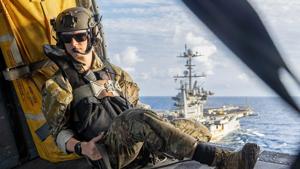
Ahead of the U.S. strikes against Iranian leaders on Saturday, federal agents had already been addressing Iranian threats in the U.S. and on the high seas.
On Friday, the U.S. District Court for the District of Columbia sought to forfeit the Motor Tanker Skipper, a crude oil tanker seized by U.S. forces on the high seas last December carrying approximately 1.8 million barrels of crude oil supplied by Petróleos de Venezuela, S.A. (PdVSA), Venezuela’s state-owned oil company. The ship was part of a shadow fleet connected to the Islamic Revolutionary Guard Corps (IRGC), including the IRGC-Qods Force (IRGC-QF), a designated Foreign Terrorist Organizations (FTO), authorities allege.
The ship left the José Terminal in Venezuela with 1.1 million barrels scheduled to be delivered to Cubametales, the Cuban state-run oil import and export company. The Treasury Department’s Office of Foreign Assets Control (OFAC) sanctioned the Cuban company in July 2019. It also sanctioned the Skipper in 2022, which was previously named Adisa. After it was sanctioned, the ship’s name was changed to avoid detection, investigators found.
Last December, U.S. forces seized the Skipper on the high seas pursuant to a seizure warrant. At that time, the crew were flying a false Guyanese flag, rendering the ship stateless. The Skipper and its cargo were transported to waters off the coast of Texas.
The charges allege that since at least 2021, PdVSA was facilitating shipping and selling petroleum products to benefit the IRGC and IRGC-QF. This involved the Skipper moving crude oil from Iran and Venezuela through ship-to-ship transfers worldwide. False flags were flown to disguise its alleged illicit activities to evade detection and sanctions.
In 2024, the Skipper delivered approximately three million barrels of crude oil from Iran to Syria and was transporting illicit oil from Iran and Venezuela last year, investigators allege.
Revenue from selling the illicit petroleum supported IRGC activities, including “the proliferation of weapons of mass destruction and their means of delivery, support for terrorism and both domestic and international human rights abuses,” the Department of Justice says. Ghost fleets play an essential role in generating revenue for despotic regimes by moving Iranian and other illicit oil around the world, the DOJ says.
The Trump administration has also brought justice to an Iranian journalist and human rights activists, Mashi Alinejad, who’s been seeking refuge in Brooklyn, New York. The IRGC and Iranian intelligence service have been hunting her for years. Last year, two Georgian nationals and members of a Russian mob faction were sentenced to 25 years in prison for attempting to kidnap and murder her, The Center Square reported.
After the Russian mobsters’ attempts failed, the IRGC hired a convicted murderer in New York to kill her, Carlisle Rivera, known as “Pop.” He was inmates with an Iranian, Farhad Shakeri, who was also serving time for manslaughter. After Shakeri was released and returned to Iran as an IRGC asset, he offered Rivera $100,000 to find and kill Alinejad, according to the charges. His efforts also failed. Shakeri remains at large.
Last month, Rivera was sentenced to 15 years in prison for his role in an IRGC murder-for-hire scheme.
In Philadelphia, U.S. Customs and Border Protection officers also confiscated a shipment of ancient artifacts that had been shipped out of Iran to the U.S. in a major antiquities’ theft case.
Officers seized 36 copper-alloy short swords and 50 copper-alloy arrowheads that date to the Bronze Age, CBP said.
The shipment initially arrived on an express delivery flight from the United Arab Emirates in October but took several months for archaeologists to determine their origin.
CBP officers initially X-rayed the shipment, discovered the cultural artifacts and held them to be investigated by the National Targeting Center’s Antiquities Unit. Working with archaeologists affiliated with a local Philadelphia university, they authenticated the short swords and arrowheads dating to between 1600-1000 BCE.
They believe they originated from an area along the southwestern Caspian Sea near the lush Talish Mountains region of Iran and were illegally excavated from ancient burial sites.
Multiple federal agencies were involved in the seizures and investigations.
Federal authorities are also searching for more than 700 Iranians who were released into the country by the Biden administration, The Center Square reported.